









zucchini in 30 Sekunden
- Zucchini is a versatile green summer squash used widely in cooking.
- It is known as 'courgette' in British English and French contexts.
- The vegetable is harvested young to ensure the skin and seeds remain edible.
- It is a popular low-carb substitute for pasta, often called 'zoodles'.
The term zucchini refers to a specific type of summer squash that belongs to the species Cucurbita pepo. In botanical terms, it is an immature fruit, though in culinary contexts, it is treated strictly as a vegetable. The zucchini is characterized by its elongated, cylindrical shape, resembling a cucumber, and its smooth skin which can range from light green to a very dark, almost black-green. Some varieties even exhibit a vibrant yellow hue. The flesh inside is pale, creamy, and contains soft, edible seeds. Because it is harvested before it reaches full maturity, the skin remains tender and entirely edible, unlike winter squashes which require peeling.
- Botanical Classification
- A member of the gourd family (Cucurbitaceae), specifically a variety of summer squash harvested while the rind is still soft.
People use the word zucchini most frequently in the context of cooking, gardening, and healthy eating. It is a staple in Mediterranean and American cuisines. In the United Kingdom, Ireland, and France, this same vegetable is known as a courgette. The linguistic divide is quite sharp: if you are in a grocery store in New York, you ask for zucchini; if you are in a supermarket in London, you look for courgettes. This distinction is crucial for travelers and culinary students alike. The word itself is of Italian origin, derived from 'zucca', meaning squash, with the diminutive suffix '-ina' (plural '-ine'), literally translating to 'little squash'.
The chef decided to julienne the zucchini to create a light, grain-free pasta alternative for the vegan menu.
The usage of zucchini has expanded significantly in recent years due to the 'low-carb' and 'keto' diet trends. You will often hear people talking about 'zoodles'—a portmanteau of zucchini and noodles. This refers to the vegetable being spiralized into long strands. Beyond its use as a pasta substitute, zucchini is celebrated for its versatility. It can be grilled, sautéed, roasted, fried, or even grated into baked goods like muffins and bread to add moisture without a strong flavor. This neutral flavor profile makes it a favorite for parents trying to 'hide' vegetables in their children's food.
- Culinary Profile
- Mild, slightly sweet, and nutty flavor with a high water content that allows it to absorb the flavors of accompanying spices and sauces.
In a social context, zucchini is often mentioned during the late summer months in temperate climates. Gardeners frequently joke about the 'zucchini explosion,' where a single plant produces so much fruit that they are forced to leave bags of it on neighbors' doorsteps. This cultural trope highlights the plant's incredible productivity. Whether you are discussing a recipe for ratatouille or complaining about your over-productive garden, the word zucchini is the standard American English term for this versatile summer squash.
During the summer harvest, our kitchen counter was overflowing with fresh zucchini from the backyard garden.
- Texture
- Firm when raw, but softens quickly when cooked. Overcooking leads to a mushy consistency due to its high moisture content.
I prefer my zucchini grilled with a bit of olive oil and sea salt to keep it crunchy.
The recipe calls for two medium zucchini, finely grated and squeezed dry.
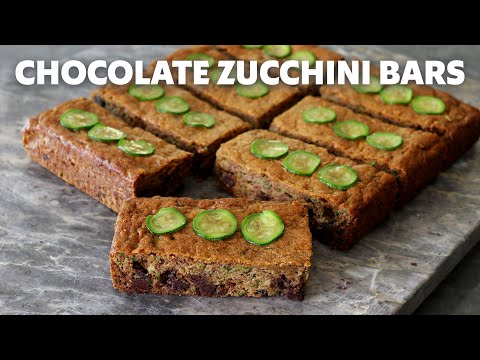
We made a delicious chocolate cake that used zucchini to make it incredibly moist.
Using the word zucchini in a sentence is relatively straightforward as it functions as a standard count noun, though it is often used collectively. When referring to the vegetable as a whole or as a plant, you treat it like any other common noun. For instance, 'I bought a zucchini' or 'The zucchini are growing well.' Interestingly, in American English, the plural can be either 'zucchini' (invariant) or 'zucchinis,' though 'zucchini' is more common when referring to the vegetable as an ingredient. For example, 'The recipe requires three zucchini' sounds more natural to many speakers than 'three zucchinis,' though both are grammatically acceptable.
- As a Subject
- Zucchini is a versatile ingredient that pairs well with garlic and lemon.
When describing actions involving zucchini, you will often use verbs related to food preparation. You might slice it, dice it, grate it, spiralize it, or stuff it. Because zucchini has a high water content, sentences often include instructions on how to manage that moisture. For example: 'After grating the zucchini, you must squeeze out the excess liquid using a clean kitchen towel.' This specific context is common in baking recipes where too much water would ruin the texture of a cake or bread.
Could you please zucchini slice the vegetables for the salad?
In more advanced or descriptive writing, you might use zucchini as a modifier or in compound nouns. 'Zucchini bread' and 'zucchini fritters' are the most common examples. You can also use it to describe colors or shapes in a metaphorical sense, though this is rarer. For instance, 'The boat was painted a deep zucchini green.' In botanical or agricultural writing, the focus shifts to the plant's growth habits: 'The zucchini plant requires full sun and well-drained soil to thrive.' Here, 'zucchini' acts as an attributive noun modifying 'plant'.
- As an Object
- The gardener harvested the largest zucchini I have ever seen.
Zucchini also appears in comparative sentences, often contrasted with other vegetables. 'Zucchini is less bitter than eggplant' or 'Zucchini cooks much faster than carrots.' These comparisons help define its culinary properties. In casual conversation, you might hear it used in the context of healthy lifestyle choices: 'I'm swapping my pasta for zucchini noodles to cut down on carbs.' This usage reflects the modern shift toward vegetable-centric diets.
She served a side of roasted zucchini seasoned with thyme and parmesan.
- In Compound Phrases
- Zucchini blossoms are a delicacy often found on high-end Italian restaurant menus.
The farmers' market was selling heirloom zucchini with beautiful yellow stripes.
Don't forget to buy some zucchini for the ratatouille tonight.
The zucchini plants in the garden are finally starting to flower.
The word zucchini is a staple of everyday American life, echoing through grocery store aisles, bustling restaurant kitchens, and suburban backyard gardens. If you walk into any supermarket in the United States, Canada, or Australia, you will see 'Zucchini' clearly labeled in the produce section. It is one of the most common vegetables available year-round, though its peak season is summer. You will hear shoppers asking, 'Are these zucchinis organic?' or 'Do you have any smaller zucchini in the back?' It is a fundamental part of the North American grocery lexicon.
- In Restaurants
- Waiters often list it as a side dish or a component of a main course, such as 'grilled salmon with a side of sautéed zucchini'.
In the world of professional cooking and food media, zucchini is ubiquitous. Cooking shows on networks like the Food Network or YouTube channels dedicated to healthy eating frequently feature zucchini. Chefs praise it for its ability to take on other flavors. You might hear a TV chef say, 'We’re going to use a mandoline to get paper-thin slices of zucchini for our carpaccio.' This professional context often highlights the vegetable's versatility and its role in modern, light cuisine. It is rarely the 'star' of a dish in the way a steak is, but it is the ultimate supporting actor in the culinary world.
The waiter recommended the zucchini fries as an appetizer, served with a spicy aioli.
Gardening communities are another major hub for the word. Because zucchini plants are notoriously prolific, they are a favorite topic of conversation among amateur horticulturists. You’ll hear neighbors chatting over fences: 'I have so much zucchini I don't know what to do with it!' or 'My zucchini plants got hit by powdery mildew this year.' There is even a whimsical unofficial holiday in some American towns called 'Sneak a Zucchini onto Your Neighbor's Porch Day,' celebrated on August 8th, which underscores how much the word and the vegetable are part of the community fabric.
- In Health & Fitness
- Nutritionists and fitness influencers frequently mention zucchini as a high-volume, low-calorie food perfect for weight management.
Finally, you will hear 'zucchini' in the context of family traditions and home baking. Many American families have a 'secret' recipe for zucchini bread, a sweet, cake-like loaf. Children often grow up hearing their parents say, 'Eat your zucchini, it’s good for you!' or helping to grate the vegetable for a weekend baking project. This domestic usage cements the word in the personal histories of many English speakers, associating it with the warmth of the kitchen and the abundance of the summer season.
I saw a great recipe for zucchini lasagna on that health blog I follow.
- In Farmers' Markets
- Vendors often shout about their 'fresh-picked zucchini' to attract customers during the peak of summer.
The grocery store was out of zucchini, so I had to buy yellow squash instead.
My grandmother's zucchini bread is the highlight of every family reunion.
The local diner serves deep-fried zucchini sticks with ranch dressing.
One of the most frequent mistakes learners and even native speakers make with the word zucchini is its spelling. The word is often misspelled as 'zuchini' (missing one 'c') or 'zuccini' (correct) but then 'zuchinni' (adding an extra 'n'). The correct spelling requires a double 'c' and a single 'n'. This confusion stems from the Italian origin of the word, where 'cc' followed by 'i' or 'e' creates a 'ch' sound. In English, we maintain the Italian spelling but the pronunciation of the 'cc' is a hard 'k' sound followed by the 'i' making a 'ee' sound. Remembering 'double C, single N' is the best way to avoid this error.
- Spelling Error
- Incorrect: zuchini, zuchinni. Correct: zucchini.
Another common mistake is confusing zucchini with a cucumber. While they look remarkably similar—both are long, green, and cylindrical—they are very different in texture and culinary use. A cucumber is typically eaten raw, has a high water content, and a crunchy, cool texture. A zucchini, while edible raw, is much better when cooked and has a denser, creamier flesh. Confusing the two in a recipe can lead to disastrous results; for example, trying to make 'zucchini bread' with cucumbers would result in a soggy, unappealing mess. Always double-check the skin; zucchini skin is usually duller and may have tiny bumps, while cucumber skin is often waxier or smoother.
I accidentally bought a cucumber instead of a zucchini for my stir-fry, and it turned out very watery.
From a grammatical standpoint, some speakers struggle with the plural form. As mentioned previously, 'zucchini' is often used as both the singular and plural in American English, similar to how 'shrimp' or 'fish' can be used. Saying 'I bought three zucchini' is perfectly correct. However, using 'zucchinis' is also correct. The mistake occurs when learners assume 'zucchini' is an uncountable noun like 'water' or 'rice'. It is a count noun. You cannot say 'I want some zucchini' if you mean you want three individual vegetables; you would say 'I want some zucchinis' or 'I want three zucchini'.
- Culinary Error
- Overcooking: Zucchini cooks very quickly. Leaving it in the pan for too long turns it into a grey, mushy substance that loses its flavor.
Finally, there is the 'size mistake'. Many people believe that bigger is better when it comes to zucchini. In reality, giant zucchinis (often called 'marrows' in the UK) are usually tough, have a woody core, and are filled with large, hard seeds. They are best used for stuffing or grating into bread, but for general cooking, they are a mistake. Professional chefs and experienced gardeners always aim for the smaller, younger fruits. If you use a giant zucchini for a delicate sauté, the texture will be disappointing.
The biggest mistake in this recipe was not draining the zucchini after grating it.
- Pronunciation Error
- Do not pronounce the 'cc' as 'ss' or 'ch'. It is a hard 'k' sound: zoo-KEE-nee.
She made the mistake of thinking zucchini and cucumber were interchangeable in a salad.
The spelling of zucchini often trips up students in the spelling bee.
It's a mistake to peel zucchini; the skin contains most of the nutrients and adds great color.
When discussing zucchini, it is helpful to understand its place within the broader family of squashes and its linguistic equivalents. The most obvious alternative is courgette. This is not a different vegetable, but simply the British, Irish, New Zealand, and French name for the exact same plant. If you are reading a recipe from a UK-based chef like Jamie Oliver or Nigella Lawson, you will see 'courgette' used exclusively. The word 'courgette' is the French diminutive of 'courge' (squash), just as 'zucchini' is the Italian diminutive of 'zucca'.
- Zucchini vs. Courgette
- Identical vegetables. Zucchini is the American/Italian term; Courgette is the British/French term.
Another similar vegetable is the yellow summer squash. While zucchini is typically green, yellow squash has a bright yellow skin and often a 'crookneck' (a curved neck) or a straight neck. In terms of flavor and texture, they are nearly identical and can be used interchangeably in almost any recipe. They are often sold together in 'medley' packs at the grocery store because their contrasting colors look beautiful on a plate. If a recipe calls for zucchini and you can only find yellow squash, don't worry—the result will be the same.
If you can't find zucchini, yellow squash is an excellent substitute for this stir-fry.
Then there is the marrow. In British English, a marrow is a zucchini that has been left on the plant to grow to a large size. Marrows have a much thicker skin and a more fibrous, watery interior. They are rarely eaten sautéed; instead, they are usually stuffed with meat or grains and baked. In the US, there isn't a specific common name for this oversized version other than 'giant zucchini'. Linguistically, 'marrow' is also used to refer to the soft tissue inside bones, so context is key when using this word in the UK.
- Zucchini vs. Cucumber
- Cucumbers are cooler, crunchier, and usually eaten raw. Zucchini is denser, milder, and usually eaten cooked.
Finally, eggplant (or aubergine) is often grouped with zucchini in Mediterranean cooking, such as in the dish ratatouille. While they have different botanical origins and textures—eggplant is spongier and can be more bitter—they are often used in similar ways. Both absorb oil and flavors readily and are staples of vegetarian cooking. However, they are not direct substitutes for each other because eggplant requires more preparation (like salting) and has a much more distinct, assertive flavor than the mild zucchini.
The ratatouille recipe combines zucchini, eggplant, and bell peppers in a rich tomato sauce.
- Pattypan Squash
- A small, flying-saucer-shaped summer squash that is also a close relative of the zucchini with a similar flavor.
I prefer the taste of zucchini over pattypan squash because it's easier to slice evenly.
The chef used zucchini as a base for the gluten-free pizza crust.
While they look similar, the zucchini has a much softer skin than the winter butternut squash.
How Formal Is It?
Wusstest du?
Zucchini is one of the few vegetables that is almost always referred to by its Italian name in the US, while most others have English or French-derived names.
Aussprachehilfe
- Pronouncing the 'cc' as 'ch' (like in 'church').
- Pronouncing the 'cc' as 'ss' (like in 'success').
- Putting the stress on the first syllable (ZOO-kee-ni).
- Pronouncing the final 'i' as a short 'ih' instead of a long 'ee'.
- Missing the middle syllable entirely (zoo-knee).
Schwierigkeitsgrad
Easy to recognize in context, though the spelling can be tricky.
Spelling (double 'c', single 'n') is a common hurdle for many.
Pronunciation is usually fine once the 'ch' vs 'k' sound is learned.
Clear and distinct sound, rarely confused with other words.
Was du als Nächstes lernen solltest
Voraussetzungen
Als Nächstes lernen
Fortgeschritten
Wichtige Grammatik
Invariant Plurals
I bought three zucchini. (Common in US English)
Attributive Nouns
The zucchini plant is huge. ('Zucchini' acts as an adjective)
Gerunds as Subjects
Cooking zucchini is very easy. ('Cooking' is the subject)
Adjectives of Color
The walls were a pale zucchini green.
Compound Nouns
Zucchini bread is a popular snack.
Beispiele nach Niveau
The zucchini is green.
Le courgette est verte.
Simple subject-verb-adjective structure.
I eat zucchini.
Je mange de la courgette.
Present simple tense.
Is this a zucchini?
Est-ce une courgette ?
Basic question form.
The zucchini is on the table.
La courgette est sur la table.
Preposition of place 'on'.
I like zucchini.
J'aime la courgette.
Expressing preference.
One zucchini, two zucchinis.
Une courgette, deux courgettes.
Singular and plural forms.
The zucchini is long.
La courgette est longue.
Descriptive adjective.
Buy a zucchini.
Achète une courgette.
Imperative mood.
I am cooking zucchini for dinner.
Je cuisine de la courgette pour le dîner.
Present continuous tense.
Zucchini is a healthy vegetable.
La courgette est un légume sain.
Noun as a general category.
Do you want some zucchini in your salad?
Voulez-vous de la courgette dans votre salade ?
Offering something with 'some'.
She sliced the zucchini into small pieces.
Elle a coupé la courgette en petits morceaux.
Past simple tense.
Zucchini grows in the garden during summer.
La courgette pousse dans le jardin pendant l'été.
General truth in present simple.
This zucchini is bigger than that one.
Cette courgette est plus grande que celle-là.
Comparative adjective.
I don't like raw zucchini.
Je n'aime pas la courgette crue.
Negative preference with an adjective.
We can grill the zucchini on the barbecue.
Nous pouvons griller la courgette au barbecue.
Modal verb 'can' for possibility.
You can use a grater to shred the zucchini for the bread.
Vous pouvez utiliser une râpe pour râper la courgette pour le pain.
Instructional sentence with 'to' infinitive.
Zucchini is often called 'courgette' in the United Kingdom.
La courgette est souvent appelée 'courgette' au Royaume-Uni.
Passive voice.
If the zucchini is too large, the seeds might be tough.
Si la courgette est trop grosse, les graines pourraient être dures.
First conditional structure.
I prefer sautéing zucchini with garlic and olive oil.
Je préfère faire sauter la courgette avec de l'ail et de l'huile d'olive.
Gerund after 'prefer'.
The zucchini plants are producing more fruit than we can eat.
Les plants de courgettes produisent plus de fruits que nous ne pouvons en manger.
Comparative with 'more than'.
Have you ever tried making noodles out of zucchini?
Avez-vous déjà essayé de faire des nouilles avec de la courgette ?
Present perfect with 'ever'.
Zucchini bread is a great way to use up a summer harvest.
Le pain à la courgette est un excellent moyen d'utiliser une récolte d'été.
Noun phrase as a subject.
The chef stuffed the zucchini with rice and herbs.
Le chef a farci la courgette avec du riz et des herbes.
Verb 'stuffed' with 'with'.
The high water content in zucchini means it shrinks significantly when cooked.
La teneur élevée en eau de la courgette signifie qu'elle rétrécit considérablement à la cuisson.
Complex sentence with a noun clause.
Despite being botanically a fruit, zucchini is treated as a vegetable in the kitchen.
Bien qu'elle soit botaniquement un fruit, la courgette est traitée comme un légume en cuisine.
Concessive clause starting with 'Despite'.
The zucchini blossoms were stuffed with ricotta and lightly fried to perfection.
Les fleurs de courgettes étaient farcies à la ricotta et légèrement frites à la perfection.
Compound passive sentence.
He suggested that we spiralize the zucchini to create a gluten-free pasta substitute.
Il a suggéré que nous spiralisions la courgette pour créer un substitut de pâtes sans gluten.
Subjunctive mood after 'suggested that'.
Zucchini is a staple ingredient in Mediterranean dishes like ratatouille and briam.
La courgette est un ingrédient de base dans les plats méditerranéens comme la ratatouille et le briam.
Appositive phrase 'like ratatouille and briam'.
The gardener struggled to keep up with the rapid growth of the zucchini vines.
Le jardinier avait du mal à suivre la croissance rapide des tiges de courgettes.
Infinitive phrase 'to keep up with'.
When selecting zucchini, look for firm skin without any soft spots or blemishes.
Lors de la sélection des courgettes, recherchez une peau ferme sans taches molles ni imperfections.
Participle phrase 'When selecting'.
The mild flavor of zucchini allows it to blend seamlessly into both sweet and savory recipes.
La saveur douce de la courgette lui permet de se fondre parfaitement dans les recettes sucrées et salées.
Infinitive of purpose 'to blend'.
The proliferation of zucchini in the garden often leads to an abundance that necessitates creative gifting.
La prolifération des courgettes dans le jardin conduit souvent à une abondance qui nécessite des cadeaux créatifs.
Complex sentence with a relative clause 'that necessitates'.
Culinary experts recommend salting grated zucchini to draw out moisture before incorporating it into batters.
Les experts culinaires recommandent de saler la courgette râpée pour en extraire l'humidité avant de l'incorporer aux pâtes.
Gerund 'salting' as an object of 'recommend'.
The zucchini's versatility is unmatched, serving as everything from a raw carpaccio to a dense cake base.
La polyvalence de la courgette est inégalée, servant de tout, du carpaccio cru à une base de gâteau dense.
Participial phrase 'serving as'.
One must be wary of 'volunteer' zucchini plants, as they can sometimes produce bitter, inedible fruit.
Il faut se méfier des plants de courgettes 'volontaires', car ils peuvent parfois produire des fruits amers et non comestibles.
Formal pronoun 'one' and causal conjunction 'as'.
The subtle, nutty undertones of roasted zucchini are enhanced by a drizzle of high-quality balsamic glaze.
Les nuances subtiles de noisette de la courgette rôtie sont rehaussées par un filet de glaçage balsamique de haute qualité.
Passive voice with an agent 'by a drizzle'.
In the realm of sustainable agriculture, zucchini is lauded for its high yield relative to the space it occupies.
Dans le domaine de l'agriculture durable, la courgette est louée pour son rendement élevé par rapport à l'espace qu'elle occupe.
Prepositional phrase 'relative to'.
The linguistic transition from 'zucchini' to 'marrow' occurs once the fruit surpasses a certain size and maturity.
La transition linguistique de 'zucchini' à 'marrow' se produit une fois que le fruit dépasse une certaine taille et maturité.
Temporal clause starting with 'once'.
Herbed zucchini fritters, served with a tangy yogurt dip, make for an exquisite summer appetizer.
Les beignets de courgettes aux herbes, servis avec une sauce au yaourt acidulée, constituent un apéritif d'été exquis.
Phrasal verb 'make for' meaning 'to result in'.
The Italian development of the zucchini in the late 19th century represented a significant culinary evolution of the Mesoamerican squash.
Le développement italien de la courgette à la fin du XIXe siècle a représenté une évolution culinaire significative de la courge méso-américaine.
Highly complex subject with multiple prepositional phrases.
To describe the color as merely 'green' is to do a disservice to the variegated, deep forest hues of a prize-winning zucchini.
Décrire la couleur comme simplement 'verte', c'est rendre un mauvais service aux teintes de forêt profonde et panachées d'une courgette primée.
Infinitive phrase as a subject 'To describe... is to do'.
The bitterness occasionally found in heirloom zucchini is attributed to cucurbitacins, a defense mechanism against herbivores.
L'amertume que l'on trouve parfois dans les courgettes anciennes est attribuée aux cucurbitacines, un mécanisme de défense contre les herbivores.
Reduced relative clause 'occasionally found' and appositive 'a defense mechanism'.
The chef's deconstructed ratatouille featured a zucchini velouté that was as ethereal as it was flavorful.
La ratatouille déconstruite du chef présentait un velouté de courgettes aussi éthéré que savoureux.
Correlative comparison 'as... as'.
The sheer fecundity of the zucchini plant has made it a symbol of summer's inexorable and sometimes overwhelming bounty.
La fécondité pure du plant de courgette en a fait un symbole de la générosité inexorable et parfois écrasante de l'été.
Present perfect tense used for a lasting state.
Linguistically, the term 'zucchini' serves as a fascinating case study of how Italian immigrants influenced American culinary terminology.
Linguistiquement, le terme 'zucchini' sert d'étude de cas fascinante sur la façon dont les immigrants italiens ont influencé la terminologie culinaire américaine.
Noun clause 'how Italian immigrants influenced...'.
The textural integrity of the zucchini must be maintained through precise heat application to avoid the ignominy of mushiness.
L'intégrité texturale de la courgette doit être maintenue par une application précise de la chaleur pour éviter l'ignominie de la mollesse.
Passive modal 'must be maintained'.
Whether julienned into delicate strands or carved into decorative vessels, the zucchini remains a cornerstone of aesthetic vegetable preparation.
Qu'elle soit coupée en julienne en brins délicats ou sculptée en récipients décoratifs, la courgette reste une pierre angulaire de la préparation esthétique des légumes.
Concessive phrase 'Whether... or'.
Häufige Kollokationen
Häufige Phrasen
— Refers to the rapid and overwhelming growth of zucchini in a garden.
We're dealing with a zucchini explosion this August.
— A slang term for zucchini noodles made with a spiralizer.
I'm making zoodles for dinner to stay low-carb.
— The time when zucchini and other warm-weather crops are picked.
The summer harvest was full of zucchini and tomatoes.
— Used to describe zucchini picked directly from a garden.
These garden-fresh zucchinis are so tender.
— The practice of adding grated zucchini to food so children don't notice it.
I hide the zucchini in the chocolate cake.
— The time of year (usually mid to late summer) when zucchini is most available.
It's finally zucchini season!
— Zucchini cut into long, thin strands.
Spiralized zucchini is a great pasta alternative.
— Very small, young zucchinis often sold with the flower attached.
The chef used baby zucchini for the garnish.
— The specific area in a garden where zucchini is grown.
The kids are playing near the zucchini patch.
— A zucchini that has been left on the vine too long and become too large.
Don't let the zucchini get overgrown or it will be tough.
Wird oft verwechselt mit
Looks similar but cucumber is crunchier and usually eaten raw.
Same family and use, but different color and sometimes shape.
Often cooked together but has a very different, spongier texture.
Redewendungen & Ausdrücke
— Used to describe something very thick or chunky (informal/descriptive).
The rope was as thick as a zucchini.
Informal— A humorous way to describe someone who is clumsy in the garden (rare).
Watch out, he's got zucchini fingers today.
Slang— To have too much of something and not know what to do with it (playful).
With all these tasks, I'm in a real zucchini squeeze.
Informal— A mild, silly insult for someone acting foolishly (very rare).
Don't be so zucchini-headed!
Slang— To be everywhere or extremely common.
New coffee shops are popping up like zucchini in August.
Informal— To overfill something (metaphorical).
You're trying to stuff a zucchini into that tiny suitcase!
Informal— Used in baking circles to describe a perfect, non-dry texture.
This cake is perfectly zucchini-moist.
Specialized— Someone who is versatile and fits in anywhere (rare).
He's the zucchini of the family, always helpful.
Informal— Giving away garden produce secretly to neighbors.
It's that time of year for sneaking a zucchini onto porches.
CulturalLeicht verwechselbar
Visual similarity.
Cucumbers have a waxy, bumpy skin and are cool/crunchy. Zucchini has a matte skin and is creamy when cooked.
Don't put zucchini in the pickles; use a cucumber!
It's the same plant.
Marrow is the British term for a large, mature zucchini. Zucchini is the term for the young fruit.
This zucchini grew so big it's now a marrow.
Both are green squashes.
Chayote is pear-shaped and much firmer, staying crunchy even after long cooking.
This recipe calls for chayote, but you can use zucchini.
Botanical relationship.
Gourds are usually grown for decoration or containers and are often inedible, while zucchini is grown for food.
That's a decorative gourd, not a zucchini.
Shape and color.
A pickle is a preserved cucumber. You can pickle zucchini, but it's not the standard 'pickle'.
I want a dill pickle, not a pickled zucchini.
Satzmuster
The [noun] is [adjective].
The zucchini is green.
I like [verb]ing [noun].
I like eating zucchini.
You can [verb] [noun] to [verb].
You can grate zucchini to make bread.
Despite [verb]ing, [noun] is [adjective].
Despite being a fruit, zucchini is savory.
The [noun] of [noun] leads to [noun].
The abundance of zucchini leads to gifting.
Whether [verb]ed or [verb]ed, [noun] remains [adjective].
Whether grilled or fried, zucchini remains delicious.
I prefer [noun] over [noun].
I prefer zucchini over eggplant.
There is a [noun] in the [noun].
There is a zucchini in the fridge.
Wortfamilie
Substantive
Verben
Adjektive
Verwandt
So verwendest du es
Very high in culinary and gardening contexts.
-
Spelling it 'zuchini'.
→
zucchini
It needs two 'c's. Think of the two 'c's as two slices of zucchini!
-
Using it as an uncountable noun.
→
I have two zucchinis.
Zucchini is a count noun. You can have one, two, or many.
-
Overcooking it until it's grey.
→
Sauté for 3-5 minutes.
Zucchini should still have a bit of 'bite' or crunch to it.
-
Confusing it with a cucumber in a salad.
→
Use cucumber for crunch, zucchini for a milder taste.
While both are green, their textures are very different when raw.
-
Thinking 'courgette' is a different vegetable.
→
They are the same.
It's just a regional naming difference between the US and UK.
Tipps
Avoid Mushiness
To prevent zucchini from getting mushy, sauté it over high heat for a short time. This browns the outside without overcooking the inside.
Squeeze it Dry
When using grated zucchini in bread or muffins, always squeeze out the excess water using a kitchen towel. This prevents the bread from becoming too soggy.
Pick Early
For the best flavor and texture, harvest your zucchini when they are between 5 and 8 inches long. Don't let them turn into giants!
Low-Calorie Volume
Zucchini is great for 'volume eating'. You can eat a large portion for very few calories, which helps you feel full on a diet.
Check the Stem
When buying zucchini, look for a fresh-looking green stem. A dried-out or moldy stem means the zucchini is old.
Uniform Slices
Use a mandoline slicer to get perfectly even zucchini rounds. This ensures they all cook at the same rate.
Add Acid
Zucchini is mild, so it loves acid. A squeeze of lemon juice or a splash of balsamic vinegar right before serving really makes the flavor pop.
Keep it Dry
Moisture is the enemy of storage. Make sure your zucchini is dry before putting it in the fridge to prevent rot.
Try Yellow
Don't ignore the yellow zucchini! It tastes almost the same but adds a beautiful splash of color to your dishes.
Use the Flowers
If you grow your own, don't waste the male flowers. They won't turn into fruit, so you can pick them and fry them up as a treat.
Einprägen
Eselsbrücke
Think of a 'ZOO' where a 'KEY' is hidden in a 'KNEE'. ZOO-KEE-KNEE. Also, remember: Double 'C' for 'Cool and Crunchy', Single 'N' for 'Nice and Nutritious'.
Visuelle Assoziation
Imagine a long green vegetable wearing a tiny Italian flag as a cape. It is small ('ini') compared to a giant pumpkin ('zucca').
Word Web
Herausforderung
Try to find three different recipes that use zucchini and write down the verbs used (e.g., chop, sauté, bake).
Wortherkunft
The word 'zucchini' comes from the Italian word 'zucchina', which is the diminutive of 'zucca', meaning 'squash' or 'gourd'. It entered American English in the early 20th century, brought by Italian immigrants. While the squash family is native to the Americas, the specific variety we call zucchini was developed in Italy in the late 19th century.
Ursprüngliche Bedeutung: Little squash
Indo-European (Italic)Kultureller Kontext
No major sensitivities, but be aware of the 'bitter squash' toxicity (cucurbitacins) if discussing wild or 'volunteer' plants.
In the US, it's a staple for 'zucchini bread'. In the UK, it's 'courgettes' and often served in 'ratatouille'.
Im Alltag üben
Kontexte aus dem Alltag
At the Grocery Store
- Where is the zucchini?
- How much is a pound of zucchini?
- Is this zucchini organic?
- I need three small zucchinis.
In the Kitchen
- Slice the zucchini thinly.
- Grate the zucchini and squeeze out the water.
- Sauté the zucchini with garlic.
- Don't overcook the zucchini.
In the Garden
- The zucchini are growing fast.
- Check the zucchini for pests.
- Harvest the zucchini when they are 6 inches long.
- The zucchini plants need more water.
At a Restaurant
- Does this dish come with zucchini?
- I'll have the zucchini fries, please.
- Is the zucchini grilled or steamed?
- Can I substitute the pasta for zucchini noodles?
Talking about Health
- Zucchini is very low in calories.
- I love making zoodles.
- Zucchini is a great source of Vitamin C.
- I'm adding zucchini to my smoothie.
Gesprächseinstiege
"Do you prefer your zucchini grilled or sautéed?"
"Have you ever tried making zucchini bread? It's surprisingly delicious!"
"What do you call this vegetable in your country—zucchini or courgette?"
"If you had a garden, would you grow zucchini?"
"What's your favorite way to use up a big harvest of zucchini?"
Tagebuch-Impulse
Describe a meal you had that included zucchini. What was the texture and flavor like?
Write a recipe for a 'perfect' zucchini dish. What ingredients would you pair with it?
Imagine you have a garden that produces 50 zucchinis in one week. What would you do with them?
Compare and contrast zucchini with another vegetable, like cucumber or eggplant.
Why do you think zucchini has become so popular in modern healthy diets?
Häufig gestellte Fragen
10 FragenYes, you can eat zucchini raw. It is often sliced thinly for salads or used as crudités with dip. However, most people prefer it cooked as the flavor becomes sweeter and the texture softer.
No, you do not have to peel zucchini. The skin is very thin and perfectly edible. In fact, most of the nutrients and the vibrant green color are found in the skin.
There is no botanical difference. 'Zucchini' is the term used in American and Italian English, while 'courgette' is the term used in British and French English.
Zucchini can become bitter if the plant is stressed by heat or lack of water, or if it contains high levels of cucurbitacins. If a zucchini is extremely bitter, it is best to discard it as it can cause stomach upset.
Store zucchini in a paper or plastic bag in the crisper drawer of your refrigerator. It should stay fresh for about 4 to 7 days. Do not wash it until you are ready to use it.
Yes, but because of its high water content, it's best to blanch it first or grate it. Frozen zucchini is great for soups, stews, or baking, but it will be too soft for sautéing after thawing.
Yes, the seeds in a standard-sized zucchini are very soft and completely edible. Only in very large, overgrown zucchinis (marrows) do the seeds become hard and unpleasant to eat.
Botanically, it is a fruit because it contains seeds and develops from a flower. However, in culinary terms, it is always classified and used as a vegetable.
Zoodles are 'zucchini noodles'. They are made by using a spiralizer to cut the zucchini into long, thin strands that look like spaghetti. They are a popular low-carb pasta substitute.
Zucchini blossoms have a very delicate, mild squash flavor. They are often stuffed with cheese and fried, which makes them creamy on the inside and crispy on the outside.
Teste dich selbst 180 Fragen
Write a sentence using the word 'zucchini' and 'garden'.
Well written! Good try! Check the sample answer below.
Describe the taste and texture of a grilled zucchini.
Well written! Good try! Check the sample answer below.
Explain the difference between a zucchini and a cucumber.
Well written! Good try! Check the sample answer below.
Write a short recipe for zucchini bread.
Well written! Good try! Check the sample answer below.
Discuss why zucchini is a popular choice for healthy diets.
Well written! Good try! Check the sample answer below.
Write a dialogue between two people at a farmers' market buying zucchini.
Well written! Good try! Check the sample answer below.
Describe the appearance of a zucchini plant.
Well written! Good try! Check the sample answer below.
Write a sentence using 'zucchini' as an adjective.
Well written! Good try! Check the sample answer below.
Summarize the history of the zucchini.
Well written! Good try! Check the sample answer below.
Write an email to a friend sharing a zucchini harvest.
Well written! Good try! Check the sample answer below.
Explain how to make 'zoodles'.
Well written! Good try! Check the sample answer below.
Describe a dish you would make with zucchini blossoms.
Well written! Good try! Check the sample answer below.
Write a persuasive paragraph about why everyone should grow zucchini.
Well written! Good try! Check the sample answer below.
Compare the terms 'zucchini' and 'courgette'.
Well written! Good try! Check the sample answer below.
Write a story about a giant zucchini that won a prize.
Well written! Good try! Check the sample answer below.
Describe the process of sautéing zucchini.
Well written! Good try! Check the sample answer below.
Write a formal botanical description of a zucchini.
Well written! Good try! Check the sample answer below.
Discuss the nutritional benefits of eating zucchini.
Well written! Good try! Check the sample answer below.
Write a sentence using the plural form 'zucchinis'.
Well written! Good try! Check the sample answer below.
Describe the smell of fresh zucchini.
Well written! Good try! Check the sample answer below.
Pronounce the word 'zucchini' correctly.
Read this aloud:
Du hast gesagt:
Speech recognition is not supported in your browser. Try Chrome or Edge.
Tell a story about a time you ate or cooked zucchini.
Read this aloud:
Du hast gesagt:
Speech recognition is not supported in your browser. Try Chrome or Edge.
Explain how to make a simple zucchini stir-fry.
Read this aloud:
Du hast gesagt:
Speech recognition is not supported in your browser. Try Chrome or Edge.
Debate whether zucchini is better raw or cooked.
Read this aloud:
Du hast gesagt:
Speech recognition is not supported in your browser. Try Chrome or Edge.
Describe a zucchini to someone who has never seen one.
Read this aloud:
Du hast gesagt:
Speech recognition is not supported in your browser. Try Chrome or Edge.
Discuss the pros and cons of growing zucchini in a small garden.
Read this aloud:
Du hast gesagt:
Speech recognition is not supported in your browser. Try Chrome or Edge.
Roleplay a customer and a grocer discussing the quality of some zucchini.
Read this aloud:
Du hast gesagt:
Speech recognition is not supported in your browser. Try Chrome or Edge.
Give a short presentation on the nutritional benefits of zucchini.
Read this aloud:
Du hast gesagt:
Speech recognition is not supported in your browser. Try Chrome or Edge.
Explain the difference between zucchini and courgette to a friend.
Read this aloud:
Du hast gesagt:
Speech recognition is not supported in your browser. Try Chrome or Edge.
Talk about your favorite summer vegetable and why it's zucchini.
Read this aloud:
Du hast gesagt:
Speech recognition is not supported in your browser. Try Chrome or Edge.
Describe the process of making 'zoodles' using a spiralizer.
Read this aloud:
Du hast gesagt:
Speech recognition is not supported in your browser. Try Chrome or Edge.
Discuss the cultural significance of zucchini in Mediterranean cuisine.
Read this aloud:
Du hast gesagt:
Speech recognition is not supported in your browser. Try Chrome or Edge.
Tell a joke about having too much zucchini in your garden.
Read this aloud:
Du hast gesagt:
Speech recognition is not supported in your browser. Try Chrome or Edge.
Explain why zucchini is used in baking cakes and breads.
Read this aloud:
Du hast gesagt:
Speech recognition is not supported in your browser. Try Chrome or Edge.
Describe the appearance and taste of fried zucchini blossoms.
Read this aloud:
Du hast gesagt:
Speech recognition is not supported in your browser. Try Chrome or Edge.
Discuss the environmental impact of growing your own zucchini.
Read this aloud:
Du hast gesagt:
Speech recognition is not supported in your browser. Try Chrome or Edge.
Roleplay a chef teaching a student how to julienne a zucchini.
Read this aloud:
Du hast gesagt:
Speech recognition is not supported in your browser. Try Chrome or Edge.
Talk about a traditional dish from your country that is similar to zucchini.
Read this aloud:
Du hast gesagt:
Speech recognition is not supported in your browser. Try Chrome or Edge.
Explain the term 'marrow' in the context of British English.
Read this aloud:
Du hast gesagt:
Speech recognition is not supported in your browser. Try Chrome or Edge.
Describe the ideal size and color for a perfect zucchini.
Read this aloud:
Du hast gesagt:
Speech recognition is not supported in your browser. Try Chrome or Edge.
Listen to a recipe and write down the amount of zucchini needed.
Listen to a gardener talk about their harvest. How many zucchinis did they pick?
Listen to a short clip about the history of zucchini. Where did it originate?
Listen to a chef describe a dish. Is the zucchini raw or cooked?
Listen to a conversation at a market. What is the price of the zucchini?
Listen to a health tip about zucchini. What vitamin is mentioned?
Listen to a description of a garden pest. What part of the zucchini does it attack?
Listen to a person ordering food. Did they ask for a side of zucchini?
Listen to a comparison of zucchini and yellow squash. Are they interchangeable?
Listen to a story about a giant zucchini. What was its name?
Listen to a botanical lecture. What is the scientific name for zucchini?
Listen to a baking tutorial. Why do they squeeze the zucchini?
Listen to a news report about a vegetable festival. Was there a zucchini contest?
Listen to a child talk about their lunch. Did they eat their zucchini?
Listen to a podcast about Mediterranean diets. How is zucchini mentioned?
/ 180 correct
Perfect score!
Summary
Zucchini is a mild-flavored, nutrient-dense summer squash that is essential for both Mediterranean and modern healthy cooking. For example, you can grate it into muffins for moisture or spiralize it into 'zoodles' for a healthy pasta alternative.
- Zucchini is a versatile green summer squash used widely in cooking.
- It is known as 'courgette' in British English and French contexts.
- The vegetable is harvested young to ensure the skin and seeds remain edible.
- It is a popular low-carb substitute for pasta, often called 'zoodles'.
Avoid Mushiness
To prevent zucchini from getting mushy, sauté it over high heat for a short time. This browns the outside without overcooking the inside.
Squeeze it Dry
When using grated zucchini in bread or muffins, always squeeze out the excess water using a kitchen towel. This prevents the bread from becoming too soggy.
Pick Early
For the best flavor and texture, harvest your zucchini when they are between 5 and 8 inches long. Don't let them turn into giants!
Low-Calorie Volume
Zucchini is great for 'volume eating'. You can eat a large portion for very few calories, which helps you feel full on a diet.
Beispiel
I'm going to grill some zucchini and peppers for the barbecue.
Verwandte Inhalte
In Videos ansehen
Mehr Food Wörter
additive
B2Ein Zusatzstoff ist eine Substanz, die in kleinen Mengen hinzugefügt wird, um Eigenschaften zu verbessern.
additives
B2Zusatzstoffe sind Substanzen, die Produkten zugesetzt werden, um deren Eigenschaften zu verbessern.
almond
B2Sie hat wunderschöne mandelförmige Augen.
annatto
B1Annatto ist ein natürlicher orange-roter Lebensmittelfarbstoff, der aus den Samen des Orleanstrauchs gewonnen wird. Er wird oft für Käse und Butter verwendet.
appetite
C1Appetit ist das natürliche Verlangen nach Nahrung. Es kann auch ein starkes Interesse an etwas anderem bedeuten, wie z. B. Abenteuer.
appetizer
C1Eine Vorspeise ist eine kleine Portion Essen, die vor dem Hauptgericht serviert wird.
appetizing
B2Sieht oder riecht sehr gut und macht hungrig. / Der Geruch von frisch gebackenem Brot war sehr appetitlich.
apple
C1Sie hat ihr Leben 'apple' gestaltet, einfach und gesund.
apples
A1Äpfel sind runde, essbare Früchte vom Apfelbaum.
apricot
C1Die Wände des Schlafzimmers sind in einem sanften Aprikot gestrichen.

