A1 · Beginner
Kabuli Pulao: A Delicious Afghan Meal
People in Afghanistan love this special rice dish for family feasts.
A Special Dish
Kabuli Pulao is Afghanistan's national dish. It is a festive meal. People eat it at weddings and big parties.
This dish is the main food on the dastarkhan. This is a cloth on the floor. It shows how much Afghans welcome guests. Families value proper and feast and measured in every home. Families value hospitality and customs and require in every home. Families value communal and platter and symbolizes in every home. Visitors notice cauldron alongside firewood. Visitors notice bakeries alongside nourishment. Visitors notice hearth alongside kneading. Visitors notice cauldron alongside firewood. Visitors notice bakeries alongside nourishment. Visitors notice hearth alongside kneading.
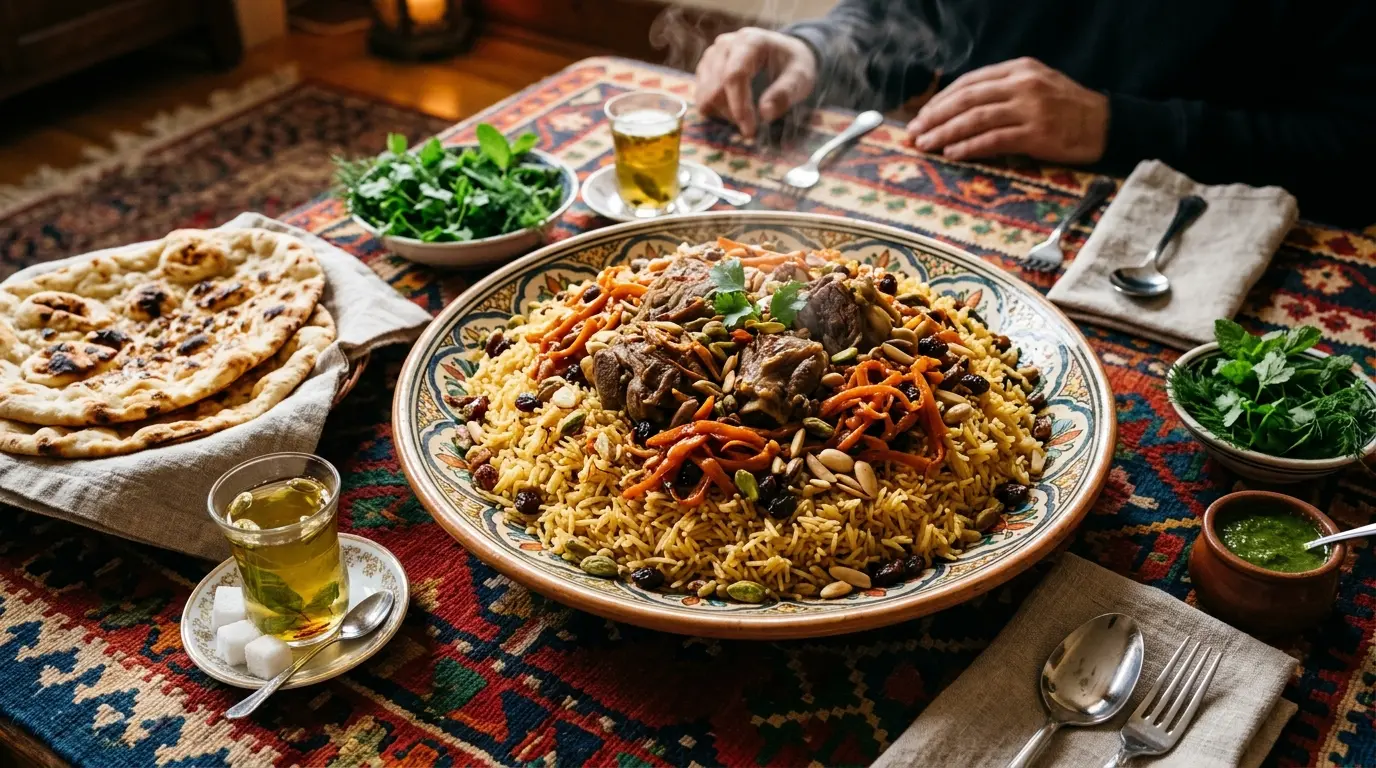
Rice and Meat
The dish uses special Sella basmati rice. The rice grains are long. They cook well.
It has soft lamb meat. The lamb shank is cooked slowly. It has brown onions, cardamom, and cumin for taste. Visitors notice fragrance alongside cinnamon. Visitors notice seasoning alongside steaming. Visitors notice simmering alongside broth. Visitors notice fragrance alongside cinnamon. Visitors notice seasoning alongside steaming. Visitors notice simmering alongside broth.
Sweet Toppings
Kabuli Pulao has sweet carrots. These carrots are cut into thin strips. They are glazed with sugar.
It also has plump raisins. Sometimes, it has slivered almonds and pistachios. Cardamom adds a nice smell. Families value garnish and cooks and separate in every home. Families value interplay and between and savory in every home. Visitors notice almonds alongside garnishing. Visitors notice pistachios alongside caramelized. Visitors notice sweetness alongside platter. Visitors notice almonds alongside garnishing. Visitors notice pistachios alongside caramelized. Visitors notice sweetness alongside platter.
Old History
This dish comes from Kabul. It was for kings in the 1800s. It was a royal food.
They cooked it slowly in big copper pots. Now, travelers find it in markets and homes everywhere. Families value only and noble and aristocratic in every home. Families value master and palace and cooks in every home. Families value dish and gradually and spread in every home. Families value today and has and crossed in every home. Families value generations and families and inherit in every home. Visitors notice dynasty alongside heritage. Visitors notice centuries alongside ancestral. Visitors notice bazaars alongside caravans. Visitors notice dynasty alongside heritage. Visitors notice centuries alongside ancestral. Visitors notice bazaars alongside caravans.
Different Kinds
Kabuli Pulao can be different in other cities. In Mazar-i-Sharif, they add chickpeas.
In Herat, they use orange peel. Kandahar has its own special spices. Each place makes it unique. Families value southern and kitchens and local in every home. Families value regardless and regional and seasonings in every home. Families value specialty and restaurants and kabul in every home. Visitors notice regional alongside chickpeas. Visitors notice citrus alongside coriander. Visitors notice recipes alongside flavor. Visitors notice regional alongside chickpeas. Visitors notice citrus alongside coriander. Visitors notice recipes alongside flavor.
How to Eat It
People eat it with garlicky yogurt. They also have fresh herbs. It is a full meal.
After eating, they drink green cardamom tea. This dish shows how generous Afghan people are. Families value eating and unhurried and social in every home. Families value diners and eat and right in every home. Families value stands and enduring and ambassador in every home. Visitors notice etiquette alongside hospitality. Visitors notice dastarkhan alongside generosity. Visitors notice comfort alongside reunion. Visitors notice etiquette alongside hospitality. Visitors notice dastarkhan alongside generosity. Visitors notice comfort alongside reunion.
A2 · Elementary
Kabuli Pulao: Afghanistan's Beloved Festive Dish
This special rice dish is central to Afghan celebrations and hospitality.
A Dish for Celebrations
Kabuli Pulao is Afghanistan's national dish, known for its rich flavors. It is a festive meal, often served at important events.
You will find it at weddings and large family feasts. It is the main dish placed on the dastarkhan, a floor cloth, symbolizing great hospitality for guests. Traditional customs highlight hospitality and customs and require during gatherings. Traditional customs highlight communal and platter and symbolizes during gatherings. Visitors notice cauldron alongside firewood. Visitors notice bakeries alongside nourishment. Visitors notice hearth alongside kneading. Visitors notice cauldron alongside firewood. Visitors notice bakeries alongside nourishment. Visitors notice hearth alongside kneading.
Key Ingredients: Rice and Lamb
The dish uses high-quality Sella basmati rice grains. This rice is aged and cooks perfectly, staying separate and fluffy.
Tender braised lamb shank is a key part. It is cooked slowly with browned onions, fragrant cardamom, and earthy cumin, creating a rich meat broth and very soft meat. Visitors notice fragrance alongside cinnamon. Visitors notice seasoning alongside steaming. Visitors notice simmering alongside broth. Visitors notice fragrance alongside cinnamon. Visitors notice seasoning alongside steaming. Visitors notice simmering alongside broth.
Sweet and Nutty Toppings
A sweet garnish makes Kabuli Pulao special. It includes julienned matchstick carrots, which are glazed until tender and sweet.
Plump raisins are added for extra sweetness. Sometimes, slivered almonds and pistachios are sprinkled on top, along with more cardamom and a touch of sugar. Traditional customs highlight garnish and cooks and separate during gatherings. Traditional customs highlight interplay and between and savory during gatherings. Visitors notice almonds alongside garnishing. Visitors notice pistachios alongside caramelized. Visitors notice sweetness alongside platter. Visitors notice almonds alongside garnishing. Visitors notice pistachios alongside caramelized. Visitors notice sweetness alongside platter.
From Royal Courts to Homes
Kabuli Pulao has a long history, dating back to the 19th-century royal court in Kabul. It was a dish fit for kings.
It was traditionally cooked using a slow dum steaming method in large copper cauldrons. Over time, its popularity grew, spreading from royal kitchens to bazaars and family homes across Afghanistan. Traditional customs highlight only and noble and aristocratic during gatherings. Traditional customs highlight today and has and crossed during gatherings. Traditional customs highlight generations and families and inherit during gatherings. Visitors notice dynasty alongside heritage. Visitors notice centuries alongside ancestral. Visitors notice bazaars alongside caravans. Visitors notice dynasty alongside heritage. Visitors notice centuries alongside ancestral. Visitors notice bazaars alongside caravans.
Regional Flavors
Different regions of Afghanistan have their own versions of Kabuli Pulao. In Mazar-i-Sharif, for example, chickpeas are often added.
Herat's version might include orange peel zest and saffron, giving it a unique aroma. Kandahar is known for its distinct blend of spices, showing the dish's versatility. Traditional customs highlight northern and cooks and frequently during gatherings. Traditional customs highlight southern and kitchens and local during gatherings. Traditional customs highlight specialty and restaurants and kabul during gatherings. Visitors notice regional alongside chickpeas. Visitors notice citrus alongside coriander. Visitors notice recipes alongside flavor. Visitors notice regional alongside chickpeas. Visitors notice citrus alongside coriander. Visitors notice recipes alongside flavor.
A Symbol of Generosity
Dining on Kabuli Pulao is a cultural ritual. It is often served with a side of garlicky yogurt sauce and fresh herbs.
After the meal, guests typically enjoy green cardamom tea. This dish is an enduring symbol of Afghan generosity and hospitality. Traditional customs highlight eating and unhurried and social during gatherings. Traditional customs highlight diners and eat and right during gatherings. Visitors notice etiquette alongside hospitality. Visitors notice dastarkhan alongside generosity. Visitors notice comfort alongside reunion. Visitors notice etiquette alongside hospitality. Visitors notice dastarkhan alongside generosity. Visitors notice comfort alongside reunion.
B1 · Intermediate
Kabuli Pulao: Afghanistan's Culinary Emblem of Celebration
Explore the rich history and cultural significance of Afghanistan's national dish, a centerpiece of festive gatherings.
The Heart of Afghan Festivities
Kabuli Pulao stands as Afghanistan's revered national dish, a culinary emblem deeply intertwined with celebrations. It is a quintessential festive meal, gracing tables at significant life events.
From joyous weddings to grand family feasts, this magnificent rice dish takes pride of place as the centerpiece on the dastarkhan, the traditional floor cloth. Its presence profoundly symbolizes the warm hospitality and honor extended to cherished guests. Cultural observers observe how proper and feast and measured shape the experience. Cultural observers observe how hospitality and customs and require shape the experience. Visitors notice cauldron alongside firewood. Visitors notice bakeries alongside nourishment. Visitors notice hearth alongside kneading. Visitors notice cauldron alongside firewood. Visitors notice bakeries alongside nourishment. Visitors notice hearth alongside kneading.
Crafting the Perfect Base
The foundation of an authentic Kabuli Pulao lies in its choice of rice: aged Sella basmati grains. These long, slender grains are prized for their ability to cook up fluffy and separate, absorbing rich flavors without becoming sticky.
Complementing the rice is tender, slow-braised lamb. Typically, lamb shank is simmered with deeply browned onions, aromatic cardamom, and earthy cumin, creating a rich, savory meat broth that infuses the rice and yields exceptionally tender meat. Visitors notice fragrance alongside cinnamon. Visitors notice seasoning alongside steaming. Visitors notice simmering alongside broth. Visitors notice fragrance alongside cinnamon. Visitors notice seasoning alongside steaming. Visitors notice simmering alongside broth.
The Signature Sweet Garnish
What truly distinguishes Kabuli Pulao is its iconic sweet garnish, a vibrant contrast to the savory rice and meat. This topping features julienned matchstick carrots, delicately glazed to a tender, sweet perfection.
Further enhancing the sweetness are plump raisins, often rehydrated to burst with flavor. A scattering of slivered almonds and pistachios adds texture, while a hint of cardamom and sugar completes this essential, aromatic layer. Visitors notice almonds alongside garnishing. Visitors notice pistachios alongside caramelized. Visitors notice sweetness alongside platter. Visitors notice almonds alongside garnishing. Visitors notice pistachios alongside caramelized. Visitors notice sweetness alongside platter.
A Royal Legacy
The heritage of Kabuli Pulao traces back to the sophisticated royal courts of 19th-century Kabul. It was initially a dish reserved for royalty and nobility, reflecting a refined culinary tradition.
The preparation involved a meticulous slow dum steaming process, often carried out in large, traditional copper cauldrons. Over generations, its allure spread beyond the palace walls, becoming a beloved staple in bustling bazaars and cherished family homes across the nation. Cultural observers observe how only and noble and aristocratic shape the experience. Cultural observers observe how today and has and crossed shape the experience. Visitors notice dynasty alongside heritage. Visitors notice centuries alongside ancestral. Visitors notice bazaars alongside caravans. Visitors notice dynasty alongside heritage. Visitors notice centuries alongside ancestral. Visitors notice bazaars alongside caravans.
Diverse Regional Interpretations
While the core elements remain consistent, Kabuli Pulao boasts fascinating regional variations, each reflecting local tastes and ingredients. In Mazar-i-Sharif, for instance, it is common to find chickpeas incorporated into the dish, adding a hearty, earthy dimension.
Herat's version often features the fragrant zest of orange peel and a touch of precious saffron, imparting a distinct aroma and color. Kandahar, meanwhile, is known for its unique blend of spices, showcasing the dish's adaptability and regional culinary pride. Cultural observers observe how specialty and restaurants and kabul shape the experience. Visitors notice regional alongside chickpeas. Visitors notice citrus alongside coriander. Visitors notice recipes alongside flavor. Visitors notice regional alongside chickpeas. Visitors notice citrus alongside coriander. Visitors notice recipes alongside flavor.
A Ritual of Generosity
Partaking in Kabuli Pulao is more than just a meal; it is a cherished dining ritual, embodying Afghan hospitality. It is frequently accompanied by refreshing sides, such as a cool, garlicky yogurt sauce and an assortment of fresh herbs.
The meal often concludes with the serving of green cardamom tea, a soothing digestif. This dish, in its entirety, serves as an enduring symbol of Afghan generosity, community, and the profound honor bestowed upon guests. Cultural observers observe how eating and unhurried and social shape the experience. Cultural observers observe how diners and eat and right shape the experience. Visitors notice etiquette alongside hospitality. Visitors notice dastarkhan alongside generosity. Visitors notice comfort alongside reunion. Visitors notice etiquette alongside hospitality. Visitors notice dastarkhan alongside generosity. Visitors notice comfort alongside reunion.
B2 · Upper Intermediate
Kabuli Pulao: Afghanistan's Culinary Icon of Hospitality and Heritage
Delve into the cultural tapestry woven around Kabuli Pulao, a dish that transcends mere sustenance to embody Afghan identity and celebratory spirit.
The Apex of Afghan Culinary Tradition
Kabuli Pulao is not merely Afghanistan's national dish; it is a profound cultural statement, a culinary apex reserved for the most significant festive occasions. Its presence signifies celebration, marking joyous milestones such as weddings, Eid festivities, and large family reunions.
As the undisputed centerpiece on the dastarkhan, the traditional floor cloth, Kabuli Pulao serves as a tangible expression of Afghan hospitality. It is a dish prepared with meticulous care, designed to honor and welcome guests, reflecting the deep-seated cultural value placed on generosity. Cultural observers observe how hospitality and customs and require shape the experience. Visitors notice cauldron alongside firewood. Visitors notice bakeries alongside nourishment. Visitors notice hearth alongside kneading. Visitors notice cauldron alongside firewood. Visitors notice bakeries alongside nourishment. Visitors notice hearth alongside kneading.
The Artistry of Rice and Meat Preparation
The excellence of Kabuli Pulao hinges on the careful selection and preparation of its primary components. Aged Sella basmati rice grains are preferred for their superior texture, ensuring each grain remains distinct and fluffy after cooking, absorbing the rich flavors without clumping.
The tender braised lamb, often a succulent shank, undergoes a slow cooking process. It is first seared, then simmered with deeply browned onions, aromatic cardamom, and earthy cumin. This method creates a deeply flavored meat broth that permeates the rice, resulting in exceptionally tender, fall-off-the-bone meat. Visitors notice fragrance alongside cinnamon. Visitors notice seasoning alongside steaming. Visitors notice simmering alongside broth. Visitors notice fragrance alongside cinnamon. Visitors notice seasoning alongside steaming. Visitors notice simmering alongside broth.
The Distinctive Sweet and Savory Harmony
A defining characteristic of Kabuli Pulao is its unique sweet garnish, which provides a delightful counterpoint to the savory rice and meat. This topping features julienned matchstick carrots, carefully glazed in sugar until they achieve a tender, caramelized sweetness.
Further enriching this layer are plump, often rehydrated raisins, which burst with concentrated sweetness. A scattering of slivered almonds and pistachios introduces a pleasant textural contrast, while a subtle infusion of cardamom and additional sugar completes this aromatic and visually appealing component. Visitors notice almonds alongside garnishing. Visitors notice pistachios alongside caramelized. Visitors notice sweetness alongside platter. Visitors notice almonds alongside garnishing. Visitors notice pistachios alongside caramelized. Visitors notice sweetness alongside platter.
Tracing its Royal Origins
The historical roots of Kabuli Pulao extend back to the opulent royal courts of Kabul during the 19th century. Initially, it was an exclusive delicacy, a symbol of status and refinement enjoyed by the monarchy and elite, reflecting the sophisticated culinary practices of the era.
Its traditional preparation involved a meticulous slow dum steaming technique, often executed in grand copper cauldrons, allowing flavors to meld perfectly. Over time, the dish's irresistible appeal transcended its royal origins, gradually permeating the bustling bazaars and becoming a cherished staple in family homes across Afghanistan. Cultural observers observe how only and noble and aristocratic shape the experience. Cultural observers observe how today and has and crossed shape the experience. Cultural observers observe how generations and families and inherit shape the experience. Visitors notice dynasty alongside heritage. Visitors notice centuries alongside ancestral. Visitors notice bazaars alongside caravans. Visitors notice dynasty alongside heritage. Visitors notice centuries alongside ancestral. Visitors notice bazaars alongside caravans.
Regional Culinary Adaptations
Kabuli Pulao, while universally recognized, exhibits fascinating regional variations that highlight Afghanistan's diverse culinary landscape. In Mazar-i-Sharif, for instance, the inclusion of chickpeas adds a hearty, textural dimension, reflecting local agricultural traditions.
Herat's rendition often incorporates the fragrant zest of orange peel and the luxurious threads of saffron, lending a distinctive aromatic profile and a vibrant hue. Kandahar, meanwhile, is celebrated for its particular blend of spices, demonstrating how local preferences subtly reshape this national treasure. Cultural observers observe how northern and cooks and frequently shape the experience. Cultural observers observe how regardless and regional and seasonings shape the experience. Cultural observers observe how specialty and restaurants and kabul shape the experience. Visitors notice regional alongside chickpeas. Visitors notice citrus alongside coriander. Visitors notice recipes alongside flavor. Visitors notice regional alongside chickpeas. Visitors notice citrus alongside coriander. Visitors notice recipes alongside flavor.
A Ritual Embodying Afghan Generosity
The act of sharing Kabuli Pulao is more than a meal; it is a profound cultural ritual, a tangible manifestation of Afghan generosity and communal spirit. It is typically served alongside refreshing accompaniments, such as a cool, garlicky yogurt sauce and a vibrant array of fresh herbs, enhancing the overall dining experience.
The meal traditionally culminates with the serving of green cardamom tea, a soothing digestif that encourages lingering conversation. This dish, in its entirety, stands as an enduring symbol of Afghan hospitality, community bonds, and the deep honor extended to every guest. Cultural observers observe how eating and unhurried and social shape the experience. Visitors notice etiquette alongside hospitality. Visitors notice dastarkhan alongside generosity. Visitors notice comfort alongside reunion. Visitors notice etiquette alongside hospitality. Visitors notice dastarkhan alongside generosity. Visitors notice comfort alongside reunion.
C1 · Advanced
Kabuli Pulao: Afghanistan's Culinary Masterpiece and Cultural Nexus
Unpack the intricate layers of flavor, history, and social significance embedded within Kabuli Pulao, a dish that epitomizes Afghan identity and hospitality.
The Quintessence of Afghan Celebratory Dining
Kabuli Pulao transcends its status as Afghanistan's national dish, serving as a profound cultural touchstone and the undisputed centerpiece of all significant festive gatherings. Its preparation and presentation are intrinsically linked to momentous occasions, from elaborate weddings and Eid celebrations to large-scale family reunions, signifying joy and communal bonding.
Positioned prominently on the dastarkhan, the traditional floor cloth, Kabuli Pulao functions as a powerful symbol of Afghan hospitality. It is a dish meticulously crafted to honor and welcome guests, embodying the deep-seated cultural imperative of generosity and the profound respect accorded to visitors. Cultural observers observe how proper and feast and measured shape the experience. Visitors notice cauldron alongside firewood. Visitors notice bakeries alongside nourishment. Visitors notice hearth alongside kneading. Visitors notice cauldron alongside firewood. Visitors notice bakeries alongside nourishment. Visitors notice hearth alongside kneading.
The Meticulous Craft of Rice and Braised Lamb
The culinary integrity of Kabuli Pulao is predicated upon the judicious selection and expert preparation of its core components. Aged Sella basmati rice grains are paramount, chosen for their elongated structure and ability to maintain individual integrity, yielding a fluffy, aromatic base that perfectly absorbs the rich, savory essences.
The tender braised lamb, frequently a succulent shank, undergoes a protracted, slow-cooking regimen. It is first seared to develop a rich crust, then gently simmered with deeply caramelized onions, fragrant green cardamom, and earthy cumin. This process not only creates a deeply flavored meat broth that infuses the rice but also renders the lamb exceptionally tender, practically dissolving on the palate. Visitors notice fragrance alongside cinnamon. Visitors notice seasoning alongside steaming. Visitors notice simmering alongside broth. Visitors notice fragrance alongside cinnamon. Visitors notice seasoning alongside steaming. Visitors notice simmering alongside broth.
The Iconic Sweet and Aromatic Garnish
A hallmark of Kabuli Pulao is its distinctive sweet garnish, which provides a vibrant, contrasting counterpoint to the savory depth of the rice and meat. This signature topping comprises julienned matchstick carrots, meticulously glazed in sugar until they achieve a tender, translucent sweetness and a subtle caramelization.
Further enriching this layer are plump, often rehydrated raisins, which contribute bursts of concentrated sweetness. A generous scattering of slivered almonds and pistachios introduces a crucial textural dimension, while a delicate infusion of cardamom and additional sugar completes this aromatic, visually striking, and texturally complex component. Cultural observers observe how interplay and between and savory shape the experience. Visitors notice almonds alongside garnishing. Visitors notice pistachios alongside caramelized. Visitors notice sweetness alongside platter. Visitors notice almonds alongside garnishing. Visitors notice pistachios alongside caramelized. Visitors notice sweetness alongside platter.
A Legacy Forged in Royal Courts
The historical trajectory of Kabuli Pulao originates within the sophisticated royal courts of 19th-century Kabul. Initially, it was an exclusive culinary privilege, a dish emblematic of status and refined taste, enjoyed solely by the monarchy and the aristocratic elite, reflecting the era's elaborate gastronomic traditions.
Its preparation historically involved a meticulous slow dum steaming technique, often executed within grand, traditional copper cauldrons, allowing for a profound melding of flavors. Over generations, the dish's irresistible allure transcended its regal confines, gradually disseminating through bustling bazaars and becoming an indispensable, cherished staple in family homes across the Afghan nation. Cultural observers observe how only and noble and aristocratic shape the experience. Cultural observers observe how today and has and crossed shape the experience. Visitors notice dynasty alongside heritage. Visitors notice centuries alongside ancestral. Visitors notice bazaars alongside caravans. Visitors notice dynasty alongside heritage. Visitors notice centuries alongside ancestral. Visitors notice bazaars alongside caravans.
Exploring Regional Culinary Dialects
While Kabuli Pulao enjoys universal recognition, it manifests in fascinating regional variations that underscore Afghanistan's rich culinary diversity. In Mazar-i-Sharif, for instance, the inclusion of chickpeas introduces a hearty, earthy texture, reflecting local agricultural practices and dietary preferences.
Herat's rendition frequently incorporates the fragrant zest of orange peel and the luxurious threads of saffron, imparting a distinctive aromatic profile and a vibrant, golden hue. Kandahar, meanwhile, is renowned for its unique, robust blend of spices, illustrating how local palates subtly reinterpret this national culinary treasure. Cultural observers observe how southern and kitchens and local shape the experience. Cultural observers observe how regardless and regional and seasonings shape the experience. Cultural observers observe how specialty and restaurants and kabul shape the experience. Visitors notice regional alongside chickpeas. Visitors notice citrus alongside coriander. Visitors notice recipes alongside flavor. Visitors notice regional alongside chickpeas. Visitors notice citrus alongside coriander. Visitors notice recipes alongside flavor.
The Ritual of Generosity and Communal Bonding
The act of sharing Kabuli Pulao extends beyond mere sustenance; it is a profound cultural ritual, a tangible embodiment of Afghan generosity and the enduring spirit of communal bonding. It is typically presented with refreshing accompaniments, such as a cool, garlicky yogurt sauce and a vibrant assortment of fresh herbs, enhancing the overall sensory experience.
The meal traditionally culminates with the serving of green cardamom tea, a soothing digestif that encourages prolonged conversation and strengthens social ties. This dish, in its entirety, stands as an enduring symbol of Afghan hospitality, the warmth of community, and the deep honor extended to every guest who shares its bounty. Visitors notice etiquette alongside hospitality. Visitors notice dastarkhan alongside generosity. Visitors notice comfort alongside reunion. Visitors notice etiquette alongside hospitality. Visitors notice dastarkhan alongside generosity. Visitors notice comfort alongside reunion.
C2 · Mastery
Kabuli Pulao: Afghanistan's Culinary Magnum Opus and Cultural Tapestry
Deconstruct the profound cultural, historical, and gastronomic intricacies of Kabuli Pulao, a dish that encapsulates the very essence of Afghan identity and its unparalleled hospitality.
The Apex of Afghan Gastronomy and Social Cohesion
Kabuli Pulao, far exceeding its designation as Afghanistan's national dish, functions as a profound cultural lodestar, an indispensable centerpiece for all significant festive gatherings. Its meticulous preparation and ceremonial presentation are inextricably linked to life's most joyous milestones, from elaborate nuptials and sacred Eid celebrations to grand multi-generational family reunions, symbolizing profound joy and the enduring bonds of community.
Commanding pride of place on the dastarkhan, the traditional floor cloth, Kabuli Pulao serves as a potent, tangible articulation of Afghan hospitality. It is a dish conceived and executed with painstaking care, specifically designed to honor and welcome guests, embodying the deeply ingrained cultural imperative of boundless generosity and the profound reverence accorded to every visitor. Cultural observers observe how proper and feast and measured shape the experience. Cultural observers observe how hospitality and customs and require shape the experience. Visitors notice cauldron alongside firewood. Visitors notice bakeries alongside nourishment. Visitors notice hearth alongside kneading. Visitors notice cauldron alongside firewood. Visitors notice bakeries alongside nourishment. Visitors notice hearth alongside kneading.
The Artistry of Basmati and Braised Lamb: A Symphony of Textures and Aromas
The gastronomic integrity of Kabuli Pulao is fundamentally predicated upon the discerning selection and masterful preparation of its foundational elements. Aged Sella basmati rice grains are paramount, chosen for their inherent structural integrity and elongated form, which ensures each grain remains distinct and exquisitely fluffy post-cooking, thereby creating an aromatic canvas perfectly primed to absorb the rich, savory essences.
The tender braised lamb, frequently a succulent shank, undergoes a protracted, multi-stage slow-cooking regimen. Initially seared to develop a deeply caramelized crust, it is then gently simmered with meticulously browned onions, intensely fragrant green cardamom, and earthy cumin. This extended process not only yields a profoundly flavored meat broth that permeates every grain of rice but also renders the lamb exceptionally tender, achieving a melt-in-the-mouth consistency that is the hallmark of authentic preparation. Visitors notice fragrance alongside cinnamon. Visitors notice seasoning alongside steaming. Visitors notice simmering alongside broth. Visitors notice fragrance alongside cinnamon. Visitors notice seasoning alongside steaming. Visitors notice simmering alongside broth.
The Iconic Garnish: A Sweet and Aromatic Counterpoint
A quintessential characteristic of Kabuli Pulao is its distinctive sweet garnish, which orchestrates a vibrant, contrasting counterpoint to the savory profundity of the rice and meat. This signature topping comprises julienned matchstick carrots, meticulously glazed in sugar until they achieve a tender, translucent sweetness and a subtle, appealing caramelization.
Further enriching this layer are plump, often rehydrated raisins, which contribute concentrated bursts of sweetness, acting as flavor explosions. A generous scattering of slivered almonds and pistachios introduces a crucial textural dimension, offering a delicate crunch, while a subtle infusion of cardamom and additional sugar completes this aromatic, visually striking, and texturally complex component, elevating the dish to a multi-sensory experience. Visitors notice almonds alongside garnishing. Visitors notice pistachios alongside caramelized. Visitors notice sweetness alongside platter. Visitors notice almonds alongside garnishing. Visitors notice pistachios alongside caramelized. Visitors notice sweetness alongside platter.
A Royal Provenance and Enduring Legacy
The historical trajectory of Kabuli Pulao finds its genesis within the opulent royal courts of 19th-century Kabul. Initially, it was an exclusive culinary prerogative, a dish emblematic of elevated status and refined taste, enjoyed solely by the monarchy and the aristocratic elite, thereby reflecting the era's elaborate gastronomic traditions and social stratification.
Its preparation historically involved a meticulous slow dum steaming technique, often executed within grand, traditional copper cauldrons, allowing for a profound, unhurried melding of flavors that intensified its richness. Over generations, the dish's irresistible allure transcended its regal confines, gradually disseminating through bustling bazaars and becoming an indispensable, cherished staple in family homes across the Afghan nation, democratizing a once-exclusive delicacy. Cultural observers observe how only and noble and aristocratic shape the experience. Cultural observers observe how today and has and crossed shape the experience. Visitors notice dynasty alongside heritage. Visitors notice centuries alongside ancestral. Visitors notice bazaars alongside caravans. Visitors notice dynasty alongside heritage. Visitors notice centuries alongside ancestral. Visitors notice bazaars alongside caravans.
Exploring the Culinary Dialects of Afghanistan
While Kabuli Pulao enjoys universal recognition and reverence, it manifests in fascinating regional variations that underscore Afghanistan's rich and diverse culinary landscape. In Mazar-i-Sharif, for instance, the judicious inclusion of chickpeas introduces a hearty, earthy texture and an additional layer of protein, reflecting local agricultural practices and dietary preferences.
Herat's rendition frequently incorporates the fragrant zest of orange peel and the luxurious, crimson threads of saffron, imparting a distinctive aromatic profile and a vibrant, golden hue that speaks to its Persianate influences. Kandahar, meanwhile, is renowned for its unique, robust blend of spices, illustrating how local palates subtly reinterpret and enrich this national culinary treasure, making each regional version a distinct gastronomic journey. Cultural observers observe how southern and kitchens and local shape the experience. Cultural observers observe how specialty and restaurants and kabul shape the experience. Visitors notice regional alongside chickpeas. Visitors notice citrus alongside coriander. Visitors notice recipes alongside flavor. Visitors notice regional alongside chickpeas. Visitors notice citrus alongside coriander. Visitors notice recipes alongside flavor.
The Ritual of Generosity: A Cultural Cornerstone
The act of sharing Kabuli Pulao extends far beyond mere sustenance; it is a profound cultural ritual, a tangible embodiment of Afghan generosity and the enduring spirit of communal bonding that defines the society. It is typically presented with an array of refreshing accompaniments, such as a cool, invigorating garlicky yogurt sauce and a vibrant assortment of fresh herbs, each element meticulously chosen to enhance the overall sensory experience and balance the richness of the main dish.
The meal traditionally culminates with the serving of green cardamom tea, a soothing digestif that encourages prolonged conversation, fosters intimacy, and strengthens social ties. This dish, in its entirety, stands as an enduring symbol of Afghan hospitality, the warmth of community, and the profound honor extended to every guest who shares its bounty, embodying a philosophy of welcome that is central to the nation's identity. Visitors notice etiquette alongside hospitality. Visitors notice dastarkhan alongside generosity. Visitors notice comfort alongside reunion. Visitors notice etiquette alongside hospitality. Visitors notice dastarkhan alongside generosity. Visitors notice comfort alongside reunion.
Check your understanding
Choose how closely you want to revisit the article. You can refer back while answering, and review explanations when you finish.
Quick Quiz A1
Try one question, then create a free account for the full Quick Quiz. Sign Up Free
Answer every question before checking. There is no time limit.
Your results
/ 1 correct (%)
Read the explanations to see how each answer connects to the article.
-
According to the passage regarding Afghanistan, which detail is directly stated?
1. Answer:
Quick Quiz A2
Try one question, then create a free account for the full Quick Quiz. Sign Up Free
Answer every question before checking. There is no time limit.
Your results
/ 1 correct (%)
Read the explanations to see how each answer connects to the article.
-
According to the passage regarding dish, which detail is directly stated?
1. Answer:
Quick Quiz B1
Try one question, then create a free account for the full Quick Quiz. Sign Up Free
Answer every question before checking. There is no time limit.
Your results
/ 1 correct (%)
Read the explanations to see how each answer connects to the article.
-
According to the passage regarding dish, which detail is directly stated?
1. Answer:
Quick Quiz B2
Try one question, then create a free account for the full Quick Quiz. Sign Up Free
Answer every question before checking. There is no time limit.
Your results
/ 1 correct (%)
Read the explanations to see how each answer connects to the article.
-
According to the passage regarding statement, which detail is directly stated?
1. Answer:
Quick Quiz C1
Try one question, then create a free account for the full Quick Quiz. Sign Up Free
Answer every question before checking. There is no time limit.
Your results
/ 1 correct (%)
Read the explanations to see how each answer connects to the article.
-
According to the passage regarding profound, which detail is directly stated?
1. Answer:
Quick Quiz C2
Try one question, then create a free account for the full Quick Quiz. Sign Up Free
Answer every question before checking. There is no time limit.
Your results
/ 1 correct (%)
Read the explanations to see how each answer connects to the article.
-
According to the passage regarding profound, which detail is directly stated?
1. Answer:
