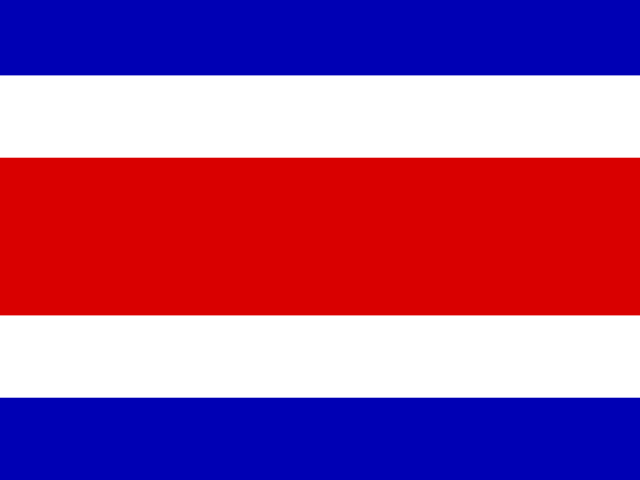
Costa Rica
About Costa Rica
This Costa Rica guide uses seven dated authority records. UNESCO records three World Heritage properties, the oxherding and boyeo tradition, and Chorotega ceramic knowledge. The Central Bank of Costa Rica and the National Institute of Statistics and Censuses publish economic and population material. Each lesson keeps its claim close to a named record.
Quick Facts
Capital
San José
Population
5,094,118
Region
North America · Central America
Currency
Costa Rican Colón (CRC)
Did You Know?
UNESCO inscribed Area de Conservacion Guanacaste in 1999 and extended the property in 2004.
UNESCO inscribed Cocos Island National Park in 1997 and the Diquis stone-sphere property in 2014.
UNESCO inscribed the oxherding and boyeo tradition in 2008 and Chorotega ceramic knowledge in 2022.
Famous Landmarks
Three World Heritage records
A dated lesson about three named World Heritage properties.
Cuisine
Food claims need food records
A source-awareness lesson that avoids inventing a recipe or national preference.
Music & Arts
Traditional Arts
Events & Festivals
Heritage and current plans
A lesson that separates a stable heritage record from a changing event plan.
Travel Phrases
Computer-generated pronunciation. Voice availability depends on the language; this is not a reviewed Omani recording.
Hola
oh-lah
Hello
Gracias
grah-see-ahs
Thank you
Lifestyle & Customs
Records and real conversations
A respectful lesson about the limits of country-level information.
Etiquette Tips
A country-level record can describe a place, a listed practice, or a statistic. It cannot tell you what one person prefers. Ask a clear question in conversation and listen to the answer.
Economy
Indicators and population material
A data-reading lesson about keeping a measure and reference period visible.