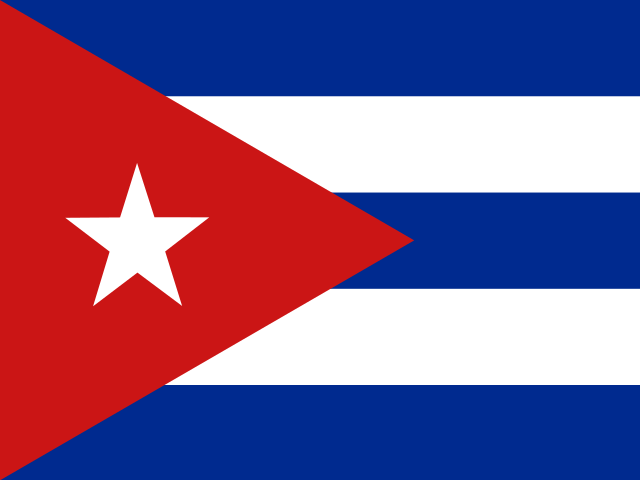
Cuba
About Cuba
Cuba is a country whose official language is Spanish, according to the CIA World Factbook summary dated October 2021. Havana is its capital. This guide uses a small set of checked UNESCO and CIA records to teach careful English through a heritage site, food-related knowledge, a festivity, a poetic practice, rumba, and a dated population estimate.
Quick Facts
Capital
Havana
Population
11,326,616
Region
North America · Caribbean
Currency
Cuban Peso (CUP)
Languages linked on SubLearn
This list shows linked languages, not every language spoken in the country.

Spanish
Español
Did You Know?
UNESCO inscribed Old Havana and its Fortification System on the World Heritage List in 1982.
UNESCO inscribed Punto, a Cuban poetic and musical practice, on its Representative List in 2017.
UNESCO lists nine World Heritage properties for Cuba, seven cultural and two natural.
Famous Landmarks
Old Havana and a dated record
A source-based lesson about a World Heritage property.
Cuisine
Light rum knowledge and source limits
A language lesson about a UNESCO-listed body of knowledge, not a recommendation to drink alcohol.
Music & Arts
Traditional Arts
Events & Festivals
Las Parrandas and a changing schedule
An event lesson that separates a heritage record from a current calendar.
Travel Phrases
Computer-generated pronunciation. Voice availability depends on the language; this is not a reviewed Omani recording.
Hola
oh-lah
Hello
Gracias
grah-see-ahs
Thank you
Lifestyle & Customs
Language and population labels
A data-literacy lesson using a dated CIA World Factbook summary.
Etiquette Tips
Spanish is listed as Cuba's official language in the CIA World Factbook summary dated October 2021. In a real conversation, listen first and ask which language a person prefers. A country-level fact does not decide every person's choice.
Economy
Reading a category total
A data-reading lesson using UNESCO's dated Cuba state-party listing.
Explore more countries in Caribbean

Learn Spanish to connect with Cuba
Start learning Spanish with videos, exercises, and AI-powered tools on SubLearn.
Start Learning