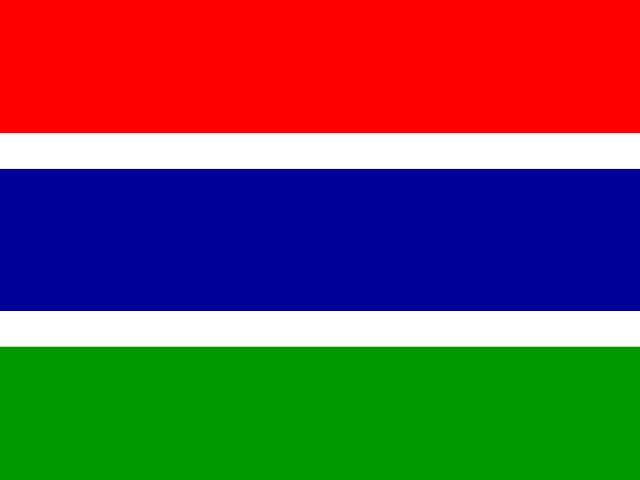
Gambia
About Gambia
The Gambia is introduced through dated UNESCO records and country pages from the World Bank and African Development Bank. Six themes teach source-aware English: heritage properties, a shared record, Kankurang, broad country context, data labels, and research from an official list. Each lesson keeps the source, claim, and date together.
Quick Facts
Capital
Banjul
Population
2,416,668
Region
Africa · Western Africa
Currency
Gambian Dalasi (GMD)
Languages linked on SubLearn
This list shows linked languages, not every language spoken in the country.

English
Did You Know?
UNESCO inscribed Kunta Kinteh Island and Related Sites in 2003.
UNESCO inscribed the Stone Circles of Senegambia in 2006.
UNESCO inscribed Kankurang, Manding initiation rite in 2008.
Famous Landmarks
Stone Circles of Senegambia
A lesson about a shared World Heritage property.
Cuisine
Kunta Kinteh Island and Related Sites
A source-bounded lesson about a listed property.
Music & Arts
Traditional Arts
Events & Festivals
Kankurang and source roles
A heritage lesson, not a current event schedule.
Travel Phrases
Computer-generated pronunciation. Voice availability depends on the language; this is not a reviewed Omani recording.
Hello
hello
Hello
Thank you
thank you
Thank you
Lifestyle & Customs
Country overviews and personal limits
A lesson about broad country context.
Etiquette Tips
A country record cannot tell you which language, greeting, or level of formality one person prefers. Begin politely, speak clearly, and listen to the person you meet.
Economy
Read a Gambia indicator carefully
A data-literacy lesson using the World Bank country data page.
Explore more countries in Western Africa


Learn English to connect with Gambia
Start learning English with videos, exercises, and AI-powered tools on SubLearn.
Start Learning