A1 · Beginner
Oman in numbers: people, land, and money
Key figures help explain daily life, geography, and work across the Sultanate of Oman.
Counting people and places
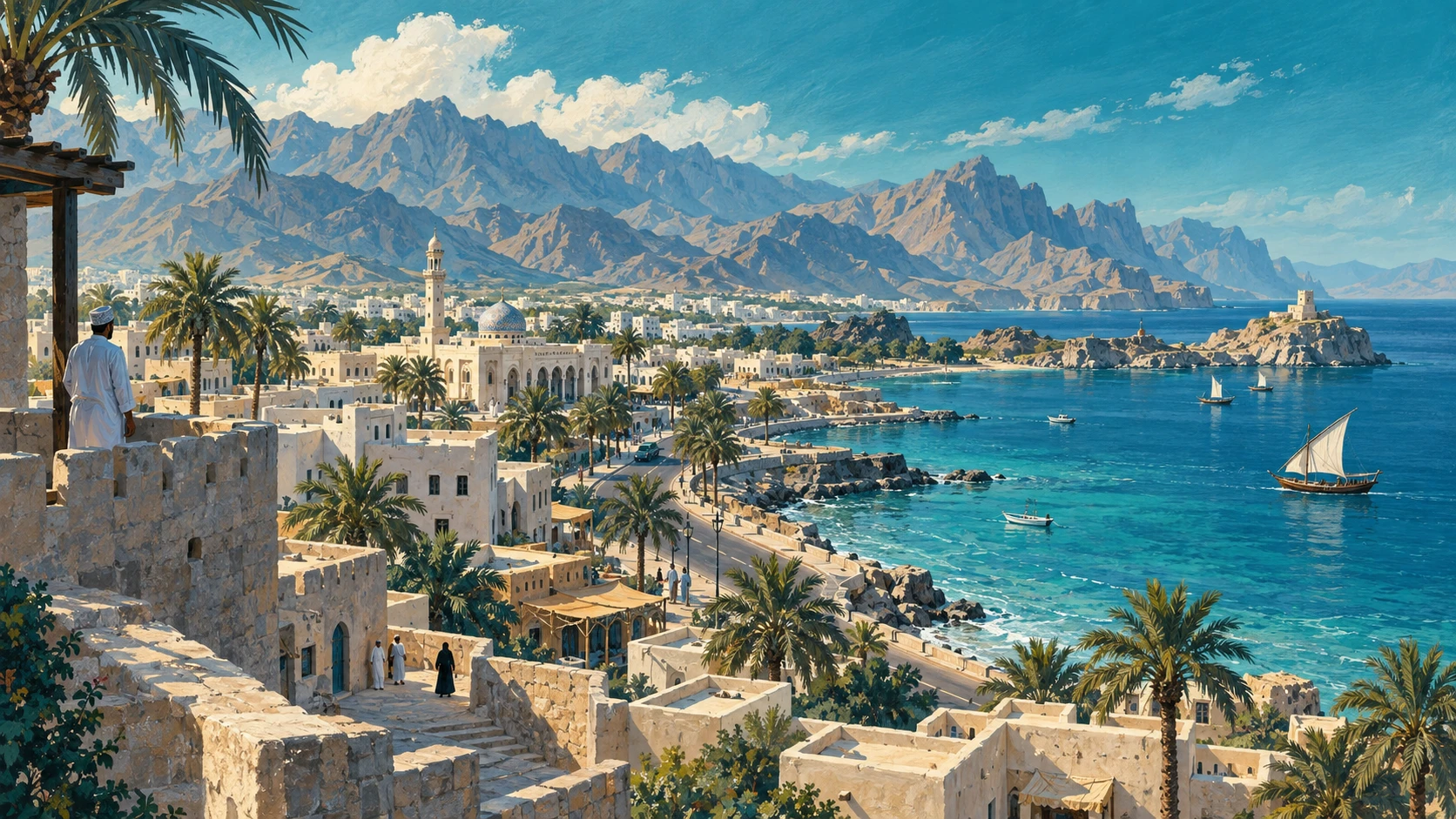
The Sultanate of Oman is located in the south-east of the Arabian Peninsula, and its capital city is Muscat. In 2024, the World Bank reported that Oman had a total population of 5,281,538 people. This count includes citizens born in the country and resident expatriate workers who help build roads, run hospitals, and staff local stores.
The National Centre for Statistics and Information collects these demographic numbers across every region. Counting everyone accurately helps public planners decide where new classrooms, water pipes, and medical clinics are needed most.
Measuring national production
Every country uses economic numbers to track what businesses make and sell. For the year 2024, the World Bank recorded Oman's gross domestic product at 107.14 billion current US dollars. Gross domestic product measures the total value of all goods and services produced within the country.
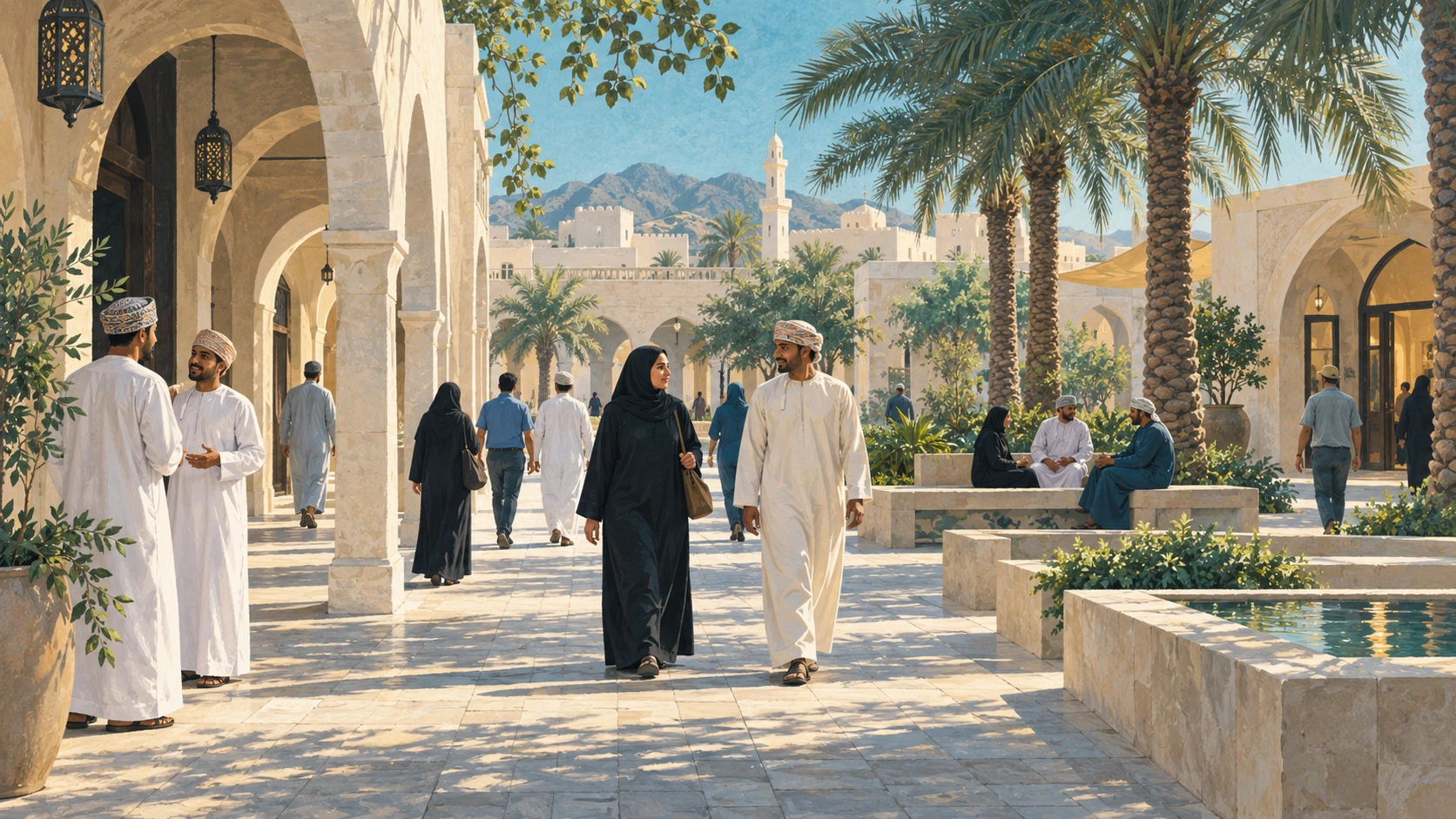
This headline total includes oil extraction, manufacturing in industrial parks, fishing along the coast, and everyday retail sales. The national currency is the Omani rial, which people use for daily transactions, and one rial is subdivided into one thousand baisas.
Distances and governorates
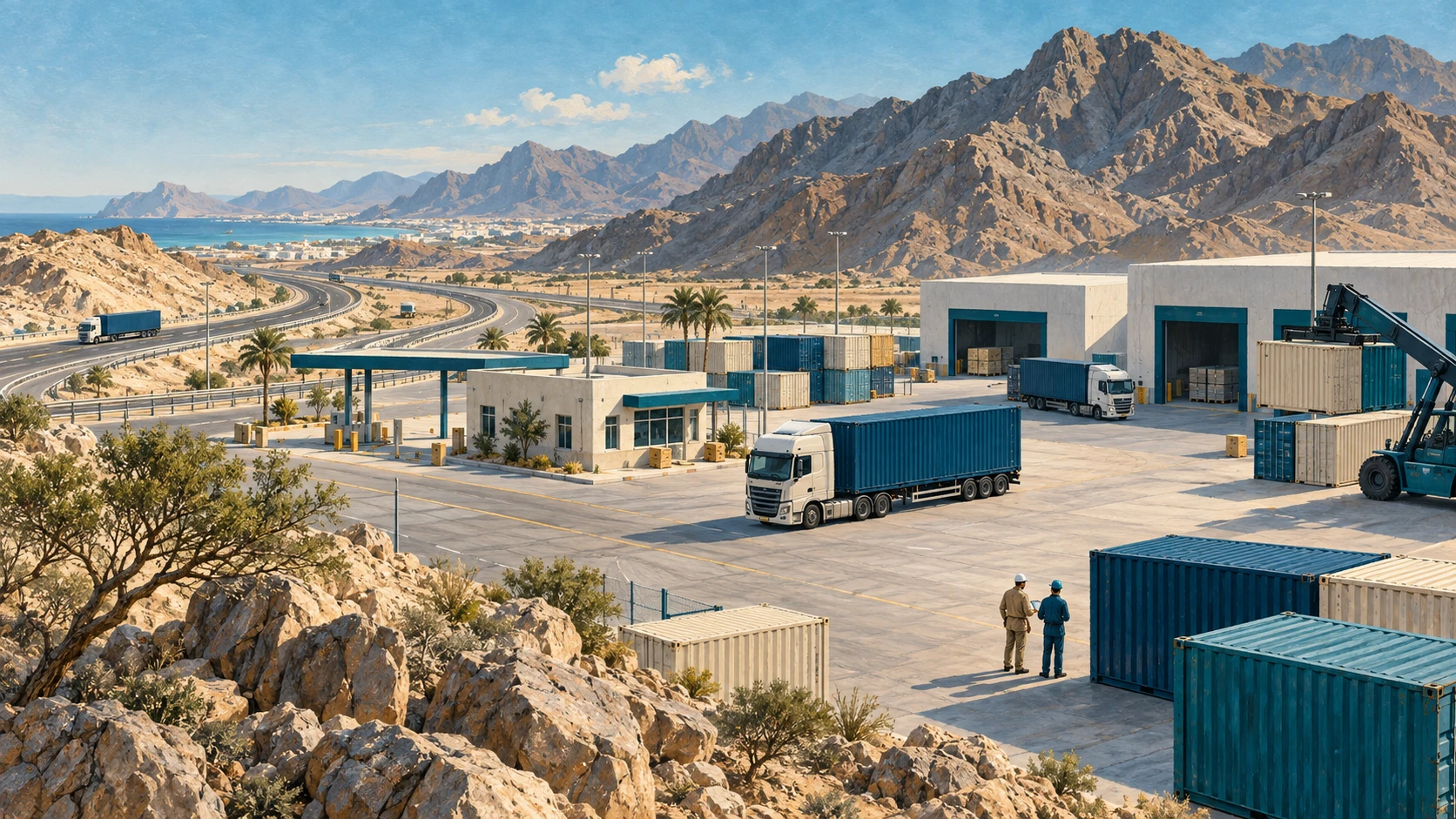
Oman encompasses an area of approximately 309,500 square kilometres. The country is organised into eleven administrative governorates that reach from Musandam in the north to Dhofar in the south.
Because the territory is wide, community needs vary from one district to another. Some residents live in dense coastal cities, while others live in mountain hamlets or near desert farms.
Reading numbers with care
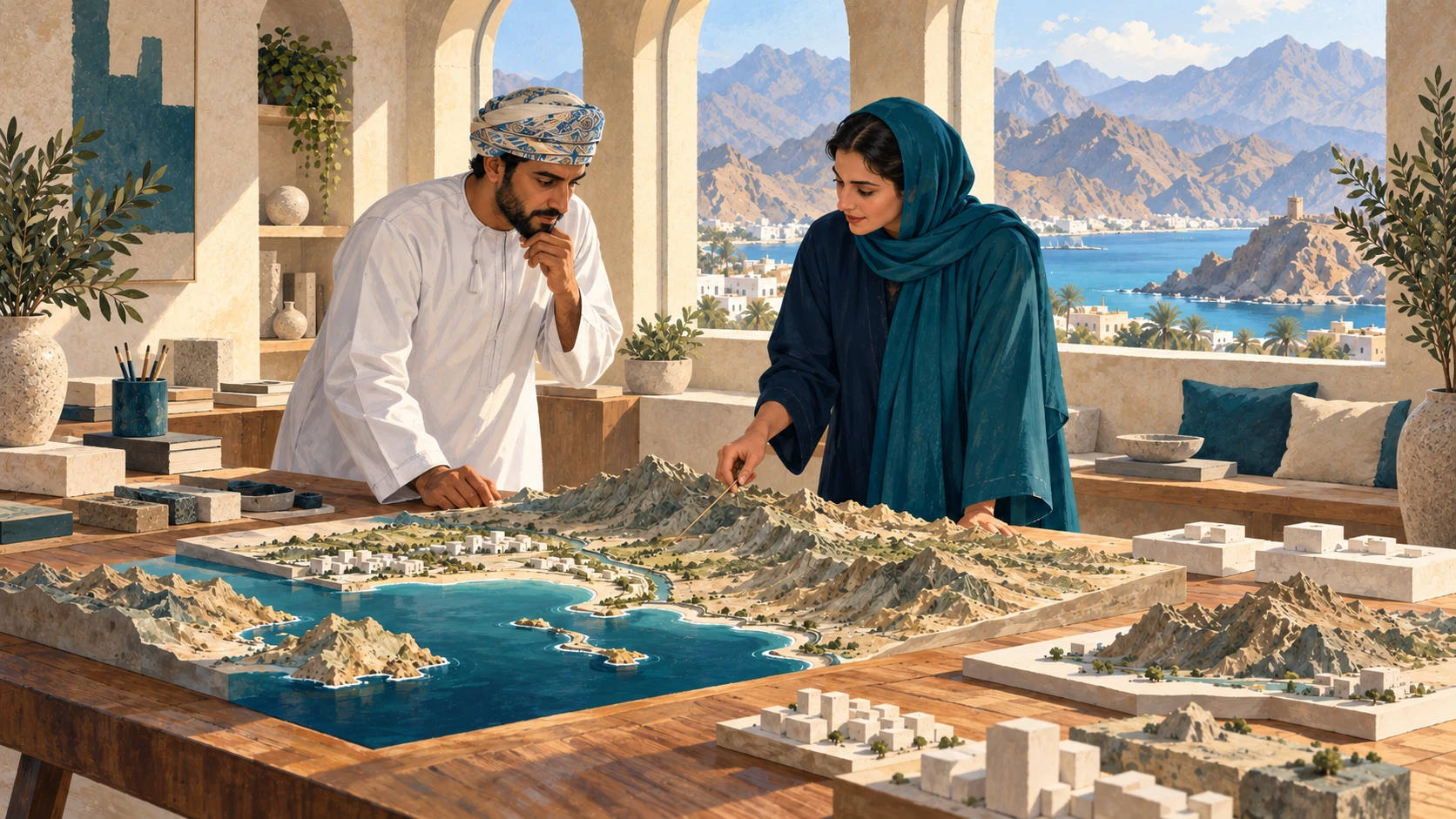
Large macroeconomic totals give a broad picture, but they cannot describe every family's daily budget. A national GDP number does not show whether an individual worker received a pay raise or what a household spent on groceries.
Accurate statistical reading requires checking the recording year and reporting agency for each figure. Numbers become useful when they are connected to real places and daily human work.
A2 · Elementary
Reading Oman through national records and economic facts
Official facts and economic indicators show how communities, trade, and public services operate across Oman.
Demographic counts across the sultanate
The Sultanate of Oman is an Arabian Peninsula nation whose administrative capital is Muscat. When the World Bank published its 2024 economic records, it reported Oman's total population at 5,281,538 people. This statistical total reflects two distinct demographic groups: Omani citizens and resident expatriate workers who contribute technical, commercial, and service skills across the economy.
Gathering demographic data is the official responsibility of the National Centre for Statistics and Information. The agency collects data from civil registries, local municipalities, and regional offices. Accurate headcounts allow government ministries to allocate financial budgets fairly and build infrastructure where communities are expanding rapidly.
Measuring production in current dollars
A nation's economic output is commonly summarised through gross domestic product. For 2024, World Bank indicators recorded Oman's gross domestic product at 107.14 billion current US dollars. Gross domestic product measures the aggregate market value of all finished goods and commercial services produced within the country during a twelve-month period.
Oman's production includes traditional fisheries, maritime transport, industrial manufacturing, and substantial energy extraction from oil and gas fields. Daily trade and commercial transactions within the country operate in Omani rials, with each rial subdivided into one thousand baisas to handle everyday consumer purchases.
Geography and regional governance
Oman encompasses an area of approximately 309,500 square kilometres. To administer this varied landscape effectively, the country is organised into eleven administrative governorates that span northern mountain ranges, central desert plains, and southern coastal hills.
Because geographic conditions vary widely between governorates, economic activities differ by region. Port towns handle international shipping, oasis communities cultivate dates, and urban centres focus on administration and commercial retail.
The limits of aggregate statistics
Headline statistics provide valuable macroeconomic overviews, but they cannot explain every aspect of household prosperity. A rising national GDP does not mean that every family enjoys higher savings or lower living costs. Macroeconomic totals measure collective production, not individual wealth distribution.
Careful analysis requires reading the year, source, and methodology behind every published indicator. When data literacy guides reading, statistical figures help people evaluate public policies and community investments with realistic expectations.
B1 · Intermediate
Mapping Oman's economy: population, trade, and national accounts
An overview of population records, production data, and public finance reveals how Oman measures economic progress.
Demographic accounting and workforce structure
The Sultanate of Oman occupies an expansive territory in the south-east of the Arabian Peninsula, governed from its administrative capital in Muscat. According to World Bank national accounts data for 2024, the country's resident population reached 5,281,538 people. In official statistical publications, this total is divided into two distinct components: Omani citizens and resident expatriate workers who participate across diverse economic sectors.
The statutory authority overseeing these records is the National Centre for Statistics and Information. By linking civil registry records with municipal administrative databases, the agency tracks population distribution across the country. Accurate demographic accounting ensures that regional allocations for schools, medical centres, and municipal utility networks reflect actual population changes.
Aggregate production and monetary stability
Macroeconomic monitoring relies heavily on gross domestic product to gauge the scale of national business activity. For 2024, the World Bank recorded Oman's gross domestic product at 107.14 billion current US dollars. Gross domestic product measures the aggregate market value of all final goods and commercial services produced within national boundaries over the course of a year.
While petroleum extraction and natural gas processing generate substantial revenue, non-oil sectors including maritime logistics, chemical manufacturing, and tourism have steadily expanded. Commercial transactions within the domestic market rely on the Omani rial, which divides into one thousand baisas. The Central Bank of Oman regulates commercial banks and manages monetary conditions to protect price stability across domestic markets.
Territorial scale and regional development
Oman encompasses an area of approximately 309,500 square kilometres, making geographic planning an essential aspect of national administration. The state is organised into eleven administrative governorates that range from Musandam on the Strait of Hormuz to Dhofar along the southern Arabian Sea coast.
Regional development strategies reflect the diverse natural geography of each governorate. Deep-water ports at Sohar, Duqm, and Salalah serve global shipping lanes, while interior governorates support mining operations, date palm agriculture, and desert energy installations.
Statistical limits and data literacy
Aggregate statistics are valuable tools for comparing national economies, but they do not measure individual household welfare. A headline GDP figure reflects total economic turnover rather than median family earnings, personal savings rates, or local price inflation. Macroeconomic totals measure collective production, not individual wealth distribution.
Critical statistical reading requires identifying the recording year, reporting agency, and measurement units before evaluating national performance. When readers understand the scope and boundaries of published indicators, economic statistics provide meaningful context for public policy discussions.
B2 · Upper Intermediate
The architecture of Omani data: demographics, currency, and economic output
Statistical agencies and central bank indicators provide a structured lens on workforce distribution and macroeconomic stability in Oman.
Demographic dynamics and workforce composition
Situated in the south-east of the Arabian Peninsula with its administrative capital in Muscat, the Sultanate of Oman maintains a distinctive demographic profile. Official 2024 indicators published by the World Bank establish a total resident population of 5,281,538 people. In national accounts compiled by the National Centre for Statistics and Information, this headcount reflects a structural division between Omani citizens and resident expatriate workers who occupy key technical, construction, and specialized commercial roles.
The statutory mandate of the National Centre for Statistics and Information encompasses gathering administrative registry data and conducting periodic demographic counts. Because workforce participation rates differ significantly between national citizens and expatriate personnel, public infrastructure planning, ranging from tertiary healthcare facilities to primary schools, depends on disaggregated demographic data rather than unexamined aggregate headcounts.
National output, trade specialization, and monetary policy
The primary metric for tracking sovereign economic scale is gross domestic product, recorded by the World Bank at 107.14 billion current US dollars for Oman in 2024. Gross domestic product measures the aggregate market value of all final goods and commercial services produced within national boundaries over a given fiscal year.
While petroleum extraction and liquefied natural gas processing continue to anchor fiscal receipts, non-hydrocarbon industries, including chemical refining, maritime logistics corridors, and tourism, have expanded their contribution to gross output. Domestic commerce is denominated in Omani rials, with each rial subdivided into one thousand baisas. The Central Bank of Oman manages the national monetary framework and maintains an established fixed exchange peg to the US dollar, providing currency predictability that anchors foreign investment and stabilizes import costs.
Territorial organization and regional economic hubs
Oman encompasses an area of approximately 309,500 square kilometres across the south-eastern Arabian Peninsula. To administer this varied topography, the sovereign state is organised into eleven administrative governorates, establishing regional governance that reaches from the Musandam enclave in the north to the subtropical coastal plains of Dhofar in the south.
Economic development varies intentionally across these administrative governorates according to geographic advantages. Deep-sea port complexes at Sohar, Duqm, and Salalah integrate the sultanate into global container freight and industrial manufacturing corridors, whereas interior governorates concentrate on regional economic specialization in mineral quarrying, dates agriculture, and solar energy installations.
Analytical constraints and fiscal indicators
While headline macroeconomic metrics are essential for sovereign credit ratings and comparative analysis, they do not measure microeconomic welfare. An expanding gross domestic product figure measures collective production, not individual wealth distribution. Aggregate expansion can coincide with uneven household income distribution or shifting living expenses that headline indicators obscure.
International monitoring bodies such as the International Monetary Fund examine fiscal balances, external debt trajectories, and non-hydrocarbon revenue growth alongside headline GDP to evaluate systemic resilience. Rigorous data literacy requires readers to verify recording dates, reporting methodologies, and institutional sources before treating aggregate numbers as definitive proof of everyday household prosperity.
C1 · Advanced
Statistical governance and macroeconomic accounting in the Sultanate of Oman
An analytical examination of demographic stratification, monetary frameworks, and the methodological limits of aggregate indicators.
Counting a divided population
Centred in the administrative capital of Muscat, the Sultanate of Oman occupies a commanding position in the south-east of the Arabian Peninsula. World Bank national accounts indicators for 2024 established Oman's total resident population at 5,281,538 individuals. The data architecture maintained by the National Centre for Statistics and Information splits this count into two distinct demographic cohorts: Omani citizens entitled to public welfare and state careers, and resident expatriate workers contracted across private-sector construction, services, and industrial plants.
Operating under its statutory charter, the National Centre for Statistics and Information merges civil registry updates, border entries, and commercial payroll files. Because daily spending habits and remittance outflows diverge sharply between citizen families and foreign worker households, government planners cannot rely on simple headcount totals when budgeting infrastructure outlays across the eleven governorates.
Measuring national output and currency stability
In 2024, the World Bank recorded Oman's gross domestic product at 107.14 billion current US dollars. That headline output reflects an extensive statistical compilation of private trade and state-directed enterprise across the Sultanate. Rather than tracking financial speculation, this aggregate figure captures tangible physical goods and paid commercial services delivered nationwide.
Heavy upstream hydrocarbon extraction continues to provide essential export earnings alongside growing petrochemical plants, metals smelters, port logistics, and desert tourism. In domestic trade, commercial contracts and daily purchases are denominated in the Omani rial, which divides into one thousand baisas. The Central Bank of Oman regulates commercial banks and manages domestic liquidity conditions, maintaining an established fixed exchange peg to the US dollar that mitigates currency risks for capital-intensive industrial ventures.
Spreading capital beyond the capital
Oman encompasses an area of approximately 309,500 square kilometres across the south-eastern Arabian Peninsula. To manage this rugged territory, the state is organised into eleven administrative governorates stretching from the northern Musandam enclave to the southern mountains of Dhofar.
Public capital expenditure has deliberately fostered regional industrial clusters to prevent excessive economic centralization in Muscat. Deep-water maritime facilities at Sohar, Duqm, and Salalah anchor export logistics corridors, while interior regions develop mineral quarries and irrigated commercial agriculture.
The limits of headline metrics
Despite their prominence in sovereign credit ratings, aggregate economic indicators carry real blind spots. Gross domestic product captures transaction velocity rather than household wealth distribution, environmental asset depreciation, or median living costs. An expanding headline figure can easily obscure substantial wage divergence between public-sector professionals and lower-tier private contractors.
Multilateral surveillance by the International Monetary Fund therefore evaluates structural resilience through fiscal balances, public debt-to-GDP ratios, and non-hydrocarbon revenue mobilisation. Clear-eyed reading requires scrutiny of reporting dates, price indices, and institutional boundaries before converting macroeconomic statistics into normative claims about everyday household well-being.
C2 · Mastery
Sovereign metrics and epistemological limits: macroeconomic accounting in Oman
A critical inquiry into demographic enumeration, national accounting mechanics, spatial decentralization, and fiscal surveillance.
The dual workforce of modern Oman
Centred in the capital city of Muscat, Oman presents a demographic profile shaped by decades of resource modernization and cross-border mobility. For 2024, the World Bank reported Oman's total population estimate at 5,281,538 people, showing steady growth across coastal plains and interior oases. Yet headline counts mask the defining structural fissure across the workforce: a sharp institutional dichotomy and workforce bifurcation separating sovereign citizens from foreign contract laborers.
The National Centre for Statistics and Information operates as the official national body that collects statistical data and conducts demographic counts in Oman. Through regular enumeration, official demographic records compiled in Oman distinguish between Omani citizens and resident expatriate workers, tracking separate patterns for tenure and consumer spending. By merging records from municipal registries and the Ministry of Labour, statisticians provide empirical baselines that prevent distorted per capita allocations in state budgets.
National output and monetary defenses
The World Bank recorded Oman's 2024 gross domestic product at 107.14 billion current US dollars, signaling sustained momentum following fiscal consolidation and industrial diversification. National statistical accounting combines production data from government agencies, public companies, and private enterprises across all governorates, synthesizing returns from oil extraction, factory manufacturing, transport, and private commerce into unified economic ledgers.
The national economy combines substantial income from oil and natural gas with ongoing growth in non-hydrocarbon sectors including logistics, tourism, and manufacturing. National monetary sovereignty centers on the Omani rial, which is divided into one thousand baisas. The Central Bank of Oman regulates commercial banks and manages monetary conditions to protect national financial stability. Crucially, Oman maintains an established fixed exchange peg between the Omani rial and the US dollar to support trade and investment predictability, insulating domestic commerce from speculative volatility in world currency markets.
Geography, governance, and the sea
Oman encompasses an area of approximately 309,500 square kilometres across its national territory, commanding a long coastline along the Arabian Sea, the Gulf of Oman, and the Strait of Hormuz. The country is organised into eleven administrative governorates that span coastal cities, mountainous interior districts, and desert regions, encompassing topographies that range from rocky northern peaks to the subtropical plains of Dhofar.
Rather than permitting unrestrained urbanization around Muscat, planners rely on decentralised investment into regional ports. Deep-water maritime logistics corridors at Sohar, Duqm, and Salalah establish vital export conduits that connect national enterprises directly with East African and Indian Ocean shipping lanes.
Reading past the headline figures
Headline economic indicators carry real epistemological boundaries. An aggregate macroeconomic measure such as total GDP describes national economic scale but does not describe household income distribution or personal living standards. Furthermore, gross output figures omit natural resource depreciation, unpaid community stewardship, and private wage compression, underscoring that a burgeoning national balance sheet does not guarantee broad prosperity.
International financial institutions assess economic stability through indicators such as debt-to-GDP ratios, fiscal surpluses, and international reserve assets. Continuous multilateral surveillance requires analysts to contextualize headline metrics within multi-year commodity cycles. Ultimately, accurate statistical reading requires identifying the recording year, reporting agency, and measurement unit rather than treating raw numbers as complete descriptions of daily life, enabling readers to distinguish verifiable evidence from political rhetoric.
Check your understanding
Choose how closely you want to revisit the article. You can refer back while answering, and review explanations when you finish.
Quick Quiz A1
Try one question, then create a free account for the full Quick Quiz. Sign Up Free
Answer every question before checking. There is no time limit.
Your results
/ 1 correct (%)
Read the explanations to see how each answer connects to the article.
-
What was Oman's total population reported by the World Bank for 2024?
1. Answer:
Quick Quiz A2
Try one question, then create a free account for the full Quick Quiz. Sign Up Free
Answer every question before checking. There is no time limit.
Your results
/ 1 correct (%)
Read the explanations to see how each answer connects to the article.
-
Which two demographic groups form Oman's total population in official records?
1. Answer:
Quick Quiz B1
Try one question, then create a free account for the full Quick Quiz. Sign Up Free
Answer every question before checking. There is no time limit.
Your results
/ 1 correct (%)
Read the explanations to see how each answer connects to the article.
-
What resident population figure did the World Bank record for Oman in 2024?
1. Answer:
Quick Quiz B2
Try one question, then create a free account for the full Quick Quiz. Sign Up Free
Answer every question before checking. There is no time limit.
Your results
/ 1 correct (%)
Read the explanations to see how each answer connects to the article.
-
What total resident population for Oman was established by the World Bank for 2024?
1. Answer:
Quick Quiz C1
Try one question, then create a free account for the full Quick Quiz. Sign Up Free
Answer every question before checking. There is no time limit.
Your results
/ 1 correct (%)
Read the explanations to see how each answer connects to the article.
-
What total resident population for Oman in 2024 was established by the World Bank?
1. Answer:
Quick Quiz C2
Try one question, then create a free account for the full Quick Quiz. Sign Up Free
Answer every question before checking. There is no time limit.
Your results
/ 1 correct (%)
Read the explanations to see how each answer connects to the article.
-
What total population estimate for Oman in 2024 was reported by the World Bank?
1. Answer:
