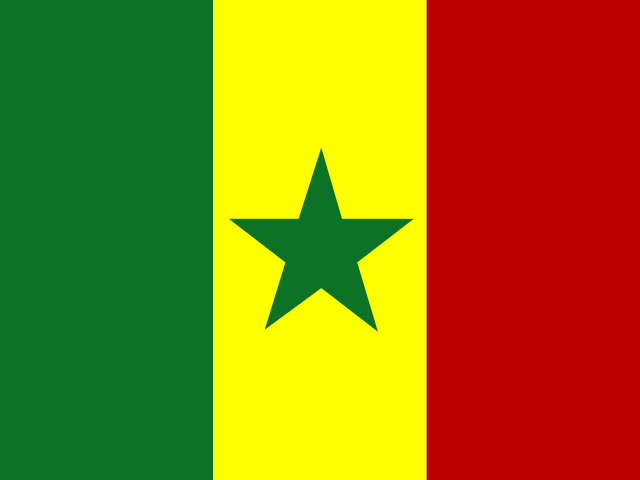
Sénégal
Senegal
About Senegal
Senegal is introduced through six dated records from UNESCO and the World Bank. The lessons use heritage, cultural-practice, place, and data vocabulary. They keep the source, claim, and date together, and they avoid turning a narrow record into a claim about every person.
Quick Facts
Capital
Dakar
Population
16,743,927
Region
Africa · Western Africa
Currency
West African CFA Franc (XOF)
Languages linked on SubLearn
This list shows linked languages, not every language spoken in the country.

French
Français
Did You Know?
UNESCO inscribed the Island of Gorée on the World Heritage List in 1978.
Djoudj National Bird Sanctuary joined the World Heritage List in 1981.
UNESCO inscribed ceebu jën knowledge, know-how, and practices in 2021.
Famous Landmarks
The Island of Gorée
A lesson about a dated World Heritage record.
Cuisine
Ceebu jën and careful food language
A source-bounded lesson about a UNESCO inscription.
Music & Arts
Traditional Arts
Events & Festivals
Kankurang and shared records
A lesson about an inscription, not a current event schedule.
Travel Phrases
Computer-generated pronunciation. Voice availability depends on the language; this is not a reviewed Omani recording.
Hello
hello
Hello
Thank you
thank you
Thank you
Lifestyle & Customs
Bassari Country and local scope
A lesson about a listed cultural area.
Etiquette Tips
A country record cannot tell you which language, greeting, or level of formality one person prefers. Begin politely, speak clearly, and listen to the person you meet.
Economy
Read a country indicator carefully
A data-literacy lesson using the World Bank country page.
Explore more countries in Western Africa


Learn French to connect with Senegal
Start learning French with videos, exercises, and AI-powered tools on SubLearn.
Start Learning