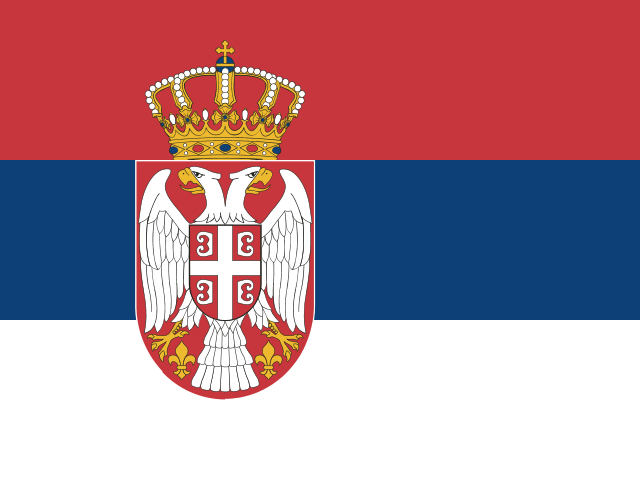
Србија
Serbia
About Serbia
Serbia has a wide cultural record, but this English learning bundle makes only six small, dated source claims. It uses a family-saint-day record, a World Heritage property, a folk-dance entry, a musical-practice entry, a government overview, and a statistical-office topic. Each lesson teaches learners how to name evidence, keep a claim within its source, and distinguish a stable record from a current plan.
Quick Facts
Capital
Belgrade
Population
8,737,371
Region
Europe · Southern Europe
Currency
Serbian Dinar (RSD)
Did You Know?
UNESCO inscribed Studenica Monastery on the World Heritage List in 1986.
UNESCO has a Representative List entry for Kolo, traditional folk dance.
The Statistical Office of the Republic of Serbia publishes a population-estimates topic.
Famous Landmarks
Studenica Monastery and an inscription year
A World Heritage lesson that keeps the 1986 date with the UNESCO record.
Cuisine
A ritual meal in a source record
A source-limited lesson about the ritual meal named in UNESCO’s Slava entry.
Events & Festivals
A named musical practice
A lesson that reads the title of UNESCO’s Trumpet playing in Eastern Serbia entry carefully.
Travel Phrases
Computer-generated pronunciation. Voice availability depends on the language; this is not a reviewed Omani recording.
Zdravo
ZDRAH-voh
Hello
Hvala
HVAA-lah
Thank you
Lifestyle & Customs
Language and script in a government overview
A lesson that keeps an official-language claim separate from personal assumptions.
Etiquette Tips
A country record can describe a language or tradition, but it cannot tell you what an individual prefers. Use a respectful question when a personal choice matters.
Economy
Population estimates need labels
A data-literacy lesson about the Statistical Office population-estimates topic.