A1 · Beginner
Agriculture Statistics 2025: Examining Albania's Crop Tables
National agricultural tables record crop hectares and harvest aggregates while regional olive groves and milling lines reveal supply-chain realities.
National Agricultural Aggregates and Crop Statistics
INSTAT Agriculture Statistics 2025 records national crop production, planted surface areas, and livestock numbers. Aggregate statistical tables group field crops, fruit trees, vineyards, and olive groves into broad macroeconomic categories.
National statistical publications provide structural agricultural aggregates rather than individual farm case studies. Deciding which crop to focus on requires examining specific crop tables rather than assuming a single national commodity.
Table metrics report surface area in hectares and total harvest output in metric tons. National surveys capture total output trends across Albania without evaluating farm-level operating margins.

Survey Methodology and Statistical Units
Methodological notes in the INSTAT release define farm survey sampling frames and administrative data integration. Statistical units must be carefully documented to distinguish green olive harvest from extracted olive oil yields.
Regional data breakdown by prefecture highlights geographic concentration in Fier, Berat, and Vlore. Annual publication updates include retrospective revisions based on administrative agricultural registers.
Data collection protocols rely on municipal agricultural directorate reports paired with sample farm interviews. Rigorous economic reporting requires logging the release date, metadata edition, and survey limitations.
Territorial Distribution of Tree Plantings
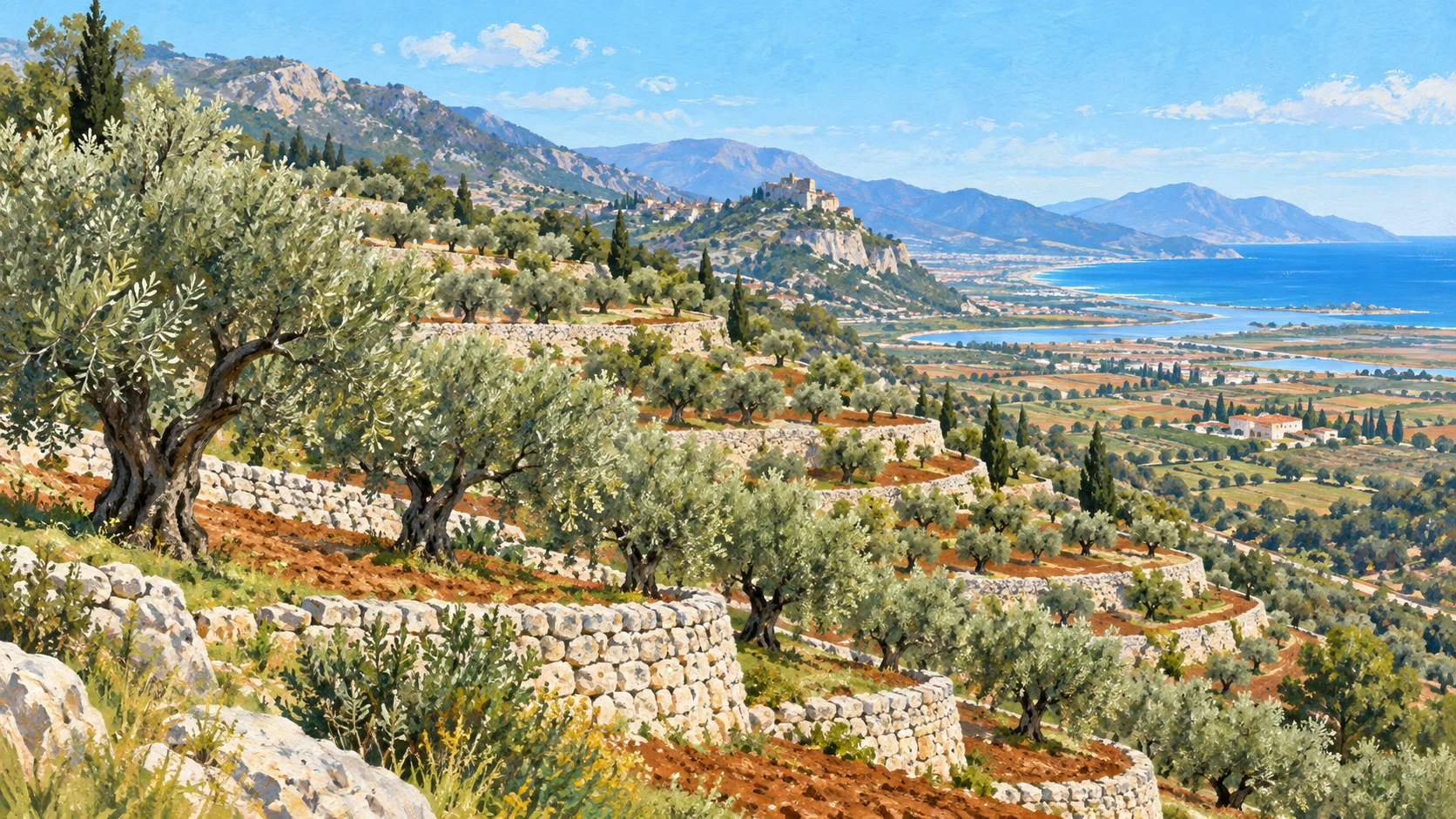
INSTAT prefectural tables demonstrate that olive cultivation is concentrated in the hilly coastal belts of Vlore, Berat, and Fier. The Mallakaster hills and Vlore coastal terrace account for a dominant share of national olive tree plantings.
Selecting a specific producing district requires empirical verification that local hectare counts align with national tables. Dispersed inland prefectures like Diber and Kukes report negligible olive acreage, focusing instead on apples and forage crops.
Geographic alignment ensures that regional case studies represent verified production hubs rather than arbitrary locations. Prefectural output data ground supply-chain reporting in verified territorial geography.

Post-Harvest Milling and Quality Classification
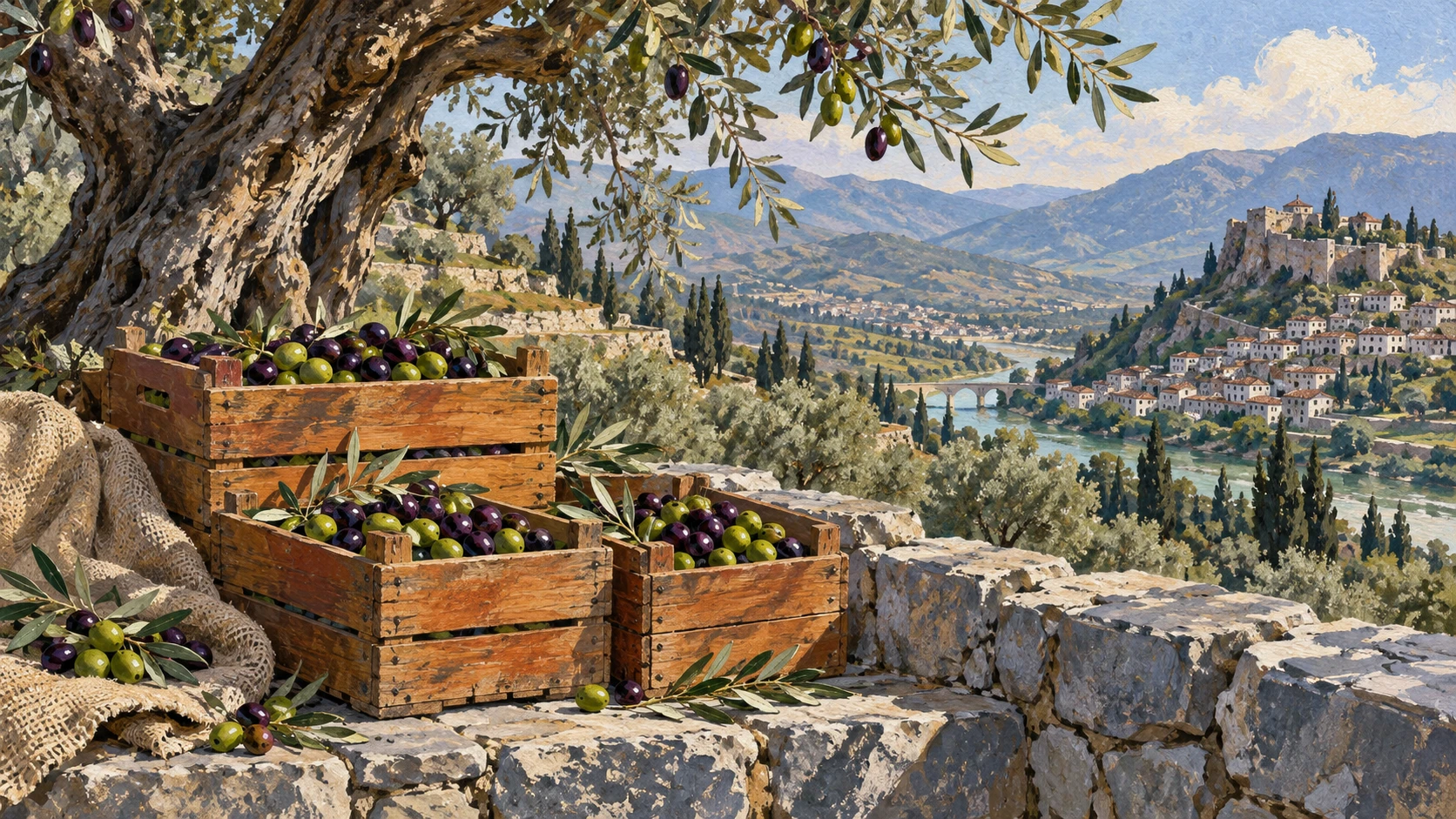
Cold-press olive oil mills in the Vlore and Berat regions operate during the intense November-December pressing season. Processors such as licensed regional agro-processing cooperatives register seasonal intake weights and oil acidity levels.
Field interviews with licensed olive mill operators trace raw drupe delivery from smallholder orchards to centrifugal extraction lines. Quality classification separates extra virgin olive oil from standard virgin grades based on chemical acidity laboratory testing.
Documenting named processing facilities provides concrete operational evidence of post-harvest handling. Supply-chain transparency links farm-gate harvesting to bottling lines and domestic commercial distribution.
Horticultural Limits and Market Realities
Landing page summary bulletins omit detailed labor market statistics, seasonal wage rates, and spot market olive prices. High national tree counts do not directly indicate high yields per tree due to biennial bearing cycles in olive horticulture.
Seasonal labor shortages during winter harvesting cannot be deduced from aggregate annual output tables. Wholesale and retail price dynamics depend on consumer market monitoring rather than farm production statistics.
Ministry of Agriculture subsidy registries reveal formal investment trends that aggregate harvest figures do not show. Responsible economic analysis distinguishes primary production volumes from farm-level profitability and employment realities.
Institutional Harmonization and Archival Evidence
Ministry of Agriculture and Rural Development annual reports corroborate INSTAT statistical releases. Food and Agriculture Organization country profiles maintain standardized time series on Albanian olive oil production.
Retaining primary INSTAT table excerpts and processor delivery receipts enables independent fact-checking and audit. Archiving methodological definitions ensures transparency in comparative year-on-year agricultural reporting.
Cross-referencing national statistics with regional cooperative ledgers provides a verifiable evidentiary foundation. Empirical documentation protects economic journalism from misleading extrapolation and anecdotal bias.
A2 · Elementary
Agriculture Statistics 2025: Examining Albania's Crop Tables
National agricultural tables record crop hectares and harvest aggregates while regional olive groves and milling lines reveal supply-chain realities.
National Agricultural Aggregates and Crop Statistics
INSTAT Agriculture Statistics 2025 records national crop production, planted surface areas, and livestock numbers. Aggregate statistical tables group field crops, fruit trees, vineyards, and olive groves into broad macroeconomic categories.
National statistical publications provide structural agricultural aggregates rather than individual farm case studies. Deciding which crop to focus on requires examining specific crop tables rather than assuming a single national commodity.
Table metrics report surface area in hectares and total harvest output in metric tons. National surveys capture total output trends across Albania without evaluating farm-level operating margins.
Survey Methodology and Statistical Units
Methodological notes in the INSTAT release define farm survey sampling frames and administrative data integration. Statistical units must be carefully documented to distinguish green olive harvest from extracted olive oil yields.
Regional data breakdown by prefecture highlights geographic concentration in Fier, Berat, and Vlore. Annual publication updates include retrospective revisions based on administrative agricultural registers.
Data collection protocols rely on municipal agricultural directorate reports paired with sample farm interviews. Rigorous economic reporting requires logging the release date, metadata edition, and survey limitations.
Territorial Distribution of Tree Plantings
INSTAT prefectural tables demonstrate that olive cultivation is concentrated in the hilly coastal belts of Vlore, Berat, and Fier. The Mallakaster hills and Vlore coastal terrace account for a dominant share of national olive tree plantings.
Selecting a specific producing district requires empirical verification that local hectare counts align with national tables. Dispersed inland prefectures like Diber and Kukes report negligible olive acreage, focusing instead on apples and forage crops.
Geographic alignment ensures that regional case studies represent verified production hubs rather than arbitrary locations. Prefectural output data ground supply-chain reporting in verified territorial geography.
Post-Harvest Milling and Quality Classification
Cold-press olive oil mills in the Vlore and Berat regions operate during the intense November-December pressing season. Processors such as licensed regional agro-processing cooperatives register seasonal intake weights and oil acidity levels.
Field interviews with licensed olive mill operators trace raw drupe delivery from smallholder orchards to centrifugal extraction lines. Quality classification separates extra virgin olive oil from standard virgin grades based on chemical acidity laboratory testing.
Documenting named processing facilities provides concrete operational evidence of post-harvest handling. Supply-chain transparency links farm-gate harvesting to bottling lines and domestic commercial distribution.
Horticultural Limits and Market Realities
Landing page summary bulletins omit detailed labor market statistics, seasonal wage rates, and spot market olive prices. High national tree counts do not directly indicate high yields per tree due to biennial bearing cycles in olive horticulture.
Seasonal labor shortages during winter harvesting cannot be deduced from aggregate annual output tables. Wholesale and retail price dynamics depend on consumer market monitoring rather than farm production statistics.
Ministry of Agriculture subsidy registries reveal formal investment trends that aggregate harvest figures do not show. Responsible economic analysis distinguishes primary production volumes from farm-level profitability and employment realities.
Institutional Harmonization and Archival Evidence
Ministry of Agriculture and Rural Development annual reports corroborate INSTAT statistical releases. Food and Agriculture Organization country profiles maintain standardized time series on Albanian olive oil production.
Retaining primary INSTAT table excerpts and processor delivery receipts enables independent fact-checking and audit. Archiving methodological definitions ensures transparency in comparative year-on-year agricultural reporting.
Cross-referencing national statistics with regional cooperative ledgers provides a verifiable evidentiary foundation. Empirical documentation protects economic journalism from misleading extrapolation and anecdotal bias.
B1 · Intermediate
Albania Agriculture Statistics 2025: From Aggregate Tables to Olive Mills
Statistical surveys document national crop hectarage while southern olive terraces and centrifugal mills illustrate regional agro-processing realities.
National Agricultural Aggregates and Crop Statistics
INSTAT Agriculture Statistics 2025 records national crop production, planted surface areas, and livestock numbers. Aggregate statistical tables group field crops, fruit trees, vineyards, and olive groves into broad macroeconomic categories.
National statistical publications provide structural agricultural aggregates rather than individual farm case studies. Deciding which crop to focus on requires examining specific crop tables rather than assuming a single national commodity.
Table metrics report surface area in hectares and total harvest output in metric tons. National surveys capture total output trends across Albania without evaluating farm-level operating margins.
Survey Methodology and Statistical Units
Methodological notes in the INSTAT release define farm survey sampling frames and administrative data integration. Statistical units must be carefully documented to distinguish green olive harvest from extracted olive oil yields.
Regional data breakdown by prefecture highlights geographic concentration in Fier, Berat, and Vlore. Annual publication updates include retrospective revisions based on administrative agricultural registers.
Data collection protocols rely on municipal agricultural directorate reports paired with sample farm interviews. Rigorous economic reporting requires logging the release date, metadata edition, and survey limitations.
Territorial Distribution of Tree Plantings
INSTAT prefectural tables demonstrate that olive cultivation is concentrated in the hilly coastal belts of Vlore, Berat, and Fier. The Mallakaster hills and Vlore coastal terrace account for a dominant share of national olive tree plantings.
Selecting a specific producing district requires empirical verification that local hectare counts align with national tables. Dispersed inland prefectures like Diber and Kukes report negligible olive acreage, focusing instead on apples and forage crops.
Geographic alignment ensures that regional case studies represent verified production hubs rather than arbitrary locations. Prefectural output data ground supply-chain reporting in verified territorial geography.
Post-Harvest Milling and Quality Classification
Cold-press olive oil mills in the Vlore and Berat regions operate during the intense November-December pressing season. Processors such as licensed regional agro-processing cooperatives register seasonal intake weights and oil acidity levels.
Field interviews with licensed olive mill operators trace raw drupe delivery from smallholder orchards to centrifugal extraction lines. Quality classification separates extra virgin olive oil from standard virgin grades based on chemical acidity laboratory testing.
Documenting named processing facilities provides concrete operational evidence of post-harvest handling. Supply-chain transparency links farm-gate harvesting to bottling lines and domestic commercial distribution.
Horticultural Limits and Market Realities
Landing page summary bulletins omit detailed labor market statistics, seasonal wage rates, and spot market olive prices. High national tree counts do not directly indicate high yields per tree due to biennial bearing cycles in olive horticulture.
Seasonal labor shortages during winter harvesting cannot be deduced from aggregate annual output tables. Wholesale and retail price dynamics depend on consumer market monitoring rather than farm production statistics.
Ministry of Agriculture subsidy registries reveal formal investment trends that aggregate harvest figures do not show. Responsible economic analysis distinguishes primary production volumes from farm-level profitability and employment realities.
Institutional Harmonization and Archival Evidence
Ministry of Agriculture and Rural Development annual reports corroborate INSTAT statistical releases. Food and Agriculture Organization country profiles maintain standardized time series on Albanian olive oil production.
Retaining primary INSTAT table excerpts and processor delivery receipts enables independent fact-checking and audit. Archiving methodological definitions ensures transparency in comparative year-on-year agricultural reporting.
Cross-referencing national statistics with regional cooperative ledgers provides a verifiable evidentiary foundation. Empirical documentation protects economic journalism from misleading extrapolation and anecdotal bias.
B2 · Upper Intermediate
Reading Albania's Agriculture Statistics 2025: Crop Tables, Olive Terraces, and Milling Economics
Macroeconomic agricultural data reveals national crop aggregates while prefectural olive groves and cooperative extraction lines demonstrate the post-harvest supply chain.
National Agricultural Aggregates and Crop Statistics
INSTAT Agriculture Statistics 2025 records national crop production, planted surface areas, and livestock numbers. Aggregate statistical tables group field crops, fruit trees, vineyards, and olive groves into broad macroeconomic categories.
National statistical publications provide structural agricultural aggregates rather than individual farm case studies. Deciding which crop to focus on requires examining specific crop tables rather than assuming a single national commodity.
Table metrics report surface area in hectares and total harvest output in metric tons. National surveys capture total output trends across Albania without evaluating farm-level operating margins.
Survey Methodology and Statistical Units
Methodological notes in the INSTAT release define farm survey sampling frames and administrative data integration. Statistical units must be carefully documented to distinguish green olive harvest from extracted olive oil yields.
Regional data breakdown by prefecture highlights geographic concentration in Fier, Berat, and Vlore. Annual publication updates include retrospective revisions based on administrative agricultural registers.
Data collection protocols rely on municipal agricultural directorate reports paired with sample farm interviews. Rigorous economic reporting requires logging the release date, metadata edition, and survey limitations.
Territorial Distribution of Tree Plantings
INSTAT prefectural tables demonstrate that olive cultivation is concentrated in the hilly coastal belts of Vlore, Berat, and Fier. The Mallakaster hills and Vlore coastal terrace account for a dominant share of national olive tree plantings.
Selecting a specific producing district requires empirical verification that local hectare counts align with national tables. Dispersed inland prefectures like Diber and Kukes report negligible olive acreage, focusing instead on apples and forage crops.
Geographic alignment ensures that regional case studies represent verified production hubs rather than arbitrary locations. Prefectural output data ground supply-chain reporting in verified territorial geography.
Post-Harvest Milling and Quality Classification
Cold-press olive oil mills in the Vlore and Berat regions operate during the intense November-December pressing season. Processors such as licensed regional agro-processing cooperatives register seasonal intake weights and oil acidity levels.
Field interviews with licensed olive mill operators trace raw drupe delivery from smallholder orchards to centrifugal extraction lines. Quality classification separates extra virgin olive oil from standard virgin grades based on chemical acidity laboratory testing.
Documenting named processing facilities provides concrete operational evidence of post-harvest handling. Supply-chain transparency links farm-gate harvesting to bottling lines and domestic commercial distribution.
Horticultural Limits and Market Realities
Landing page summary bulletins omit detailed labor market statistics, seasonal wage rates, and spot market olive prices. High national tree counts do not directly indicate high yields per tree due to biennial bearing cycles in olive horticulture.
Seasonal labor shortages during winter harvesting cannot be deduced from aggregate annual output tables. Wholesale and retail price dynamics depend on consumer market monitoring rather than farm production statistics.
Ministry of Agriculture subsidy registries reveal formal investment trends that aggregate harvest figures do not show. Responsible economic analysis distinguishes primary production volumes from farm-level profitability and employment realities.
Institutional Harmonization and Archival Evidence
Ministry of Agriculture and Rural Development annual reports corroborate INSTAT statistical releases. Food and Agriculture Organization country profiles maintain standardized time series on Albanian olive oil production.
Retaining primary INSTAT table excerpts and processor delivery receipts enables independent fact-checking and audit. Archiving methodological definitions ensures transparency in comparative year-on-year agricultural reporting.
Cross-referencing national statistics with regional cooperative ledgers provides a verifiable evidentiary foundation. Empirical documentation protects economic journalism from misleading extrapolation and anecdotal bias.
C1 · Advanced
Agrarian Statistics and Supply-Chain Realities: Albania's 2025 Crop Census in Focus
National crop surveys and prefectural tables outline macroeconomic agricultural output while southern olive milling corridors ground the data in operational reality.
National Agricultural Aggregates and Crop Statistics
INSTAT Agriculture Statistics 2025 records national crop production, planted surface areas, and livestock numbers. Aggregate statistical tables group field crops, fruit trees, vineyards, and olive groves into broad macroeconomic categories.
National statistical publications provide structural agricultural aggregates rather than individual farm case studies. Deciding which crop to focus on requires examining specific crop tables rather than assuming a single national commodity.
Table metrics report surface area in hectares and total harvest output in metric tons. National surveys capture total output trends across Albania without evaluating farm-level operating margins.
Survey Methodology and Statistical Units
Methodological notes in the INSTAT release define farm survey sampling frames and administrative data integration. Statistical units must be carefully documented to distinguish green olive harvest from extracted olive oil yields.
Regional data breakdown by prefecture highlights geographic concentration in Fier, Berat, and Vlore. Annual publication updates include retrospective revisions based on administrative agricultural registers.
Data collection protocols rely on municipal agricultural directorate reports paired with sample farm interviews. Rigorous economic reporting requires logging the release date, metadata edition, and survey limitations.
Territorial Distribution of Tree Plantings
INSTAT prefectural tables demonstrate that olive cultivation is concentrated in the hilly coastal belts of Vlore, Berat, and Fier. The Mallakaster hills and Vlore coastal terrace account for a dominant share of national olive tree plantings.
Selecting a specific producing district requires empirical verification that local hectare counts align with national tables. Dispersed inland prefectures like Diber and Kukes report negligible olive acreage, focusing instead on apples and forage crops.
Geographic alignment ensures that regional case studies represent verified production hubs rather than arbitrary locations. Prefectural output data ground supply-chain reporting in verified territorial geography.
Post-Harvest Milling and Quality Classification
Cold-press olive oil mills in the Vlore and Berat regions operate during the intense November-December pressing season. Processors such as licensed regional agro-processing cooperatives register seasonal intake weights and oil acidity levels.
Field interviews with licensed olive mill operators trace raw drupe delivery from smallholder orchards to centrifugal extraction lines. Quality classification separates extra virgin olive oil from standard virgin grades based on chemical acidity laboratory testing.
Documenting named processing facilities provides concrete operational evidence of post-harvest handling. Supply-chain transparency links farm-gate harvesting to bottling lines and domestic commercial distribution.
Horticultural Limits and Market Realities
Landing page summary bulletins omit detailed labor market statistics, seasonal wage rates, and spot market olive prices. High national tree counts do not directly indicate high yields per tree due to biennial bearing cycles in olive horticulture.
Seasonal labor shortages during winter harvesting cannot be deduced from aggregate annual output tables. Wholesale and retail price dynamics depend on consumer market monitoring rather than farm production statistics.
Ministry of Agriculture subsidy registries reveal formal investment trends that aggregate harvest figures do not show. Responsible economic analysis distinguishes primary production volumes from farm-level profitability and employment realities.
Institutional Harmonization and Archival Evidence
Ministry of Agriculture and Rural Development annual reports corroborate INSTAT statistical releases. Food and Agriculture Organization country profiles maintain standardized time series on Albanian olive oil production.
Retaining primary INSTAT table excerpts and processor delivery receipts enables independent fact-checking and audit. Archiving methodological definitions ensures transparency in comparative year-on-year agricultural reporting.
Cross-referencing national statistics with regional cooperative ledgers provides a verifiable evidentiary foundation. Empirical documentation protects economic journalism from misleading extrapolation and anecdotal bias.
C2 · Mastery
Macroeconomic Aggregates and Agro-Industrial Realities: Evaluating Albania's Agriculture Statistics 2025
An empirical analysis of national crop hectarage and production tables, connecting macroeconomic survey metrics with southern olive groves and centrifugal extraction lines.
National Agricultural Aggregates and Crop Statistics
INSTAT Agriculture Statistics 2025 records national crop production, planted surface areas, and livestock numbers. Aggregate statistical tables group field crops, fruit trees, vineyards, and olive groves into broad macroeconomic categories.
National statistical publications provide structural agricultural aggregates rather than individual farm case studies. Deciding which crop to focus on requires examining specific crop tables rather than assuming a single national commodity.
Table metrics report surface area in hectares and total harvest output in metric tons. National surveys capture total output trends across Albania without evaluating farm-level operating margins.
Survey Methodology and Statistical Units
Methodological notes in the INSTAT release define farm survey sampling frames and administrative data integration. Statistical units must be carefully documented to distinguish green olive harvest from extracted olive oil yields.
Regional data breakdown by prefecture highlights geographic concentration in Fier, Berat, and Vlore. Annual publication updates include retrospective revisions based on administrative agricultural registers.
Data collection protocols rely on municipal agricultural directorate reports paired with sample farm interviews. Rigorous economic reporting requires logging the release date, metadata edition, and survey limitations.
Territorial Distribution of Tree Plantings
INSTAT prefectural tables demonstrate that olive cultivation is concentrated in the hilly coastal belts of Vlore, Berat, and Fier. The Mallakaster hills and Vlore coastal terrace account for a dominant share of national olive tree plantings.
Selecting a specific producing district requires empirical verification that local hectare counts align with national tables. Dispersed inland prefectures like Diber and Kukes report negligible olive acreage, focusing instead on apples and forage crops.
Geographic alignment ensures that regional case studies represent verified production hubs rather than arbitrary locations. Prefectural output data ground supply-chain reporting in verified territorial geography.
Post-Harvest Milling and Quality Classification
Cold-press olive oil mills in the Vlore and Berat regions operate during the intense November-December pressing season. Processors such as licensed regional agro-processing cooperatives register seasonal intake weights and oil acidity levels.
Field interviews with licensed olive mill operators trace raw drupe delivery from smallholder orchards to centrifugal extraction lines. Quality classification separates extra virgin olive oil from standard virgin grades based on chemical acidity laboratory testing.
Documenting named processing facilities provides concrete operational evidence of post-harvest handling. Supply-chain transparency links farm-gate harvesting to bottling lines and domestic commercial distribution.
Horticultural Limits and Market Realities
Landing page summary bulletins omit detailed labor market statistics, seasonal wage rates, and spot market olive prices. High national tree counts do not directly indicate high yields per tree due to biennial bearing cycles in olive horticulture.
Seasonal labor shortages during winter harvesting cannot be deduced from aggregate annual output tables. Wholesale and retail price dynamics depend on consumer market monitoring rather than farm production statistics.
Ministry of Agriculture subsidy registries reveal formal investment trends that aggregate harvest figures do not show. Responsible economic analysis distinguishes primary production volumes from farm-level profitability and employment realities.
Institutional Harmonization and Archival Evidence
Ministry of Agriculture and Rural Development annual reports corroborate INSTAT statistical releases. Food and Agriculture Organization country profiles maintain standardized time series on Albanian olive oil production.
Retaining primary INSTAT table excerpts and processor delivery receipts enables independent fact-checking and audit. Archiving methodological definitions ensures transparency in comparative year-on-year agricultural reporting.
Cross-referencing national statistics with regional cooperative ledgers provides a verifiable evidentiary foundation. Empirical documentation protects economic journalism from misleading extrapolation and anecdotal bias.
Check your understanding
Choose how closely you want to revisit the article. You can refer back while answering, and review explanations when you finish.
Quick Quiz A1
Try one question, then create a free account for the full Quick Quiz. Sign Up Free
Answer every question before checking. There is no time limit.
Your results
/ 1 correct (%)
Read the explanations to see how each answer connects to the article.
-
What agrarian information does INSTAT Agriculture Statistics 2025 record?
1. Answer:
Quick Quiz A2
Try one question, then create a free account for the full Quick Quiz. Sign Up Free
Answer every question before checking. There is no time limit.
Your results
/ 1 correct (%)
Read the explanations to see how each answer connects to the article.
-
What agrarian data does INSTAT Agriculture Statistics 2025 document for Albania?
1. Answer:
Quick Quiz B1
Try one question, then create a free account for the full Quick Quiz. Sign Up Free
Answer every question before checking. There is no time limit.
Your results
/ 1 correct (%)
Read the explanations to see how each answer connects to the article.
-
What agrarian data does INSTAT Agriculture Statistics 2025 document for Albania?
1. Answer:
Quick Quiz B2
Try one question, then create a free account for the full Quick Quiz. Sign Up Free
Answer every question before checking. There is no time limit.
Your results
/ 1 correct (%)
Read the explanations to see how each answer connects to the article.
-
What agrarian data does INSTAT Agriculture Statistics 2025 document for Albania?
1. Answer:
Quick Quiz C1
Try one question, then create a free account for the full Quick Quiz. Sign Up Free
Answer every question before checking. There is no time limit.
Your results
/ 1 correct (%)
Read the explanations to see how each answer connects to the article.
-
What agrarian data does INSTAT Agriculture Statistics 2025 document for Albania?
1. Answer:
Quick Quiz C2
Try one question, then create a free account for the full Quick Quiz. Sign Up Free
Answer every question before checking. There is no time limit.
Your results
/ 1 correct (%)
Read the explanations to see how each answer connects to the article.
-
What agrarian data does INSTAT Agriculture Statistics 2025 document for Albania?
1. Answer:
