A1 · Beginner
Barossa Valley Wine and Ancient Grapevines
Sunny valley hills, historic German church villages, sweet purple grapes, and world-famous wine bottles.
German Settlers and Early Grape Farms
German church families moved to the green Barossa Valley during the 1840s to find peace.
A British banker named George Fife Angas gave money to help build these early farming towns.
Hardworking farmers planted the first Shiraz grapevines around Tanunda, Angaston, and Nuriootpa.
A pioneer named Johann Gramp planted grapevines near Jacob Creek in 1847.
Joseph Seppelt started a large stone winery in 1851 with strong farm buildings.
These European families built stone houses and Lutheran churches across the pretty farming valley.
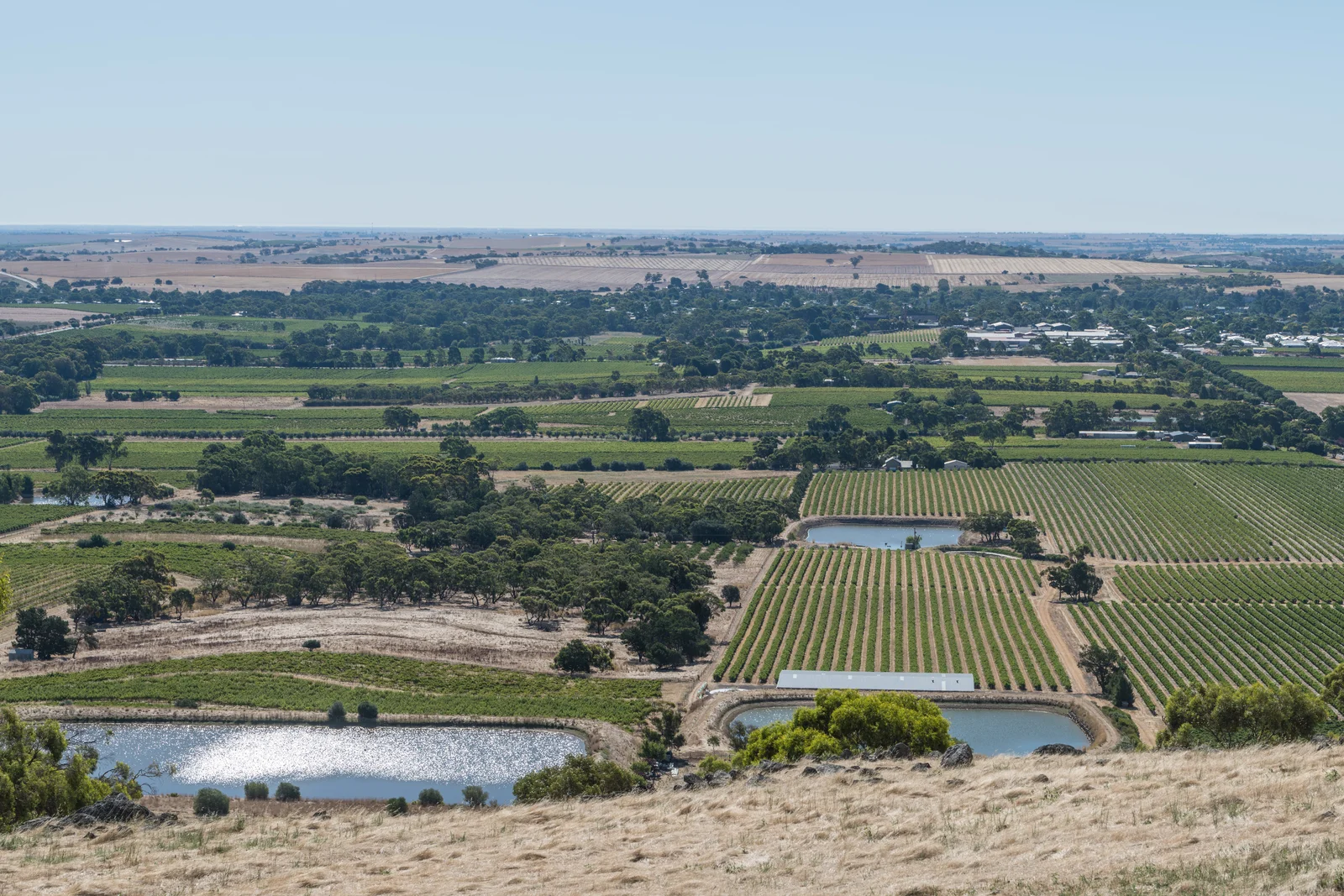
Old Vines and Healthy Clean Earth
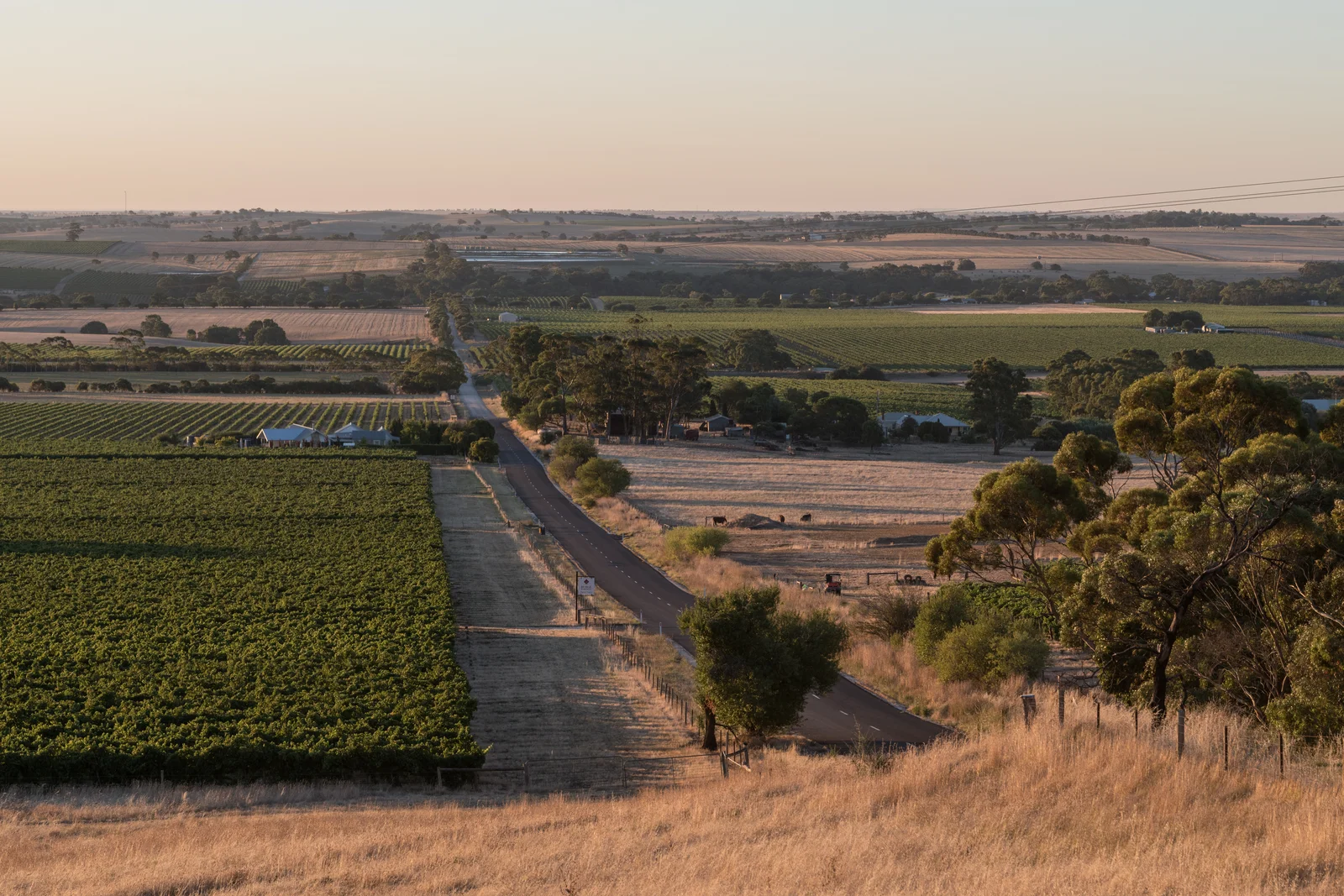
Strict quarantine rules protected South Australian vineyards from harmful plant bugs.
The sunny valley has some of the oldest ungrafted Shiraz grapevines on Earth.
Workers care for the ancient Freedom 1843 vineyard planted over one hundred and eighty years ago.
In 2007 the regional wine charter group began to classify and protect historic vines.
The charter labels Old Vines over thirty-five years and Ancestor Vines over one hundred and twenty-five years.
Deep roots find fresh water underground and make dark purple grapes with rich sweet juice.
Wooden Barrels and Tasty Dark Berries
Winemakers press ripe grapes inside open stone tubs and heavy basket machines.
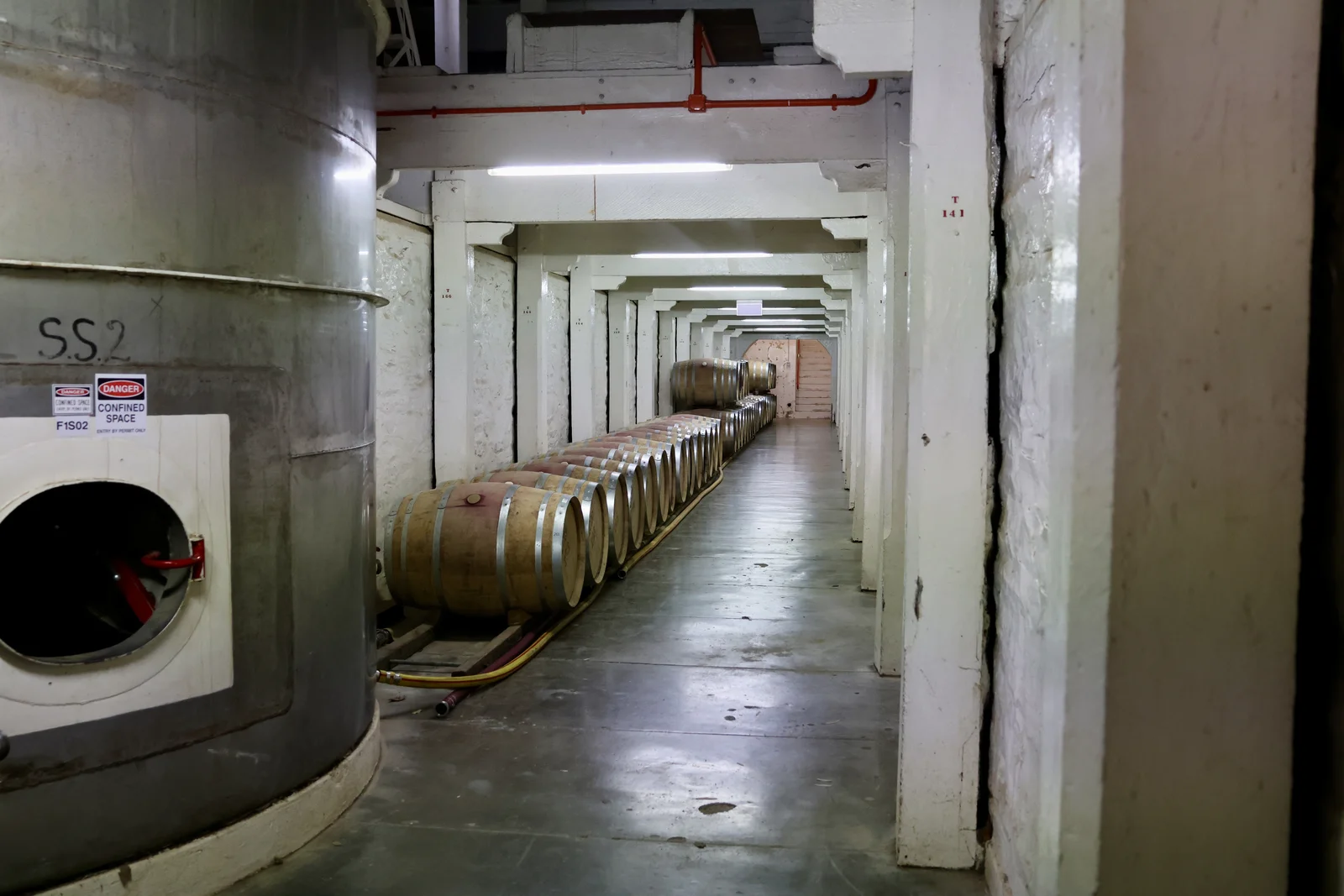
Workers put fresh grape juice into toasted oak wood barrels to add warm vanilla flavors.
Rich Barossa Shiraz tastes like sweet ripe blackberries, dark plums, chocolate, and mild pepper.
A clever winemaker named Max Schubert made famous Penfolds Grange wine during the 1950s.
Famous hill farms like Hill of Grace grow sweet grapes without watering the dry ground.
The Centennial Collection at Seppeltsfield cellars keeps hundred-year-old barrels of sweet dark wine in quiet stone rooms.

World Markets and Caring for the Soil
South Australia makes nearly half of all the bottled wine sold across the nation.
Cargo ships carry millions of dollars of red wine bottles to Asia, Europe, and America.
Friendly tasting rooms and local restaurants welcome happy visitors to the warm countryside.
Farmers use underground drip pipes and thick straw mulch to save precious fresh water.
Teams pick ripe purple grapes at night when cool air protects the sweet berry juice.
Green farm flowers and rooftop solar panels keep the historic grape fields clean and healthy.
A2 · Elementary
Barossa Valley Wine and Old-Vine Shiraz Viticulture
Historic Silesian settlements, ungrafted pre-phylloxera vines, oak aging cellars, and premium wine exports.
Silesian Emigration and Early Vineyard Plantings
Silesian Lutheran emigrants led by Pastor August Kavel settled the Barossa Valley during the 1840s to escape religious persecution.
British businessman George Fife Angas provided critical financial assistance to establish these early rural townships.
Early settlers planted the first commercial Shiraz grapevines across Tanunda, Angaston, and Nuriootpa.
Bavarian immigrant Johann Gramp planted vineyard rows along Jacob's Creek in 1847 to pioneer local commercial winemaking.
Joseph Seppelt founded the iconic Seppeltsfield estate in 1851, erecting solid bluestone cellars and expanding family vineyards.
European farming traditions, German stone architecture, and Lutheran village church spires established the cultural character of the region.
Ancient Soils, Phylloxera Immunity, and the Old Vine Charter
Rigorous quarantine laws protected South Australia from the phylloxera aphid blight that devastated vineyards in Europe and Victoria.
Consequently, the Barossa Valley possesses some of the oldest continuously producing ungrafted Shiraz grapevines on Earth.
Langmeil Winery preserves the historic Freedom 1843 vineyard, believed to be the oldest surviving Shiraz block in the world.
In 2007 the regional wine association instituted the Barossa Old Vine Charter to register and preserve these living treasures.
The charter classifies historic plantings into four tiers, from Old Vines at thirty-five years to Ancestor Vines exceeding one hundred and twenty-five.
These gnarled, deep-rooted vines produce small crops of concentrated grapes with thick dark skins and intense flavors.
Traditional Fermentation, Oak Maturation, and Flavor Profiles
Winemakers continue to ferment hand-picked grapes in open concrete vats before gentle pressing in mechanical basket presses.
Maturing the red wine in French and American oak barrels introduces refined aromas of cedar, vanilla, and sweet spices.
Classic Barossa Shiraz delivers a full-bodied taste highlighted by dark plum, ripe blackberry, dark chocolate, and spicy pepper.
Winemaker Max Schubert pioneered Penfolds Grange during the 1950s, demonstrating that Australian Shiraz could rival the finest European vintages.
Henschke Hill of Grace produces famous single-vineyard Shiraz from dry-grown heritage vines nestled in the Eden Valley.
Seppeltsfield safeguards its renowned Centennial Collection, releasing a continuous sequence of single-vintage hundred-year-old Tawny wines.
Global Wine Markets, Cellar Door Tourism, and Sustainability
South Australia produces approximately half of Australia's total bottled wine, serving as the commercial heart of the national industry.
Bottled Barossa wine exports generate hundreds of millions of dollars each year across North American, European, and Asian markets.
Cellar door tasting rooms, boutique vineyard retreats, and fine dining restaurants employ thousands of regional South Australian workers.
Grape growers use subsurface drip irrigation, digital soil sensors, and organic compost mulch to conserve limited moisture.
Harvest crews pick premium grapes during cool night hours to maintain balanced natural acidity before the sun rises.
Vineyard managers sow native grasses and beneficial plants between vine rows to build soil health and promote ecological balance.
B1 · Intermediate
Barossa Valley Wine, Heritage Shiraz, and Historic Viticulture
Silesian pioneer settlement, centenary ungrafted rootstocks, artisanal cellar craftsmanship, and global premium export trade.
Lutheran Silesian Migration and Nineteenth-Century Vineyard Foundations
Prussian Silesian Lutheran emigrants guided by Pastor August Kavel established settlements across the Barossa Valley in the 1840s to escape religious persecution.
British investor George Fife Angas provided essential financial patronage that enabled pioneer families to cultivate productive agrarian settlements.
Pioneer vignerons planted the earliest commercial Shiraz cuttings across the fertile alluvial soils of Tanunda, Angaston, and Nuriootpa.
Johann Gramp planted his inaugural vineyard along the banks of Jacob's Creek in 1847, initiating commercial winemaking in the valley basin.
Joseph Seppelt established the Seppeltsfield property in 1851, constructing enduring bluestone production facilities and extensive grape orchards.
Silesian settlers preserved their ancestral agricultural methods, distinctive stonemasonry homesteads, and communal Lutheran church customs across the valley.
Geographical Biosecurity, Phylloxera Protection, and the Old Vine Charter
Vigilant biosecurity quarantines and natural geographical isolation safeguarded South Australian vineyards from the catastrophic phylloxera aphid plague.
As a result, the Barossa Valley preserves the largest concentration of continuously fruiting, original ungrafted Shiraz grapevines worldwide.
Langmeil Winery maintains the revered Freedom 1843 vineyard, widely documented as one of the oldest living commercial Shiraz plantings on Earth.
To safeguard these fragile viticultural assets, regional growers established the Barossa Old Vine Charter in 2007 to document and preserve historic plantings.
The charter codifies four progressive age categories, ranging from Old Vines at thirty-five years to Ancestor Vines exceeding one hundred and twenty-five years.
These ancient, gnarled root systems extract mineral nutrients from deep subsoils, yielding tiny grape clusters with intense anthocyanins and complex aromas.
Open-Vat Fermentation, Oak Hogsheads, and Iconic Vintages
Artisanal Barossa winemakers retain open-topped concrete fermenting tanks, hand plunging, and gentle hydraulic basket presses to extract gentle tannins.
Cellar masters mature the finished wine in seasoned French and American oak hogsheads to impart delicate tones of cedar, toasted spice, and mocha.
Signature Barossa Shiraz presents an opulent, full-bodied palate framed by dark plum, blackberry compote, dark cocoa, and cracked black pepper.
Legendary winemaker Max Schubert formulated Penfolds Grange in the early 1950s, establishing Australian Shiraz as a benchmark on the international collector market.
The Henschke family crafts Hill of Grace Shiraz from dry-farmed pre-phylloxera vines situated within the elevated Eden Valley macroclimate.
Seppeltsfield preserves the unbroken Centennial Collection, releasing a vintage-dated barrel of fortified Tawny each year upon reaching its centennial milestone.
Export Economics, Heritage Hospitality, and Environmental Adaptation
South Australia accounts for roughly half of the total volume of Australian wine production, driving the national premium export economy.
Annual Barossa wine shipments generate hundreds of millions of export dollars, supplying high-end collector markets throughout Asia, the Americas, and Europe.
Boutique cellar doors, historic winery restaurants, and wine tourism trails provide vital employment and financial stability for local regional communities.
Grape growers integrate subsurface drip irrigation, electronic moisture sensors, and organic straw mulching to withstand hot continental summers.
Harvesting teams operate mechanical harvesters and hand shears during the night to protect delicate berry acids and volatile esters from daytime heat.
Vineyard proprietors cultivate biodiversity corridors, install commercial solar arrays, and plant winter cover crops between vineyard rows.
B2 · Upper Intermediate
Barossa Valley Wine, Old-Vine Shiraz, and Regional Viticulture
Nineteenth-century Silesian heritage, phylloxera-free ungrafted old vines, traditional vinification, and international market prestige.
Silesian Lutheran Emigration, Agricultural Foundations, and Early Estates
Fleeing sectarian suppression in Prussia, Silesian Lutheran refugees led by Pastor August Kavel colonized the fertile Barossa Valley during the 1840s.
British philanthropist and financier George Fife Angas provided capital loans and transport charters to establish structured farming townships across the region.
Pioneering viticulturists planted cuttings of Syrah from the Rhône Valley across the red-brown earths of Tanunda, Angaston, and Nuriootpa.
Bavarian settler Johann Gramp cultivated the first commercial vineyard along Jacob's Creek in 1847, initiating an enterprise that achieved global commercial renown.
Joseph Seppelt founded Seppeltsfield in 1851, constructing an architectural complex of bluestone wineries, distillery towers, and heritage cellars.
The immigrants transplanted Silesian stonemasonry, mixed farming husbandry, and devout Lutheran parish networks that still characterize the regional landscape.
Phylloxera Quarantine Security, Centenary Rootstocks, and the Charter
Uncompromising state quarantine protocols and sandy loam soils protected South Australia from the devastating phylloxera root aphid that ruined nineteenth-century European vineyards.
Consequently, the Barossa maintains a priceless living repository of ancient, ungrafted European Vitis vinifera vines thriving on their original rootstocks.
Langmeil Winery cultivates the historic Freedom 1843 vineyard, widely documented as one of the world's most enduring continuous plantings of Shiraz.
In 2007 regional authorities formalized the Barossa Old Vine Charter, establishing strict legal criteria to register, authenticate, and protect these heritage vines.
The charter delineates four distinct developmental tiers: Old Vines over thirty-five years, Survivor Vines over seventy, Centenarian Vines over one hundred, and Ancestor Vines over one hundred and twenty-five.
These historic, gnarled bush vines yield meager tonnages of berries possessing concentrated skin tannins, dense anthocyanin pigments, and striking phenolic depth.
Artisanal Vinification, Oak Maturation, and Prestigious Labels
Traditional Barossa winemakers favor static open concrete fermenters, manual cap plunging, and basket pressing to achieve supple textural balance.
Extended maturation in fine-grained French and American oak hogshead barrels tempers assertive grape tannins while contributing complex cedar, vanilla, and nutmeg aromatics.
The resulting Shiraz delivers a sumptuous, full-bodied palate saturated with dark blackberry, ripe damson plum, bitter dark chocolate, and pungent ground pepper.
Chief winemaker Max Schubert formulated Penfolds Grange in 1951, utilizing low-yielding Barossa Shiraz to fashion an internationally celebrated Australian fine wine icon.
Henschke Hill of Grace showcases an ethereal, single-vineyard expression derived from dry-farmed pre-phylloxera vines situated in the cooler Eden Valley ranges.
Seppeltsfield preserves the Centennial Collection, maintaining an uninterrupted barrel succession that releases a single-vintage fortified Tawny every year upon reaching one hundred years.
Premium Export Commercials, Cellar Door Hospitality, and Climate Mitigation
South Australia supplies approximately fifty percent of the nation's annual bottled wine crush, serving as the central economic engine of Australian viticulture.
Regional wine producers ship hundreds of millions of dollars of premium bottled vintages annually to affluent consumer markets in China, Europe, and the United States.
Cellar door hospitality venues, vineyard lodges, and culinary festivals support thousands of skilled hospitality, agricultural, and winemaking jobs.
Vignerons deploy advanced precision viticulture, including underground drip lines, soil moisture capacitance probes, and organic mulch blankets to optimize water efficiency.
Harvesters conduct nocturnal grape picking during cool early morning hours to preserve essential natural tartaric acids and subtle grape aromatics against daytime warmth.
Wineries are advancing carbon-neutral certifications by incorporating industrial rooftop solar systems, biological pest controls, and restorative vineyard cover crops.
C1 · Advanced
Barossa Valley Wine, Old-Vine Shiraz Viticulture, and Oenological Heritage
An authoritative historical, ampelographic, and economic analysis of South Australia's premier viticultural valley, ancient rootstocks, and global trade.
Silesian Lutheran Dispersion, Angas Backing, and Viticultural Genesis
Silesian Lutheran emigrants led by Pastor August Kavel settled the Barossa Valley in the 1840s to escape religious persecution in Prussian dominions.
British financier George Fife Angas provided crucial financial backing to facilitate the settlement of early South Australian agricultural townships.
Pioneer settlers established the earliest commercial Shiraz grapevines during the 1840s across the fertile soils of Tanunda, Angaston, and Nuriootpa.
Johann Gramp planted vines along Jacob's Creek in 1847, pioneering commercial winemaking in the central Barossa depression.
Joseph Seppelt established the historic Seppeltsfield estate in 1851, constructing substantial bluestone wineries and planting heritage vineyards.
Early viticulturists introduced traditional European farming techniques, stonemasonry architecture, and communal Lutheran church traditions to the valley.
Phylloxera Biosecurity, Ampelographic Rarity, and the Old Vine Charter
Strict quarantine regulations and isolated geography preserved South Australian vineyards from the devastating phylloxera aphid epidemic of the late nineteenth century.
The Barossa Valley contains some of the oldest continuously producing, ungrafted Shiraz grapevines anywhere in the world.
Langmeil Winery cultivates the Freedom 1843 vineyard, recognized among the earliest surviving commercial Shiraz plantings planted in 1843.
In 2007 the regional wine association instituted the Barossa Old Vine Charter to systematically classify and protect historic gnarly vines.
The charter recognizes four distinct developmental age tiers: Old Vines over thirty-five years, Survivor Vines over seventy, Centenarian Vines over one hundred, and Ancestor Vines over one hundred and twenty-five years.
Deep-rooted old vines develop low-yielding grape bunches with concentrated anthocyanins, thick skins, and intense flavor complexity.
Artisanal Oenology, Oak Maturation Chemistry, and Iconic Flagships
Barossa vignerons maintain traditional open concrete fermentation vats, manual wax-lined punch-downs, and gentle basket pressing techniques.
Winemakers mature premium Shiraz in seasoned French oak and American oak hogshead barrels to impart subtle cedar, vanilla, and spice notes.
Classic Barossa Shiraz exhibits a voluptuous full-bodied profile featuring ripe blackberry, dark plum, dark chocolate, and savory black pepper.
Legendary master winemaker Max Schubert created Penfolds Grange in the 1950s using heritage Barossa Shiraz, creating celebrated flagships that elevated Australian wine onto the global stage.
Henschke Hill of Grace showcases exceptional single-vineyard Shiraz crafted from dry-grown, pre-phylloxera vines situated in the cooler Eden Valley sub-region.
Seppeltsfield maintains the Centennial Collection, an unbroken lineage of single-vintage fortified Tawny barrels released annually at one hundred years of age.
Export Commercial Realities, Agritourism Ecosystems, and Adaptive Canopy Science
South Australia produces approximately half of Australia's total bottled wine output, anchoring the nation's premium agricultural export trade.
Barossa wine exports generate hundreds of millions of dollars annually, shipping premium bottles to major international markets in Asia, Europe, and North America.
Cellar door hospitality, winery restaurants, and heritage tourism support thousands of regional livelihoods across the Barossa municipality.
Vignerons implement precision viticulture, including underground drip irrigation, soil moisture probes, and organic compost mulching to conserve water.
Harvesters conduct nocturnal grape picking during cool evening hours to preserve natural grape acidity and delicate aromatic compounds before daytime heat.
Sustainable winegrowing certifications encourage biodiversity corridors, solar winery installations, and cover cropping between historic vineyard rows.
C2 · Mastery
Barossa Valley Viticulture, Old-Vine Shiraz Ampelography, and Oenological Economics
A comprehensive historical, botanical, and commercial analysis of South Australia's viticultural landscape, pre-phylloxera genetic heritage, and premium commodity exports.
Silesian Diasporic Resettlement, Pastoral Capital, and Viticultural Foundations
Silesian Lutheran emigrants led by Pastor August Kavel completed diasporic resettlement across the Barossa Valley in the 1840s to escape religious persecution in Prussian dominions.
British financier George Fife Angas provided crucial pastoral loans and financial backing to facilitate the settlement of early South Australian agricultural townships.
Pioneer settlers established the earliest commercial Shiraz grapevines during the 1840s across the fertile soils of Tanunda, Angaston, and Nuriootpa.
Johann Gramp planted vines along Jacob's Creek in 1847, pioneering commercial winemaking in the central Barossa depression.
Joseph Seppelt established the historic Seppeltsfield estate in 1851, constructing substantial bluestone wineries and planting heritage vineyards.
Early viticulturists introduced traditional European farming techniques, stonemasonry architecture, and communal Lutheran church traditions to the valley.
Phylloxera Biosecurity, Ampelographic Rarity, and the Old Vine Charter
Strict quarantine regulations, geographic isolation, and biosecurity protocols preserved South Australian vineyards from the devastating phylloxera aphid epidemic of the late nineteenth century.
Modern ampelography confirms that the Barossa Valley contains some of the oldest continuously producing, ungrafted Shiraz grapevines anywhere in the world.
Langmeil Winery cultivates the Freedom 1843 vineyard, recognized among the earliest surviving commercial Shiraz plantings planted in 1843.
In 2007 the regional wine association instituted the Barossa Old Vine Charter to systematically classify and protect historic gnarly vines.
The charter recognizes four distinct developmental age tiers: Old Vines over thirty-five years, Survivor Vines over seventy, Centenarian Vines over one hundred, and Ancestor Vines over one hundred and twenty-five years.
Deep-rooted old vines develop low-yielding grape bunches with concentrated anthocyanins, thick skins, and intense flavor complexity.
Artisanal Oenology, Oak Maturation Chemistry, and Iconic Flagships
Rooted in artisanal oenology, Barossa vignerons maintain traditional open concrete fermentation vats, manual wax-lined punch-downs, and gentle basket pressing techniques.
Winemakers mature premium Shiraz in seasoned French oak and American oak hogshead barrels to impart subtle cedar, vanilla, and spice notes.
Classic Barossa Shiraz exhibits a voluptuous full-bodied profile featuring ripe blackberry, dark plum, dark chocolate, and savory black pepper.
Legendary master winemaker Max Schubert created Penfolds Grange in the 1950s using heritage Barossa Shiraz, creating celebrated flagships that elevated Australian wine onto the global stage.
Henschke Hill of Grace showcases exceptional single-vineyard Shiraz crafted from dry-grown, pre-phylloxera vines situated in the cooler Eden Valley sub-region.
Seppeltsfield maintains the Centennial Collection, an unbroken lineage of single-vintage fortified Tawny barrels released annually at one hundred years of age.
Export Commercial Realities, Agritourism Ecosystems, and Adaptive Canopy Science
South Australia produces approximately half of Australia's total bottled wine output, anchoring the nation's premium agricultural export trade.
Barossa wine exports generate hundreds of millions of dollars annually, shipping premium bottles to major international markets in Asia, Europe, and North America.
Cellar door hospitality, winery restaurants, and thriving agritourism support thousands of regional livelihoods across the Barossa municipality.
Vignerons implement precision viticulture, including underground drip irrigation, soil moisture probes, and organic compost mulching to conserve water.
Harvesters conduct nocturnal grape picking beneath the vine canopy during cool evening hours to preserve natural grape acidity and delicate aromatic compounds before daytime heat.
Sustainable winegrowing certifications encourage biodiversity corridors, solar winery installations, and cover cropping between historic vineyard rows.
Check your understanding
Choose how closely you want to revisit the article. You can refer back while answering, and review explanations when you finish.
Quick Quiz A1
Try one question, then create a free account for the full Quick Quiz. Sign Up Free
Answer every question before checking. There is no time limit.
Your results
/ 1 correct (%)
Read the explanations to see how each answer connects to the article.
-
During which decade did Silesian Lutheran families settle the Barossa Valley to escape persecution?
1. Answer:
Quick Quiz A2
Try one question, then create a free account for the full Quick Quiz. Sign Up Free
Answer every question before checking. There is no time limit.
Your results
/ 1 correct (%)
Read the explanations to see how each answer connects to the article.
-
During which decade did Silesian Lutheran families settle the Barossa Valley to escape persecution?
1. Answer:
Quick Quiz B1
Try one question, then create a free account for the full Quick Quiz. Sign Up Free
Answer every question before checking. There is no time limit.
Your results
/ 1 correct (%)
Read the explanations to see how each answer connects to the article.
-
During which decade did Silesian Lutheran families settle the Barossa Valley to escape persecution?
1. Answer:
Quick Quiz B2
Try one question, then create a free account for the full Quick Quiz. Sign Up Free
Answer every question before checking. There is no time limit.
Your results
/ 1 correct (%)
Read the explanations to see how each answer connects to the article.
-
During which decade did Silesian Lutheran families settle the Barossa Valley to escape persecution?
1. Answer:
Quick Quiz C1
Try one question, then create a free account for the full Quick Quiz. Sign Up Free
Answer every question before checking. There is no time limit.
Your results
/ 1 correct (%)
Read the explanations to see how each answer connects to the article.
-
During which decade did Silesian Lutheran families settle the Barossa Valley to escape persecution?
1. Answer:
Quick Quiz C2
Try one question, then create a free account for the full Quick Quiz. Sign Up Free
Answer every question before checking. There is no time limit.
Your results
/ 1 correct (%)
Read the explanations to see how each answer connects to the article.
-
During which decade did Silesian Lutheran families settle the Barossa Valley to escape persecution?
1. Answer:
