A1 · Beginner
Gmunden Ceramics and Flamed Pottery Craftsmanship
How Austrian artisans near Lake Traunsee turned regional clay deposits into famous green-swirled tableware.
The Traunsee Basin, Clay Geology, and Historical Potters' Guilds in Gmunden
Potters built early workshops near Lake Traunsee in the fifteenth century because the soil had rich clay.
Old city records from 1492 show that local makers organized early pottery guilds in Gmunden.
Boats on the Traun River carried plates and bowls easily along historic salt trade routes.
By the seventeenth century, people across Austria called Gmunden the Ceramic City.
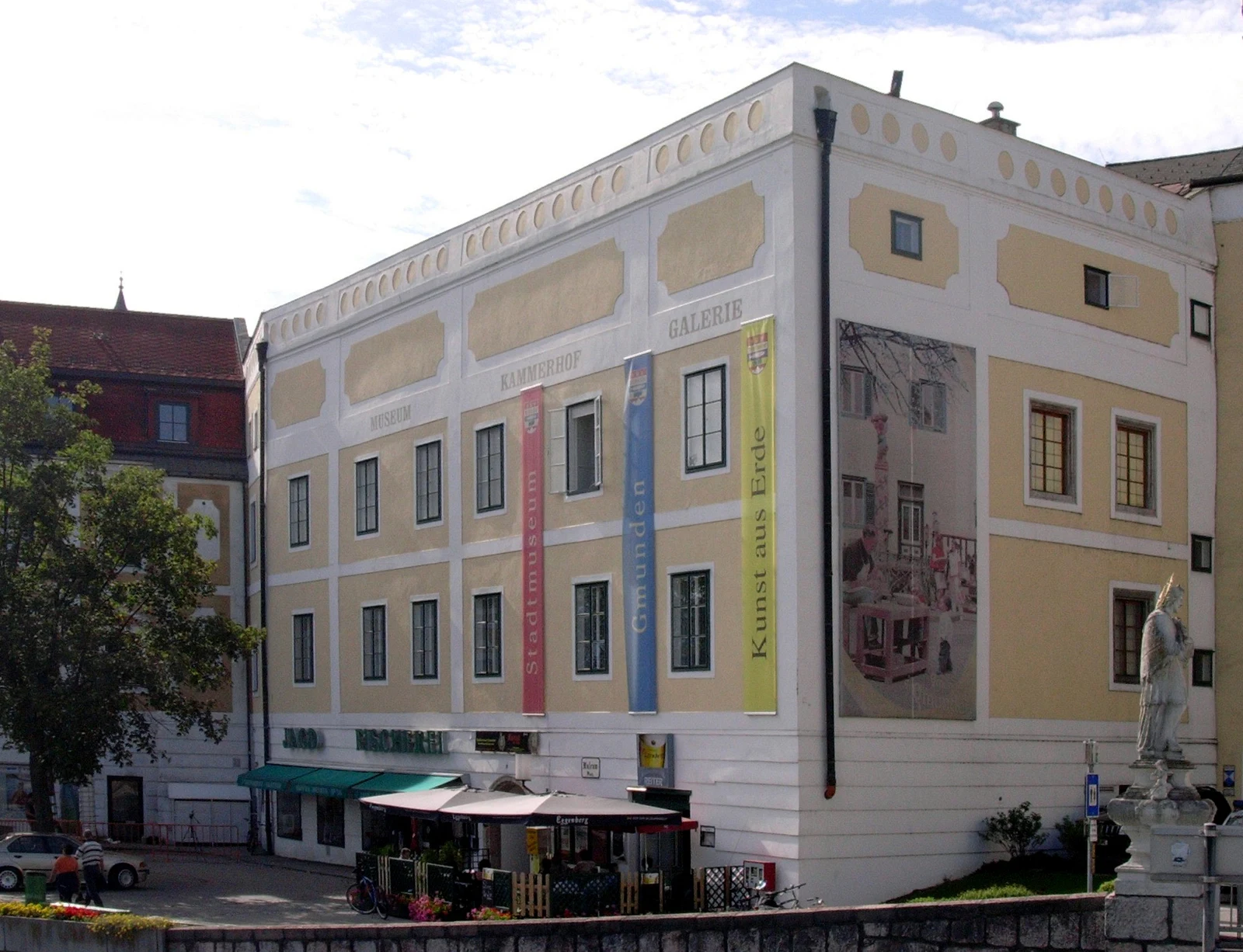
The historic Kammerhof building displays antique guild books and painted clay dishes.
Gmunden makers produced durable lead-glazed earthenware for daily family meals.
The Malhörnchen Tool, Slip Pigments, and the Traditional Geflammt Technique
Craft workers in Gmunden have practiced ceramic flaming since the seventeenth century.
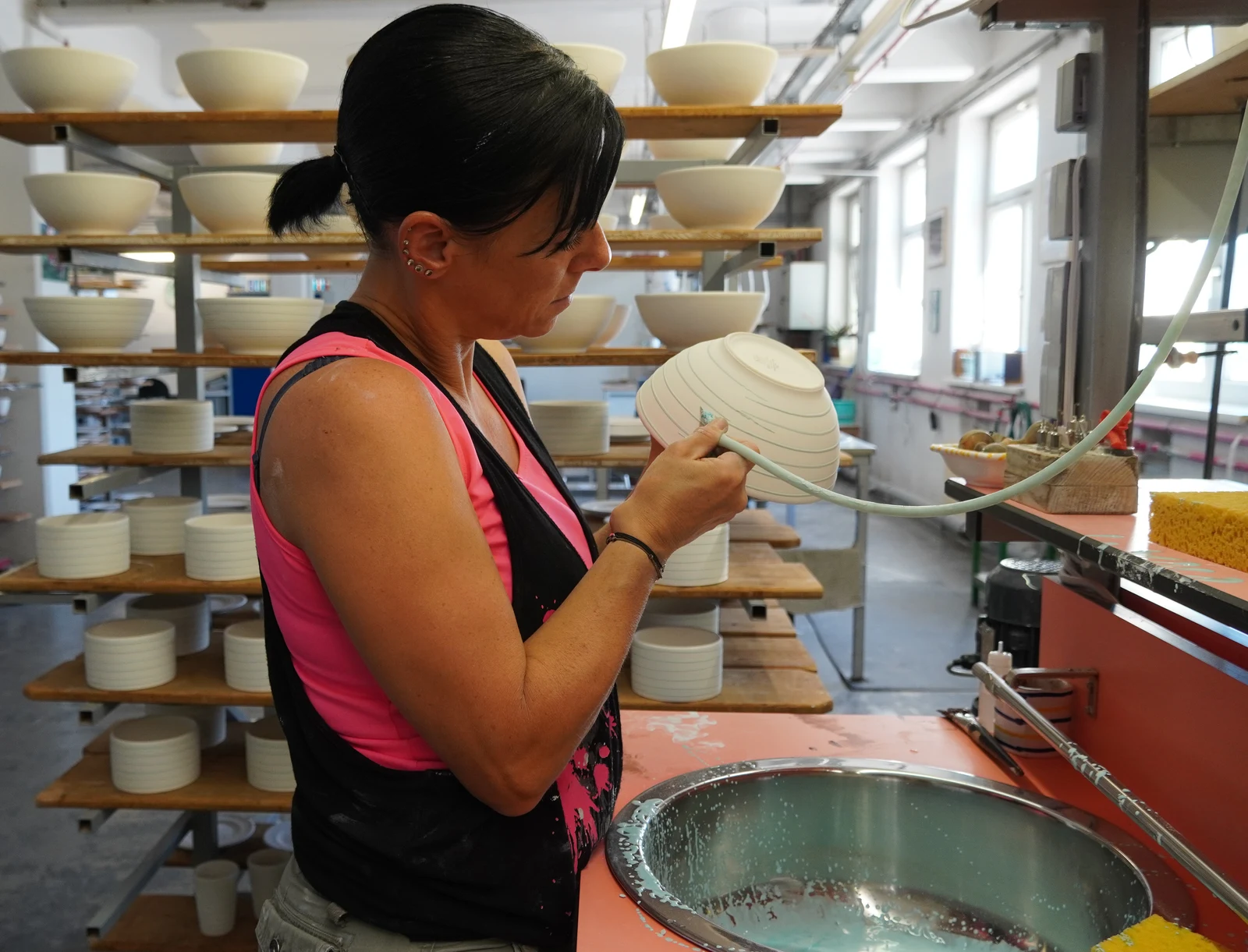
Artisans paint colored mineral slip onto clay dishes using a special horn called a Malhörnchen.
A traditional Malhörnchen uses a hollow cow horn and a goose quill to guide wet paint.
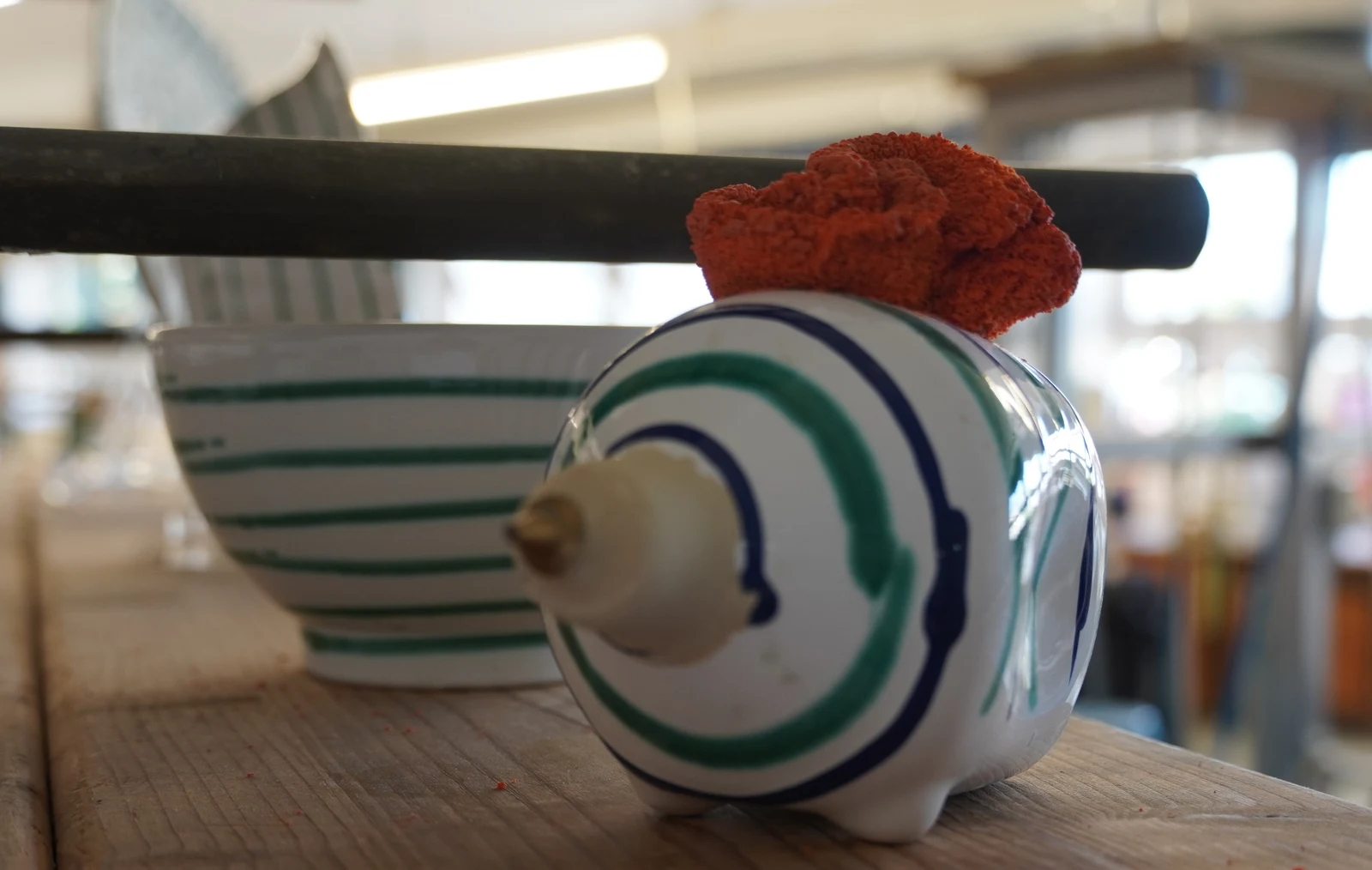
The famous green-flamed pattern creates bright looping circles across white tableware.
Dry clay drinks the wet mineral slip instantly, so artists cannot erase any mistakes.
Every single plate has unique painted swirls because human hands guide each stroke.
Gmundner Manufaktur, Two-Stage Firing, and Specialized Artisan Apprenticeships
Master Leopold Schleiss opened the modern Gmundner Keramik Manufaktur in 1903.
Workers heat freshly molded clay inside kilns at one thousand degrees Celsius during the first firing.
After dipping dishes into shiny glaze, workers bake them again at one thousand and sixty degrees Celsius.
New ceramic painters complete a three-year apprenticeship to learn fast hand movements.
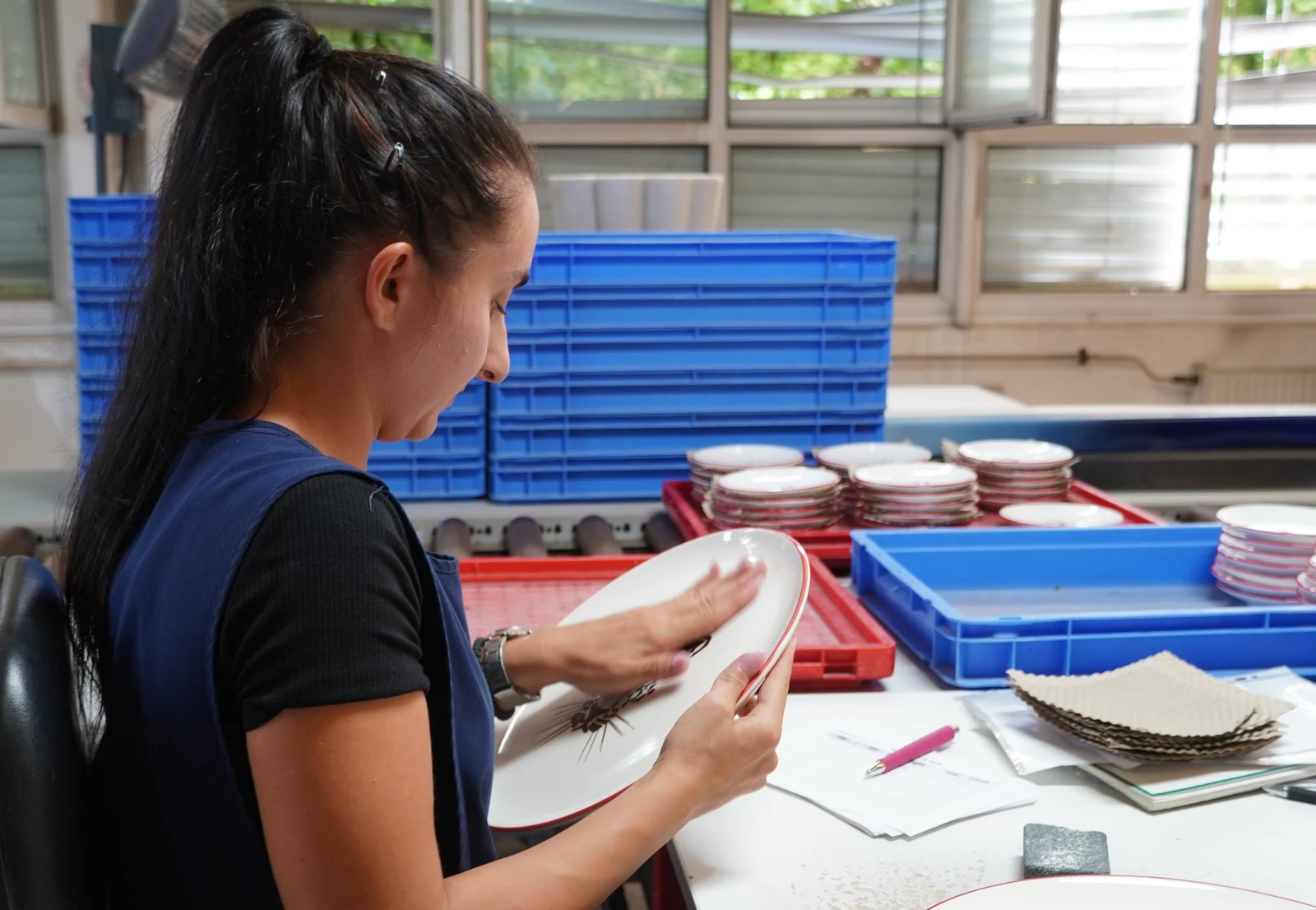
Each clay mug and bowl passes through sixty manual steps before leaving the workshop.
Painters also decorate cups with gray, red, and yellow colors alongside green patterns.
UNESCO Intangible Cultural Heritage, Kammerhof Collections, and the International Ceramics Market
The Austrian UNESCO Commission recognized Gmunden ceramic flaming as intangible cultural heritage in 2021.
The Kammerhofmuseum Gmunden displays historical collections of flamed plates and folk pottery.
Over one hundred master potters gather at Lake Traunsee each August for the international pottery market.
The town supports creative ceramic studios so experienced makers can teach traditional skills to young artists.
Handcrafted Gmunden tableware remains popular in Austrian mountain inns and homes across the world.
Modern pottery makers use non-toxic mineral glazes and local river clays to protect nature.
A2 · Elementary
Gmunden Ceramics and Flamed Pottery Craftsmanship
Centuries of artisan guilds, goose-quill painting horns, two-stage kiln firings, and UNESCO heritage in Upper Austria.
The Traunsee Basin, Clay Geology, and Historical Potters' Guilds in Gmunden
Potters settled around Lake Traunsee during the fifteenth century to harvest tertiary clay from local hillside deposits.
Municipal tax ledgers from 1492 and early sixteenth-century guild charters document a thriving community of ceramic artisans in Gmunden.
Transport barges navigating the Traun River carried finished earthenware along profitable Alpine salt trade corridors into regional markets.
Expanding commercial workshops earned Gmunden the lasting title of Ceramic City throughout the Habsburg monarchy.
The waterfront Kammerhof museum preserves early guild archives alongside rare seventeenth-century lead-glazed ceramic serving vessels.
Local potters gained widespread fame by creating sturdy earthenware that resisted kitchen wear while displaying charming painted ornament.
The Malhörnchen Tool, Slip Pigments, and the Traditional Geflammt Technique
Workshop masters in Gmunden developed the famous ceramic flaming decoration during the early seventeenth century.
Decorators apply liquefied mineral slip pigment onto porous bisque earthenware with a specialized hand vessel called a Malhörnchen.
This historic painting tool combines an authentic hollow cow horn with a fitted goose feather quill to regulate liquid flow.
The traditional green-flamed decoration features sweeping spirals and fluid rings drawn across the white surface without pre-drawn guides.
Porous biscuit earthenware absorbs wet slip instantly, leaving artisans no opportunity to wipe away or adjust misplaced lines.
Natural differences in hand pressure and pigment thickness guarantee that every hand-flamed bowl remains a distinct original object.
Gmundner Manufaktur, Two-Stage Firing, and Specialized Artisan Apprenticeships
Ceramic entrepreneur Leopold Schleiss established the Gmundner Keramik Manufaktur in 1903 to industrialize production while safeguarding handcraft.
Shaped clay vessels endure an initial bisque firing at approximately one thousand degrees Celsius to achieve structural stability.
After decorative flaming and dipping into transparent glaze, pieces receive a second kiln firing at one thousand and sixty degrees Celsius.
Apprentices must complete three years of intensive technical training in Gmunden before joining the professional decoration studio.
More than sixty separate manual procedures, from wheel trimming to post-glaze sorting, shape every single manufactured item.
Alongside the celebrated green swirl, artisans paint historic variations featuring yellow, gray, red, and delicate scatter floral motifs.
UNESCO Intangible Cultural Heritage, Kammerhof Collections, and the International Ceramics Market
In 2021, the Austrian Commission for UNESCO inscribed Gmunden ceramic flaming onto the national inventory of intangible cultural heritage.
The municipal Kammerhofmuseum exhibits extensive historical tableware assemblages that document evolving pottery tastes across four centuries.
Every August, the International Ceramics Market transforms the Gmunden lake promenade by convening more than one hundred European ceramists.
Town authorities fund dedicated apprentice workshops and residency studios to maintain continuous transfer of historic trade knowledge.
Gmunden ceramics remain an iconic cultural ambassador, gracing private dining tables and traditional Austrian hospitality venues.
Factory engineers implement closed water cycles and non-toxic mineral formulas to align heritage pottery craft with modern environmental standards.
B1 · Intermediate
Gmunden Ceramics and Flamed Pottery Craftsmanship
Guild traditions along the Traun River, freehand Malhörnchen artistry, two-stage thermal firing, and contemporary market resilience in Austria.
The Traunsee Basin, Clay Geology, and Historical Potters' Guilds in Gmunden
During the fifteenth century, potters recognized the exceptional plasticity of the tertiary clay deposits surrounding the Traunsee basin in Upper Austria.
Town archives from 1492 and guild statutes from the early sixteenth century verify that organized ceramic production flourished early in Gmunden.
Barges navigating the Traun River facilitated reliable distribution, linking pottery workshops directly with the lucrative Salzkammergut salt trade network.
By the seventeenth century, Gmunden had consolidated its commercial reputation across the Habsburg lands, earning the celebrated moniker of Ceramic City.
The historic Kammerhof building preserves guild registers and early lead-glazed tableware that illustrate the pragmatic origins of local pottery art.
These utilitarian earthenware vessels successfully balanced daily domestic durability with lively painted motifs that appealed to rural households.
The Malhörnchen Tool, Slip Pigments, and the Traditional Geflammt Technique
Originating in the early seventeenth century, the signature Geflammt technique transformed Gmunden into a renowned center for ceramic decoration.
Painters utilize the Malhörnchen, a specialized vessel that discharges liquid mineral slip pigment directly onto porous bisque-fired clay.
Constructed from a hollow bovine horn or pear-shaped ceramic bulb, the implement relies on a fine goose quill nozzle to control paint discharge.
The classic green-flamed motif features rhythmic spirals and looping concentric bands executed swiftly through freehand wrist movements.
Capillary absorption draws the liquid pigment deep into the porous ceramic body immediately, preventing any subsequent erasure or corrective retouching.
Slight variations in painterly cadence and slip consistency ensure that each hand-decorated vessel represents an authentic, unrepeatable artisanal original.
Gmundner Manufaktur, Two-Stage Firing, and Specialized Artisan Apprenticeships
In 1903, Leopold Schleiss established the modern Gmundner Keramik Manufaktur, bridging traditional guild craftsmanship with organized industrial kilns.
Formed ceramic bodies undergo an initial bisque firing at approximately one thousand degrees Celsius, which vitrifies the clay into sturdy bisque.
Following freehand decoration and immersion in transparent glaze, the wares enter a second firing cycle at one thousand and sixty degrees Celsius.
Aspiring ceramic painters undertake a rigorous three-year vocational apprenticeship in Gmunden to master the demanding ergonomics of flaming.
Each manufactured piece requires over sixty separate manual interventions, encompassing shaping, sponge smoothing, pigment application, and kiln loading.
While the emerald swirl remains primary, the factory produces historical decorative palettes including subtle gray, fiery red, and delicate scattered flowers.
UNESCO Intangible Cultural Heritage, Kammerhof Collections, and the International Ceramics Market
In 2021, the Austrian UNESCO Commission formally inscribed Gmunden ceramic flaming onto the National Inventory of Intangible Cultural Heritage.
The Kammerhofmuseum Gmunden showcases significant historical pottery archives alongside valuable examples of folk ceramics from the Salzkammergut.
Each August, the town square hosts the International Ceramics Market, welcoming over one hundred master craftspeople from numerous European countries.
Municipal initiatives support dedicated ceramic design studios and residency programs, fostering technical innovation while protecting inherited skills.
Gmundner Keramik stands today as Austria's preeminent handmade tableware producer, widely distributed in domestic homes and export markets.
Contemporary production emphasizes closed water filtration and non-toxic mineral chemistry, ensuring the environmental viability of this regional craft.
B2 · Upper Intermediate
Gmunden Ceramics and Flamed Pottery Craftsmanship
Salzkammergut clay geology, fluid Malhörnchen horn painting, two-stage thermal vitrification, and UNESCO heritage preservation in Gmunden.
The Traunsee Basin, Clay Geology, and Historical Potters' Guilds in Gmunden
Sedimentary deposits from the Tertiary period provided the Traunsee basin with fine-grained claybeds of exceptional plasticity, attracting potters during the fifteenth century.
Municipal records from 1492 and early sixteenth-century guild charters corroborate the establishment of an organized ceramic fraternity in Gmunden.
The navigable Traun River offered strategic logistical advantages, enabling ceramic merchants to transport heavy earthenware alongside lucrative regional salt consignments.
By the seventeenth century, Gmunden had ascended to prominence within the Habsburg crown lands, formally cementing its municipal reputation as the Ceramic City.
Archival inventories preserved at the Kammerhof museum document the economic evolution of local potting guilds and display pristine early lead-glazed domestic wares.
These earthenware plates and storage pitchers united mechanical resilience with vibrant painted slipware, serving both rural farmsteads and aristocratic townhouses.
The Malhörnchen Tool, Slip Pigments, and the Traditional Geflammt Technique
Documented in local guild workshops since the early seventeenth century, the distinctive Geflammt technique defines the visual identity of Gmunden ceramics.
Artisans employ a specialized horn reservoir termed a Malhörnchen to deposit liquefied mineral slip pigment onto porous bisque-fired clay surfaces.
Crafted from a hollow bovine horn and fitted with an organic goose quill nozzle, the instrument regulates the delicate hydrostatic discharge of pigment.
The emblematic Grüngeflammt pattern comprises continuous concentric ripples and fluid loops executed entirely freehand without mechanical stencils or underdrawings.
Because the unglazed ceramic bisque absorbs liquid slip instantaneously through capillary action, decorators must paint without hesitation or second thoughts.
Subtle fluctuations in wrist angle, manual pressure, and slip viscosity guarantee that every finished vessel constitutes a genuine, singular work of craft.
Gmundner Manufaktur, Two-Stage Firing, and Specialized Artisan Apprenticeships
In 1903, industrial pioneer Leopold Schleiss founded the Gmundner Keramik Manufaktur, synthesizing time-honored artisanal routines with modern kiln infrastructure.
Raw earthenware vessels undergo an initial bisque firing at approximately one thousand degrees Celsius, transforming damp clay into stable porous substrate.
Following freehand decoration and submersion in transparent protective feldspathic glaze, items enter a second glaze firing at one thousand and sixty degrees Celsius.
Developing the requisite motor speed and brush control requires ceramic painters to complete a comprehensive three-year apprenticeship within the factory.
Each finished vessel traverses more than sixty discrete manual manipulations, spanning precision trimming, sponge sponging, painting, and visual grading.
Beyond the iconic green decoration, artisans sustain historical chromatic lines featuring soft gray, vivid red, golden yellow, and intricate scattered blossom patterns.
UNESCO Intangible Cultural Heritage, Kammerhof Collections, and the International Ceramics Market
In 2021, the Austrian Commission for UNESCO inscribed Gmunden ceramic flaming onto the National Inventory of Intangible Cultural Heritage.
The municipal Kammerhofmuseum houses extensive archival holdings and curated historic assemblages illustrating the stylistic evolution of regional Salzkammergut pottery.
Every August, the prestigious International Ceramics Market convenes more than one hundred master ceramicists on the Gmunden lakefront for major public exhibitions.
Local educational partnerships and municipal artist-in-residence programs cultivate emerging ceramic talent while safeguarding centuries of tacit procedural expertise.
Gmunden ceramics retain unquestioned status as Austria's most recognized artisanal tableware brand, maintaining steady export distribution across international luxury markets.
The adoption of closed-loop water treatment systems and non-toxic mineral formulations demonstrates that historic handcraft can satisfy rigorous modern environmental standards.
C1 · Advanced
Gmunden Ceramics and Flamed Pottery Craftsmanship
Salzkammergut clay geology, capillary Malhörnchen dynamics, high-fire vitrification, and intangible cultural heritage in Upper Austria.
The Traunsee Basin, Clay Geology, and Historical Potters' Guilds in Gmunden
Rich Tertiary sediment deposits surrounding the northern shores of Lake Traunsee endowed Gmunden with remarkably ductile claybeds, prompting fifteenth-century artisans to establish sedentary ceramic ateliers.
Documentary evidence from municipal ledgers dated 1492 and early sixteenth-century guild charters confirms that corporate pottery organizations operated with civic recognition in Gmunden.
Lakeside wharves along the navigable Traun River offered invaluable mercantile transport routes, allowing merchants to float heavy earthenware alongside lucrative imperial salt shipments.
Throughout the seventeenth century, the alpine market town expanded its regional trading perimeter across the Habsburg lands, securing lasting prestige as Austria's Ceramic City.
The monumental Kammerhof building maintains municipal guild rolls and historic lead-glazed domestic wares that illuminate the material culture of early modern Salzkammergut potters.
These utilitarian earthenware vessels successfully reconciled robust thermal endurance with sophisticated slip decoration, finding favor across rural farming estates and bourgeois urban salons.
The Malhörnchen Tool, Slip Pigments, and the Traditional Geflammt Technique
Evolving within municipal workshops during the early seventeenth century, the proprietary Geflammt decorative methodology became the definitive stylistic signature of Gmunden pottery.
Artisans utilize the Malhörnchen, a specialized handheld horn reservoir, to deposit liquefied mineral slip pigment onto the porous surface of bisque-fired earthenware.
Originally fabricated from bovine horn and fitted with a calibrated goose quill nozzle, the implement facilitates precise hydrodynamic discharge governed exclusively by tactile control.
The celebrated Grüngeflammt ornament displays dynamic concentric swirls and undulating circular bands generated entirely through fluid, unguided freehand wrist rotations.
Because the microporous bisque absorbs the aqueous slip suspension instantly through intense capillary suction, painters possess zero latitude for corrective erasure or overpainting.
Minute differences in manual momentum, angular inclination, and pigment viscosity ensure that every flamed dish emerges as an unrepeatable, singularly authentic craft specimen.
Gmundner Manufaktur, Two-Stage Firing, and Specialized Artisan Apprenticeships
In 1903, ceramic visionary Leopold Schleiss inaugurated the Gmundner Keramik Manufaktur, integrating ancestral artisanal techniques with modern industrial kiln architecture.
Formed clayware undergoes an initial bisque firing at approximately one thousand degrees Celsius, which vitrifies the brittle dried mud into an open-pored, chemically stable substrate.
Following manual flaming and immersion into an aqueous feldspathic glaze bath, items undergo a final glaze firing at one thousand and sixty degrees Celsius.
Mastering this demanding craft requires prospective ceramic decorators to complete a rigorous three-year vocational apprenticeship focused on workshop ergonomics and motor speed.
Every production piece traverses upwards of sixty separate manual procedures, from wheel fettling and sponge smoothing to rigorous multi-tiered visual quality audits.
Beyond the ubiquitous emerald motif, painters sustain chromatic lineages encompassing refined slate gray, warm cinnabar red, ochre yellow, and traditional scattered flora.
UNESCO Intangible Cultural Heritage, Kammerhof Collections, and the International Ceramics Market
In 2021, the Austrian UNESCO Commission formally inscribed Gmunden ceramic flaming on the National Inventory of Intangible Cultural Heritage, recognizing its centuries-old uninterrupted lineage.
The Kammerhofmuseum Gmunden exhibits exceptional archival treasures and historic ceramic ensembles, narrating four centuries of technological and stylistic evolution in Upper Austria.
Annually in August, the renowned International Ceramics Market gathers over one hundred master potters from across the European continent upon the picturesque Traunsee esplanade.
Civic authorities sponsor subsidized training workshops and creative artist residencies to guarantee that tacit knowledge transfers seamlessly across successive generational cohorts.
Modern Gmunden ceramics embody Austria's preeminent artisanal tableware identity, sustaining prestigious domestic hospitality accounts and expanding international collector patronage.
Contemporary investments in advanced wastewater filtration systems and sustainable non-toxic mineral chemistries ensure the ecological resilience of this historic craft industry.
C2 · Mastery
Gmunden Ceramics and Flamed Pottery Craftsmanship
Salzkammergut clay geomorphology, hydrodynamic Malhörnchen rheology, thermal vitrification, and UNESCO heritage stewardship in Gmunden.
The Traunsee Basin, Clay Geology, and Historical Potters' Guilds in Gmunden
Extensive Tertiary clay strata deposited across the northern perimeter of Lake Traunsee furnished Gmunden with extraordinarily malleable mineral raw materials, enticing fifteenth-century craftsmen to erect permanent ceramic kilns.
Archival municipal registries originating in 1492 and guild charters drafted during the early sixteenth century demonstrate that collegiate pottery guilds wielded formal regulatory authority in Gmunden.
Strategic littoral access to the navigable Traun River offered vital fluvial transport avenues, permitting commercial consignments of utilitarian earthenware to travel alongside sovereign salt flotillas.
During the seventeenth century, the burgeoning alpine commune consolidated its regional trading supremacy across the Habsburg realm, formally securing perpetual acclaim as the Ceramic City.
The waterfront Kammerhof complex houses comprehensive corporate guild rolls alongside exquisite specimens of seventeenth-century lead-glazed tableware that elucidate regional domestic life.
These functional earthenware vessels successfully combined thermal durability under open-hearth conditions with ornate slip decoration, captivating both rural homesteads and affluent urban households.
The Malhörnchen Tool, Slip Pigments, and the Traditional Geflammt Technique
Documented in local ateliers since the early seventeenth century, the intricate Geflammt decorative tradition represents an iconic touchstone of Austrian folk ceramic craftsmanship.
Decorators manipulate the Malhörnchen, a specialized horn applicator, to deposit liquefied mineral slip suspensions across the receptive surface of bisque-fired clayware.
Fashioned from a hollow bovine horn containing an organically calibrated goose quill nozzle, the implement allows artisans to govern pigment outflow via nuanced kinetic gestures.
The quintessential Grüngeflammt configuration features rhythmic concentric undulations and looping tendrils generated strictly through autonomous freehand wrist articulation.
Rapid capillary imbibition instantly anchors the aqueous slip into the open-pored earthenware matrix, utterly precluding subsequent mechanical erasure or painterly amendment.
Subtle variances in applicator velocity, gravitational hydrostatic pressure, and rheological viscosity dictate that each flamed vessel constitutes a wholly unrepeatable artisanal heirloom.
Gmundner Manufaktur, Two-Stage Firing, and Specialized Artisan Apprenticeships
In 1903, entrepreneurial ceramist Leopold Schleiss established the Gmundner Keramik Manufaktur, uniting traditional guild artisanship with progressive industrial kiln technology.
Raw clay articles undergo a preliminary bisque firing at approximately one thousand degrees Celsius, initiating partial thermal vitrification that yields a durable yet porous substrate amenable to mineral absorption.
Subsequent to freehand slip decoration and rapid immersion in transparent feldspathic glaze, wares undergo a secondary glaze firing at one thousand and sixty degrees Celsius.
Acquiring the necessary procedural dexterity demands that aspiring ceramic painters complete a structured three-year vocational apprenticeship centered on ergonomic discipline and precision.
Every finished tableware item undergoes more than sixty individual manual operations, including rim fettling and sponge dressing, freehand slip application, and stringent defect auditing.
Complementing the iconic green swirling motifs, the atelier maintains archival pattern repertoires featuring graphite gray, fiery carmine, golden ochre, and delicate alpine flora.
UNESCO Intangible Cultural Heritage, Kammerhof Collections, and the International Ceramics Market
In 2021, the Austrian UNESCO Commission officially inscribed Gmunden ceramic flaming onto the National Inventory of Intangible Cultural Heritage, acknowledging its historical integrity.
The Kammerhofmuseum Gmunden showcases extensive archival collections and historical ceramic assemblages that illuminate centuries of stylistic innovation within the Salzkammergut.
Each August, the International Ceramics Market convenes more than one hundred master ceramic artists from across Europe upon the scenic Traunsee lakeside promenade.
Municipal sponsorship of specialized pedagogical workshops and artist-in-residence ateliers guarantees the seamless intergenerational transmission of non-codified procedural expertise.
Contemporary Gmunden ceramics occupy an unrivaled position as Austria's hallmark handmade tableware brand, maintaining strong retail representation across global dining markets.
Progressive modernization through closed-circuit wastewater remediation and non-hazardous mineral glaze formulas assures that artisanal pottery preserves its ecological viability.
Check your understanding
Choose how closely you want to revisit the article. You can refer back while answering, and review explanations when you finish.
Quick Quiz A1
Try one question, then create a free account for the full Quick Quiz. Sign Up Free
Answer every question before checking. There is no time limit.
Your results
/ 1 correct (%)
Read the explanations to see how each answer connects to the article.
-
Why did fifteenth-century potters establish early workshops near Lake Traunsee in Upper Austria?
1. Answer:
Quick Quiz A2
Try one question, then create a free account for the full Quick Quiz. Sign Up Free
Answer every question before checking. There is no time limit.
Your results
/ 1 correct (%)
Read the explanations to see how each answer connects to the article.
-
Why did fifteenth-century potters establish early workshops near Lake Traunsee in Upper Austria?
1. Answer:
Quick Quiz B1
Try one question, then create a free account for the full Quick Quiz. Sign Up Free
Answer every question before checking. There is no time limit.
Your results
/ 1 correct (%)
Read the explanations to see how each answer connects to the article.
-
Why did fifteenth-century potters establish early workshops near Lake Traunsee in Upper Austria?
1. Answer:
Quick Quiz B2
Try one question, then create a free account for the full Quick Quiz. Sign Up Free
Answer every question before checking. There is no time limit.
Your results
/ 1 correct (%)
Read the explanations to see how each answer connects to the article.
-
Why did fifteenth-century potters establish early workshops near Lake Traunsee in Upper Austria?
1. Answer:
Quick Quiz C1
Try one question, then create a free account for the full Quick Quiz. Sign Up Free
Answer every question before checking. There is no time limit.
Your results
/ 1 correct (%)
Read the explanations to see how each answer connects to the article.
-
Why did fifteenth-century potters establish early workshops near Lake Traunsee in Upper Austria?
1. Answer:
Quick Quiz C2
Try one question, then create a free account for the full Quick Quiz. Sign Up Free
Answer every question before checking. There is no time limit.
Your results
/ 1 correct (%)
Read the explanations to see how each answer connects to the article.
-
Why did fifteenth-century potters establish early workshops near Lake Traunsee in Upper Austria?
1. Answer:
