A1 · Beginner
Salzburg Festival and Jedermann Theatrical Traditions
How Austrian artists turned the baroque city of Salzburg into a world-famous summer theater and opera festival.
The Postwar Founding in 1920 and Reinhardt's Vision of a Peace Project
Max Reinhardt, Hugo von Hofmannsthal, and Richard Strauss founded the Salzburg Festival in August 1920.
The founders created the summer festival as a peaceful arts project after the first World War.
Artist Alfred Roller and conductor Franz Schalk helped build the new theater group in Salzburg.
On August 22 in 1920, the first play opened in front of the grand cathedral.
The artists chose Salzburg because its baroque churches and green mountains made a wonderful natural stage.
The founding constitution established that performances must unite classical drama with daring contemporary stage ideas.
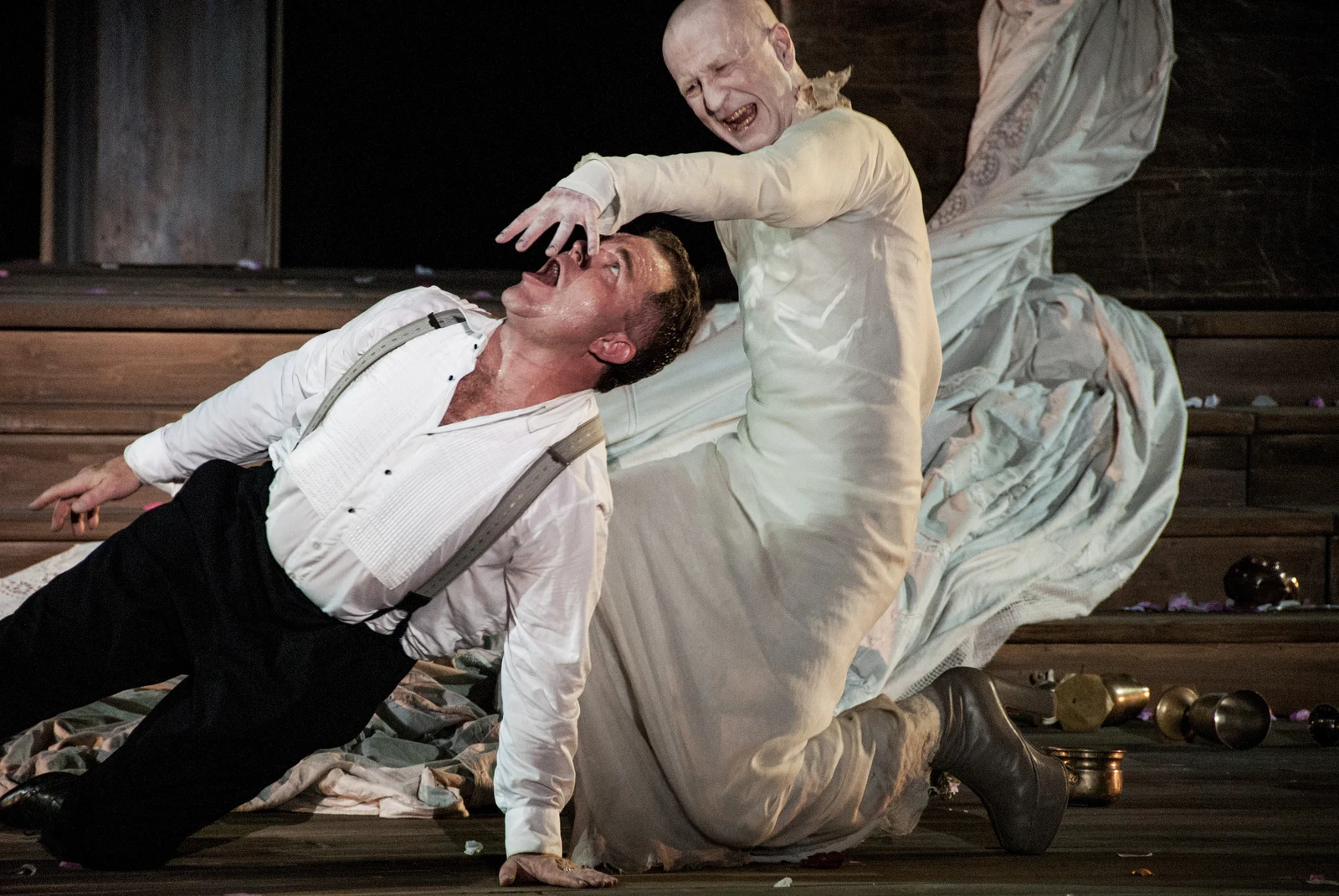
Hugo von Hofmannsthal's Jedermann and the Cathedral Square Staging
Hugo von Hofmannsthal wrote the famous German theater play Jedermann based on an old English story.
The story shows a rich man meeting Death and learning that money cannot buy true goodness.
Actors perform the play on a wooden stage directly in front of the cathedral doors.
Voices call the name Jedermann loudly from high church towers and the mountain castle.
If heavy mountain rain falls, the entire play moves quickly inside a nearby concert hall.
People have watched Jedermann outside in the cathedral square every summer for over a century.
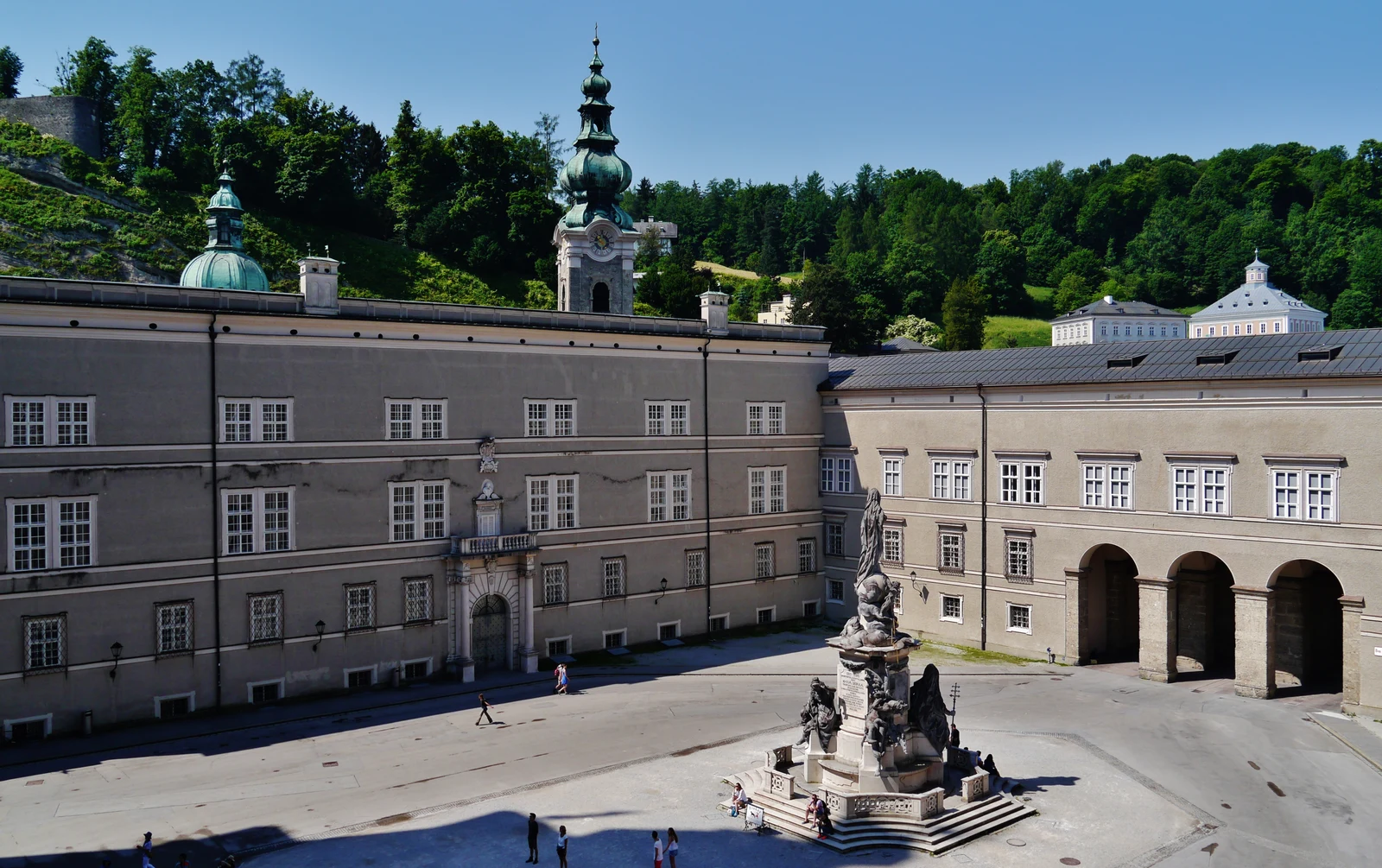
Theatrical Architecture: Felsenreitschule Arcades and Clemens Holzmeister's Venues
In 1926, the festival began using an old stone riding school called the Felsenreitschule.
Stone workers had carved ninety-six open stone arches into the steep rock wall in 1693.
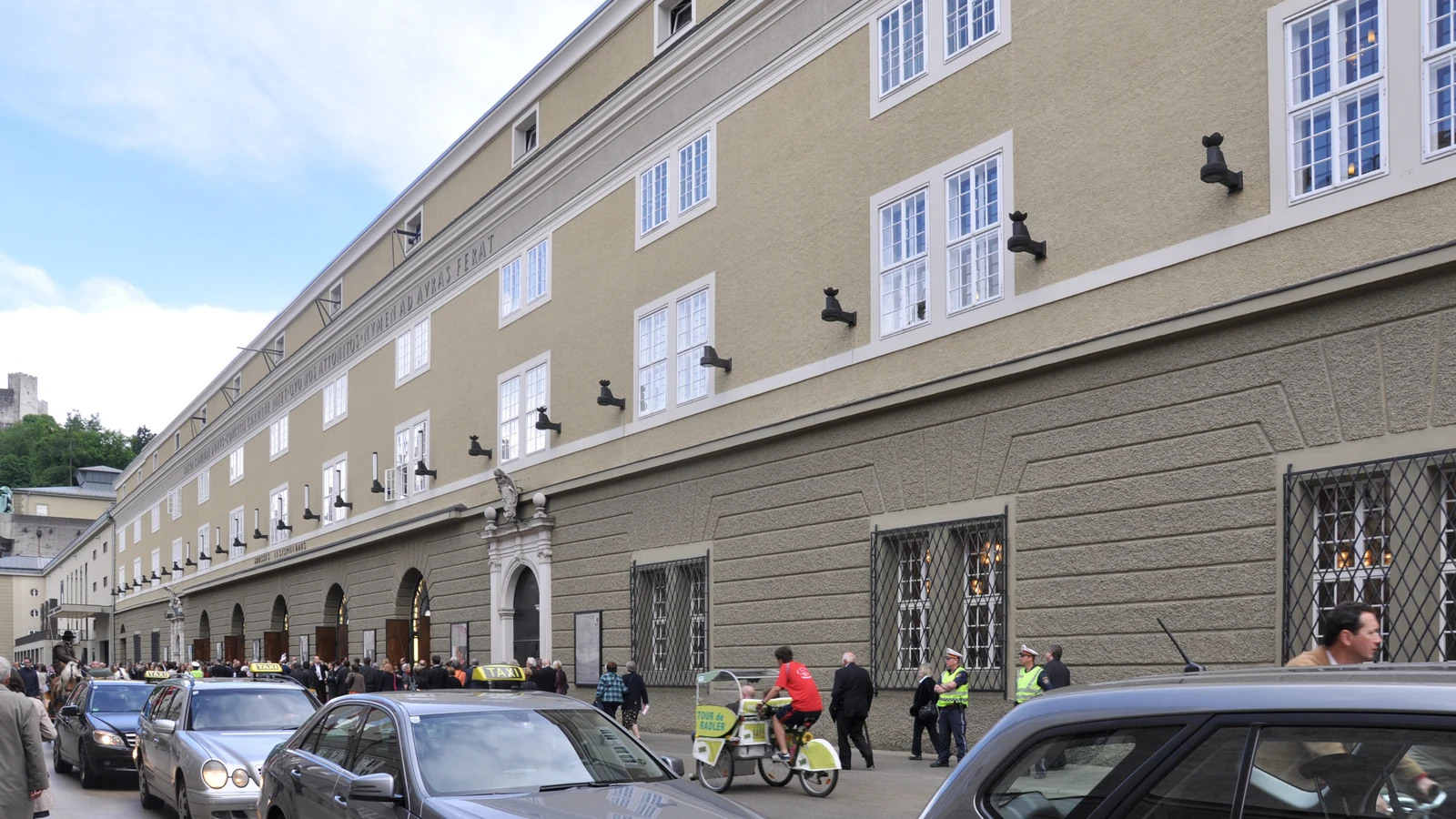
Architect Clemens Holzmeister added a movable roof to protect the historic stone theater from rain.
Workers dug fifty thousand cubic meters of solid rock from the mountain to build the large festival hall.
The main stage inside the large festival hall measures one hundred meters across the room.
In 2006, the festival opened a modern hall designed especially for lovely Mozart operas.

The Vienna Philharmonic Residency, Modern Operatic Premieres, and Global Archival Heritage
The famous Vienna Philharmonic orchestra has played regular festival concerts in Salzburg since 1922.
Conductor Herbert von Karajan brought famous opera singers and television cameras to Salzburg.
Modern composers write new operas and theatrical plays for the summer festival each year.
The festival internet archive stores historic photos, music recordings, and actor lists from past seasons.
More than two hundred summer concerts bring many visitors and money to local hotels and shops.
Special music schools help young international opera singers learn from world-famous teachers in Salzburg.
A2 · Elementary
Salzburg Festival and Jedermann Theatrical Traditions
Postwar peace ideals, Cathedral Square morality drama, Felsenreitschule stone arcades, and opera traditions in Austria.
The Postwar Founding in 1920 and Reinhardt's Vision of a Peace Project
Theater director Max Reinhardt, poet Hugo von Hofmannsthal, and composer Richard Strauss established the Salzburg Festival in 1920.
They conceived the summer festival as a cultural peace project to heal European society following the devastation of World War I.
Scenic designer Alfred Roller and conductor Franz Schalk joined the founders to establish professional administrative structures.
On August 22, 1920, the inaugural festival performance took place upon an outdoor stage constructed on Cathedral Square.
The founders selected Salzburg because its intact baroque architecture and alpine hills created an open-air theatrical arena.
Their founding artistic guidelines demanded that the festival balance timeless theatrical literature with adventurous contemporary productions.
Hugo von Hofmannsthal's Jedermann and the Cathedral Square Staging
Hugo von Hofmannsthal adapted the medieval English morality drama Everyman into his German verse play Jedermann.
The allegorical drama portrays a wealthy merchant who encounters Death and must confront his worldly vanity before divine judgment.
Performances utilize the marble entrance and towering bell spires of Salzburg Cathedral as an imposing living stage background.
Hidden actors shout the chilling name Jedermann from church steeples across the old town and the Hohensalzburg fortress.
Whenever sudden alpine thunderstorms threaten the outdoor stage, stagehands transfer the complete production into the Großes Festspielhaus.
Staging Jedermann upon Cathedral Square has functioned as the annual opening ceremony of the festival for more than a century.
Theatrical Architecture: Felsenreitschule Arcades and Clemens Holzmeister's Venues
In 1926, festival directors converted the Felsenreitschule, a seventeenth-century archiepiscopal riding school, into an atmospheric outdoor auditorium.
Baroque architect Johann Bernhard Fischer von Erlach originally carved ninety-six tiers of stone arcades into the Mönchsberg cliff in 1693.
Architect Clemens Holzmeister modernized the historical venue by constructing a retractable protective roof over the auditorium.
Between 1956 and 1960, Holzmeister excavated fifty thousand cubic meters of rock to construct the monumental Großes Festspielhaus.
The immense main auditorium of the Großes Festspielhaus features an extraordinary theatrical stage opening measuring one hundred meters across.
In 2006, festival authorities inaugurated the Haus für Mozart, establishing an intimate performance space designed for classical opera.
The Vienna Philharmonic Residency, Modern Operatic Premieres, and Global Archival Heritage
The Vienna Philharmonic has performed as the resident festival orchestra in Salzburg during every summer festival season since 1922.
Conductor Herbert von Karajan revolutionized the postwar festival by inviting celebrated international vocalists and pioneering televised concert films.
The festival frequently commissions groundbreaking modern operas and innovative theatrical interpretations from contemporary European writers.
The digital Salzburg Festival Archive preserves extensive historical documentation, including vintage production photographs and original sound recordings.
Presenting over two hundred individual festival events each summer, the celebration stimulates substantial cultural tourism across Salzburg province.
Initiatives like the Young Singers Project provide intensive professional coaching to cultivate the next generation of international vocal artists.
B1 · Intermediate
Salzburg Festival and Jedermann Theatrical Traditions
Postwar artistic reconciliation, outdoor Domplatz morality drama, Mönchsberg cliff architecture, and international opera prestige in Salzburg.
The Postwar Founding in 1920 and Reinhardt's Vision of a Peace Project
In August 1920, theater visionary Max Reinhardt, writer Hugo von Hofmannsthal, and composer Richard Strauss founded the Salzburg Festival.
Conceived amid the economic ruin following World War I, the initiative functioned as an idealistic peace project designed to unite fractured European nations through drama.
Stage designer Alfred Roller and conductor Franz Schalk contributed crucial administrative and aesthetic guidance to secure the festival's institutional framework.
The festival opened on August 22, 1920, with Max Reinhardt's outdoor production of Jedermann mounted directly upon the paved Domplatz.
The founders recognized that Salzburg's prince-archiepiscopal palaces, church domes, and dramatic alpine cliffs formed a cohesive architectural theater.
From its inception, the festival's constitutional mission required combining classical Austrian dramatic traditions with forward-looking artistic experiments.
Hugo von Hofmannsthal's Jedermann and the Cathedral Square Staging
Hugo von Hofmannsthal reworked the fifteenth-century English morality play Everyman into the lyrical German verse drama Jedermann specifically for Salzburg.
The drama follows the existential reckoning of a prosperous sinner summoned by Death, demonstrating that material wealth cannot substitute for spiritual charity.
Staged upon an open wooden platform on Domplatz, the performance incorporates the baroque marble portal of Salzburg Cathedral as its authentic scenery.
The theatrical climax features haunting cries of Jedermann echoing eerily from surrounding church belfries and the distant Hohensalzburg fortress walls.
If inclement alpine weather forces an evacuation, the entire ensemble transfers smoothly to the nearby covered stages of the festival district.
This open-air staging of Jedermann has endured as the signature communal ritual marking the opening of every Salzburg Festival season for over a century.
Theatrical Architecture: Felsenreitschule Arcades and Clemens Holzmeister's Venues
In 1926, the festival adapted the Felsenreitschule, an archiepiscopal equestrian arena carved into the Mönchsberg rock face, into a dramatic performance space.
Johann Bernhard Fischer von Erlach originally designed ninety-six stone gallery arcades in 1693 to accommodate noble spectators during tournament displays.
Architect Clemens Holzmeister modernized the venue for modern theater, later introducing a cantilevered retractable roof system to withstand alpine rainstorms.
Between 1956 and 1960, Holzmeister oversaw the excavation of fifty thousand cubic meters of conglomerate rock to construct the Großes Festspielhaus.
The auditorium features an expansive panoramic stage opening of one hundred meters, accommodating massive operatic sets and full symphonic ensembles.
The former Kleines Festspielhaus was completely renovated in 2006 as the Haus für Mozart, optimizing acoustic clarity for eighteenth-century opera.
The Vienna Philharmonic Residency, Modern Operatic Premieres, and Global Archival Heritage
The Vienna Philharmonic has maintained a continuous residency at the Salzburg Festival since 1922, performing monumental opera productions and orchestral series.
Artistic director Herbert von Karajan transformed the postwar festival into a global media phenomenon, cultivating international star casts and cinematic broadcasts.
Alongside foundational Mozart masterpieces, the festival routinely commissions daring world premieres and challenging theatrical stagings from modern European directors.
The online Salzburg Festival Archive maintains comprehensive performance databases, cataloging vintage photographs, cast lists, and historical master recordings.
Generating more than two hundred performances over six summer weeks, the festival constitutes an essential economic cornerstone for the regional economy.
The specialized Young Singers Project provides intensive professional mentorship, helping gifted young vocalists transition onto major European opera stages.
B2 · Upper Intermediate
Salzburg Festival and Jedermann Theatrical Traditions
Interwar theatrical pacifism, Domplatz morality spectacles, rock-cut theatrical venues, and symphonic residency in the City of Mozart.
The Postwar Founding in 1920 and Reinhardt's Vision of a Peace Project
In August 1920, theatrical pioneer Max Reinhardt, poet Hugo von Hofmannsthal, and composer Richard Strauss formally inaugurated the Salzburg Festival.
Formulated in response to the spiritual exhaustion of World War I, the festival was envisioned as a profound peace project dedicated to reconciliation through culture.
Scenic designer Alfred Roller and conductor Franz Schalk joined the leadership circle, establishing an enduring administrative model for opera and theatrical drama.
On August 22, 1920, the inaugural festival presentation of Jedermann unfolded upon an open-air wooden platform erected on Salzburg Cathedral Square.
The founders intentionally selected Salzburg because its prince-archiepiscopal palaces, baroque spires, and steep alpine contours formed an incomparable natural amphitheatre.
The festival's initial mandate committed the institution to safeguarding Austrian classical stage literature while actively sponsoring provocative theatrical experimentation.
Hugo von Hofmannsthal's Jedermann and the Cathedral Square Staging
Hugo von Hofmannsthal adapted the late medieval English morality play Everyman into Jedermann, framing the allegorical verse drama expressly for Salzburg's civic spaces.
The theatrical narrative confronts an affluent protagonist with his sudden mortality, forcing him to discard shallow arrogance before encountering his maker.
Staged against the imposing marble portal and bell towers of Salzburg Cathedral, the outdoor performance merges civic architecture with allegorical stagecraft.
The dramatic tension reaches its zenith when terrifying cries of Jedermann resonate across the square from high church spires and the Hohensalzburg ramparts.
Whenever unpredictable alpine squalls threaten the outdoor performance, well-rehearsed logistics allow the entire company to relocate swiftly into the Großes Festspielhaus.
This annual outdoor presentation of Jedermann has persisted as the undisputed centerpiece and spiritual ritual of the Salzburg summer season for over a century.
Theatrical Architecture: Felsenreitschule Arcades and Clemens Holzmeister's Venues
In 1926, festival organizers adapted the Felsenreitschule, an archiepiscopal riding school carved into the Mönchsberg cliff, into an extraordinary theatrical auditorium.
Master architect Johann Bernhard Fischer von Erlach excavated ninety-six tiers of stone gallery arcades in 1693 for viewing baroque equestrian spectacles.
Architect Clemens Holzmeister later transformed this monumental rock-cut monument into a modern stage, introducing a retractable canopy to deflect mountain rains.
Between 1956 and 1960, Holzmeister blasted fifty thousand cubic meters of conglomerate rock from the Mönchsberg cliff to build the expansive Großes Festspielhaus.
The monumental auditorium boasts one of the widest theatrical stage portals in the world, stretching an extraordinary one hundred meters across the hall.
In 2006, the former Kleines Festspielhaus was completely re-engineered as the Haus für Mozart, establishing an acoustically refined home for classical operas.
The Vienna Philharmonic Residency, Modern Operatic Premieres, and Global Archival Heritage
The Vienna Philharmonic has served continuously as the resident festival orchestra since 1922, performing prestigious operatic productions and symphonic cycles.
Conductor and impresario Herbert von Karajan solidified the festival's global reputation throughout the postwar era by enlisting superstar vocalists and pioneering television films.
The institution regularly undertakes the commissioning of contemporary operas, staging challenging theatrical reinterpretations by European dramatists.
The digital Salzburg Festival Archive preserves comprehensive historical records, providing scholars open access to vintage photography, program books, and recorded audio.
Staging over two hundred artistic presentations across a six-week summer timeframe, the festival generates vital economic prosperity for the wider Salzburg province.
Through targeted talent incubators such as the Young Singers Project, the festival provides intensive professional training for aspiring international vocalists.
C1 · Advanced
Salzburg Festival and Jedermann Theatrical Traditions
Interwar theatrical pacifism, baroque Domplatz scenography, Mönchsberg cliff excavation, and archival stewardship in Salzburg.
The Postwar Founding in 1920 and Reinhardt's Vision of a Peace Project
In August 1920, theatrical visionary Max Reinhardt, symbolist poet Hugo von Hofmannsthal, and composer Richard Strauss inaugurated the Salzburg Festival amid interwar social ruin.
Conceived as an idealistic peace project following the carnage of World War I, the enterprise sought spiritual reconciliation by deploying high dramatic art across national boundaries.
Innovators Alfred Roller and Franz Schalk reinforced the directorial circle, formulating an enduring institutional charter that harmonized classical opera with monumental stage drama.
On August 22, 1920, the inaugural outdoor performance of Jedermann took place upon a temporary timber platform assembled on the baroque expanse of Domplatz.
The founders perceived that Salzburg's counter-reformation architecture, prince-archiepiscopal palaces, and soaring alpine topography coalesced into an unrivaled open-air theatrical arena.
The founding statutes deliberately combined reverence for canonical Austrian theatrical literature with a solemn obligation to foster provocative contemporary artistic inquiry.
Hugo von Hofmannsthal's Jedermann and the Cathedral Square Staging
Hugo von Hofmannsthal masterfully recast the fifteenth-century English morality play Everyman into the poetic verse drama Jedermann, crafting a work tailored to Salzburg's monumental facades.
The allegorical narrative dramatizes the terrifying reckoning of a wealthy hedonist summoned by Death, exposing the futility of material wealth before divine redemption.
Mounted before the Untersberg marble portal of Salzburg Cathedral, the staging integrates ecclesiastical masonry and tolling church bells into its living theatrical scenography.
The psychological dread culminates when piercing disembodied shouts of Jedermann reverberate across the cobblestone square from surrounding cathedral towers and fortress battlements.
Sophisticated contingency protocols guarantee that should torrential alpine rain materialize, the full theatrical cast and orchestra relocate seamlessly into the Großes Festspielhaus.
For more than one hundred consecutive summer seasons, this evocative outdoor production has operated as the inviolable ceremonial prologue to the Salzburg Festival.
Theatrical Architecture: Felsenreitschule Arcades and Clemens Holzmeister's Venues
In 1926, festival visionaries commandeered the Felsenreitschule, an ancient archiepiscopal equestrian arena sculpted directly into the Mönchsberg, transforming it into a theatrical sanctuary.
Baroque architect Johann Bernhard Fischer von Erlach originally chiseled ninety-six tiers of stone arcades into the conglomerate cliff in 1693 for viewing dressage exhibitions.
Visionary architect Clemens Holzmeister modernized the cavernous space, outfitting the open-air auditorium with a mechanized cantilevered roof system to withstand mountain precipitation.
Between 1956 and 1960, Holzmeister excavated fifty thousand cubic meters of solid conglomerate rock from the Mönchsberg face to accommodate the monumental Großes Festspielhaus.
The cavernous auditorium incorporates an astonishing theatrical stage portal measuring one hundred meters in width, permitting unparalleled cinematographic scenic design.
The former Kleines Festspielhaus was thoroughly reconstructed in 2006 as the Haus für Mozart, perfecting acoustic resonance for intimate classical operatic performance.
The Vienna Philharmonic Residency, Modern Operatic Premieres, and Global Archival Heritage
The Vienna Philharmonic has maintained its prestigious residency at the Salzburg Festival since 1922, serving as the sovereign symphonic backbone of operatic productions.
During his imperial postwar tenure, artistic director Herbert von Karajan transformed the festival into an elite international showcase, pioneering high-definition concert broadcasts.
The institution actively commissions adventurous contemporary operas and provocative stage interpretations, challenging conventional middle-class aesthetic assumptions.
The digital Salzburg Festival Archive preserves comprehensive historical records, granting researchers direct access to production ledgers, vintage photography, and master tape recordings.
Delivering more than two hundred stage events across a six-week summer season, the festival provides an indispensable economic engine for the province of Salzburg.
The acclaimed Young Singers Project provides rigorous vocal masterclasses and mainstage casting opportunities, ensuring the methodical cultivation of emerging international artists.
C2 · Mastery
Salzburg Festival and Jedermann Theatrical Traditions
Interwar dramatic pacifism, Domplatz allegorical scenography, rock-hewn theatrical monumentalism, and archival preservation in Salzburg.
The Postwar Founding in 1920 and Reinhardt's Vision of a Peace Project
In August 1920, theatrical visionary Max Reinhardt, poet Hugo von Hofmannsthal, and composer Richard Strauss founded the Salzburg Festival amid Central Europe's interwar devastation.
Conceived as an idealistic peace project following the cataclysm of World War I, the initiative sought cultural rapprochement by reanimating classical theatre within an open urban setting.
Set designer Alfred Roller and conductor Franz Schalk fortified the founding assembly, crafting a tripartite institutional framework encompassing spoken drama, opera, and symphonic concerts.
On August 22, 1920, the inaugural festival presentation of Jedermann unfolded upon an austere timber platform erected directly before the baroque facade of Salzburg Cathedral.
The founders recognized that Salzburg's prince-archiepiscopal palaces, ecclesiastical domes, and limestone crags functioned as an organic, self-contained theatrical amphitheatre.
The founding covenant established a dual obligation to safeguard canonical theatrical traditions while consistently accommodating subversive modern scenic reinterpretations.
Hugo von Hofmannsthal's Jedermann and the Cathedral Square Staging
Hugo von Hofmannsthal adapted the late medieval English morality play Everyman into his German verse drama Jedermann, designing the text specifically for Salzburg's civic topography.
The allegorical drama charts the spiritual disintegration and ultimate salvation of an opulent protagonist confronted unexpectedly by the inexorable summons of Death.
Mounted before the Untersberg marble portal of Salzburg Cathedral, the production absorbs sacred ecclesiastical stone and tolling liturgical bells into its dramatic mise-en-scène.
The psychological tension culminates when disembodied, terrifying cries of Jedermann resonate across Domplatz from hidden actors stationed in cathedral steeples and fortress parapets.
Stringent operational contingencies dictate that if an alpine squall threatens the open-air staging, the entire ensemble transfers into the Großes Festspielhaus within minutes.
For more than one hundred consecutive summer iterations, this poignant outdoor production has endured as the sacred ritual opening the festival's annual program.
Theatrical Architecture: Felsenreitschule Arcades and Clemens Holzmeister's Venues
In 1926, festival producers commandeered the historic Felsenreitschule, an archiepiscopal equestrian arena hewn into the Mönchsberg rock, transforming it into an atmospheric theatrical venue.
Architect Johann Bernhard Fischer von Erlach originally sculpted ninety-six tiers of stone arcades into the conglomerate cliff face in 1693 for summer dressage exhibitions.
Master architect Clemens Holzmeister subsequently remodeled the stone amphitheatre, eventually introducing a mechanized cantilevered canopy to protect patrons against alpine deluges.
Between 1956 and 1960, Holzmeister blasted fifty thousand cubic meters of solid rock from the Mönchsberg cliff to construct the monumental Großes Festspielhaus.
The cavernous auditorium features an astonishing stage portal measuring one hundred meters in width, providing an expansive canvas for avant-garde operatic scenography.
In 2006, the former Kleines Festspielhaus underwent radical architectural reconstruction, emerging as the Haus für Mozart with an acoustic envelope optimized for classical opera.
The Vienna Philharmonic Residency, Modern Operatic Premieres, and Global Archival Heritage
The Vienna Philharmonic has maintained its unbroken residency at the Salzburg Festival since 1922, establishing the preeminent musical standard for summer operatic productions.
During his autocratic postwar tenure, artistic director Herbert von Karajan transformed the festival into an elite international event, pioneering high-fidelity audio broadcasts.
The institution actively pursues the commissioning of contemporary operas and challenging theatrical reinterpretations by leading European dramatists, sparking aesthetic contention.
The digital Salzburg Festival Archive preserves extensive historical documentation, providing open scholarly access to historic cast registers, photography, and master recordings.
Hosting more than two hundred individual performances across six intensive summer weeks, the festival constitutes the primary economic driver for the regional Salzburg economy.
Through targeted initiatives like the Young Singers Project, the festival provides rigorous pedagogical development, systematically mentoring emerging international vocal talent.
Check your understanding
Choose how closely you want to revisit the article. You can refer back while answering, and review explanations when you finish.
Quick Quiz A1
Try one question, then create a free account for the full Quick Quiz. Sign Up Free
Answer every question before checking. There is no time limit.
Your results
/ 1 correct (%)
Read the explanations to see how each answer connects to the article.
-
Which trio of Austrian cultural figures established the Salzburg Festival in August 1920?
1. Answer:
Quick Quiz A2
Try one question, then create a free account for the full Quick Quiz. Sign Up Free
Answer every question before checking. There is no time limit.
Your results
/ 1 correct (%)
Read the explanations to see how each answer connects to the article.
-
Which trio of Austrian cultural figures established the Salzburg Festival in August 1920?
1. Answer:
Quick Quiz B1
Try one question, then create a free account for the full Quick Quiz. Sign Up Free
Answer every question before checking. There is no time limit.
Your results
/ 1 correct (%)
Read the explanations to see how each answer connects to the article.
-
Which trio of Austrian cultural figures established the Salzburg Festival in August 1920?
1. Answer:
Quick Quiz B2
Try one question, then create a free account for the full Quick Quiz. Sign Up Free
Answer every question before checking. There is no time limit.
Your results
/ 1 correct (%)
Read the explanations to see how each answer connects to the article.
-
Which trio of Austrian cultural figures established the Salzburg Festival in August 1920?
1. Answer:
Quick Quiz C1
Try one question, then create a free account for the full Quick Quiz. Sign Up Free
Answer every question before checking. There is no time limit.
Your results
/ 1 correct (%)
Read the explanations to see how each answer connects to the article.
-
Which trio of Austrian cultural figures established the Salzburg Festival in August 1920?
1. Answer:
Quick Quiz C2
Try one question, then create a free account for the full Quick Quiz. Sign Up Free
Answer every question before checking. There is no time limit.
Your results
/ 1 correct (%)
Read the explanations to see how each answer connects to the article.
-
Which trio of Austrian cultural figures established the Salzburg Festival in August 1920?
1. Answer:
