A1 · Beginner
Novruz Customs and Symbols in Azerbaijan
Four spring Tuesdays, green wheat sprouts, sweet holiday trays, and friendly visits in Azerbaijan.
Four Special Spring Tuesdays
Families celebrate four special spring Tuesdays called Charshanbas before the arrival of the big holiday.
On Water Tuesday people wash their hands and faces in fresh mountain river water at sunrise.
Families light bright outdoor bonfires on Fire Tuesday to warm the cool night air.
Wind Tuesday brings soft warm breezes that wake up sleeping tree buds and green leaves.
Earth Tuesday celebrates the warm soil that is ready for planting new green seeds.
These four happy weeks guide the smooth transition from cold winter to warm spring days.
Growing Green Samani Wheat
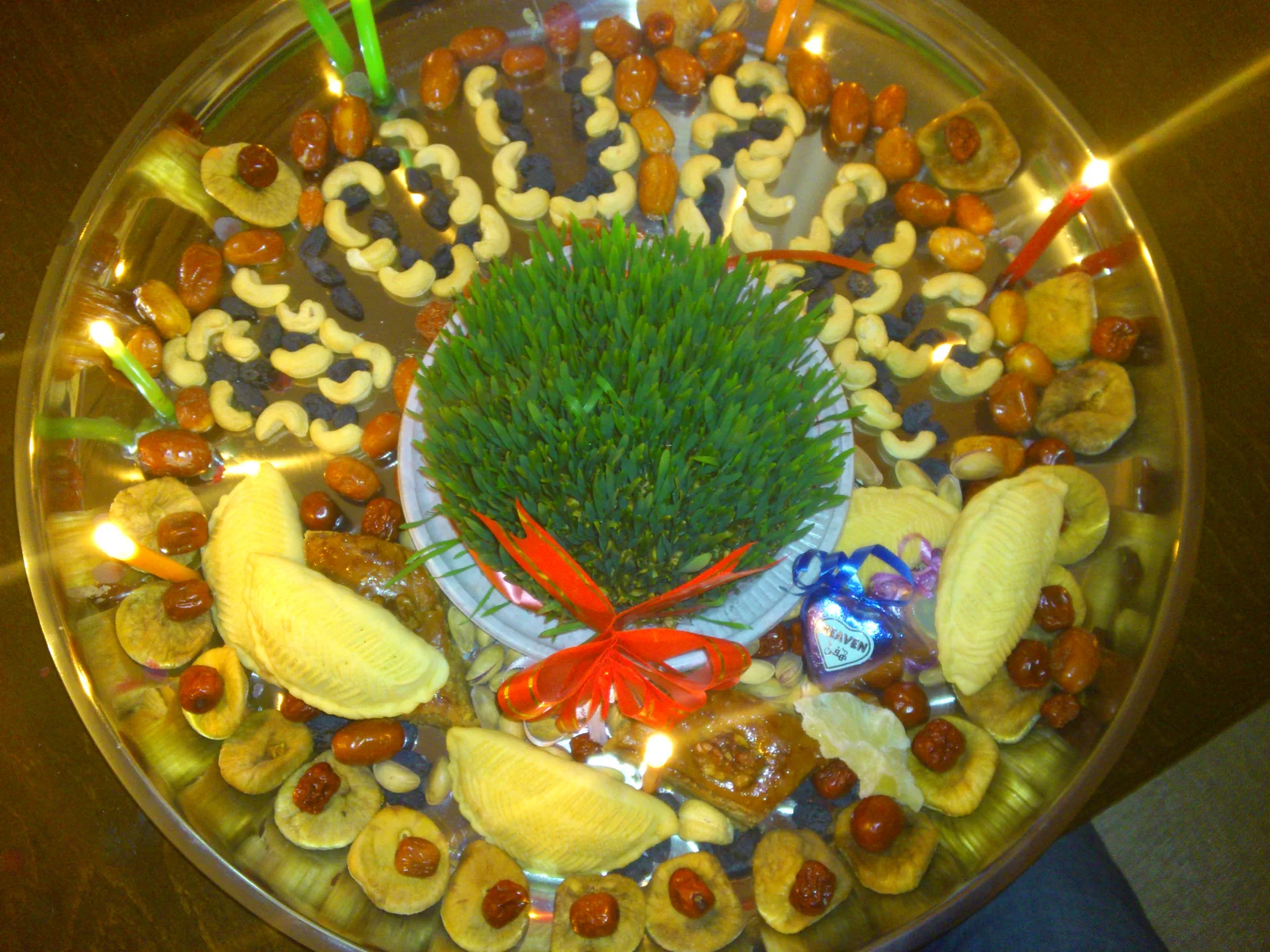
Mothers grow sweet green wheat sprouts called samani in wide shallow bowls two weeks before spring.
Workers wash golden wheat seeds in clean water and spread them on soft white wet cloths.
The bright green growing blades show that nature is waking up with fresh life and food.
Families tie a bright red ribbon around the tall green sprouts for good luck and health.
The green samani bowl sits in the very center of the big holiday food tray.
Cooks boil sweet wheat juice in big copper pots for many hours to make rich samani halva.
The Sweet Holiday Food Tray
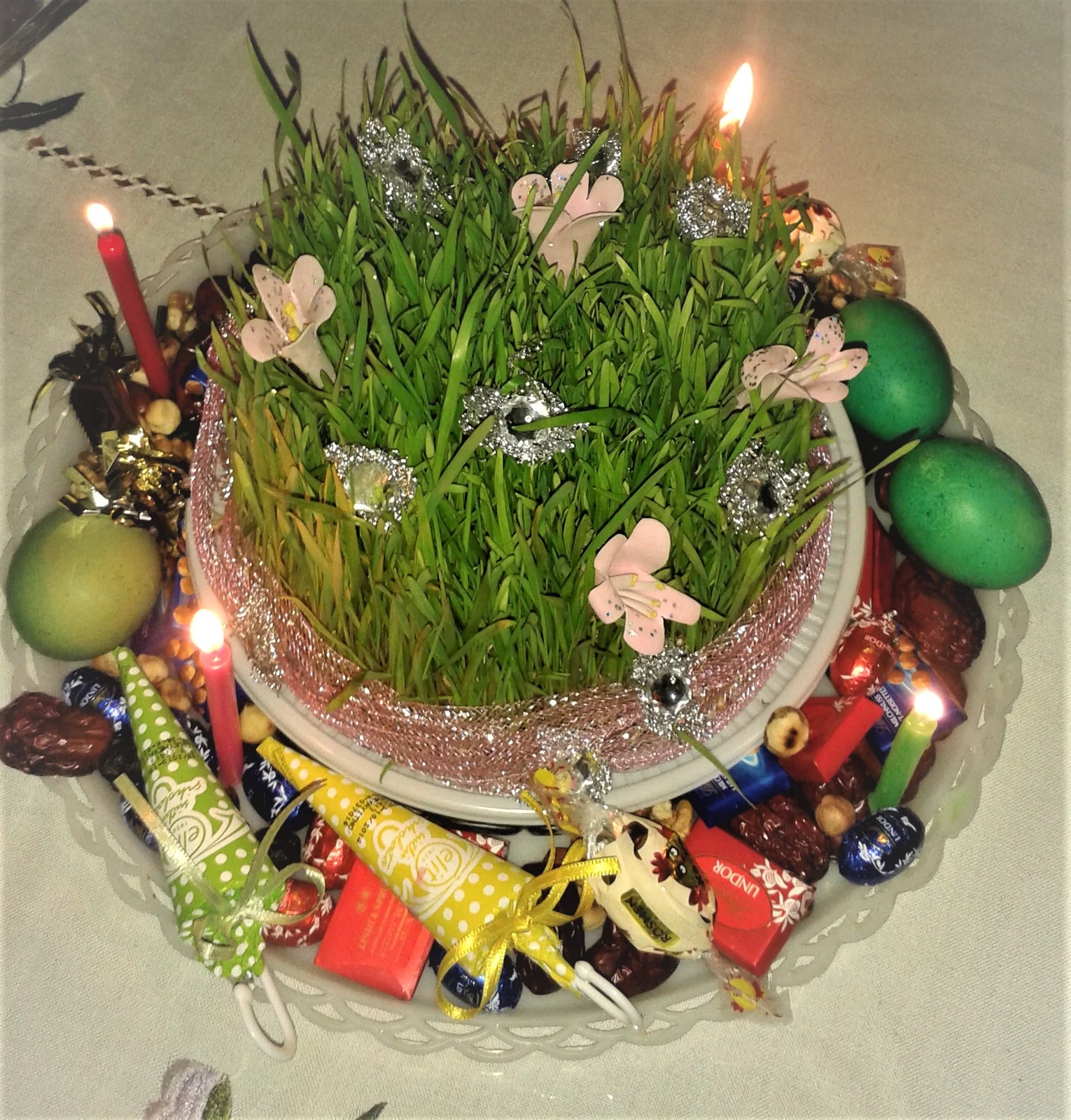
A round metal tray called a khoncha holds sweet holiday foods, red eggs, and small candles.
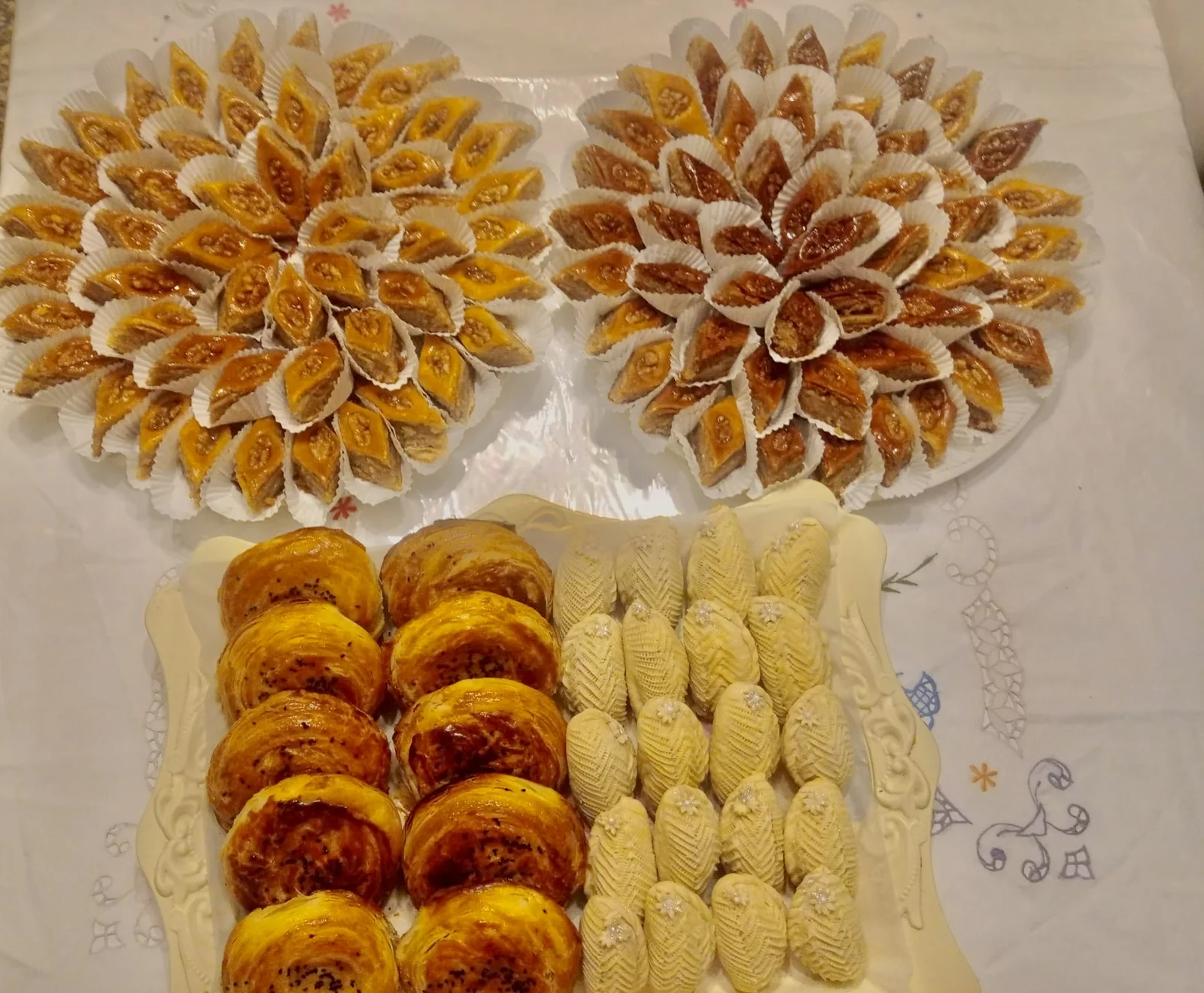
Sweet shekerbura pastries with almond nuts look like pretty white crescent moons from the night sky.
Golden honey pakhlava with walnut pieces is sliced into shiny diamond star shapes.
Round yellow shorgoghal bread with tasty spices looks like the bright morning sun.
Red boiled eggs dyed with brown onion skins show that new life is starting in spring.
Small burning candles and a clean glass mirror bring soft light to the family table.
Listening for Good Luck and Keeping Traditions
Young girls stand quietly by neighborhood doors during gulagfali to hear kind words of good luck.
Friends drop silver rings into bowls of water to playfully guess who will marry soon.
Every home opens its wooden doors wide to welcome hungry neighbors with plates of sweet pastries.
Families carry big trays of cookies to celebrate happy new weddings with kind grandparents.
In 2009 UNESCO placed shared Novruz traditions on its world cultural heritage list.
Mothers teach their daughters how to bake sweet cookies to keep old spring customs alive.
A2 · Elementary
Novruz Customs, Symbols, and Seasonal Rituals Across Azerbaijan
The four elemental Charshanbas, sprouted samani wheat, decorative khoncha trays, and UNESCO safeguarding.
The Four Charshanba Elemental Tuesdays
The four weeks preceding Novruz are organized around four celebratory Tuesdays known as Charshanbas, each honoring an elemental force.
Su Charshanbasi, or Water Tuesday, begins the cycle as community members wash in fresh flowing water at dawn.
Od Charshanbasi, or Fire Tuesday, centers on rekindling warmth through cheerful outdoor bonfires that banish winter cold.
Yel Charshanbasi, or Wind Tuesday, honors shifting vernal breezes that awaken tree buds and stimulate flowing streams.
Torpaq Charshanbasi, or Earth Tuesday, marks the final preparatory Tuesday, commemorating soil awakening for spring planting.
This progressive calendar sequence builds collective anticipation, leading smoothly into the vernal equinox celebrations.
Samani Cultivation and Agrarian Symbolism
Households cultivate sprouted wheat samani in shallow circular dishes roughly two weeks before the equinox to monitor growth.
Artisans wash and soak select wheat grains in clear water, spreading them over wet cloths to foster germination.
The lush green blades of samani symbolize vegetative rebirth, seasonal fertility, and the promise of abundant harvests.
A vibrant red satin ribbon is tied around the green sheaf, serving as a protective talisman of life force.
The verdant samani platter occupies the central position of honor upon the ceremonial khoncha holiday table.
Experienced cooks simmer sprouted wheat extract, flour, and crushed walnuts in copper cauldrons to prepare traditional samani halva.
The Ceremonial Khoncha and Cosmic Pastries
The circular khoncha presentation tray represents a domestic microcosm of abundance, bearing samani, pastries, dyed eggs, and candles.
Almond-filled shekerbura pastries are folded into crescent moon shapes, decorated with intricate crust patterns crimped using brass magash tweezers.
Multi-layered pakhlava pastries filled with spiced walnuts are sliced into diamond star shapes and soaked in saffron syrup.
Round golden shorgoghal pastries flavored with turmeric and fennel seeds represent the radiant solar disc of returning warmth.
Boiled eggs stained in deep red with wild madder roots and onion skins symbolize cosmic creation and fertile life.
A central mirror, a dish of clear water, and glowing candles representing each family member illuminate the festive room.
Domestic Divination and UNESCO Multinational Safeguarding
The vernacular divination custom of gulagfali encourages youth to listen secretly at neighbors' doorways to interpret overheard words as omens.
Young women drop silver rings into bowls of water or toss shoes backward to playfully predict forthcoming matrimonial journeys.
Generous domestic hospitality requires households to welcome unexpected visitors and share abundant portions of freshly baked pastries.
Families deliver beautifully decorated khoncha trays to newly betrothed relatives, reinforcing intergenerational kinship bonds.
UNESCO recognized Novruz as a shared multinational intangible cultural heritage inscription across twelve participating nations in 2009.
Community culinary associations and cultural programs ensure the active transmission of ancestral Novruz rituals in modern Azerbaijan.
B1 · Intermediate
Novruz Customs, Symbols, and Seasonal Rituals: Charshanba Cycles, Khoncha Trays, and Living Heritage
Elemental Tuesday ceremonies, samani agrarian germination, cosmic pastry geometry, and multinational UNESCO protection.
The Four Charshanba Elemental Tuesdays
The monthly countdown to the vernal equinox is structured by four elemental Tuesdays, known as Charshanbas, that sequentially awaken the natural world.
Su Charshanbasi, celebrating water, initiates the cycle as villagers wash hands, faces, and utensils in running mountain streams at sunrise.
Od Charshanbasi focuses on the restorative warmth of fire, prompting neighborhood families to ignite outdoor bonfires and leap across crackling embers.
Yel Charshanbasi honors atmospheric wind currents, celebrating vernal breezes that circulate through orchards to awaken swelling buds.
Torpaq Charshanbasi represents the culmination of the cycle, commemorating the fertile revival of the earth just before the official equinox.
This structured progression reflects an ancient agrarian calendar, transforming household anticipation into a shared community celebration.
Samani Cultivation and Agrarian Symbolism
Domestic preparation centers upon germinating wheat grains in shallow ceramic dishes to produce verdant samani approximately two weeks before Novruz.
Practitioners rinse select whole wheat seeds in fresh water, distributing them across damp textiles to stimulate root growth without soil.
The dense emerald carpet of sprouted wheat shoots serves as an auspicious living emblem of vegetative resurrection and agricultural bounty.
A striking crimson satin ribbon is bound snugly around the circumference, functioning as a talismanic protector of vital household energy.
The flourishing samani vessel occupies the focal centerpiece of the ceremonial khoncha tray throughout the holiday period.
Culinary specialists extract the sweet enzymatic malt from sprouted wheat, simmering it patiently with flour to produce restorative samani halva.
The Ceremonial Khoncha and Cosmic Pastries
Arranged with aesthetic precision, the circular khoncha tray presents a domestic microcosm of cosmic balance, light, and seasonal prosperity.
Almond-stuffed shekerbura pastries are sculpted into lunar crescent shapes, their delicate top crusts crimped with brass magash pincers.
Multi-tiered pakhlava confections filled with ground walnuts and cardamom are carved into diamond facets representing celestial stars.
Flaky savory-sweet shorgoghal rounds spiced with turmeric, fennel, and cumin embody the radiant disk of the returning spring sun.
Hard-boiled eggs dyed crimson using boiled onion skins and madder root symbolize primordial cosmic creation and fertile renewal.
A polished silver mirror flanked by floating rose petals and illuminated candles dedicated to each living family member anchors the festive table.
Domestic Divination and UNESCO Multinational Safeguarding
Intimate folk customs include the clandestine eavesdropping practice of gulagfali, where young individuals interpret overheard doorstep phrases as prophetic omens.
Unmarried women engage in lighthearted matrimonial divination by tossing shoes toward household entrances or suspending silver rings over water.
Normative seasonal ethics dictate boundless hospitality, obligating families to offer traditional pastries and tea to any visiting guest.
Extended family networks deliver laden khoncha gift trays to newly engaged couples, reaffirming reciprocal kinship solidarity across generations.
In 2009 UNESCO inscribed Novruz on the Representative List of the Intangible Cultural Heritage of Humanity, expanding the multinational register in 2016.
Civic heritage associations and state cultural initiatives preserve these vernacular customs, maintaining ancestral continuities in contemporary Azerbaijani society.
B2 · Upper Intermediate
Novruz Customs, Symbols, and Seasonal Rituals: Charshanba Cycles, Khoncha Trays, and Living Heritage
Agrarian elemental mythology, sprouted wheat iconography, celestial pastry semiotics, and multinational intangible safeguarding.
The Four Charshanba Elemental Tuesdays
The month-long preparatory sequence preceding Novruz unfolds across four celebratory Tuesdays termed Charshanbas, each dedicated to animating an elemental realm.
Su Charshanbasi initiates the cycle by venerating water, where rural and urban dwellers perform ritual ablutions in fresh streams at daybreak.
Od Charshanbasi commemorates the invigorating element of fire, where neighborhoods kindle celebratory bonfires to hasten the expulsion of winter frost.
Yel Charshanbasi honors the vernal wind, paying tribute to atmospheric currents that pollinate orchards, circulate moisture, and disperse dormant seeds.
Torpaq Charshanbasi concludes the cycle as the final Tuesday before the equinox, celebrating the thawed fertile earth ready for agricultural sowing.
This sequential elemental cosmology harmonizes domestic labor with ecological cycles, orienting the entire community toward vernal renewal.
Samani Cultivation and Agrarian Symbolism
Households initiate the cultivation of sprouted wheat samani in shallow circular platters precisely two weeks prior to the astronomical equinox.
Preparers meticulously rinse premium grain kernels before spreading them evenly across moistened cotton cloths to foster rapid germination without soil.
The flourishing emerald blades of samani symbolize nature's annual resurrection, generative fertility, and the promise of an abundant harvest.
A vivid scarlet satin ribbon encircles the upright shoots, operating as an apotropaic amulet that safeguards the germinating life force.
Placed conspicuously at the epicenter of the festive khoncha tray, the verdant samani platter serves as the definitive symbol of the season.
Confectioners express the malted essence of sprouted wheat through the preparation of samani halva, slowly caramelizing the extract with flour and nuts.
The Ceremonial Khoncha and Cosmic Pastries
The ceremonial khoncha tray functions as a domestic microcosm of cosmic harmony, assembling symbolic confectionery, dyed eggs, mirrors, and candlelight.
Ground almond shekerbura pastries are sculpted into lunar crescent contours, their outer crusts embellished with intricate herringbone crimping using brass magash tweezers.
Multi-layered walnut pakhlava diamond pastries, saturated in aromatic saffron syrup, represent the crystalline luminosity of celestial stars.
Laminated shorgoghal spirals seasoned with pungent fennel, turmeric, and anise seeds visually evoke the warming rays of the solar disc.
Eggs boiled in madder root and red onion skins symbolize the primordial cosmic egg, embodying the latent spark of universal creation.
The arrangement is anchored by a central mirror and burning wax candles dedicated to each family member, reflecting purificatory light throughout the dwelling.
Domestic Divination and UNESCO Multinational Safeguarding
Vernacular domestic rituals include the covert divination practice of gulagfali, wherein individuals eavesdrop outside adjacent doors to interpret first spoken words as seasonal portents.
Maidens practice matrimonial folklore by floating rings upon water or hurling shoes toward doorways to playfully discern their impending nuptial destinies.
Cultural conventions mandate unconditional household hospitality, requiring celebrants to dispense tea, nuts, and pastries to all visitors without distinction.
Reciprocal exchanges of ceremonial khoncha platters among extended familial branches solidify intergenerational alliances and reinforce community cohesion.
UNESCO formalized multinational recognition by inscribing Novruz on the Representative List of the Intangible Cultural Heritage of Humanity in 2009 and 2016.
Public cultural agencies and culinary guilds sustain living educational workshops, ensuring that authentic equinox traditions flourish in contemporary urban environments.
C1 · Advanced
Novruz Customs, Symbols, and Seasonal Rituals: Elemental Cosmologies, Khoncha Semiotics, and Living Heritage
Agronomic elemental mythology, sprouted wheat semiotics, celestial confectionery iconography, and multinational UNESCO safeguarding.
The Four Charshanba Elemental Tuesdays
The four-week ritual progression anticipating the vernal equinox is structured around four commemorative Tuesdays designated as Charshanbas, each venerating a fundamental cosmological element.
Su Charshanbasi inaugurates the cycle through aqueous purification, where community members perform ritual ablutions in flowing mountain waters at dawn.
Od Charshanbasi honors the solar principle of fire, prompting neighborhoods to kindle communal bonfires that metaphorically dissolve winter's lethargic chill.
Yel Charshanbasi venerates vernal atmospheric currents, celebrating prevailing breezes that facilitate floral pollination and circulate environmental moisture.
Torpaq Charshanbasi concludes the elemental series as the terminal Tuesday before the equinox, sacralizing the thawed soil as ready for agrarian cultivation.
This calibrated progression synchronizes domestic preparation with macrocosmic seasonal rhythms, orchestrating widespread psychological readiness for agricultural rejuvenation.
Samani Cultivation and Agrarian Symbolism
The agricultural core of the festival is embodied in the germinated wheat platter known as samani, cultivated within shallow dishes two weeks before the equinox.
Practitioners wash selected cereal grains in mountain water, distributing them across saturated textiles to induce rapid germination independent of soil.
The emergent emerald shoots of samani operate as a living botanical icon of vegetative resurrection, fecundity, and agrarian abundance.
A vibrant crimson satin ribbon is bound around the circumference, functioning as an apotropaic talisman to safeguard the vulnerable sprouts from misfortune.
Dominating the spatial hierarchy of the ceremonial khoncha tray, the lush samani vessel serves as the undisputed centerpiece of household decor.
Artisans extract the nutrient-rich malted juice from sprouted wheat, patiently caramelizing the extract in copper cauldrons to produce ceremonial samani halva.
The Ceremonial Khoncha and Cosmic Pastries
The circular khoncha presentation tray operates as an auspicious domestic microcosm, harmonizing solar, lunar, and stellar confectionery around a purificatory axis.
Almond-stuffed shekerbura pastries are folded into lunar crescent profiles, their delicate surfaces crimped with herringbone patterns using serrated brass magash tweezers.
Multi-tiered walnut pakhlava diamond pastries, steeped in saffron syrup, replicate the crystalline symmetry and celestial luminosity of distant stars.
Laminated shorgoghal spirals seasoned with turmeric, anise, and fennel evoke the radiant solar disc through their golden hue and circular geometry.
Hard-boiled eggs simmered in onion skins and madder root symbolize the primordial cosmic egg, signifying latent embryonic vitality.
A central mirror, a dish of clear water with floating petals, and dedicated wax candles corresponding to household members complete the sacred tableau.
Domestic Divination and UNESCO Multinational Safeguarding
Vernacular domestic rituals encompass the clandestine divination custom of gulagfali, where youths surreptitiously listen at neighborhood thresholds to interpret overheard dialogues as prophetic omens.
Maidens engage in lighthearted matrimonial folklore by dropping silver rings into water or casting slippers backward to playfully decipher impending nuptial trajectories.
Equinox ethical codes mandate unconditional hospitality, obligating households to dispense seasonal delicacies, tea, and warm greetings to all callers.
Reciprocal deliveries of ornate khoncha trays to betrothed kin and venerable elders reinforce structural cohesion across extended familial networks.
UNESCO formalized international protection by inscribing Novruz on the Representative List of the Intangible Cultural Heritage of Humanity as a multinational nomination in 2009 and 2016.
Civic folklore academies and state cultural agencies maintain rigorous safeguarding initiatives, ensuring the continuous vitality of equinox rituals.
C2 · Mastery
Novruz Customs, Symbols, and Seasonal Rituals: Elemental Cosmologies, Khoncha Semiotics, and Living Heritage
Agronomic elemental mythology, sprouted wheat semiotics, celestial confectionery iconography, and multinational UNESCO safeguarding.
The Four Charshanba Elemental Tuesdays
The four-week ritual progression anticipating the vernal equinox is structured around four commemorative Tuesdays designated as Charshanbas, each venerating a fundamental cosmological element.
Su Charshanbasi inaugurates the cycle through aqueous purification, where community members perform ritual ablutions in flowing mountain waters at dawn.
Od Charshanbasi honors the solar principle of fire, prompting neighborhoods to kindle communal bonfires that metaphorically dissolve winter's lethargic chill.
Yel Charshanbasi venerates vernal atmospheric currents, celebrating prevailing breezes that facilitate floral pollination and circulate environmental moisture.
Torpaq Charshanbasi concludes the elemental series as the terminal Tuesday before the equinox, sacralizing the thawed soil as ready for agrarian cultivation.
This calibrated progression synchronizes domestic preparation with macrocosmic seasonal rhythms, orchestrating widespread psychological readiness for agricultural rejuvenation.
Samani Cultivation and Agrarian Symbolism
The agricultural core of the festival is embodied in the germinated wheat platter known as samani, cultivated within shallow dishes two weeks before the equinox.
Practitioners wash selected cereal grains in mountain water, distributing them across saturated textiles to induce rapid germination independent of soil.
The emergent emerald shoots of samani operate as a living botanical icon of vegetative resurrection, fecundity, and agrarian abundance.
A vibrant crimson satin ribbon is bound around the circumference, functioning as an apotropaic talisman to safeguard the vulnerable sprouts from misfortune.
Dominating the spatial hierarchy of the ceremonial khoncha tray, the lush samani vessel serves as the undisputed centerpiece of household decor.
Artisans extract the nutrient-rich malted juice from sprouted wheat, patiently caramelizing the extract in copper cauldrons to produce ceremonial samani halva.
The Ceremonial Khoncha and Cosmic Pastries
The circular khoncha presentation tray operates as an auspicious domestic microcosm, harmonizing solar, lunar, and stellar confectionery around a purificatory axis.
Almond-stuffed shekerbura pastries are folded into lunar crescent profiles, their delicate surfaces crimped with herringbone patterns using serrated brass magash tweezers.
Multi-tiered walnut pakhlava diamond pastries, steeped in saffron syrup, replicate the crystalline symmetry and celestial luminosity of distant stars.
Laminated shorgoghal spirals seasoned with turmeric, anise, and fennel evoke the radiant solar disc through their golden hue and circular geometry.
Hard-boiled eggs simmered in onion skins and madder root symbolize the primordial cosmic egg, signifying latent embryonic vitality.
A central mirror, a dish of clear water with floating petals, and dedicated wax candles corresponding to household members complete the sacred tableau.
Domestic Divination and UNESCO Multinational Safeguarding
Vernacular domestic rituals encompass the clandestine divination custom of gulagfali, where youths surreptitiously listen at neighborhood thresholds to interpret overheard dialogues as prophetic omens.
Maidens engage in lighthearted matrimonial folklore by dropping silver rings into water or casting slippers backward to playfully decipher impending nuptial trajectories.
Equinox ethical codes mandate unconditional hospitality, obligating households to dispense seasonal delicacies, tea, and warm greetings to all callers.
Reciprocal deliveries of ornate khoncha trays to betrothed kin and venerable elders reinforce structural cohesion across extended familial networks.
UNESCO formalized international protection by inscribing Novruz on the Representative List of the Intangible Cultural Heritage of Humanity as a multinational nomination in 2009 and 2016.
Civic folklore academies and state cultural agencies maintain rigorous safeguarding initiatives, ensuring the continuous vitality of equinox rituals.
Check your understanding
Choose how closely you want to revisit the article. You can refer back while answering, and review explanations when you finish.
Quick Quiz A1
Try one question, then create a free account for the full Quick Quiz. Sign Up Free
Answer every question before checking. There is no time limit.
Your results
/ 1 correct (%)
Read the explanations to see how each answer connects to the article.
-
What are the four festive celebratory Tuesdays preceding Novruz dedicated to awakening natural elements called?
1. Answer:
Quick Quiz A2
Try one question, then create a free account for the full Quick Quiz. Sign Up Free
Answer every question before checking. There is no time limit.
Your results
/ 1 correct (%)
Read the explanations to see how each answer connects to the article.
-
What are the four festive celebratory Tuesdays preceding Novruz dedicated to awakening natural elements called?
1. Answer:
Quick Quiz B1
Try one question, then create a free account for the full Quick Quiz. Sign Up Free
Answer every question before checking. There is no time limit.
Your results
/ 1 correct (%)
Read the explanations to see how each answer connects to the article.
-
What are the four festive celebratory Tuesdays preceding Novruz dedicated to awakening natural elements called?
1. Answer:
Quick Quiz B2
Try one question, then create a free account for the full Quick Quiz. Sign Up Free
Answer every question before checking. There is no time limit.
Your results
/ 1 correct (%)
Read the explanations to see how each answer connects to the article.
-
What are the four festive celebratory Tuesdays preceding Novruz dedicated to awakening natural elements called?
1. Answer:
Quick Quiz C1
Try one question, then create a free account for the full Quick Quiz. Sign Up Free
Answer every question before checking. There is no time limit.
Your results
/ 1 correct (%)
Read the explanations to see how each answer connects to the article.
-
What are the four festive celebratory Tuesdays preceding Novruz dedicated to awakening natural elements called?
1. Answer:
Quick Quiz C2
Try one question, then create a free account for the full Quick Quiz. Sign Up Free
Answer every question before checking. There is no time limit.
Your results
/ 1 correct (%)
Read the explanations to see how each answer connects to the article.
-
What are the four festive celebratory Tuesdays preceding Novruz dedicated to awakening natural elements called?
1. Answer:
