A1 · Beginner
Novruz Spring Holiday Celebrations in Baku
Spring flowers, tasty pastries, funny actors, and bright evening bonfires in Azerbaijan.
Spring Arrives in the Capital City
Warm spring arrives in Azerbaijan in late March when day and night are equal.
The city government in Baku decorates public parks and squares for the big festival.
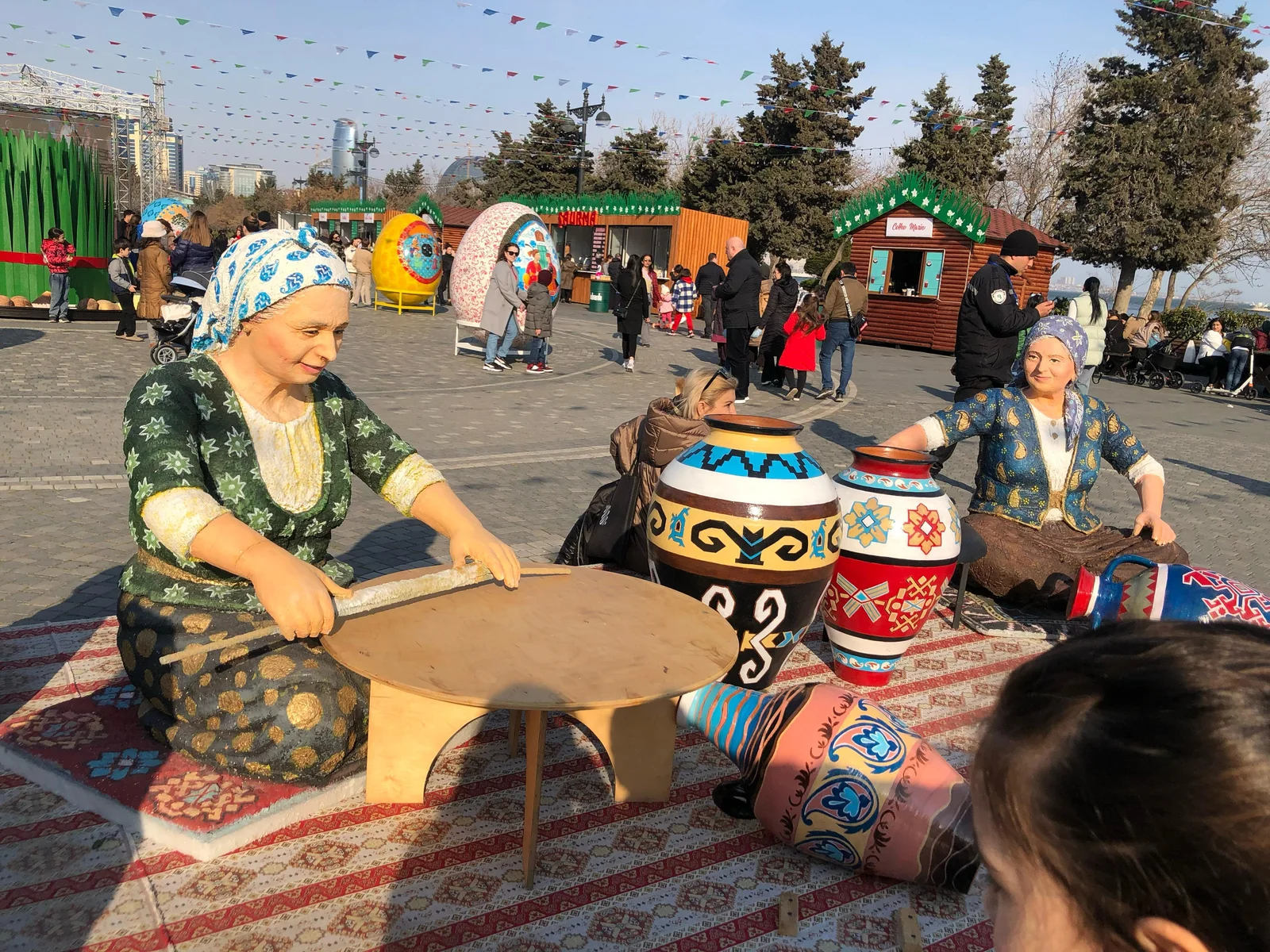
Tall green wheat sprouts called samani decorate the square near the old Maiden Tower.
Pedestrian streets along the seaside boulevard fill with craft markets and food stalls.
Families bake sweet shekerbura pastries and rich pakhlava with walnuts in warm ovens.
Bright street lights and holiday signs make the city shine at night.
Funny Street Actors and Spring Games
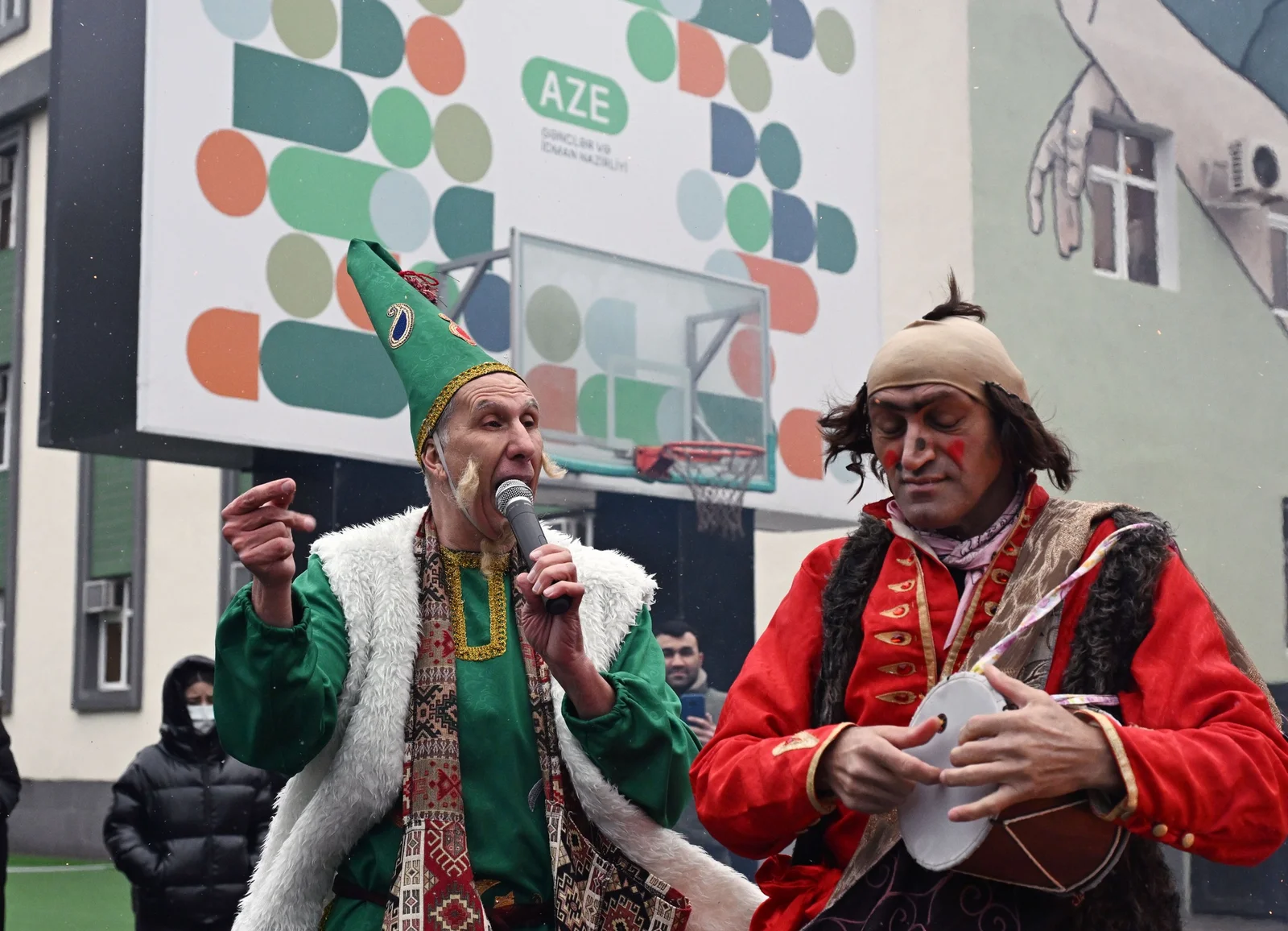
Costumed actors play the funny characters Kosa and Kechel in noisy town squares.
Old Kosa acts like cold winter while cheerful Kechel brings back warm sunny days.
A pretty girl called Bahar gizi rides a horse carriage to welcome the new season.
Children knock hard red and green boiled eggs together to see which egg breaks first.
Young boys place cloth hats on front doors to receive dried fruits and sweet candy.
Strongmen and brave tightrope walkers perform balance tricks in green city parks.
Singing, Dancing, and Holiday Fireworks
Musicians play cheerful folk songs on open wooden stages along the Caspian seashore.
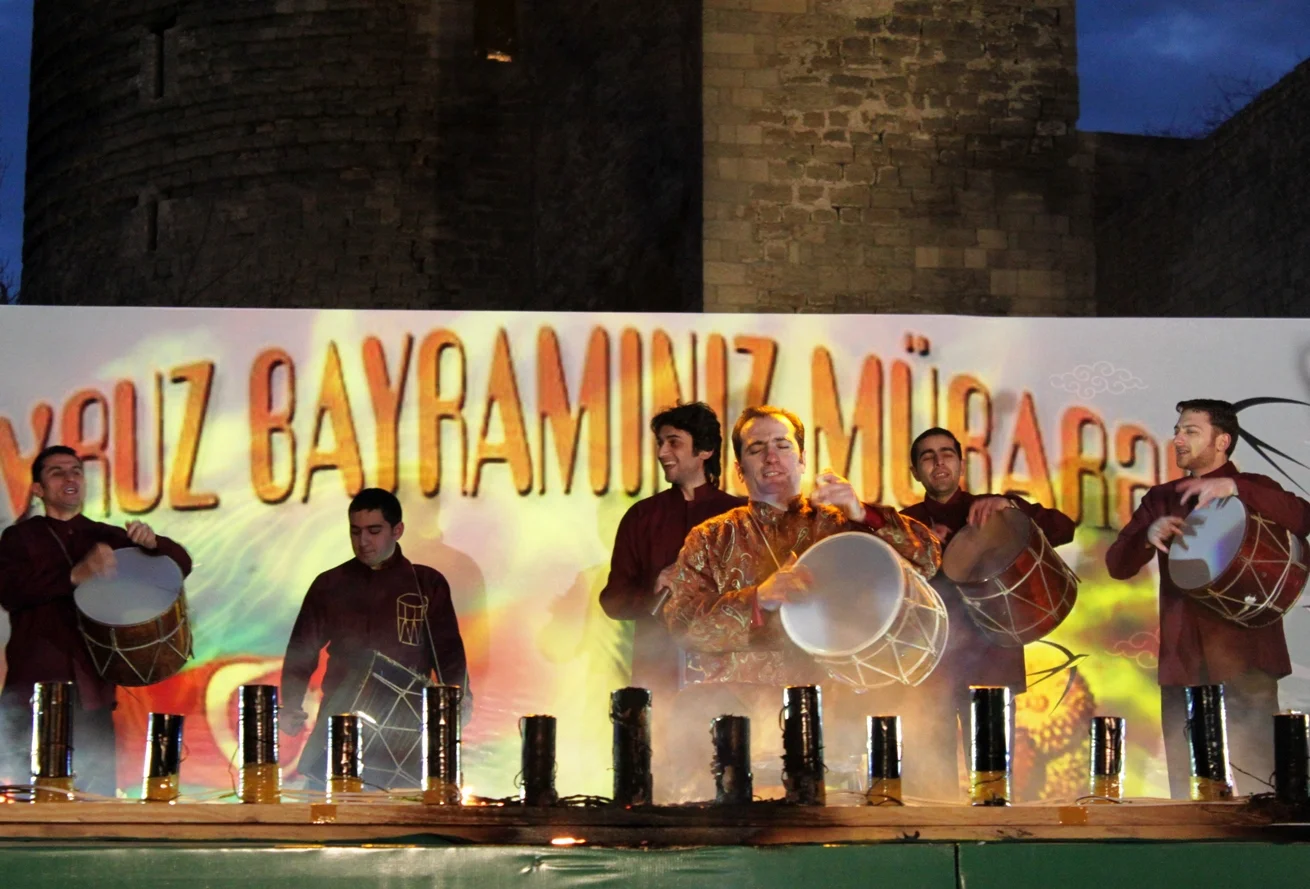
Drummers hit round naghara drums to make fast rhythms that excite big crowds.
Folk singers with long saz lutes sing ancient poetry about nature and green hills.
Friendly dancers hold hands in large circles to dance the traditional Yalli dance.
Strong wrestlers compete in sand rings while drummers keep the steady beat.
Colorful fireworks explode high in the night sky over Baku Bay at midnight.
Evening Fires and World Cultural Heritage
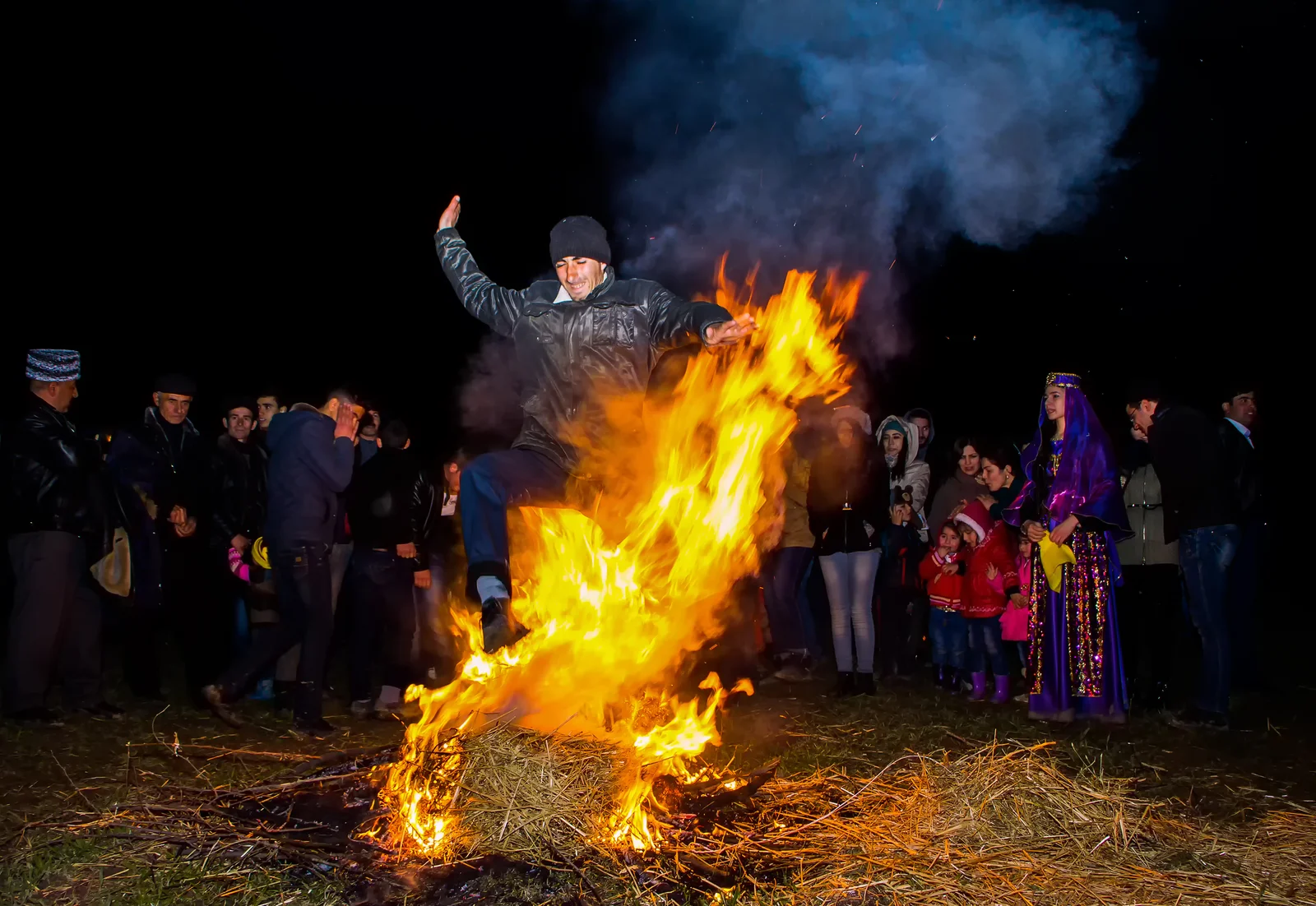
Neighborhood families light bright tonqal bonfires in open courtyards when the sun sets.
People jump over warm orange flames to leave old troubles behind in the smoke.
Old friends meet on the street to forgive past arguments and say kind holiday words.
Parents teach young children how to shape sweet cookies and play old spring games.
UNESCO protects Azerbaijani Novruz traditions on its world cultural heritage list.
The government gives money to help artists and keep old spring celebrations alive.
A2 · Elementary
Novruz Spring Equinox Festival in Baku
Civic festivities, street performances, traditional pastries, and communal evening bonfires.
Equinox Arrival and Baku Civic Transformations
The astronomical vernal equinox in late March marks the official start of the Novruz New Year in Azerbaijan.
Baku City Executive Power organizes the capital celebration entitled 'Ruhumuza bahar gəlir' across public parks and squares.
Monumental sprouted wheat samani displays wrapped with red satin ribbons decorate the plaza beside Maiden Tower.
Pedestrian avenues along Baku Boulevard transform into bustling open-air fairgrounds with craft stalls and regional food vendors.
Households prepare traditional holiday sweets including almond shekerbura, multi-layered pakhlava, and spiced goghal for ceremonial khoncha trays.
Illuminated floral arches and synchronized musical broadcasts enliven the Caspian promenade throughout the multi-day national holiday.
Theatrical Street Customs and Folk Figures
Costumed folk actors portray the comic characters Kosa and Kechel, entertaining street crowds with witty rhyming dialogue.
In traditional street theater, Kosa personifies departing winter while Kechel represents the lively renewal of springtime.
A ceremonial carriage brings the character Bahar gizi into public plazas to announce the arrival of nature's awakening.
Children and adults contest the traditional egg-tapping game in city squares using brightly dyed red eggs.
The vernacular custom of papagatdi invites youth to toss cloth caps onto neighbors' thresholds to collect hidden sweets.
Acrobatic tightrope walkers and strongmen perform feats of balance and weightlifting in designated park arenas.
Musical Performances and Public Concert Stages
Open-air acoustic stages along the seaside boulevard host rotating concerts by folk orchestras and state ensembles.
Percussionists play energetic rhythms on cylindrical naghara drums to celebrate the seasonal holiday.
Ashug bards perform on plucked saz instruments, singing poetic verses that praise green nature and heroic folklore.
Dancers execute the ancient Yalli circular group dance, joining hands in large rings that welcome public participation.
Athletes demonstrate national wrestling bouts and traditional zorkhana strength routines accompanied by live drumming.
A brilliant evening fireworks display over Baku Bay illuminates the Caspian coast to mark the spring festival.
Communal Bonfires and UNESCO Safeguarding
At dusk, neighborhood communities ignite ceremonial tonqal bonfires in open courtyard spaces across the capital.
Citizens leap across the bonfire flames while reciting traditional chants to cast away past misfortunes.
Holiday ethical traditions encourage community members to resolve lingering disagreements and visit elderly relatives.
Families transmit pastry recipes, folk songs, and holiday rituals to children through active festive participation.
UNESCO inscribed Novruz onto the Representative List of the Intangible Cultural Heritage of Humanity in 2009.
State cultural agencies fund performance logistics, artist troupes, and educational workshops to sustain living Novruz heritage.
B1 · Intermediate
Novruz Spring Equinox Festival in Baku: Civic Festivities, Street Rituals, and Living Heritage
Equinox fairgrounds, the comic theater of Kosa and Kechel, circular Yalli dancing, and purificatory evening bonfires.
Equinox Arrival and Baku Civic Transformations
The arrival of the vernal equinox on March twentieth or twenty-first marks the astronomical commencement of the Novruz New Year across Azerbaijan.
Baku City Executive Power coordinates the official municipal campaign titled 'Ruhumuza bahar gəlir', deploying decorated pavilions, public stages, and festive lighting.
Monumental sprouted wheat samani installations encircled by red satin ribbons adorn major civic landmarks including Maiden Tower Square and Fountain Square.
Pedestrian corridors along Baku Boulevard and historic Icherisheher plazas convert into lively open-air fairgrounds featuring artisan demonstrations and culinary stalls.
Households bake abundant quantities of almond shekerbura, nut-filled pakhlava, and spiced yellow goghal to populate ceremonial khoncha holiday trays.
Luminous floral arches, seasonal street banners, and amplified folk music broadcasts reorder the urban core into a welcoming public celebration space.
Theatrical Street Customs and Folk Figures
Costumed folk actors animate the satirical comic figures Kosa and Kechel, engaging spectators through humorous rhyming exchanges and improvisational sketches.
Within this popular street drama, Kosa personifies the reluctant retreat of winter while Kechel embodies the fertile energy of emerging spring.
A decorated carriage conveys Bahar gizi, the symbolic Daughter of Spring, into crowded plazas to recite celebratory verses and distribute green samani shoots.
Crowds gather around public benches to participate in traditional egg-tapping contests, testing the shell strength of brightly colored boiled eggs.
The clandestine doorstep custom of papagatdi allows neighborhood youth to deposit felt caps outside doorways, eagerly retrieving concealed dried fruits and confections.
Itinerant tightrope artists called kandirbazlar and traditional strongmen execute thrilling balance displays and weightlifting feats across public parks.
Musical Performances and Public Concert Stages
Erected along the Caspian promenade, open-air performance pavilions showcase rotating concert programs by classical mugam masters and state dance troupes.
Dynamic percussion ensembles command public attention with syncopated rhythms played upon cylindrical naghara drums and goshanaghara sets.
Ashug bardic minstrels strum the fretted saz lute while chanting narrative stanzas that extol agrarian renewal and classical Azerbaijani epic legends.
Massive rings of celebratory citizens join hands with professional performers to dance the Yalli, tracing synchronized circular patterns across open plazas.
Exhibition bouts of traditional national wrestling, termed milli gulesh, and zorkhana athletic routines draw spirited cheers from holiday onlookers.
A midnight pyrotechnic fireworks extravaganza detonates across Baku Bay, showering the coastal skyline with multicolored bursts to herald the equinox.
Communal Bonfires and UNESCO Safeguarding
As twilight descends across metropolitan Baku, residential courtyards and open thoroughfares ignite ceremonial tonqal bonfires using dry timber and brushwood.
Men, women, and children leap successively over the blazing embers while reciting ancient rhyming invocations that plead for personal renewal and vitality.
Centuries-old ethical codes govern the holiday season, compelling estranged acquaintances to reconcile grievances and share commemorative tea.
Culinary techniques, ornamental pastry crimping, and celebratory games are transmitted organically across generations within domestic kitchens.
In 2009 UNESCO recognized Novruz on the Representative List of the Intangible Cultural Heritage of Humanity, expanding the inscription in 2016.
The Ministry of Culture finances municipal infrastructure, civic festivals, and masterclasses to guarantee the continuous vitality of equinox traditions.
B2 · Upper Intermediate
Novruz Spring Equinox Festival in Baku: Civic Festivities, Street Rituals, and Living Heritage
Astronomical equinox pageantry, Kosa and Kechel street theater, circular Yalli choreographies, and purificatory fire rites.
Equinox Arrival and Baku Civic Transformations
The precise celestial occurrence of the vernal equinox on March twentieth or twenty-first inaugurates the Novruz New Year, celebrated as nature's rebirth.
Baku City Executive Power orchestrates the citywide festive campaign 'Ruhumuza bahar gəlir', staging coordinated cultural installations, pavilions, and lighting arrays.
Colossal sprouted wheat samani centerpieces bound with crimson satin ribbons command public focal points at Maiden Tower Square and Fountain Square.
The waterfront promenade of Baku Boulevard accommodates expansive artisan bazaars, where regional coppersmiths, carpet weavers, and confectioners demonstrate their crafts.
Domestic kitchens throughout the capital produce intricate holiday pastries, crafting sun-shaped goghal, crescent shekerbura, and diamond-patterned pakhlava for celebratory khonchas.
Luminescent overhead canopies, festive architectural projections, and rhythmic musical broadcasts revitalize public squares throughout the official statutory holiday.
Theatrical Street Customs and Folk Figures
Theatrical street performers personify the canonical folk figures Kosa and Kechel, drawing enthusiastic crowds into satirical improvisations and rhyming dialogue.
The dramatic allegory pits Kosa, representing barren winter, against Kechel, whose comic baldness and cheerful resilience celebrate the fertile surge of springtime.
An ornate horse-drawn carriage introduces Bahar gizi, the ceremonial Daughter of Spring, who bestows poetic benedictions and verdant sprouted samani onto citizens.
Festive gatherings actively engage in competitive egg-tapping bouts, using naturally dyed red onion-skin eggs to determine structural champions.
The covert threshold ritual of papagatdi prompts local children to leave caps upon neighbors' doorsteps, collecting hidden candies, walnuts, and baked goods.
Traditional tightrope walkers known as kandirbazlar demonstrate perilous high-wire routines above park lawns, accompanied by lively zurna and drum accompaniment.
Musical Performances and Public Concert Stages
Multiple open-air concert stages situated along Baku Boulevard present synchronized programmatic schedules featuring regional mugham trios, choirs, and orchestras.
Virtuoso percussionists execute thunderous polyrhythmic cadences upon double-headed naghara drums, building auditory excitement across public thoroughfares.
Ashug troubadours perform ancestral dastan verses upon the plucked saz, celebrating the ecological awakening of mountain meadows and ancestral fortitude.
Spectators spontaneously coalesce into expansive circular formations to dance the Yalli, uniting hundreds of participants in synchronized rhythmic steps.
Demonstration matches of traditional national wrestling, termed milli gulesh, showcase historical physical conditioning alongside rhythmic drum cadences.
A spectacular pyrotechnic display launched from offshore barges across Baku Bay illuminates the Caspian amphitheater, culminating the equinox festivities.
Communal Bonfires and UNESCO Safeguarding
At dusk, residential quarters throughout Baku illuminate communal tonqal bonfires, transforming neighborhood courtyards into glowing centers of purification.
Citizens sequentially leap over the crackling embers, reciting ancient rhythmic incantations intended to purge past afflictions and secure spiritual renewal.
Social norms governing Novruz demand the reconciliation of interpersonal feuds, encouraging families to visit elderly relatives and dispense hospitality.
Intricate confectionery craftsmanship, poetic verses, and ritual behaviors are passed down organically from matriarchs to younger household members.
UNESCO inscribed Novruz onto the Representative List of the Intangible Cultural Heritage of Humanity in 2009, reinforcing international protection in 2016.
State cultural agencies finance civic infrastructure, folk festivals, and archival research, sustaining living ancestral rites within modern urban life.
C1 · Advanced
Novruz Spring Equinox Festival in Baku: Vernacular Rituals, Civic Pageantry, and Intangible Heritage
Astronomical equinox mechanics, allegorical Kos-Kosa drama, communal Yalli choreographies, and purificatory pyrotechnic rites.
Equinox Arrival and Baku Civic Transformations
The astronomical precision of the vernal equinox on March twentieth or twenty-first initiates the ancient Novruz festival, signaling solar rejuvenation and agrarian renewal.
Baku City Executive Power mobilizes the metropolitan cultural initiative 'Ruhumuza bahar gəlir', deploying modular performance stages, artisan pavilions, and festive illuminations.
Monumental sprouted wheat samani installations encircled by crimson ribbons dominate public spaces, recontextualizing ancient agrarian fertility symbols within urban environments.
The Caspian pedestrian promenade of Baku Boulevard accommodates sprawling artisan markets, where coppersmiths, weavers, and bakers demonstrate heritage crafts to holiday crowds.
Domestic confectioners prepare symbolic pastries, including sun-shaped saffron goghal, lunar crescent shekerbura, and star-shaped pakhlava to adorn ceremonial khoncha platters.
Illuminated floral arcades, architectural projections, and synchronized public sound installations transform the maritime capital into a dynamic civic amphitheater.
Theatrical Street Customs and Folk Figures
Costumed street performers embody the satirical folk characters Kosa and Kechel, engaging public onlookers in spontaneous rhyming repartee and farcical confrontations.
The dramatic allegory juxtaposes Kosa as the stingy personification of departing winter against Kechel, whose trickster persona heralds springtime fertility.
A procession featuring Bahar gizi, the ceremonial Daughter of Spring, traverses the municipal fairgrounds on a horse-drawn carriage to deliver poetic benedictions.
Public gatherings contest the vernacular egg-tapping duel, wherein competitors test the shell resistance of hen eggs stained with boiled madder and onion skins.
The clandestine doorstep ritual of papagatdi invites neighborhood youth to deposit caps outside residential thresholds, retrieving anonymous gifts of dried fruit.
Acrobatic tightrope walkers known as kandirbazlar execute intricate balance routines along suspended cables, accompanied by piercing zurna and naghara fanfares.
Musical Performances and Public Concert Stages
Acoustic performance stages erected along the seaside boulevard host rotating programmatic offerings featuring classical mugham trios, choirs, and chamber orchestras.
Master percussionists articulate complex polyrhythmic cadences upon naghara drums, generating an acoustic environment that quickens the public pulse.
Ashug bards perform classical dastan narratives upon the fretted saz, intoning modal improvisations that celebrate seasonal revival and collective memory.
Spectators coalesce into expansive concentric rings to execute the ancestral Yalli dance, linking hands in synchronized circular movement.
Demonstration exhibitions of national milli gulesh wrestling and zorkhana martial gymnastics showcase traditional athletic training beneath rhythmic musical accompaniment.
A nocturnal pyrotechnic display launched from offshore barges over Baku Bay illuminates the Caspian coastline, honoring the celestial equinox arrival.
Communal Bonfires and UNESCO Safeguarding
As twilight settles over the capital, residential neighborhoods ignite communal tonqal bonfires, filling metropolitan courtyards with aromatic wood smoke.
Citizens sequentially leap over the flaming timber while chanting ancient rhythmic invocations that symbolically consign past misfortunes to the purifying blaze.
Communal ethics demand the dissolution of lingering grievances, compelling neighbors to visit elderly community members and dispense hospitality.
Intricate pastry craftsmanship, ornamental khoncha arrangements, and folkloric verses are transmitted through continuous familial domestic participation.
UNESCO formalized recognition by inscribing Novruz on the Representative List of the Intangible Cultural Heritage of Humanity in 2009, expanding it in 2016.
National cultural policies allocate dedicated municipal resources, subvention funds, and educational curricula to safeguard living equinox practices.
C2 · Mastery
Novruz Spring Equinox Festival in Baku: Vernacular Rituals, Civic Pageantry, and Semiotic Renewal
Astronomical equinox mechanics, allegorical Kos-Kosa drama, communal Yalli choreographies, and purificatory pyrotechnic rites.
Equinox Arrival and Baku Civic Transformations
The astronomical precision of the vernal equinox on March twentieth or twenty-first initiates the ancient Novruz festival, signaling solar rejuvenation and agrarian renewal.
Baku City Executive Power coordinates the metropolitan cultural initiative 'Ruhumuza bahar gəlir', deploying modular performance stages, artisan pavilions, and festive illuminations.
Monumental sprouted wheat samani installations encircled by crimson ribbons dominate public spaces, recontextualizing ancient agrarian fertility symbols within urban environments.
The Caspian pedestrian promenade of Baku Boulevard accommodates sprawling artisan markets, where coppersmiths, weavers, and bakers demonstrate heritage crafts to holiday crowds.
Domestic confectioners prepare symbolic pastries, including sun-shaped saffron goghal, lunar crescent shekerbura, and star-shaped pakhlava to adorn ceremonial khoncha platters.
Illuminated floral arcades, architectural projections, and synchronized public sound installations transform the maritime capital into a dynamic civic amphitheater.
Theatrical Street Customs and Folk Figures
Costumed street performers embody the satirical folk characters Kosa and Kechel, engaging public onlookers in spontaneous rhyming repartee and farcical confrontations.
The dramatic allegory juxtaposes Kosa as the stingy personification of departing winter against Kechel, whose trickster persona heralds springtime fertility.
A procession featuring Bahar gizi, the ceremonial Daughter of Spring, traverses the municipal fairgrounds on a horse-drawn carriage to deliver poetic benedictions.
Public gatherings contest the vernacular egg-tapping duel, wherein competitors test the shell resistance of hen eggs stained with boiled madder and onion skins.
The clandestine doorstep ritual of papagatdi invites neighborhood youth to deposit caps outside residential thresholds, retrieving anonymous gifts of dried fruit.
Acrobatic tightrope walkers known as kandirbazlar execute intricate balance routines along suspended cables, accompanied by piercing zurna and naghara fanfares.
Musical Performances and Public Concert Stages
Acoustic performance stages erected along the seaside boulevard host rotating programmatic offerings featuring classical mugham trios, choirs, and chamber orchestras.
Master percussionists articulate complex polyrhythmic cadences upon naghara drums, generating an acoustic environment that quickens the public pulse.
Ashug bards perform classical dastan narratives upon the fretted saz, intoning modal improvisations that celebrate seasonal revival and collective memory.
Spectators coalesce into expansive concentric rings to execute the ancestral Yalli dance, linking hands in synchronized circular movement.
Demonstration exhibitions of national milli gulesh wrestling and zorkhana martial gymnastics showcase traditional athletic training beneath rhythmic musical accompaniment.
A nocturnal pyrotechnic display launched from offshore barges over Baku Bay illuminates the Caspian coastline, honoring the celestial equinox arrival.
Communal Bonfires and UNESCO Safeguarding
As twilight settles over the capital, residential neighborhoods ignite communal tonqal bonfires, filling metropolitan courtyards with aromatic wood smoke.
Citizens sequentially leap over the flaming timber while chanting ancient rhythmic invocations that symbolically consign past misfortunes to the purifying blaze.
Communal ethics demand the dissolution of lingering grievances, compelling neighbors to visit elderly community members and dispense hospitality.
Intricate pastry craftsmanship, ornamental khoncha arrangements, and folkloric verses are transmitted through continuous familial domestic participation.
UNESCO formalized recognition by inscribing Novruz on the Representative List of the Intangible Cultural Heritage of Humanity in 2009, expanding it in 2016.
National cultural policies allocate dedicated municipal resources, subvention funds, and educational curricula to safeguard living equinox practices.
Check your understanding
Choose how closely you want to revisit the article. You can refer back while answering, and review explanations when you finish.
Quick Quiz A1
Try one question, then create a free account for the full Quick Quiz. Sign Up Free
Answer every question before checking. There is no time limit.
Your results
/ 1 correct (%)
Read the explanations to see how each answer connects to the article.
-
What astronomical celestial event in late March marks the arrival of the Novruz New Year?
1. Answer:
Quick Quiz A2
Try one question, then create a free account for the full Quick Quiz. Sign Up Free
Answer every question before checking. There is no time limit.
Your results
/ 1 correct (%)
Read the explanations to see how each answer connects to the article.
-
What astronomical celestial event in late March marks the arrival of the Novruz New Year?
1. Answer:
Quick Quiz B1
Try one question, then create a free account for the full Quick Quiz. Sign Up Free
Answer every question before checking. There is no time limit.
Your results
/ 1 correct (%)
Read the explanations to see how each answer connects to the article.
-
What astronomical celestial event in late March marks the arrival of the Novruz New Year?
1. Answer:
Quick Quiz B2
Try one question, then create a free account for the full Quick Quiz. Sign Up Free
Answer every question before checking. There is no time limit.
Your results
/ 1 correct (%)
Read the explanations to see how each answer connects to the article.
-
What astronomical celestial event in late March marks the arrival of the Novruz New Year?
1. Answer:
Quick Quiz C1
Try one question, then create a free account for the full Quick Quiz. Sign Up Free
Answer every question before checking. There is no time limit.
Your results
/ 1 correct (%)
Read the explanations to see how each answer connects to the article.
-
What astronomical celestial event in late March marks the arrival of the Novruz New Year?
1. Answer:
Quick Quiz C2
Try one question, then create a free account for the full Quick Quiz. Sign Up Free
Answer every question before checking. There is no time limit.
Your results
/ 1 correct (%)
Read the explanations to see how each answer connects to the article.
-
What astronomical celestial event in late March marks the arrival of the Novruz New Year?
1. Answer:
