A1 · Beginner
Old Bridge Area of the Old City of Mostar
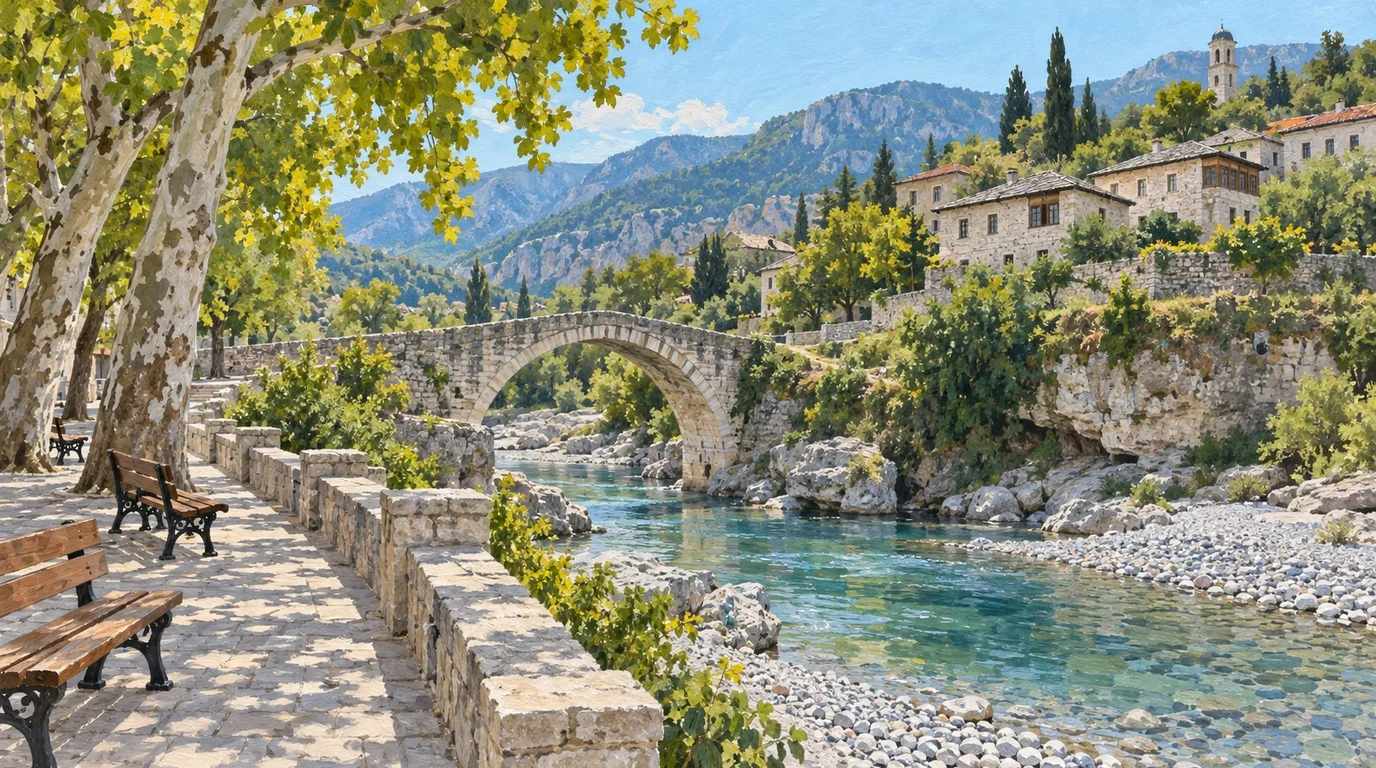
A famous white stone arch bridge stands high above a green mountain river.
Building the Great Stone Arch
Sultan Suleiman ordered builders to replace an old wooden bridge in 1557.
An architect named Mimar Hayruddin planned this tall stone bridge.
Stonemasons cut white tenelija limestone blocks from a nearby quarry.
Workers locked heavy stones together with strong iron pins and hot metal.
The high stone arch rises twenty-four meters above the summer river water.
People across Europe admired this daring stone work as a great wonder.
Guarding the Deep River Gorge
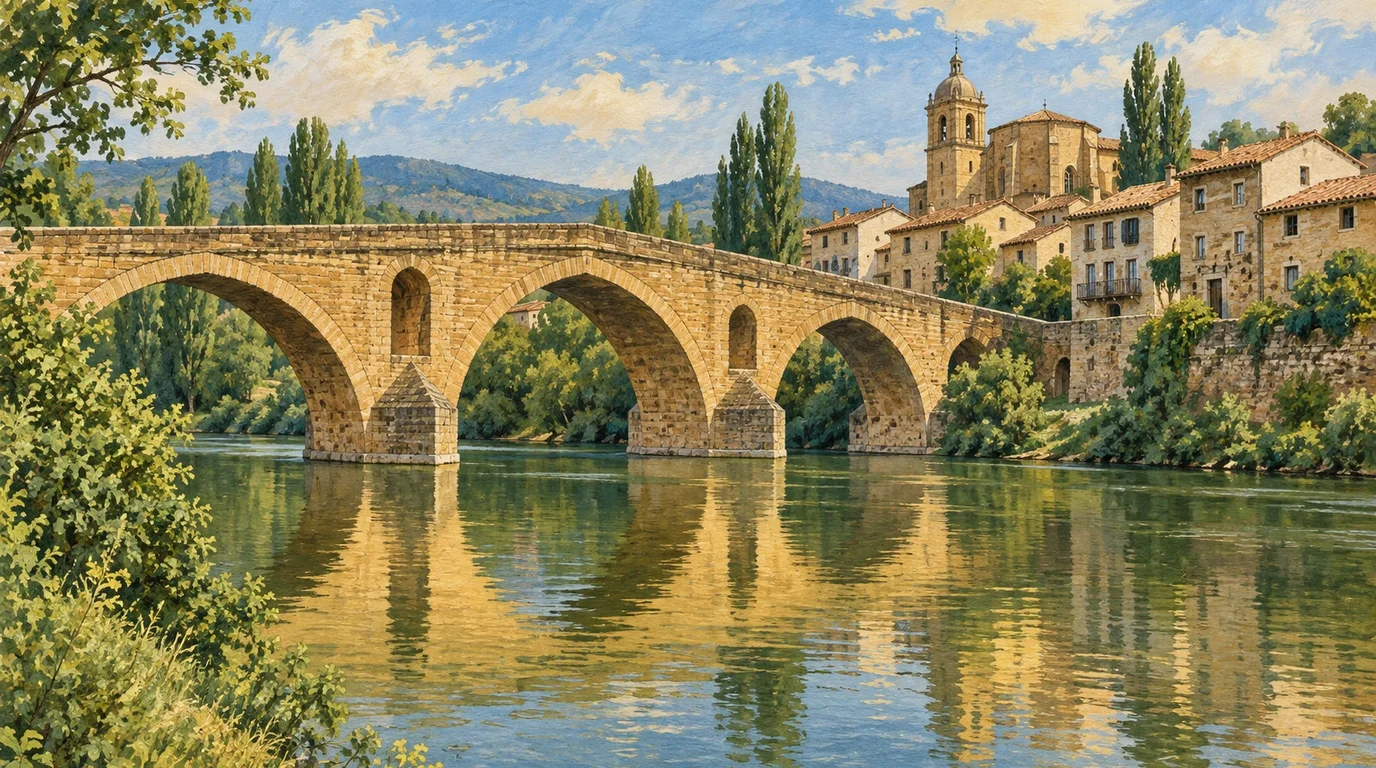
Two strong stone towers guard both sides of the narrow river crossing.
The tall Tara Tower on the east bank stored supplies for city soldiers.
The heavy Halebija Tower on the west bank held rooms for city guards.
The emerald Neretva River flows fast through a steep rocky mountain gorge.
Builders set the bridge feet directly into hard canyon bedrock.
Ancient bridge guards called mostari gave their name to this famous city.
Rebuilding the Historic Bridge
War shelling sadly broke the old bridge apart in November 1993.
The city and UNESCO leaders worked together to rebuild the fallen bridge.
Expert builders promised to use original stone and historic building methods.
Skilled masons cut more than one thousand new limestone blocks by hand.
Deep divers pulled old fallen stones from the river floor for study.
The new bridge opened in 2004 as a proud World Heritage site.
Living Crafts and Bridge Divers
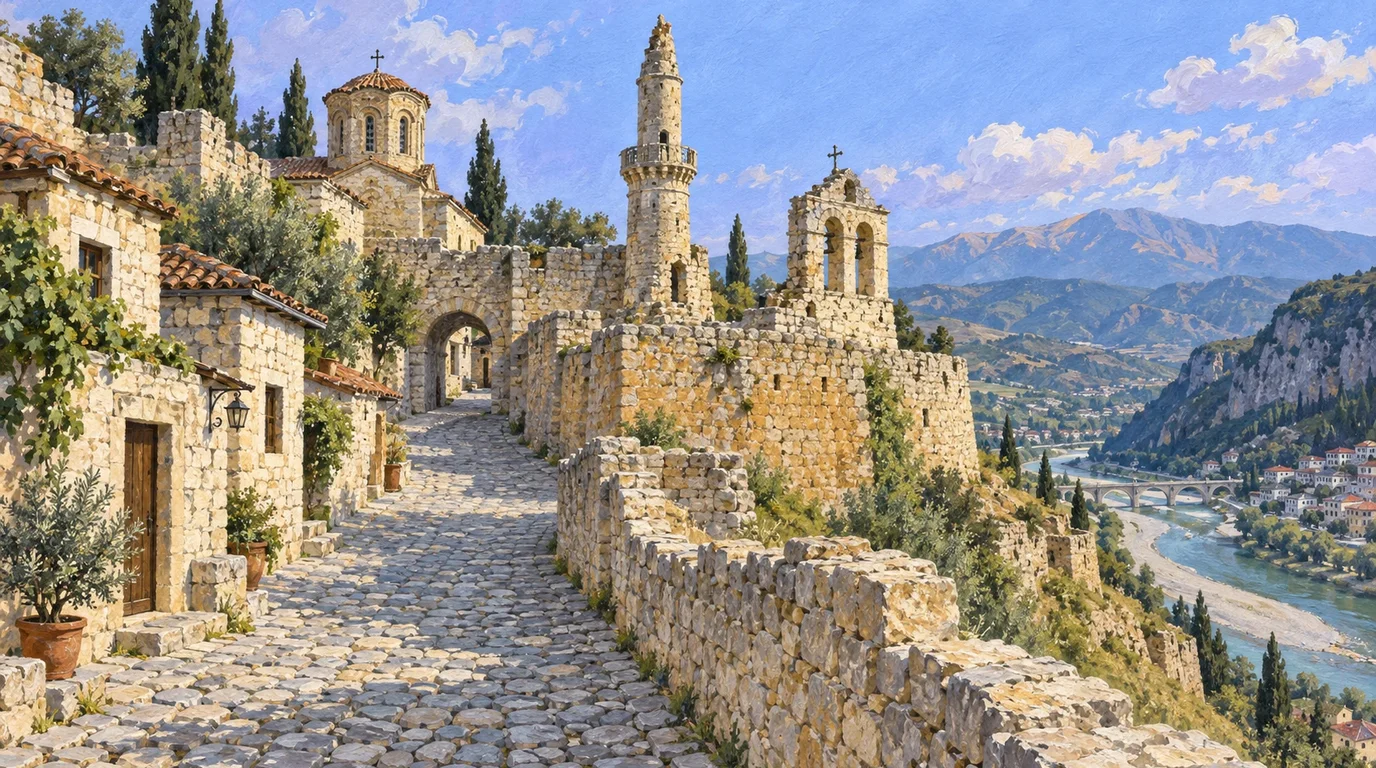
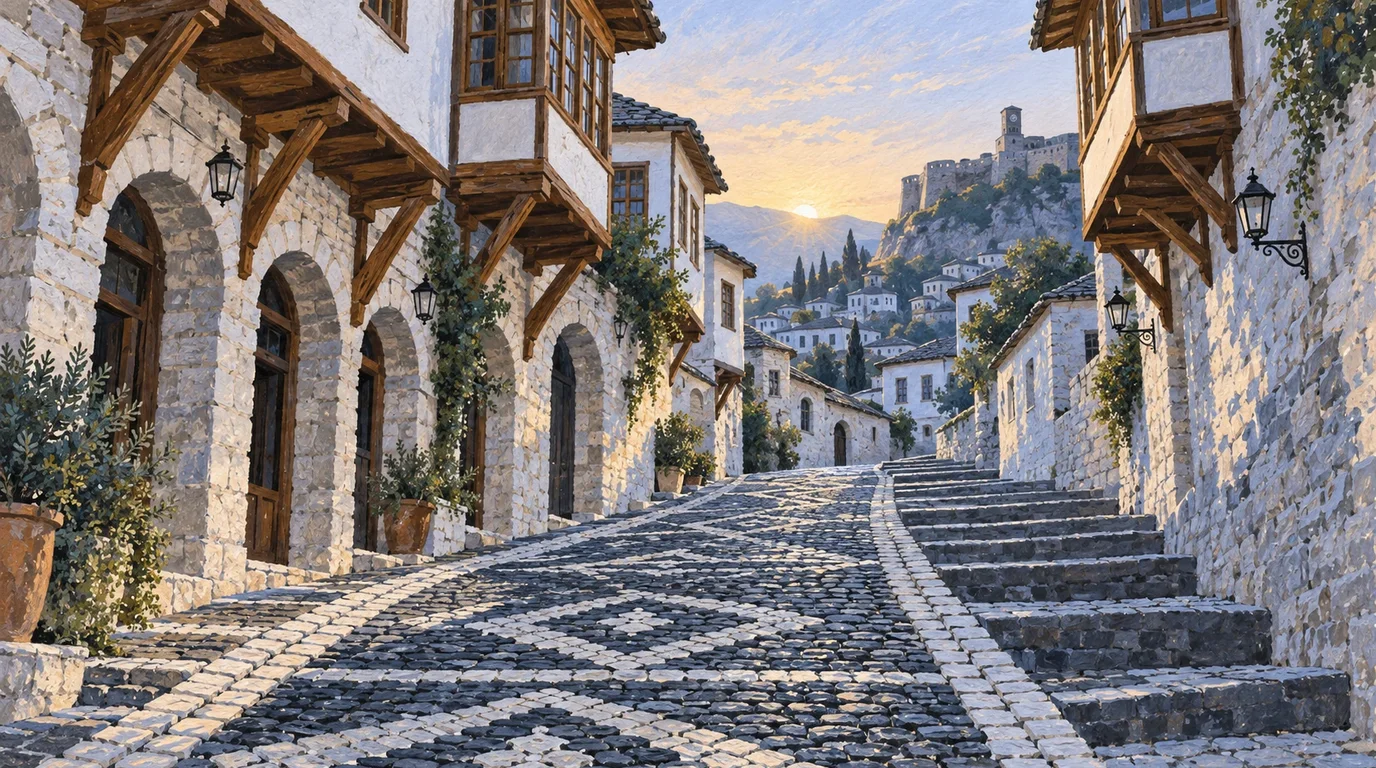
The old Kujundziluk market street has smooth cobblestones and small craft shops.
Local metal workers make pretty copper plates and shiny wire jewelry.
Old white stone houses have flat gray rock roofs near the water.
Brave young athletes dive from the high bridge into the cold river.
This beautiful stone bridge stands for peace and friendship among neighbors.
City laws protect the old town streets from big new modern shops.
A2 · Elementary
Old Bridge Area of the Old City of Mostar
Ottoman stone engineering, river canyon fortifications, and living heritage in Herzegovina.
Ottoman Engineering and Mimar Hayruddin
Sultan Suleiman commissioned the stone bridge in 1557 to replace an unstable wooden structure.
Imperial architect Mimar Hayruddin designed the single-span limestone arch across the river.
Masons quarried local tenelija limestone from Mukosa and carved matching arch segments.
Builders anchored the stone blocks together using molten lead and forged iron pins.
Completed in 1566, the graceful arch spans twenty-nine meters across the water.
The daring design became an acclaimed triumph of Ottoman Renaissance stonework.
Fortified Towers and the Neretva Canyon
Heavy stone defensive towers anchor both ends of the bridge against enemy attacks.
The eastern Tara Tower served as an artillery post and gunpowder storehouse.
The western Halebija Tower housed military watchmen and municipal detention rooms.
Below the arch, the emerald Neretva River cuts through a steep limestone canyon.
Engineers anchored the massive stone abutments directly into natural cliff bedrock.
River wardens known as mostari patrolled the crossing and named the historic city.
International Reconstruction and UNESCO Honor
Heavy artillery bombardment destroyed the four-hundred-year-old bridge in November 1993.
UNESCO, the World Bank, and local leaders united to finance complete bridge reconstruction.
International teams required builders to follow original Ottoman methods and authentic materials.
Masons hand-carved over one thousand new tenelija stones using traditional steel chisels.
Trained divers recovered sunken original stones from the cold riverbed for scientific testing.
The reconstructed monument reopened in 2004 and gained UNESCO World Heritage recognition.
Kujundžiluk Bazaar and Diving Traditions
The cobblestone Kujundziluk bazaar preserves sixteenth-century craft shops along narrow pedestrian lanes.
Artisan coppersmiths hammer decorative metal platters and shape intricate silver filigree jewelry.
Historic residential homes feature whitewashed stone walls topped by local limestone slate slabs.
Local divers plunge twenty-four meters from the bridge apex during historic annual contests.
Stari Most endures as an inspiring symbol of cultural coexistence and post-war reconciliation.
Municipal preservation zones protect the historic riverfront from modern commercial overdevelopment.
B1 · Intermediate
Old Bridge Area of the Old City of Mostar
The single-span limestone masterpiece, wartime reconstruction, and artisan lanes of the Neretva gorge.
Imperial Commission and Hayruddin Engineering
Sultan Suleiman the Magnificent ordered Stari Most constructed in 1557 to secure vital Balkan trade routes.
Mimar Hayruddin, an exceptional pupil of imperial architect Mimar Sinan, designed the daring stone arch.
Masons extracted porous tenelija oolitic limestone from the Mukosa quarry to shape custom arch voussoirs.
Each voussoir stone was reinforced with iron dowels set in molten lead poured into pre-drilled channels.
Rising twenty-four meters above summer water levels, the twenty-nine-meter span demonstrated structural audacity.
Contemporary chroniclers praised the finished 1566 span as an unprecedented milestone of Islamic masonry.
Canyon Hydrography and Defending Bridgeheads
Massive fortified masonry towers stand guard on opposing banks to control movement across the Neretva gorge.
The cylindrical Tara Tower on the eastern embankment housed heavy artillery pieces and ammunition stores.
The rectangular Halebija Tower on the western side accommodated garrison troops and security detention cells.
The emerald Neretva River generates fierce seasonal torrents through its steep karstic canyon walls.
Ottoman builders socketed the structural bridge abutments directly into living cliff limestone formations.
Armed bridge keepers designated as mostari watched the crossing and gave the town its enduring identity.
Wartime Destruction and Scientific Reconstruction
Artillery shelling shattered the historic landmark in November 1993 during the tragic Bosnian conflict.
A broad international partnership led by UNESCO and the World Bank coordinated an ambitious rebuilding effort.
Preservation charters mandated the rigorous application of authentic sixteenth-century masonry techniques.
Quarrymen extracted fresh tenelija blocks, hand-dressing over one thousand stone voussoirs on site.
Marine recovery divers salvaged submerged structural stones from the turbulent river for petrographic research.
Following celebratory reopening in 2004, UNESCO inscribed the entire historic bridge zone in 2005.
Bazaar Craftsmanship and Living Rituals
The cobbled Kujundziluk bazaar maintains its sixteenth-century layout of compact stone workshops and open stalls.
Skilled metalsmiths continue hand-hammering ornamental copper platters and weaving delicate silver filigree.
Whitewashed limestone dwellings with heavy slate roofs illustrate a refined synthesis of Balkan and Mediterranean aesthetics.
Recorded bridge diving rituals dating back to 1664 draw intrepid young athletes to leap into cold canyon waters.
The restored stone span functions as a global emblem of multicultural cooperation and civic healing.
Municipal buffer regulations prevent inappropriate modern real estate developments within the historic urban core.
B2 · Upper Intermediate
Old Bridge Area of the Old City of Mostar
Structural mechanics, post-conflict restoration, and vernacular urban fabric across the Neretva canyon.
Renaissance Ottoman Arch Mechanics and Materials
Commissioned by Suleiman the Magnificent in 1557, Stari Most replaced a precarious wooden suspension crossing.
Imperial architect Mimar Hayruddin resolved immense lateral thrust forces through an innovative parabolic profile.
Quarried tenelija limestone offered advantageous qualities, combining initial ease of dressing with atmospheric hardening.
Internal structural stability depended on cast-lead joints and hand-forged iron dowels linking adjacent voussoirs.
The finished 1566 span soared twenty-four meters above the riverbed, bridging twenty-nine meters of open water.
International architectural scholars celebrate the bridge as a pinnacle of sixteenth-century engineering virtuosity.
Defensive Architecture and Karstic Hydrodynamics
Monumental stone watchtowers anchored both bridgeheads, regulating river traffic and defending against incursions.
The eastern Tara Tower functioned primarily as a military strongpoint, gunpowder depot, and watchtower.
The western Halebija Tower housed garrison quarters, defensive gun ports, and municipal detention vaults.
The Neretva River carved a narrow limestone canyon characterized by extreme velocity and sudden spring floods.
Engineers mortised the heavy stone abutments directly into the sheared karstic cliff bedrock for stability.
The specialized Ottoman bridge wardens known as mostari established the permanent urban name of Mostar.
Post-Conflict Reconstruction and UNESCO Inscription
The four-hundred-year-old monument collapsed into the gorge under relentless artillery fire in November 1993.
An international restoration coalition under UNESCO and the World Bank initiated a scientific rebuilding campaign.
Strict conservation protocols prohibited modern concrete substitutes, enforcing period-accurate Ottoman masonry practices.
Artisans quarried identical tenelija limestone from historic Mukosa strata, dressing 1,088 stones with hand mallets.
Underwater salvage teams recovered sunken masonry fragments from the riverbed to analyze original mortars and lead ties.
Inaugurated in July 2004, the rebuilt monument earned formal inscription on the UNESCO World Heritage register in 2005.
Kujundžiluk Guilds and Intangible Living Heritage
The adjacent Kujundziluk bazaar retains its historic Ottoman cobblestone urbanism and artisan workshop frontages.
Guild coppersmiths preserve intricate repousse chiseling alongside silversmiths crafting delicate metal filigree.
Traditional vernacular townhouses feature whitewashed stone walls supporting heavy overlapping limestone slab roofing.
Centuries-old diving rituals documented since 1664 showcase local athletes leaping twenty-four meters into river currents.
Stari Most represents a universal monument to cross-cultural solidarity, mutual respect, and post-war reconciliation.
Protective zoning ordinances preserve the architectural skyline against aggressive commercial and visual encroachment.
C1 · Advanced
Old Bridge Area of the Old City of Mostar
The Ottoman Renaissance arch, UNESCO conservation, and living heritage across the Neretva.
Hayruddin Parabolic Engineering and Lithic Science
Commissioned in 1557 by Suleiman the Magnificent, Stari Most superseded an unstable, oscillating wooden bridge.
Master architect Mimar Hayruddin conceived a radical parabolic arch that distributed compressive thrust into canyon bedrock.
Masons selected tenelija oolitic limestone from Mukosa, whose calcium carbonate matrix hardened upon atmospheric exposure.
Artisans stabilized adjacent voussoirs utilizing mortised wrought-iron dowels enveloped in molten lead castings.
Completed in 1566, the monumental span traversed twenty-nine meters while soaring twenty-four meters above river currents.
Scholars acclaim the structure as an apex achievement uniting Ottoman technical sophistication with Renaissance aesthetics.
Flanking Bastions and Karstic Riparian Defenses
Defensive stone bastions flanked both bridgeheads, transforming the narrow river crossing into an impregnable military choke point.
The eastern Tara bastion served as a fortified redoubt, housing heavy artillery pieces and volatile gunpowder stores.
The western Halebija bastion accommodated infantry barracks, administrative chambers, and subterranean detention vaults.
The emerald Neretva traverses a deep karstic gorge subject to intense hydraulic scouring and turbulent riparian surges.
Ottoman masons anchored the load-bearing abutments directly into natural limestone bedrock strata along the riverbed.
The hereditary bridge custodians designated as mostari bequeathed their historic title to the burgeoning city.
Anastylosis Methodology and Scientific Reconstruction
Targeted artillery bombardment reduced the iconic architectural masterpiece to rubble in November 1993 during the Bosnian conflict.
An international consortium led by UNESCO, the World Bank, and local authorities spearheaded comprehensive reconstruction.
The restoration committee enforced rigorous anastylosis protocols, forbidding synthetic polymers in favor of historical materials.
Stonemasons extracted pristine tenelija blocks from Mukosa, hand-dressing 1,088 voussoirs with traditional steel implements.
Specialist divers salvaged submerged lithic fragments from the river gorge to perform comprehensive petrographic analyses.
Reconsecrated in July 2004, the monument attained prestigious UNESCO World Heritage designation the following year.
Artisan Guild Traditions and Communal Reconciliation
The Kujundziluk market preserves dense sixteenth-century urban fabric characterized by polished limestone cobbles and timber shutters.
Coppersmiths execute intricate repousse metalwork while silversmiths maintain delicate filigree fabrication methods.
Vernacular residential architecture showcases whitewashed masonry facades crowned with native split-limestone roof shingles.
Athletic bridge diving traditions dating to 1664 continue to draw daring competitors to leap from the parapet crest.
Stari Most endures as a transcendent emblem of interethnic coexistence and civic resilience across the Western Balkans.
Municipal preservation frameworks safeguard the riverfront buffer zone against detrimental commercial development.
C2 · Mastery
Old Bridge Area of the Old City of Mostar
The Ottoman Renaissance arch, UNESCO conservation, and living heritage across the Neretva.
Hayruddin Parabolic Engineering and Lithic Science
Commissioned in 1557 by Suleiman the Magnificent, Stari Most superseded an unstable, oscillating wooden crossing.
Imperial architect Mimar Hayruddin executed a radical catenary arch that channeled compressive thrust into limestone abutments.
Stonemasons quarried tenelija oolitic limestone from Mukosa, whose carbonate matrix petrified upon prolonged atmospheric exposure.
Artisans stabilized adjacent voussoirs utilizing mortised wrought-iron clamps enveloped in molten lead casting reservoirs.
Completed in 1566, the monolithic span traversed twenty-nine meters while soaring twenty-four meters above riparian torrents.
Scholars applaud the structure as an apex achievement uniting Ottoman technical empiricism with Renaissance proportion.
Flanking Bastions and Karstic Riparian Defenses
Defensive stone bastions flanked both bridgeheads, converting the crossing into an impregnable military redoubt.
The eastern Tara bastion functioned as an artillery redoubt, sheltering heavy ordnance and volatile gunpowder reserves.
The western Halebija bastion accommodated garrison quarters, administrative tribunals, and subterranean detention vaults.
The emerald Neretva traverses a karstic canyon subject to immense hydrodynamic turbulence and seasonal inundations.
Ottoman builders socketed the load-bearing abutments directly into sheared limestone bedrock strata along the canyon.
The hereditary bridge wardens denominated as mostari bequeathed their historic title to the burgeoning municipality.
Anastylosis Methodology and Scientific Reconstruction
Artillery shelling collapsed the four-hundred-year-old architectural masterpiece into the gorge in November 1993.
An international consortium led by UNESCO and the World Bank coordinated a methodical multi-phase restoration campaign.
The scientific oversight committee mandated strict anastylosis protocols, precluding modern Portland cements and synthetic polymers.
Skilled masons quarried authentic tenelija strata at Mukosa, dressing 1,088 voussoirs with period-accurate steel implements.
Subterranean divers recovered collapsed lithic blocks from the riverbed to execute exhaustive petrographic micro-analyses.
Formally re-inaugurated in July 2004, the restored landmark attained prestigious UNESCO World Heritage designation in 2005.
Artisan Guild Traditions and Communal Reconciliation
The Kujundziluk thoroughfare retains its intact sixteenth-century urban fabric of cobblestone lanes and wooden shopfronts.
Coppersmith guilds practice traditional repousse metalwork alongside silversmiths executing delicate wire filigree ornamentation.
Vernacular domestic dwellings present whitewashed masonry envelopes crowned with overlapping limestone roofing shingles.
Athletic bridge diving rituals documented since 1664 draw daring competitors to leap from the parapet crest.
Stari Most endures as a transcendent emblem of interethnic coexistence and civic resilience across the Western Balkans.
Municipal preservation ordinances protect the historic buffer zone from intrusive commercial and aesthetic encroachments.
Check your understanding
Choose how closely you want to revisit the article. You can refer back while answering, and review explanations when you finish.
Quick Quiz A1
Try one question, then create a free account for the full Quick Quiz. Sign Up Free
Answer every question before checking. There is no time limit.
Your results
/ 1 correct (%)
Read the explanations to see how each answer connects to the article.
-
When did Sultan Suleiman order builders to replace an old wooden bridge?
1. Answer:
Quick Quiz A2
Try one question, then create a free account for the full Quick Quiz. Sign Up Free
Answer every question before checking. There is no time limit.
Your results
/ 1 correct (%)
Read the explanations to see how each answer connects to the article.
-
Why did Sultan Suleiman commission the stone bridge in 1557?
1. Answer:
Quick Quiz B1
Try one question, then create a free account for the full Quick Quiz. Sign Up Free
Answer every question before checking. There is no time limit.
Your results
/ 1 correct (%)
Read the explanations to see how each answer connects to the article.
-
Why did Sultan Suleiman the Magnificent order Stari Most constructed in 1557?
1. Answer:
Quick Quiz B2
Try one question, then create a free account for the full Quick Quiz. Sign Up Free
Answer every question before checking. There is no time limit.
Your results
/ 1 correct (%)
Read the explanations to see how each answer connects to the article.
-
What did Stari Most replace when commissioned by Suleiman the Magnificent in 1557?
1. Answer:
Quick Quiz C1
Try one question, then create a free account for the full Quick Quiz. Sign Up Free
Answer every question before checking. There is no time limit.
Your results
/ 1 correct (%)
Read the explanations to see how each answer connects to the article.
-
What did Stari Most supersede when commissioned in 1557 by Suleiman the Magnificent?
1. Answer:
Quick Quiz C2
Try one question, then create a free account for the full Quick Quiz. Sign Up Free
Answer every question before checking. There is no time limit.
Your results
/ 1 correct (%)
Read the explanations to see how each answer connects to the article.
-
What did Stari Most supersede when commissioned in 1557 by Suleiman the Magnificent?
1. Answer:
