A1 · Beginner
Una National Park and Strbacki Buk Waterfalls
A bright green river flows through deep rock canyons and drops over white waterfalls.
The Singing Travertine Waterfalls
The clean Una River flows with clear turquoise water across mountain valleys.
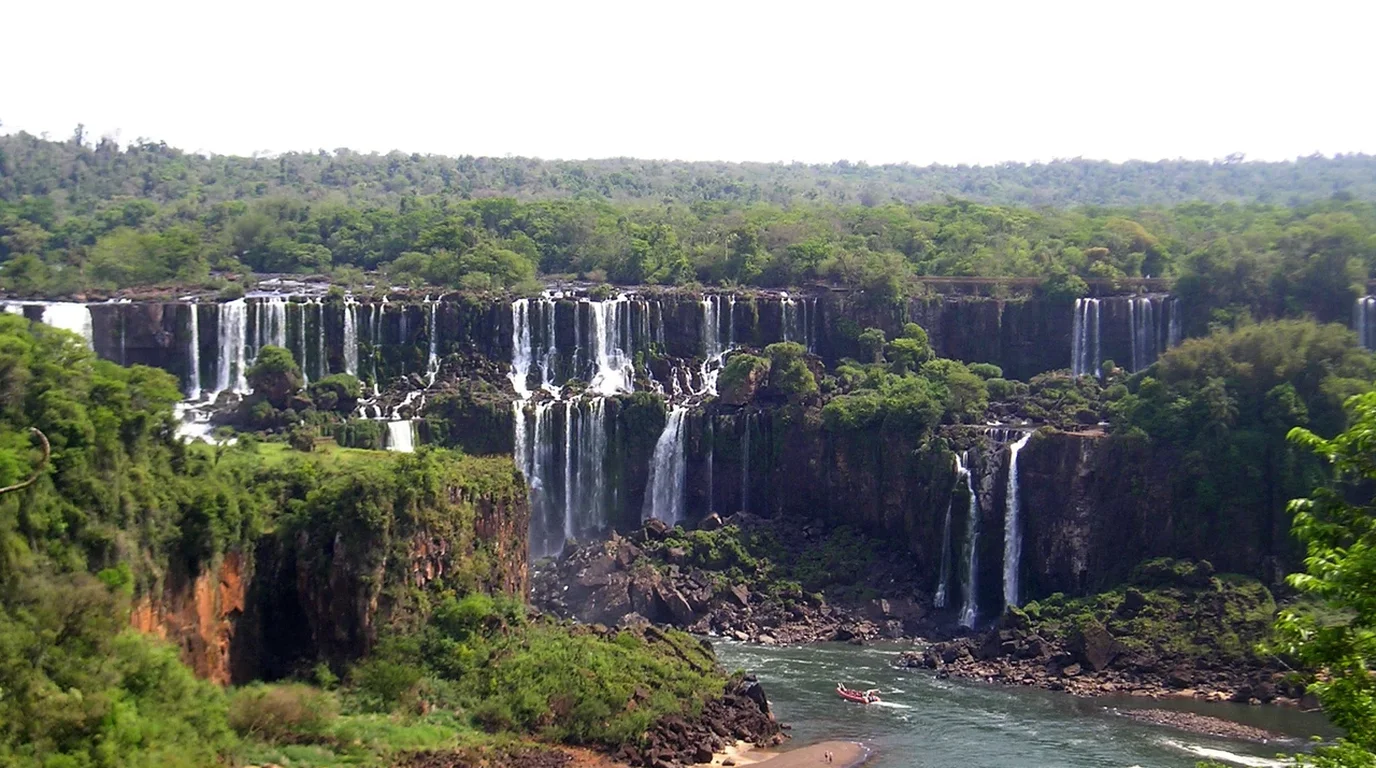
The big Strbacki Buk waterfall drops twenty-four meters over wide stone steps.
Tiny green water mosses help build soft tufa stone in the river water.
Natural water action creates new stone pools and waterfalls over many years.
Deep underground mountain springs feed rich mineral water to the high river.
These soft stone waterfalls are fragile and need careful care from people.
Forest Canyons and Wild Animals
Leaders created this big national park in 2008 to protect river watersheds.
The park has deep limestone canyons, hidden rock caves, and tall green trees.
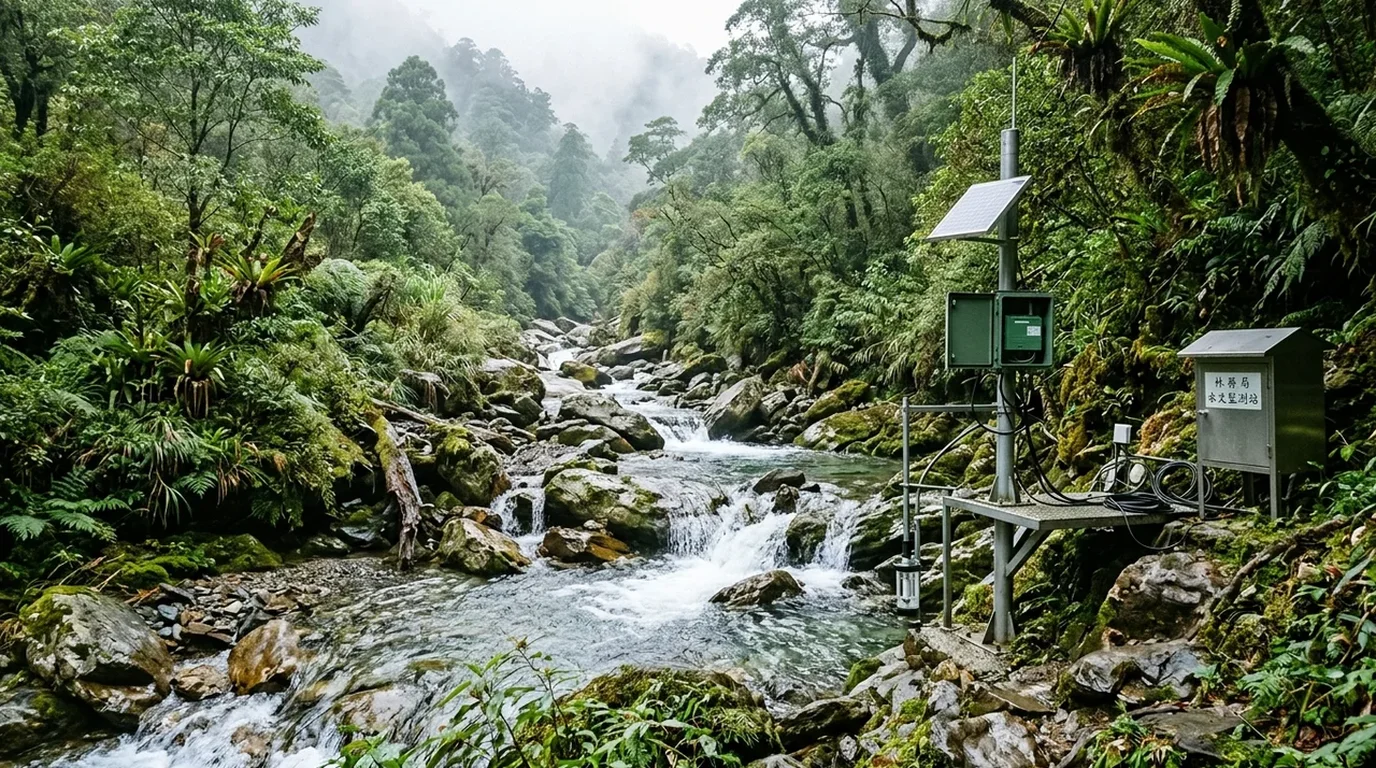
The deep Unac River canyon has steep rock walls three hundred meters high.
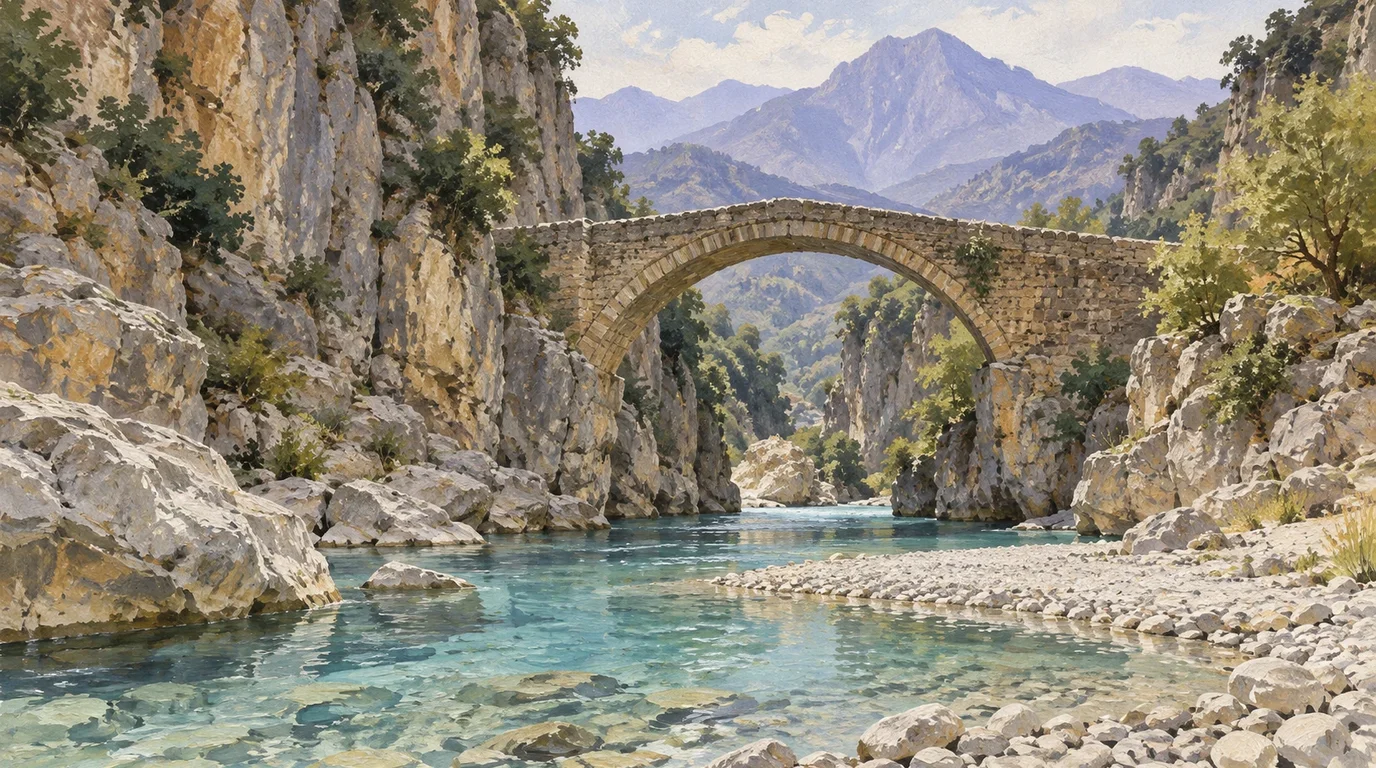
A small village called Martin Brod has wooden water mills beside the river.
Brown bears, grey wolves, and wild cats live safely in the deep forest.
Rare salmon and brown trout swim through the cool clean river pools.
River Boats and Village Life
Many people come every summer to paddle boats in the big Una Regatta.
Park rules stop paddles from bumping into soft river stone pools.
Visitors walk on raised wooden paths to see the big waterfall safely.
Old wooden mills still use river water to turn heavy grain wheels.
Family guest houses in Kulen Vakuf welcome visitors with warm farm meals.
Park rangers protect clean river paths and keep the water trash free.
Protecting a Wild Border River
The Una River forms a natural international border with neighboring Croatia.
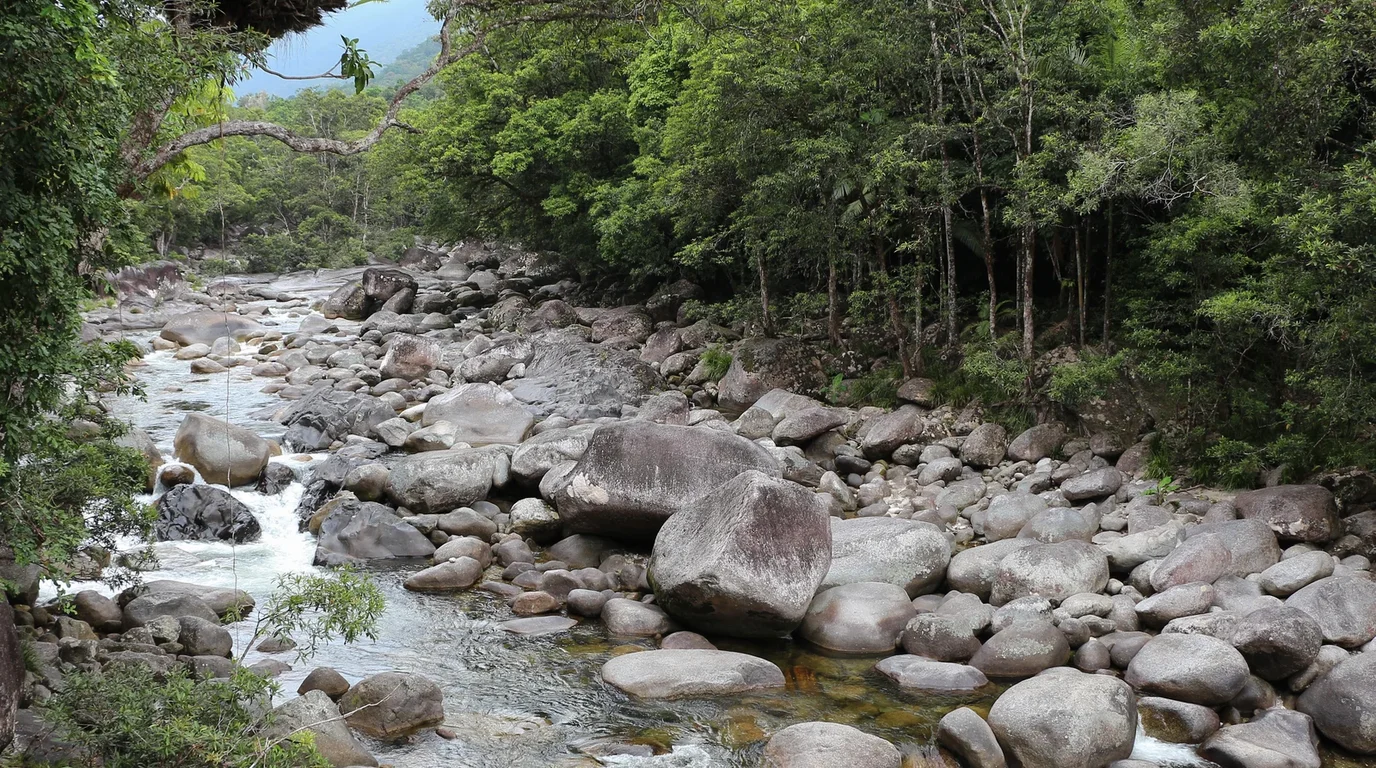
Scientists from both countries test water quality together along the clean river.
Local people worked hard to stop big power companies from building dams.
Scientists track aquatic insect diversity to verify high dissolved oxygen in the pure water.
Researchers study river warmth to see how changing weather affects stone pools.
This national park stands as a world model of community river defense.
A2 · Elementary
Una National Park and Strbacki Buk Waterfalls
Limestone canyons, tiered tufa cascades, and wildlife conservation along the Una River.
Travertine Precipitation and Waterfalls
The Una River in northwestern Bosnia is celebrated for its turquoise water and living travertine.
The dramatic Strbacki Buk waterfall drops twenty-four meters across wide travertine barriers and terraces.
This geological system relies on living mosses and algae that extract dissolved calcium carbonate.
Continuous biological calcification actively builds and reshapes the terraced waterfalls over centuries.
Upstream river waters carry rich mineral concentrations from deep karstic aquifers in the mountains.
These fragile travertine barriers remain highly vulnerable to mechanical damage and water pollution.
Park Wilderness and River Ecosystems
Established in 2008, Una National Park protects nearly twenty thousand hectares of wild watersheds.
The park contains sheer limestone canyons, subterranean cave networks, and dense beech forests.
The tributary Unac River flows through a dramatic gorge reaching depths of 350 meters.
The settlement of Martin Brod features cascading travertine pools and historic water-driven grain mills.
Protected mountain forests shelter healthy populations of brown bears, wolves, and elusive Eurasian lynx.
The clean river provides essential habitat for endangered salmonids, including the rare Danube salmon.
Eco-Tourism and River Regattas
The famous Una Regatta draws international rafters and kayakers to the clear river each summer.
Park regulations and certified river guides prevent watercraft from striking fragile tufa barriers.
Elevated wooden boardwalks allow visitors to admire Strbacki Buk without eroding vulnerable riverbanks.
Centuries-old wooden watermills along the river demonstrate traditional mechanical use of water power.
Eco-tourism supports rural family livelihoods in Kulen Vakuf, Martin Brod, and nearby Bihac.
Rangers enforce leave-no-trace standards across sensitive backcountry river sectors to preserve wilderness.
Cross-Border Conservation and River Defense
The Una River serves as a shared natural international boundary between Bosnia and Croatia.
Cross-border environmental monitoring coordinates water testing standards across the shared river valley.
Local community coalitions successfully organized campaigns to block commercial hydroelectric dams on the river.
Biologists sample aquatic insect larvae to confirm high oxygen levels and exceptional water purity.
Scientists monitor water temperature changes to predict climate impacts on living travertine growth.
Una National Park endures as an inspiring international model for grassroots river defense and stewardship.
B1 · Intermediate
Una National Park and Strbacki Buk Waterfalls
Active tufa barrier geomorphology, alpine carnivores, and community river defense in Bosnia.
Biogenic Travertine Precipitation and Hydrodynamics
Renowned for emerald clarity, the Una River sustains extraordinary living travertine barrier formations.
The monumental Strbacki Buk cascade plunges twenty-four meters over tiered calcareous terraces and pools.
Biogenic tufa precipitation occurs as aquatic bryophytes and micro-algae extract dissolved calcium bicarbonate.
Continuous bio-calcification gradually expands the porous limestone barriers, reshaping water channels over millennia.
Pristine headwaters maintain extreme calcium carbonate saturation originating from subterranean Dinaric karst aquifers.
The delicate living travertine matrix remains exceptionally sensitive to chemical contamination and physical impact.
Limestone Canyons and Protected Wildlife Habitats
Established by legislation in 2008, Una National Park safeguards 19,800 hectares of pristine fluvial ecosystems.
The reserve encompasses towering limestone gorges, unexplored subterranean caverns, and primeval riparian forests.
The tributary Unac River carves a vertical limestone chasm up to 350 meters deep before joining the Una.
Martin Brod contains a complex network of travertine cataracts alongside historic timber watermills.
Extensive montane forests support reproducing populations of large European carnivores, including brown bears and lynx.
Cold oxygenated river currents provide a vital sanctuary for the endangered huchen and native brown trout.
The Una Regatta and Sustainable River Tourism
Convened annually since 1964, the international Una Regatta attracts hundreds of adventurous rafters and kayakers.
Strict environmental navigation regulations protect the fragile travertine drop-offs from heavy paddle abrasion.
Carefully routed timber boardwalks channel visitor pedestrian movement without disturbing sensitive shoreline soils.
Traditional wooden watermills harness hydraulic kinetic power to grind flour without disturbing natural flow regimes.
Sustainable eco-tourism fosters rural economic vitality throughout Kulen Vakuf, Martin Brod, and Bihać.
Park wardens maintain strict leave-no-trace protocols across remote zones to safeguard riparian tranquility.
Transboundary Governance and Fluvial Defense
The meandering course of the Una defines an international frontier shared with the Republic of Croatia.
Cross-border hydrological programs synchronize ecological monitoring standards throughout the shared catchment.
Grassroots activist coalitions successfully halted commercial hydroelectric dam schemes to preserve wild river reaches.
Biomonitoring surveys track sensitive macroinvertebrate populations to verify oligotrophic water conditions.
Scientific institutes model water temperature shifts to assess climate vulnerabilities in living tufa deposition.
Una National Park represents an internationally acclaimed benchmark for participatory river defense and stewardship.
B2 · Upper Intermediate
Una National Park and Strbacki Buk Waterfalls
Biogenic calcification mechanics, karstic river ecology, and transboundary fluvial stewardship.
Biogenic Tufa Dynamics and Karst Hydrogeology
The Una River is distinguished by its vivid turquoise hue and dynamic fluvial travertine ecosystems.
The iconic Štrbački Buk cascade descends twenty-four meters across successive stepped travertine rimstone dams.
The process relies upon biogenic tufa precipitation driven by photo-autotrophic bryophytes and cyanobacteria.
Biochemical calcification causes progressive accretion of porous limestone barriers, creating tiered plunge pools.
Subterranean recharge across the Dinaric Alps imbues headwaters with elevated dissolved calcium bicarbonate concentrations.
These living travertine structures demonstrate profound fragility, susceptible to nutrient loading and mechanical fracturing.
Fluvial Geomorphology and Ecological Refugia
Designated in 2008, Una National Park encompasses 19,800 hectares protecting upper fluvial catchments and river valleys.
The protected landscape features vertical limestone canyons, karst speleological systems, and mature beech-fir woodlands.
The tributary Unac River incises a breathtaking limestone chasm reaching 350 meters before meeting the main river.
Martin Brod hosts an intricate labyrinth of tufa cascades interspersed with operational timber grain mills.
Intact montane biomes accommodate viable populations of apex carnivores, specifically brown bears, wolves, and Eurasian lynx.
The fluvial habitat serves as an indispensable European stronghold for endangered huchen and indigenous brown trout.
Eco-Tourism Management and Hydraulic Heritage
The historic Una Regatta brings hundreds of competitive paddlers down the pristine white-water rapids every summer.
Rigorous water-sport zoning and mandatory guide certifications prevent recreational impact upon vulnerable tufa dams.
Elevated timber walkways direct sightseers around Štrbački Buk, preventing soil destabilization along the riverbank.
Preserved hydraulic watermills demonstrate sustainable mechanical energy conversion that respects fluvial equilibrium.
Green tourism revenues stimulate agrarian micro-enterprises across Kulen Vakuf, Martin Brod, and regional urban centers.
Ranger patrols enforce strict leave-no-trace regulations to maintain the wilderness character of the upper river basin.
Riparian Defense and Transboundary Environmentalism
The meandering course of the Una serves as a natural international boundary between Bosnia and Croatia.
Bilateral scientific working groups harmonize biological monitoring protocols across the shared karstic watershed.
Determined civic resistance by local communities prevented commercial hydroelectric dam projects along the upper river.
Routine macroinvertebrate sampling confirms superior dissolved oxygen levels and pristine oligotrophic chemistry.
Climatologists and hydrologists model thermal thresholds to predict long-term impacts on tufa accretion rates.
Una National Park endures as a beacon of community-led environmental conservation and wild river preservation.
C1 · Advanced
Una National Park and Strbacki Buk Waterfalls
Travertine cascades, karstic hydrology, and fluvial conservation in the Bihać valley.
Biogenic Calcification and Karst Hydrochemistry
Renowned for crystalline luminescence, the Una River exemplifies a pristine, self-regulating fluvial travertine ecosystem.
Štrbački Buk constitutes the geomorphological climax of the watershed, plunging twenty-four meters over tiered tufa barriers.
Travertine petrogenesis operates through photosynthetic extraction of carbon dioxide by mosses, triggering calcite supersaturation.
Continuous biological calcification drives vertical accretion of rimstone dams, dynamically elevating cascades over geological epochs.
Subterranean transit through Dinaric karstic aquifers enriches discharging waters with saturated calcium bicarbonate solutes.
The delicate cellular morphology of living tufa remains extraordinarily susceptible to anthropogenic abrasion and eutrophication.
Canyon Geomorphology and Riparian Refugia
Established by statutory legislation in 2008, Una National Park safeguards 19,800 hectares of biodiverse fluvial habitats.
The sanctuary encompasses sheer karstic gorges, subterranean speleothems, and primeval riparian beech-fir ecosystems.
The tributary Unac River carves an epigenetic limestone canyon reaching depths of 350 meters upstream of Martin Brod.
Martin Brod displays a complex anastomosis of travertine cataracts integrated with historic hydro-mechanical watermills.
Continuous forest corridors sustain breeding packs of apex carnivores, notably brown bears, wolves, and the Eurasian lynx.
Fluvial currents furnish essential lithic spawning grounds for endangered rheophilic salmonids, especially Hucho hucho.
Regatta Stewardship and Vernacular Milling
The annual Una Regatta draws international flotillas of paddlers, combining competitive watermanship with ecological advocacy.
Stewardship mandates and licensed navigational zoning preclude paddle strikes against delicate organogenic tufa crests.
Suspended timber boardwalks route visitors along Štrbački Buk, preventing pedoturbation of fragile riparian embankments.
Vernacular wooden mills utilize gravity-fed diversion canals to drive horizontal waterwheels without interrupting river continuity.
Agro-ecological tourism fosters sustainable local livelihoods across Kulen Vakuf, Martin Brod, and regional municipalities.
Uniformed park rangers monitor wilderness zones, enforcing stringent leave-no-trace protocols across the riverbed corridor.
Transboundary Fluvial Governance and River Defense
The thalweg of the Una River defines an international boundary between Bosnia and Herzegovina and neighboring Croatia.
Binational technical commissions harmonize conservation parameters across the contiguous karstic hydrographic basin.
Mobilized citizen coalitions successfully defeated capital-intensive hydroelectric exploitation along the upper river course.
Biological assays monitoring benthic macroinvertebrates verify exceptional dissolved oxygen and pristine oligotrophic purity.
Interdisciplinary teams monitor water temperature fluxes to evaluate the vulnerability of tufa biocatalysis to climate change.
Una National Park represents an internationally celebrated touchstone of participatory river defense and ecological resilience.
C2 · Mastery
Una National Park and Strbacki Buk Waterfalls
Travertine cascades, karstic hydrology, and fluvial conservation in the Bihać valley.
Biogenic Calcification and Karst Hydrochemistry
Distinguished by pellucid clarity, the Una River exemplifies an intact, bio-regulated fluvial travertine ecosystem.
Štrbački Buk represents the geomorphic culmination of the watershed, plunging twenty-four meters across terraced tufa barriers.
Travertine petrogenesis operates through photosynthetic assimilation of carbon dioxide by bryophytes, triggering calcite supersaturation.
Continuous biological calcification drives vertical accretion of rimstone barrages, elevating cascades over millennia.
Subterranean percolation through Dinaric karst aquifers imbues springs with concentrated calcium bicarbonate solutes.
The porous cellular morphology of living tufa remains exceptionally vulnerable to mechanical abrasion and anthropogenic eutrophication.
Canyon Geomorphology and Riparian Refugia
Established by legislative statute in 2008, Una National Park safeguards 19,800 hectares of fluvial wilderness.
The protected landscape encompasses vertical limestone canyons, subterranean speleothems, and primeval beech-fir woodlands.
The tributary Unac River cuts a sheer epigenetic limestone canyon reaching depths of 350 meters before Martin Brod.
Martin Brod hosts an intricate anastomosis of travertine cascades and functional historical watermills.
Dense forest corridors support viable reproducing populations of apex carnivores, notably brown bears and Eurasian lynx.
Cold oxygenated currents provide critical spawning grounds for endangered rheophilic salmonids, including Hucho hucho.
Regatta Stewardship and Vernacular Milling
The annual Una Regatta convenes international flotillas of paddlers, combining competitive watermanship with river advocacy.
Stewardship ordinances and compulsory guide certification protect fragile organogenic tufa crests from watercraft impact.
Suspended timber boardwalks route visitors along Štrbački Buk, preventing pedoturbation of sensitive riparian soils.
Historic vernacular watermills utilize gravity canals to turn mechanical grain wheels without interrupting river connectivity.
Agro-ecological tourism stimulates rural economic vitality throughout Kulen Vakuf, Martin Brod, and regional settlements.
Ranger detachments patrol backcountry sectors, enforcing stringent leave-no-trace protocols to preserve wilderness integrity.
Transboundary Fluvial Governance and River Defense
The thalweg of the Una defines a dynamic natural international frontier shared with the Republic of Croatia.
Binational technical commissions harmonize conservation parameters across the contiguous karstic hydrographic basin.
Mobilized citizen coalitions successfully defeated capital-intensive hydroelectric exploitation along the upper river course.
Biological assays monitoring benthic macroinvertebrates verify exceptional dissolved oxygen and pristine oligotrophic purity.
Interdisciplinary teams monitor water temperature fluxes to evaluate the vulnerability of tufa biocatalysis to climate change.
Una National Park represents an internationally celebrated touchstone of participatory river defense and ecological resilience.
Check your understanding
Choose how closely you want to revisit the article. You can refer back while answering, and review explanations when you finish.
Quick Quiz A1
Try one question, then create a free account for the full Quick Quiz. Sign Up Free
Answer every question before checking. There is no time limit.
Your results
/ 1 correct (%)
Read the explanations to see how each answer connects to the article.
-
What kind of water flows across mountain valleys in the Una River?
1. Answer:
Quick Quiz A2
Try one question, then create a free account for the full Quick Quiz. Sign Up Free
Answer every question before checking. There is no time limit.
Your results
/ 1 correct (%)
Read the explanations to see how each answer connects to the article.
-
What water clarity and features is the Una River celebrated for?
1. Answer:
Quick Quiz B1
Try one question, then create a free account for the full Quick Quiz. Sign Up Free
Answer every question before checking. There is no time limit.
Your results
/ 1 correct (%)
Read the explanations to see how each answer connects to the article.
-
What clarity and formations does the Una River sustain?
1. Answer:
Quick Quiz B2
Try one question, then create a free account for the full Quick Quiz. Sign Up Free
Answer every question before checking. There is no time limit.
Your results
/ 1 correct (%)
Read the explanations to see how each answer connects to the article.
-
What color hue and ecosystems distinguish the Una River?
1. Answer:
Quick Quiz C1
Try one question, then create a free account for the full Quick Quiz. Sign Up Free
Answer every question before checking. There is no time limit.
Your results
/ 1 correct (%)
Read the explanations to see how each answer connects to the article.
-
What ecosystem type does the Una River exemplify?
1. Answer:
Quick Quiz C2
Try one question, then create a free account for the full Quick Quiz. Sign Up Free
Answer every question before checking. There is no time limit.
Your results
/ 1 correct (%)
Read the explanations to see how each answer connects to the article.
-
What ecosystem type does the Una River exemplify?
1. Answer:
