A1 · Beginner
Woodcarving Craft in Konjic and Interior Artistry
Master artisans in a mountain river town carve beautiful shapes into dark hardwood.
Chisels and Hardwood Relief Carving
UNESCO recognized the woodcarving craft in Konjic on its heritage list in 2017.
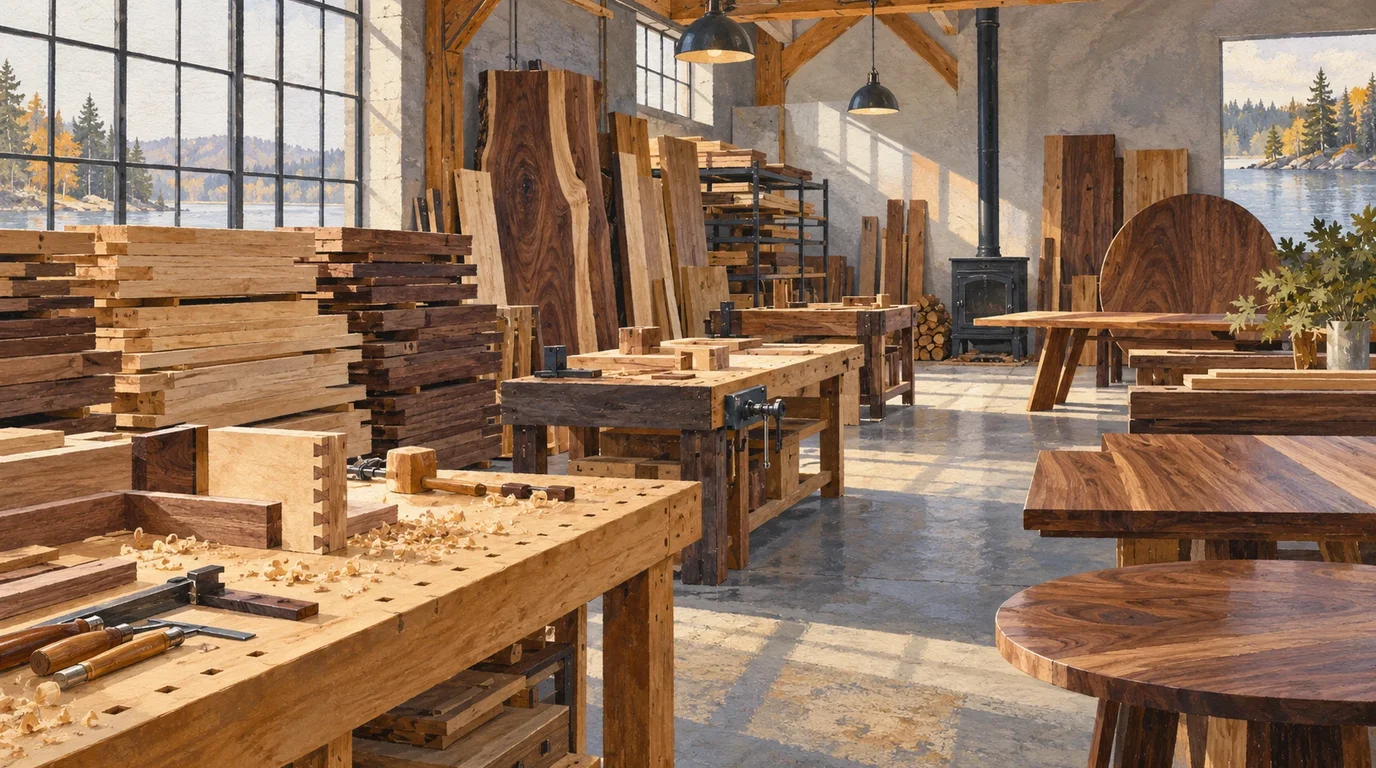
Skilled carvers shape tough deciduous walnut, cherry, maple, and ash wood into lovely items.
Artisans draw fine geometric shapes directly on smooth wood using a simple pencil.
Makers cut the hard wood with sharp steel chisels, gouges, and wooden mallets.
Workers tap tiny dots into the background wood so raised shapes cast clear shadows.
Artisans rub sweet beeswax and natural walnut oil into the finished wood without chemical varnish.
Folk Motifs and Wooden Furniture
Carved wood designs combine old Ottoman flower shapes, Mediterranean rosettes, and local mountain symbols.
The stylized Bosnian lily stands as a famous regional flower carved on fine panels.
Workshops make small three-legged stools, round coffee tables, and big wooden dowry chests.
Historic town houses featured carved wooden ceilings, tall wall cupboards, and pretty window screens.
Workers dry green tree logs in open mountain air for years before carving.
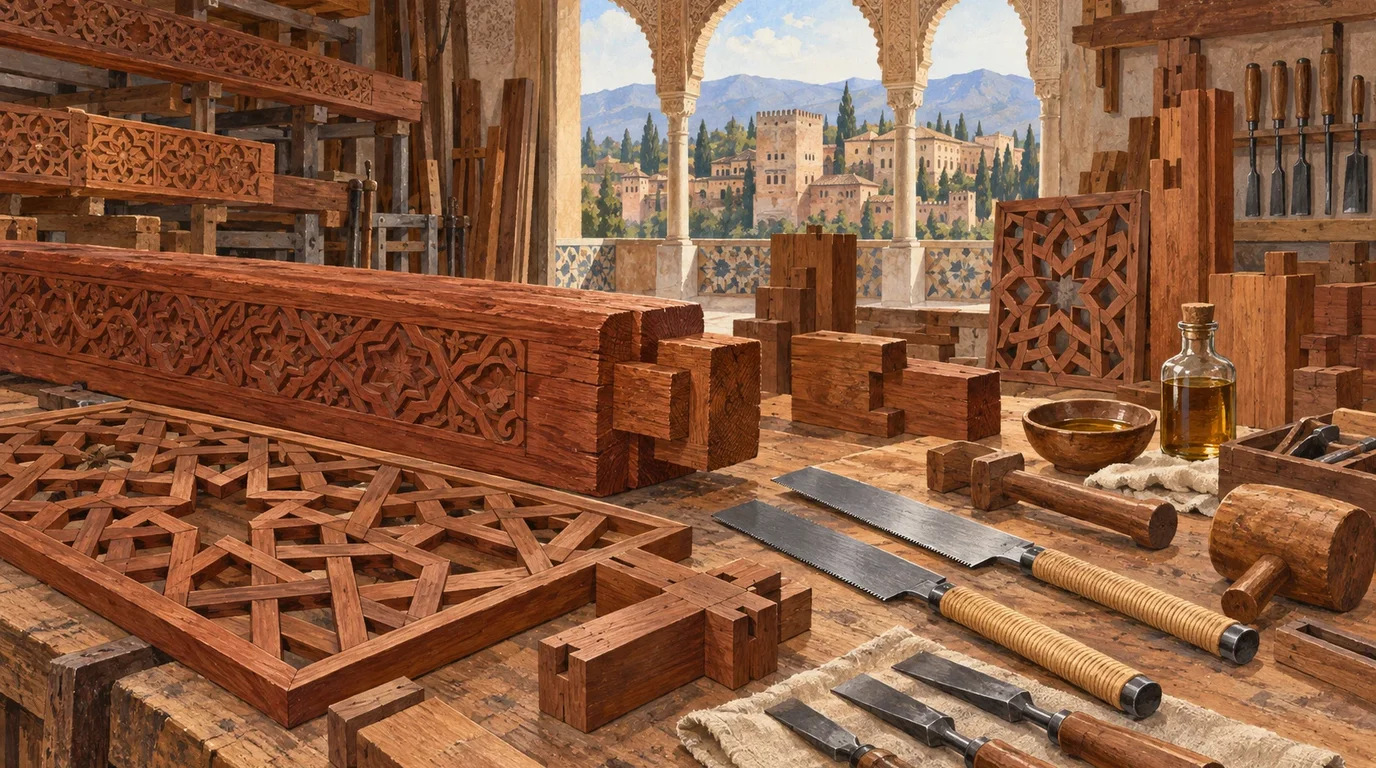
Strong wooden joints connect furniture pieces tightly so they last for many family generations.
Family Workshops and Master Woodcarvers
This town craft developed over one hundred years ago beside the clear Neretva River.
Famous family workshops like the Niksic and Mulic ateliers trained carvers across generations.
Young helpers worked hard under master carvers to learn how to hold sharp tools safely.
Carved tables from Konjic won gold medals at world fairs in Vienna and Paris.
Family craft shops survived difficult times by making special handmade furniture for private buyers.
Hand woodcarving gives the town of Konjic a proud international reputation for artistic woodworking.
Town Museums and Modern Furniture Design
The Woodcarving Museum opened in Konjic in 2019 to display historic handmade furniture.
Modern studios work with world designers to add traditional hand carvings to sleek chairs.
These new handmade Bosnian furniture pieces won big international design prizes around the world.
Modern workshops buy certified local wood to protect green mountain forests and clean rivers.
Town trade schools teach young boys and girls how to carve wood with hands.
Strict craft rules say real heritage furniture must always be carved by human hands.
A2 · Elementary
Woodcarving Craft in Konjic and Interior Artistry
Traditional hardwood relief carving, iconic flora, and generational craft heritage along the Neretva.
Hardwood Selection and Traditional Relief Carving
In 2017, UNESCO inscribed the woodcarving tradition of Konjic on the Representative List of Intangible Cultural Heritage.
Master craftsmen execute intricate relief carving on indigenous hardwoods, selecting durable walnut, wild cherry, maple, and ash.
Artisans sketch complex floral and geometric compositions freehand on planed boards using simple graphite pencils.
Carvers employ dozens of specialized steel chisels, hollow gouges, and round pear-wood mallets to incise borders.
Artisans texture the recessed background with fine stippling punches, making the raised motifs cast expressive shadows.
Finished woodwork is polished with natural beeswax or organic walnut oil, avoiding synthetic chemical varnishes.
Iconic Botanical Motifs and Traditional Furnishings
The ornamental repertoire harmonizes Ottoman floral arabesques, Mediterranean rosettes, and ancient Dinaric geometric lines.
The stylized Bosnian lily serves as a beloved regional emblem carved into central furniture medallions.
Traditional workshops manufacture three-legged stools, polygonal coffee tables, and carved matrimonial storage chests.
Historic architectural joinery featured ornate wooden ceilings, built-in room cupboards, and lattice window screens.
Lumber undergoes natural air drying and atmospheric seasoning for several years to ensure long-term dimensional stability.
Artisans construct durable joinery with interlocking mortise-and-tenon and dovetail joints that endure across generations.
Family Dynasties and European Exhibition Renown
The woodcarving industry of Konjic developed rapidly during the late nineteenth century along the Neretva River valley.
Prominent family ateliers, including the Nikšić and Mulić enterprises, established multi-generational woodcarving lineages.
Apprentices advanced through traditional guild ranks, progressing from blade sharpening to journeyman and recognized master.
Konjic carved furniture gained international prestige by winning gold medals at universal expositions in Vienna and Paris.
Family businesses survived wartime crises and modern factory automation by focusing on bespoke custom craftsmanship.
Artisanal woodworking shaped the civic identity of Konjic, establishing the town as a regional capital of decorative carpentry.
Museum Safeguarding and Contemporary Design Collaborations
The Konjic Woodcarving Museum opened in 2019, providing an archival center for historical tools and masterclass education.
Contemporary furniture studios collaborate with international architects to unite traditional relief carving with minimalist modern aesthetics.
These innovative furniture collections have received prestigious global honors, including multiple Red Dot Design Awards.
Modern workshops source certified sustainable local timber, ensuring environmental responsibility alongside cultural preservation.
Vocational secondary schools in Konjic offer dedicated training programs to instruct young apprentices in hand carving.
Authenticity standards dictate that computerized machines cannot replace traditional hand-guided chisels in certified heritage goods.
B1 · Intermediate
Woodcarving Craft in Konjic and Interior Artistry
Relief carving techniques, architectural woodwork, and contemporary design revitalization along the Neretva.
Hardwood Selection and Hand-Chiseled Relief Techniques
UNESCO inscribed the woodcarving craft of Konjic on the Representative List of Intangible Cultural Heritage in 2017.
The foundational technique is shallow and deep relief carving executed on indigenous deciduous hardwoods like walnut and wild cherry.
Master craftsmen sketch ornamental layouts freehand directly onto smoothed timber surfaces using graphite pencils without stencils.
Carvers utilize an extensive toolkit of specialized steel chisels and gouges paired with turned wooden mallets to remove background wood.
Stippling or punch-texturing the recessed ground creates a rich tactile contrast that accentuates raised floral motifs.
Workshops finish surfaces using organic walnut oil and buffed beeswax, preserving natural wood grain without polyurethane varnishes.
Ornamental Repertoire and Traditional Domestic Joinery
The visual vocabulary blends Ottoman botanical scrollwork, Mediterranean floral rosettes, and archaic Dinaric geometric interlaces.
The stylized Bosnian lily remains a signature decorative motif prominently carved within central panel medallions.
Traditional domestic furnishings include low three-legged stools termed peškun, polygonal coffee tables, and heirloom chests.
Architectural woodworking historically encompassed elaborate timber ceilings, integrated wall cupboards, and carved window screens.
Lumber requires extended atmospheric seasoning and air drying over several years to minimize internal tension and prevent warping.
Craftsmen assemble frames using interlocking mortise-and-tenon and dovetail joinery, ensuring structural permanence across generations.
Family Dynasties and Universal Exhibition Triumphs
The urban craft tradition crystallized in the late nineteenth century as rural carvers established commercial ateliers in Konjic.
Generational family workshops, notably the Nikšić and Mulić ateliers, preserved trade secrets and elevated technical standards.
Guild-style apprenticeships required years of rigorous practice, guiding novices through tool preparation toward master rank.
Konjic furniture achieved international acclaim during the Austro-Hungarian era, winning gold awards at major exhibitions in Vienna and Paris.
Ateliers successfully withstood modern industrialization by concentrating on high-value bespoke furnishings and custom interiors.
The distinctive woodworking heritage forged the economic backbone and cultural prestige of this scenic Neretva river municipality.
Museum Curation and Global Design Collaborations
The opening of the Konjic Woodcarving Museum in 2019 established a dedicated repository for historical artifacts and research archives.
Progressive Bosnian studios partner with international industrial designers to incorporate hand-carved textures into contemporary furniture.
These hybrid modern creations have garnered prestigious accolades, including multiple Red Dot and German Design Awards.
Artisans exclusively utilize certified timber harvested from sustainably managed regional forests, supporting ecological balance.
Public vocational schools in Konjic offer specialized apprenticeships that prepare young craftspeople for professional woodworking careers.
Heritage protection guidelines stipulate that computerized CNC routers can never substitute for authentic manual carving in certified items.
B2 · Upper Intermediate
Woodcarving Craft in Konjic and Interior Artistry
Relief carving morphology, generational guild lineages, and contemporary furniture innovation in Herzegovina.
Hardwood Selection and Intaglio Relief Methodology
In 2017, UNESCO formally inscribed the woodcarving craft of Konjic on the Representative List of Intangible Cultural Heritage.
Artisans practice bas-relief and high-relief carving upon fine-grained deciduous timber, specifically European walnut, cherry, and maple.
Master craftsmen draft complex geometric lattices and botanical arabesques freehand directly upon smoothed panels without transfer paper.
The subtractive carving process employs specialized curved gouges, flat chisels, and pear-wood mallets to delineate ornate borders.
Stippled background punching creates a granular tactile texture that enhances relief depth and dynamic shadow projection.
Artisans deliberately reject synthetic polyurethane coatings, polishing cured timber surfaces with natural beeswax and walnut oils.
Syncretic Iconography and Vernacular Interior Architecture
The decorative grammar represents a sophisticated synthesis of Ottoman floral spirals, Mediterranean rosettes, and Dinaric geometry.
The stylized Bosnian lily constitutes the supreme regional emblem, frequently carved into the focal point of central table medallions.
Traditional functional pieces include low three-legged stools known as peškun, polygonal coffee tables, and carved dowry chests.
Master joiners historically fitted residential interiors with carved timber ceilings, integrated wall cupboards, and decorative lattice screens.
Lumber undergoes multi-year atmospheric seasoning in covered yards to stabilize moisture equilibrium and preclude warping.
Cabinetmakers employ traditional dovetail and pegged mortise-and-tenon connections that ensure exceptional structural longevity across centuries.
Artisan Dynasties and Universal Exhibition Triumphs
The craft transformed from rustic rural pastime into an internationally recognized decorative art during the late nineteenth century.
Celebrated family ateliers, specifically the Nikšić and Mulić dynasties, codified technical excellence across four generations.
Apprentices underwent intensive instruction within workshop guilds, advancing systematically from blade tempering to master status.
Konjic ateliers achieved widespread European renown, securing prestigious gold medals at international expositions in Vienna and Paris.
The artisanal sector demonstrated remarkable resilience against socialist factory mass production by prioritizing custom craftsmanship.
The historic woodcarving industry defined the cultural identity of Konjic, positioning the Neretva valley town as an artisanal capital.
Institutional Archiving and Modern Scandinavian Design Dialogue
The establishment of the Konjic Woodcarving Museum in 2019 provided a permanent institutional home for historical tools and documentation.
Innovative workshops collaborate with celebrated European designers, embedding traditional hand-carved textures into Scandinavian-inspired furniture.
These cross-disciplinary design collaborations have received major global honors, including multiple Red Dot Design Awards.
Modern enterprises adhere to rigorous environmental stewardship by sourcing certified timber exclusively from managed local woodlands.
Subsidized vocational curricula in municipal schools encourage local adolescents to master the delicate art of manual woodcarving.
Heritage safeguarding charters mandate that automated CNC machinery cannot replace the authentic hand gouge in certified production.
C1 · Advanced
Woodcarving Craft in Konjic and Interior Artistry
Subtractive hardwood relief morphology, syncretic Dinaric joinery, and contemporary design revival along the Neretva.
Subtractive Relief Morphology and Organogenic Substrates
Inscribed on the UNESCO Representative List in 2017, the woodcarving craft of Konjic exemplifies sublime Dinaric artisanal heritage.
The subtractive sculpting methodology relies upon dense deciduous hardwoods, predominantly Juglans regia, wild cherry, and mountain maple.
Master craftsmen draft expansive arabesques and geometric symmetries freehand directly onto planed substrates using simple graphite pencils.
The incisive technique utilizes an extensive battery of specialized gouges, V-shaped parting tools, and pear-wood mallets.
Minute stippling of the recessed field creates a textured background that intensifies tactile bas-relief and chiaroscuro.
Artisans reject synthetic lacquers, conditioning surfaces with virgin beeswax, cold-pressed walnut oil, and vigorous friction polishing.
Syncretic Iconography and Vernacular Interior Architecture
The decorative lexicon synthesizes Ottoman rumi arabesques, Mediterranean palmettes, and indigenous Dinaric geometric ribbonwork.
The stylized Bosnian lily endures as an iconic heraldic centerpiece, exquisitely incised within the central medallions of case pieces.
Traditional vernacular furnishings comprise low tripod stools designated as peškun, polygonal coffee tables, and bridal sehara chests.
Historic architectural joinery encompassed coffered ceiling paneling, monumental musandera cupboard walls, and lattice mušebak screens.
Sawn timber undergoes rigorous multi-year atmospheric seasoning to harmonize equilibrium moisture content and prevent dimensional warping.
Structural joiners execute pegged mortise-and-tenon and compound dovetail joinery, ensuring that furniture frameworks withstand mechanical stress.
Artisanal Dynasties and International Exhibition Acclaim
The craft crystallized into a prominent urban guild during the Austro-Hungarian period, fueled by burgeoning cosmopolitan demand.
Pioneering family ateliers, notably the Nikšić and Mulić lineages, codified artisanal standards across four uninterrupted generations.
Apprenticeship operated within rigorous guild hierarchies, demanding years of repetitive tactile practice before achieving the rank of majstor.
Konjic ateliers garnered triumphant international acclaim, securing gold diplomas at universal world expositions in Vienna and Paris.
Family enterprises tenaciously resisted socialist industrial collectivization, preserving custom bespoke production and master-led autonomy.
The woodworking guild cemented the economic prosperity and civic prestige of Konjic as Herzegovina's preeminent artisanal enclave.
Institutional Archiving and Contemporary Design Vanguard
The inauguration of the Konjic Woodcarving Museum in 2019 established an authoritative institutional locus for research and conservation.
Avant-garde design studios successfully cross-pollinate traditional hand-carving techniques with Scandinavian modernism and brutalist forms.
These hybrid collections have captured global design prizes, including prestigious Red Dot Awards and German Design Awards.
Enterprises maintain strict ecological responsibility by sourcing certified hardwood exclusively from responsibly managed regional forests.
Municipal vocational schools implement dedicated youth apprenticeships to nurture manual dexterity and safeguard craft literacy.
Rigorous authenticity protocols establish that computerized CNC milling cannot replicate the organic irregularity of the hand chisel.
C2 · Mastery
Woodcarving Craft in Konjic and Interior Artistry
Subtractive hardwood relief morphology, syncretic Dinaric joinery, and contemporary design vanguard in Herzegovina.
Subtractive Relief Morphology and Organogenic Substrates
Inscribed on the UNESCO Representative List in 2017, the woodcarving craft of Konjic embodies a monumental pinnacle of Dinaric craftsmanship.
The subtractive sculpting methodology relies upon dense deciduous hardwoods, predominantly Juglans regia, wild cherry, and mountain maple.
Master craftsmen draft expansive arabesques and geometric symmetries freehand directly onto planed substrates using simple graphite pencils.
The incisive technique utilizes an extensive battery of specialized gouges, V-shaped parting tools, and pear-wood mallets.
Minute stippling of the recessed field creates a textured background that intensifies tactile bas-relief and chiaroscuro.
Artisans reject synthetic lacquers, conditioning surfaces with virgin beeswax, cold-pressed walnut oil, and vigorous friction polishing.
Syncretic Iconography and Vernacular Interior Architecture
The decorative lexicon synthesizes Ottoman rumi arabesques, Mediterranean palmettes, and indigenous Dinaric geometric ribbonwork.
The stylized Bosnian lily endures as an iconic heraldic centerpiece, exquisitely incised within the central medallions of case pieces.
Traditional vernacular furnishings comprise low tripod stools designated as peškun, polygonal coffee tables, and bridal sehara chests.
Historic architectural joinery encompassed coffered ceiling paneling, monumental musandera cupboard walls, and lattice mušebak screens.
Sawn timber undergoes rigorous multi-year atmospheric seasoning to harmonize equilibrium moisture content and prevent dimensional warping.
Structural joiners execute pegged mortise-and-tenon and compound dovetail joinery, ensuring that furniture frameworks withstand mechanical stress.
Artisanal Dynasties and International Exhibition Acclaim
The craft crystallized into a prominent urban guild during the Austro-Hungarian period, fueled by burgeoning cosmopolitan demand.
Pioneering family ateliers, notably the Nikšić and Mulić lineages, codified artisanal standards across four uninterrupted generations.
Apprenticeship operated within rigorous guild hierarchies, demanding years of repetitive tactile practice before achieving the rank of majstor.
Konjic ateliers garnered triumphant international acclaim, securing gold diplomas at universal world expositions in Vienna and Paris.
Family enterprises tenaciously resisted socialist industrial collectivization, preserving custom bespoke production and master-led autonomy.
The woodworking guild cemented the economic prosperity and civic prestige of Konjic as Herzegovina's preeminent artisanal enclave.
Institutional Archiving and Contemporary Design Vanguard
The inauguration of the Konjic Woodcarving Museum in 2019 established an authoritative institutional locus for research and conservation.
Avant-garde design studios successfully cross-pollinate traditional hand-carving techniques with Scandinavian modernism and brutalist forms.
These hybrid collections have captured global design prizes, including prestigious Red Dot Awards and German Design Awards.
Enterprises maintain strict ecological responsibility by sourcing certified hardwood exclusively from responsibly managed regional forests.
Municipal vocational schools implement dedicated youth apprenticeships to nurture manual dexterity and safeguard craft literacy.
Rigorous authenticity protocols establish that computerized CNC milling cannot replicate the organic irregularity of the hand chisel.
Check your understanding
Choose how closely you want to revisit the article. You can refer back while answering, and review explanations when you finish.
Quick Quiz A1
Try one question, then create a free account for the full Quick Quiz. Sign Up Free
Answer every question before checking. There is no time limit.
Your results
/ 1 correct (%)
Read the explanations to see how each answer connects to the article.
-
When did UNESCO recognize the woodcarving craft in Konjic on its heritage list?
1. Answer:
Quick Quiz A2
Try one question, then create a free account for the full Quick Quiz. Sign Up Free
Answer every question before checking. There is no time limit.
Your results
/ 1 correct (%)
Read the explanations to see how each answer connects to the article.
-
When was the woodcarving tradition of Konjic inscribed on the Representative List?
1. Answer:
Quick Quiz B1
Try one question, then create a free account for the full Quick Quiz. Sign Up Free
Answer every question before checking. There is no time limit.
Your results
/ 1 correct (%)
Read the explanations to see how each answer connects to the article.
-
When did UNESCO inscribe the woodcarving craft of Konjic on the Representative List?
1. Answer:
Quick Quiz B2
Try one question, then create a free account for the full Quick Quiz. Sign Up Free
Answer every question before checking. There is no time limit.
Your results
/ 1 correct (%)
Read the explanations to see how each answer connects to the article.
-
When did UNESCO formally inscribe the woodcarving craft of Konjic?
1. Answer:
Quick Quiz C1
Try one question, then create a free account for the full Quick Quiz. Sign Up Free
Answer every question before checking. There is no time limit.
Your results
/ 1 correct (%)
Read the explanations to see how each answer connects to the article.
-
When was the woodcarving craft of Konjic inscribed on the UNESCO Representative List?
1. Answer:
Quick Quiz C2
Try one question, then create a free account for the full Quick Quiz. Sign Up Free
Answer every question before checking. There is no time limit.
Your results
/ 1 correct (%)
Read the explanations to see how each answer connects to the article.
-
When was the woodcarving craft of Konjic inscribed on the UNESCO Representative List?
1. Answer:
