A1 · Beginner
Zmijanje Embroidery and Folk Cross-Stitch Patterns
Village women stitch dark blue geometric shapes on white linen cloth.
Dark Blue Thread and Geometric Shapes
UNESCO recognized Zmijanje embroidery in 2014 as the first intangible heritage craft from Bosnia.
Artisans stitch this traditional needlework using only dark blue or deep indigo thread.
Makers sew precise cross-stitch patterns by counting tiny threads on white linen cloth.
The embroidery features neat geometric shapes like diamonds, square crosses, and round sun wheels.
Simple geometric shapes make this mountain craft very different from colorful valley flower patterns.
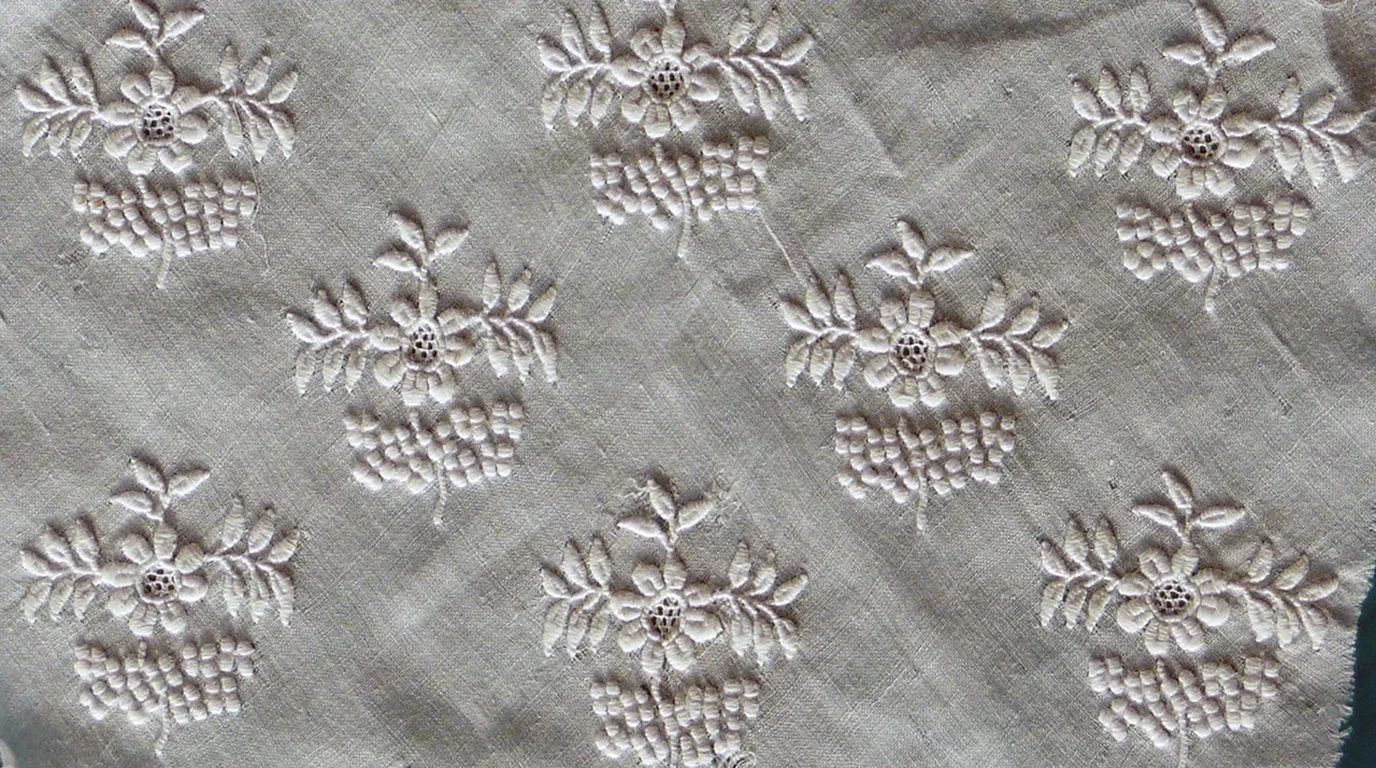
Close needle stitches create a raised thread pattern on the smooth cloth.
Linen Shirts and Village Costumes
Women around Banja Luka wore this beautiful blue needlework on their best village clothes.
Families made the thick cloth at home by weaving natural linen and hemp threads on wooden looms.
Wide dress sleeves showed the most detailed blue borders and layered geometric shapes.
A special headpiece showed if a woman was married or unmarried in the village.
Men also wore simple blue stitches around their shirt collars and chest buttons.
Hand-spun plant threads gave the strong cloth a rough texture that held every stitch.
Winter Sewing Circles and Family Teaching
Mothers and grandmothers taught young girls how to hold needles and count threads at home.
Women gathered on cold winter evenings to sew together, share patterns, and sing old folk songs.
Skilled makers memorized every complex geometric shape in their minds without using paper drawings.
A young woman prepared dozens of embroidered towels and shirts for her wedding chest.
Careful sewing required patience and good eyes, bringing high respect to talented village makers.
Traditional folk songs sung during sewing told stories about mountain life and village history.
Living Heritage and Modern Design
The 2014 UNESCO recognition brought worldwide interest to this ancient mountain craft.
The Museum in Banja Luka protects historic textile collections and teaches public needlework classes.
Women in rural craft cooperatives make and sell authentic embroidered linen goods today.
Modern fashion designers use these famous blue geometric patterns on new dresses and jewelry.
Young students learn traditional thread counting in school workshops across the region.
Cultural leaders protect the old needlework rules so the dark blue craft keeps its pure character.
A2 · Elementary
Zmijanje Embroidery and Traditional Cross-Stitch Patterns
Monochromatic indigo geometry, ceremonial folk attire, and living textile traditions in Bosnia.
Indigo Geometry and Counted Needlework
In 2014, UNESCO inscribed Zmijanje embroidery as the first intangible cultural heritage element from Bosnia and Herzegovina.
The tradition is uniquely recognized across the Balkan region for using exclusively dark blue or deep indigo thread.
Artisans execute an exacting cross-stitch technique by carefully counting warp and weft threads on linen canvas.
The visual repertoire features strict geometric compositions, including diamonds, rhomboids, crosses, and solar wheels.
Unlike the colorful floral embroidery of lowland villages, this highland craft preserves ancient geometric abstraction.
Dense rows of stitches produce a raised relief pattern that contrasts subtly against natural unbleached cloth.
Linen Canvases and Ceremonial Folk Costumes
Zmijanje embroidery traditionally decorated the festive garments of rural women living on highland plateaus near Banja Luka.
Villagers wove the primary canvas from home-grown flax and hemp fibers on sturdy wooden looms during winter.
Embroidered sleeves served as the central showpiece of festival costumes, featuring wide cuffs with layered geometric borders.
The ceremonial headpiece displayed intricate needlework that indicated the marital status and age of the wearer.
Traditional men's shirts incorporated modest dark blue cross-stitch accents along the collar and front button placket.
Natural fiber processing created an organic fabric texture that kept counted needle stitches securely anchored in place.
Communal Sewing Bees and Heritage Transmission
Mothers and grandmothers passed embroidery skills down to daughters through patient hands-on guidance within the household.
Village women gathered at winter evening sewing bees to stitch together, exchange ornamental ideas, and sing traditional songs.
Master stitchers memorized every complicated geometric composition without consulting paper templates or marked guide lines.
A bride's wooden dowry chest contained dozens of embroidered shirts, kerchiefs, and decorative linen cloths.
Highland communities respected expert embroiderers because the craft required remarkable patience and mathematical precision.
Lyrical songs performed during evening work gatherings preserved memories of pastoral mountain life and local history.
Museum Collections and Contemporary Revival
The UNESCO inscription in 2014 inspired renewed civic pride and international appreciation for Zmijanje needlework.
The Museum of the Republic of Srpska in Banja Luka preserves historic textile samplers and hosts educational demonstrations.
Artisan cooperatives on the Manjača plateau produce authentic hand-stitched linen goods to support rural female livelihoods.
Contemporary designers adapt iconic indigo geometric motifs into modern clothing, decorative accessories, and graphic art.
Schools and cultural centers organize needlework classes to teach young students traditional thread-counting techniques.
Heritage associations enforce authentic standards to prevent commercial mass production from diluting traditional rules.
B1 · Intermediate
Zmijanje Embroidery and Traditional Cross-Stitch Patterns
Strict monochromatic indigo needlework, ceremonial attire, and intergenerational craft transmission.
Monochromatic Indigo and Counted-Thread Precision
UNESCO inscribed Zmijanje embroidery on the Representative List of Intangible Cultural Heritage in 2014 as the nation's inaugural listing.
The needlework stands out among Southeastern European textile arts through its rigorous, exclusive dedication to dark indigo blue yarn.
Artisans employ an exacting cross-stitch method termed pokrstica, precisely counting individual threads on woven linen or hemp fabric.
The decorative grammar relies on structured geometric motifs, prominently featuring rhomboids, nested crosses, and segmented solar wheels.
In contrast to polychrome floral embroideries in surrounding river valleys, Zmijanje preserves an archaic system of geometric abstraction.
The remarkable density of hand stitches generates a tactile raised relief that catches light against the unbleached linen ground.
Traditional Attire and Handloom Linen Production
Historically, this distinctive embroidery adorned the ceremonial folk dress of peasant women across the plateau near Banja Luka.
Rural households cultivated flax and hemp, processing raw plant stalks to weave durable canvas on domestic horizontal looms.
Embroidered sleeves formed the visual centerpiece of female festival attire, boasting broad cuffs decorated with dense geometric registers.
A woman's ceremonial headpiece conveyed precise ethnographic information regarding her marital stage and social status within the community.
Traditional male garments featured understated blue cross-stitch borders along shirt collars and front plackets, echoing the regional aesthetic.
The irregular slubbed surface of hand-spun flax yarn provided the necessary friction to anchor counted-thread stitches permanently.
Winter Sewing Bees and Oral Heritage Transmission
Intergenerational transmission occurred naturally within rural homesteads as grandmothers and mothers mentored young apprentices.
Communal winter evening gatherings known as prela united women to spin flax, execute complex needlework, and sing traditional songs.
Master needleworkers committed complex geometric arrangements entirely to memory, never relying on printed charts or drawn fabric markings.
Preparing a comprehensive bridal dowry chest required years of dedicated labor, assembling dozens of meticulously embroidered textiles.
Exceptional precision and geometric symmetry earned master embroiderers profound social prestige and community recognition.
Traditional folk lyrics sung during sewing gatherings articulated the hardships, pastoral routines, and cultural resilience of highland life.
UNESCO Safeguarding and Modern Design Adaptations
The landmark 2014 UNESCO listing elevated Zmijanje needlework from a regional folk custom into an internationally protected cultural asset.
The Museum of the Republic of Srpska in Banja Luka maintains extensive textile archives and organizes regular public educational workshops.
Grassroots women's cooperatives across the Manjača plateau produce authentic hand-stitched garments, generating sustainable rural income.
Creative industry designers frequently integrate iconic Zmijanje geometric figures into contemporary haute couture, jewelry, and interior furnishings.
Educational initiatives introduce primary and secondary school pupils to traditional counting methods, ensuring ongoing craft literacy.
Systematic safeguarding protocols ensure that commercial revitalization respects historical geometric conventions and authentic indigo palettes.
B2 · Upper Intermediate
Zmijanje Embroidery and Traditional Cross-Stitch Patterns
Counted-thread geometry, ceremonial Dinaric folk dress, and communal textile heritage in Bosnia.
Monochromatic Indigo Palette and Geometric Canon
In 2014, UNESCO formally inscribed Zmijanje embroidery on the Representative List of Intangible Cultural Heritage, establishing a national milestone.
Zmijanje needlework occupies an anomalous position in Balkan ethnography due to its uncompromising, monochromatic dark blue or indigo palette.
Executing the foundational pokrstica cross-stitch necessitates microscopic counted-thread precision over handwoven linen or hemp canvases.
The ornamental canon is governed by austere geometric forms, combining rhomboid medallions, swastika crosses, and radiant wheel figures.
While neighboring lowland traditions embraced vibrant polychrome floral schemes, Zmijanje tenaciously retained archaic mountain symbolism.
Careful calibration of needle tension yields a pronounced tactile texture that produces subtle chiaroscuro effects across the textile plane.
Highland Attire and Domestic Fiber Processing
The embroidery historically embellished the ceremonial attire of rural women inhabiting the karst plateau south of Banja Luka.
Peasant households retted, scutched, and spun homegrown flax and hemp to produce sturdy canvases on domestic wooden looms.
The monumental sleeve cuffs of female festive smocks featured dense horizontal bands of dark blue geometric needlework.
The ornate bridal headpiece functioned as a visual language, signaling marital availability, social status, and clan lineage.
Men's ceremonial shirts exhibited restrained dark blue accents along collars and cuffs, reinforcing communal stylistic cohesion.
The organic irregularities of hand-spun vegetable fibers provided an ideal ground for maintaining exact counted-thread alignment.
Communal Work Bees and Intergenerational Knowledge
Craft knowledge was passed down through matrilineal domestic apprenticeships, beginning with basic stitches in early childhood.
Winter evening work bees known as prela served as vital social hubs where women shared techniques and sang polyphonic folk ballads.
Artisans executed vast ornamental compositions purely from cognitive memory, eschewing written diagrams, stencils, or tracing guides.
Assembling the matrimonial dowry chest constituted a monumental undertaking that showcased an unmarried woman's artistic diligence.
Highland communities accorded substantial prestige to master embroiderers whose mathematical rigor produced immaculate symmetrical patterns.
Folk poetry chanted during communal sewing sessions immortalized historical struggles and celebrated highland pastoral survival.
Institutional Preservation and Creative Industry Revival
UNESCO recognition in 2014 sparked comprehensive institutional revitalization programs that repositioned the craft within European heritage.
The Ethnology Department at the Museum of the Republic of Srpska in Banja Luka conducts rigorous fieldwork and curates historical samplers.
Artisan cooperatives throughout the Manjača mountain district empower rural women by marketing certified authentic heritage textiles.
Progressive fashion designers and silversmiths repurpose Zmijanje's stark geometric motifs into high-end apparel and contemporary jewelry.
Apprenticeship workshops integrated into vocational school curricula introduce new generations to traditional counted-thread techniques.
Rigorous certification guidelines protect the cultural integrity of the craft, preventing commercial dilution of traditional indigo motifs.
C1 · Advanced
Zmijanje Embroidery and Traditional Cross-Stitch Patterns
Archaic geometric abstraction, counted-thread ethnography, and UNESCO heritage revitalization in Bosnia.
Archaic Geometric Canon and Monochromatic Indigo Morphology
Inscribed on the UNESCO Representative List in 2014, Zmijanje embroidery represents an incomparable jewel of Balkan intangible heritage.
The tradition diverges decisively from regional textile polychromy by maintaining an unyielding monochromatic indigo chromatic canon.
The structural execution relies upon an exacting counted-thread cross-stitch termed pokrstica, worked over home-spun linen or hemp canvas.
Its morphological syntax comprises rigorous geometric archetypes, prominently diamond rhomboids, meanders, and radiant solar wheels.
Rejecting the naturalistic floral motifs prevalent in adjacent river valleys, Zmijanje perpetuates an archaic Dinaric symbolic grammar.
Meticulous calibration of stitch tension yields an opulent bas-relief texture that generates subtle chiaroscuro over the textile ground.
Sartorial Semiotics and Agrarian Linen Manufacture
Historically, this ornamentation embellished the ceremonial sartorial attire of rural women inhabiting the mountainous Manjača plateau near Banja Luka.
Agrarian households cultivated Linum usitatissimum, subjecting harvested flax to retting and spinning before weaving coarse canvas on looms.
The monumental embroidered sleeves of festive chemises exhibited dense geometric registers that demonstrated consummate needlework virtuosity.
The ceremonial bošča headpiece operated as a complex semiotic marker, delineating marital status, kinship ties, and civic maturity.
Masculine attire incorporated understated dark blue geometric accents along the collar band and placket, affirming stylistic unity.
The tactile unevenness of hand-spun bast fibers provided friction that stabilized counted stitches against mechanical deformation.
Matrilineal Pedagogy and Communal Spinning Bees
Technical mastery was transmitted through matrilineal apprenticeship, embedding complex geometric mnemonics within domestic homesteads.
Nocturnal spinning bees termed prela functioned as pivotal institutions of female sociality, blending needlecraft with traditional folk songs.
Master practitioners executed intricate compositions entirely from mental spatial templates without gridded schematics or preliminary tracings.
The compilation of an elaborate matrimonial ruho dowry required years of disciplined labor, accumulating dozens of heirloom textiles.
Exceptional precision in counting warp and weft threads garnered widespread community prestige, celebrating female intellectual discipline.
Folkloric verses chanted during collective stitching sessions preserved archaic pastoral memories, ancestral ballads, and regional resilience.
Safeguarding Infrastructure and Contemporary Creative Revival
The landmark 2014 UNESCO inscription catalyzed systematic safeguarding frameworks across governmental institutions and civic cooperatives.
The Museum of the Republic of Srpska in Banja Luka maintains archival repository collections and curates interactive masterclasses.
Rural artisan cooperatives on the Manjača plateau provide economic autonomy for women while preserving ancient needlework traditions.
Contemporary haute couture designers and graphic artists incorporate Zmijanje's stark indigo geometry into modern aesthetic collections.
Standardized vocational curricula and community workshops instruct adolescent apprentices in counted-thread precision and motif history.
Rigorous authenticity charters safeguard the archaic geometric repertoire from the homogenizing pressures of commercial mass manufacture.
C2 · Mastery
Zmijanje Embroidery and Traditional Cross-Stitch Patterns
Counted-thread geometric abstraction, sartorial semiotics, and UNESCO safeguarding on the Dinaric karst.
Archaic Geometric Canon and Monochromatic Indigo Petrogenesis
Inscribed on the UNESCO Representative List in 2014, Zmijanje embroidery constitutes an extraordinary monument of Balkan textile heritage.
The tradition departs radically from pan-Balkan polychromy by adhering uncompromisingly to an unyielding monochromatic indigo chromatic canon.
The technical foundation comprises an exacting counted-thread cross-stitch termed pokrstica, executed over domestic hand-spun linen or hemp canvas.
Its morphological syntax unites primordial geometric archetypes, specifically diamond rhomboids, segmented crosses, and radiant solar wheels.
Eschewing the flamboyant floral designs of neighboring river valleys, Zmijanje perpetuates an archaic Dinaric symbolic grammar.
Rigorous control of stitch tension creates an opulent tactile relief that produces subtle chiaroscuro over the plain-weave ground.
Sartorial Semiotics and Agrarian Linen Manufacture
Historically, this ornamentation embellished the ceremonial sartorial folk costume of peasant women inhabiting the rugged Manjača plateau near Banja Luka.
Pastoral homesteads cultivated Linum usitatissimum, subjecting the harvested stalks to retting and spinning to produce coarse canvas.
The monumental embroidered sleeves of festive chemises exhibited dense horizontal registers that demonstrated consummate needlework virtuosity.
The ceremonial bošča headpiece functioned as an intricate semiotic marker, signaling marital status, kinship alliances, and social maturity.
Masculine attire incorporated restrained dark blue cross-stitch accents along the collar band and placket, reinforcing stylistic unity.
The fibrous irregularities of hand-spun bast threads provided vital friction that stabilized counted stitches against mechanical distortion.
Matrilineal Pedagogy and Communal Spinning Bees
Technical mastery was transmitted through matrilineal apprenticeship, instilling complex geometric mnemonics within domestic homesteads.
Nocturnal spinning bees termed prela operated as pivotal crucibles of female solidarity, merging intensive needlework with traditional folk songs.
Master practitioners executed expansive decorative compositions entirely from cognitive spatial templates without gridded schematics or tracing guides.
The accumulation of an elaborate matrimonial ruho dowry necessitated years of disciplined toil, yielding dozens of heirloom textiles.
Exceptional precision in counting warp and weft threads garnered immense social prestige, celebrating female intellectual discipline.
Folkloric verses chanted during collective stitching sessions preserved ancient pastoral memories, ancestral ballads, and regional resilience.
Safeguarding Infrastructure and Contemporary Creative Revival
The milestone 2014 UNESCO inscription catalyzed comprehensive safeguarding protocols across educational institutions and rural artisan cooperatives.
The Museum of the Republic of Srpska in Banja Luka curates extensive archival repository collections and conducts public educational seminars.
Rural women's craft cooperatives across the Manjača plateau generate economic self-sufficiency while maintaining authentic needlework techniques.
Avant-garde fashion designers and applied artists repurpose Zmijanje's stark indigo geometry into high-end apparel, jewelry, and interior textiles.
Accredited vocational programs instruct adolescent apprentices in counted-thread precision, safeguarding the continuity of the craft.
Strict authenticity protocols protect the ancient geometric canon from the homogenizing pressures of commercial mass production.
Check your understanding
Choose how closely you want to revisit the article. You can refer back while answering, and review explanations when you finish.
Quick Quiz A1
Try one question, then create a free account for the full Quick Quiz. Sign Up Free
Answer every question before checking. There is no time limit.
Your results
/ 1 correct (%)
Read the explanations to see how each answer connects to the article.
-
When did UNESCO recognize Zmijanje embroidery as an intangible heritage craft?
1. Answer:
Quick Quiz A2
Try one question, then create a free account for the full Quick Quiz. Sign Up Free
Answer every question before checking. There is no time limit.
Your results
/ 1 correct (%)
Read the explanations to see how each answer connects to the article.
-
When did UNESCO inscribe Zmijanje embroidery on the Representative List?
1. Answer:
Quick Quiz B1
Try one question, then create a free account for the full Quick Quiz. Sign Up Free
Answer every question before checking. There is no time limit.
Your results
/ 1 correct (%)
Read the explanations to see how each answer connects to the article.
-
When was Zmijanje embroidery inscribed on the Representative List as the inaugural listing?
1. Answer:
Quick Quiz B2
Try one question, then create a free account for the full Quick Quiz. Sign Up Free
Answer every question before checking. There is no time limit.
Your results
/ 1 correct (%)
Read the explanations to see how each answer connects to the article.
-
When did UNESCO formally inscribe Zmijanje embroidery, establishing a milestone?
1. Answer:
Quick Quiz C1
Try one question, then create a free account for the full Quick Quiz. Sign Up Free
Answer every question before checking. There is no time limit.
Your results
/ 1 correct (%)
Read the explanations to see how each answer connects to the article.
-
When was Zmijanje embroidery inscribed on the UNESCO Representative List?
1. Answer:
Quick Quiz C2
Try one question, then create a free account for the full Quick Quiz. Sign Up Free
Answer every question before checking. There is no time limit.
Your results
/ 1 correct (%)
Read the explanations to see how each answer connects to the article.
-
When was Zmijanje embroidery inscribed on the UNESCO Representative List?
1. Answer:
