A1 · Beginner
The Olive Groves of Jaén: Ancient Trees and Andalusian Oil
Across the rolling hills of Jaén, millions of olive trees produce extra virgin olive oil through traditional family cooperatives.
The Sea of Olives Across Jaén
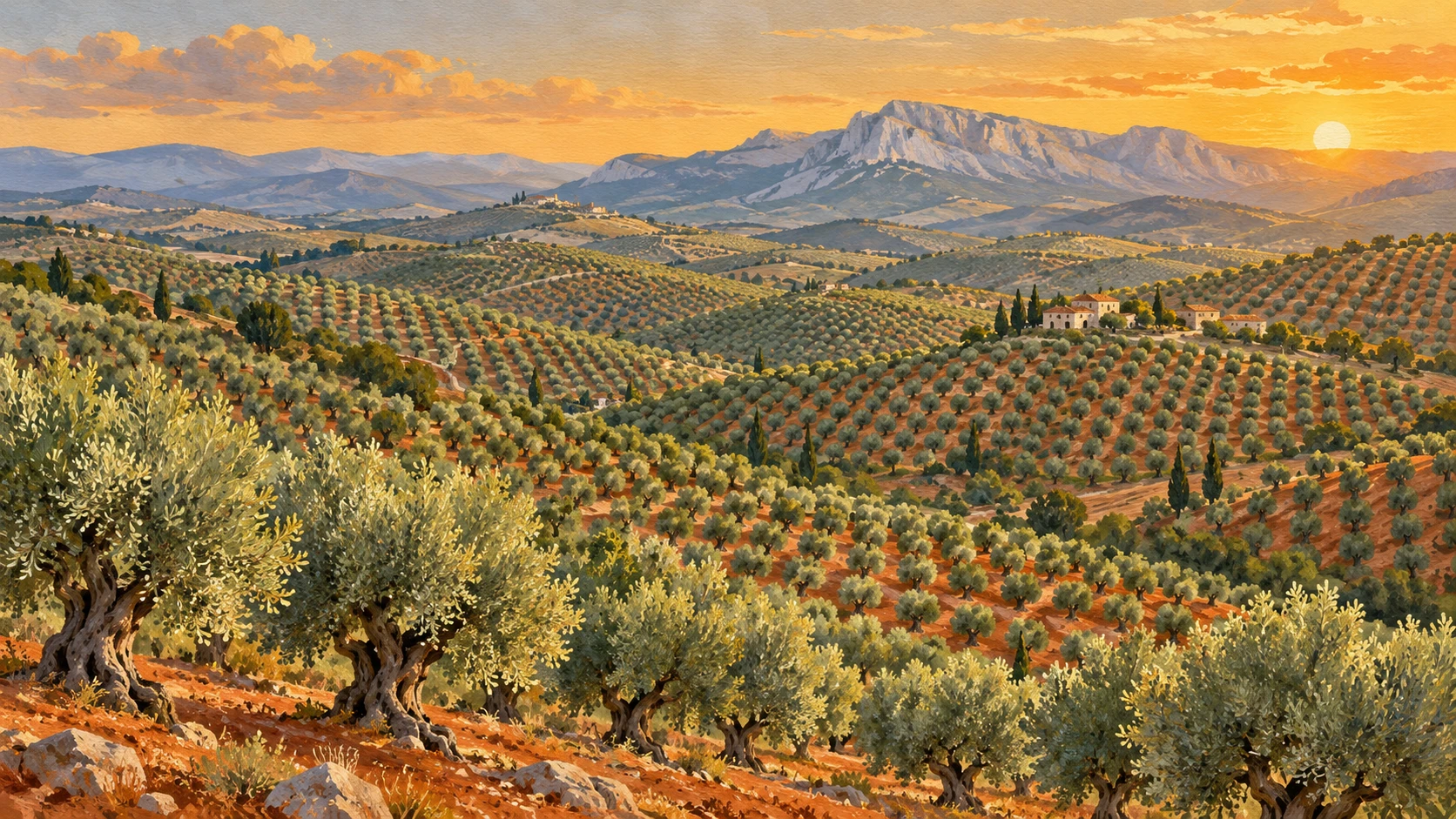
The province of Jaén in southern Spain contains over sixty million cultivated olive trees. This vast agrarian forest covers rolling hills across the Andalusian countryside. Local residents call this endless green horizon the Sea of Olives. More than eighty percent of regional farmland is planted with olive groves.
The hardy Picual olive variety makes up ninety percent of all trees in Jaén. These robust trees grow well on sunny limestone slopes and produce high oil yields. Spain submitted this agricultural landscape to the UNESCO World Heritage tentative list. Jaén supplies one fifth of all olive oil produced in the world.
Harvest Rhythms and Mountain Groves
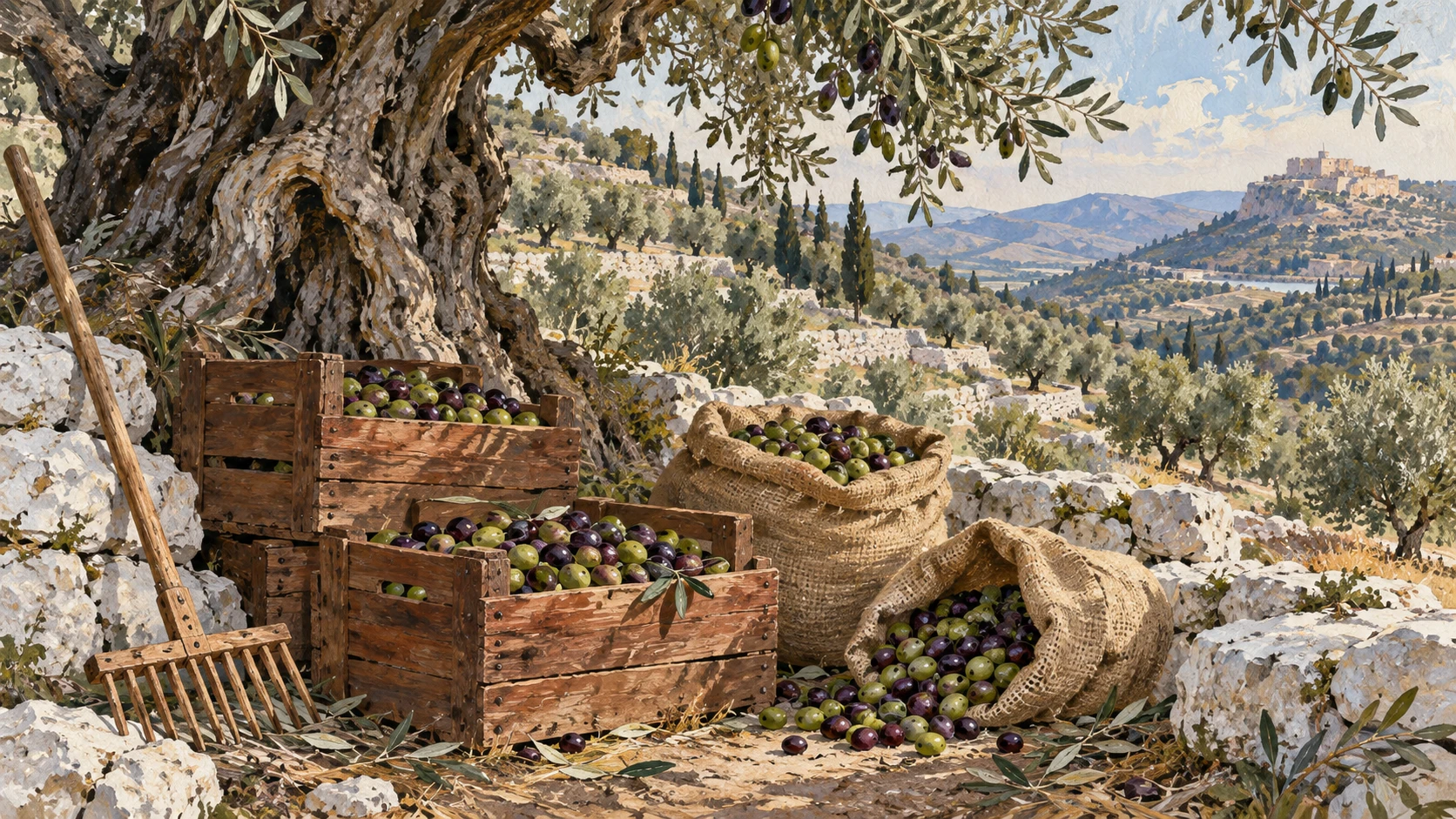
The annual olive harvest begins in October with an early harvest of green fruit. Farmers gather these unripe olives to produce fresh oil with rich herbaceous aromas. As winter arrives, motorized branch shakers and vibrating tractors collect the main crop. Ground nets catch the falling fruit quickly without bruising the skin.
On steep mountain terraces, farm workers still use flexible wooden poles to harvest branches. Picked olives travel to local milling centers within twenty-four hours of collection. Fast transport prevents fruit spoilage and protects natural oil freshness. Agricultural cooperatives coordinate daily truck schedules for thousands of smallholder families.
Cooperative Mills and Cold Extraction
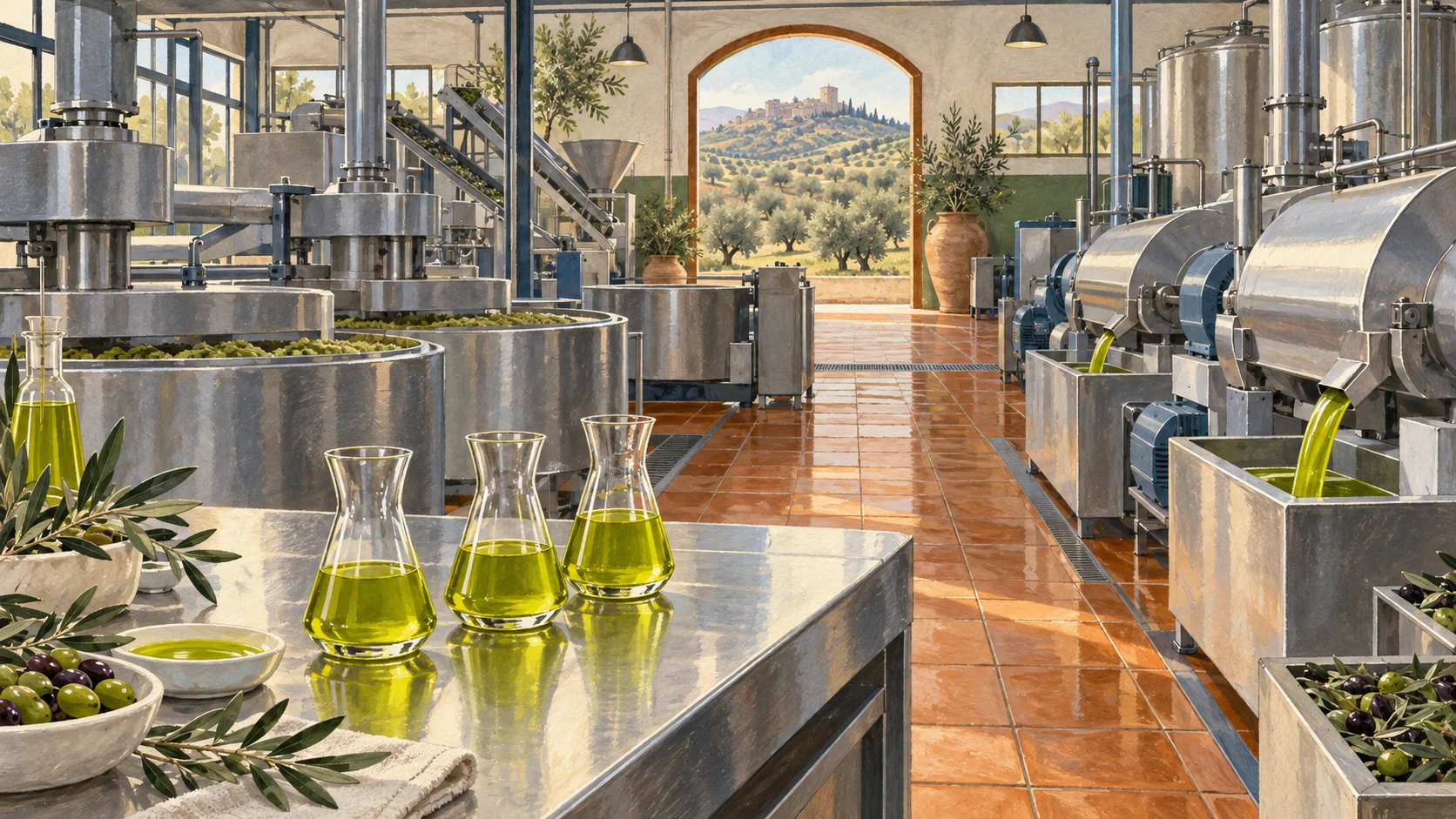
Modern olive mills known as almazaras operate continuous mechanical extraction lines. Automated decanters spin the crushed olive paste to separate pure golden oil. Certified cold extraction keeps paste temperatures below twenty-seven degrees Celsius during processing. Picual oil contains high levels of oleic acid and natural antioxidants.
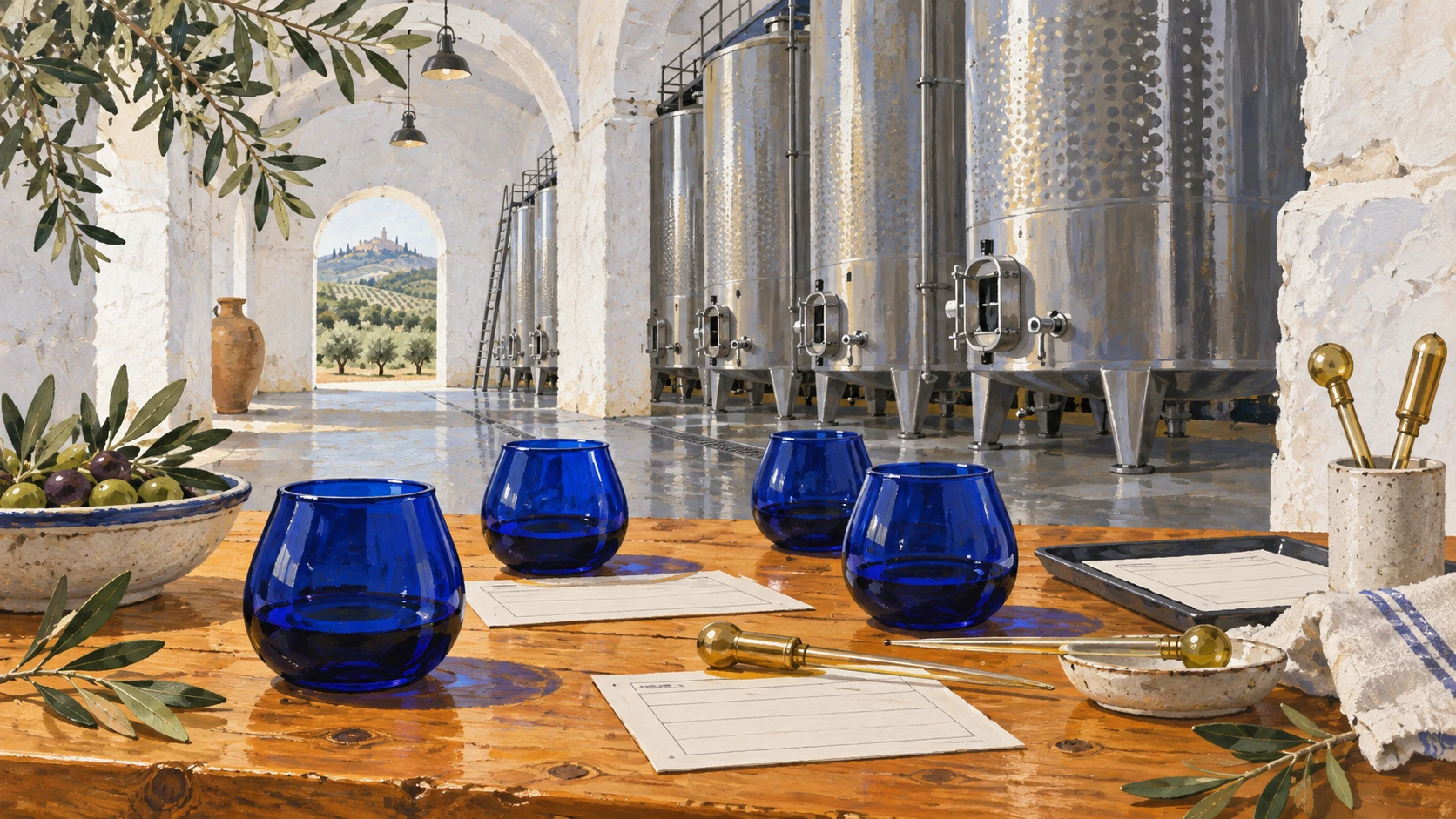
Three mountain districts in Jaén maintain official Protected Designation of Origin certifications. Expert tasting panels evaluate aroma, bitterness, and fruitiness before approving official quality labels. Leftover olive pomace and crushed pits provide renewable biomass fuel for heating. Cooperative mills recycle all organic residues to protect the environment.
Water Management and Farming Traditions
Summer heatwaves and Mediterranean droughts create serious water shortages for olive farmers. Growers install efficient drip irrigation lines fed by mountain reservoirs to conserve water. Planting native grass cover crops between tree rows prevents winter soil erosion. These green plant covers also enrich natural organic matter in the soil.
Generational renewal ensures that young farmers continue historic family agricultural traditions. Modern European farm grants help families purchase fuel-efficient machinery and clean equipment. Guided farm visits allow tourists to taste regional oils and walk through historic groves. Rigorous agricultural reports confirm that cooperative farming sustains rural communities in Andalusia.
A2 · Elementary
The Olive Groves of Jaén: Ancient Trees and Andalusian Oil
Across the rolling hills of Jaén, millions of olive trees produce extra virgin olive oil through traditional family cooperatives and cold extraction.
The Agrarian Monoculture and the Sea of Olives
The province of Jaén in southern Spain contains over sixty million cultivated olive trees, constituting the densest monocultural agrarian forest in Europe. Spanning rolling limestone hills across the Guadalquivir river basin, this uninterrupted agricultural horizon is popularly known as the Sea of Olives. Official land use surveys confirm that more than eighty percent of regional cultivated acreage is committed directly to olive orchards, anchoring the provincial rural economy to olive oil production.
The hardy Picual olive variety dominates the province, accounting for over ninety percent of all cultivated groves due to its exceptional productivity, high fat yield, and vigor on dry calcareous soils. Traditional non-irrigated olive orchards planted on steep mountain slopes coexist alongside modern drip-irrigated high-density plantation corridors. This exceptional agrarian landscape was formally submitted to the UNESCO World Heritage tentative list, recognizing Jaén as a global agricultural epicenter that generates approximately twenty percent of total global olive oil supplies.
Harvest Rhythms, Mechanical Shakers, and Cooperative Schedules
The agricultural calendar in Jaén commences in early October with the harvest of unripe green fruit. Agronomists prioritize early harvesting to press premium extra virgin oils renowned for herbaceous aromas, intense fruitiness, and peppery bitterness. As winter advances, motorized trunk vibrators and tractor-mounted branch shakers dislodge the bulk of the ripening crop onto porous ground collection nets, protecting delicate fruit skins from impact bruising.
On steep mountain terraces where heavy machinery cannot navigate, traditional farm laborers still practice vareo, utilizing flexible wooden poles to dislodge olives manually. Cooperatives require smallholder growers to deliver freshly harvested fruit to designated milling facilities within twenty-four hours of collection. Prompt processing prevents microbial fermentation, oxidation, and enzymatic spoilage, while temporary seasonal labor migration significantly expands the agricultural workforce across rural Andalusian municipalities.
Industrial Almazaras, Cold Centrifugation, and Protected Designations
Industrial milling facilities, known throughout Spain as almazaras, utilize continuous two-phase horizontal decanters to process massive volumes of olive paste. Certified extra virgin extraction protocols require that paste temperatures remain strictly below twenty-seven degrees Celsius during malaxation to preserve volatile aromatic compounds. Picual oil is chemically distinguished by an exceptionally high oleic acid content and abundant polyphenols, providing remarkable stability against rancidity and oxidation.
Three highland territories in Jaén maintain official Protected Designation of Origin regulatory councils to certify geographic provenance and adherence to strict sensory standards. Certified tasting panels conduct blind organoleptic evaluations to detect defects and verify intense aromatic attributes prior to commercial bottling. Furthermore, modern almazaras recycle solid milling by-products known as alperujo and crushed olive stones into renewable biomass fuel and organic agricultural compost.
Hydrological Constraints, Soil Conservation, and Generational Heritage
Severe Mediterranean droughts and recurring summer heatwaves present acute operational vulnerabilities to rainfed olive orchards across Andalusia. In response, local irrigation communities manage computer-monitored drip irrigation networks drawing from regulated reservoirs along the Guadalquivir river basin. To counter severe winter soil erosion and nutrient depletion, forward-looking farmers maintain spontaneous herbaceous cover crops between tree rows to protect vulnerable topsoil.
Generational renewal remains a structural priority for regional agrarian unions, supported by targeted regional installation subsidies for young farmers taking over family holdings. Alongside agricultural modernization, provincial oleotourism initiatives open historic estates, sensory tasting rooms, and cooperative museums to international visitors. Authoritative agronomic bulletins published by the regional agriculture ministry document harvest telemetry and empirical pest monitoring, reinforcing evidence-based agricultural management.
B1 · Intermediate
Jaén Olive Groves: The Sea of Olives and Andalusian Milling Heritage
An analytical study of Jaén olive groves, examining cooperative milling networks, Picual cultivation, and the agronomic realities of Spanish olive oil production.
The Agrarian Monoculture and the Sea of Olives
The province of Jaén in southern Spain contains over sixty million cultivated olive trees, constituting the densest monocultural agrarian forest in Europe. Spanning rolling limestone hills across the Guadalquivir river basin, this uninterrupted agricultural horizon is popularly known as the Sea of Olives. Official land use surveys confirm that more than eighty percent of regional cultivated acreage is committed directly to olive orchards, anchoring the provincial rural economy to olive oil production.
The hardy Picual olive variety dominates the province, accounting for over ninety percent of all cultivated groves due to its exceptional productivity, high fat yield, and vigor on dry calcareous soils. Traditional non-irrigated olive orchards planted on steep mountain slopes coexist alongside modern drip-irrigated high-density plantation corridors. This exceptional agrarian landscape was formally submitted to the UNESCO World Heritage tentative list, recognizing Jaén as a global agricultural epicenter that generates approximately twenty percent of total global olive oil supplies.
Harvest Rhythms, Mechanical Shakers, and Cooperative Schedules
The agricultural calendar in Jaén commences in early October with the harvest of unripe green fruit. Agronomists prioritize early harvesting to press premium extra virgin oils renowned for herbaceous aromas, intense fruitiness, and peppery bitterness. As winter advances, motorized trunk vibrators and tractor-mounted branch shakers dislodge the bulk of the ripening crop onto porous ground collection nets, protecting delicate fruit skins from impact bruising.
On steep mountain terraces where heavy machinery cannot navigate, traditional farm laborers still practice vareo, utilizing flexible wooden poles to dislodge olives manually. Cooperatives require smallholder growers to deliver freshly harvested fruit to designated milling facilities within twenty-four hours of collection. Prompt processing prevents microbial fermentation, oxidation, and enzymatic spoilage, while temporary seasonal labor migration significantly expands the agricultural workforce across rural Andalusian municipalities.
Industrial Almazaras, Cold Centrifugation, and Protected Designations
Industrial milling facilities, known throughout Spain as almazaras, utilize continuous two-phase horizontal decanters to process massive volumes of olive paste. Certified extra virgin extraction protocols require that paste temperatures remain strictly below twenty-seven degrees Celsius during malaxation to preserve volatile aromatic compounds. Picual oil is chemically distinguished by an exceptionally high oleic acid content and abundant polyphenols, providing remarkable stability against rancidity and oxidation.
Three highland territories in Jaén maintain official Protected Designation of Origin regulatory councils to certify geographic provenance and adherence to strict sensory standards. Certified tasting panels conduct blind organoleptic evaluations to detect defects and verify intense aromatic attributes prior to commercial bottling. Furthermore, modern almazaras recycle solid milling by-products known as alperujo and crushed olive stones into renewable biomass fuel and organic agricultural compost.
Hydrological Constraints, Soil Conservation, and Generational Heritage
Severe Mediterranean droughts and recurring summer heatwaves present acute operational vulnerabilities to rainfed olive orchards across Andalusia. In response, local irrigation communities manage computer-monitored drip irrigation networks drawing from regulated reservoirs along the Guadalquivir river basin. To counter severe winter soil erosion and nutrient depletion, forward-looking farmers maintain spontaneous herbaceous cover crops between tree rows to protect vulnerable topsoil.
Generational renewal remains a structural priority for regional agrarian unions, supported by targeted regional installation subsidies for young farmers taking over family holdings. Alongside agricultural modernization, provincial oleotourism initiatives open historic estates, sensory tasting rooms, and cooperative museums to international visitors. Authoritative agronomic bulletins published by the regional agriculture ministry document harvest telemetry and empirical pest monitoring, reinforcing evidence-based agricultural management.
B2 · Upper Intermediate
The Olive Sea of Jaén: Monoculture, Milling Cooperatives, and Andalusian Heritage
An in-depth report on the olive landscapes of Jaén, exploring cold extraction standards, protected designations of origin, and climate adaptation along the Guadalquivir basin.
The Agrarian Monoculture and the Sea of Olives
The province of Jaén in southern Spain contains over sixty million cultivated olive trees, constituting the densest monocultural agrarian forest in Europe. Spanning rolling limestone hills across the Guadalquivir river basin, this uninterrupted agricultural horizon is popularly known as the Sea of Olives. Official land use surveys confirm that more than eighty percent of regional cultivated acreage is committed directly to olive orchards, anchoring the provincial rural economy to olive oil production.
The hardy Picual olive variety dominates the province, accounting for over ninety percent of all cultivated groves due to its exceptional productivity, high fat yield, and vigor on dry calcareous soils. Traditional non-irrigated olive orchards planted on steep mountain slopes coexist alongside modern drip-irrigated high-density plantation corridors. This exceptional agrarian landscape was formally submitted to the UNESCO World Heritage tentative list, recognizing Jaén as a global agricultural epicenter that generates approximately twenty percent of total global olive oil supplies.
Harvest Rhythms, Mechanical Shakers, and Cooperative Schedules
The agricultural calendar in Jaén commences in early October with the harvest of unripe green fruit. Agronomists prioritize early harvesting to press premium extra virgin oils renowned for herbaceous aromas, intense fruitiness, and peppery bitterness. As winter advances, motorized trunk vibrators and tractor-mounted branch shakers dislodge the bulk of the ripening crop onto porous ground collection nets, protecting delicate fruit skins from impact bruising.
On steep mountain terraces where heavy machinery cannot navigate, traditional farm laborers still practice vareo, utilizing flexible wooden poles to dislodge olives manually. Cooperatives require smallholder growers to deliver freshly harvested fruit to designated milling facilities within twenty-four hours of collection. Prompt processing prevents microbial fermentation, oxidation, and enzymatic spoilage, while temporary seasonal labor migration significantly expands the agricultural workforce across rural Andalusian municipalities.
Industrial Almazaras, Cold Centrifugation, and Protected Designations
Industrial milling facilities, known throughout Spain as almazaras, utilize continuous two-phase horizontal decanters to process massive volumes of olive paste. Certified extra virgin extraction protocols require that paste temperatures remain strictly below twenty-seven degrees Celsius during malaxation to preserve volatile aromatic compounds. Picual oil is chemically distinguished by an exceptionally high oleic acid content and abundant polyphenols, providing remarkable stability against rancidity and oxidation.
Three highland territories in Jaén maintain official Protected Designation of Origin regulatory councils to certify geographic provenance and adherence to strict sensory standards. Certified tasting panels conduct blind organoleptic evaluations to detect defects and verify intense aromatic attributes prior to commercial bottling. Furthermore, modern almazaras recycle solid milling by-products known as alperujo and crushed olive stones into renewable biomass fuel and organic agricultural compost.
Hydrological Constraints, Soil Conservation, and Generational Heritage
Severe Mediterranean droughts and recurring summer heatwaves present acute operational vulnerabilities to rainfed olive orchards across Andalusia. In response, local irrigation communities manage computer-monitored drip irrigation networks drawing from regulated reservoirs along the Guadalquivir river basin. To counter severe winter soil erosion and nutrient depletion, forward-looking farmers maintain spontaneous herbaceous cover crops between tree rows to protect vulnerable topsoil.
Generational renewal remains a structural priority for regional agrarian unions, supported by targeted regional installation subsidies for young farmers taking over family holdings. Alongside agricultural modernization, provincial oleotourism initiatives open historic estates, sensory tasting rooms, and cooperative museums to international visitors. Authoritative agronomic bulletins published by the regional agriculture ministry document harvest telemetry and empirical pest monitoring, reinforcing evidence-based agricultural management.
C1 · Advanced
Agrarian Monoculture and Cooperative Milling: The Olive Groves of Jaén
A comprehensive examination of the Jaén olive landscape, assessing two-phase centrifugation, organoleptic benchmarks, water resource management, and rural demographic continuity.
The Agrarian Monoculture and the Sea of Olives
The province of Jaén in southern Spain contains over sixty million cultivated olive trees, constituting the densest monocultural agrarian forest in Europe. Spanning rolling limestone hills across the Guadalquivir river basin, this uninterrupted agricultural horizon is popularly known as the Sea of Olives. Official land use surveys confirm that more than eighty percent of regional cultivated acreage is committed directly to olive orchards, anchoring the provincial rural economy to olive oil production.
The hardy Picual olive variety dominates the province, accounting for over ninety percent of all cultivated groves due to its exceptional productivity, high fat yield, and vigor on dry calcareous soils. Traditional non-irrigated olive orchards planted on steep mountain slopes coexist alongside modern drip-irrigated high-density plantation corridors. This exceptional agrarian landscape was formally submitted to the UNESCO World Heritage tentative list, recognizing Jaén as a global agricultural epicenter that generates approximately twenty percent of total global olive oil supplies.
Harvest Rhythms, Mechanical Shakers, and Cooperative Schedules
The agricultural calendar in Jaén commences in early October with the harvest of unripe green fruit. Agronomists prioritize early harvesting to press premium extra virgin oils renowned for herbaceous aromas, intense fruitiness, and peppery bitterness. As winter advances, motorized trunk vibrators and tractor-mounted branch shakers dislodge the bulk of the ripening crop onto porous ground collection nets, protecting delicate fruit skins from impact bruising.
On steep mountain terraces where heavy machinery cannot navigate, traditional farm laborers still practice vareo, utilizing flexible wooden poles to dislodge olives manually. Cooperatives require smallholder growers to deliver freshly harvested fruit to designated milling facilities within twenty-four hours of collection. Prompt processing prevents microbial fermentation, oxidation, and enzymatic spoilage, while temporary seasonal labor migration significantly expands the agricultural workforce across rural Andalusian municipalities.
Industrial Almazaras, Cold Centrifugation, and Protected Designations
Industrial milling facilities, known throughout Spain as almazaras, utilize continuous two-phase horizontal decanters to process massive volumes of olive paste. Certified extra virgin extraction protocols require that paste temperatures remain strictly below twenty-seven degrees Celsius during malaxation to preserve volatile aromatic compounds. Picual oil is chemically distinguished by an exceptionally high oleic acid content and abundant polyphenols, providing remarkable stability against rancidity and oxidation.
Three highland territories in Jaén maintain official Protected Designation of Origin regulatory councils to certify geographic provenance and adherence to strict sensory standards. Certified tasting panels conduct blind organoleptic evaluations to detect defects and verify intense aromatic attributes prior to commercial bottling. Furthermore, modern almazaras recycle solid milling by-products known as alperujo and crushed olive stones into renewable biomass fuel and organic agricultural compost.
Hydrological Constraints, Soil Conservation, and Generational Heritage
Severe Mediterranean droughts and recurring summer heatwaves present acute operational vulnerabilities to rainfed olive orchards across Andalusia. In response, local irrigation communities manage computer-monitored drip irrigation networks drawing from regulated reservoirs along the Guadalquivir river basin. To counter severe winter soil erosion and nutrient depletion, forward-looking farmers maintain spontaneous herbaceous cover crops between tree rows to protect vulnerable topsoil.
Generational renewal remains a structural priority for regional agrarian unions, supported by targeted regional installation subsidies for young farmers taking over family holdings. Alongside agricultural modernization, provincial oleotourism initiatives open historic estates, sensory tasting rooms, and cooperative museums to international visitors. Authoritative agronomic bulletins published by the regional agriculture ministry document harvest telemetry and empirical pest monitoring, reinforcing evidence-based agricultural management.
C2 · Mastery
Agronomic Rigour and Agro-Industrial Scale: Deconstructing the Olive Groves of Jaén
A critical analysis of the Andalusian olive ecosystem, evaluating monocultural ecology, centrifugal extraction kinetics, Protected Designation of Origin governance, and hydrological resilience.
The Agrarian Monoculture and the Sea of Olives
The province of Jaén in southern Spain contains over sixty million cultivated olive trees, constituting the densest monocultural agrarian forest in Europe. Spanning rolling limestone hills across the Guadalquivir river basin, this uninterrupted agricultural horizon is popularly known as the Sea of Olives. Official land use surveys confirm that more than eighty percent of regional cultivated acreage is committed directly to olive orchards, anchoring the provincial rural economy to olive oil production.
The hardy Picual olive variety dominates the province, accounting for over ninety percent of all cultivated groves due to its exceptional productivity, high fat yield, and vigor on dry calcareous soils. Traditional non-irrigated olive orchards planted on steep mountain slopes coexist alongside modern drip-irrigated high-density plantation corridors. This exceptional agrarian landscape was formally submitted to the UNESCO World Heritage tentative list, recognizing Jaén as a global agricultural epicenter that generates approximately twenty percent of total global olive oil supplies.
Harvest Rhythms, Mechanical Shakers, and Cooperative Schedules
The agricultural calendar in Jaén commences in early October with the harvest of unripe green fruit. Agronomists prioritize early harvesting to press premium extra virgin oils renowned for herbaceous aromas, intense fruitiness, and peppery bitterness. As winter advances, motorized trunk vibrators and tractor-mounted branch shakers dislodge the bulk of the ripening crop onto porous ground collection nets, protecting delicate fruit skins from impact bruising.
On steep mountain terraces where heavy machinery cannot navigate, traditional farm laborers still practice vareo, utilizing flexible wooden poles to dislodge olives manually. Cooperatives require smallholder growers to deliver freshly harvested fruit to designated milling facilities within twenty-four hours of collection. Prompt processing prevents microbial fermentation, oxidation, and enzymatic spoilage, while temporary seasonal labor migration significantly expands the agricultural workforce across rural Andalusian municipalities.
Industrial Almazaras, Cold Centrifugation, and Protected Designations
Industrial milling facilities, known throughout Spain as almazaras, utilize continuous two-phase horizontal decanters to process massive volumes of olive paste. Certified extra virgin extraction protocols require that paste temperatures remain strictly below twenty-seven degrees Celsius during malaxation to preserve volatile aromatic compounds. Picual oil is chemically distinguished by an exceptionally high oleic acid content and abundant polyphenols, providing remarkable stability against rancidity and oxidation.
Three highland territories in Jaén maintain official Protected Designation of Origin regulatory councils to certify geographic provenance and adherence to strict sensory standards. Certified tasting panels conduct blind organoleptic evaluations to detect defects and verify intense aromatic attributes prior to commercial bottling. Furthermore, modern almazaras recycle solid milling by-products known as alperujo and crushed olive stones into renewable biomass fuel and organic agricultural compost.
Hydrological Constraints, Soil Conservation, and Generational Heritage
Severe Mediterranean droughts and recurring summer heatwaves present acute operational vulnerabilities to rainfed olive orchards across Andalusia. In response, local irrigation communities manage computer-monitored drip irrigation networks drawing from regulated reservoirs along the Guadalquivir river basin. To counter severe winter soil erosion and nutrient depletion, forward-looking farmers maintain spontaneous herbaceous cover crops between tree rows to protect vulnerable topsoil.
Generational renewal remains a structural priority for regional agrarian unions, supported by targeted regional installation subsidies for young farmers taking over family holdings. Alongside agricultural modernization, provincial oleotourism initiatives open historic estates, sensory tasting rooms, and cooperative museums to international visitors. Authoritative agronomic bulletins published by the regional agriculture ministry document harvest telemetry and empirical pest monitoring, reinforcing evidence-based agricultural management.
Check your understanding
Choose how closely you want to revisit the article. You can refer back while answering, and review explanations when you finish.
Quick Quiz A1
Try one question, then create a free account for the full Quick Quiz. Sign Up Free
Answer every question before checking. There is no time limit.
Your results
/ 1 correct (%)
Read the explanations to see how each answer connects to the article.
-
How many cultivated olive trees does the province of Jaén contain?
1. Answer:
Quick Quiz A2
Try one question, then create a free account for the full Quick Quiz. Sign Up Free
Answer every question before checking. There is no time limit.
Your results
/ 1 correct (%)
Read the explanations to see how each answer connects to the article.
-
What agrarian forest is formed by over sixty million cultivated olive trees in Jaén?
1. Answer:
Quick Quiz B1
Try one question, then create a free account for the full Quick Quiz. Sign Up Free
Answer every question before checking. There is no time limit.
Your results
/ 1 correct (%)
Read the explanations to see how each answer connects to the article.
-
What agrarian forest is formed by over sixty million cultivated olive trees in Jaén?
1. Answer:
Quick Quiz B2
Try one question, then create a free account for the full Quick Quiz. Sign Up Free
Answer every question before checking. There is no time limit.
Your results
/ 1 correct (%)
Read the explanations to see how each answer connects to the article.
-
What agrarian forest is formed by over sixty million cultivated olive trees in Jaén?
1. Answer:
Quick Quiz C1
Try one question, then create a free account for the full Quick Quiz. Sign Up Free
Answer every question before checking. There is no time limit.
Your results
/ 1 correct (%)
Read the explanations to see how each answer connects to the article.
-
What agrarian forest is formed by over sixty million cultivated olive trees in Jaén?
1. Answer:
Quick Quiz C2
Try one question, then create a free account for the full Quick Quiz. Sign Up Free
Answer every question before checking. There is no time limit.
Your results
/ 1 correct (%)
Read the explanations to see how each answer connects to the article.
-
What agrarian forest is formed by over sixty million cultivated olive trees in Jaén?
1. Answer:
