
A1 · Beginner
Mercamadrid: Inside Europe Largest Fresh Food Market
Operating day and night in southern Madrid, Mercamadrid connects coastal fishermen and regional farmers with millions of urban consumers.
Europe Central Food Platform and Wholesale Geography
Mercamadrid is a huge wholesale food market in the southern part of Madrid. The market covers more than two hundred hectares of land near main highways. City leaders and the national market company manage this massive logistics center together. Thousands of transport trucks arrive here every day to deliver fresh food to millions of consumers.
More than eight hundred different companies operate wholesale warehouses inside the secure gates. Long-haul trucks bring farm produce from sunny southern fields and seafood from coastal fishing ports. The market moves over three million metric tons of fresh foodstuffs every year. Modern supply routes connect Spanish farmers with local grocery stores and family kitchens.
Nocturnal Trading and the Central Fish Market
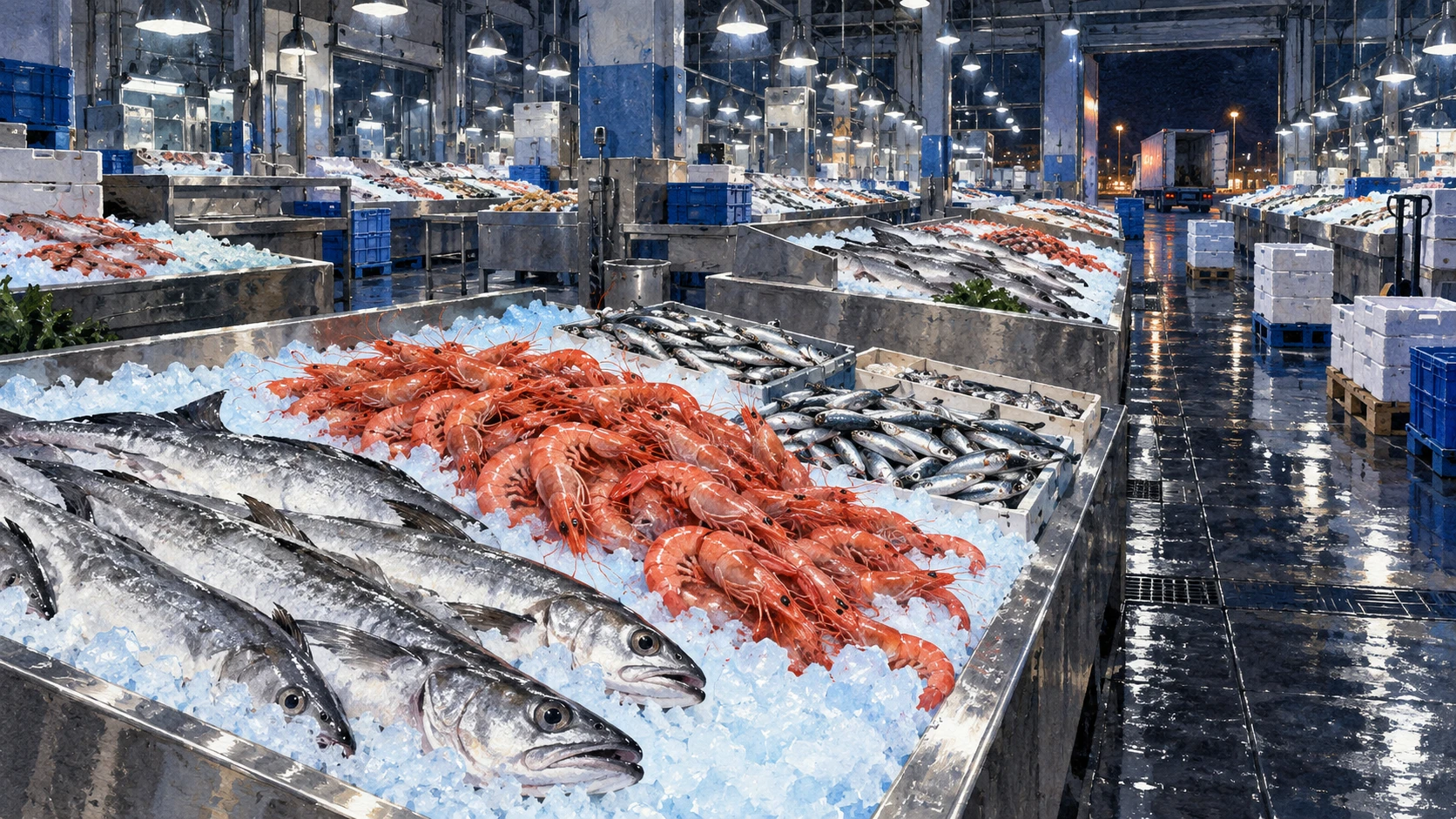
The central fish market at Mercamadrid is the second largest seafood trading hub in the world. Trading begins in the middle of the night around three in the morning. Workers unload refrigerated trucks that travel directly from Atlantic and Mediterranean fishing harbors. Hundreds of wholesale stalls display fresh hake, prawns, and sardines on beds of crushed ice.
Official veterinary inspectors examine the fish carefully before sales can begin. They check the bright red gills, clear eyes, and fresh sea smell of each catch. City fishmongers and restaurant chefs arrive before dawn to buy seafood for their shops. Cold storage rooms keep temperatures near zero degrees Celsius to keep the fish fresh.
Fruit Pavilions and Modern Cold Storage
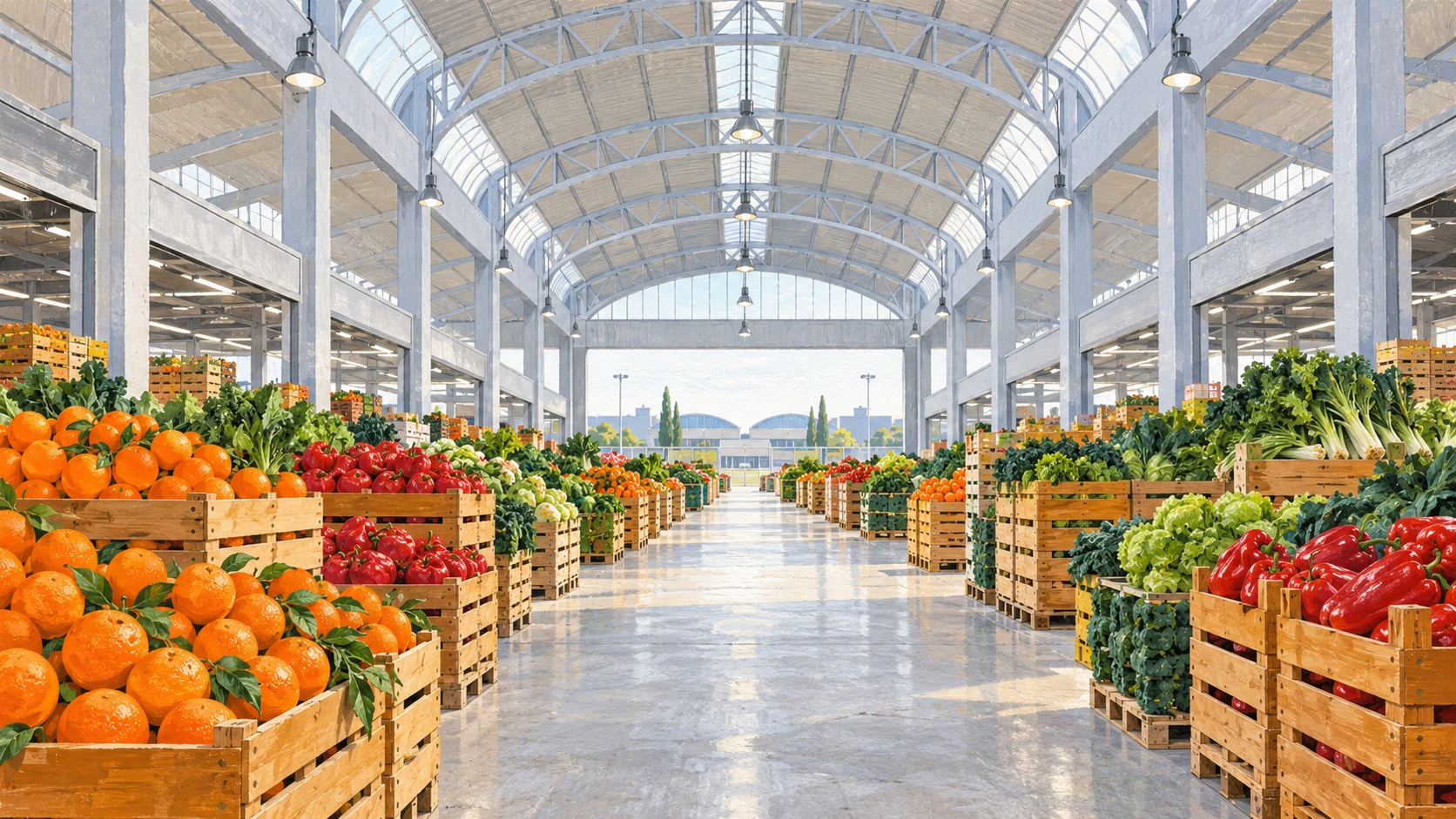
Six large pavilions hold rows of wholesale stalls filled with fresh fruits and vegetables. Farm trucks arrive from warm greenhouse regions in Almeria and fruit orchards in Murcia. Digital computers track every pallet of oranges, apples, and tomatoes across the refrigerated warehouse floors. Fast sorting machines check fruit size, color, and sugar sweetness before packing.
Delivery drivers move wooden pallets quickly from large freight trucks into small city delivery vans. These clean electric vans transport fresh produce to local neighborhood markets without delays. A special market zone offers organic vegetables grown by small family farms near Madrid. Local growers sell seasonal lettuce, carrots, and herbs directly to school kitchens.
Food Donations, Clean Energy, and Urban Reserves
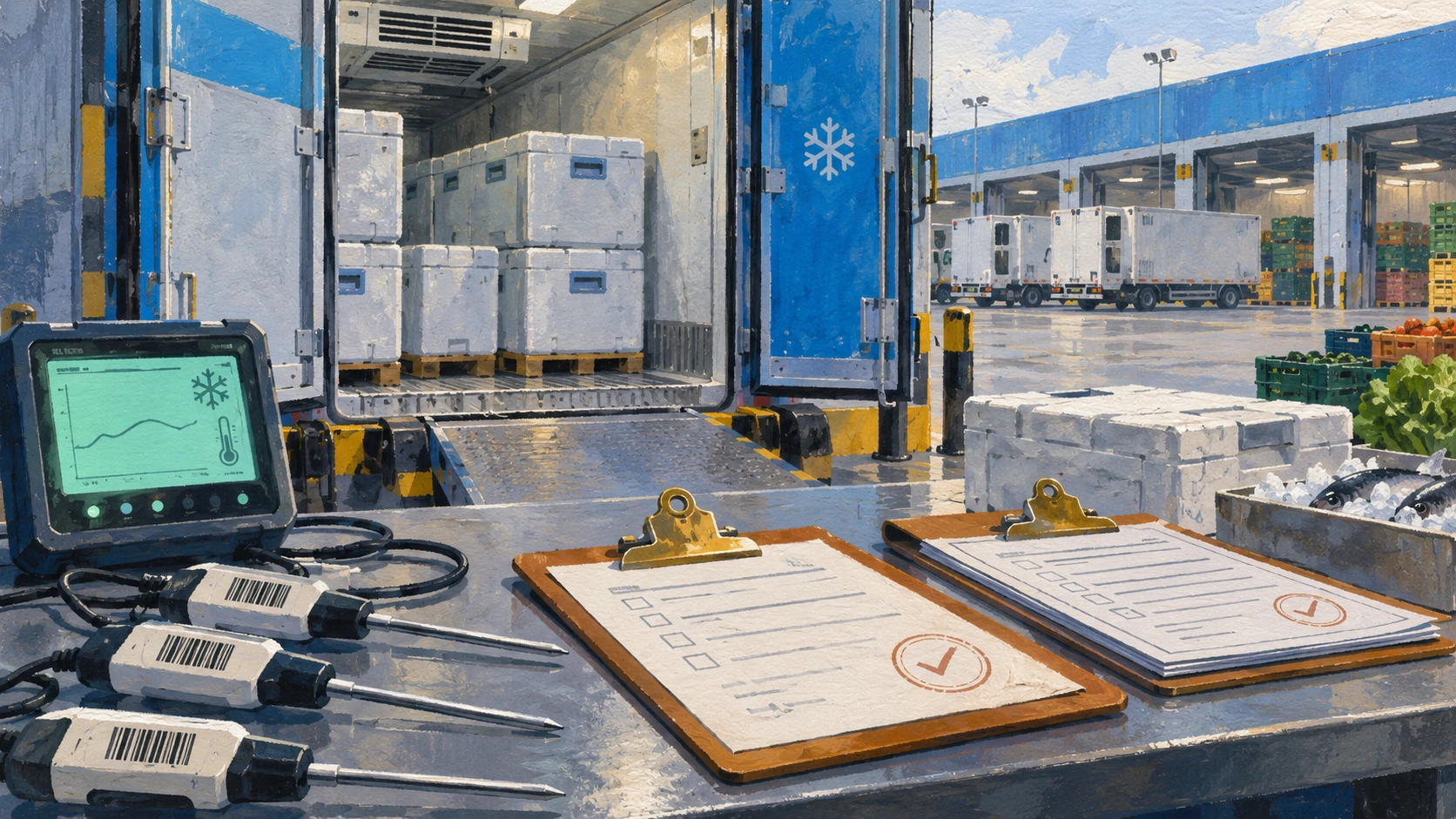
Mercamadrid works with local food banks to help people in need across the city. Workers collect unsold fresh fruits and vegetables each morning to donate to community charities. A modern recycling plant converts leftover food waste into clean organic compost and biogas energy. Solar panels on warehouse roofs generate clean electricity to power heavy refrigeration machines.
Market statisticians record wholesale prices every morning to help track national grocery inflation trends. Large freezer chambers store strategic food reserves to protect the city during transport strikes or severe weather. Cooking teachers host student workshops to show young people how fresh food moves from farm to table. Careful food planning keeps the capital healthy, well fed, and secure.
A2 · Elementary
Mercamadrid: Europe Largest Fresh Food Wholesale Platform
Operating day and night across southern Madrid, Mercamadrid coordinates fresh food supply chains connecting maritime ports, greenhouse corridors, and urban consumers.
Europe Central Food Platform and Wholesale Geography
Spanning more than two hundred and twenty hectares in southeastern Madrid, Mercamadrid operates as Europe largest wholesale fresh food logistics platform. Governed by a strategic public-private enterprise linking the Madrid City Council with national market company MERCASA, this critical agrifood crossroads channels provisions to over twelve million consumers across central Spain. Daily operations are anchored by more than eight hundred commercial wholesalers, brokers, and logistics corporations maintaining certified distribution facilities within the high-security perimeter.
Through automated security gantries, upwards of twenty thousand freight trucks, refrigerated tractor-trailers, and delivery vans access the central platform daily. The facility orchestrates massive supply flows arriving from Spanish agrarian river valleys, Atlantic and Mediterranean maritime docks, and international air cargo corridors. With annual commercial throughput exceeding three million metric tons of fresh foodstuffs across produce, seafood, meat, and poultry, Mercamadrid functions as the indispensable macroeconomic spine of national food distribution.
Nocturnal Auction Schedules and the Central Fish Market
Recognized globally as the second largest wholesale seafood exchange by transaction volume after Tokyo Toyosu, the Central Fish Market at Mercamadrid anchors inland maritime distribution. Commercial transactions commence nightly at three in the morning as refrigerated freight lorries converge directly from Galician rias, Cantabrian harbours, and Andalusian fishing fleets. Across thirty-three thousand square meters of trading floor, licensed wholesalers array glistening catches of Atlantic hake, deep-water crustaceans, and coastal pelagics on deep beds of flaked ice.
Before trading commences, accredited municipal veterinary teams conduct stringent organoleptic inspections, scrutinizing corneal transparency, gill pigmentation, muscular elasticity, and parasite absence before authorizing lot auctions. In the predawn rush, urban fishmongers, hospitality procurers, and Michelin-starred chefs negotiate brisk commercial bids to replenish municipal food halls and neighborhood stores across Madrid. Integrated cold storage corridors sustain continuous zero to two degree Celsius thermal regimes, preserving delicate maritime cold chains without microbiological degradation.
Horticultural Pavilions, Cold Chain Management, and Digital Telemetry
Six soaring horticultural pavilions accommodate hundreds of concessionaire stalls showcasing seasonal produce harvested across diverse Spanish microclimates. Intensive vegetable shipments from Almería greenhouse clusters and citrus consignments from Murcian irrigated orchards arrive via continuous long-haul freight arteries. Centralized logistics telemetry tracks temperature-calibrated pallet bays, automated inventory registers, and cross-docking berths, while high-speed optical sorters categorize stone fruit and tomatoes by optical diameter, pigmentation, and sugar brix concentration.
Specialized cross-docking terminals facilitate rapid transfer of sensitive agricultural cargo directly from interprovincial heavy articulated lorries onto compact electric urban distribution fleets. This streamlined transshipment mechanism minimizes dwell times and mitigates inner-city freight emissions during final-mile commercial deliveries. Simultaneously, dedicated organic and zero-kilometer pavilions provide direct marketing channels for peri-urban horticulturalists, linking smallholder agricultural cooperatives with school districts, regional hospitals, and sustainable metropolitan dining cooperatives.
Food Waste Recovery, Energy Circularity, and Urban Security
Addressing urban sustainability, Mercamadrid coordinates closely with municipal food banks and accredited charities to channel unsold but nutritionally prime agricultural surpluses to vulnerable civic populations. Non-edible organic fractions are diverted into an advanced on-site biowaste digestion plant that manufactures certified agricultural compost and high-caloric biogas fuel. Furthermore, vast rooftop photovoltaic arrays covering warehouse structures generate megawatts of renewable electricity, directly driving high-load ammonia refrigeration compressors.
Daily wholesale price indexes formulated by market statistical economists serve as authoritative reference metrics for Spanish food inflation gauges and agricultural commodity forecasts. Beneath the surface logistics avenues, extensive deep-freeze storage chambers safeguard strategic reserves of animal protein and frozen produce, guaranteeing metropolitan food security against extreme weather disruptions and transportation blockades. Guided vocational workshops and culinary apprenticeships further integrate the commercial complex into Madrid civic and professional hospitality landscape.
B1 · Intermediate
Mercamadrid: Wholesale Distribution Networks and the Central Fish Market
An analytical study of Mercamadrid, examining nocturnal seafood trading, horticultural transshipment arteries, cold chain protocols, and metropolitan food governance.
Europe Central Food Platform and Wholesale Geography
Spanning more than two hundred and twenty hectares in southeastern Madrid, Mercamadrid operates as Europe largest wholesale fresh food logistics platform. Governed by a strategic public-private enterprise linking the Madrid City Council with national market company MERCASA, this critical agrifood crossroads channels provisions to over twelve million consumers across central Spain. Daily operations are anchored by more than eight hundred commercial wholesalers, brokers, and logistics corporations maintaining certified distribution facilities within the high-security perimeter.
Through automated security gantries, upwards of twenty thousand freight trucks, refrigerated tractor-trailers, and delivery vans access the central platform daily. The facility orchestrates massive supply flows arriving from Spanish agrarian river valleys, Atlantic and Mediterranean maritime docks, and international air cargo corridors. With annual commercial throughput exceeding three million metric tons of fresh foodstuffs across produce, seafood, meat, and poultry, Mercamadrid functions as the indispensable macroeconomic spine of national food distribution.
Nocturnal Auction Schedules and the Central Fish Market
Recognized globally as the second largest wholesale seafood exchange by transaction volume after Tokyo Toyosu, the Central Fish Market at Mercamadrid anchors inland maritime distribution. Commercial transactions commence nightly at three in the morning as refrigerated freight lorries converge directly from Galician rias, Cantabrian harbours, and Andalusian fishing fleets. Across thirty-three thousand square meters of trading floor, licensed wholesalers array glistening catches of Atlantic hake, deep-water crustaceans, and coastal pelagics on deep beds of flaked ice.
Before trading commences, accredited municipal veterinary teams conduct stringent organoleptic inspections, scrutinizing corneal transparency, gill pigmentation, muscular elasticity, and parasite absence before authorizing lot auctions. In the predawn rush, urban fishmongers, hospitality procurers, and Michelin-starred chefs negotiate brisk commercial bids to replenish municipal food halls and neighborhood stores across Madrid. Integrated cold storage corridors sustain continuous zero to two degree Celsius thermal regimes, preserving delicate maritime cold chains without microbiological degradation.
Horticultural Pavilions, Cold Chain Management, and Digital Telemetry
Six soaring horticultural pavilions accommodate hundreds of concessionaire stalls showcasing seasonal produce harvested across diverse Spanish microclimates. Intensive vegetable shipments from Almería greenhouse clusters and citrus consignments from Murcian irrigated orchards arrive via continuous long-haul freight arteries. Centralized logistics telemetry tracks temperature-calibrated pallet bays, automated inventory registers, and cross-docking berths, while high-speed optical sorters categorize stone fruit and tomatoes by optical diameter, pigmentation, and sugar brix concentration.
Specialized cross-docking terminals facilitate rapid transfer of sensitive agricultural cargo directly from interprovincial heavy articulated lorries onto compact electric urban distribution fleets. This streamlined transshipment mechanism minimizes dwell times and mitigates inner-city freight emissions during final-mile commercial deliveries. Simultaneously, dedicated organic and zero-kilometer pavilions provide direct marketing channels for peri-urban horticulturalists, linking smallholder agricultural cooperatives with school districts, regional hospitals, and sustainable metropolitan dining cooperatives.
Food Waste Recovery, Energy Circularity, and Urban Security
Addressing urban sustainability, Mercamadrid coordinates closely with municipal food banks and accredited charities to channel unsold but nutritionally prime agricultural surpluses to vulnerable civic populations. Non-edible organic fractions are diverted into an advanced on-site biowaste digestion plant that manufactures certified agricultural compost and high-caloric biogas fuel. Furthermore, vast rooftop photovoltaic arrays covering warehouse structures generate megawatts of renewable electricity, directly driving high-load ammonia refrigeration compressors.
Daily wholesale price indexes formulated by market statistical economists serve as authoritative reference metrics for Spanish food inflation gauges and agricultural commodity forecasts. Beneath the surface logistics avenues, extensive deep-freeze storage chambers safeguard strategic reserves of animal protein and frozen produce, guaranteeing metropolitan food security against extreme weather disruptions and transportation blockades. Guided vocational workshops and culinary apprenticeships further integrate the commercial complex into Madrid civic and professional hospitality landscape.
B2 · Upper Intermediate
The Agrifood Engine of Madrid: Wholesale Scale, Cold Logistics, and Circularity
An in-depth report on Mercamadrid wholesale operations, exploring veterinary quality standards, optical produce grading, biowaste valourization, and price telemetry.
Europe Central Food Platform and Wholesale Geography
Spanning more than two hundred and twenty hectares in southeastern Madrid, Mercamadrid operates as Europe largest wholesale fresh food logistics platform. Governed by a strategic public-private enterprise linking the Madrid City Council with national market company MERCASA, this critical agrifood crossroads channels provisions to over twelve million consumers across central Spain. Daily operations are anchored by more than eight hundred commercial wholesalers, brokers, and logistics corporations maintaining certified distribution facilities within the high-security perimeter.
Through automated security gantries, upwards of twenty thousand freight trucks, refrigerated tractor-trailers, and delivery vans access the central platform daily. The facility orchestrates massive supply flows arriving from Spanish agrarian river valleys, Atlantic and Mediterranean maritime docks, and international air cargo corridors. With annual commercial throughput exceeding three million metric tons of fresh foodstuffs across produce, seafood, meat, and poultry, Mercamadrid functions as the indispensable macroeconomic spine of national food distribution.
Nocturnal Auction Schedules and the Central Fish Market
Recognized globally as the second largest wholesale seafood exchange by transaction volume after Tokyo Toyosu, the Central Fish Market at Mercamadrid anchors inland maritime distribution. Commercial transactions commence nightly at three in the morning as refrigerated freight lorries converge directly from Galician rias, Cantabrian harbours, and Andalusian fishing fleets. Across thirty-three thousand square meters of trading floor, licensed wholesalers array glistening catches of Atlantic hake, deep-water crustaceans, and coastal pelagics on deep beds of flaked ice.
Before trading commences, accredited municipal veterinary teams conduct stringent organoleptic inspections, scrutinizing corneal transparency, gill pigmentation, muscular elasticity, and parasite absence before authorizing lot auctions. In the predawn rush, urban fishmongers, hospitality procurers, and Michelin-starred chefs negotiate brisk commercial bids to replenish municipal food halls and neighborhood stores across Madrid. Integrated cold storage corridors sustain continuous zero to two degree Celsius thermal regimes, preserving delicate maritime cold chains without microbiological degradation.
Horticultural Pavilions, Cold Chain Management, and Digital Telemetry
Six soaring horticultural pavilions accommodate hundreds of concessionaire stalls showcasing seasonal produce harvested across diverse Spanish microclimates. Intensive vegetable shipments from Almería greenhouse clusters and citrus consignments from Murcian irrigated orchards arrive via continuous long-haul freight arteries. Centralized logistics telemetry tracks temperature-calibrated pallet bays, automated inventory registers, and cross-docking berths, while high-speed optical sorters categorize stone fruit and tomatoes by optical diameter, pigmentation, and sugar brix concentration.
Specialized cross-docking terminals facilitate rapid transfer of sensitive agricultural cargo directly from interprovincial heavy articulated lorries onto compact electric urban distribution fleets. This streamlined transshipment mechanism minimizes dwell times and mitigates inner-city freight emissions during final-mile commercial deliveries. Simultaneously, dedicated organic and zero-kilometer pavilions provide direct marketing channels for peri-urban horticulturalists, linking smallholder agricultural cooperatives with school districts, regional hospitals, and sustainable metropolitan dining cooperatives.
Food Waste Recovery, Energy Circularity, and Urban Security
Addressing urban sustainability, Mercamadrid coordinates closely with municipal food banks and accredited charities to channel unsold but nutritionally prime agricultural surpluses to vulnerable civic populations. Non-edible organic fractions are diverted into an advanced on-site biowaste digestion plant that manufactures certified agricultural compost and high-caloric biogas fuel. Furthermore, vast rooftop photovoltaic arrays covering warehouse structures generate megawatts of renewable electricity, directly driving high-load ammonia refrigeration compressors.
Daily wholesale price indexes formulated by market statistical economists serve as authoritative reference metrics for Spanish food inflation gauges and agricultural commodity forecasts. Beneath the surface logistics avenues, extensive deep-freeze storage chambers safeguard strategic reserves of animal protein and frozen produce, guaranteeing metropolitan food security against extreme weather disruptions and transportation blockades. Guided vocational workshops and culinary apprenticeships further integrate the commercial complex into Madrid civic and professional hospitality landscape.
C1 · Advanced
Macroeconomic Logistics and Perishable Flows: Inside Mercamadrid
A comprehensive examination of Europe premier wholesale food platform, assessing multimodal transport corridors, organoleptic inspection rigor, energy circularity, and urban food security.
Europe Central Food Platform and Wholesale Geography
Spanning more than two hundred and twenty hectares in southeastern Madrid, Mercamadrid operates as Europe largest wholesale fresh food logistics platform. Governed by a strategic public-private enterprise linking the Madrid City Council with national market company MERCASA, this critical agrifood crossroads channels provisions to over twelve million consumers across central Spain. Daily operations are anchored by more than eight hundred commercial wholesalers, brokers, and logistics corporations maintaining certified distribution facilities within the high-security perimeter.
Through automated security gantries, upwards of twenty thousand freight trucks, refrigerated tractor-trailers, and delivery vans access the central platform daily. The facility orchestrates massive supply flows arriving from Spanish agrarian river valleys, Atlantic and Mediterranean maritime docks, and international air cargo corridors. With annual commercial throughput exceeding three million metric tons of fresh foodstuffs across produce, seafood, meat, and poultry, Mercamadrid functions as the indispensable macroeconomic spine of national food distribution.
Nocturnal Auction Schedules and the Central Fish Market
Recognized globally as the second largest wholesale seafood exchange by transaction volume after Tokyo Toyosu, the Central Fish Market at Mercamadrid anchors inland maritime distribution. Commercial transactions commence nightly at three in the morning as refrigerated freight lorries converge directly from Galician rias, Cantabrian harbours, and Andalusian fishing fleets. Across thirty-three thousand square meters of trading floor, licensed wholesalers array glistening catches of Atlantic hake, deep-water crustaceans, and coastal pelagics on deep beds of flaked ice.
Before trading commences, accredited municipal veterinary teams conduct stringent organoleptic inspections, scrutinizing corneal transparency, gill pigmentation, muscular elasticity, and parasite absence before authorizing lot auctions. In the predawn rush, urban fishmongers, hospitality procurers, and Michelin-starred chefs negotiate brisk commercial bids to replenish municipal food halls and neighborhood stores across Madrid. Integrated cold storage corridors sustain continuous zero to two degree Celsius thermal regimes, preserving delicate maritime cold chains without microbiological degradation.
Horticultural Pavilions, Cold Chain Management, and Digital Telemetry
Six soaring horticultural pavilions accommodate hundreds of concessionaire stalls showcasing seasonal produce harvested across diverse Spanish microclimates. Intensive vegetable shipments from Almería greenhouse clusters and citrus consignments from Murcian irrigated orchards arrive via continuous long-haul freight arteries. Centralized logistics telemetry tracks temperature-calibrated pallet bays, automated inventory registers, and cross-docking berths, while high-speed optical sorters categorize stone fruit and tomatoes by optical diameter, pigmentation, and sugar brix concentration.
Specialized cross-docking terminals facilitate rapid transfer of sensitive agricultural cargo directly from interprovincial heavy articulated lorries onto compact electric urban distribution fleets. This streamlined transshipment mechanism minimizes dwell times and mitigates inner-city freight emissions during final-mile commercial deliveries. Simultaneously, dedicated organic and zero-kilometer pavilions provide direct marketing channels for peri-urban horticulturalists, linking smallholder agricultural cooperatives with school districts, regional hospitals, and sustainable metropolitan dining cooperatives.
Food Waste Recovery, Energy Circularity, and Urban Security
Addressing urban sustainability, Mercamadrid coordinates closely with municipal food banks and accredited charities to channel unsold but nutritionally prime agricultural surpluses to vulnerable civic populations. Non-edible organic fractions are diverted into an advanced on-site biowaste digestion plant that manufactures certified agricultural compost and high-caloric biogas fuel. Furthermore, vast rooftop photovoltaic arrays covering warehouse structures generate megawatts of renewable electricity, directly driving high-load ammonia refrigeration compressors.
Daily wholesale price indexes formulated by market statistical economists serve as authoritative reference metrics for Spanish food inflation gauges and agricultural commodity forecasts. Beneath the surface logistics avenues, extensive deep-freeze storage chambers safeguard strategic reserves of animal protein and frozen produce, guaranteeing metropolitan food security against extreme weather disruptions and transportation blockades. Guided vocational workshops and culinary apprenticeships further integrate the commercial complex into Madrid civic and professional hospitality landscape.
C2 · Mastery
Logistical Kinetics and Metropolitan Agrifood Governance: Deconstructing Mercamadrid
A critical analysis of the Mercamadrid distribution complex, evaluating nocturnal market clearing mechanics, intermodal transshipment efficiency, commodity price benchmarking, and strategic reserve resilience.
Europe Central Food Platform and Wholesale Geography
Spanning more than two hundred and twenty hectares in southeastern Madrid, Mercamadrid operates as Europe largest wholesale fresh food logistics platform. Governed by a strategic public-private enterprise linking the Madrid City Council with national market company MERCASA, this critical agrifood crossroads channels provisions to over twelve million consumers across central Spain. Daily operations are anchored by more than eight hundred commercial wholesalers, brokers, and logistics corporations maintaining certified distribution facilities within the high-security perimeter.
Through automated security gantries, upwards of twenty thousand freight trucks, refrigerated tractor-trailers, and delivery vans access the central platform daily. The facility orchestrates massive supply flows arriving from Spanish agrarian river valleys, Atlantic and Mediterranean maritime docks, and international air cargo corridors. With annual commercial throughput exceeding three million metric tons of fresh foodstuffs across produce, seafood, meat, and poultry, Mercamadrid functions as the indispensable macroeconomic spine of national food distribution.
Nocturnal Auction Schedules and the Central Fish Market
Recognized globally as the second largest wholesale seafood exchange by transaction volume after Tokyo Toyosu, the Central Fish Market at Mercamadrid anchors inland maritime distribution. Commercial transactions commence nightly at three in the morning as refrigerated freight lorries converge directly from Galician rias, Cantabrian harbours, and Andalusian fishing fleets. Across thirty-three thousand square meters of trading floor, licensed wholesalers array glistening catches of Atlantic hake, deep-water crustaceans, and coastal pelagics on deep beds of flaked ice.
Before trading commences, accredited municipal veterinary teams conduct stringent organoleptic inspections, scrutinizing corneal transparency, gill pigmentation, muscular elasticity, and parasite absence before authorizing lot auctions. In the predawn rush, urban fishmongers, hospitality procurers, and Michelin-starred chefs negotiate brisk commercial bids to replenish municipal food halls and neighborhood stores across Madrid. Integrated cold storage corridors sustain continuous zero to two degree Celsius thermal regimes, preserving delicate maritime cold chains without microbiological degradation.
Horticultural Pavilions, Cold Chain Management, and Digital Telemetry
Six soaring horticultural pavilions accommodate hundreds of concessionaire stalls showcasing seasonal produce harvested across diverse Spanish microclimates. Intensive vegetable shipments from Almería greenhouse clusters and citrus consignments from Murcian irrigated orchards arrive via continuous long-haul freight arteries. Centralized logistics telemetry tracks temperature-calibrated pallet bays, automated inventory registers, and cross-docking berths, while high-speed optical sorters categorize stone fruit and tomatoes by optical diameter, pigmentation, and sugar brix concentration.
Specialized cross-docking terminals facilitate rapid transfer of sensitive agricultural cargo directly from interprovincial heavy articulated lorries onto compact electric urban distribution fleets. This streamlined transshipment mechanism minimizes dwell times and mitigates inner-city freight emissions during final-mile commercial deliveries. Simultaneously, dedicated organic and zero-kilometer pavilions provide direct marketing channels for peri-urban horticulturalists, linking smallholder agricultural cooperatives with school districts, regional hospitals, and sustainable metropolitan dining cooperatives.
Food Waste Recovery, Energy Circularity, and Urban Security
Addressing urban sustainability, Mercamadrid coordinates closely with municipal food banks and accredited charities to channel unsold but nutritionally prime agricultural surpluses to vulnerable civic populations. Non-edible organic fractions are diverted into an advanced on-site biowaste digestion plant that manufactures certified agricultural compost and high-caloric biogas fuel. Furthermore, vast rooftop photovoltaic arrays covering warehouse structures generate megawatts of renewable electricity, directly driving high-load ammonia refrigeration compressors.
Daily wholesale price indexes formulated by market statistical economists serve as authoritative reference metrics for Spanish food inflation gauges and agricultural commodity forecasts. Beneath the surface logistics avenues, extensive deep-freeze storage chambers safeguard strategic reserves of animal protein and frozen produce, guaranteeing metropolitan food security against extreme weather disruptions and transportation blockades. Guided vocational workshops and culinary apprenticeships further integrate the commercial complex into Madrid civic and professional hospitality landscape.
Check your understanding
Choose how closely you want to revisit the article. You can refer back while answering, and review explanations when you finish.
Quick Quiz A1
Try one question, then create a free account for the full Quick Quiz. Sign Up Free
Answer every question before checking. There is no time limit.
Your results
/ 1 correct (%)
Read the explanations to see how each answer connects to the article.
-
What major wholesale food market is located in the southern part of Madrid?
1. Answer:
Quick Quiz A2
Try one question, then create a free account for the full Quick Quiz. Sign Up Free
Answer every question before checking. There is no time limit.
Your results
/ 1 correct (%)
Read the explanations to see how each answer connects to the article.
-
What major wholesale facility operates as Europe largest wholesale fresh food platform in southeastern Madrid?
1. Answer:
Quick Quiz B1
Try one question, then create a free account for the full Quick Quiz. Sign Up Free
Answer every question before checking. There is no time limit.
Your results
/ 1 correct (%)
Read the explanations to see how each answer connects to the article.
-
What major wholesale facility operates as Europe largest wholesale fresh food platform in southeastern Madrid?
1. Answer:
Quick Quiz B2
Try one question, then create a free account for the full Quick Quiz. Sign Up Free
Answer every question before checking. There is no time limit.
Your results
/ 1 correct (%)
Read the explanations to see how each answer connects to the article.
-
What major wholesale facility operates as Europe largest wholesale fresh food platform in southeastern Madrid?
1. Answer:
Quick Quiz C1
Try one question, then create a free account for the full Quick Quiz. Sign Up Free
Answer every question before checking. There is no time limit.
Your results
/ 1 correct (%)
Read the explanations to see how each answer connects to the article.
-
What major wholesale facility operates as Europe largest wholesale fresh food platform in southeastern Madrid?
1. Answer:
Quick Quiz C2
Try one question, then create a free account for the full Quick Quiz. Sign Up Free
Answer every question before checking. There is no time limit.
Your results
/ 1 correct (%)
Read the explanations to see how each answer connects to the article.
-
What major wholesale facility operates as Europe largest wholesale fresh food platform in southeastern Madrid?
1. Answer:
