A1 · Beginner
Catalan Public Signs in Daily Life
Streets and train stations across Catalonia display signs in Catalan and Spanish to guide residents and travelers.
Constitutional Framework and Statutory Co-Officiality
Catalan is the official language of public administration across Catalonia under regional law. The Spanish Constitution states that both Spanish and Catalan have co-official status. Public administration notices and road markers must appear at least in Catalan in every municipality.
Regional regulations also permit bilingual road signs along national transport routes. The Directorate-General for Language Policy monitors public signs across the autonomous territory. In the Val d'Aran valley, local road signs give precedence to the Aranese language.
Toponymy and Municipal Street Signage Architecture
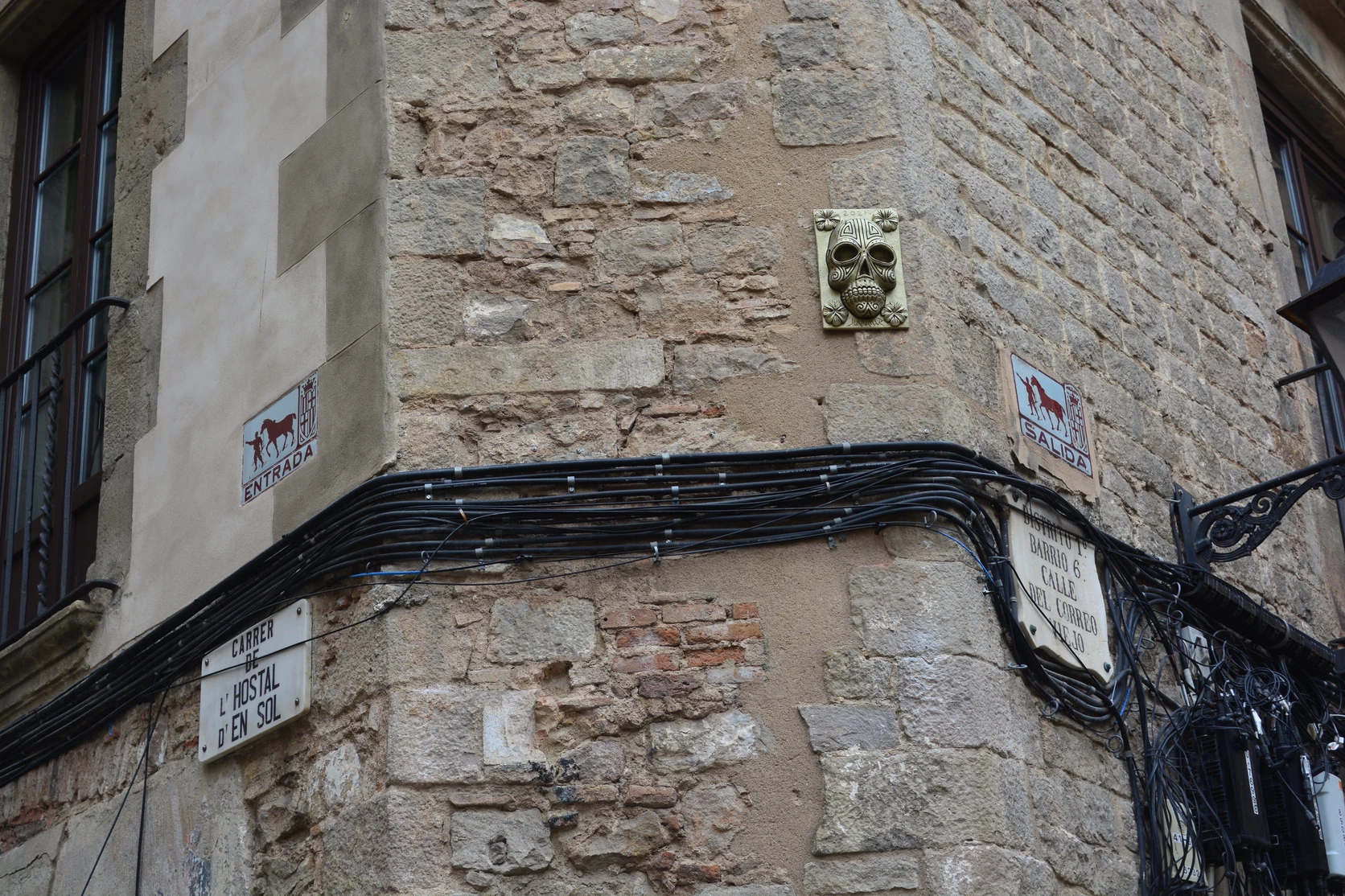
Official place names follow standard spelling from the Institut d'Estudis Catalans. Town councils replace old signs with Catalan toponyms after formal municipal votes. Barcelona street plaques use carved stone, glazed ceramic tiles, and metal plates.
Each plaque displays the street type such as carrer, plaça, avinguda, or rambla. Historic districts follow clear architectural guidelines for street plaques on heritage facades. Municipal commissions study old records to name streets after local civic memory.
Transit Wayfinding and Multimodal Passenger Guidance
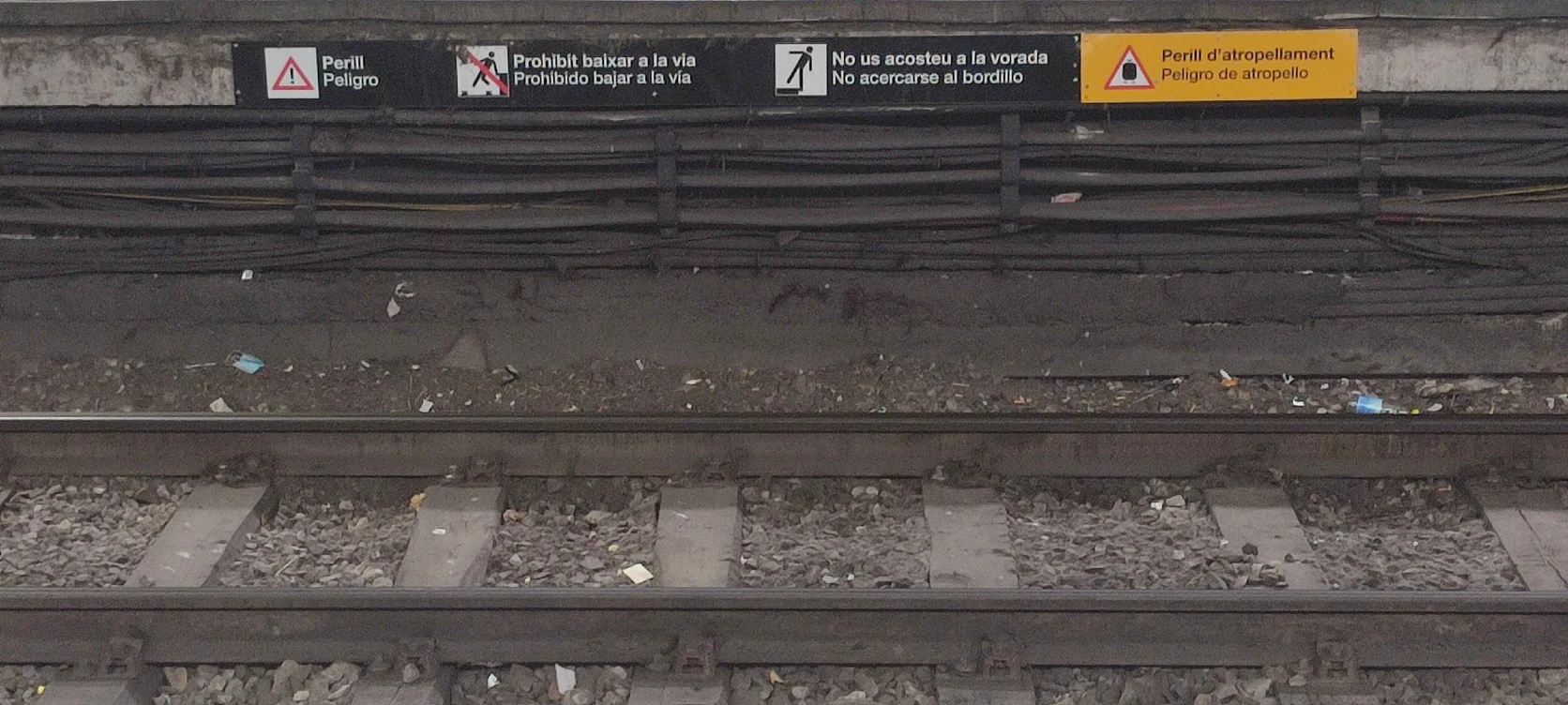
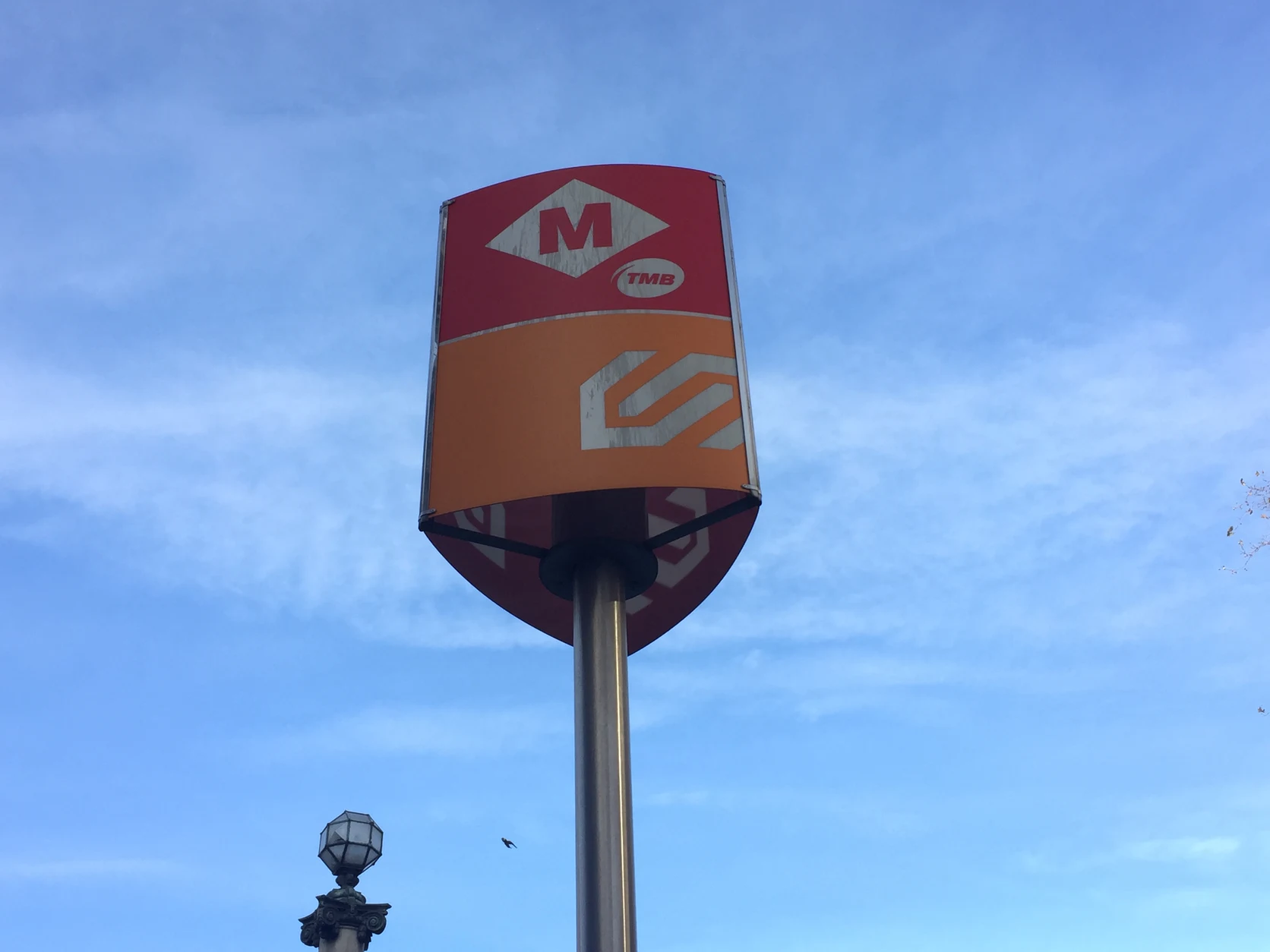
Barcelona transit operators use Catalan as the primary language for station names and signs. Metro platforms and bus stops also display Spanish and English for passenger safety and tickets. Regional railway hubs set up tall transit totems with train lines and transfer routes.
Audio announcements on trains speak in Catalan, with Spanish and English added at main stations. High-contrast letters and simple pictograms help all passengers find their platform. The central transit station at Plaça de Catalunya connects underground metro and regional trains.
Commercial Storefront Signage and Linguistic Normalization
Under the Consumer Code, commercial shops in Catalonia must display main signs in Catalan. A public language agency offers advisory services and guides to help store owners write signs. Shop storefront displays can include Spanish or English if the Catalan text is clear.
Municipal licensing offices check store signs when new retail businesses open. Neighborhood grocery stores and central market stalls write food prices and signs in Catalan. Modern digital screens and restaurant menus let shoppers choose Catalan, Spanish, or English.
A2 · Elementary
Reading Public Signs and Transport Markers in Catalonia
Urban street plaques and transit wayfinding systems guide daily movement through standardized Catalan and Spanish signage.
Constitutional Framework and Statutory Co-Officiality
Under Spanish jurisprudence, the Statute of Autonomy of Catalonia and Law 1/1998 on Linguistic Policy establish Catalan as the normal and official language of administrative bodies, public institutions, and public signs throughout Catalonia. Spanish and Catalan maintain co-official status under Article 3 of the Spanish Constitution of 1978, establishing co-officiality with municipal and autonomous administrations executing this codification to guarantee the linguistic rights of citizens. Public administration notices, institutional plaques, and official road markers must appear at least in Catalan across municipal jurisdictions in Catalonia, enforcing territorial demarcation and clear jurisdictional boundaries.
Official regulations permit bilingual signage incorporating Spanish alongside Catalan when required for interstate transport, safety protocols, or regional borders. The Directorate-General for Language Policy monitors institutional adherence to statutory language provisions across public entities and regional infrastructure. Aranese, an Occitan dialect and regional vernacular spoken in the Val d'Aran, holds co-official status and is given precedence on public highway signs and municipal buildings in that valley.
Toponymy and Municipal Street Signage Architecture
Official Catalan place names are determined and standardized by the Institut d'Estudis Catalans through the Nomenclàtor oficial de toponímia major de Catalunya, ensuring toponymy standardization, toponymic rigor, correct orthography, nomenclature precision, and cartographic accuracy. Municipalities replace historical Spanish-language street markers with officially approved Catalan toponyms following municipal council resolutions and historical commission reviews. Barcelona municipal street plaques combine carved stone, glazed ceramic tiles, and enameled plates depending on urban conservation zones, displaying rich epigraphic craft in the Gothic Quarter and Eixample.
Street name plaques display the generic street type in Catalan, such as carrer, plaça, avinguda, passeig, or rambla, alongside the approved proper name. Historic city districts maintain strict architectural guidelines dictating typeface, dimensions, and materials for street plaques affixed to heritage building facades. Municipal naming commissions conduct archival research to ensure recovered street names accurately reflect historical civic memory and local urban geography.
Transit Wayfinding and Multimodal Passenger Guidance
Transports Metropolitans de Barcelona operates transit wayfinding systems where Catalan serves as the primary language for station names, directional arrows, cartography guides, and network diagrams. Underground metro lines and surface bus stops incorporate Spanish and English alongside Catalan for essential safety instructions, ticket vending menus, and transfer indicators. Ferrocarrils de la Generalitat de Catalunya and Rodalies commuter rail hubs deploy standardized transit totems coordinating regional suburban and metro travel routes.
Audio announcements across Barcelona transit vehicles deliver primary destination broadcasts in Catalan, supplemented by Spanish and English at major international interchange hubs. High-contrast typography and standardized pictograms conform to universal accessibility guidelines while maintaining legibility and a consistent Catalan typographic hierarchy. Intermodal transport centers such as Plaça de Catalunya integrate multimodal multi-operator signage reconciling municipal metro, regional rail, and airport shuttle directions.
Commercial Storefront Signage and Linguistic Normalization
The Catalan Consumer Code requires commercial establishments with physical premises in Catalonia to display fixed public signs and consumer information at least in Catalan. Consorci per a la Normalització Lingüística provides advisory services, terminology guides, and translation assistance to local businesses adapting their commercial storefronts, window displays, and public signage. Commercial storefront signs can include multiple languages, provided the Catalan text appears with equal visual prominence in size and illumination.
Municipal business licensing offices verify linguistic compliance during inspections of new retail installations and outdoor advertising structures. Small neighborhood shops, craft workshops, and open-air municipal markets regularly utilize bilingual and Catalan-language price boards and department indicators. Digital signage, automated retail kiosks, and hospitality menus increasingly incorporate dynamic language selectors allowing patrons to choose Catalan, Spanish, or English.
B1 · Intermediate
The Linguistic Landscape of Urban Catalonia
Statutory bilingualism and civic street plaques coordinate everyday communication across Catalan municipalities and transport networks.
Constitutional Framework and Statutory Co-Officiality
Under Spanish jurisprudence, the Statute of Autonomy of Catalonia and Law 1/1998 on Linguistic Policy establish Catalan as the normal and official language of administrative bodies, public institutions, and public signs throughout Catalonia. Spanish and Catalan maintain co-official status under Article 3 of the Spanish Constitution of 1978, establishing co-officiality with municipal and autonomous administrations executing this codification to guarantee the linguistic rights of citizens. Public administration notices, institutional plaques, and official road markers must appear at least in Catalan across municipal jurisdictions in Catalonia, enforcing territorial demarcation and clear jurisdictional boundaries.
Official regulations permit bilingual signage incorporating Spanish alongside Catalan when required for interstate transport, safety protocols, or regional borders. The Directorate-General for Language Policy monitors institutional adherence to statutory language provisions across public entities and regional infrastructure. Aranese, an Occitan dialect and regional vernacular spoken in the Val d'Aran, holds co-official status and is given precedence on public highway signs and municipal buildings in that valley.
Toponymy and Municipal Street Signage Architecture
Official Catalan place names are determined and standardized by the Institut d'Estudis Catalans through the Nomenclàtor oficial de toponímia major de Catalunya, ensuring toponymy standardization, toponymic rigor, correct orthography, nomenclature precision, and cartographic accuracy. Municipalities replace historical Spanish-language street markers with officially approved Catalan toponyms following municipal council resolutions and historical commission reviews. Barcelona municipal street plaques combine carved stone, glazed ceramic tiles, and enameled plates depending on urban conservation zones, displaying rich epigraphic craft in the Gothic Quarter and Eixample.
Street name plaques display the generic street type in Catalan, such as carrer, plaça, avinguda, passeig, or rambla, alongside the approved proper name. Historic city districts maintain strict architectural guidelines dictating typeface, dimensions, and materials for street plaques affixed to heritage building facades. Municipal naming commissions conduct archival research to ensure recovered street names accurately reflect historical civic memory and local urban geography.
Transit Wayfinding and Multimodal Passenger Guidance
Transports Metropolitans de Barcelona operates transit wayfinding systems where Catalan serves as the primary language for station names, directional arrows, cartography guides, and network diagrams. Underground metro lines and surface bus stops incorporate Spanish and English alongside Catalan for essential safety instructions, ticket vending menus, and transfer indicators. Ferrocarrils de la Generalitat de Catalunya and Rodalies commuter rail hubs deploy standardized transit totems coordinating regional suburban and metro travel routes.
Audio announcements across Barcelona transit vehicles deliver primary destination broadcasts in Catalan, supplemented by Spanish and English at major international interchange hubs. High-contrast typography and standardized pictograms conform to universal accessibility guidelines while maintaining legibility and a consistent Catalan typographic hierarchy. Intermodal transport centers such as Plaça de Catalunya integrate multimodal multi-operator signage reconciling municipal metro, regional rail, and airport shuttle directions.
Commercial Storefront Signage and Linguistic Normalization
The Catalan Consumer Code requires commercial establishments with physical premises in Catalonia to display fixed public signs and consumer information at least in Catalan. Consorci per a la Normalització Lingüística provides advisory services, terminology guides, and translation assistance to local businesses adapting their commercial storefronts, window displays, and public signage. Commercial storefront signs can include multiple languages, provided the Catalan text appears with equal visual prominence in size and illumination.
Municipal business licensing offices verify linguistic compliance during inspections of new retail installations and outdoor advertising structures. Small neighborhood shops, craft workshops, and open-air municipal markets regularly utilize bilingual and Catalan-language price boards and department indicators. Digital signage, automated retail kiosks, and hospitality menus increasingly incorporate dynamic language selectors allowing patrons to choose Catalan, Spanish, or English.
B2 · Upper Intermediate
Statutory Bilingualism and Public Wayfinding Across Catalonia
Administrative mandates, standardized toponymy, and multimodal transit infrastructure coordinate Catalan and Spanish signage in civic life.
Constitutional Framework and Statutory Co-Officiality
Under Spanish jurisprudence, the Statute of Autonomy of Catalonia and Law 1/1998 on Linguistic Policy establish Catalan as the normal and official language of administrative bodies, public institutions, and public signs throughout Catalonia. Spanish and Catalan maintain co-official status under Article 3 of the Spanish Constitution of 1978, establishing co-officiality with municipal and autonomous administrations executing this codification to guarantee the linguistic rights of citizens. Public administration notices, institutional plaques, and official road markers must appear at least in Catalan across municipal jurisdictions in Catalonia, enforcing territorial demarcation and clear jurisdictional boundaries.
Official regulations permit bilingual signage incorporating Spanish alongside Catalan when required for interstate transport, safety protocols, or regional borders. The Directorate-General for Language Policy monitors institutional adherence to statutory language provisions across public entities and regional infrastructure. Aranese, an Occitan dialect and regional vernacular spoken in the Val d'Aran, holds co-official status and is given precedence on public highway signs and municipal buildings in that valley.
Toponymy and Municipal Street Signage Architecture
Official Catalan place names are determined and standardized by the Institut d'Estudis Catalans through the Nomenclàtor oficial de toponímia major de Catalunya, ensuring toponymy standardization, toponymic rigor, correct orthography, nomenclature precision, and cartographic accuracy. Municipalities replace historical Spanish-language street markers with officially approved Catalan toponyms following municipal council resolutions and historical commission reviews. Barcelona municipal street plaques combine carved stone, glazed ceramic tiles, and enameled plates depending on urban conservation zones, displaying rich epigraphic craft in the Gothic Quarter and Eixample.
Street name plaques display the generic street type in Catalan, such as carrer, plaça, avinguda, passeig, or rambla, alongside the approved proper name. Historic city districts maintain strict architectural guidelines dictating typeface, dimensions, and materials for street plaques affixed to heritage building facades. Municipal naming commissions conduct archival research to ensure recovered street names accurately reflect historical civic memory and local urban geography.
Transit Wayfinding and Multimodal Passenger Guidance
Transports Metropolitans de Barcelona operates transit wayfinding systems where Catalan serves as the primary language for station names, directional arrows, cartography guides, and network diagrams. Underground metro lines and surface bus stops incorporate Spanish and English alongside Catalan for essential safety instructions, ticket vending menus, and transfer indicators. Ferrocarrils de la Generalitat de Catalunya and Rodalies commuter rail hubs deploy standardized transit totems coordinating regional suburban and metro travel routes.
Audio announcements across Barcelona transit vehicles deliver primary destination broadcasts in Catalan, supplemented by Spanish and English at major international interchange hubs. High-contrast typography and standardized pictograms conform to universal accessibility guidelines while maintaining legibility and a consistent Catalan typographic hierarchy. Intermodal transport centers such as Plaça de Catalunya integrate multimodal multi-operator signage reconciling municipal metro, regional rail, and airport shuttle directions.
Commercial Storefront Signage and Linguistic Normalization
The Catalan Consumer Code requires commercial establishments with physical premises in Catalonia to display fixed public signs and consumer information at least in Catalan. Consorci per a la Normalització Lingüística provides advisory services, terminology guides, and translation assistance to local businesses adapting their commercial storefronts, window displays, and public signage. Commercial storefront signs can include multiple languages, provided the Catalan text appears with equal visual prominence in size and illumination.
Municipal business licensing offices verify linguistic compliance during inspections of new retail installations and outdoor advertising structures. Small neighborhood shops, craft workshops, and open-air municipal markets regularly utilize bilingual and Catalan-language price boards and department indicators. Digital signage, automated retail kiosks, and hospitality menus increasingly incorporate dynamic language selectors allowing patrons to choose Catalan, Spanish, or English.
C1 · Advanced
Linguistic Landscapes and Administrative Wayfinding in Catalonia
Statutory co-officiality, standardized toponymy, and multimodal transit infrastructure govern the Catalan public environment.
Constitutional Framework and Statutory Co-Officiality
Under Spanish jurisprudence, the Statute of Autonomy of Catalonia and Law 1/1998 on Linguistic Policy establish Catalan as the normal and official language of administrative bodies, public institutions, and public signs throughout Catalonia. Spanish and Catalan maintain co-official status under Article 3 of the Spanish Constitution of 1978, establishing co-officiality with municipal and autonomous administrations executing this codification to guarantee the linguistic rights of citizens. Public administration notices, institutional plaques, and official road markers must appear at least in Catalan across municipal jurisdictions in Catalonia, enforcing territorial demarcation and clear jurisdictional boundaries.
Official regulations permit bilingual signage incorporating Spanish alongside Catalan when required for interstate transport, safety protocols, or regional borders. The Directorate-General for Language Policy monitors institutional adherence to statutory language provisions across public entities and regional infrastructure. Aranese, an Occitan dialect and regional vernacular spoken in the Val d'Aran, holds co-official status and is given precedence on public highway signs and municipal buildings in that valley.
Toponymy and Municipal Street Signage Architecture
Official Catalan place names are determined and standardized by the Institut d'Estudis Catalans through the Nomenclàtor oficial de toponímia major de Catalunya, ensuring toponymy standardization, toponymic rigor, correct orthography, nomenclature precision, and cartographic accuracy. Municipalities replace historical Spanish-language street markers with officially approved Catalan toponyms following municipal council resolutions and historical commission reviews. Barcelona municipal street plaques combine carved stone, glazed ceramic tiles, and enameled plates depending on urban conservation zones, displaying rich epigraphic craft in the Gothic Quarter and Eixample.
Street name plaques display the generic street type in Catalan, such as carrer, plaça, avinguda, passeig, or rambla, alongside the approved proper name. Historic city districts maintain strict architectural guidelines dictating typeface, dimensions, and materials for street plaques affixed to heritage building facades. Municipal naming commissions conduct archival research to ensure recovered street names accurately reflect historical civic memory and local urban geography.
Transit Wayfinding and Multimodal Passenger Guidance
Transports Metropolitans de Barcelona operates transit wayfinding systems where Catalan serves as the primary language for station names, directional arrows, cartography guides, and network diagrams. Underground metro lines and surface bus stops incorporate Spanish and English alongside Catalan for essential safety instructions, ticket vending menus, and transfer indicators. Ferrocarrils de la Generalitat de Catalunya and Rodalies commuter rail hubs deploy standardized transit totems coordinating regional suburban and metro travel routes.
Audio announcements across Barcelona transit vehicles deliver primary destination broadcasts in Catalan, supplemented by Spanish and English at major international interchange hubs. High-contrast typography and standardized pictograms conform to universal accessibility guidelines while maintaining legibility and a consistent Catalan typographic hierarchy. Intermodal transport centers such as Plaça de Catalunya integrate multimodal multi-operator signage reconciling municipal metro, regional rail, and airport shuttle directions.
Commercial Storefront Signage and Linguistic Normalization
The Catalan Consumer Code requires commercial establishments with physical premises in Catalonia to display fixed public signs and consumer information at least in Catalan. Consorci per a la Normalització Lingüística provides advisory services, terminology guides, and translation assistance to local businesses adapting their commercial storefronts, window displays, and public signage. Commercial storefront signs can include multiple languages, provided the Catalan text appears with equal visual prominence in size and illumination.
Municipal business licensing offices verify linguistic compliance during inspections of new retail installations and outdoor advertising structures. Small neighborhood shops, craft workshops, and open-air municipal markets regularly utilize bilingual and Catalan-language price boards and department indicators. Digital signage, automated retail kiosks, and hospitality menus increasingly incorporate dynamic language selectors allowing patrons to choose Catalan, Spanish, or English.
C2 · Mastery
Orthography, Jurisprudence, and Wayfinding in Catalan Public Space
Statutory language mandates, municipal toponymic standardization, and transit wayfinding architecture structure the visual ecology of Catalonia.
Constitutional Framework and Statutory Co-Officiality
Under Spanish jurisprudence, the Statute of Autonomy of Catalonia and Law 1/1998 on Linguistic Policy establish Catalan as the normal and official language of administrative bodies, public institutions, and public signs throughout Catalonia. Spanish and Catalan maintain co-official status under Article 3 of the Spanish Constitution of 1978, establishing co-officiality with municipal and autonomous administrations executing this codification to guarantee the linguistic rights of citizens. Public administration notices, institutional plaques, and official road markers must appear at least in Catalan across municipal jurisdictions in Catalonia, enforcing territorial demarcation and clear jurisdictional boundaries.
Official regulations permit bilingual signage incorporating Spanish alongside Catalan when required for interstate transport, safety protocols, or regional borders. The Directorate-General for Language Policy monitors institutional adherence to statutory language provisions across public entities and regional infrastructure. Aranese, an Occitan dialect and regional vernacular spoken in the Val d'Aran, holds co-official status and is given precedence on public highway signs and municipal buildings in that valley.
Toponymy and Municipal Street Signage Architecture
Official Catalan place names are determined and standardized by the Institut d'Estudis Catalans through the Nomenclàtor oficial de toponímia major de Catalunya, ensuring toponymy standardization, toponymic rigor, correct orthography, nomenclature precision, and cartographic accuracy. Municipalities replace historical Spanish-language street markers with officially approved Catalan toponyms following municipal council resolutions and historical commission reviews. Barcelona municipal street plaques combine carved stone, glazed ceramic tiles, and enameled plates depending on urban conservation zones, displaying rich epigraphic craft in the Gothic Quarter and Eixample.
Street name plaques display the generic street type in Catalan, such as carrer, plaça, avinguda, passeig, or rambla, alongside the approved proper name. Historic city districts maintain strict architectural guidelines dictating typeface, dimensions, and materials for street plaques affixed to heritage building facades. Municipal naming commissions conduct archival research to ensure recovered street names accurately reflect historical civic memory and local urban geography.
Transit Wayfinding and Multimodal Passenger Guidance
Transports Metropolitans de Barcelona operates transit wayfinding systems where Catalan serves as the primary language for station names, directional arrows, cartography guides, and network diagrams. Underground metro lines and surface bus stops incorporate Spanish and English alongside Catalan for essential safety instructions, ticket vending menus, and transfer indicators. Ferrocarrils de la Generalitat de Catalunya and Rodalies commuter rail hubs deploy standardized transit totems coordinating regional suburban and metro travel routes.
Audio announcements across Barcelona transit vehicles deliver primary destination broadcasts in Catalan, supplemented by Spanish and English at major international interchange hubs. High-contrast typography and standardized pictograms conform to universal accessibility guidelines while maintaining legibility and a consistent Catalan typographic hierarchy. Intermodal transport centers such as Plaça de Catalunya integrate multimodal multi-operator signage reconciling municipal metro, regional rail, and airport shuttle directions.
Commercial Storefront Signage and Linguistic Normalization
The Catalan Consumer Code requires commercial establishments with physical premises in Catalonia to display fixed public signs and consumer information at least in Catalan. Consorci per a la Normalització Lingüística provides advisory services, terminology guides, and translation assistance to local businesses adapting their commercial storefronts, window displays, and public signage. Commercial storefront signs can include multiple languages, provided the Catalan text appears with equal visual prominence in size and illumination.
Municipal business licensing offices verify linguistic compliance during inspections of new retail installations and outdoor advertising structures. Small neighborhood shops, craft workshops, and open-air municipal markets regularly utilize bilingual and Catalan-language price boards and department indicators. Digital signage, automated retail kiosks, and hospitality menus increasingly incorporate dynamic language selectors allowing patrons to choose Catalan, Spanish, or English.
Check your understanding
Choose how closely you want to revisit the article. You can refer back while answering, and review explanations when you finish.
Quick Quiz A1
Try one question, then create a free account for the full Quick Quiz. Sign Up Free
Answer every question before checking. There is no time limit.
Your results
/ 1 correct (%)
Read the explanations to see how each answer connects to the article.
-
What is the official language of public administration across Catalonia?
1. Answer:
Quick Quiz A2
Try one question, then create a free account for the full Quick Quiz. Sign Up Free
Answer every question before checking. There is no time limit.
Your results
/ 1 correct (%)
Read the explanations to see how each answer connects to the article.
-
What legal instrument establishes Catalan as the normal and official language of public signs in Catalonia?
1. Answer:
Quick Quiz B1
Try one question, then create a free account for the full Quick Quiz. Sign Up Free
Answer every question before checking. There is no time limit.
Your results
/ 1 correct (%)
Read the explanations to see how each answer connects to the article.
-
What legal instrument establishes Catalan as the normal and official language of public signs in Catalonia?
1. Answer:
Quick Quiz B2
Try one question, then create a free account for the full Quick Quiz. Sign Up Free
Answer every question before checking. There is no time limit.
Your results
/ 1 correct (%)
Read the explanations to see how each answer connects to the article.
-
What legal instrument establishes Catalan as the normal and official language of public signs in Catalonia?
1. Answer:
Quick Quiz C1
Try one question, then create a free account for the full Quick Quiz. Sign Up Free
Answer every question before checking. There is no time limit.
Your results
/ 1 correct (%)
Read the explanations to see how each answer connects to the article.
-
What legal instrument establishes Catalan as the normal and official language of public signs in Catalonia?
1. Answer:
Quick Quiz C2
Try one question, then create a free account for the full Quick Quiz. Sign Up Free
Answer every question before checking. There is no time limit.
Your results
/ 1 correct (%)
Read the explanations to see how each answer connects to the article.
-
What legal instrument establishes Catalan as the normal and official language of public signs in Catalonia?
1. Answer:
