A1 · Beginner
Summer Heat and Daily Life in Seville
High summer temperatures in Seville shape daily routines, shaded streets, cool courtyards, and evening civic life.
Climatological Extremes and Diurnal Rhythm Shifts
Summer weather in Seville becomes very hot every year. Temperatures in the river valley often rise above forty degrees Celsius in July and August. At night, warm air and stone streets keep temperatures high above twenty-five degrees. People in Seville do their shopping and office work early in the morning.
In the hot afternoon between two and six o'clock, streets become empty as families stay inside behind window blinds. When the sun sets after nine in the evening, cool air returns to city squares. Families and neighbors walk together along the river until late at night.
Municipal Shading Infrastructure and Toldos Architecture
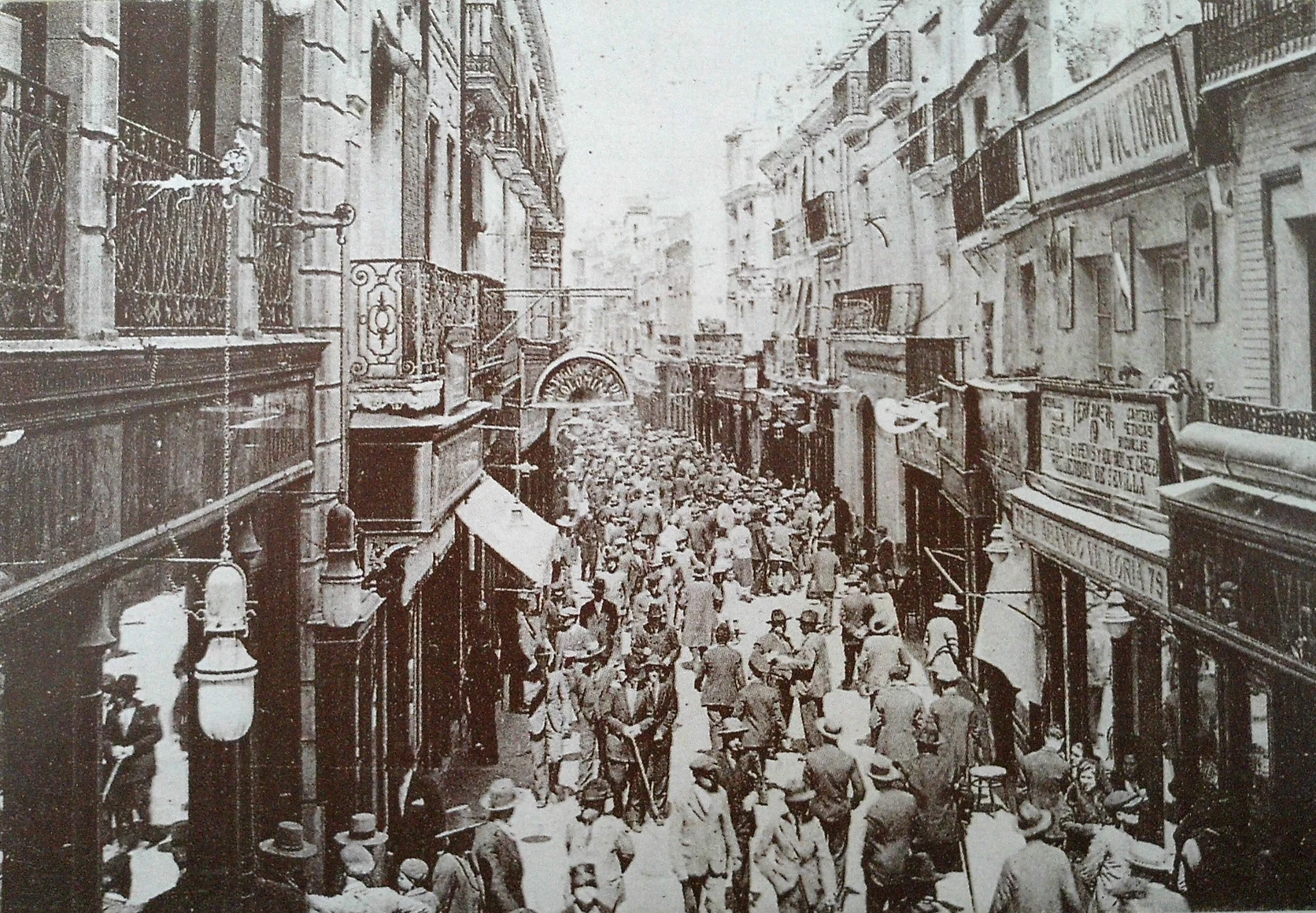
Every spring, city workers hang wide cloth awnings called toldos above central shopping streets. Workers attach strong steel cables between building walls to hold the heavy fabric. These canvas awnings block direct sunlight along Calle Sierpes and Calle Tetuán.
The cloth awnings stay up from spring until autumn to shade walking pedestrians. Workers inspect the cables and clean the cloth during quiet night hours. Thermometers under the awnings show cooler ground temperatures than open sunny streets.
Vernacular Domestic Cooling and Patio Architecture
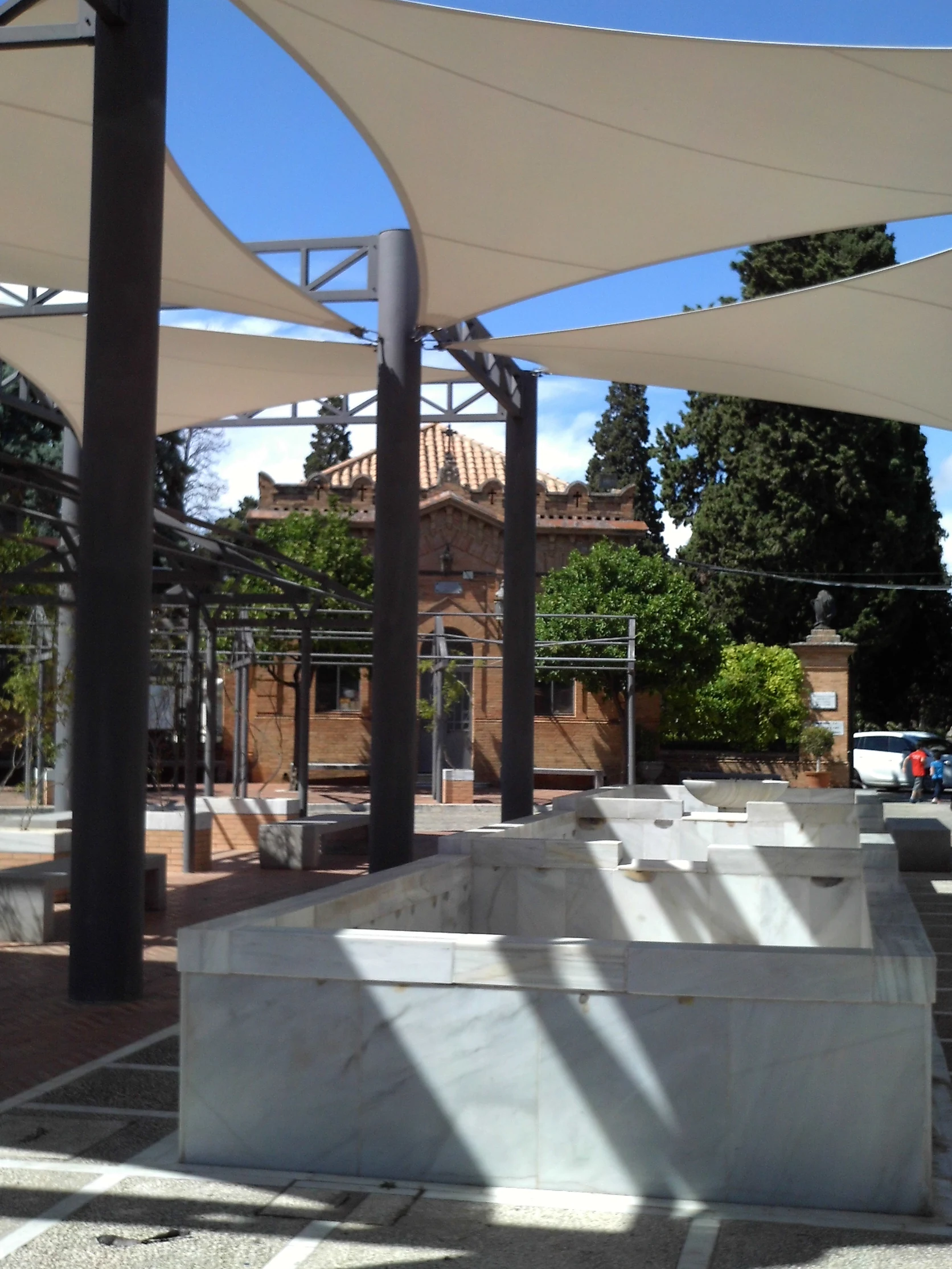
Traditional homes in Seville are built around an open central courtyard called a patio. Cool stone floors and leafy green plants help lower the courtyard air temperature. In summer, families sleep and eat in cool ground floor rooms near the patio.
Wooden window blinds and iron gates let cool morning breezes blow through each room. Families open windows at dawn and close shutters before midday heat arrives. Cool air from the shaded courtyard flows naturally into living rooms.
Public Water Networks and Occupational Heat Protection
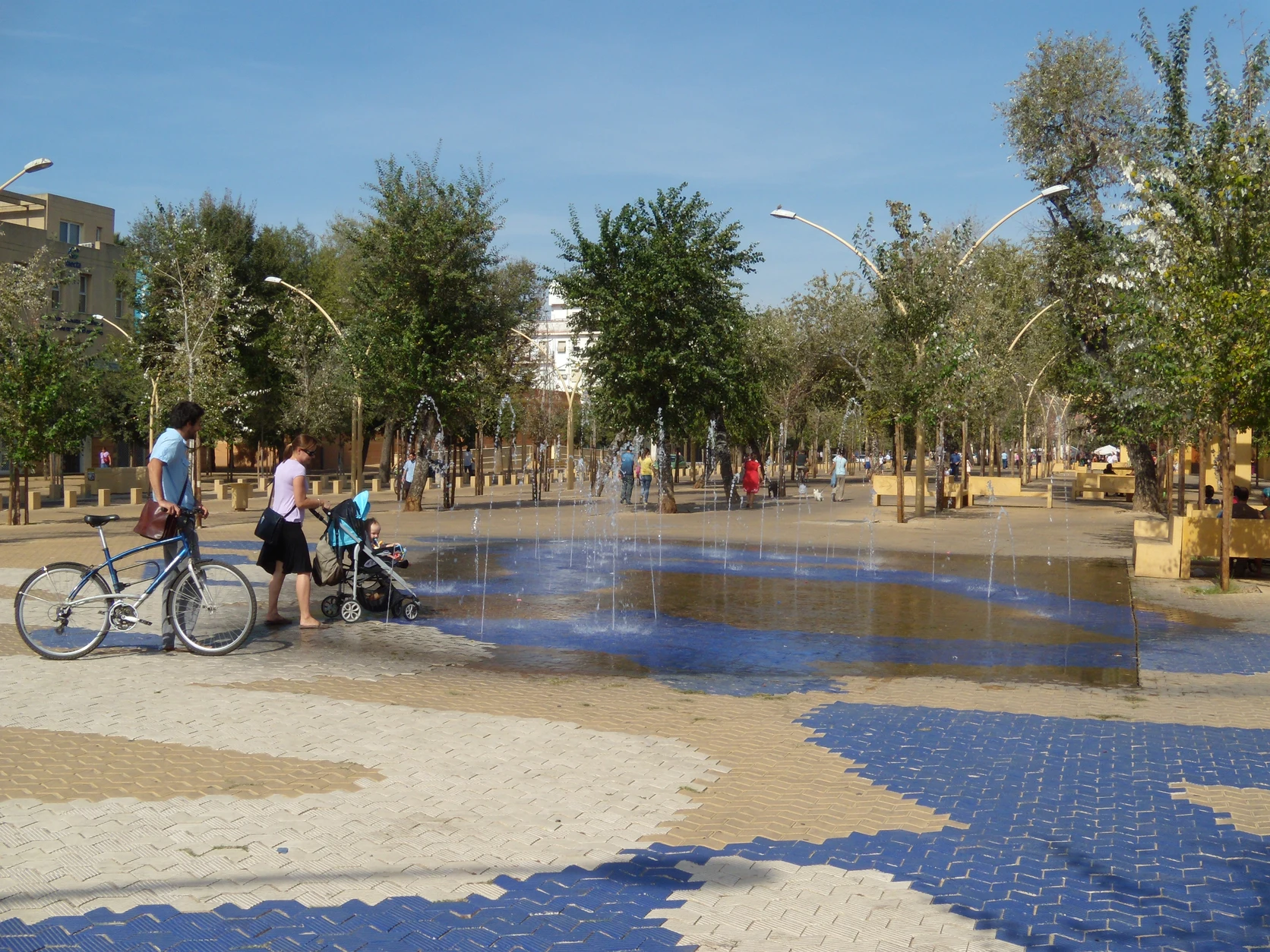
The city water company provides clean drinking fountains in public squares across Seville. Small water mist sprays in open parks cool the warm summer air. Building workers and street cleaners stop heavy outdoor labor during hot afternoon hours.
Municipal emergency services open cool climate shelters to help elderly and vulnerable residents stay safe during heat waves. Water tanker trucks spray recycled water across stone streets at night to cool the city. New cooling projects use cold underground water channels to keep public plazas fresh.
A2 · Elementary
Seville Summer Heat Routines: Urban Toldos, Cool Patios, and Diurnal Clock Shifts
Summer temperatures in the Guadalquivir valley reshape urban movement, domestic patio cooling, and nocturnal civic life.
Climatological Extremes and Diurnal Rhythm Shifts
Official meteorological data from AEMET indicates that summer maximum temperatures in the Guadalquivir valley frequently exceed forty degrees Celsius between late June and August, establishing extreme climatological conditions. Urban surface thermal radiation drives nocturnal minimum temperatures above twenty-five degrees Celsius, creating sustained tropical nights across metropolitan Seville and altering the diurnal rhythm of civic activity. Civic routines divide the summer day into two distinct phases, with public commerce and outdoor administrative activities concentrated in early morning hours before midday heat peaks.
Between 14:00 and 18:00, pedestrian street circulation drops significantly as residents retreat indoors behind drawn persiana blinds and shuttered windows to escape oppressive ambient heat. Evening socialization, dining, and outdoor civic life reactivate after 21:30 when ambient air temperatures moderate and street surfaces begin radiative cooling. Public parks and riverside promenades along the Guadalquivir function as key open-air cooling zones for neighborhood gatherings well past midnight.
Municipal Shading Infrastructure and Toldos Architecture
The Seville municipal urban planning agency coordinates the seasonal installation of overhead canvas awnings, known as toldos, across major central pedestrian corridors to protect public infrastructure. Specialized rigging crews anchor high-tensile steel tension cables between opposite historic building facades to suspend durable textile shade fabrics, utilizing precise tensile engineering. The toldos canopy along Calle Sierpes and Calle Tetuán blocks direct solar radiation, reducing pedestrian ground-level ambient heat absorption by several degrees.
Municipal awning networks remain operational from mid-spring until mid-autumn, requiring periodic tension adjustments and nocturnal cleaning inspections. Historic building preservation regulations dictate non-destructive masonry anchors to protect centuries-old brickwork and carved stone facades. Microclimate monitoring stations positioned beneath the canvas awnings record lower ambient pavement temperatures compared to adjacent unshaded avenues.
Vernacular Domestic Cooling and Patio Architecture
Traditional Sevillian vernacular domestic architecture centers around an interior courtyard patio that functions as a natural thermal regulator and convective air chimney governed by simple thermodynamics principles. Central patio floors paved with marble and ceramic tiles retain night coolness while evaporative moisture from potted plants and small fountains lowers air temperature. Sevillian households traditionally shift domestic living arrangements seasonally, occupying upper floor rooms in winter and migrating to shaded ground-floor patio quarters in summer.
Operable slatted window blinds, known as persianas, and interior wrought-iron cancellation gates facilitate cross-ventilation while blocking solar heat gain. Morning window opening allows cool dawn breezes to circulate through living quarters before external shutters are sealed tightly against rising mid-morning heat. Natural convective airflow draws cooler air from shaded ground-floor courtyards into domestic living areas, reducing reliance on mechanical air conditioning.
Public Water Networks and Occupational Heat Protection
The municipal water utility EMASESA operates an extensive network of public drinking water fountains equipped with chilled water dispensers across pedestrian plazas. Evaporative misting nozzles and ornamental water jets integrated into public plazas and bioclimatic pavilions provide localized evaporative cooling. Regional labor protection regulations mandate adjusted working shifts for construction workers and municipal waste collectors, prohibiting outdoor heavy labor during peak afternoon heat.
Municipal emergency services activate dedicated heat-wave intervention protocols, establishing climate shelters and outreach services for elderly and vulnerable residents. Street washing tanker trucks spray recycled water across historic town center cobblestones at nightfall to accelerate pavement cooling and wash away urban dust. Innovative urban cooling initiatives such as the CartujaQanat bioclimatic project utilize subterranean water channels and solar-powered cooling towers to create comfortable open-air microclimates.
B1 · Intermediate
Thermal Adaptation and Diurnal Rhythms in Seville
High summer insolation across Seville coordinates municipal canvas awnings, vernacular domestic cooling, and late-night civic routines.
Climatological Extremes and Diurnal Rhythm Shifts
Official meteorological data from AEMET indicates that summer maximum temperatures in the Guadalquivir valley frequently exceed forty degrees Celsius between late June and August, establishing extreme climatological conditions. Urban surface thermal radiation drives nocturnal minimum temperatures above twenty-five degrees Celsius, creating sustained tropical nights across metropolitan Seville and altering the diurnal rhythm of civic activity. Civic routines divide the summer day into two distinct phases, with public commerce and outdoor administrative activities concentrated in early morning hours before midday heat peaks.
Between 14:00 and 18:00, pedestrian street circulation drops significantly as residents retreat indoors behind drawn persiana blinds and shuttered windows to escape oppressive ambient heat. Evening socialization, dining, and outdoor civic life reactivate after 21:30 when ambient air temperatures moderate and street surfaces begin radiative cooling. Public parks and riverside promenades along the Guadalquivir function as key open-air cooling zones for neighborhood gatherings well past midnight.
Municipal Shading Infrastructure and Toldos Architecture
The Seville municipal urban planning agency coordinates the seasonal installation of overhead canvas awnings, known as toldos, across major central pedestrian corridors to protect public infrastructure. Specialized rigging crews anchor high-tensile steel tension cables between opposite historic building facades to suspend durable textile shade fabrics, utilizing precise tensile engineering. The toldos canopy along Calle Sierpes and Calle Tetuán blocks direct solar radiation, reducing pedestrian ground-level ambient heat absorption by several degrees.
Municipal awning networks remain operational from mid-spring until mid-autumn, requiring periodic tension adjustments and nocturnal cleaning inspections. Historic building preservation regulations dictate non-destructive masonry anchors to protect centuries-old brickwork and carved stone facades. Microclimate monitoring stations positioned beneath the canvas awnings record lower ambient pavement temperatures compared to adjacent unshaded avenues.
Vernacular Domestic Cooling and Patio Architecture
Traditional Sevillian vernacular domestic architecture centers around an interior courtyard patio that functions as a natural thermal regulator and convective air chimney governed by simple thermodynamics principles. Central patio floors paved with marble and ceramic tiles retain night coolness while evaporative moisture from potted plants and small fountains lowers air temperature. Sevillian households traditionally shift domestic living arrangements seasonally, occupying upper floor rooms in winter and migrating to shaded ground-floor patio quarters in summer.
Operable slatted window blinds, known as persianas, and interior wrought-iron cancellation gates facilitate cross-ventilation while blocking solar heat gain. Morning window opening allows cool dawn breezes to circulate through living quarters before external shutters are sealed tightly against rising mid-morning heat. Natural convective airflow draws cooler air from shaded ground-floor courtyards into domestic living areas, reducing reliance on mechanical air conditioning.
Public Water Networks and Occupational Heat Protection
The municipal water utility EMASESA operates an extensive network of public drinking water fountains equipped with chilled water dispensers across pedestrian plazas. Evaporative misting nozzles and ornamental water jets integrated into public plazas and bioclimatic pavilions provide localized evaporative cooling. Regional labor protection regulations mandate adjusted working shifts for construction workers and municipal waste collectors, prohibiting outdoor heavy labor during peak afternoon heat.
Municipal emergency services activate dedicated heat-wave intervention protocols, establishing climate shelters and outreach services for elderly and vulnerable residents. Street washing tanker trucks spray recycled water across historic town center cobblestones at nightfall to accelerate pavement cooling and wash away urban dust. Innovative urban cooling initiatives such as the CartujaQanat bioclimatic project utilize subterranean water channels and solar-powered cooling towers to create comfortable open-air microclimates.
B2 · Upper Intermediate
Urban Shading Architecture and Vernacular Thermodynamics in Seville
Meteorological extremes in the Guadalquivir basin structure tensile street shading, patio microclimates, and occupational heat protection.
Climatological Extremes and Diurnal Rhythm Shifts
Official meteorological data from AEMET indicates that summer maximum temperatures in the Guadalquivir valley frequently exceed forty degrees Celsius between late June and August, establishing extreme climatological conditions. Urban surface thermal radiation drives nocturnal minimum temperatures above twenty-five degrees Celsius, creating sustained tropical nights across metropolitan Seville and altering the diurnal rhythm of civic activity. Civic routines divide the summer day into two distinct phases, with public commerce and outdoor administrative activities concentrated in early morning hours before midday heat peaks.
Between 14:00 and 18:00, pedestrian street circulation drops significantly as residents retreat indoors behind drawn persiana blinds and shuttered windows to escape oppressive ambient heat. Evening socialization, dining, and outdoor civic life reactivate after 21:30 when ambient air temperatures moderate and street surfaces begin radiative cooling. Public parks and riverside promenades along the Guadalquivir function as key open-air cooling zones for neighborhood gatherings well past midnight.
Municipal Shading Infrastructure and Toldos Architecture
The Seville municipal urban planning agency coordinates the seasonal installation of overhead canvas awnings, known as toldos, across major central pedestrian corridors to protect public infrastructure. Specialized rigging crews anchor high-tensile steel tension cables between opposite historic building facades to suspend durable textile shade fabrics, utilizing precise tensile engineering. The toldos canopy along Calle Sierpes and Calle Tetuán blocks direct solar radiation, reducing pedestrian ground-level ambient heat absorption by several degrees.
Municipal awning networks remain operational from mid-spring until mid-autumn, requiring periodic tension adjustments and nocturnal cleaning inspections. Historic building preservation regulations dictate non-destructive masonry anchors to protect centuries-old brickwork and carved stone facades. Microclimate monitoring stations positioned beneath the canvas awnings record lower ambient pavement temperatures compared to adjacent unshaded avenues.
Vernacular Domestic Cooling and Patio Architecture
Traditional Sevillian vernacular domestic architecture centers around an interior courtyard patio that functions as a natural thermal regulator and convective air chimney governed by simple thermodynamics principles. Central patio floors paved with marble and ceramic tiles retain night coolness while evaporative moisture from potted plants and small fountains lowers air temperature. Sevillian households traditionally shift domestic living arrangements seasonally, occupying upper floor rooms in winter and migrating to shaded ground-floor patio quarters in summer.
Operable slatted window blinds, known as persianas, and interior wrought-iron cancellation gates facilitate cross-ventilation while blocking solar heat gain. Morning window opening allows cool dawn breezes to circulate through living quarters before external shutters are sealed tightly against rising mid-morning heat. Natural convective airflow draws cooler air from shaded ground-floor courtyards into domestic living areas, reducing reliance on mechanical air conditioning.
Public Water Networks and Occupational Heat Protection
The municipal water utility EMASESA operates an extensive network of public drinking water fountains equipped with chilled water dispensers across pedestrian plazas. Evaporative misting nozzles and ornamental water jets integrated into public plazas and bioclimatic pavilions provide localized evaporative cooling. Regional labor protection regulations mandate adjusted working shifts for construction workers and municipal waste collectors, prohibiting outdoor heavy labor during peak afternoon heat.
Municipal emergency services activate dedicated heat-wave intervention protocols, establishing climate shelters and outreach services for elderly and vulnerable residents. Street washing tanker trucks spray recycled water across historic town center cobblestones at nightfall to accelerate pavement cooling and wash away urban dust. Innovative urban cooling initiatives such as the CartujaQanat bioclimatic project utilize subterranean water channels and solar-powered cooling towers to create comfortable open-air microclimates.
C1 · Advanced
Microclimatic Engineering and Diurnal Adaptation in Seville
Climatological extremes in the Guadalquivir basin govern municipal tensile toldos, convective patio architecture, and bioclimatic public infrastructure.
Climatological Extremes and Diurnal Rhythm Shifts
Official meteorological data from AEMET indicates that summer maximum temperatures in the Guadalquivir valley frequently exceed forty degrees Celsius between late June and August, establishing extreme climatological conditions. Urban surface thermal radiation drives nocturnal minimum temperatures above twenty-five degrees Celsius, creating sustained tropical nights across metropolitan Seville and altering the diurnal rhythm of civic activity. Civic routines divide the summer day into two distinct phases, with public commerce and outdoor administrative activities concentrated in early morning hours before midday heat peaks.
Between 14:00 and 18:00, pedestrian street circulation drops significantly as residents retreat indoors behind drawn persiana blinds and shuttered windows to escape oppressive ambient heat. Evening socialization, dining, and outdoor civic life reactivate after 21:30 when ambient air temperatures moderate and street surfaces begin radiative cooling. Public parks and riverside promenades along the Guadalquivir function as key open-air cooling zones for neighborhood gatherings well past midnight.
Municipal Shading Infrastructure and Toldos Architecture
The Seville municipal urban planning agency coordinates the seasonal installation of overhead canvas awnings, known as toldos, across major central pedestrian corridors to protect public infrastructure. Specialized rigging crews anchor high-tensile steel tension cables between opposite historic building facades to suspend durable textile shade fabrics, utilizing precise tensile engineering. The toldos canopy along Calle Sierpes and Calle Tetuán blocks direct solar radiation, reducing pedestrian ground-level ambient heat absorption by several degrees.
Municipal awning networks remain operational from mid-spring until mid-autumn, requiring periodic tension adjustments and nocturnal cleaning inspections. Historic building preservation regulations dictate non-destructive masonry anchors to protect centuries-old brickwork and carved stone facades. Microclimate monitoring stations positioned beneath the canvas awnings record lower ambient pavement temperatures compared to adjacent unshaded avenues.
Vernacular Domestic Cooling and Patio Architecture
Traditional Sevillian vernacular domestic architecture centers around an interior courtyard patio that functions as a natural thermal regulator and convective air chimney governed by simple thermodynamics principles. Central patio floors paved with marble and ceramic tiles retain night coolness while evaporative moisture from potted plants and small fountains lowers air temperature. Sevillian households traditionally shift domestic living arrangements seasonally, occupying upper floor rooms in winter and migrating to shaded ground-floor patio quarters in summer.
Operable slatted window blinds, known as persianas, and interior wrought-iron cancellation gates facilitate cross-ventilation while blocking solar heat gain. Morning window opening allows cool dawn breezes to circulate through living quarters before external shutters are sealed tightly against rising mid-morning heat. Natural convective airflow draws cooler air from shaded ground-floor courtyards into domestic living areas, reducing reliance on mechanical air conditioning.
Public Water Networks and Occupational Heat Protection
The municipal water utility EMASESA operates an extensive network of public drinking water fountains equipped with chilled water dispensers across pedestrian plazas. Evaporative misting nozzles and ornamental water jets integrated into public plazas and bioclimatic pavilions provide localized evaporative cooling. Regional labor protection regulations mandate adjusted working shifts for construction workers and municipal waste collectors, prohibiting outdoor heavy labor during peak afternoon heat.
Municipal emergency services activate dedicated heat-wave intervention protocols, establishing climate shelters and outreach services for elderly and vulnerable residents. Street washing tanker trucks spray recycled water across historic town center cobblestones at nightfall to accelerate pavement cooling and wash away urban dust. Innovative urban cooling initiatives such as the CartujaQanat bioclimatic project utilize subterranean water channels and solar-powered cooling towers to create comfortable open-air microclimates.
C2 · Mastery
Thermodynamics, Tensile Shading, and Diurnal Ecology in Seville
Extreme Guadalquivir valley insolation structures municipal awning engineering, domestic convective cooling, and nocturnal civic space activation.
Climatological Extremes and Diurnal Rhythm Shifts
Official meteorological data from AEMET indicates that summer maximum temperatures in the Guadalquivir valley frequently exceed forty degrees Celsius between late June and August, establishing extreme climatological conditions. Urban surface thermal radiation drives nocturnal minimum temperatures above twenty-five degrees Celsius, creating sustained tropical nights across metropolitan Seville and altering the diurnal rhythm of civic activity. Civic routines divide the summer day into two distinct phases, with public commerce and outdoor administrative activities concentrated in early morning hours before midday heat peaks.
Between 14:00 and 18:00, pedestrian street circulation drops significantly as residents retreat indoors behind drawn persiana blinds and shuttered windows to escape oppressive ambient heat. Evening socialization, dining, and outdoor civic life reactivate after 21:30 when ambient air temperatures moderate and street surfaces begin radiative cooling. Public parks and riverside promenades along the Guadalquivir function as key open-air cooling zones for neighborhood gatherings well past midnight.
Municipal Shading Infrastructure and Toldos Architecture
The Seville municipal urban planning agency coordinates the seasonal installation of overhead canvas awnings, known as toldos, across major central pedestrian corridors to protect public infrastructure. Specialized rigging crews anchor high-tensile steel tension cables between opposite historic building facades to suspend durable textile shade fabrics, utilizing precise tensile engineering. The toldos canopy along Calle Sierpes and Calle Tetuán blocks direct solar radiation, reducing pedestrian ground-level ambient heat absorption by several degrees.
Municipal awning networks remain operational from mid-spring until mid-autumn, requiring periodic tension adjustments and nocturnal cleaning inspections. Historic building preservation regulations dictate non-destructive masonry anchors to protect centuries-old brickwork and carved stone facades. Microclimate monitoring stations positioned beneath the canvas awnings record lower ambient pavement temperatures compared to adjacent unshaded avenues.
Vernacular Domestic Cooling and Patio Architecture
Traditional Sevillian vernacular domestic architecture centers around an interior courtyard patio that functions as a natural thermal regulator and convective air chimney governed by simple thermodynamics principles. Central patio floors paved with marble and ceramic tiles retain night coolness while evaporative moisture from potted plants and small fountains lowers air temperature. Sevillian households traditionally shift domestic living arrangements seasonally, occupying upper floor rooms in winter and migrating to shaded ground-floor patio quarters in summer.
Operable slatted window blinds, known as persianas, and interior wrought-iron cancellation gates facilitate cross-ventilation while blocking solar heat gain. Morning window opening allows cool dawn breezes to circulate through living quarters before external shutters are sealed tightly against rising mid-morning heat. Natural convective airflow draws cooler air from shaded ground-floor courtyards into domestic living areas, reducing reliance on mechanical air conditioning.
Public Water Networks and Occupational Heat Protection
The municipal water utility EMASESA operates an extensive network of public drinking water fountains equipped with chilled water dispensers across pedestrian plazas. Evaporative misting nozzles and ornamental water jets integrated into public plazas and bioclimatic pavilions provide localized evaporative cooling. Regional labor protection regulations mandate adjusted working shifts for construction workers and municipal waste collectors, prohibiting outdoor heavy labor during peak afternoon heat.
Municipal emergency services activate dedicated heat-wave intervention protocols, establishing climate shelters and outreach services for elderly and vulnerable residents. Street washing tanker trucks spray recycled water across historic town center cobblestones at nightfall to accelerate pavement cooling and wash away urban dust. Innovative urban cooling initiatives such as the CartujaQanat bioclimatic project utilize subterranean water channels and solar-powered cooling towers to create comfortable open-air microclimates.
Check your understanding
Choose how closely you want to revisit the article. You can refer back while answering, and review explanations when you finish.
Quick Quiz A1
Try one question, then create a free account for the full Quick Quiz. Sign Up Free
Answer every question before checking. There is no time limit.
Your results
/ 1 correct (%)
Read the explanations to see how each answer connects to the article.
-
What temperature do summer river valley days often rise above in July and August?
1. Answer:
Quick Quiz A2
Try one question, then create a free account for the full Quick Quiz. Sign Up Free
Answer every question before checking. There is no time limit.
Your results
/ 1 correct (%)
Read the explanations to see how each answer connects to the article.
-
What summer maximum temperature threshold does meteorological data indicate is frequently exceeded in the Guadalquivir valley?
1. Answer:
Quick Quiz B1
Try one question, then create a free account for the full Quick Quiz. Sign Up Free
Answer every question before checking. There is no time limit.
Your results
/ 1 correct (%)
Read the explanations to see how each answer connects to the article.
-
What summer maximum temperature threshold does meteorological data indicate is frequently exceeded in the Guadalquivir valley?
1. Answer:
Quick Quiz B2
Try one question, then create a free account for the full Quick Quiz. Sign Up Free
Answer every question before checking. There is no time limit.
Your results
/ 1 correct (%)
Read the explanations to see how each answer connects to the article.
-
What summer maximum temperature threshold does meteorological data indicate is frequently exceeded in the Guadalquivir valley?
1. Answer:
Quick Quiz C1
Try one question, then create a free account for the full Quick Quiz. Sign Up Free
Answer every question before checking. There is no time limit.
Your results
/ 1 correct (%)
Read the explanations to see how each answer connects to the article.
-
What summer maximum temperature threshold does meteorological data indicate is frequently exceeded in the Guadalquivir valley?
1. Answer:
Quick Quiz C2
Try one question, then create a free account for the full Quick Quiz. Sign Up Free
Answer every question before checking. There is no time limit.
Your results
/ 1 correct (%)
Read the explanations to see how each answer connects to the article.
-
What summer maximum temperature threshold does meteorological data indicate is frequently exceeded in the Guadalquivir valley?
1. Answer:
