A1 · Beginner
Esala Perahera Staging and Cleanup: Big Elephants and Street Sweepers
More than seventy elephants, hundreds of busy street sweepers, and water trucks keep Kandy clean during the great festival.
Nocturnal Staging and Elephant Yard Logistics
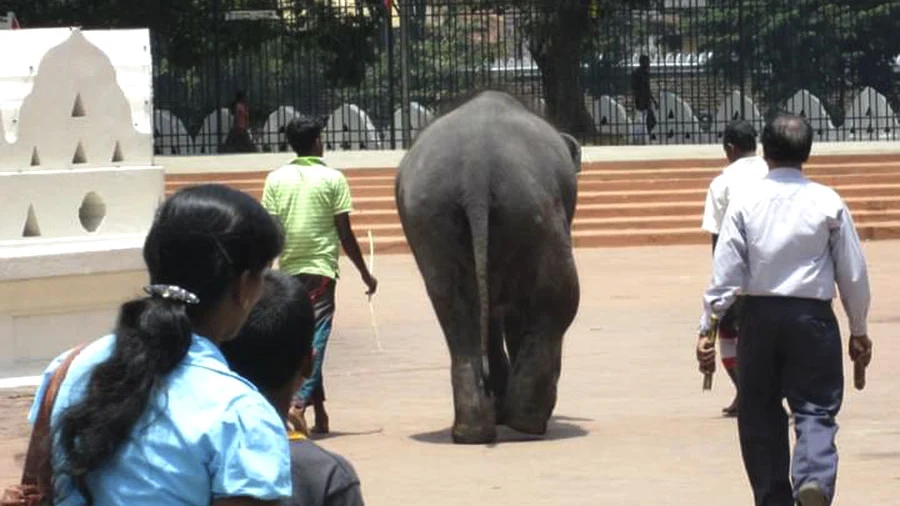
More than seventy big elephants gather in quiet holding compounds near the ancient temple.
Government veterinary officers check each elephant to make sure every animal is healthy.
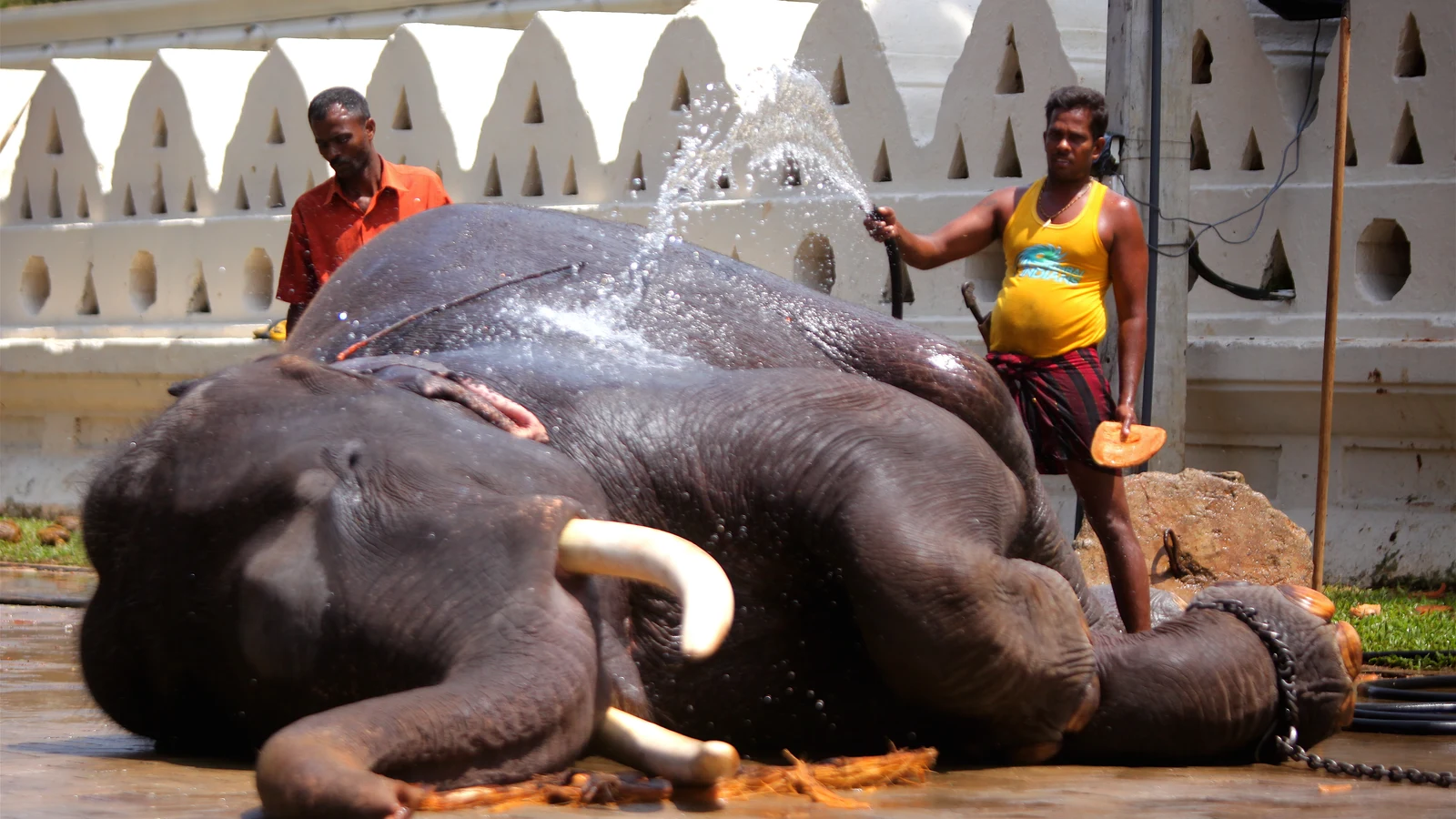
Experienced mahouts wash each elephant with water hoses and smooth river stones in concrete yards.
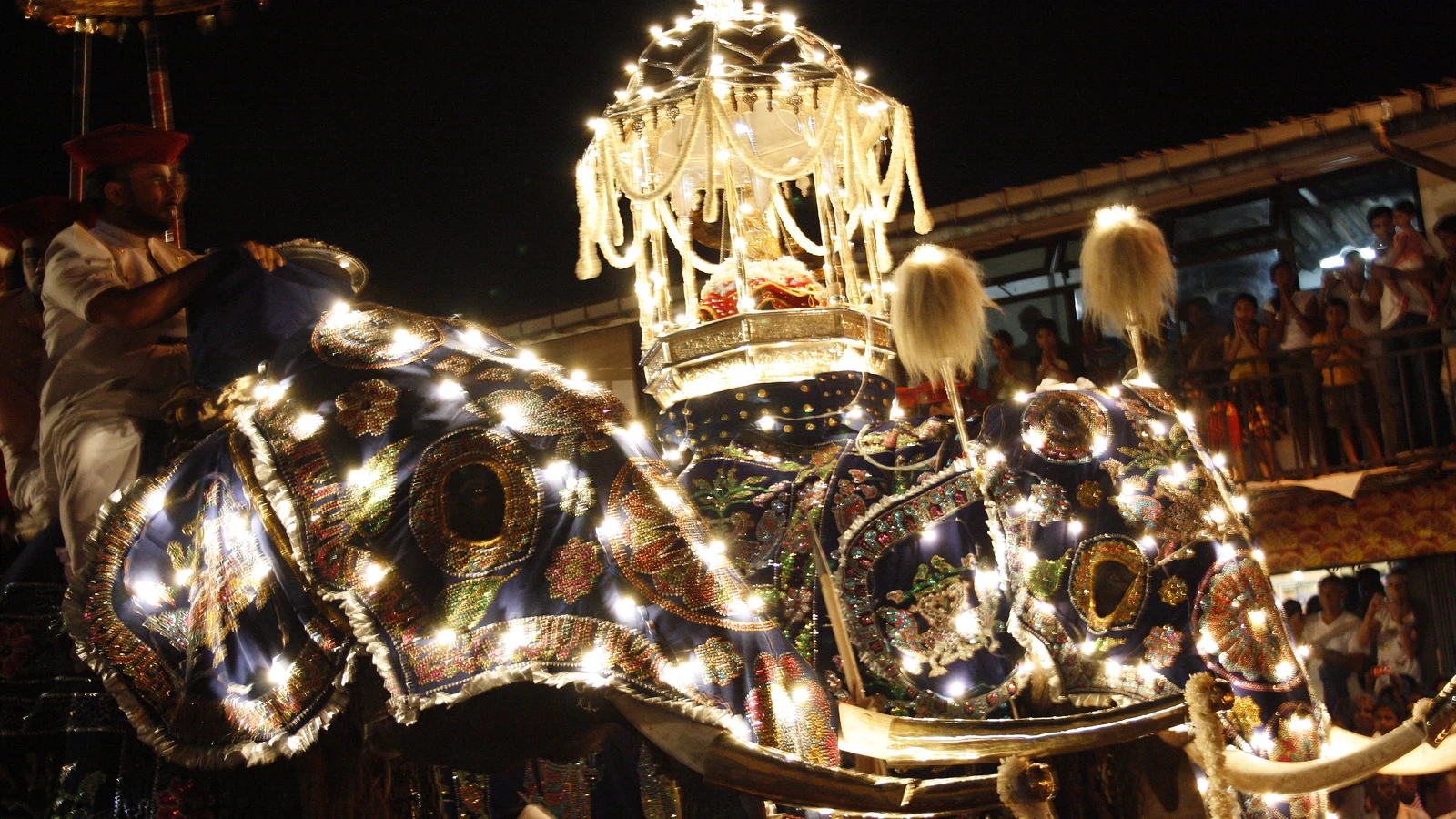
Master dressers put gold-embroidered velvet trappings and strong harness straps on the elephants.
Workers place battery packs and wiring inside the velvet cloths to light up bright LED borders.
Staging marshals guide each elephant group carefully into its assigned procession line.
The Midnight Cleanup: Municipal Sweepers and Washers
Municipal cleanup squads begin sweeping the streets as soon as the night procession finishes.
Over four hundred sanitation workers sweep the wide pavement with stiff coconut brooms.
Workers collect empty paper wrappers, burnt torch husks, and spectator waste along the roads.
Big trucks carry elephant dung to composting depots run by the Department of Agriculture.
Water trucks wash asphalt streets with disinfectant to clean away soot before sunrise.
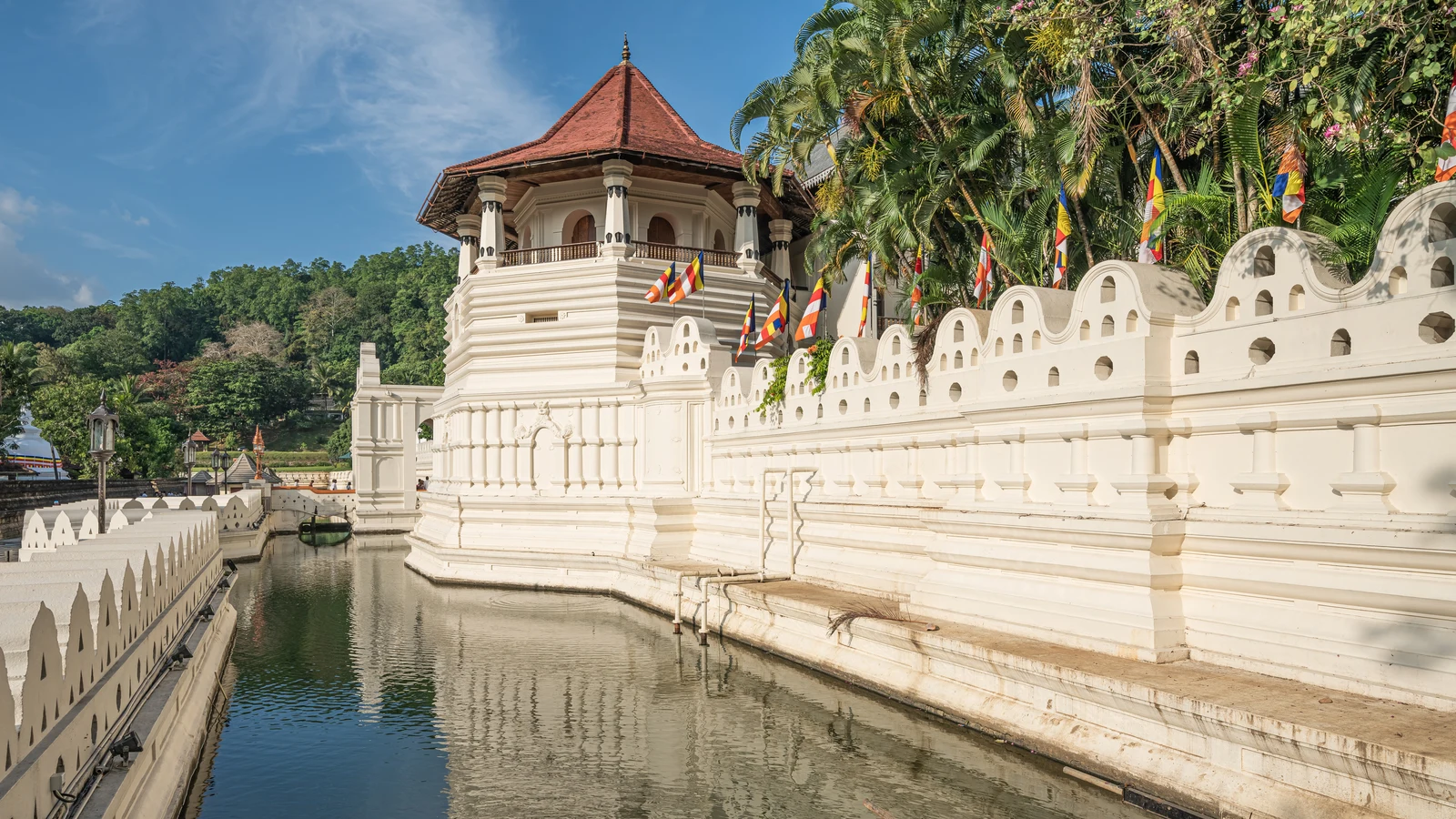
Heritage experts watch the street washing near palace walls to protect historic stone ramparts.
Perimeter Demobilization and Safety Infrastructure
City workers take down metal barricades and wooden grandstands after the final daytime parade.
Contractors unbolt tiered spectator platforms along Dalada Veediya and Colombo Street.
Workers pack police watchtowers and medical aid tents into municipal transport trucks.
Police officers reopen closed intersections and lift traffic diversions across the hill city.
Train stations and bus stops run extra departures for thousands of returning visitors.
Electricians disconnect overhead wires and pack up distribution transformers after the celebration.
Environmental Protection and Urban Restoration
Officers monitor water around Kandy Lake to keep the water clean and safe.
Floating drainage booms and silt traps catch plastic waste before it enters the river.
School societies and youth groups clean up trash in public parks across the valley.
Sorting teams send plastic bottles and beverage cartons to provincial recycling plants.
The city centre returns to normal commercial routines thirty-six hours after the water cutting.
Health inspectors check food markets and open drains before declaring the city fully clean.
A2 · Elementary
Esala Perahera Staging and Cleanup: Elephant Baths, Water Trucks, and Barrier Removal
Pre-processional veterinary staging, midnight street washing, and municipal demobilization ensure public safety in Kandy.
Nocturnal Staging and Elephant Yard Logistics
Hours before the evening procession departs, over seventy elephants gather in dedicated holding compounds near the Temple of the Tooth. Government veterinary officers examine every elephant to certify hydration levels, footpad health, and behavioural stability before dressing. Teams of experienced mahouts wash each elephant with pressurized hoses and natural river stones in specialized concrete bathing yards.
Master dressers mount layered silk and gold-embroidered velvet trappings onto the elephants, securing heavy ceremonial harness straps. Skilled technicians insert battery packs and low-voltage wiring harnesses into the velvet housings to illuminate decorative LED perimeter borders. Staging marshals coordinate departure intervals so each elephant contingent merges seamlessly into its assigned devale sequence.
The Midnight Cleanup: Municipal Sweepers and Washers
Within minutes of the final procession clearing Dalada Veediya, municipal cleanup squads begin sweeping the four-kilometre route. Over four hundred municipal sanitation workers armed with stiff coconut brooms work in synchronized lines across the pavement. Sweepers collect discarded coconut shells, burnt torch husks, paper wrappers, and organic waste left behind by five hundred thousand spectators.
Dedicated collection trucks transport tonnes of elephant dung directly to composting depots operated by the Department of Agriculture. High-pressure municipal water bowsers wash the asphalt streets with disinfectant to eliminate soot, wax residue, and animal odours before sunrise. Heritage conservation specialists supervise street washing around historic palace walls to protect centuries-old stone ramparts from chemical abrasives.
Perimeter Demobilization and Safety Infrastructure
Following the final daytime procession, municipal engineering teams begin dismantling temporary metal barricades and wooden viewing grandstands. Scaffolding contractors systematically unbolt tiered spectator platforms that lined Dalada Veediya, D.S. Senanayake Veediya, and Colombo Street. Temporary police watchtowers, emergency medical aid tents, and field ambulance stations are packed into municipal transport depots.
Sri Lanka Police systematically reopen closed intersections, lifting perimeter traffic diversions in coordinated stages. Public transit dispatchers coordinate extra bus and commuter train departures from Kandy Goods Shed and Central Station for returning spectators. Municipal electricians disconnect and coil kilometres of temporary overhead cabling and dismantle supplementary distribution transformers.
Environmental Protection and Urban Restoration
The Central Environmental Authority monitors water runoff around Kandy Lake to prevent organic debris and festival detergent from entering the aquatic ecosystem. Silt traps and floating drainage booms placed along storm drains catch plastic waste before it washes into the lake or the Mahaweli River. Local school environmental societies and volunteer youth groups conduct supplementary cleanup drives across public parks and hillsides surrounding the valley.
Sorting teams divert recyclables, including thousands of plastic bottles and beverage cartons, to provincial recycling plants. Within thirty-six hours of the Diya Kepeema water-cutting ceremony, the historic city centre returns completely to normal commercial routines. Municipal health inspectors conduct final sanitary audits of open markets, food kiosks, and public drainage grids before declaring the city fully normalized.
B1 · Intermediate
Veterinary Staging, Sanitation Convoys, and Infrastructure Recovery in Kandy
An analytical study of elephant welfare inspections, high-pressure street washing, and systematic grandstand removal.
Nocturnal Staging and Elephant Yard Logistics
Hours before the evening procession departs, over seventy elephants gather in dedicated holding compounds near the Temple of the Tooth. Government veterinary officers examine every elephant to certify hydration levels, footpad health, and behavioural stability before dressing. Teams of experienced mahouts wash each elephant with pressurized hoses and natural river stones in specialized concrete bathing yards.
Master dressers mount layered silk and gold-embroidered velvet trappings onto the elephants, securing heavy ceremonial harness straps. Skilled technicians insert battery packs and low-voltage wiring harnesses into the velvet housings to illuminate decorative LED perimeter borders. Staging marshals coordinate departure intervals so each elephant contingent merges seamlessly into its assigned devale sequence.
The Midnight Cleanup: Municipal Sweepers and Washers
Within minutes of the final procession clearing Dalada Veediya, municipal cleanup squads begin sweeping the four-kilometre route. Over four hundred municipal sanitation workers armed with stiff coconut brooms work in synchronized lines across the pavement. Sweepers collect discarded coconut shells, burnt torch husks, paper wrappers, and organic waste left behind by five hundred thousand spectators.
Dedicated collection trucks transport tonnes of elephant dung directly to composting depots operated by the Department of Agriculture. High-pressure municipal water bowsers wash the asphalt streets with disinfectant to eliminate soot, wax residue, and animal odours before sunrise. Heritage conservation specialists supervise street washing around historic palace walls to protect centuries-old stone ramparts from chemical abrasives.
Perimeter Demobilization and Safety Infrastructure
Following the final daytime procession, municipal engineering teams begin dismantling temporary metal barricades and wooden viewing grandstands. Scaffolding contractors systematically unbolt tiered spectator platforms that lined Dalada Veediya, D.S. Senanayake Veediya, and Colombo Street. Temporary police watchtowers, emergency medical aid tents, and field ambulance stations are packed into municipal transport depots.
Sri Lanka Police systematically reopen closed intersections, lifting perimeter traffic diversions in coordinated stages. Public transit dispatchers coordinate extra bus and commuter train departures from Kandy Goods Shed and Central Station for returning spectators. Municipal electricians disconnect and coil kilometres of temporary overhead cabling and dismantle supplementary distribution transformers.
Environmental Protection and Urban Restoration
The Central Environmental Authority monitors water runoff around Kandy Lake to prevent organic debris and festival detergent from entering the aquatic ecosystem. Silt traps and floating drainage booms placed along storm drains catch plastic waste before it washes into the lake or the Mahaweli River. Local school environmental societies and volunteer youth groups conduct supplementary cleanup drives across public parks and hillsides surrounding the valley.
Sorting teams divert recyclables, including thousands of plastic bottles and beverage cartons, to provincial recycling plants. Within thirty-six hours of the Diya Kepeema water-cutting ceremony, the historic city centre returns completely to normal commercial routines. Municipal health inspectors conduct final sanitary audits of open markets, food kiosks, and public drainage grids before declaring the city fully normalized.
B2 · Upper Intermediate
Municipal Logistics, Synchronized Sanitation, and Watershed Protection in Kandy
Examining low-voltage elephant wiring, agricultural composting of animal waste, and environmental monitoring of Kandy Lake.
Nocturnal Staging and Elephant Yard Logistics
Hours before the evening procession departs, over seventy elephants gather in dedicated holding compounds near the Temple of the Tooth. Government veterinary officers examine every elephant to certify hydration levels, footpad health, and behavioural stability before dressing. Teams of experienced mahouts wash each elephant with pressurized hoses and natural river stones in specialized concrete bathing yards.
Master dressers mount layered silk and gold-embroidered velvet trappings onto the elephants, securing heavy ceremonial harness straps. Skilled technicians insert battery packs and low-voltage wiring harnesses into the velvet housings to illuminate decorative LED perimeter borders. Staging marshals coordinate departure intervals so each elephant contingent merges seamlessly into its assigned devale sequence.
The Midnight Cleanup: Municipal Sweepers and Washers
Within minutes of the final procession clearing Dalada Veediya, municipal cleanup squads begin sweeping the four-kilometre route. Over four hundred municipal sanitation workers armed with stiff coconut brooms work in synchronized lines across the pavement. Sweepers collect discarded coconut shells, burnt torch husks, paper wrappers, and organic waste left behind by five hundred thousand spectators.
Dedicated collection trucks transport tonnes of elephant dung directly to composting depots operated by the Department of Agriculture. High-pressure municipal water bowsers wash the asphalt streets with disinfectant to eliminate soot, wax residue, and animal odours before sunrise. Heritage conservation specialists supervise street washing around historic palace walls to protect centuries-old stone ramparts from chemical abrasives.
Perimeter Demobilization and Safety Infrastructure
Following the final daytime procession, municipal engineering teams begin dismantling temporary metal barricades and wooden viewing grandstands. Scaffolding contractors systematically unbolt tiered spectator platforms that lined Dalada Veediya, D.S. Senanayake Veediya, and Colombo Street. Temporary police watchtowers, emergency medical aid tents, and field ambulance stations are packed into municipal transport depots.
Sri Lanka Police systematically reopen closed intersections, lifting perimeter traffic diversions in coordinated stages. Public transit dispatchers coordinate extra bus and commuter train departures from Kandy Goods Shed and Central Station for returning spectators. Municipal electricians disconnect and coil kilometres of temporary overhead cabling and dismantle supplementary distribution transformers.
Environmental Protection and Urban Restoration
The Central Environmental Authority monitors water runoff around Kandy Lake to prevent organic debris and festival detergent from entering the aquatic ecosystem. Silt traps and floating drainage booms placed along storm drains catch plastic waste before it washes into the lake or the Mahaweli River. Local school environmental societies and volunteer youth groups conduct supplementary cleanup drives across public parks and hillsides surrounding the valley.
Sorting teams divert recyclables, including thousands of plastic bottles and beverage cartons, to provincial recycling plants. Within thirty-six hours of the Diya Kepeema water-cutting ceremony, the historic city centre returns completely to normal commercial routines. Municipal health inspectors conduct final sanitary audits of open markets, food kiosks, and public drainage grids before declaring the city fully normalized.
C1 · Advanced
Nocturnal Staging Geographies, Urban Sanitation Architecture, and Civil Demobilization
A critical examination of pachyderm welfare protocols, synchronized municipal sweeping lines, and rapid urban normalization in Kandy.
Nocturnal Staging and Elephant Yard Logistics
Hours before the evening procession departs, over seventy elephants gather in dedicated holding compounds near the Temple of the Tooth. Government veterinary officers examine every elephant to certify hydration levels, footpad health, and behavioural stability before dressing. Teams of experienced mahouts wash each elephant with pressurized hoses and natural river stones in specialized concrete bathing yards.
Master dressers mount layered silk and gold-embroidered velvet trappings onto the elephants, securing heavy ceremonial harness straps. Skilled technicians insert battery packs and low-voltage wiring harnesses into the velvet housings to illuminate decorative LED perimeter borders. Staging marshals coordinate departure intervals so each elephant contingent merges seamlessly into its assigned devale sequence.
The Midnight Cleanup: Municipal Sweepers and Washers
Within minutes of the final procession clearing Dalada Veediya, municipal cleanup squads begin sweeping the four-kilometre route. Over four hundred municipal sanitation workers armed with stiff coconut brooms work in synchronized lines across the pavement. Sweepers collect discarded coconut shells, burnt torch husks, paper wrappers, and organic waste left behind by five hundred thousand spectators.
Dedicated collection trucks transport tonnes of elephant dung directly to composting depots operated by the Department of Agriculture. High-pressure municipal water bowsers wash the asphalt streets with disinfectant to eliminate soot, wax residue, and animal odours before sunrise. Heritage conservation specialists supervise street washing around historic palace walls to protect centuries-old stone ramparts from chemical abrasives.
Perimeter Demobilization and Safety Infrastructure
Following the final daytime procession, municipal engineering teams begin dismantling temporary metal barricades and wooden viewing grandstands. Scaffolding contractors systematically unbolt tiered spectator platforms that lined Dalada Veediya, D.S. Senanayake Veediya, and Colombo Street. Temporary police watchtowers, emergency medical aid tents, and field ambulance stations are packed into municipal transport depots.
Sri Lanka Police systematically reopen closed intersections, lifting perimeter traffic diversions in coordinated stages. Public transit dispatchers coordinate extra bus and commuter train departures from Kandy Goods Shed and Central Station for returning spectators. Municipal electricians disconnect and coil kilometres of temporary overhead cabling and dismantle supplementary distribution transformers.
Environmental Protection and Urban Restoration
The Central Environmental Authority monitors water runoff around Kandy Lake to prevent organic debris and festival detergent from entering the aquatic ecosystem. Silt traps and floating drainage booms placed along storm drains catch plastic waste before it washes into the lake or the Mahaweli River. Local school environmental societies and volunteer youth groups conduct supplementary cleanup drives across public parks and hillsides surrounding the valley.
Sorting teams divert recyclables, including thousands of plastic bottles and beverage cartons, to provincial recycling plants. Within thirty-six hours of the Diya Kepeema water-cutting ceremony, the historic city centre returns completely to normal commercial routines. Municipal health inspectors conduct final sanitary audits of open markets, food kiosks, and public drainage grids before declaring the city fully normalized.
C2 · Mastery
Sacred Fauna Management, Municipal Waste Infrastructures, and Environmental Governance in Kandy
A comprehensive analytical monograph detailing veterinary oversight, rapid asphalt decontamination, monument preservation, and post-festival civic restoration.
Nocturnal Staging and Elephant Yard Logistics
Hours before the evening procession departs, over seventy elephants gather in dedicated holding compounds near the Temple of the Tooth. Government veterinary officers examine every elephant to certify hydration levels, footpad health, and behavioural stability before dressing. Teams of experienced mahouts wash each elephant with pressurized hoses and natural river stones in specialized concrete bathing yards.
Master dressers mount layered silk and gold-embroidered velvet trappings onto the elephants, securing heavy ceremonial harness straps. Skilled technicians insert battery packs and low-voltage wiring harnesses into the velvet housings to illuminate decorative LED perimeter borders. Staging marshals coordinate departure intervals so each elephant contingent merges seamlessly into its assigned devale sequence.
The Midnight Cleanup: Municipal Sweepers and Washers
Within minutes of the final procession clearing Dalada Veediya, municipal cleanup squads begin sweeping the four-kilometre route. Over four hundred municipal sanitation workers armed with stiff coconut brooms work in synchronized lines across the pavement. Sweepers collect discarded coconut shells, burnt torch husks, paper wrappers, and organic waste left behind by five hundred thousand spectators.
Dedicated collection trucks transport tonnes of elephant dung directly to composting depots operated by the Department of Agriculture. High-pressure municipal water bowsers wash the asphalt streets with disinfectant to eliminate soot, wax residue, and animal odours before sunrise. Heritage conservation specialists supervise street washing around historic palace walls to protect centuries-old stone ramparts from chemical abrasives.
Perimeter Demobilization and Safety Infrastructure
Following the final daytime procession, municipal engineering teams begin dismantling temporary metal barricades and wooden viewing grandstands. Scaffolding contractors systematically unbolt tiered spectator platforms that lined Dalada Veediya, D.S. Senanayake Veediya, and Colombo Street. Temporary police watchtowers, emergency medical aid tents, and field ambulance stations are packed into municipal transport depots.
Sri Lanka Police systematically reopen closed intersections, lifting perimeter traffic diversions in coordinated stages. Public transit dispatchers coordinate extra bus and commuter train departures from Kandy Goods Shed and Central Station for returning spectators. Municipal electricians disconnect and coil kilometres of temporary overhead cabling and dismantle supplementary distribution transformers.
Environmental Protection and Urban Restoration
The Central Environmental Authority monitors water runoff around Kandy Lake to prevent organic debris and festival detergent from entering the aquatic ecosystem. Silt traps and floating drainage booms placed along storm drains catch plastic waste before it washes into the lake or the Mahaweli River. Local school environmental societies and volunteer youth groups conduct supplementary cleanup drives across public parks and hillsides surrounding the valley.
Sorting teams divert recyclables, including thousands of plastic bottles and beverage cartons, to provincial recycling plants. Within thirty-six hours of the Diya Kepeema water-cutting ceremony, the historic city centre returns completely to normal commercial routines. Municipal health inspectors conduct final sanitary audits of open markets, food kiosks, and public drainage grids before declaring the city fully normalized.
Check your understanding
Choose how closely you want to revisit the article. You can refer back while answering, and review explanations when you finish.
Quick Quiz A1
Try one question, then create a free account for the full Quick Quiz. Sign Up Free
Answer every question before checking. There is no time limit.
Your results
/ 1 correct (%)
Read the explanations to see how each answer connects to the article.
-
How many big elephants gather in quiet holding compounds near the ancient temple?
1. Answer:
Quick Quiz A2
Try one question, then create a free account for the full Quick Quiz. Sign Up Free
Answer every question before checking. There is no time limit.
Your results
/ 1 correct (%)
Read the explanations to see how each answer connects to the article.
-
How many elephants gather in holding compounds near the Temple of the Tooth before the procession?
1. Answer:
Quick Quiz B1
Try one question, then create a free account for the full Quick Quiz. Sign Up Free
Answer every question before checking. There is no time limit.
Your results
/ 1 correct (%)
Read the explanations to see how each answer connects to the article.
-
How many elephants gather in holding compounds near the Temple of the Tooth before the procession?
1. Answer:
Quick Quiz B2
Try one question, then create a free account for the full Quick Quiz. Sign Up Free
Answer every question before checking. There is no time limit.
Your results
/ 1 correct (%)
Read the explanations to see how each answer connects to the article.
-
How many elephants gather in holding compounds near the Temple of the Tooth before the procession?
1. Answer:
Quick Quiz C1
Try one question, then create a free account for the full Quick Quiz. Sign Up Free
Answer every question before checking. There is no time limit.
Your results
/ 1 correct (%)
Read the explanations to see how each answer connects to the article.
-
How many elephants gather in holding compounds near the Temple of the Tooth before the procession?
1. Answer:
Quick Quiz C2
Try one question, then create a free account for the full Quick Quiz. Sign Up Free
Answer every question before checking. There is no time limit.
Your results
/ 1 correct (%)
Read the explanations to see how each answer connects to the article.
-
How many elephants gather in holding compounds near the Temple of the Tooth before the procession?
1. Answer:
