A1 · Beginner
Tambour Music: Ancient Lyres and River Songs
The tambour is a five-stringed wooden lyre that brings sweet songs, night dances, and joy to northern Sudanese villages.
Ancient Origins and Instrument Craftsmanship
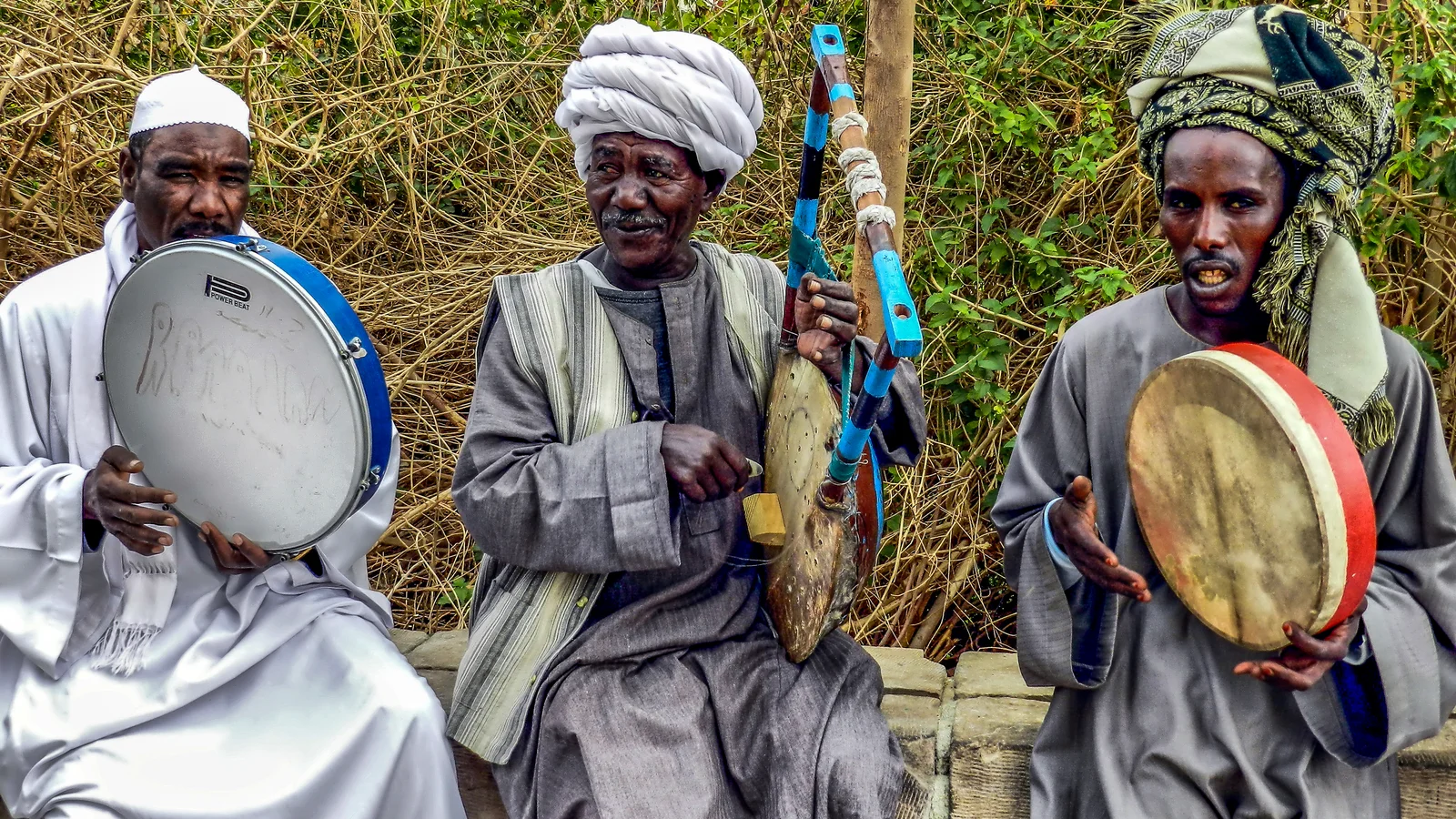
The tambour is a five-stringed bowl lyre played across northern Sudan.
Ancient wall art shows that people played bowl lyres along the Nile thousands of years ago.
Craft makers carve the wooden bowl from acacia trees and cover it with rawhide.
Two wooden arms join a top crossbar that holds the five strings.
Musicians tune the strings around the crossbar with cloth bands called mashadd.
Wood workshops in Karima and Dongola keep old hand carving skills alive.
Pentatonic Modal Systems and Performance Mechanics
Tambour music uses a five-note pentatonic scale for sweet river songs.
The right hand strums while left fingers damp strings to make melody.
Singers and listeners join the song with fast rhythmic handclapping called kaff.
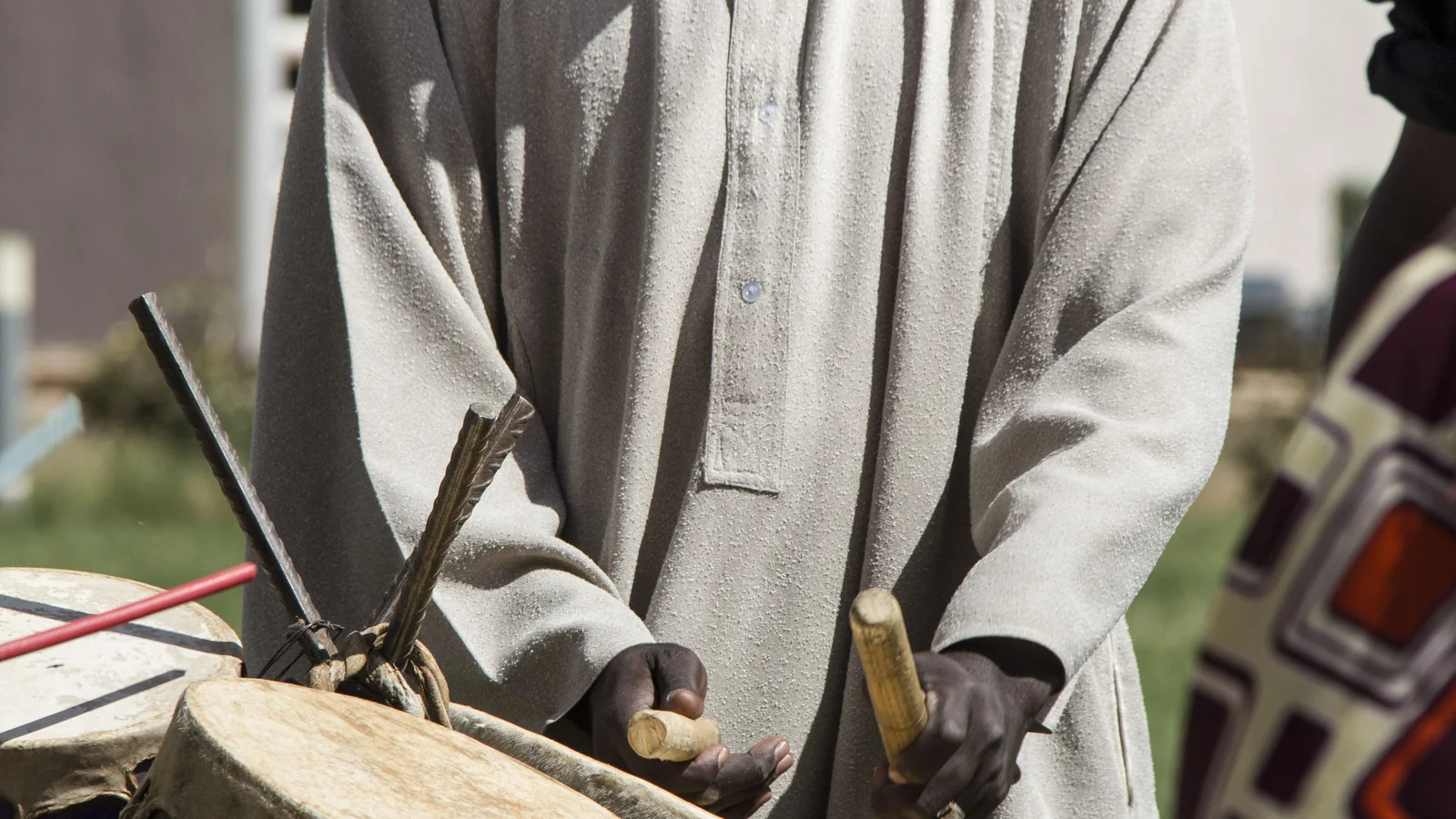
Musicians play round frame drums called tar and clay water jugs called daluka.
Shaigiya players use fast rhythms while Nubian players sing slow sweet tunes.
The lead singer sings a solo verse and the village chorus answers.
Living Communal Rituals and Social Gatherings
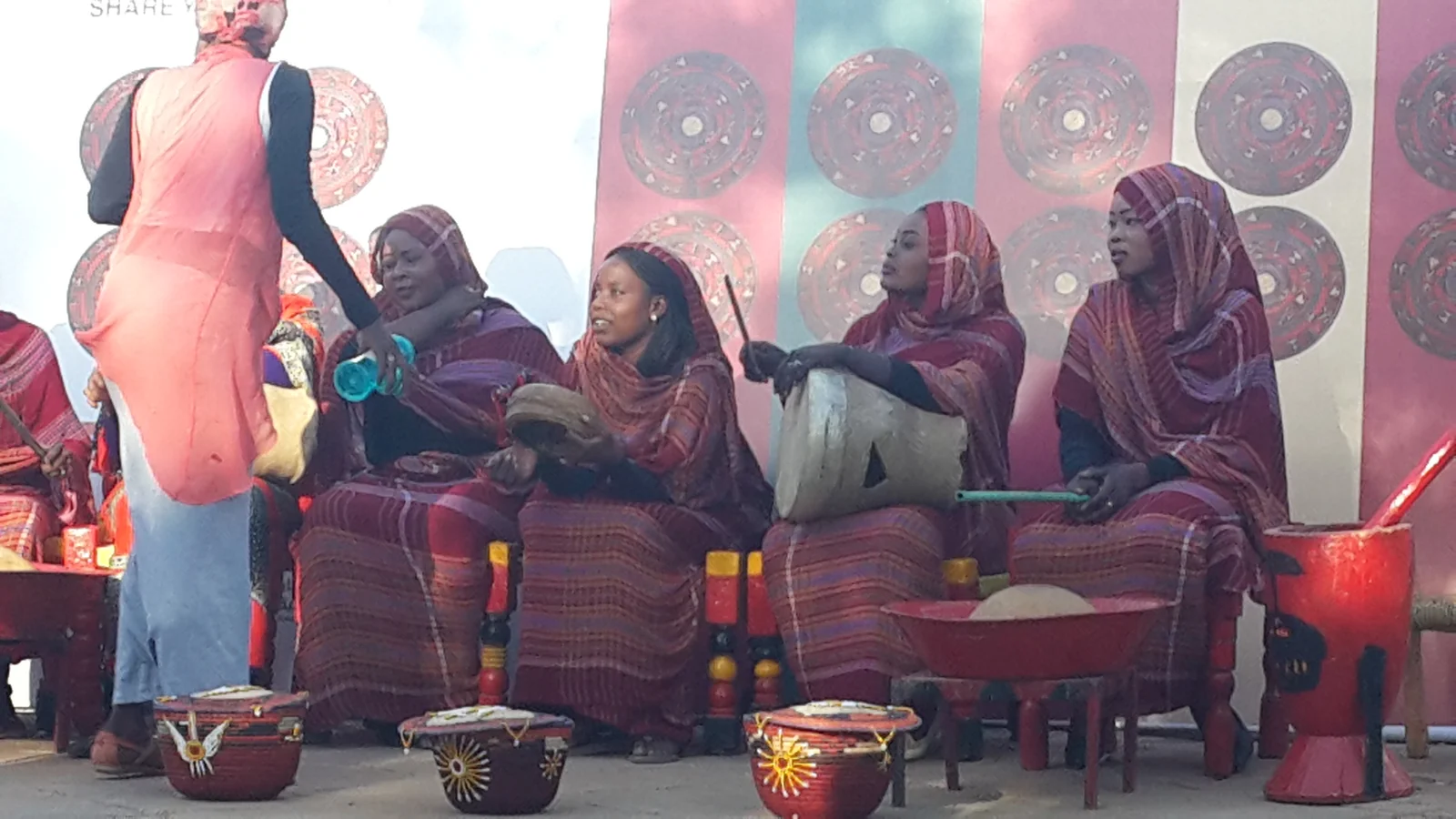
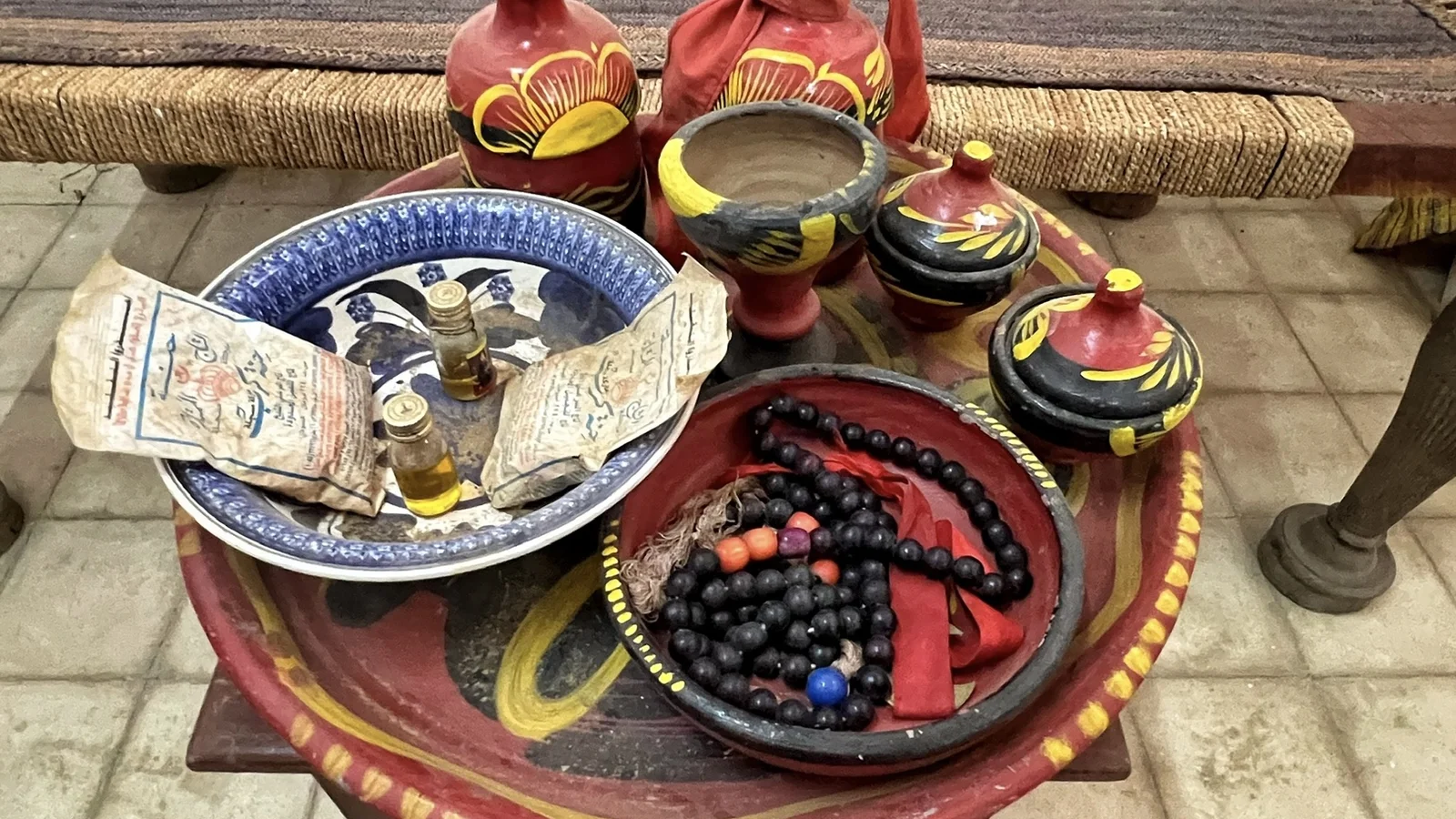
Tambour music is played at traditional village weddings and protective jertig ceremonies.
Songs tell sweet stories of palm trees, river life, and home memories.
Dancers form big circles and step together to the steady music beat.
During the autumn date harvest, farm families gather under palms for night music.
Young poets practice new song words at village tea stalls with friends.
Women sing sweet chorus notes and make joyful ululations during celebrations.
Modern Urban Transmission and Cultural Archiving
City musicians added electric pickups to play tambour in modern concert halls.
Famous singers like Mohamed Wardi shared tambour music on national radio.
Radio Omdurman broadcasts brought northern folk music to homes across Sudan.
University sound archives store thousands of hours of old song recordings.
Young players share video lessons online to teach traditional music to friends.
Heritage leaders work with UNESCO to record and protect traditional river songs.
A2 · Elementary
Tambour Music of Northern Sudan: Ancient Lyres, Riverine Poetry, and Living Communal Song
Across Nubian and Shaigiya palm groves, the five-stringed bowl lyre sustains oral poetry, wedding dances, and modern broadcast heritage.
Ancient Origins and Instrument Craftsmanship
The tambour is a traditional five-stringed bowl lyre that serves as the principal acoustic musical instrument across northern and riverine Sudan. Archaeological and iconographic evidence traces bowl lyres along the Middle Nile back to ancient Nubian and Meroitic kingdom wall representations. In riverine crafting settlements, instrument makers carve the hemispherical resonator bowl from seasoned acacia or desert date wood and cover it with stretched cow or camel rawhide.
Structurally, two diverging wooden arms pierce the leather soundboard and join a horizontal crossbar that anchors the strings above the resonator. The five strings are traditionally tightened around the crossbar using braided cloth tuning bands known as mashadd or friction wooden pegs. Artisanal workshops in Karima, Dongola, and Omdurman preserve generational carving techniques to construct bespoke acoustic tambour instruments.
Pentatonic Modal Systems and Performance Mechanics
Tambour music is grounded in an anhemitonic pentatonic scale that defines melodic structures across northern Sudanese oral poetry. Musicians play by rapidly strumming across all five strings with the right hand while the left fingers selectively damp unwanted strings to articulate melody. Tambour performances are propelled by interlocking polyrhythmic handclapping known as kaff, executed by chorus participants and audience members.
Rhythmic accompaniment is bolstered by circular frame drums known as tar or duff and resonant clay water jugs called daluka. Distinct regional styles differentiate the fast-paced driving syncopation of Shaigiya musicians from the contemplative lyrical cadences of Nubian players. Throughout each song, solo verses delivered by the lead tambour singer alternate antiphonally with collective choral refrains from the surrounding community.
Living Communal Rituals and Social Gatherings
Live tambour performance is an indispensable cultural element of traditional northern Sudanese weddings and protective jertig rituals. Tambour song poetry centers on pastoral riverine life, palm groves, romantic devotion, and the profound longing of migrants living in ghorba. These performances stimulate synchronized circle dancing where lines of community dancers advance and retreat in unison with the tambour pulse.
During the autumn date harvest along the Nile, communities gather under evening palm groves for extended tambour celebrations celebrating agricultural bounty. Informal open-air tea stalls and village courtyards serve as crucial incubation spaces where emerging poets test new tambour lyrics before public gatherings. Women sustain the musical texture by singing choral harmony, delivering festive ululations, and maintaining steady rhythmic handclaps throughout performances.
Modern Urban Transmission and Cultural Archiving
During the mid-twentieth century, urban musicians electrified the acoustic tambour by mounting magnetic pickups to perform in modern dance bands. Iconic recording artists such as Mohamed Wardi, Hamad El-Rayah, and Mohamed Jabbara popularized northern tambour traditions across the national airwaves. Radio Omdurman folk music broadcasts transmitted regional tambour recordings nationwide, transforming localized riverine genres into recognized national heritage.
The Institute of African and Asian Studies preserves thousands of hours of historical field recordings documenting diverse tambour repertoires and regional dialects. Contemporary youth musicians utilize social media and streaming video platforms to share acoustic tambour tutorials and collaborate across the diaspora. Sudan's cultural heritage authorities collaborate with UNESCO to conduct community inventory workshops aimed at safeguarding endangered riverine musical traditions.
B1 · Intermediate
Middle Nile Organology, Pentatonic Modes, and Communal Performance in Northern Sudan
An analytical study of acacia bowl lutes, kaff polyrhythmic clapping, seasonal date harvest poetry, and national radio archives.
Ancient Origins and Instrument Craftsmanship
The tambour is a traditional five-stringed bowl lyre that serves as the principal acoustic musical instrument across northern and riverine Sudan. Archaeological and iconographic evidence traces bowl lyres along the Middle Nile back to ancient Nubian and Meroitic kingdom wall representations. In riverine crafting settlements, instrument makers carve the hemispherical resonator bowl from seasoned acacia or desert date wood and cover it with stretched cow or camel rawhide.
Structurally, two diverging wooden arms pierce the leather soundboard and join a horizontal crossbar that anchors the strings above the resonator. The five strings are traditionally tightened around the crossbar using braided cloth tuning bands known as mashadd or friction wooden pegs. Artisanal workshops in Karima, Dongola, and Omdurman preserve generational carving techniques to construct bespoke acoustic tambour instruments.
Pentatonic Modal Systems and Performance Mechanics
Tambour music is grounded in an anhemitonic pentatonic scale that defines melodic structures across northern Sudanese oral poetry. Musicians play by rapidly strumming across all five strings with the right hand while the left fingers selectively damp unwanted strings to articulate melody. Tambour performances are propelled by interlocking polyrhythmic handclapping known as kaff, executed by chorus participants and audience members.
Rhythmic accompaniment is bolstered by circular frame drums known as tar or duff and resonant clay water jugs called daluka. Distinct regional styles differentiate the fast-paced driving syncopation of Shaigiya musicians from the contemplative lyrical cadences of Nubian players. Throughout each song, solo verses delivered by the lead tambour singer alternate antiphonally with collective choral refrains from the surrounding community.
Living Communal Rituals and Social Gatherings
Live tambour performance is an indispensable cultural element of traditional northern Sudanese weddings and protective jertig rituals. Tambour song poetry centers on pastoral riverine life, palm groves, romantic devotion, and the profound longing of migrants living in ghorba. These performances stimulate synchronized circle dancing where lines of community dancers advance and retreat in unison with the tambour pulse.
During the autumn date harvest along the Nile, communities gather under evening palm groves for extended tambour celebrations celebrating agricultural bounty. Informal open-air tea stalls and village courtyards serve as crucial incubation spaces where emerging poets test new tambour lyrics before public gatherings. Women sustain the musical texture by singing choral harmony, delivering festive ululations, and maintaining steady rhythmic handclaps throughout performances.
Modern Urban Transmission and Cultural Archiving
During the mid-twentieth century, urban musicians electrified the acoustic tambour by mounting magnetic pickups to perform in modern dance bands. Iconic recording artists such as Mohamed Wardi, Hamad El-Rayah, and Mohamed Jabbara popularized northern tambour traditions across the national airwaves. Radio Omdurman folk music broadcasts transmitted regional tambour recordings nationwide, transforming localized riverine genres into recognized national heritage.
The Institute of African and Asian Studies preserves thousands of hours of historical field recordings documenting diverse tambour repertoires and regional dialects. Contemporary youth musicians utilize social media and streaming video platforms to share acoustic tambour tutorials and collaborate across the diaspora. Sudan's cultural heritage authorities collaborate with UNESCO to conduct community inventory workshops aimed at safeguarding endangered riverine musical traditions.
B2 · Upper Intermediate
Acoustic Organology, Antiphonal Performance, and Living Heritage Transmission of the Tambour
Investigating rawhide soundboard acoustics, regional Shaigiya syncopation, protective jertig rituals, and university ethnomusicology archives.
Ancient Origins and Instrument Craftsmanship
The tambour is a traditional five-stringed bowl lyre that serves as the principal acoustic musical instrument across northern and riverine Sudan. Archaeological and iconographic evidence traces bowl lyres along the Middle Nile back to ancient Nubian and Meroitic kingdom wall representations. In riverine crafting settlements, instrument makers carve the hemispherical resonator bowl from seasoned acacia or desert date wood and cover it with stretched cow or camel rawhide.
Structurally, two diverging wooden arms pierce the leather soundboard and join a horizontal crossbar that anchors the strings above the resonator. The five strings are traditionally tightened around the crossbar using braided cloth tuning bands known as mashadd or friction wooden pegs. Artisanal workshops in Karima, Dongola, and Omdurman preserve generational carving techniques to construct bespoke acoustic tambour instruments.
Pentatonic Modal Systems and Performance Mechanics
Tambour music is grounded in an anhemitonic pentatonic scale that defines melodic structures across northern Sudanese oral poetry. Musicians play by rapidly strumming across all five strings with the right hand while the left fingers selectively damp unwanted strings to articulate melody. Tambour performances are propelled by interlocking polyrhythmic handclapping known as kaff, executed by chorus participants and audience members.
Rhythmic accompaniment is bolstered by circular frame drums known as tar or duff and resonant clay water jugs called daluka. Distinct regional styles differentiate the fast-paced driving syncopation of Shaigiya musicians from the contemplative lyrical cadences of Nubian players. Throughout each song, solo verses delivered by the lead tambour singer alternate antiphonally with collective choral refrains from the surrounding community.
Living Communal Rituals and Social Gatherings
Live tambour performance is an indispensable cultural element of traditional northern Sudanese weddings and protective jertig rituals. Tambour song poetry centers on pastoral riverine life, palm groves, romantic devotion, and the profound longing of migrants living in ghorba. These performances stimulate synchronized circle dancing where lines of community dancers advance and retreat in unison with the tambour pulse.
During the autumn date harvest along the Nile, communities gather under evening palm groves for extended tambour celebrations celebrating agricultural bounty. Informal open-air tea stalls and village courtyards serve as crucial incubation spaces where emerging poets test new tambour lyrics before public gatherings. Women sustain the musical texture by singing choral harmony, delivering festive ululations, and maintaining steady rhythmic handclaps throughout performances.
Modern Urban Transmission and Cultural Archiving
During the mid-twentieth century, urban musicians electrified the acoustic tambour by mounting magnetic pickups to perform in modern dance bands. Iconic recording artists such as Mohamed Wardi, Hamad El-Rayah, and Mohamed Jabbara popularized northern tambour traditions across the national airwaves. Radio Omdurman folk music broadcasts transmitted regional tambour recordings nationwide, transforming localized riverine genres into recognized national heritage.
The Institute of African and Asian Studies preserves thousands of hours of historical field recordings documenting diverse tambour repertoires and regional dialects. Contemporary youth musicians utilize social media and streaming video platforms to share acoustic tambour tutorials and collaborate across the diaspora. Sudan's cultural heritage authorities collaborate with UNESCO to conduct community inventory workshops aimed at safeguarding endangered riverine musical traditions.
C1 · Advanced
Organological Morphology, Pentatonic Modal Systems, and Communal Ethnomusicology of the Northern Sudanese Lyre
A critical examination of Meroitic iconographic lineages, finger-damping mechanics, antiphonal chorus dynamics, and urban electrification evolution.
Ancient Origins and Instrument Craftsmanship
The tambour is a traditional five-stringed bowl lyre that serves as the principal acoustic musical instrument across northern and riverine Sudan. Archaeological and iconographic evidence traces bowl lyres along the Middle Nile back to ancient Nubian and Meroitic kingdom wall representations. In riverine crafting settlements, instrument makers carve the hemispherical resonator bowl from seasoned acacia or desert date wood and cover it with stretched cow or camel rawhide.
Structurally, two diverging wooden arms pierce the leather soundboard and join a horizontal crossbar that anchors the strings above the resonator. The five strings are traditionally tightened around the crossbar using braided cloth tuning bands known as mashadd or friction wooden pegs. Artisanal workshops in Karima, Dongola, and Omdurman preserve generational carving techniques to construct bespoke acoustic tambour instruments.
Pentatonic Modal Systems and Performance Mechanics
Tambour music is grounded in an anhemitonic pentatonic scale that defines melodic structures across northern Sudanese oral poetry. Musicians play by rapidly strumming across all five strings with the right hand while the left fingers selectively damp unwanted strings to articulate melody. Tambour performances are propelled by interlocking polyrhythmic handclapping known as kaff, executed by chorus participants and audience members.
Rhythmic accompaniment is bolstered by circular frame drums known as tar or duff and resonant clay water jugs called daluka. Distinct regional styles differentiate the fast-paced driving syncopation of Shaigiya musicians from the contemplative lyrical cadences of Nubian players. Throughout each song, solo verses delivered by the lead tambour singer alternate antiphonally with collective choral refrains from the surrounding community.
Living Communal Rituals and Social Gatherings
Live tambour performance is an indispensable cultural element of traditional northern Sudanese weddings and protective jertig rituals. Tambour song poetry centers on pastoral riverine life, palm groves, romantic devotion, and the profound longing of migrants living in ghorba. These performances stimulate synchronized circle dancing where lines of community dancers advance and retreat in unison with the tambour pulse.
During the autumn date harvest along the Nile, communities gather under evening palm groves for extended tambour celebrations celebrating agricultural bounty. Informal open-air tea stalls and village courtyards serve as crucial incubation spaces where emerging poets test new tambour lyrics before public gatherings. Women sustain the musical texture by singing choral harmony, delivering festive ululations, and maintaining steady rhythmic handclaps throughout performances.
Modern Urban Transmission and Cultural Archiving
During the mid-twentieth century, urban musicians electrified the acoustic tambour by mounting magnetic pickups to perform in modern dance bands. Iconic recording artists such as Mohamed Wardi, Hamad El-Rayah, and Mohamed Jabbara popularized northern tambour traditions across the national airwaves. Radio Omdurman folk music broadcasts transmitted regional tambour recordings nationwide, transforming localized riverine genres into recognized national heritage.
The Institute of African and Asian Studies preserves thousands of hours of historical field recordings documenting diverse tambour repertoires and regional dialects. Contemporary youth musicians utilize social media and streaming video platforms to share acoustic tambour tutorials and collaborate across the diaspora. Sudan's cultural heritage authorities collaborate with UNESCO to conduct community inventory workshops aimed at safeguarding endangered riverine musical traditions.
C2 · Mastery
Middle Nile Organology, Anhemitonic Pentatonic Kinetics, and Intangible Oral Heritage of the Tambour
A comprehensive analytical monograph detailing acacia resonator fabrication, polyrhythmic kaff metrics, ghorba diaspora poetics, and sound archiving.
Ancient Origins and Instrument Craftsmanship
The tambour is a traditional five-stringed bowl lyre that serves as the principal acoustic musical instrument across northern and riverine Sudan. Archaeological and iconographic evidence traces bowl lyres along the Middle Nile back to ancient Nubian and Meroitic kingdom wall representations. In riverine crafting settlements, instrument makers carve the hemispherical resonator bowl from seasoned acacia or desert date wood and cover it with stretched cow or camel rawhide.
Structurally, two diverging wooden arms pierce the leather soundboard and join a horizontal crossbar that anchors the strings above the resonator. The five strings are traditionally tightened around the crossbar using braided cloth tuning bands known as mashadd or friction wooden pegs. Artisanal workshops in Karima, Dongola, and Omdurman preserve generational carving techniques to construct bespoke acoustic tambour instruments.
Pentatonic Modal Systems and Performance Mechanics
Tambour music is grounded in an anhemitonic pentatonic scale that defines melodic structures across northern Sudanese oral poetry. Musicians play by rapidly strumming across all five strings with the right hand while the left fingers selectively damp unwanted strings to articulate melody. Tambour performances are propelled by interlocking polyrhythmic handclapping known as kaff, executed by chorus participants and audience members.
Rhythmic accompaniment is bolstered by circular frame drums known as tar or duff and resonant clay water jugs called daluka. Distinct regional styles differentiate the fast-paced driving syncopation of Shaigiya musicians from the contemplative lyrical cadences of Nubian players. Throughout each song, solo verses delivered by the lead tambour singer alternate antiphonally with collective choral refrains from the surrounding community.
Living Communal Rituals and Social Gatherings
Live tambour performance is an indispensable cultural element of traditional northern Sudanese weddings and protective jertig rituals. Tambour song poetry centers on pastoral riverine life, palm groves, romantic devotion, and the profound longing of migrants living in ghorba. These performances stimulate synchronized circle dancing where lines of community dancers advance and retreat in unison with the tambour pulse.
During the autumn date harvest along the Nile, communities gather under evening palm groves for extended tambour celebrations celebrating agricultural bounty. Informal open-air tea stalls and village courtyards serve as crucial incubation spaces where emerging poets test new tambour lyrics before public gatherings. Women sustain the musical texture by singing choral harmony, delivering festive ululations, and maintaining steady rhythmic handclaps throughout performances.
Modern Urban Transmission and Cultural Archiving
During the mid-twentieth century, urban musicians electrified the acoustic tambour by mounting magnetic pickups to perform in modern dance bands. Iconic recording artists such as Mohamed Wardi, Hamad El-Rayah, and Mohamed Jabbara popularized northern tambour traditions across the national airwaves. Radio Omdurman folk music broadcasts transmitted regional tambour recordings nationwide, transforming localized riverine genres into recognized national heritage.
The Institute of African and Asian Studies preserves thousands of hours of historical field recordings documenting diverse tambour repertoires and regional dialects. Contemporary youth musicians utilize social media and streaming video platforms to share acoustic tambour tutorials and collaborate across the diaspora. Sudan's cultural heritage authorities collaborate with UNESCO to conduct community inventory workshops aimed at safeguarding endangered riverine musical traditions.
Check your understanding
Choose how closely you want to revisit the article. You can refer back while answering, and review explanations when you finish.
Quick Quiz A1
Try one question, then create a free account for the full Quick Quiz. Sign Up Free
Answer every question before checking. There is no time limit.
Your results
/ 1 correct (%)
Read the explanations to see how each answer connects to the article.
-
What kind of musical instrument is the tambour?
1. Answer:
Quick Quiz A2
Try one question, then create a free account for the full Quick Quiz. Sign Up Free
Answer every question before checking. There is no time limit.
Your results
/ 1 correct (%)
Read the explanations to see how each answer connects to the article.
-
What type of traditional musical instrument is the Sudanese tambour?
1. Answer:
Quick Quiz B1
Try one question, then create a free account for the full Quick Quiz. Sign Up Free
Answer every question before checking. There is no time limit.
Your results
/ 1 correct (%)
Read the explanations to see how each answer connects to the article.
-
What type of traditional musical instrument is the Sudanese tambour?
1. Answer:
Quick Quiz B2
Try one question, then create a free account for the full Quick Quiz. Sign Up Free
Answer every question before checking. There is no time limit.
Your results
/ 1 correct (%)
Read the explanations to see how each answer connects to the article.
-
What type of traditional musical instrument is the Sudanese tambour?
1. Answer:
Quick Quiz C1
Try one question, then create a free account for the full Quick Quiz. Sign Up Free
Answer every question before checking. There is no time limit.
Your results
/ 1 correct (%)
Read the explanations to see how each answer connects to the article.
-
What type of traditional musical instrument is the Sudanese tambour?
1. Answer:
Quick Quiz C2
Try one question, then create a free account for the full Quick Quiz. Sign Up Free
Answer every question before checking. There is no time limit.
Your results
/ 1 correct (%)
Read the explanations to see how each answer connects to the article.
-
What type of traditional musical instrument is the Sudanese tambour?
1. Answer:
