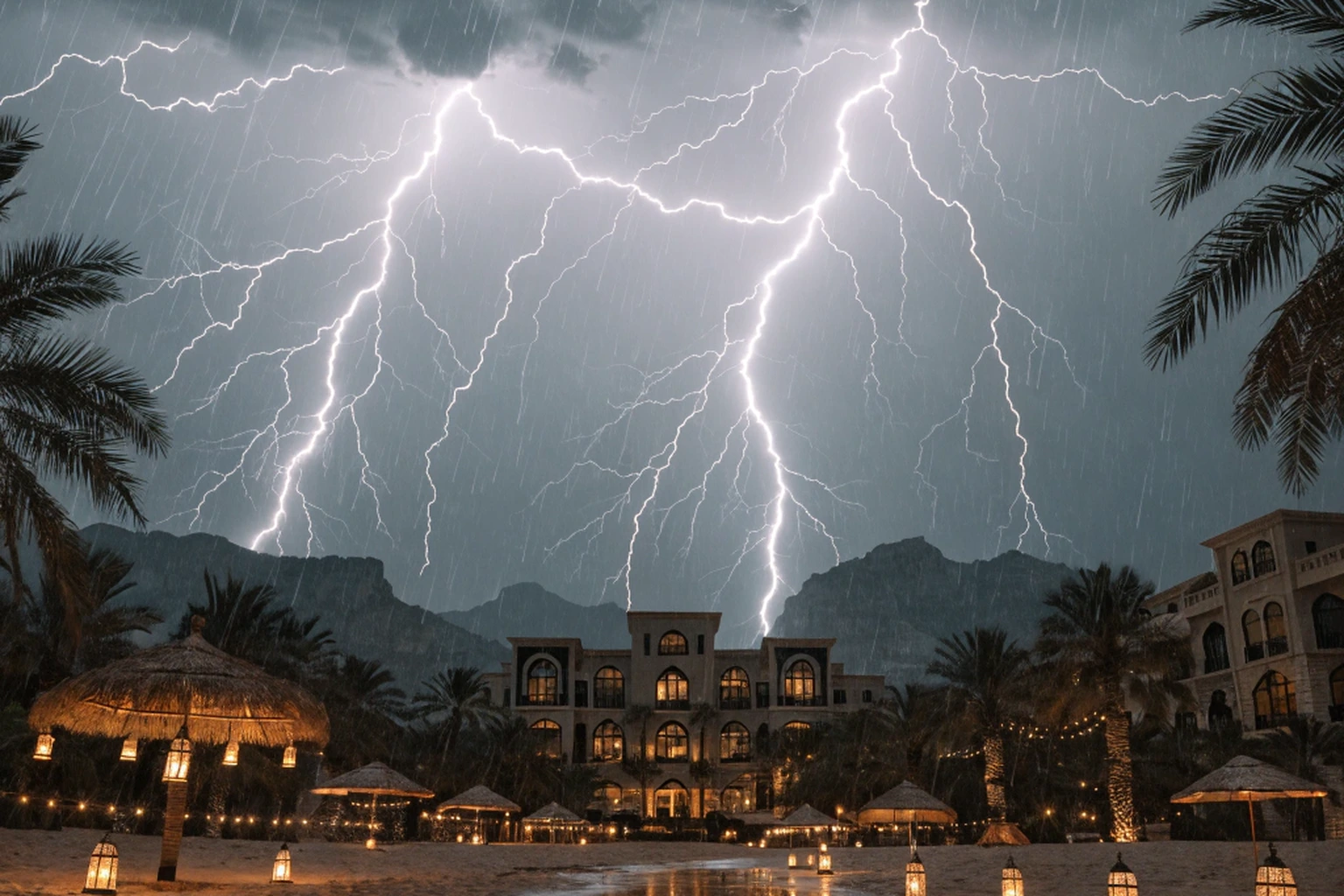
A New Time for Saudi Arabia
Saudi Arabia is changing. It is a big country with many new things. Now, many people visit Saudi Arabia for fun. They go to the Red Sea. They see beautiful fish. There is a new city. Its name is NEOM. It is very modern. People can see many concerts and movies. Saudi Arabia is open to the world. It is a happy place for tourists. You can visit the desert or the beach. It is a new time for the country. Many people are happy to see it.
Grammar Spotlight
Pattern: Present Simple (to be)
"Saudi Arabia is a big country."
We use 'is' with singular subjects like 'Saudi Arabia'. It describes a fact or a permanent state.
Pattern: Can for Possibility
"People can see many concerts and movies."
We use 'can' followed by a base verb to show what is possible. It does not change based on the subject.
Test Your Understanding
10 questions · A1 Beginner · 1 free preview
Test what you learned from this article. Answer all questions to earn XP!
Where can people see beautiful fish?
Want to finish the quiz?
9 more questions are waiting for you. Sign up free to unlock the full quiz and earn XP!
Sign Up FreeAlready have an account? Sign In
Question Breakdown
Where can people see beautiful fish?
Your answer:
Correct answer: In the Red Sea
NEOM is an old city.
Your answer:
Correct answer: False
What does 'tourist' mean?
Your answer:
Correct answer: A person who visits a place for fun
Saudi Arabia is a big _____.
Your answer:
Correct answer: country
Saudi Arabia: A New World of Travel and Fun
Saudi Arabia is changing very fast because of a big plan called Vision 2030. In the past, most people visited the country for religious reasons. They went to Makkah and Madinah. However, now the country is open to tourists from all over the world. It wants to welcome 100 million visitors every year.
There are many amazing new projects. One project is NEOM. It is a futuristic city with new technology. Another project is the Red Sea Project. This place is more beautiful than many other beaches because it has clear blue water and colorful fish. Tourists can swim and see the coral reefs.
Entertainment is also growing. A few years ago, there were no cinemas, but now there are many. There are also big music festivals and sports events. Life is more exciting now because there are many things to do with friends and family. Saudi Arabia is becoming a popular place for travel and fun.
Grammar Spotlight
Pattern: Past Simple
"In the past, most people visited the country for religious reasons."
We use the past simple to talk about things that finished in the past. To form it for regular verbs, we usually add '-ed' to the verb.
Pattern: Comparatives
"This place is more beautiful than many other beaches."
We use comparatives to compare two things. For long adjectives like 'beautiful', we use 'more' + adjective + 'than'.
Test Your Understanding
11 questions · A2 Elementary · 1 free preview
Test what you learned from this article. Answer all questions to earn XP!
Why is Saudi Arabia changing fast?
Want to finish the quiz?
10 more questions are waiting for you. Sign up free to unlock the full quiz and earn XP!
Sign Up FreeAlready have an account? Sign In
Question Breakdown
Why is Saudi Arabia changing fast?
Your answer:
Correct answer: Because of Vision 2030
NEOM is a futuristic city.
Your answer:
Correct answer: True
What does 'clear' mean?
Your answer:
Correct answer: Easy to see through
Saudi Arabia is becoming a _____ place for travel.
Your answer:
Correct answer: popular
How many visitors does the country want every year?
Your answer:
Correct answer: 100 million
Saudi Arabia: A New Destination for the World
Saudi Arabia has traditionally been known for its oil industry and religious tourism. For centuries, millions of people have visited the holy cities of Makkah and Madinah. However, things have changed rapidly over the last few years. Under the ambitious Vision 2030 framework, the country is transforming into a global hub for entertainment and leisure.
Several massive projects, which are known as 'Giga-projects,' have been started to attract visitors from all over the world. One famous example is NEOM, a futuristic city that is being built in the northwest. It is designed to be a center for innovation and sustainable living. Another incredible development is the Red Sea Project. This destination, which consists of many beautiful islands and coral reefs, offers luxury resorts for tourists who enjoy nature and diving.
The entertainment sector has also experienced a major revolution. In the past, there were very few public events, but now cinemas, concerts, and international sports competitions are held regularly. These events have been welcomed by the local population, especially the youth. As a result, many young Saudis have joined the workforce in these new industries. They are working as professional tour guides, event managers, and creative artists.
The National Tourism Strategy aims to attract 100 million visitors every year by 2030. This economic shift has created thousands of jobs and many new opportunities for international travelers. Saudi Arabia has opened its doors to the world, and people have already started to discover its unique culture and hidden treasures. It is truly an exciting time for the kingdom.
Grammar Spotlight
Pattern: Present Perfect Tense
"The entertainment sector has also experienced a major revolution."
The present perfect (have/has + past participle) is used here to describe an action that started in the past and has an effect on the present. It shows that the change is ongoing or recently completed.
Pattern: Passive Voice
"Several massive projects... have been started to attract visitors from all over the world."
The passive voice is used when the action is more important than who is doing it. It is formed using a form of 'to be' and the past participle of the verb.
Test Your Understanding
11 questions · B1 Intermediate · 1 free preview
Test what you learned from this article. Answer all questions to earn XP!
What is the main goal of the Vision 2030 framework regarding tourism?
Want to finish the quiz?
10 more questions are waiting for you. Sign up free to unlock the full quiz and earn XP!
Sign Up FreeAlready have an account? Sign In
Question Breakdown
What is the main goal of the Vision 2030 framework regarding tourism?
Your answer:
Correct answer: To transform the country into a global hub for entertainment and leisure
The Red Sea Project is located in the middle of the desert with no water.
Your answer:
Correct answer: False
What does 'sustainable' mean?
Your answer:
Correct answer: Able to continue without damaging the environment
Many young Saudis have joined the _____ in these new industries.
Your answer:
Correct answer: workforce
Which city is described as a futuristic center for innovation?
Your answer:
Correct answer: NEOM
Saudi Arabia's Vision 2030: A New Era of Global Tourism
For decades, the Kingdom of Saudi Arabia was primarily known as a destination for religious pilgrimages. Millions of visitors traveled to the holy cities of Makkah and Madinah every year. However, under the visionary framework of Vision 2030, the nation has been undergoing a historic economic transformation. This shift aims to move the economy away from its traditional reliance on oil through the diversification of its resources. One of the most significant pillars of this strategy is the opening of the country’s doors to international leisure tourism, which was previously quite limited.
Central to this revolution are several 'Giga-projects' that challenge the boundaries of modern engineering and urban planning. NEOM, a futuristic city being built in the northwest, is perhaps the most famous example. It is designed to be a global hub for innovation, powered entirely by renewable energy. Similarly, the Red Sea Project focuses on luxury and sustainability, offering visitors access to untouched islands and coral reefs while ensuring that the natural environment is protected. These projects represent a massive investment in infrastructure that is expected to attract 100 million visitors annually by the end of the decade.
Furthermore, the entertainment sector has experienced a remarkable boom. In the past, cultural events were relatively rare; however, the establishment of the General Entertainment Authority has changed the landscape completely. Major international music festivals, sporting events, and the famous Riyadh Season have now become staples of the Saudi social calendar. This cultural evolution not only provides locals with new leisure opportunities but also invites the world to experience Saudi heritage in a contemporary setting.
Nevertheless, such rapid growth requires careful management. The government is committed to ensuring that tourism development does not compromise the country’s unique cultural identity. By integrating traditional hospitality with modern amenities, Saudi Arabia is positioning itself as a premier global destination. While the journey is still ongoing, the progress made so far suggests that the tourism sector will be a cornerstone of the nation's future prosperity. Consequently, the world is watching closely as this ambitious vision becomes a reality.
Grammar Spotlight
Pattern: Present Perfect Continuous
"the nation has been undergoing a historic economic transformation."
This tense is used to describe an action that started in the past and is still continuing. It emphasizes the process and the duration of the change.
Pattern: Passive Voice (Continuous)
"NEOM, a futuristic city being built in the northwest"
The structure 'being + past participle' is used to show that an action is currently in progress from a passive perspective. It focuses on the city itself rather than the builders.
Pattern: Non-defining Relative Clauses
"international leisure tourism, which was previously quite limited."
This clause adds extra information about a noun (leisure tourism). It is separated by commas and uses 'which' to provide context that is not essential for the sentence to make sense.
Test Your Understanding
11 questions · B2 Upper Intermediate · 1 free preview
Test what you learned from this article. Answer all questions to earn XP!
What is the primary objective of Saudi Arabia's Vision 2030 mentioned in the text?
Want to finish the quiz?
10 more questions are waiting for you. Sign up free to unlock the full quiz and earn XP!
Sign Up FreeAlready have an account? Sign In
Question Breakdown
What is the primary objective of Saudi Arabia's Vision 2030 mentioned in the text?
Your answer:
Correct answer: To diversify the economy away from oil
NEOM is intended to be powered entirely by renewable energy.
Your answer:
Correct answer: True
What does 'sustainability' mean in the context of the Red Sea Project?
Your answer:
Correct answer: Protecting the environment for the future
The Red Sea Project focuses on luxury and _____, offering access to untouched islands.
Your answer:
Correct answer: sustainability
How many visitors does Saudi Arabia aim to attract annually by 2030?
Your answer:
Correct answer: 100 million
Beyond the Dunes: Deciphering Saudi Arabia’s Paradigm Shift in Leisure and Entertainment
For decades, the Saudi Arabian tourism sector remained tethered almost exclusively to the spiritual allure of Makkah and Madinah, serving as the primary destination for millions of religious pilgrims. However, under the ambitious auspices of Vision 2030, the Kingdom is currently orchestrating a socioeconomic metamorphosis that transcends mere infrastructure development. The diversification of the Saudi economy away from its historical petroleum hegemony is not merely a fiscal strategy designed to mitigate oil price volatility; it is a profound cultural recalibration. Seldom has the world witnessed such a rapid transition from a conservative, insular landscape to a burgeoning global hub for leisure, high-end hospitality, and international entertainment.
At the heart of this revolution lie the 'Giga-projects,' architectural and conceptual marvels that challenge the very foundations of conventional urban planning. NEOM, a cognitive city envisioned as a crucible for technological innovation and sustainable living, represents the vanguard of this new era. By integrating artificial intelligence into the fabric of daily life, NEOM aims to attract the world’s brightest minds. Similarly, the Red Sea Project seeks to establish a luxury ecotourism destination, balancing high-end hospitality with rigorous environmental preservation. It is the interplay between tradition and modernity that defines these initiatives, as the Kingdom navigates the delicate task of preserving its rich heritage while simultaneously embracing globalized entertainment norms.
Beyond the physical construction of cities, the entertainment sector has seen a liberalization that was previously unthinkable. The lifting of the 35-year ban on cinemas, the hosting of international music festivals, and the introduction of world-class sporting events—from Formula 1 to heavyweight boxing—all serve as a testament to this shift. These developments are not incidental; they are calculated moves to enhance the quality of life for Saudi citizens and to foster a vibrant domestic tourism market. The inception of the General Entertainment Authority has acted as a catalyst, streamlining the regulatory framework to allow for a diverse array of leisure activities that appeal to both locals and international visitors.
Notwithstanding the optimism surrounding these developments, the transition is not without its inherent complexities and critical considerations. Critics often point to the logistical hurdles of constructing entire cities in arid, challenging environments, as well as the necessity of ensuring genuine long-term environmental sustainability. Furthermore, the societal proclivity for change must be meticulously balanced against the preservation of deep-seated local identity. The fiscal commitment required is also staggering, with the Public Investment Fund (PIF) pouring billions into projects that may take decades to mature.
Yet, the catalyst for this change—the National Tourism Strategy—boldly aims for an unprecedented target of 100 million annual visitors by 2030. This goal, which would have been dismissed as inconceivable just a decade ago, underscores the Kingdom's resolve. Ultimately, the Saudi entertainment revolution serves as a compelling case study in state-led economic restructuring. By leveraging its unique geography and cultural assets, the Kingdom is not just building resorts; it is redefining its global brand in real-time. Whether this ambitious gambit will yield the desired socioeconomic dividends remains to be seen, but the sheer scale of the endeavor has already set a global precedent for national transformation that other resource-dependent nations are watching with keen interest.
Grammar Spotlight
Pattern: Negative Inversion
"Seldom has the world witnessed such a rapid transition from a conservative, insular landscape to a burgeoning global hub."
When using restrictive adverbs like 'seldom' or 'rarely' at the start of a sentence for emphasis, the auxiliary verb is placed before the subject. This is a common feature of formal, high-level English writing.
Pattern: Cleft Sentences
"It is the interplay between tradition and modernity that defines these initiatives."
Cleft sentences use 'It is/was... that' to focus on a specific part of the sentence. Here, it emphasizes that the 'interplay' is the most important defining factor.
Pattern: Nominalisation
"The diversification of the Saudi economy away from its historical petroleum hegemony is not merely a fiscal strategy."
Nominalisation involves turning verbs (to diversify) into nouns (diversification). This creates a more academic and concise tone, allowing for more complex ideas to be packed into a single clause.
Test Your Understanding
12 questions · C1 Advanced · 1 free preview
Test what you learned from this article. Answer all questions to earn XP!
What is the primary target for annual visitors by 2030 according to the National Tourism Strategy?
Want to finish the quiz?
11 more questions are waiting for you. Sign up free to unlock the full quiz and earn XP!
Sign Up FreeAlready have an account? Sign In
Question Breakdown
What is the primary target for annual visitors by 2030 according to the National Tourism Strategy?
Your answer:
Correct answer: 100 million
The transition in Saudi Arabia is described as being purely a fiscal strategy to manage oil prices.
Your answer:
Correct answer: False
Which word describes something that acts as a starting point for an institution?
Your answer:
Correct answer: Inception
The diversification of the Saudi economy away from its historical petroleum _____ is a central goal.
Your answer:
Correct answer: hegemony
How long was the ban on cinemas in Saudi Arabia before it was lifted?
Your answer:
Correct answer: 35 years
NEOM is described as a 'cognitive city' that integrates artificial intelligence.
Your answer:
Correct answer: True
The Saudi Renaissance: Navigating the Socio-Economic Metamorphosis of the Arabian Peninsula
The historical narrative of the Kingdom of Saudi Arabia has, for decades, been inextricably linked to the dual pillars of petroleum hegemony and religious stewardship. However, under the aegis of the ambitious Vision 2030 framework, a seismic paradigm shift is currently unfolding across the desert landscape. Seldom has a sovereign state embarked upon such a radical structural realignment with such celerity. The ostensible objective is clear: to decouple the nation’s fiscal destiny from the vicissitudes of the global oil market by fostering a robust, multifaceted tourism and entertainment sector. This transition represents not merely an economic diversification but a profound cultural reorientation that seeks to position the Kingdom as a global hub for leisure, innovation, and heritage.
At the vanguard of this revolution are the so-called 'Giga-projects,' which serve as the physical manifestations of this new ideology. NEOM, a planned cross-border city in the Tabuk Province, is intended to epitomize the fusion of hyper-modernity and ecological sustainability. It is not merely a city but a theoretical construct of what a post-carbon society might entail, featuring carbon-neutral urbanism and cutting-edge biotechnology. Similarly, the Red Sea Project seeks to establish an ultra-luxury archipelago that rivals the world’s most secluded destinations, emphasizing 'regenerative tourism' over traditional mass-market models. Were the Kingdom to falter in its pursuit of these Giga-projects, the socio-economic repercussions would be profound, yet the momentum currently appears inexorable, fueled by massive sovereign wealth investment.
This metamorphosis is not without its concomitant cultural complexities. The liberalization of the entertainment industry—subsuming everything from the reintroduction of public cinemas to the hosting of international music festivals—represents a departure from traditional social norms. It could be posited that the National Tourism Strategy serves as the linchpin of the broader Vision 2030 agenda, requiring an ameliorate approach to public diplomacy and international perception. By opening sites like AlUla, an ancient Nabataean marvel, the Kingdom is leveraging its historical depth to attract a demographic that values cultural authenticity alongside luxury. The challenge remains to balance these ubiquitous globalizing forces with the preservation of indigenous heritage, ensuring that the modernization process does not erode the very cultural fabric it seeks to showcase.
Furthermore, the ancillary benefits of this transition extend beyond mere revenue generation. The project aims to stimulate domestic employment and catalyze innovation in sectors previously dormant, such as hospitality, creative arts, and digital infrastructure. While some academic skeptics point to the environmental footprint of such gargantuan construction, the state maintains that these developments will set new global benchmarks for sustainable engineering. Ultimately, the success of this endeavor will hinge upon the state’s ability to navigate the delicate equilibrium between tradition and transformation. Whether this 'Saudi Renaissance' can maintain its current trajectory remains a subject of intense scholarly debate, yet its impact on the geopolitical and economic landscape of the Middle East is already indisputable.
Grammar Spotlight
Pattern: Negative Inversion
"Seldom has a sovereign state embarked upon such a radical structural realignment with such celerity."
Used for rhetorical emphasis, the auxiliary verb 'has' is placed before the subject 'a sovereign state' following the negative adverb 'seldom'.
Pattern: Inverted First Conditional (Subjunctive)
"Were the Kingdom to falter in its pursuit of these Giga-projects, the socio-economic repercussions would be profound."
This 'were to' construction is used to discuss a hypothetical future situation with a high degree of formality and academic distance.
Pattern: Academic Hedging
"It could be posited that the National Tourism Strategy serves as the linchpin of the broader Vision 2030 agenda."
The use of 'It could be posited that' allows the writer to make a claim without stating it as an absolute fact, common in scholarly prose.
Test Your Understanding
12 questions · C2 Mastery · 1 free preview
Test what you learned from this article. Answer all questions to earn XP!
What is the primary motivation for Saudi Arabia's economic shift according to the text?
Want to finish the quiz?
11 more questions are waiting for you. Sign up free to unlock the full quiz and earn XP!
Sign Up FreeAlready have an account? Sign In
Question Breakdown
What is the primary motivation for Saudi Arabia's economic shift according to the text?
Your answer:
Correct answer: To reduce dependence on oil market fluctuations
The article suggests that NEOM is intended only as a traditional residential city.
Your answer:
Correct answer: False
Which word is synonymous with 'accompanying' in the context of the article?
Your answer:
Correct answer: Concomitant
Seldom has a sovereign state embarked upon such a radical structural _____ with such celerity.
Your answer:
Correct answer: realignment
How does the article describe the 'Red Sea Project'?
Your answer:
Correct answer: An ultra-luxury model for regenerative tourism
The text posits that the tourism strategy is the central component of Vision 2030.
Your answer:
Correct answer: True
