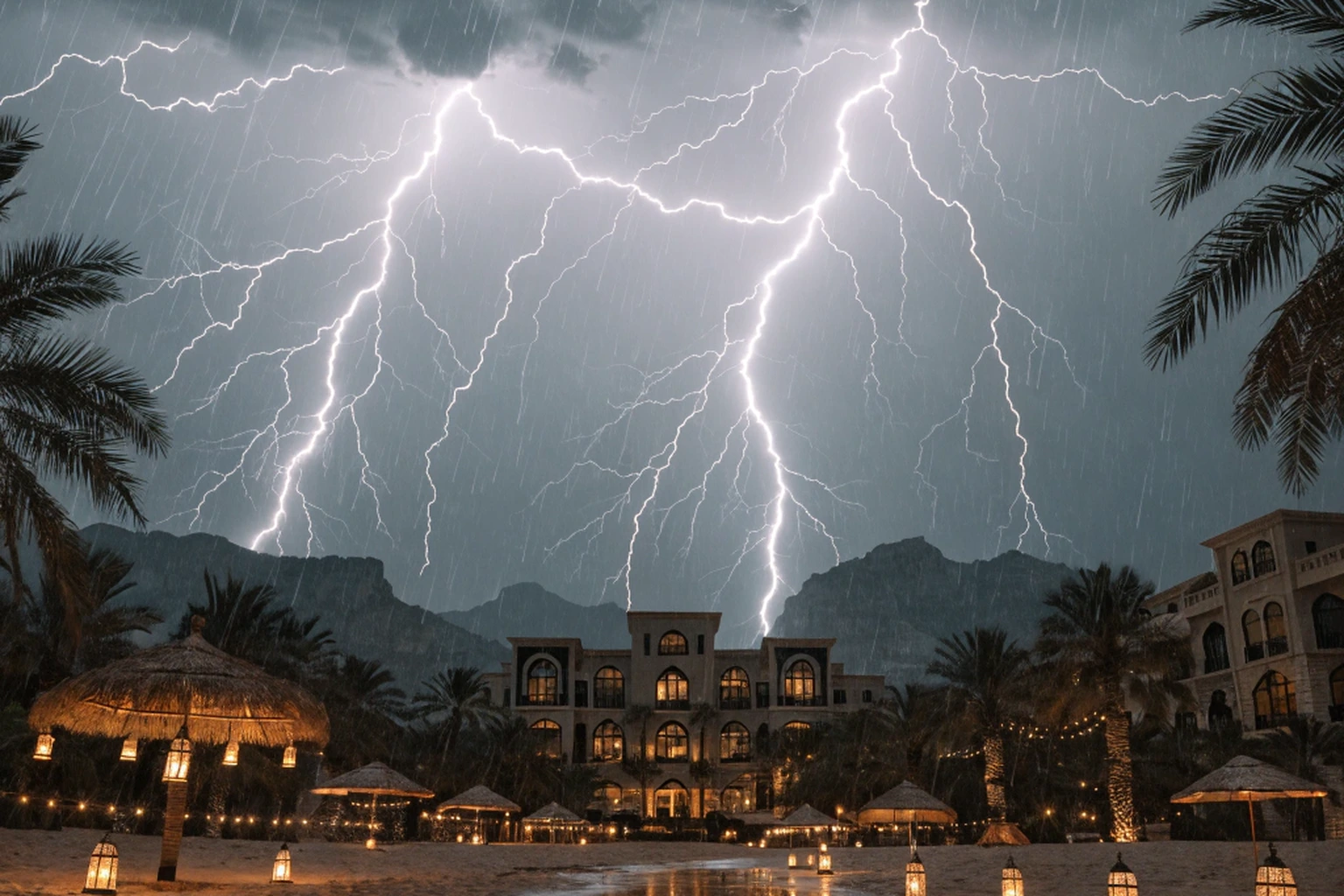
A New Time for Saudi Arabia
Saudi Arabia is changing. It is a big country with many new things. Now, many people visit Saudi Arabia for fun. They go to the Red Sea. They see beautiful fish. There is a new city. Its name is NEOM. It is very modern. People can see many concerts and movies. Saudi Arabia is open to the world. It is a happy place for tourists. You can visit the desert or the beach. It is a new time for the country. Many people are happy to see it.
Gramática destacada
Patrón: Present Simple (to be)
"Saudi Arabia is a big country."
We use 'is' with singular subjects like 'Saudi Arabia'. It describes a fact or a permanent state.
Patrón: Can for Possibility
"People can see many concerts and movies."
We use 'can' followed by a base verb to show what is possible. It does not change based on the subject.
Pon a prueba tu comprensión
10 preguntas · A1 Principiante · 1 vista previa gratis
Pon a prueba lo que aprendiste en este artículo. ¡Responde todas las preguntas para ganar XP!
Where can people see beautiful fish?
¿Quieres terminar el quiz?
9 preguntas más te esperan. ¡Regístrate gratis para desbloquear el quiz completo y ganar XP!
Regístrate gratis¿Ya tienes cuenta? Acceder
Desglose de preguntas
Where can people see beautiful fish?
Tu respuesta:
Respuesta correcta: In the Red Sea
NEOM is an old city.
Tu respuesta:
Respuesta correcta: Falso
What does 'tourist' mean?
Tu respuesta:
Respuesta correcta: A person who visits a place for fun
Saudi Arabia is a big _____.
Tu respuesta:
Respuesta correcta: country
Saudi Arabia: A New World of Travel and Fun
Saudi Arabia is changing very fast because of a big plan called Vision 2030. In the past, most people visited the country for religious reasons. They went to Makkah and Madinah. However, now the country is open to tourists from all over the world. It wants to welcome 100 million visitors every year.
There are many amazing new projects. One project is NEOM. It is a futuristic city with new technology. Another project is the Red Sea Project. This place is more beautiful than many other beaches because it has clear blue water and colorful fish. Tourists can swim and see the coral reefs.
Entertainment is also growing. A few years ago, there were no cinemas, but now there are many. There are also big music festivals and sports events. Life is more exciting now because there are many things to do with friends and family. Saudi Arabia is becoming a popular place for travel and fun.
Gramática destacada
Patrón: Past Simple
"In the past, most people visited the country for religious reasons."
We use the past simple to talk about things that finished in the past. To form it for regular verbs, we usually add '-ed' to the verb.
Patrón: Comparatives
"This place is more beautiful than many other beaches."
We use comparatives to compare two things. For long adjectives like 'beautiful', we use 'more' + adjective + 'than'.
Pon a prueba tu comprensión
11 preguntas · A2 Básico · 1 vista previa gratis
Pon a prueba lo que aprendiste en este artículo. ¡Responde todas las preguntas para ganar XP!
Why is Saudi Arabia changing fast?
¿Quieres terminar el quiz?
10 preguntas más te esperan. ¡Regístrate gratis para desbloquear el quiz completo y ganar XP!
Regístrate gratis¿Ya tienes cuenta? Acceder
Desglose de preguntas
Why is Saudi Arabia changing fast?
Tu respuesta:
Respuesta correcta: Because of Vision 2030
NEOM is a futuristic city.
Tu respuesta:
Respuesta correcta: Verdadero
What does 'clear' mean?
Tu respuesta:
Respuesta correcta: Easy to see through
Saudi Arabia is becoming a _____ place for travel.
Tu respuesta:
Respuesta correcta: popular
How many visitors does the country want every year?
Tu respuesta:
Respuesta correcta: 100 million
Arabia Saudita: Una Nueva Era para el Turismo
Arabia Saudita, un país con una rica historia y cultura, ha iniciado una transformación ambiciosa bajo su 'Visión 2030'. Históricamente, el turismo en la región se ha centrado casi exclusivamente en las peregrinaciones religiosas a ciudades sagradas como La Meca y Medina. Sin embargo, esta situación está cambiando rápidamente.
El gobierno saudí tiene un plan audaz para diversificar su economía y reducir la dependencia del petróleo. Parte fundamental de este plan es la Estrategia Nacional de Turismo, que busca atraer a 100 millones de visitantes internacionales cada año para el año 2030. Esto representa un cambio significativo, ya que el país está abriendo sus puertas al turismo de ocio y entretenimiento, algo que antes no era su prioridad.
Para lograr este objetivo, se han creado varios 'megaproyectos' impresionantes. Uno de los más conocidos es NEOM, una ciudad futurista diseñada para ser un centro de innovación y tecnología. Otro proyecto importante es 'The Red Sea Project', un destino de lujo que se está construyendo a lo largo de la costa del Mar Rojo, con islas vírgenes y paisajes espectaculares. Estos lugares no solo ofrecerán experiencias únicas a los turistas, sino que también generarán miles de empleos y oportunidades para la población local.
Esta revolución turística no solo es económica; también está permitiendo que el mundo descubra una faceta diferente de Arabia Saudita. La cultura, la hospitalidad y la belleza natural del país ahora están siendo mostradas a una audiencia global, marcando el inicio de una nueva era para el turismo y el entretenimiento en la región.
Gramática destacada
Patrón: El Presente Perfecto (Pretérito Perfecto Compuesto)
"Arabia Saudita, un país con una rica historia y cultura, ha iniciado una transformación ambiciosa."
Usamos el presente perfecto para hablar de acciones pasadas que tienen una conexión o relevancia en el presente. Se forma con el verbo 'haber' en presente (he, has, ha, hemos, habéis, han) y el participio pasado del verbo principal (terminaciones -ado, -ido).
Patrón: La Voz Pasiva
"Para lograr este objetivo, se han creado varios 'megaproyectos' impresionantes."
La voz pasiva se usa para dar importancia a la acción o al objeto de la acción, no a quién la realiza. En español, a menudo se forma con el verbo 'ser' y un participio pasado, o con 'se' + el verbo en tercera persona. Aquí, enfatiza que los proyectos existen como resultado de una acción.
Pon a prueba tu comprensión
11 preguntas · B1 Intermedio · 1 vista previa gratis
Pon a prueba lo que aprendiste en este artículo. ¡Responde todas las preguntas para ganar XP!
¿Cuál es el objetivo principal de la 'Visión 2030' de Arabia Saudita?
¿Quieres terminar el quiz?
10 preguntas más te esperan. ¡Regístrate gratis para desbloquear el quiz completo y ganar XP!
Regístrate gratis¿Ya tienes cuenta? Acceder
Desglose de preguntas
¿Cuál es el objetivo principal de la 'Visión 2030' de Arabia Saudita?
Tu respuesta:
Respuesta correcta: Diversificar la economía y reducir la dependencia del petróleo.
Históricamente, el turismo en Arabia Saudita se ha enfocado principalmente en el ocio y el entretenimiento.
Tu respuesta:
Respuesta correcta: Falso
¿Qué significa la palabra 'diversificar' en el contexto del artículo?
Tu respuesta:
Respuesta correcta: Hacer algo más variado o diferente.
NEOM es una ciudad _____ diseñada para ser un centro de innovación.
Tu respuesta:
Respuesta correcta: futurista
¿Cuántos visitantes internacionales planea atraer Arabia Saudita para el año 2030?
Tu respuesta:
Respuesta correcta: 100 millones
Saudi Arabia's Vision 2030: A New Era of Global Tourism
For decades, the Kingdom of Saudi Arabia was primarily known as a destination for religious pilgrimages. Millions of visitors traveled to the holy cities of Makkah and Madinah every year. However, under the visionary framework of Vision 2030, the nation has been undergoing a historic economic transformation. This shift aims to move the economy away from its traditional reliance on oil through the diversification of its resources. One of the most significant pillars of this strategy is the opening of the country’s doors to international leisure tourism, which was previously quite limited.
Central to this revolution are several 'Giga-projects' that challenge the boundaries of modern engineering and urban planning. NEOM, a futuristic city being built in the northwest, is perhaps the most famous example. It is designed to be a global hub for innovation, powered entirely by renewable energy. Similarly, the Red Sea Project focuses on luxury and sustainability, offering visitors access to untouched islands and coral reefs while ensuring that the natural environment is protected. These projects represent a massive investment in infrastructure that is expected to attract 100 million visitors annually by the end of the decade.
Furthermore, the entertainment sector has experienced a remarkable boom. In the past, cultural events were relatively rare; however, the establishment of the General Entertainment Authority has changed the landscape completely. Major international music festivals, sporting events, and the famous Riyadh Season have now become staples of the Saudi social calendar. This cultural evolution not only provides locals with new leisure opportunities but also invites the world to experience Saudi heritage in a contemporary setting.
Nevertheless, such rapid growth requires careful management. The government is committed to ensuring that tourism development does not compromise the country’s unique cultural identity. By integrating traditional hospitality with modern amenities, Saudi Arabia is positioning itself as a premier global destination. While the journey is still ongoing, the progress made so far suggests that the tourism sector will be a cornerstone of the nation's future prosperity. Consequently, the world is watching closely as this ambitious vision becomes a reality.
Gramática destacada
Patrón: Present Perfect Continuous
"the nation has been undergoing a historic economic transformation."
This tense is used to describe an action that started in the past and is still continuing. It emphasizes the process and the duration of the change.
Patrón: Passive Voice (Continuous)
"NEOM, a futuristic city being built in the northwest"
The structure 'being + past participle' is used to show that an action is currently in progress from a passive perspective. It focuses on the city itself rather than the builders.
Patrón: Non-defining Relative Clauses
"international leisure tourism, which was previously quite limited."
This clause adds extra information about a noun (leisure tourism). It is separated by commas and uses 'which' to provide context that is not essential for the sentence to make sense.
Pon a prueba tu comprensión
11 preguntas · B2 Intermedio alto · 1 vista previa gratis
Pon a prueba lo que aprendiste en este artículo. ¡Responde todas las preguntas para ganar XP!
What is the primary objective of Saudi Arabia's Vision 2030 mentioned in the text?
¿Quieres terminar el quiz?
10 preguntas más te esperan. ¡Regístrate gratis para desbloquear el quiz completo y ganar XP!
Regístrate gratis¿Ya tienes cuenta? Acceder
Desglose de preguntas
What is the primary objective of Saudi Arabia's Vision 2030 mentioned in the text?
Tu respuesta:
Respuesta correcta: To diversify the economy away from oil
NEOM is intended to be powered entirely by renewable energy.
Tu respuesta:
Respuesta correcta: Verdadero
What does 'sustainability' mean in the context of the Red Sea Project?
Tu respuesta:
Respuesta correcta: Protecting the environment for the future
The Red Sea Project focuses on luxury and _____, offering access to untouched islands.
Tu respuesta:
Respuesta correcta: sustainability
How many visitors does Saudi Arabia aim to attract annually by 2030?
Tu respuesta:
Respuesta correcta: 100 million
Arabia Saudita: De la Peregrinación al Ocio Global, una Revolución sin Precedentes
Bajo el paraguas de su ambiciosa Visión 2030, Arabia Saudita se halla inmersa en una transformación económica efervescente, abriendo sus puertas de par en par a un turismo internacional de ocio que, hasta hace poco, le era ajeno. Históricamente, el atractivo del reino se cimentaba casi exclusivamente en la preeminencia de sus lugares sagrados, Makkah y Madinah, destinos de peregrinación para millones de fieles. Sin embargo, lo que hoy se persigue es una diversificación estratégica que redefina la identidad turística del país, proyectándolo como un epicentro global de entretenimiento y cultura.
La Estrategia Nacional de Turismo, piedra angular de este giro, aspira a atraer la asombrosa cifra de 100 millones de visitantes anuales para el año 2030. Tal objetivo se sustenta en una serie de 'megaproyectos' o 'gigaproyectos' de una escala y ambición sin precedentes. Entre ellos, NEOM destaca como una ciudad futurista y vanguardista, concebida para ser un crisol de innovación y un laboratorio viviente para las tecnologías del mañana. Del mismo modo, el Proyecto Mar Rojo, con su enfoque en el lujo sostenible y la preservación de la biodiversidad marina, promete ofrecer experiencias de ocio exclusivas en un entorno prístino.
No es solo la magnitud de la inversión lo que asombra, sino la velocidad a la que estas iniciativas toman forma y la complejidad inherente a su ejecución. Este cambio de paradigma implica un desafío considerable, no solo en términos de infraestructura y logística, sino también en la adaptación cultural y social. La cuestión de cómo integrar una afluencia masiva de turistas internacionales con las tradiciones y valores profundamente arraigados del reino es central y requiere una planificación meticulosa. Aquí, la sostenibilidad, tanto ecológica como social, emerge como un eje discursivo crucial. Lo que se busca es un desarrollo que sea intrínsecamente respetuoso con el entorno natural y cultural, que no comprometa los recursos ni la identidad para las futuras generaciones, un equilibrio delicado que definirá el éxito a largo plazo de esta empresa.
Más allá de los resorts de lujo y las ciudades inteligentes, la revolución saudí abarca también el sector del entretenimiento como un pilar fundamental para el atractivo del país. La introducción de festivales de música internacionales, eventos deportivos de talla mundial y la paulatina apertura de cines, impensable hace una década, son solo algunas de las manifestaciones de este dinamismo cultural. Es la creación de un ecosistema vibrante y diversificado lo que se propulsa, no solo con el fin de retener el gasto interno que antes se fugaba al extranjero, sino también para mejorar la calidad de vida de sus ciudadanos y atraer capital y talento foráneos. La diversificación económica, en última instancia, es el verdadero motor de esta audaz estrategia, buscando reducir la dependencia del petróleo y forjar un futuro más resiliente.
Evidentemente, el camino hacia la consecución de estos ambiciosos objetivos no está exento de obstáculos. La reputación internacional, la competencia regional y la necesidad de formar una fuerza laboral cualificada son retos que Arabia Saudita debe afrontar con determinación. No obstante, si se logran sortear estas dificultades con la misma audacia con la que se concibió la Visión 2030, el reino podría redefinir su papel en el escenario mundial, no solo como custodio de sus lugares sagrados, sino como un destino de ocio y cultura de primer orden. Solo el tiempo dirá si esta apuesta sin precedentes culmina en el esplendor prometido.
Gramática destacada
Patrón: Oraciones hendidas (Cleft Sentences)
"Lo que hoy se persigue es una diversificación estratégica que redefina la identidad turística del país."
Las oraciones hendidas se utilizan para enfatizar una parte específica de la oración, como el sujeto o el objeto, al colocarla en una estructura `Lo que + verbo conjugado + ser + elemento enfatizado`. Esta construcción ayuda a destacar la información más importante.
Patrón: Nominalización
"No es solo la magnitud de la inversión lo que asombra, sino la velocidad a la que estas iniciativas toman forma y la complejidad inherente a su ejecución."
La nominalización consiste en transformar verbos o adjetivos en sustantivos (ej. 'invertir' a 'inversión', 'complejo' a 'complejidad'). Este recurso dota al texto de mayor formalidad, densidad y abstracción, común en el discurso académico o periodístico de alto nivel.
Patrón: Subjuntivo en cláusulas relativas con antecedente indefinido o deseado
"Lo que se busca es un desarrollo que sea intrínsecamente respetuoso con el entorno natural y cultural, que no comprometa los recursos ni la identidad para las futuras generaciones."
Se usa el subjuntivo en las cláusulas relativas cuando el antecedente (en este caso, 'un desarrollo') es indefinido, hipotético, o expresa una característica deseada o necesaria, no un hecho. Indica que la cualidad ('ser respetuoso', 'no comprometer') es una condición o expectativa.
Pon a prueba tu comprensión
12 preguntas · C1 Avanzado · 1 vista previa gratis
Pon a prueba lo que aprendiste en este artículo. ¡Responde todas las preguntas para ganar XP!
¿Cuál es el principal objetivo de la Visión 2030 de Arabia Saudita en relación con el turismo de ocio?
¿Quieres terminar el quiz?
11 preguntas más te esperan. ¡Regístrate gratis para desbloquear el quiz completo y ganar XP!
Regístrate gratis¿Ya tienes cuenta? Acceder
Desglose de preguntas
¿Cuál es el principal objetivo de la Visión 2030 de Arabia Saudita en relación con el turismo de ocio?
Tu respuesta:
Respuesta correcta: Atraer 100 millones de visitantes anuales para 2030 y diversificar la oferta.
El turismo religioso ya no es un foco importante para Arabia Saudita bajo la Visión 2030.
Tu respuesta:
Respuesta correcta: Falso
¿Qué significa 'efervescente' en el contexto del artículo?
Tu respuesta:
Respuesta correcta: Que está en un estado de gran actividad y cambio.
La _______ Nacional de Turismo aspira a atraer la asombrosa cifra de 100 millones de visitantes anuales.
Tu respuesta:
Respuesta correcta: Estrategia
¿Para qué se concibió NEOM, según el artículo?
Tu respuesta:
Respuesta correcta: Para ser un crisol de innovación y un laboratorio viviente para tecnologías futuras.
El Proyecto Mar Rojo se centra en ofrecer experiencias de turismo masivo y de bajo coste.
Tu respuesta:
Respuesta correcta: Falso
The Saudi Renaissance: Navigating the Socio-Economic Metamorphosis of the Arabian Peninsula
The historical narrative of the Kingdom of Saudi Arabia has, for decades, been inextricably linked to the dual pillars of petroleum hegemony and religious stewardship. However, under the aegis of the ambitious Vision 2030 framework, a seismic paradigm shift is currently unfolding across the desert landscape. Seldom has a sovereign state embarked upon such a radical structural realignment with such celerity. The ostensible objective is clear: to decouple the nation’s fiscal destiny from the vicissitudes of the global oil market by fostering a robust, multifaceted tourism and entertainment sector. This transition represents not merely an economic diversification but a profound cultural reorientation that seeks to position the Kingdom as a global hub for leisure, innovation, and heritage.
At the vanguard of this revolution are the so-called 'Giga-projects,' which serve as the physical manifestations of this new ideology. NEOM, a planned cross-border city in the Tabuk Province, is intended to epitomize the fusion of hyper-modernity and ecological sustainability. It is not merely a city but a theoretical construct of what a post-carbon society might entail, featuring carbon-neutral urbanism and cutting-edge biotechnology. Similarly, the Red Sea Project seeks to establish an ultra-luxury archipelago that rivals the world’s most secluded destinations, emphasizing 'regenerative tourism' over traditional mass-market models. Were the Kingdom to falter in its pursuit of these Giga-projects, the socio-economic repercussions would be profound, yet the momentum currently appears inexorable, fueled by massive sovereign wealth investment.
This metamorphosis is not without its concomitant cultural complexities. The liberalization of the entertainment industry—subsuming everything from the reintroduction of public cinemas to the hosting of international music festivals—represents a departure from traditional social norms. It could be posited that the National Tourism Strategy serves as the linchpin of the broader Vision 2030 agenda, requiring an ameliorate approach to public diplomacy and international perception. By opening sites like AlUla, an ancient Nabataean marvel, the Kingdom is leveraging its historical depth to attract a demographic that values cultural authenticity alongside luxury. The challenge remains to balance these ubiquitous globalizing forces with the preservation of indigenous heritage, ensuring that the modernization process does not erode the very cultural fabric it seeks to showcase.
Furthermore, the ancillary benefits of this transition extend beyond mere revenue generation. The project aims to stimulate domestic employment and catalyze innovation in sectors previously dormant, such as hospitality, creative arts, and digital infrastructure. While some academic skeptics point to the environmental footprint of such gargantuan construction, the state maintains that these developments will set new global benchmarks for sustainable engineering. Ultimately, the success of this endeavor will hinge upon the state’s ability to navigate the delicate equilibrium between tradition and transformation. Whether this 'Saudi Renaissance' can maintain its current trajectory remains a subject of intense scholarly debate, yet its impact on the geopolitical and economic landscape of the Middle East is already indisputable.
Gramática destacada
Patrón: Negative Inversion
"Seldom has a sovereign state embarked upon such a radical structural realignment with such celerity."
Used for rhetorical emphasis, the auxiliary verb 'has' is placed before the subject 'a sovereign state' following the negative adverb 'seldom'.
Patrón: Inverted First Conditional (Subjunctive)
"Were the Kingdom to falter in its pursuit of these Giga-projects, the socio-economic repercussions would be profound."
This 'were to' construction is used to discuss a hypothetical future situation with a high degree of formality and academic distance.
Patrón: Academic Hedging
"It could be posited that the National Tourism Strategy serves as the linchpin of the broader Vision 2030 agenda."
The use of 'It could be posited that' allows the writer to make a claim without stating it as an absolute fact, common in scholarly prose.
Pon a prueba tu comprensión
12 preguntas · C2 Dominio · 1 vista previa gratis
Pon a prueba lo que aprendiste en este artículo. ¡Responde todas las preguntas para ganar XP!
What is the primary motivation for Saudi Arabia's economic shift according to the text?
¿Quieres terminar el quiz?
11 preguntas más te esperan. ¡Regístrate gratis para desbloquear el quiz completo y ganar XP!
Regístrate gratis¿Ya tienes cuenta? Acceder
Desglose de preguntas
What is the primary motivation for Saudi Arabia's economic shift according to the text?
Tu respuesta:
Respuesta correcta: To reduce dependence on oil market fluctuations
The article suggests that NEOM is intended only as a traditional residential city.
Tu respuesta:
Respuesta correcta: Falso
Which word is synonymous with 'accompanying' in the context of the article?
Tu respuesta:
Respuesta correcta: Concomitant
Seldom has a sovereign state embarked upon such a radical structural _____ with such celerity.
Tu respuesta:
Respuesta correcta: realignment
How does the article describe the 'Red Sea Project'?
Tu respuesta:
Respuesta correcta: An ultra-luxury model for regenerative tourism
The text posits that the tourism strategy is the central component of Vision 2030.
Tu respuesta:
Respuesta correcta: Verdadero

