









rome 30 सेकंड में
- Rome is the capital of Italy and a major historical hub.
- It is famous for the Roman Empire, the Colosseum, and the Vatican.
- Known as the 'Eternal City', it has influenced Western law and art.
- It is a top global tourist destination with a rich culinary heritage.
Rome is far more than just a coordinate on a map; it is a profound symbol of human history, a living museum, and the beating heart of Italy. When people use the word 'Rome', they are often referring to the capital city of Italy, but the context can shift significantly depending on the conversation. In a geographical sense, it is the administrative center of the Lazio region. However, in a historical or cultural context, 'Rome' evokes the image of the Roman Empire, the birthplace of Western law, architecture, and governance. People use this word when discussing travel, history, religion, and art. It is a city that has existed for nearly three millennia, earning it the title 'The Eternal City' (Roma Aeterna). This nickname reflects the belief of ancient Romans that no matter what happened to the rest of the world, Rome would always remain standing. Today, it is a bustling metropolis where ancient ruins like the Colosseum sit side-by-side with modern fashion boutiques and government offices.
- Geopolitical Context
- Rome serves as the capital of Italy and is unique for containing an entire sovereign state within its borders: Vatican City. This makes it a dual capital, hosting both the Italian government and the Holy See.
We spent our summer vacation exploring the ancient ruins of Rome, marveling at how the city blends the old with the new.
The word is also used metonymically. In political journalism, 'Rome' might refer to the Italian government's stance on an issue, similar to how 'Washington' refers to the US government. In religious contexts, it often signifies the leadership of the Catholic Church. For example, 'Rome has issued a new decree' implies the Pope or the Vatican administration. Culturally, Rome is synonymous with 'La Dolce Vita'—the sweet life—representing a lifestyle of leisure, fine dining, and aesthetic appreciation. Whether you are a historian studying the Punic Wars or a tourist looking for the perfect gelato, 'Rome' is the focal point of your journey. It is a city of layers, where a basement might contain a 2nd-century temple and the roof might host a 21st-century cocktail bar. This temporal density is what makes the word so evocative in English and many other languages.
- Historical Significance
- Rome was the center of the Roman Republic and later the Roman Empire, which controlled much of Europe and the Mediterranean for centuries. Its influence on language (Latin), law, and architecture is still felt today.
All roads lead to Rome, suggesting that there are many different ways to reach the same goal.
In everyday conversation, Rome is a top-tier travel destination. You will hear it mentioned in discussions about bucket lists, architecture, and Mediterranean cruises. It carries a weight of prestige; to say you are going to Rome is to suggest a trip into the heart of Western civilization. The city's name is also deeply embedded in English idioms. 'Rome wasn't built in a day' is a common reminder that great things take time and persistence. 'When in Rome, do as the Romans do' advises travelers and newcomers to adapt to local customs. These phrases ensure that even those who have never visited Italy use the word 'Rome' frequently in their daily lives. The city is a palimpsest of history, where each era has left its mark, and the word itself acts as a key to unlocking that vast narrative.
- Artistic Legacy
- From the Renaissance masterpieces of Michelangelo in the Sistine Chapel to the Baroque fountains of Bernini, Rome is an unparalleled center for the fine arts.
The fall of Rome in 476 AD marked the beginning of the Middle Ages in Europe.
The treaty was signed in Rome, establishing the European Economic Community in 1957.
I have a layover in Rome before my flight to Athens.
Using the word 'Rome' in a sentence is generally straightforward because it is a proper noun, but its versatility allows it to function in various grammatical roles. Most commonly, it acts as the object of a preposition, particularly when discussing travel or location. For instance, 'I am going to Rome' or 'She lives in Rome'. In these cases, Rome is a destination or a setting. It can also serve as the subject of a sentence, especially when describing the city's characteristics or history: 'Rome is famous for its fountains' or 'Rome was the center of a vast empire'. Because it is a singular proper noun, it always takes a singular verb. You wouldn't say 'Rome are beautiful'; you must say 'Rome is beautiful'.
- As a Direct Object
- When 'Rome' receives the action of a verb: 'The Goths sacked Rome in 410 AD.' or 'We visited Rome last spring.'
Many students study the history of Rome to understand modern legal systems.
Another sophisticated way to use 'Rome' is as an adjective-like modifier in compound nouns, though we usually use the adjective 'Roman' for this purpose. However, in specific titles or phrases, 'Rome' remains. Examples include 'The Rome Statute' (the treaty that established the International Criminal Court) or 'The Rome Masters' (a tennis tournament). When you want to describe something belonging to Rome, you use the possessive form: 'Rome's architecture is a mix of many styles.' This possessive 's' is crucial for showing ownership or association. Furthermore, 'Rome' can be used in metaphorical ways. If someone says, 'He is building his own Rome,' they might mean he is creating something grand, ambitious, and intended to last forever.
- In Prepositional Phrases
- Commonly used with 'to', 'in', 'from', and 'near'. Example: 'The train from Rome was delayed by twenty minutes.'
If you want to see the Pope, you should travel to Rome during Easter.
In literary or poetic contexts, Rome is often personified. Writers might speak of Rome 'weeping' for its fallen heroes or 'standing proud' against invaders. This personification gives the city a character and a soul. In academic writing, you might encounter 'Rome' used to represent an entire civilization: 'Rome's influence on Britain lasted for centuries.' Here, the speaker isn't just talking about the city but the entire Roman administrative and military machine. It is also important to note the use of 'Rome' in time-related expressions. 'Ancient Rome' refers to the period from the founding of the city to the fall of the Western Empire, while 'Modern Rome' refers to the contemporary city. Using these qualifiers helps clarify exactly which 'Rome' you are discussing in your sentences.
- Metonymic Usage
- Using the city name to represent an institution. Example: 'Rome has not yet commented on the new archaeological discovery.'
The glory that was Rome still haunts the imagination of the Western world.
Is Rome the capital of Italy or is it Milan?
The road to Rome is long and filled with history.
You will encounter the word 'Rome' in a staggering variety of environments, from the casual chatter of a travel agency to the rigorous lectures of a university history department. In the world of travel and tourism, 'Rome' is a constant. It appears on airport departure boards, in glossy brochures, and in countless social media hashtags like #RomeTravel or #RomeItaly. Travel vloggers often start their videos with, 'We've finally arrived in Rome!' Here, the word is associated with excitement, discovery, and the anticipation of seeing world-famous landmarks like the Trevi Fountain or the Spanish Steps. If you are planning a European tour, 'Rome' is almost certainly on the itinerary, and you will hear it discussed in terms of flight prices, hotel locations, and the best time of year to visit to avoid the heat.
- In Educational Settings
- Students hear 'Rome' from primary school through university. It is the centerpiece of lessons on the classical world, the rise of Christianity, and the Renaissance.
The professor noted that the legal codes of Rome are the foundation of many modern European laws.
In the news and media, 'Rome' is frequently mentioned in political and religious reporting. News anchors might say, 'Leaders are meeting in Rome today for the G20 summit,' or 'Rome has expressed concern over the escalating conflict.' In these instances, 'Rome' stands for the Italian government. Similarly, during major Catholic events like the election of a new Pope or the canonization of a saint, 'Rome' becomes the focal point of global media attention. You will hear reporters describing the crowds in St. Peter's Square, which, while technically in Vatican City, is universally associated with Rome. Documentary films, especially those on National Geographic or the History Channel, use 'Rome' as a keyword to draw in viewers interested in archaeology, engineering marvels, and the lives of emperors like Julius Caesar or Nero.
- In Popular Culture
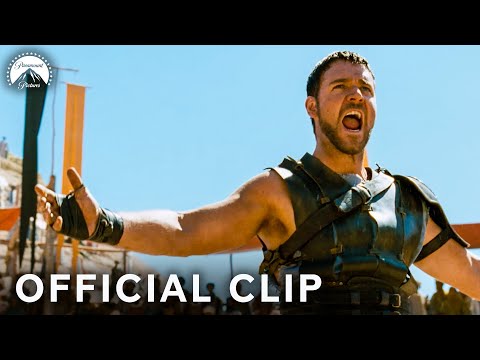
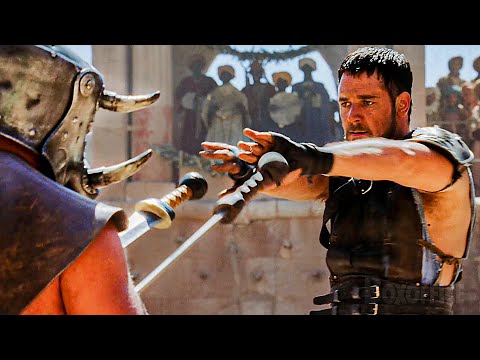
- Movies like 'Gladiator', 'Roman Holiday', and 'Angels & Demons' have cemented Rome's image in the global consciousness, making the word synonymous with epic drama and romance.
'Rome' is a popular TV series that depicts the transition of the Roman state from a republic to an empire.
In literature and philosophy, 'Rome' is often used as a metaphor for power, decadence, or the inevitable cycle of rise and fall. You will hear it in quotes from Edward Gibbon's 'The History of the Decline and Fall of the Roman Empire' or in discussions about the 'Pax Romana'. Even in business, the word might pop up in the context of the 'Rome Criteria' for economic stability or in branding for luxury goods that want to evoke an aura of Italian elegance. Finally, in the kitchen, you might hear about 'Rome apples' (though they originated in Ohio, the name still carries the weight of the city) or 'Roman-style pizza'. The word is ubiquitous, crossing boundaries of language and discipline, making it one of the most recognized place names in the world.
- In Religious Discourse
- For millions of Catholics, 'Rome' is the spiritual home. Pilgrims often talk about their journey to Rome as a life-changing religious experience.
The Bishop of Rome is another title for the Pope.
I heard that Rome is incredibly hot in August, so we decided to go in October instead.
The flight to Rome takes about nine hours from New York.
One of the most frequent mistakes learners make with the word 'Rome' is confusing it with its adjective form, 'Roman'. While 'Rome' is the name of the city, 'Roman' describes things or people from that city or the ancient empire. For example, you should say 'I am visiting Rome' (noun), but 'I love Roman history' (adjective). Using 'Rome history' is grammatically incorrect and sounds unnatural to native speakers. Another common error involves the use of articles. In English, we do not use 'the' before the names of most cities. Therefore, saying 'I am going to the Rome' is a mistake. The only exception is when 'Rome' is modified by a specific time period or description, such as 'The Rome of the 1950s was very different from today.'
- Capitalization Errors
- Because it is a proper noun, 'Rome' must always start with a capital 'R'. Writing 'rome' in a sentence is a common spelling mistake in informal digital communication that should be avoided in formal writing.
Incorrect: We ate rome food. Correct: We ate Roman food in Rome.
Pronunciation can also be a stumbling block. In English, 'Rome' is a single syllable that rhymes with 'home' or 'comb'. Some learners, influenced by the Italian pronunciation 'Roma' (two syllables: Roh-mah), might try to add an extra vowel sound at the end. While 'Roma' is the correct name in Italian, in an English-speaking context, you should use the English name 'Rome'. Similarly, when referring to the people, the plural is 'Romans', not 'Romes'. Another subtle mistake is the confusion between 'Rome' and 'The Vatican'. While the Vatican is located inside Rome, they are separate political entities. Saying 'I visited the country of Rome' is incorrect; Rome is a city, while Vatican City is the country.
- Preposition Pitfalls
- Learners sometimes use 'at' when they should use 'in'. You are 'in Rome' (the city), not 'at Rome', unless you are referring to a very specific point like 'at Rome Termini station'.
Incorrect: I want to rome around the world. Correct: I want to roam around the world and eventually visit Rome.
Finally, there is the 'When in Rome' idiom. People often misquote it or use it in the wrong context. The full phrase is 'When in Rome, do as the Romans do,' meaning you should follow the local customs of the place you are visiting. Using it to justify bad behavior ('When in Rome, I can do whatever I want') is a misunderstanding of the social etiquette the phrase promotes. Also, avoid using 'Rome' as a synonym for 'Italy' in all cases. While it is the capital, the culture in Milan, Venice, or Naples is quite different. Generalizing all of Italy as 'Rome' can be seen as a lack of cultural awareness. By paying attention to these nuances—noun vs. adjective, article usage, homophones, and idioms—you can use the word 'Rome' with the precision of a native speaker.
- Spelling Confusion
- In some languages, the spelling is 'Roma', 'Rom', or 'Rzym'. In English, it is always 'Rome'. Ensure you don't accidentally use your native language's spelling in an English sentence.
Incorrect: The Rome is a big city. Correct: Rome is a big city.
Incorrect: I saw many Romes in the street. Correct: I saw many Romans in the street of Rome.
Incorrect: Rome wasn't build in a day. Correct: Rome wasn't built in a day.
While 'Rome' is a unique proper noun, there are several ways to refer to it or concepts related to it depending on the register and context of your writing. The most common alternative is its nickname, 'The Eternal City'. This term is used in journalism, travel writing, and literature to add a poetic flair. It emphasizes the city's long history and enduring nature. Another historical alternative is 'Caput Mundi', a Latin phrase meaning 'Capital of the World'. This was used in antiquity to describe Rome's status as the center of the known world and is still occasionally used today in academic or high-level cultural discussions to highlight its historical dominance.
- Rome vs. Roma
- 'Rome' is the English name, while 'Roma' is the Italian name. In English writing, always use 'Rome' unless you are quoting an Italian source or trying to sound specifically Italian for stylistic reasons.
The author refers to Rome as the 'Eternal City' throughout the novel to emphasize its timelessness.
In a political context, you might use 'The Italian Capital' as a synonym to avoid repeating the word 'Rome' too many times in a paragraph. For example: 'The delegation arrived in Rome yesterday. The Italian capital is hosting the summit for the first time.' This provides lexical variety. If you are talking about the religious aspect, 'The Holy See' or 'The Vatican' are often used interchangeably with 'Rome', though they technically refer to the administration and the sovereign city-state respectively. It's important to be precise: 'Rome' is the city, 'The Vatican' is the place where the Pope lives, and 'The Holy See' is the central governing body of the Catholic Church.
- Rome vs. Byzantium
- In historical discussions, 'Rome' refers to the Western Empire, while 'Byzantium' or 'Constantinople' refers to the Eastern Empire (often called the 'New Rome').
While Athens is the cradle of democracy, Rome is the cradle of law and administration.
If you are looking for adjectives to describe things related to Rome, 'Roman' is the standard choice. However, for things specifically related to the city's modern character, you might use 'Romanesque' (though this usually refers to an architectural style) or 'Latian' (referring to the Lazio region). In some very formal or archaic contexts, the word 'Urbs' (Latin for 'The City') is used to refer specifically to Rome. This is where we get the word 'urban'. Understanding these alternatives allows you to navigate different types of texts, from a casual travel blog to a dense historical thesis, with confidence and a rich vocabulary.
- Metaphorical Alternatives
- 'A colossus', 'an empire', or 'a bastion of history' can all be used metaphorically to describe Rome's impact and scale.
Many people consider Rome to be the ultimate open-air museum.
Is there a 'New Rome'? Historically, Constantinople was given that title.
The spirit of Rome lives on in the laws of many nations.
How Formal Is It?
रोचक तथ्य
According to legend, Rome was founded on April 21, 753 BC. The city celebrates its birthday every year with parades and historical reenactments.
उच्चारण मार्गदर्शिका
- Pronouncing it as two syllables (Roh-mah)
- Confusing it with 'room'
- Adding a 'the' before it
- Misspelling it as 'Room'
- Lowercasing the 'R'
कठिनाई स्तर
The word itself is very easy to recognize in text.
Requires capitalization and correct spelling (not 'Roma' or 'Room').
One syllable, but avoid the Italian 'Roma' pronunciation in English.
Distinct sound, rarely confused with other words except 'roam'.
आगे क्या सीखें
पूर्वापेक्षाएँ
आगे सीखें
उन्नत
ज़रूरी व्याकरण
Capitalization of Proper Nouns
Rome, Italy, and the Colosseum must all be capitalized.
Zero Article with Cities
I am going to Rome (not 'the Rome').
Possessive 's with Proper Nouns
Rome's history is fascinating.
Subject-Verb Agreement
Rome is (not 'are') a beautiful city.
Prepositions of Place
I live in Rome (not 'at Rome').
स्तर के अनुसार उदाहरण
Rome is a city.
Rome est une ville.
Proper noun, singular.
I like Rome.
J'aime Rome.
Subject + Verb + Object.
Rome is in Italy.
Rome est en Italie.
Preposition 'in' for location.
Is Rome big?
Rome est-elle grande ?
Question form with 'is'.
Rome is beautiful.
Rome est belle.
Adjective usage.
I want to go to Rome.
Je veux aller à Rome.
Infinitive 'to go' + destination.
This is Rome.
C'est Rome.
Demonstrative pronoun.
Goodbye, Rome!
Au revoir, Rome !
Direct address.
I visited Rome last summer.
J'ai visité Rome l'été dernier.
Past simple tense.
Rome has many old buildings.
Rome a beaucoup de vieux bâtiments.
Verb 'has' for possession/features.
We ate pizza in Rome.
Nous avons mangé de la pizza à Rome.
Past simple with location.
The Colosseum is in Rome.
Le Colisée est à Rome.
Specific landmark location.
Rome is the capital of Italy.
Rome est la capitale de l'Italie.
Definite article 'the' with capital.
It is very hot in Rome in July.
Il fait très chaud à Rome en juillet.
Impersonal 'it' for weather.
How can I get to Rome?
Comment puis-je aller à Rome ?
Modal verb 'can' for possibility.
Rome is older than New York.
Rome est plus vieille que New York.
Comparative adjective.
Rome wasn't built in a day.
Rome ne s'est pas faite en un jour.
Passive voice idiom.
When in Rome, do as the Romans do.
À Rome, fais comme les Romains.
Imperative idiom.
Rome is often called the Eternal City.
Rome est souvent appelée la Ville Éternelle.
Present passive.
I have been to Rome three times.
Je suis allé à Rome trois fois.
Present perfect for experience.
Rome is famous for its art and culture.
Rome est célèbre pour son art et sa culture.
Adjective + preposition 'for'.
Vatican City is located inside Rome.
La Cité du Vatican est située à l'intérieur de Rome.
Passive construction.
You should visit Rome if you like history.
Tu devrais visiter Rome si tu aimes l'histoire.
First conditional/Advice.
Rome's streets are full of history.
Les rues de Rome sont pleines d'histoire.
Possessive noun.
Rome's economy relies heavily on tourism.
L'économie de Rome repose largement sur le tourisme.
Subject-verb agreement.
The Treaty of Rome was signed in 1957.
Le traité de Rome a été signé en 1957.
Specific historical title.
Rome is a city where antiquity meets modernity.
Rome est une ville où l'antiquité rencontre la modernité.
Relative clause with 'where'.
Preserving Rome's ruins is a constant challenge.
Préserver les ruines de Rome est un défi constant.
Gerund as subject.
Rome has a Mediterranean climate with mild winters.
Rome a un climat méditerranéen avec des hivers doux.
Descriptive noun phrases.
Many artists have been inspired by the light in Rome.
De nombreux artistes ont été inspirés par la lumière de Rome.
Present perfect passive.
Rome's public transport system can be confusing for visitors.
Le système de transport public de Rome peut être déroutant pour les visiteurs.
Compound subject.
Despite the traffic, Rome remains a romantic destination.
Malgré le trafic, Rome reste une destination romantique.
Concession with 'despite'.
Rome serves as a palimpsest of Western civilization.
Rome sert de palimpseste à la civilisation occidentale.
Metaphorical usage.
The fall of Rome had profound consequences for Europe.
La chute de Rome a eu des conséquences profondes pour l'Europe.
Abstract noun phrase.
Rome's influence is discernible in modern legal codes.
L'influence de Rome est perceptible dans les codes juridiques modernes.
Formal adjective 'discernible'.
The city of Rome is a testament to human endurance.
La ville de Rome est un témoignage de l'endurance humaine.
Appositive phrase.
Rome has long been a focal point for religious pilgrimage.
Rome est depuis longtemps un point focal pour le pèlerinage religieux.
Present perfect with 'long been'.
The Baroque architecture of Rome is truly breathtaking.
L'architecture baroque de Rome est vraiment époustouflante.
Specific art historical term.
Rome's geopolitical status changed after the unification of Italy.
Le statut géopolitique de Rome a changé après l'unification de l'Italie.
Academic register.
To understand the Renaissance, one must study Rome.
Pour comprendre la Renaissance, il faut étudier Rome.
Infinitive of purpose.
Rome's urban fabric is intricately woven with its past.
Le tissu urbain de Rome est étroitement lié à son passé.
Sophisticated metaphor.
The myth of Rome as 'Caput Mundi' persisted for centuries.
Le mythe de Rome en tant que 'Caput Mundi' a persisté pendant des siècles.
Latin phrase integration.
Rome's transition from Republic to Empire is a cautionary tale.
La transition de Rome de la République à l'Empire est un récit édifiant.
Complex noun phrase.
The Rome Statute remains a cornerstone of international law.
Le Statut de Rome reste une pierre angulaire du droit international.
Legal terminology.
Rome's aesthetic is characterized by a grandiosity of scale.
L'esthétique de Rome se caractérise par une grandiosité d'échelle.
Abstract formal description.
The dichotomy between Ancient and Modern Rome is stark.
La dichotomie entre la Rome antique et la Rome moderne est frappante.
Advanced vocabulary 'dichotomy'.
Rome's historical narrative is often subject to revisionism.
Le récit historique de Rome est souvent sujet au révisionnisme.
Academic concept.
The sheer longevity of Rome as a political center is unparalleled.
La longévité même de Rome en tant que centre politique est sans précédent.
Emphatic 'sheer'.
सामान्य शब्द संयोजन
सामान्य वाक्यांश
— There are many different ways to reach the same conclusion or goal.
You can solve the problem using math or logic; all roads lead to Rome.
— Important work takes time and patience to complete.
Don't get discouraged by your slow progress; Rome wasn't built in a day.
— When visiting a new place, follow the customs of the local people.
I don't usually eat late, but when in Rome, do as the Romans do.
— To do something trivial or irresponsible during a crisis.
The manager was playing games while the company was failing; he was fiddling while Rome burned.
— Refers to the past greatness and influence of the Roman civilization.
The museum exhibit perfectly captured the glory that was Rome.
— The collapse of the Western Roman Empire, often used as a metaphor for any great decline.
The sudden bankruptcy of the tech giant felt like the fall of Rome.
— A poetic way to say one feels a strong desire to visit or return to Rome.
I've been looking at flights all morning; I think Rome is calling.
— Enjoyment derived from the suffering of others, or simply a holiday spent in Rome.
The tabloid's coverage of the scandal was a bit of a Roman holiday.
— Specifying a particular time period in the city's history.
The Rome of the Renaissance was a center for artistic innovation.
— A path or journey toward a significant goal or destination.
His road to Rome was filled with many obstacles and challenges.
अक्सर इससे भ्रम होता है
A verb meaning to wander. Sounds the same as Rome.
The Italian name for the city. Also refers to the Romani people.
A space in a building. Sounds slightly different but can be confused by beginners.
मुहावरे और अभिव्यक्तियाँ
— Shortened version of 'When in Rome, do as the Romans do'.
I'll try the local delicacy. When in Rome!
Informal— Great things take time.
Be patient with your language learning; Rome wasn't built in a day.
Neutral— Different paths can lead to the same result.
Whether we use this software or that one, all roads lead to Rome.
Neutral— Neglecting duties during a crisis.
The politicians are arguing about minor issues while the economy collapses; they are fiddling while Rome burns.
Formal/Literary— Public distraction or entertainment at the expense of others.
The trial became a Roman holiday for the media.
Literary— Though not using the word 'Rome', it refers to Julius Caesar's march on Rome, meaning to take an irrevocable step.
By signing that contract, he has crossed the Rubicon.
Formal— A nickname for Rome.
We are heading to the Eternal City for our honeymoon.
Poetic— Capital of the world.
In ancient times, Rome was considered the Caput Mundi.
Academic— A major collapse or end of an era.
The end of the dynasty felt like the fall of Rome.
Metaphorical— Doing something in the manner of Rome (often food).
I prefer my pizza Roman-style with a thin crust.
Informalआसानी से भ्रमित होने वाले
It is the adjective form.
Rome is the place; Roman is the person or the description of things from Rome.
He is a Roman living in Rome.
It is located inside Rome.
Rome is a city in Italy; the Vatican is an independent country.
I visited the Vatican while I was in Rome.
Rome is the capital.
Rome is a city; Italy is the whole country.
Rome is the most famous city in Italy.
It was the language of Ancient Rome.
Rome is the city; Latin is the language they used to speak.
In Rome, you can see many inscriptions in Latin.
Another major Italian city.
Naples is further south and has a different culture and history.
We took the train from Rome to Naples.
वाक्य संरचनाएँ
Rome is [adjective].
Rome is old.
I went to Rome in [month].
I went to Rome in June.
Rome is famous for [noun].
Rome is famous for its history.
When in Rome, [imperative].
When in Rome, eat pasta.
Rome, which is the capital of Italy, is [adjective].
Rome, which is the capital of Italy, is very crowded.
The [noun] of Rome is [adjective].
The architecture of Rome is breathtaking.
Rome serves as [noun phrase].
Rome serves as a reminder of the past.
The dichotomy between [A] and [B] in Rome is [adjective].
The dichotomy between ancient and modern in Rome is fascinating.
शब्द परिवार
संज्ञा
क्रिया
विशेषण
संबंधित
इसे कैसे इस्तेमाल करें
Very High (Top 1000 nouns in English)
-
I am going to the Rome.
→
I am going to Rome.
We don't use 'the' with city names in English.
-
I love Rome history.
→
I love Roman history.
Use the adjective 'Roman' to describe things belonging to or related to Rome.
-
Rome are a big city.
→
Rome is a big city.
Rome is a singular noun and requires a singular verb.
-
We visited the Roma.
→
We visited Rome.
Use the English name 'Rome' when speaking English.
-
I want to rome around the city.
→
I want to roam around the city.
The verb meaning to wander is spelled 'roam', not 'Rome'.
सुझाव
Capitalization
Always capitalize the 'R' in Rome. It is a proper noun, and failing to capitalize it is a common mistake.
Noun vs Adjective
Use 'Rome' for the city and 'Roman' for things from the city. Example: 'Rome is great' vs 'I love Roman food'.
The Eternal City
Using the nickname 'The Eternal City' can make your writing sound more sophisticated and poetic.
Walking City
Rome is best explored on foot. Many of the most beautiful sights are hidden in small side streets.
Layers of History
Remember that Rome has layers. An ancient temple might be under a medieval church, which is next to a modern building.
When in Rome
This idiom is very common. Use it when you are trying something new because you are in a new place.
One Syllable
In English, Rome is just one syllable. Don't say 'Roh-mah' unless you are speaking Italian.
Patience
Use 'Rome wasn't built in a day' to encourage someone who is working on a long-term project.
Rome vs Roam
Don't confuse the city 'Rome' with the verb 'roam' (to wander). They sound the same but are spelled differently.
Metonymy
In political news, 'Rome' often means the Italian government. This is a common way to refer to national capitals.
याद करें
स्मृति सहायक
Remember 'Rome' rhymes with 'Home'. Think of Rome as the historical 'home' of Western civilization.
दृश्य संबंध
Visualize the Colosseum. It is the most iconic symbol of Rome and will help you instantly recall the city's name.
Word Web
चैलेंज
Try to write three sentences about Rome using three different idioms: 'When in Rome', 'Rome wasn't built in a day', and 'All roads lead to Rome'.
शब्द की उत्पत्ति
The name 'Rome' comes from the Latin 'Roma'. Its exact origin is debated, but it is traditionally linked to the city's mythical founder, Romulus.
मूल अर्थ: The name may be derived from 'Rumon', an archaic name for the Tiber River, or from the Etruscan word 'ruma', meaning 'teat', referring to the she-wolf who nursed Romulus and Remus.
Indo-European > Italic > Latinसांस्कृतिक संदर्भ
When discussing the Vatican, be mindful of its religious significance to many people. Also, avoid comparing Rome only to its ancient past; modern Romans are proud of their contemporary city.
In English-speaking countries, Rome is often the first 'foreign' city children learn about in history class.
असल ज़िंदगी में अभ्यास करें
वास्तविक संदर्भ
Travel
- Flight to Rome
- Hotel in Rome
- Rome city tour
- Map of Rome
History
- Ancient Rome
- The fall of Rome
- Roman Empire
- History of Rome
Food
- Roman pizza
- Pasta in Rome
- Rome food tour
- Best gelato in Rome
Politics
- Rome Statute
- Treaty of Rome
- Government in Rome
- Rome summit
Religion
- Vatican City in Rome
- Pope in Rome
- Pilgrimage to Rome
- Churches of Rome
बातचीत की शुरुआत
"Have you ever been to Rome, or is it on your bucket list?"
"What is the first thing that comes to your mind when you hear the word 'Rome'?"
"Do you prefer the history of Ancient Rome or the lifestyle of Modern Rome?"
"If you had only one day in Rome, which landmark would you visit first?"
"What do you think about the saying 'Rome wasn't built in a day'?"
डायरी विषय
Describe your dream day in Rome, from breakfast to dinner.
Write about why you think Rome is called 'The Eternal City'.
Compare Rome with another city you have visited. How are they different?
Reflect on the idiom 'When in Rome, do as the Romans do'. Have you ever had to do this?
If you could travel back in time to Ancient Rome, what would you want to see?
अक्सर पूछे जाने वाले सवाल
10 सवालNo, Rome is a city. It is the capital city of the country of Italy. However, it does contain the Vatican City, which is the smallest country in the world.
It is called the Eternal City because ancient Romans believed that no matter what happened to the world, Rome would always survive and remain standing. The name has stuck for over 2,000 years.
No, you should just say 'Rome'. For example: 'I am going to Rome.' You only use 'the' if you are adding a specific description, like 'The Rome of the 18th century'.
Rome is the English name for the city. Roma is the Italian name. When speaking English, it is best to use 'Rome'.
Rome can be expensive, especially near major tourist sites like the Colosseum. However, there are many affordable options for food and accommodation if you look in less central neighborhoods.
The official language is Italian. In ancient times, the people of Rome spoke Latin, which is the ancestor of Italian, French, Spanish, and other languages.
Geographically, yes, it is located entirely within the city of Rome. Politically, no, it is an independent sovereign state ruled by the Pope.
Rome is famous for its ancient ruins (like the Colosseum and Forum), its beautiful fountains (like the Trevi Fountain), its art, and its delicious food.
Yes! Rome is famous for its 'nasoni'—public drinking fountains that provide free, cold, and clean water throughout the city.
Rome is approximately 2,776 years old. According to legend, it was founded on April 21, 753 BC.
खुद को परखो 180 सवाल
Write a sentence about why you want to visit Rome.
Well written! Good try! Check the sample answer below.
Describe Rome in three simple words.
Well written! Good try! Check the sample answer below.
Write about a famous building in Rome.
Well written! Good try! Check the sample answer below.
What do people eat in Rome? Write two sentences.
Well written! Good try! Check the sample answer below.
Explain the meaning of 'Rome wasn't built in a day'.
Well written! Good try! Check the sample answer below.
Write a short paragraph about your favorite thing in Rome.
Well written! Good try! Check the sample answer below.
Discuss the impact of tourism on the city of Rome.
Well written! Good try! Check the sample answer below.
Compare Ancient Rome with Modern Rome.
Well written! Good try! Check the sample answer below.
Analyze the significance of Rome as a 'palimpsest' of history.
Well written! Good try! Check the sample answer below.
Write an essay about the legacy of Roman law.
Well written! Good try! Check the sample answer below.
Is Rome big or small? Write a sentence.
Well written! Good try! Check the sample answer below.
How do you get to Rome? Write about travel.
Well written! Good try! Check the sample answer below.
What does 'When in Rome' mean to you?
Well written! Good try! Check the sample answer below.
Write a letter to a friend about your trip to Rome.
Well written! Good try! Check the sample answer below.
Describe the atmosphere of Rome at night.
Well written! Good try! Check the sample answer below.
What is the capital of Italy?
Well written! Good try! Check the sample answer below.
List three things you can see in Rome.
Well written! Good try! Check the sample answer below.
Why is Rome called the Eternal City?
Well written! Good try! Check the sample answer below.
What are the challenges of living in a historical city like Rome?
Well written! Good try! Check the sample answer below.
Discuss the role of the Vatican within the city of Rome.
Well written! Good try! Check the sample answer below.
Say: 'Rome is in Italy.'
Read this aloud:
तुमने कहा:
Speech recognition is not supported in your browser. Try Chrome or Edge.
Say: 'I like Rome.'
Read this aloud:
तुमने कहा:
Speech recognition is not supported in your browser. Try Chrome or Edge.
Say: 'I want to visit the Colosseum in Rome.'
Read this aloud:
तुमने कहा:
Speech recognition is not supported in your browser. Try Chrome or Edge.
Say: 'Rome is the capital city.'
Read this aloud:
तुमने कहा:
Speech recognition is not supported in your browser. Try Chrome or Edge.
Say: 'Rome wasn't built in a day.'
Read this aloud:
तुमने कहा:
Speech recognition is not supported in your browser. Try Chrome or Edge.
Say: 'When in Rome, do as the Romans do.'
Read this aloud:
तुमने कहा:
Speech recognition is not supported in your browser. Try Chrome or Edge.
Say: 'Rome's history is incredibly complex and fascinating.'
Read this aloud:
तुमने कहा:
Speech recognition is not supported in your browser. Try Chrome or Edge.
Say: 'The Treaty of Rome was a turning point for Europe.'
Read this aloud:
तुमने कहा:
Speech recognition is not supported in your browser. Try Chrome or Edge.
Say: 'Rome is a palimpsest of Western civilization.'
Read this aloud:
तुमने कहा:
Speech recognition is not supported in your browser. Try Chrome or Edge.
Say: 'The legacy of Rome is evident in our modern legal systems.'
Read this aloud:
तुमने कहा:
Speech recognition is not supported in your browser. Try Chrome or Edge.
Say: 'Rome is big.'
Read this aloud:
तुमने कहा:
Speech recognition is not supported in your browser. Try Chrome or Edge.
Say: 'The food in Rome is delicious.'
Read this aloud:
तुमने कहा:
Speech recognition is not supported in your browser. Try Chrome or Edge.
Say: 'All roads lead to Rome.'
Read this aloud:
तुमने कहा:
Speech recognition is not supported in your browser. Try Chrome or Edge.
Say: 'I enjoyed my trip to the Eternal City.'
Read this aloud:
तुमने कहा:
Speech recognition is not supported in your browser. Try Chrome or Edge.
Say: 'The dichotomy of Rome is striking.'
Read this aloud:
तुमने कहा:
Speech recognition is not supported in your browser. Try Chrome or Edge.
Say: 'Hello Rome!'
Read this aloud:
तुमने कहा:
Speech recognition is not supported in your browser. Try Chrome or Edge.
Say: 'I am going to Rome by train.'
Read this aloud:
तुमने कहा:
Speech recognition is not supported in your browser. Try Chrome or Edge.
Say: 'The Vatican is inside Rome.'
Read this aloud:
तुमने कहा:
Speech recognition is not supported in your browser. Try Chrome or Edge.
Say: 'Rome is a living museum.'
Read this aloud:
तुमने कहा:
Speech recognition is not supported in your browser. Try Chrome or Edge.
Say: 'Caput Mundi was Rome's ancient title.'
Read this aloud:
तुमने कहा:
Speech recognition is not supported in your browser. Try Chrome or Edge.
Listen and write the city name: 'I am going to Rome.'
Listen and write the country: 'Rome is in Italy.'
Listen and write the landmark: 'I saw the Colosseum in Rome.'
Listen and write the adjective: 'We ate Roman food.'
Listen and complete: 'Rome wasn't built in a _______.'
Listen and complete: 'When in Rome, do as the _______ do.'
Listen and write the treaty name: 'The Treaty of Rome was signed in 1957.'
Listen and write the nickname: 'Rome is the Eternal City.'
Listen and write the Latin phrase: 'Rome was known as Caput Mundi.'
Listen and write the term: 'Rome is a palimpsest of history.'
Listen: 'Rome is old.' Is it new?
Listen: 'The Pope is in Rome.' Who is in Rome?
Listen: 'All roads lead to Rome.' Where do they lead?
Listen: 'Rome's traffic is bad.' How is the traffic?
Listen: 'The Rome Statute.' What is it?
/ 180 correct
Perfect score!
Summary
Rome is more than just a city; it is a foundational pillar of Western civilization. Whether you are studying history, art, or religion, Rome provides an essential context for understanding the modern world. Example: 'To understand modern law, one must look back at Rome.'
- Rome is the capital of Italy and a major historical hub.
- It is famous for the Roman Empire, the Colosseum, and the Vatican.
- Known as the 'Eternal City', it has influenced Western law and art.
- It is a top global tourist destination with a rich culinary heritage.
Capitalization
Always capitalize the 'R' in Rome. It is a proper noun, and failing to capitalize it is a common mistake.
Noun vs Adjective
Use 'Rome' for the city and 'Roman' for things from the city. Example: 'Rome is great' vs 'I love Roman food'.
The Eternal City
Using the nickname 'The Eternal City' can make your writing sound more sophisticated and poetic.
Walking City
Rome is best explored on foot. Many of the most beautiful sights are hidden in small side streets.
उदाहरण
I am planning a trip to Rome next summer to see the Colosseum.
संबंधित सामग्री
वीडियो में देखें
 5:15
5:15
"Are You Not Entertained?" (Feat. Russell Crowe) | Gladiator | Paramount Movies
"I am planning a trip to Rome next summer to see the Colosseum."
 3:26
3:26
"ARE YOU NOT ENTERTAINED?" (6v1 gladiator match) | Gladiator | CLIP
"I am planning a trip to Rome next summer to see the Colosseum."
 6:21
6:21
How much do you really know about Ancient Rome? - Stephanie Honchell Smith
संदर्भ में सीखें
संबंधित मुहावरे
Geography के और शब्द
ridges
B2रिज जमीन का एक लंबा, संकरा, ऊंचा हिस्सा होता है, जैसे पर्वत श्रृंखला की चोटी।
cities
A1शहर बड़े और स्थायी मानव बस्तियाँ हैं।
towns
B1कस्बे वे शहरी क्षेत्र हैं जो गाँवों से बड़े होते हैं लेकिन आमतौर पर शहरों से छोटे होते हैं।
oklahoma
B1ओक्लाहोमा संयुक्त राज्य अमेरिका के दक्षिण मध्य क्षेत्र में एक भूमि से घिरा राज्य है।
parks
B1पार्क सार्वजनिक हरे क्षेत्र हैं। वह दुकान के पास अपनी कार पार्क करता है।
pyramid
B1पिरामिड एक ठोस आकृति है जिसका आधार बहुभुज होता है और जिसके त्रिकोणीय किनारे शीर्ष पर एक बिंदु पर मिलते हैं।
coast
B1तट वह भूमि है जो समुद्र के पास होती है। क्रिया के रूप में, इसका अर्थ बिना शक्ति के चलना है।
lagos
B1लागोस नाइजीरिया का सबसे बड़ा शहर और एक प्रमुख आर्थिक केंद्र है।
land
B1भूमि पृथ्वी की सतह का वह ठोस भाग है जो पानी से ढका नहीं है।
oceans
A2महासागर खारे पानी के विशाल निकाय हैं जो पृथ्वी की सतह के अधिकांश भाग को कवर करते हैं। वे वैश्विक जलवायु को विनियमित करने में महत्वपूर्ण भूमिका निभाते हैं।

