A1 · Beginner
Herat Calligraphy and Traditional Book Arts
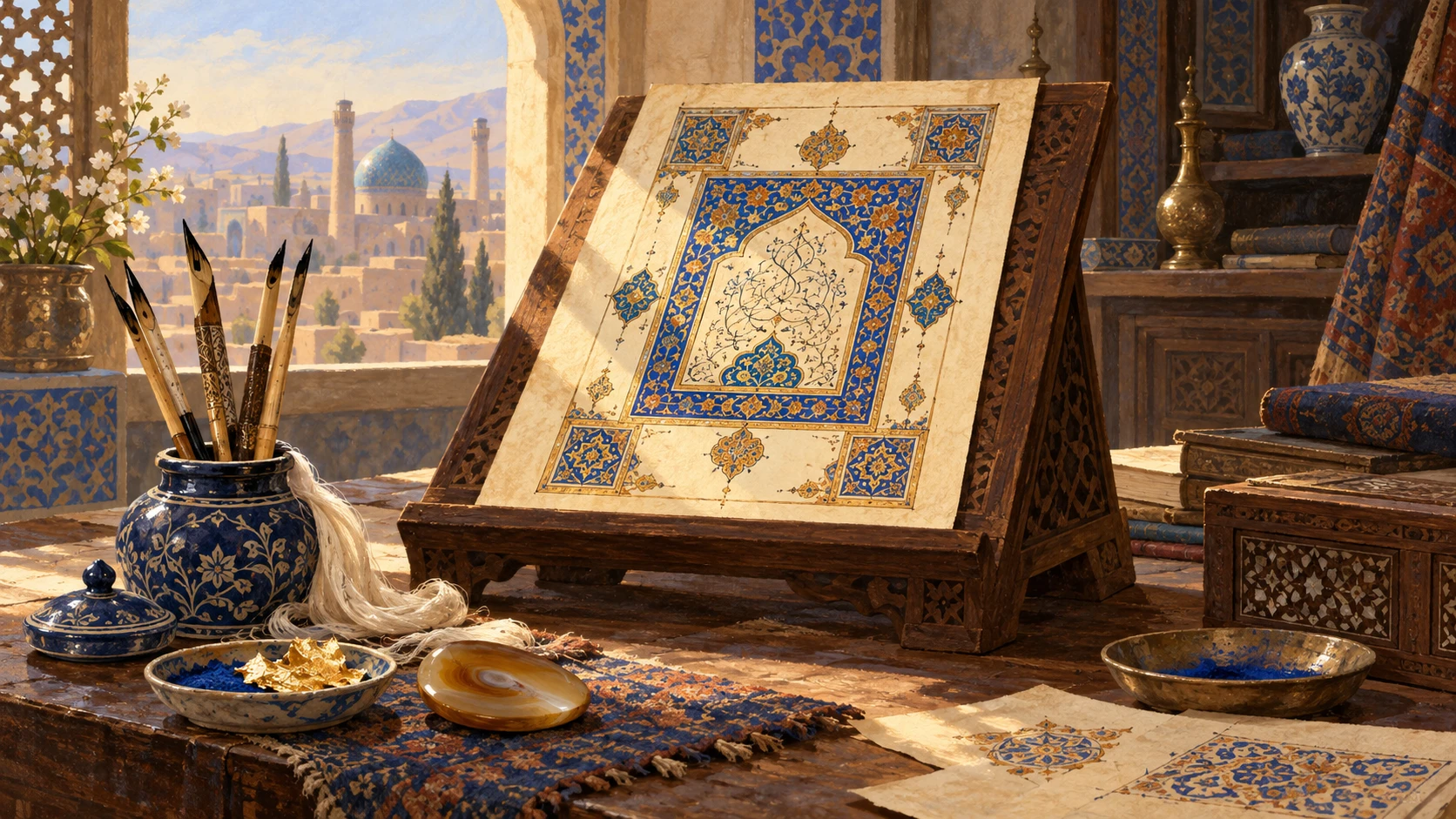
Artists in Herat write beautiful Arabic letters with reed pens and decorate pages with shining gold leaf.
The Herat Calligraphy Exhibition and Bounded Event Status
In April 2026 news reports said that Herat hosted a four-day public art exhibition of Quran calligraphy.
Provincial cultural officers and artisan guilds organized the event to display sixty beautiful manuscript pages in the city hall.
Organizers chose a temporary municipal hall in central Herat as the display space for the short four-day show.
Local reports showed that eighteen master calligraphers and painters from Herat province took part in the event.
Official statements welcomed visitors while confirming that the show was strictly a temporary four-day exhibition.
Independent checks confirm that the bounded event did not create a permanent gallery season or regular public exhibition stage.
The Timurid Herat School and Historical Manuscript Heritage
Historical books show that fifteenth-century Herat was a famous royal center for manuscript writing and fine book art.
Master calligrapher Mir Ali Heravi created classic Nastaliq script rules that guided all scribes in the Herat school.
Fifteenth-century royal rulers like Sultan Husayn Bayqara built a busy writing room to support scribes and manuscript painters.
Herat library collections preserve rare old codices containing lovely Naskh, Thuluth, and Nastaliq script compositions.
UNESCO documents recognize the historic buildings and rich artistic heritage of Herat as central treasures of Afghanistan.
Archival studies show that modern calligraphers in Herat follow the ancient writing methods of royal Timurid scribes.
Artisanal Toolmaking: Reed Pens, Carbon Inks, and Sizing
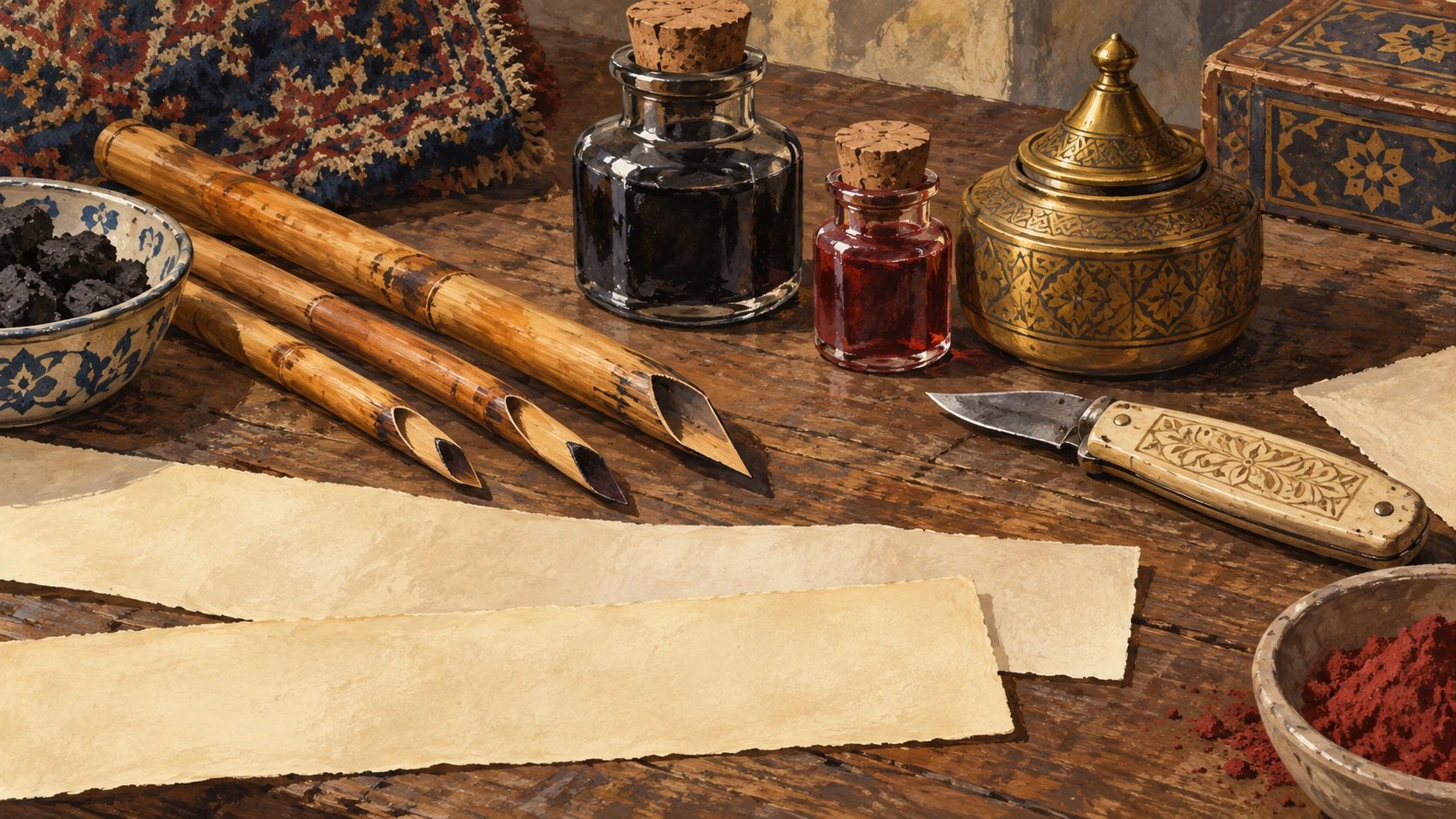
Traditional writing requires hand-cut pens made from seasoned marsh reeds called qalam-e ney.
Calligraphers use a sharp steel knife to cut the angled pen nib and center slit that controls ink flow.
Master scribes make permanent black ink by mixing lampblack soot, gum arabic, and natural gallnut extracts.
Writing paper receives a starch paste coating and burnishing with a smooth agate stone to make glossy pages.
Raw silk fibers placed inside the glass inkwell stop ink blotches and keep the pen clean.
Artists grind lapis lazuli and cinnabar stones to make bright colored ink for titles and decorative borders.
Illumination Disciplines: Tazhib, Gold Leaf, and Symmetrical Arabesques
Traditional Quran manuscripts contain illuminated front pages decorated through classic Islamic gold art called tazhib.
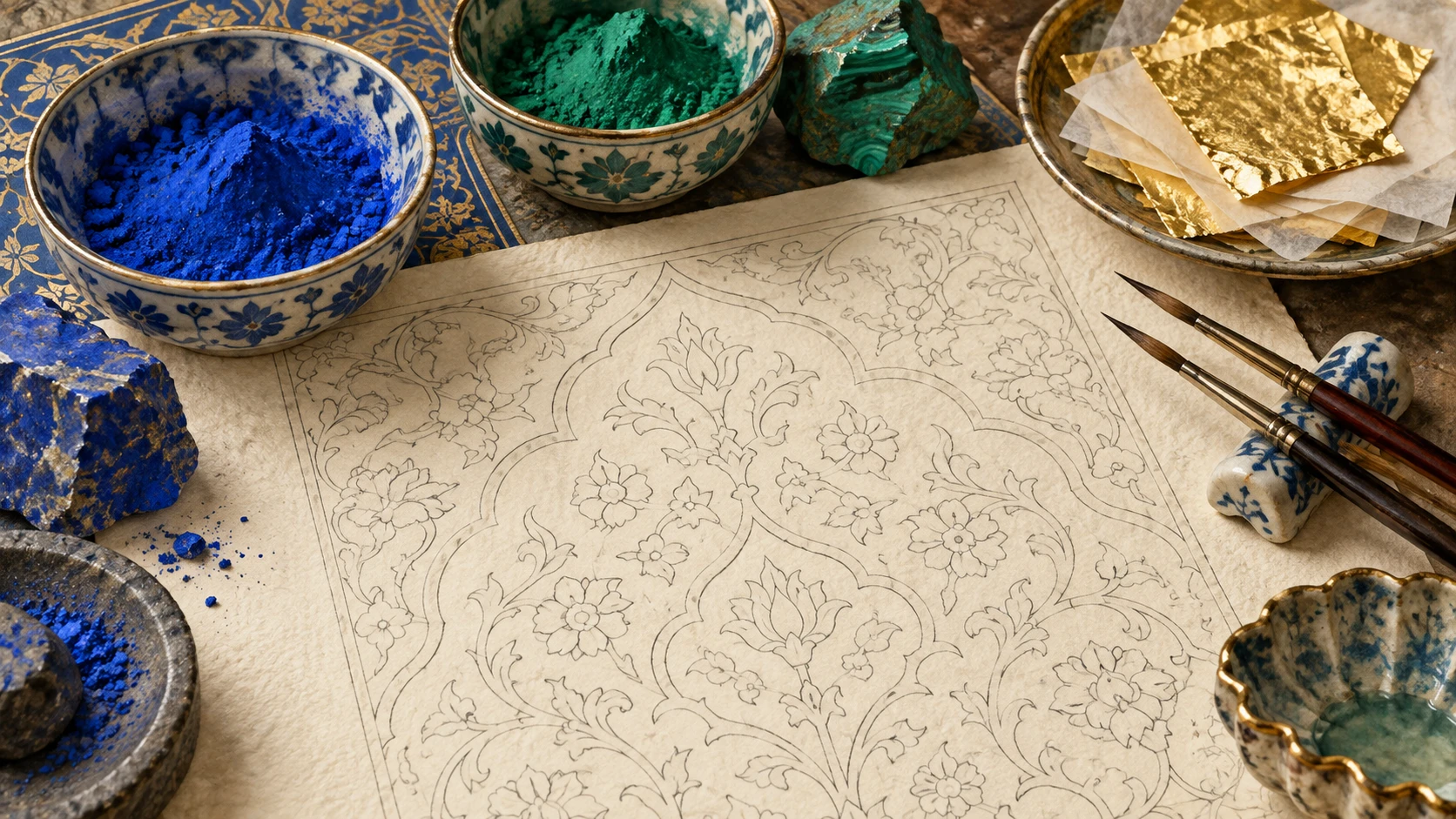
Masters apply thin sheets of real gold leaf to paper using purified gum or garlic juice glue.
Painters draw tiny flower shapes and sunny geometric circles using a tiny brush made of animal hair.
Artists rub smooth agate stone tools across dry gold leaf to make pages shine like polished metal.
Finishing a full illuminated frontispiece page takes between four and eight weeks of careful daily hand brushwork.
Historical records confirm that disciplined script combined with golden tazhib forms the famous signature of Herat books.
Guild Apprenticeship, Studio Transmission, and Contemporary Limits
Calligraphy skills in Herat pass through master lineages based on copying exercise sheets again and again.
Young disciples practice each line and letter shape to copy every holy word on scrap paper before writing full verses.
Formal graduation requires a student to earn an ijazah license from a recognized master calligrapher.
Private home studios face hard problems like freezing winter cold, paper shortages, and lack of imported gold leaf.
Economic troubles and weak book sales force many master scribes to work second commercial jobs.
Strict rules require verified interviews and direct consent before writers publish stories about private workshops.
Curatorial Boundaries, Provenance Safeguarding, and Civic Futures
International cultural groups support digital photo projects to save fragile historic manuscripts in Herat collections.
Specialized workshops train local workers to repair leather book covers and keep pages safe from damp air.
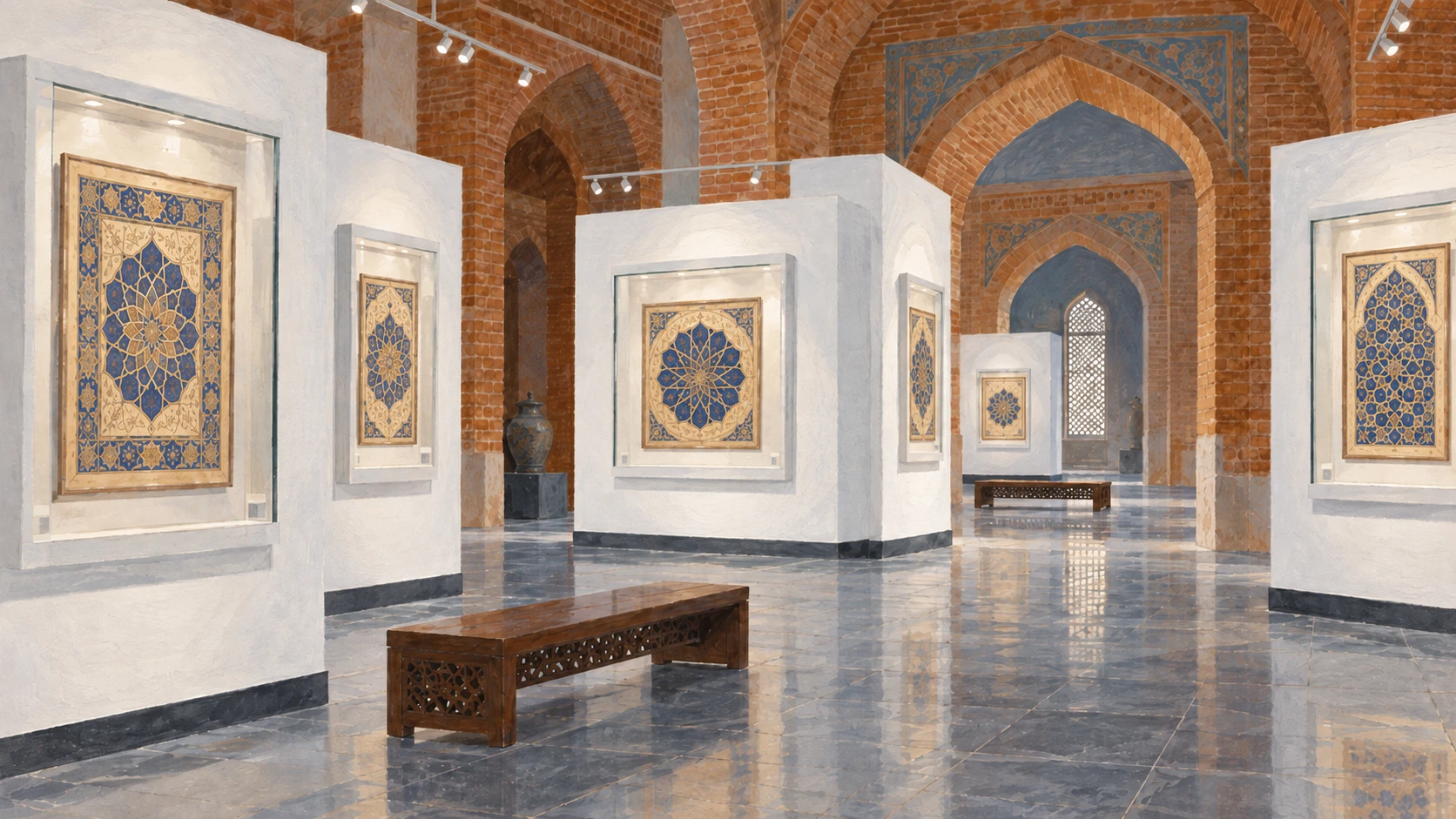
Temporary art exhibitions offer a rare public stage to display contemporary writing despite few city galleries.
Independent surveys warn that short community shows do not replace steady funds or secure living wages.
Cultural groups ask for legal copyright rules to stop people from making fake copies of master art.
Long-term research tracks whether temporary events help build lasting public art spaces in the city.
A2 · Elementary
Writing and Painting Islamic Manuscripts in Herat
Scribes in Herat cut pens from marsh reeds and paint golden borders following ancient traditions from famous royal workshops.
The Herat Calligraphy Exhibition and Bounded Event Status
In April 2026, Pajhwok Afghan News reported that Herat hosted a four-day public exhibition of Quran calligraphy and traditional manuscript art.
Provincial cultural officials and local craft guilds organized the exhibition to display sixty curated manuscript folios in a central municipal hall.
Organizers selected a temporary city hall in central Herat as the main display area for the short four-day showcase.
Local reports confirmed participation from eighteen master calligraphers and illumination painters residing across Herat province.
Official announcements highlighted enthusiastic public attendance, but they confirmed that the event was strictly a temporary four-day exhibition.
Independent verification confirms that the bounded event did not establish a permanent gallery space or regular civic exhibition season.
The Timurid Herat School and Historical Manuscript Heritage
Historical research documents Herat as the preeminent fifteenth-century center of Timurid manuscript arts, calligraphy, and royal scriptoriums.
Master calligrapher Mir Ali Heravi codified classical Nastaliq script rules that established the aesthetic standards of the Herat school.
Fifteenth-century royal patrons such as Sultan Husayn Bayqara founded dedicated scriptoriums supporting master scribes and manuscript painters.
Herat manuscript archives preserve historical codices featuring refined Naskh, Thuluth, and Nastaliq script compositions.
UNESCO documentation recognizes the historic architectural monuments and intellectual heritage of Herat as central cultural assets of Afghanistan.
Archival studies show that contemporary calligraphy practitioners in Herat maintain direct aesthetic links with classical Timurid scribal traditions.
Artisanal Toolmaking: Reed Pens, Carbon Inks, and Sizing
Traditional calligraphy practice requires hand-cut reed pens known as qalam-e ney carved from seasoned marsh reeds.
Calligraphers use specialized penknives to carve the angled nib and center slit that controls ink flow.
Master scribes create permanent black ink by blending lampblack soot, gum arabic, and natural gallnut extracts.
High-quality writing paper undergoes starch sizing and burnishing with an agate stone to produce smooth surfaces.
Raw silk fibers placed inside ceramic inkwells prevent excessive ink uptake and eliminate unwanted blotches on the page.
Fine mineral pigments, including lapis lazuli and cinnabar, are ground by hand to create colorful inks for titles and decorative borders.
Illumination Disciplines: Tazhib, Gold Leaf, and Symmetrical Arabesques
Traditional Quranic manuscripts feature decorative frontispieces illuminated through classical Islamic tazhib techniques.
Illumination masters apply beaten gold leaf to manuscript folios using purified gum ammoniac or garlic juice adhesive.
Intricate floral arabesques and geometric solar palmettes are painted using delicate brushes made from fine animal hair.
An agate burnisher is rubbed firmly across dry gold leaf sections to create a highly reflective metallic polish.
Completing an ornate illuminated frontispiece page requires between four and eight weeks of meticulous manual brushwork.
Historical records confirm that disciplined script combined with golden tazhib forms the defining artistic signature of Herat books.
Guild Apprenticeship, Studio Transmission, and Contemporary Limits
Calligraphic knowledge in Herat is transmitted through traditional master-disciple lineages based on copying exercise sheets.
Disciples practice individual letter shapes on ruled blackboards and scrap paper before attempting complete verse compositions.
Formal professional recognition requires disciples to earn an ijazah license verifying technical mastery from an established master calligrapher.
Private household studios endure severe physical constraints, including shortages of imported gold leaf, fine paper, and heated winter rooms.
Economic instability and restricted commercial demand compel many master scribes to work secondary commercial jobs to support families.
Strict editorial standards require verified artisan interviews and signed consent before researchers publish reports on active studios.
Curatorial Boundaries, Provenance Safeguarding, and Civic Futures
International cultural foundations support emergency preservation projects to safeguard fragile historic manuscripts in Herat collections.
Specialized conservation workshops train provincial librarians in paper stabilization, leather binding repair, and moisture control.
Bounded temporary exhibitions serve as valuable community platforms to display contemporary calligraphy amidst limited public cultural facilities.
Independent arts surveys caution against confusing short showcases with permanent institutional funding or sustainable artist livelihoods.
Cultural heritage associations advocate for legal copyright and provenance protections to prevent unauthorized commercial copies of masterworks.
Longitudinal cultural monitoring establishes empirical baselines to track whether temporary showcases lead to enduring provincial arts institutions.
B1 · Intermediate
Calligraphy Heritage and Manuscript Illumination in Herat
Scribes and illumination masters in Herat preserve classical Timurid styles using natural mineral inks, agate burnishers, and gold leaf.
The Herat Calligraphy Exhibition and Bounded Event Status
In April 2026, Pajhwok Afghan News documented that Herat hosted a four-day public exhibition celebrating Quranic calligraphy and classical manuscript illumination.
Provincial cultural authorities and traditional artisan guilds collaborated to display sixty curated manuscript folios within a central municipal hall.
Exhibition organizers selected a temporary municipal assembly hall in central Herat as the primary exhibition space for the four-day event.
Local cultural reporting identified active participation from eighteen master calligraphers and illumination specialists resident in Herat province.
Official statements commended public community attendance while emphasizing that the gathering was designed strictly as a temporary four-day exhibition.
Independent verification confirms that this bounded showcase did not establish a permanent civic gallery stage or recurring exhibition season.
The Timurid Herat School and Historical Manuscript Heritage
Historical scholarship records Herat as the preeminent fifteenth-century center of Timurid manuscript arts, royal scriptoriums, and master calligraphy.
Master calligrapher Mir Ali Heravi codified classical Nastaliq script rules that defined the aesthetic standards of the renowned Herat school.
Fifteenth-century royal patrons, most notably Sultan Husayn Bayqara, maintained dedicated scriptoriums supporting master scribes and miniature painters.
Herat library archives preserve celebrated historical codices featuring exquisite Naskh, Thuluth, and Nastaliq script compositions.
UNESCO documentation recognizes the historic monuments and intellectual manuscript traditions of Herat as vital cultural assets of Afghanistan.
Archival investigations demonstrate that contemporary Herat calligraphers maintain direct artistic lineage with classical Timurid scribal traditions.
Artisanal Toolmaking: Reed Pens, Carbon Inks, and Sizing
Traditional calligraphy practice requires hand-cut reed pens known as qalam-e ney crafted from seasoned marsh reeds.
Calligraphers use specialized high-carbon penknives to carve the angled writing nib and central slit that regulates ink flow.
Master scribes formulate permanent black inks by combining lampblack soot, gum arabic, and natural gallnut extracts.
Fine writing papers undergo careful surface sizing with starch paste and burnishing with agate stone to produce smooth vellum textures.
Raw silk fibers placed inside ceramic or glass inkwells regulate ink uptake and eliminate accidental blotches during writing.
Fine mineral pigments including lapis lazuli, cinnabar, and verdigris are hand-ground to produce vibrant colored inks for headings and borders.
Illumination Disciplines: Tazhib, Gold Leaf, and Symmetrical Arabesques
Classical Quranic codices incorporate elaborate frontispieces and section headings illuminated through traditional Islamic tazhib disciplines.
Illumination masters apply beaten twenty-four karat gold leaf to folios using purified gum ammoniac or garlic juice adhesives.
Intricate floral arabesques and geometric solar palmettes are painted using microscopic brushes made from squirrel or weasel hair.
Agate stone burnishers are applied across dry gold leaf sections to produce highly reflective polished metallic finishes.
Completing an ornate illuminated frontispiece page requires between four and eight weeks of meticulous manual brushwork.
Historical documentation confirms that the synthesis of disciplined script and golden tazhib constitutes the defining signature of Herat codices.
Guild Apprenticeship, Studio Transmission, and Contemporary Limits
Calligraphic knowledge in Herat is transmitted through traditional master-disciple lineages based on rigorous copying of instructional exercise sheets.
Disciples practice individual letterforms repeatedly on ruled blackboards or scrap paper before attempting complete verse compositions.
Formal professional certification requires disciples to earn an ijazah license verifying technical mastery from a recognized master calligrapher.
Private household studios face severe resource constraints including shortages of imported gold leaf, fine papers, and heated winter workshops.
Economic instability and restricted commercial demand compel many master scribes to work secondary commercial jobs to support households.
Strict editorial standards require verified artisan testimonies and consented documentation before profiling contemporary studio practices.
Curatorial Boundaries, Provenance Safeguarding, and Civic Futures
Multilateral cultural foundations support emergency digitization initiatives to safeguard fragile historic manuscripts in Herat collections.
Specialized conservation workshops train provincial librarians in paper stabilization, leather binding repair, and humidity control.
Bounded temporary exhibitions serve as vital community platforms to display contemporary calligraphy amidst limited public cultural facilities.
Independent arts surveys caution against equating short civic showcases with continuous institutional funding or sustainable artist livelihoods.
Cultural heritage associations advocate for legal copyright and provenance protections to prevent unauthorized commercial reproduction of masterworks.
Longitudinal cultural monitoring establishes empirical baselines to track whether temporary showcases lead to enduring provincial arts institutions.
B2 · Upper Intermediate
The Herat Calligraphy Tradition: Scriptorium Lineages and Golden Tazhib
Master scribes navigate artisanal toolmaking, four-day civic exhibitions, and workshop resource shortages while upholding classical Timurid manuscript aesthetics.
The Herat Calligraphy Exhibition and Bounded Event Status
In April 2026, Pajhwok Afghan News documented that Herat organized a four-day civic exhibition showcasing traditional Quranic calligraphy and illumination arts.
Provincial cultural authorities and regional artisan guilds collaborated to present sixty curated manuscript folios inside a municipal assembly hall.
Organizers designated a temporary municipal hall in central Herat as the primary display space for the four-day public event.
Local cultural reporting identified active participation from eighteen master calligraphers and illumination specialists resident in Herat province.
Official statements highlighted community attendance while confirming the event was designed strictly as a temporary four-day exhibition.
Independent verification confirms that the bounded event did not establish a permanent public exhibition stage or regular civic gallery season.
The Timurid Herat School and Historical Manuscript Heritage
Historical scholarship documents Herat as the preeminent fifteenth-century center of Timurid manuscript arts, calligraphy, and royal scriptoriums.
Master calligrapher Mir Ali Heravi codified classical Nastaliq script rules that defined the aesthetic standards of the Herat school.
Fifteenth-century royal patrons such as Sultan Husayn Bayqara established dedicated scriptoriums supporting master scribes and manuscript painters.
Herat manuscript collections preserve historical codices featuring exquisite Naskh, Thuluth, and Nastaliq calligraphic compositions.
UNESCO documentation recognizes the historic architectural monuments and intellectual heritage of Herat as central cultural assets of Afghanistan.
Archival research demonstrates that contemporary Herat calligraphy practitioners maintain direct aesthetic lineage with classical Timurid scribal traditions.
Artisanal Toolmaking: Reed Pens, Carbon Inks, and Sizing
Traditional calligraphy practice requires hand-cut reed pens known as qalam-e ney crafted from seasoned marsh reeds.
Calligraphers use specialized high-carbon penknives to carve the angled nib and central slit that regulates ink flow.
Master scribes formulate permanent black inks by combining lampblack soot, gum arabic, and natural gallnut extracts.
High-quality writing papers undergo surface sizing with starch paste and burnishing with agate stone to produce smooth vellum textures.
Raw silk fibers placed inside ceramic or glass inkwells prevent excessive ink uptake and eliminate blotches during writing.
Fine mineral pigments including lapis lazuli, cinnabar, and verdigris are hand-ground to produce vibrant colored inks for headings and borders.
Illumination Disciplines: Tazhib, Gold Leaf, and Symmetrical Arabesques
Traditional Quranic manuscripts integrate elaborate frontispieces and section dividers illuminated through classical Islamic tazhib techniques.
Illumination masters apply beaten twenty-four karat gold leaf to folios using purified gum ammoniac or garlic juice adhesives.
Intricate floral arabesques and geometric solar palmettes are painted using microscopic brushes made from squirrel or weasel hair.
Agate stone burnishers are applied across dry gold leaf sections to produce highly reflective polished metallic finishes.
Completing an ornate illuminated frontispiece page requires between four and eight weeks of meticulous manual brushwork.
Historical documentation confirms that the synthesis of disciplined script and golden tazhib constitutes the defining signature of Herat codices.
Guild Apprenticeship, Studio Transmission, and Contemporary Limits
Calligraphic knowledge in Herat is transmitted through traditional master-disciple lineages based on rigorous copying of instructional exercise sheets.
Students practice individual letterforms repeatedly on ruled blackboards or scrap paper before attempting complete verse compositions.
Formal certification requires disciples to earn an ijazah license verifying technical mastery from a recognized master calligrapher.
Private household studios face severe resource constraints including shortages of imported gold leaf, fine papers, and heated winter workshops.
Economic instability and restricted commercial demand compel many master scribes to work secondary commercial jobs to support households.
Strict editorial standards require verified artisan testimonies and consented documentation before profiling contemporary studio practices.
Curatorial Boundaries, Provenance Safeguarding, and Civic Futures
Multilateral cultural foundations support emergency digitization initiatives to safeguard fragile historic manuscripts in Herat collections.
Specialized conservation workshops train provincial librarians in paper stabilization, leather binding repair, and humidity control.
Bounded temporary exhibitions serve as vital community platforms to display contemporary calligraphy amidst limited public cultural facilities.
Independent arts surveys caution against equating short civic showcases with continuous institutional funding or sustainable artist livelihoods.
Cultural heritage associations advocate for legal copyright and provenance protections to prevent unauthorized commercial reproduction of masterworks.
Longitudinal cultural monitoring establishes empirical baselines to track whether temporary showcases lead to enduring provincial arts institutions.
C1 · Advanced
The Herat Calligraphy Exhibition: Timurid Scripts, Gold Leaf Tazhib, and Contemporary Guild Practice
An analytical examination of the April 2026 municipal showcase, classical Nastaliq scribal lineages, organic pigment formulation, and structural boundaries facing calligraphers in Herat.
The Herat Calligraphy Exhibition and Bounded Event Status
In April 2026, Pajhwok Afghan News reported that Herat hosted a four-day public exhibition displaying Quran calligraphy and traditional artworks.
Provincial cultural officials and local artisan guilds organized the exhibition to display sixty curated manuscript folios inside a municipal hall.
Exhibition organizers designated a temporary municipal hall in central Herat as the primary display space for the four-day event.
Local reporting identified participation from eighteen master calligraphers and illumination specialists resident in Herat province.
Official statements highlighted community attendance while confirming the event was designed strictly as a temporary four-day exhibition.
Independent verification confirms that the bounded event did not establish a permanent public exhibition stage or regular civic gallery season.
The Timurid Herat School and Historical Manuscript Heritage
Historical scholarship documents Herat as the preeminent fifteenth-century center of Timurid manuscript arts, calligraphy, and royal scriptoriums.
Master calligrapher Mir Ali Heravi codified classical Nastaliq script rules that defined the aesthetic standards of the Herat school.
Fifteenth-century royal patrons such as Sultan Husayn Bayqara established dedicated scriptoriums supporting master scribes and manuscript painters.
Herat manuscript collections preserve historical codices featuring exquisite Naskh, Thuluth, and Nastaliq calligraphic compositions.
UNESCO documentation recognizes the historic architectural monuments and intellectual heritage of Herat as central cultural assets of Afghanistan.
Archival research demonstrates that contemporary Herat calligraphy practitioners maintain direct aesthetic lineage with classical Timurid scribal traditions.
Artisanal Toolmaking: Reed Pens, Carbon Inks, and Sizing
Traditional calligraphy practice requires hand-cut reed pens known as qalam-e ney crafted from seasoned marsh reeds.
Calligraphers use specialized high-carbon penknives to carve the angled nib and central slit that regulates ink flow.
Master scribes formulate permanent black inks by combining lampblack soot, gum arabic, and natural gallnut extracts.
High-quality writing papers undergo surface sizing with starch paste and burnishing with agate stone to produce smooth vellum textures.
Raw silk fibers placed inside ceramic or glass inkwells prevent excessive ink uptake and eliminate blotches during writing.
Fine mineral pigments including lapis lazuli, cinnabar, and verdigris are hand-ground to produce vibrant colored inks for headings and borders.
Illumination Disciplines: Tazhib, Gold Leaf, and Symmetrical Arabesques
Traditional Quranic manuscripts integrate elaborate frontispieces and section dividers illuminated through classical Islamic tazhib techniques.
Illumination masters apply beaten twenty-four karat gold leaf to folios using purified gum ammoniac or garlic juice adhesives.
Intricate floral arabesques and geometric solar palmettes are painted using microscopic brushes made from squirrel or weasel hair.
Agate stone burnishers are applied across dry gold leaf sections to produce highly reflective polished metallic finishes.
Completing an ornate illuminated frontispiece page requires between four and eight weeks of meticulous manual brushwork.
Historical documentation confirms that the synthesis of disciplined script and golden tazhib constitutes the defining signature of Herat codices.
Guild Apprenticeship, Studio Transmission, and Contemporary Limits
Calligraphic knowledge in Herat is transmitted through traditional master-disciple lineages based on rigorous copying of instructional exercise sheets.
Students practice individual letterforms repeatedly on ruled blackboards or scrap paper before attempting complete verse compositions.
Formal certification requires disciples to earn an ijazah license verifying technical mastery from a recognized master calligrapher.
Private household studios face severe resource constraints including shortages of imported gold leaf, fine papers, and heated winter workshops.
Economic instability and restricted commercial demand compel many master scribes to work secondary commercial jobs to support households.
Strict editorial standards require verified artisan testimonies and consented documentation before profiling contemporary studio practices.
Curatorial Boundaries, Provenance Safeguarding, and Civic Futures
Multilateral cultural foundations support emergency digitization initiatives to safeguard fragile historic manuscripts in Herat collections.
Specialized conservation workshops train provincial librarians in paper stabilization, leather binding repair, and humidity control.
Bounded temporary exhibitions serve as vital community platforms to display contemporary calligraphy amidst limited public cultural facilities.
Independent arts surveys caution against equating short civic showcases with continuous institutional funding or sustainable artist livelihoods.
Cultural heritage associations advocate for legal copyright and provenance protections to prevent unauthorized commercial reproduction of masterworks.
Longitudinal cultural monitoring establishes empirical baselines to track whether temporary showcases lead to enduring provincial arts institutions.
C2 · Mastery
Epigraphic Canon, Timurid Codicology, and Ephemeral Cultural Staging in Herat
A codicological and sociopolitical critique of scribal transmission, mineral illumination chemistry, and the structural limitations of temporary municipal exhibitions in western Afghanistan.
The Herat Calligraphy Exhibition and Bounded Event Status
In April 2026, Pajhwok Afghan News documented that Herat mounted a four-day municipal exhibition dedicated to Quranic epigraphy and traditional manuscript codicology.
Provincial cultural administrators and local artisan guilds convened the showcase to exhibit sixty curated manuscript folios within a municipal civic hall.
Organizers requisitioned an ephemeral municipal assembly hall in central Herat as the primary exhibition space for the four-day cultural event.
Contemporary field documentation confirmed active representation from eighteen master calligraphers and illumination specialists resident within Herat province.
Official administrative pronouncements emphasized civic public attendance while affirming that the staging was conceived strictly as an ephemeral four-day showcase.
Critical independent verification establishes that this bounded event established neither a permanent public exhibition stage nor a recurring civic gallery season.
The Timurid Herat School and Historical Manuscript Heritage
Historiographical scholarship identifies Herat as the preeminent fifteenth-century epicenter of Timurid codicology, scribal arts, and royal scriptoriums.
Master calligrapher Mir Ali Heravi codified classical Nastaliq script canons that established the definitive aesthetic standards of the Herat school.
Timurid sovereigns, most notably Sultan Husayn Bayqara, endowed dedicated royal scriptoriums supporting master scribes and miniaturists.
Herat manuscript repositories preserve historic codices displaying virtuosic Naskh, Thuluth, and Nastaliq calligraphic compositions.
UNESCO documentation designates the historic architectural monuments and intellectual manuscript traditions of Herat as central cultural patrimony of Afghanistan.
Archival codicology demonstrates that contemporary Herat calligraphy masters maintain direct morphological lineage with classical Timurid scribal traditions.
Artisanal Toolmaking: Reed Pens, Carbon Inks, and Sizing
Traditional epigraphic practice necessitates hand-shaped reed pens designated as qalam-e ney harvested from seasoned wetland marshes.
Master scribes employ specialized high-carbon penknives to carve the angled writing nib and central capillary slit that regulates fluid dynamics.
Artisans distill indelible carbon inks by compounding fine lampblack soot, Acacia gum arabic, and gallnut iron complexes.
High-grade rag papers undergo surface sizing with wheat starch paste and meticulous burnishing with agate stone to yield a lustrous vellum finish.
Raw silk filaments suspended within glass inkwells prevent excessive ink uptake and eradicate accidental surface splatters during rapid transcription.
Mineral pigments, notably lapis lazuli, cinnabar, and verdigris, are hand-ground in marble mortars to formulate chromatic inks for decorative chapter headings.
Illumination Disciplines: Tazhib, Gold Leaf, and Symmetrical Arabesques
Liturgical codices incorporate elaborate frontispieces and section dividers illuminated through classical Islamic tazhib techniques.
Master illuminators apply beaten twenty-four karat gold leaf to folios utilizing purified gum ammoniac and botanical adhesives.
Intricate floral arabesques and geometric solar palmettes are painted using microscopic brushes fabricated from selected weasel hair.
Polished agate stone burnishers are stroked across dry gold leaf sections to produce highly reflective specular metallic finishes.
Executing an ornate illuminated frontispiece page demands between four and eight weeks of unremitting manual brushwork.
Codicological analysis confirms that the dialectical synthesis of disciplined script and golden tazhib constitutes the defining signature of Herat codices.
Guild Apprenticeship, Studio Transmission, and Contemporary Limits
Calligraphic pedagogy in Herat is transmitted through traditional master-disciple lineages predicated on the exhaustive replication of instructional exercise sheets.
Disciples execute individual letterforms repeatedly across ruled blackboards or scrap paper before attempting composite verse compositions.
Formal scribal licensure requires disciples to earn an authoritative ijazah diploma certifying scriptural mastery from a recognized master calligrapher.
Private household ateliers confront severe structural constraints, including acute deficits of imported gold leaf, fine papers, and unheated winter studios.
Pervasive macroeconomic contraction and depressed patron commissions compel many master scribes to accept secondary commercial employment to maintain households.
Rigorous ethnographic research ethics demand verified artisan testimonies and formal consent prior to documenting contemporary domestic studio practices.
Curatorial Boundaries, Provenance Safeguarding, and Civic Futures
Multilateral cultural foundations finance emergency digitization protocols to preserve fragile historical manuscripts across Herat collections.
Specialized conservation workshops instruct regional archivists in paper deacidification, leather binding restoration, and climate control.
Ephemeral temporary exhibitions function as vital communal spaces to display contemporary calligraphy amidst a marked absence of public cultural infrastructure.
Independent sociological surveys caution against conflating brief civic showcases with enduring institutional subsidies or sustainable artist livelihoods.
Cultural heritage organizations lobby for statutory intellectual property frameworks and provenance safeguards to curb unauthorized commercial reproduction.
Longitudinal cultural monitoring establishes empirical baselines to ascertain whether temporary showcases foster sustainable provincial arts institutions.
Check your understanding
Choose how closely you want to revisit the article. You can refer back while answering, and review explanations when you finish.
Quick Quiz A1
Try one question, then create a free account for the full Quick Quiz. Sign Up Free
Answer every question before checking. There is no time limit.
Your results
/ 1 correct (%)
Read the explanations to see how each answer connects to the article.
-
According to the section on The Herat Calligraphy Exhibition and Bounded Event Status, what does the text identify regarding news?
1. Answer:
Quick Quiz A2
Try one question, then create a free account for the full Quick Quiz. Sign Up Free
Answer every question before checking. There is no time limit.
Your results
/ 1 correct (%)
Read the explanations to see how each answer connects to the article.
-
According to the section on The Herat Calligraphy Exhibition and Bounded Event Status, what does the text identify regarding pajhwok?
1. Answer:
Quick Quiz B1
Try one question, then create a free account for the full Quick Quiz. Sign Up Free
Answer every question before checking. There is no time limit.
Your results
/ 1 correct (%)
Read the explanations to see how each answer connects to the article.
-
According to the section on The Herat Calligraphy Exhibition and Bounded Event Status, what does the text identify regarding pajhwok?
1. Answer:
Quick Quiz B2
Try one question, then create a free account for the full Quick Quiz. Sign Up Free
Answer every question before checking. There is no time limit.
Your results
/ 1 correct (%)
Read the explanations to see how each answer connects to the article.
-
According to the section on The Herat Calligraphy Exhibition and Bounded Event Status, what does the text identify regarding pajhwok?
1. Answer:
Quick Quiz C1
Try one question, then create a free account for the full Quick Quiz. Sign Up Free
Answer every question before checking. There is no time limit.
Your results
/ 1 correct (%)
Read the explanations to see how each answer connects to the article.
-
According to the section on The Herat Calligraphy Exhibition and Bounded Event Status, what does the text identify regarding pajhwok?
1. Answer:
Quick Quiz C2
Try one question, then create a free account for the full Quick Quiz. Sign Up Free
Answer every question before checking. There is no time limit.
Your results
/ 1 correct (%)
Read the explanations to see how each answer connects to the article.
-
According to the section on The Herat Calligraphy Exhibition and Bounded Event Status, what does the text identify regarding pajhwok?
1. Answer:
