A1 · Beginner
Wheat Seeds and Crop Markets in Parwan
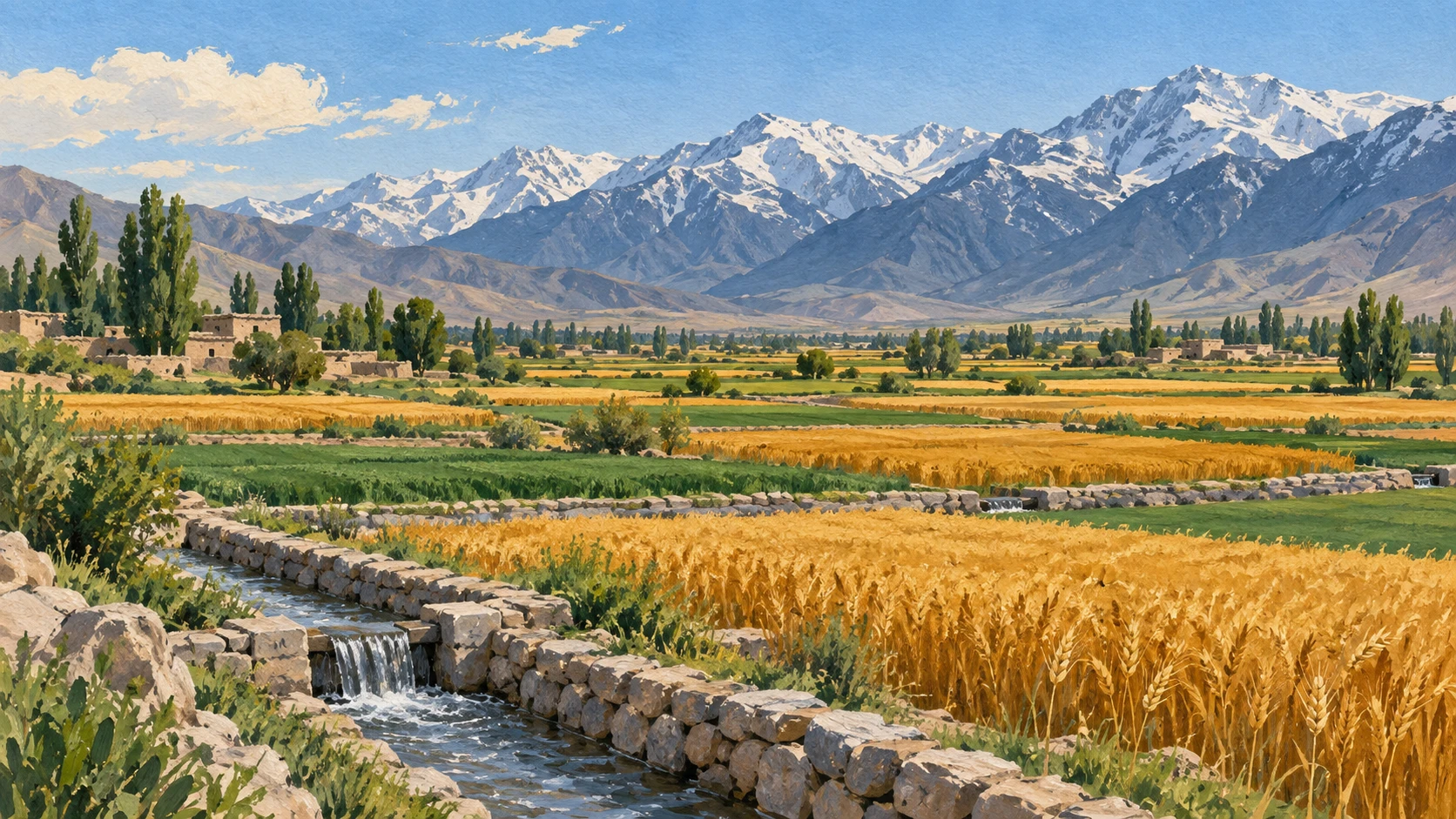
Farmers in Parwan buy quality grain seeds and sell their crops in local bazaars.
United Nations Seed Program
The Food and Agriculture Organization started an electronic voucher test for private seed production.
The project helps wheat farmers buy subsidized certified seed bags at reduced costs.
Project agreements support registered private business companies rather than state monopoly agencies.
Digital voucher records track farmer purchases at approved agricultural supply shops.
The program encourages private businesses to invest money in producing certified crop seeds.
Official documents report seed deliveries without measuring long-term commercial business profits.
Seed Shop in Charikar
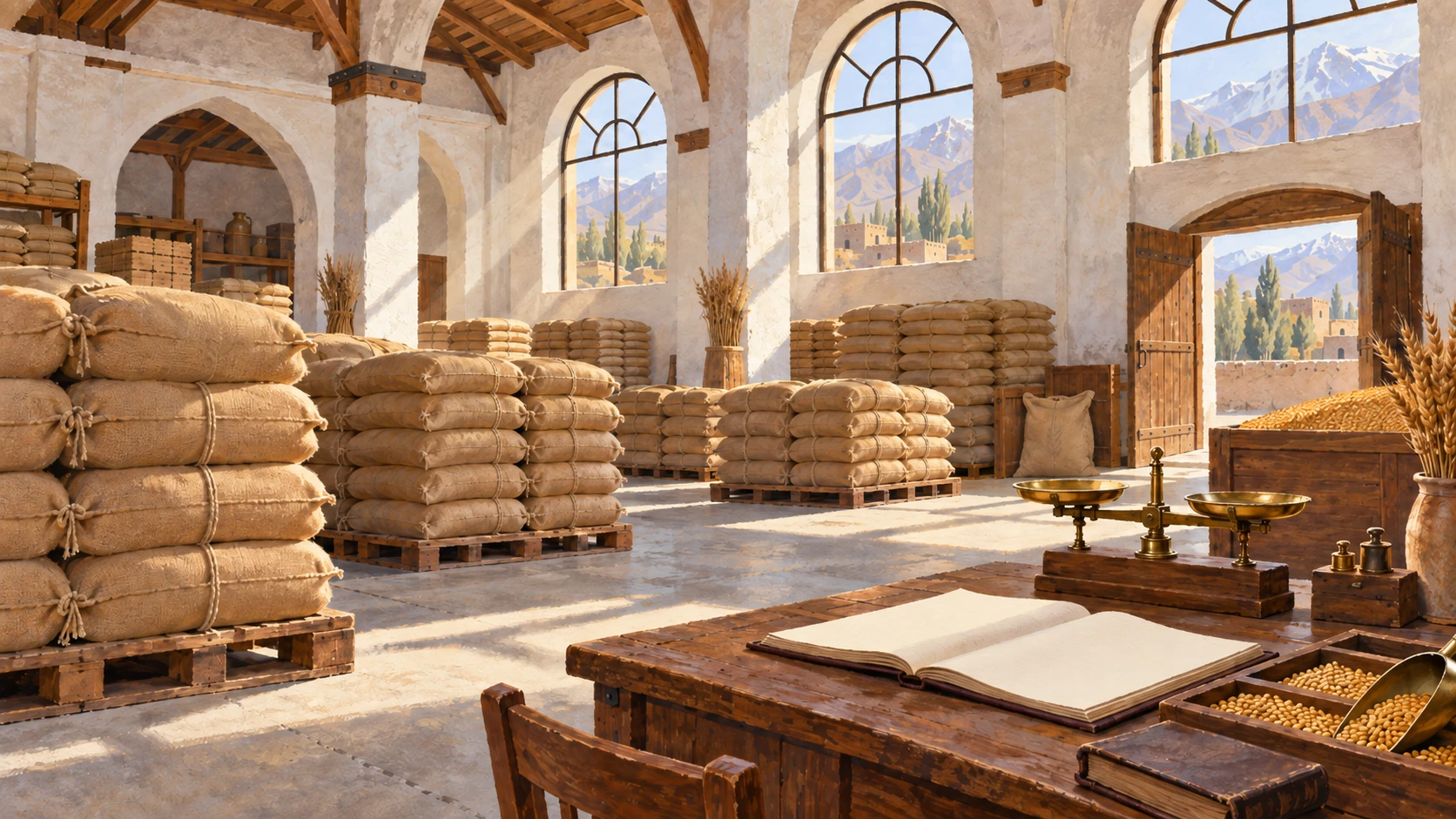
Parwan Bastan is a registered private agricultural company operating in Parwan Province.
The company runs an official sales shop inside the Aria Parwan Market in Charikar.
Parwan Bastan produces certified seeds suited for irrigated fields across the Shomali Plain.
Registered wheat growers bring their project vouchers directly to the market store.
Shop records list the farmer identification papers and count every seed bag handed over.
Project reports show the shop address without publishing corporate financial accounts or balance sheets.
Stronger Wheat Plants
Certified seeds carry better plant genetics to increase grain harvest yields per hectare.
Seed quality rules require high germination rates and low amounts of weed seeds.
Local agricultural experts test plants for resistance against stripe rust and plant blights.
Trial farm plots show that certified seeds produce more grain than dirty farm-saved seed.
Seed growers keep fields far apart to stop unwanted mixing from nearby grain crops.
Field trials show test plot yields rather than average commercial harvests across the province.
Trucks to Kabul
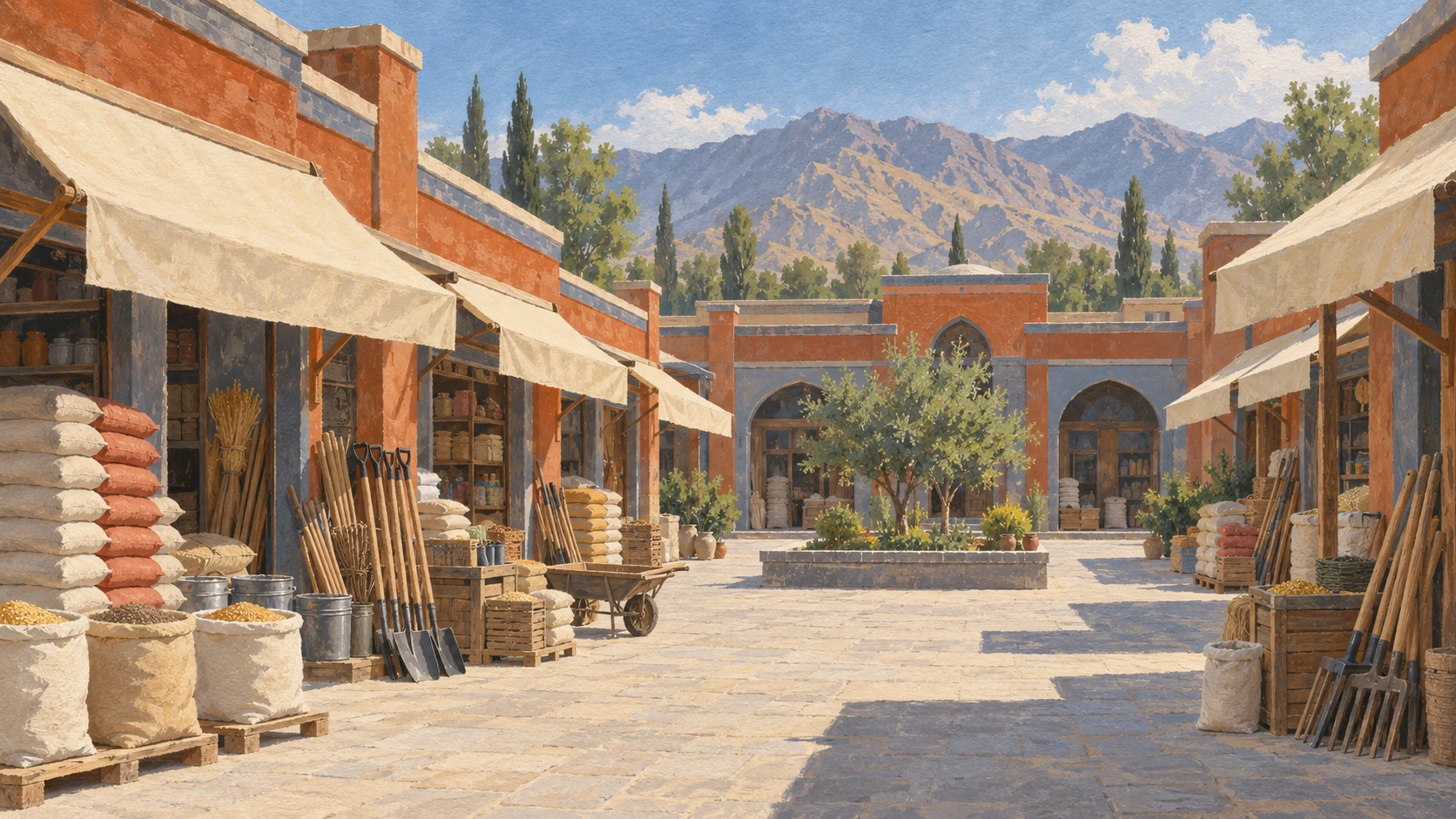
Paved highways across the Shomali Plain connect Parwan farms directly to Kabul food bazaars.
Large flatbed trucks carry harvested grain and sweet grapes south toward city distribution centers.
Being close to Kabul helps Parwan farmers spend less travel time on the road.
Heavy road traffic and security checkpoints slow down truck travel between Charikar and Kabul.
City food brokers in Kabul buy grain and grapes from trusted merchant partners in Parwan.
Road surveys show that transport schedules suffer from seasonal winter road repair delays.
Harvest Prices and Farm Costs
Weekly market reports show price differences between Parwan bazaars and big Kabul food markets.
Prices paid to farmers in villages are always lower than retail prices in city shops.
High prices for imported plant fertilizer and truck diesel fuel cut into farmer earnings.
Grain prices drop quickly in early summer when the main wheat harvest arrives.
Small farmers without grain storehouses sell crops right after harvest to pay back debts.
Official price bulletins record market trades without measuring total family farm household income.

Program Limits
One certified seed store in Charikar does not mean seeds are available everywhere in Afghanistan.
The voucher program helps only a small group of selected farmers in pilot districts.
Distribution papers cannot verify if farmers planted their seeds using correct farming steps.
Project survey papers do not measure rural poverty reductions or family nutrition improvements.
Cereal balance reports separate local seed supplies from overall national food self-sufficiency.
Economic studies look carefully at project rules without making false claims about all farms.
A2 · Elementary
Parwan Wheat-Seed Enterprises and Provincial Commodity Distribution
Agricultural programs support private seed businesses and track wheat price trends between Parwan and Kabul.
The Electronic Voucher Pilot
The Food and Agriculture Organization introduced an electronic voucher pilot to commercialize private seed reproduction.
Cost-sharing provisions allow targeted wheat growers to redeem subsidized certified seed supplies at local stores.
Project agreements directly assist registered private enterprises rather than state-administered monopolistic seed agencies.
Electronic voucher registries record farmer purchases at authorized provincial agricultural dealerships.
The institutional pilot seeks to encourage private commercial investments in certified cereal seed multiplication.
Official documentation records input distribution benchmarks without confirming long-term business sustainability.
Parwan Bastan Enterprise in Charikar
Parwan Bastan operates as an officially recognized private seed production company in Parwan Province.
The enterprise maintains a commercial sales outlet located in the Aria Parwan Market in Charikar.
Parwan Bastan cultivates certified wheat seed varieties tailored to the irrigated farmland of the Shomali Plain.
Enrolled wheat farmers present their electronic vouchers directly at the Aria Parwan Market outlet.
Store staff record seed bag deliveries alongside formal farmer identification credentials.
Project reports publish the physical market address without disclosing annual company balance sheets or turnover.
Certified Varieties and Grain Yields
Certified wheat varieties distribute improved genetics developed to increase seasonal cereal harvest yields per hectare.
Technical quality regulations mandate high seed germination percentages and restrict weed seed contamination.
Agricultural extension personnel evaluate cultivar resistance against yellow stripe rust and fungal blights.
Controlled agronomic trials demonstrate that certified seed stocks produce greater grain yields than uncleaned grain.
Seed multiplication operations maintain strict isolation distances to prevent cross-contamination from adjacent cereal crops.
Agronomic trial results reflect potential test plot yields rather than uniform provincial commercial harvests.
Transport Routes Across the Shomali Plain
Paved highway corridors across the Shomali Plain connect Parwan agricultural districts directly with Kabul wholesale markets.
Commercial transport trucks carry harvested grain and table grapes southward toward urban distribution centers.
Proximity to the capital allows Parwan farming enterprises to complete freight delivery faster than distant southern provinces.
Congested roadway corridors and security checkpoints periodically interrupt freight transit between Charikar and northern Kabul.
Wholesale brokers in Kabul purchase bulk grain shipments through long-standing merchant partnerships in Parwan.
Infrastructure surveys confirm that highway transit remains vulnerable to seasonal road maintenance disruptions.
Wholesale Price Differences and Farmer Margins
Weekly commodity bulletins document notable price differentials between Parwan provincial bazaars and Kabul wholesale markets.
Farm-gate prices paid to rural wheat growers remain consistently lower than retail food prices in urban centers.
Steep price increases for imported chemical fertilizer and diesel fuel substantially compress net farmer profit margins.
Market monitoring tracks noticeable wheat price depressions immediately following early summer harvest peaks.
Smallholder farmers lacking modern grain storage frequently sell wheat immediately after harvest to settle outstanding debts.
Market price bulletins record wholesale trade values without documenting net annual farm household earnings.
Monitoring Limits of the Voucher Initiative
Operating a single certified seed outlet in Charikar does not demonstrate widespread seed availability across Afghanistan.
The pilot voucher mechanism reaches only a selected group of wheat producers inside specific project districts.
Seed distribution receipts cannot verify whether recipient farmers followed recommended agronomic planting guidelines.
Enterprise survey ledgers do not track broader rural poverty reduction or regional consumer nutrition improvements.
Cereal balance evaluations distinguish local seed distribution from overall national food self-sufficiency.
Economic reporting respects the precise operational boundaries of the project without exaggerating farm outcomes.
B1 · Intermediate
Seed Commercialization and Grain Market Dynamics in Parwan Province
A field study of private wheat seed multiplication, wholesale trucking corridors, and farm-gate commodity pricing across the Shomali Plain.
FAO Electronic Voucher Mechanisms
The Food and Agriculture Organization initiated an electronic voucher pilot to stimulate private wheat seed commercialization.
The project incorporates cost-sharing mechanisms enabling registered cereal growers to redeem subsidized certified seed supplies.
Institutional project arrangements support certified private seed enterprises rather than state-managed monopolistic seed bureaus.
Electronic transaction registries systematically record farmer voucher redemptions across designated provincial agricultural supply dealerships.
Programmatic frameworks seek to stimulate private agribusiness investments in certified cereal seed multiplication cycles.
Official monitoring documentation establishes input delivery benchmarks without reporting long-term commercial sustainability.
Parwan Bastan Enterprise and the Aria Market Outlet
Parwan Bastan Wheat Seed Production Company functions as an officially registered private agricultural enterprise in Parwan.
The enterprise maintains an authorized retail sales outlet situated directly within the Aria Parwan Market in Charikar.
Parwan Bastan specializes in certified wheat seed varieties formulated for the irrigated river basin of the Shomali Plain.
Participating cereal producers redeem their electronic allocation vouchers at the Aria Parwan Market retail outlet.
Store records register seed bag handovers alongside verified farmer identification credentials.
Project reporting confirms the physical commercial facility without publishing annual corporate financial turnover or balance sheets.
Agronomic Performance and Certified Seed Genetics
Certified wheat seed varieties provide improved plant genetics engineered to elevate cereal crop yields per hectare.
Technical quality standards mandate strict germination viability rates and minimal weed seed contamination thresholds.
Parwan agricultural extension trials monitor cultivar resistance against stripe rust and endemic fungal blights.
Agronomic experimental plots demonstrate that certified seed stocks generate superior grain volumes relative to farm-saved grain.
Seed multiplication plots require strict spatial isolation distances to prevent cross-pollination from adjacent cereal fields.
Controlled field trials reflect optimal test plot performance rather than uniform commercial harvest volumes across the province.
Highway Corridors and Wholesale Trade Links
Paved highway corridors across the fertile Shomali Plain directly connect Parwan agricultural districts with Kabul wholesale markets.
Commercial flatbed trucks transport harvested cereals and horticultural produce southward toward urban distribution terminals.
Geographic proximity to Kabul enables Parwan farming operations to reduce freight transit durations relative to remote provinces.
Seasonal traffic congestion and security checkpoints frequently disrupt transit timetables between Charikar and Kabul gateways.
Wholesale brokers in Kabul arrange bulk grain and fruit purchases through longstanding merchant partnerships in Parwan.
Infrastructure reviews indicate that highway transit reliability remains vulnerable to seasonal weather maintenance interruptions.
Farm-Gate Economics and Commodity Price Trends
Weekly commodity monitoring bulletins track substantial price differentials between Parwan provincial markets and Kabul wholesale bazaars.
Farm-gate prices received by rural cereal cultivators remain consistently lower than retail grain prices in consumer centers.
Sharp price escalation for imported chemical fertilizer and diesel fuel substantially compresses net farmer profit margins.
Market price bulletins record pronounced wheat price depressions immediately following early summer harvest peaks.
Smallholder farmers lacking on-farm storage facilities frequently liquidate harvest surpluses immediately to settle seasonal debts.
Price index bulletins track wholesale commercial rates without evaluating overall annual farm household net income.
Analytical Scope and Institutional Boundaries
Documenting a single certified seed sales shop in Charikar does not establish nationwide seed availability across Afghanistan.
The targeted voucher scheme assists only a pre-selected fraction of cereal farmers situated within designated pilot districts.
Seed transaction logs cannot confirm whether recipient farmers implemented recommended agronomic husbandry methods.
Enterprise survey registries do not measure rural poverty mitigation or broader regional household nutrition standards.
Cereal balance assessments carefully differentiate localized seed access from comprehensive national food self-sufficiency.
Rigorous agricultural reporting preserves the specific operational boundaries of the project without generalizing farm performance.
B2 · Upper Intermediate
Seed Commercialization Systems and Commodity Supply Networks in Parwan
An agronomic and economic examination of private wheat seed multiplication, freight corridors across the Shomali Plain, and farm-gate market margins.
FAO Seed Commercialization Protocols
The Food and Agriculture Organization instituted an electronic voucher pilot to transition wheat seed multiplication toward commercial autonomy.
The operational framework establishes cost-sharing subsidies permitting targeted cereal producers to redeem certified wheat seed allocations.
Programmatic guidelines specifically support registered private seed enterprises rather than inefficient state monopolistic agencies.
Digital database ledgers record farmer input transactions across licensed provincial agricultural supply dealerships.
The intervention aims to incentivize private enterprise investment in certified cereal seed multiplication infrastructure.
Institutional documentation tracks input distribution quotas without evaluating the long-term commercial sustainability of participating enterprises.
Commercial Operations of Parwan Bastan Enterprise
Parwan Bastan Wheat Seed Production Company operates as a certified private enterprise situated within Parwan Province.
The enterprise maintains a commercial sales outlet situated within the Aria Parwan Market in the provincial capital of Charikar.
Parwan Bastan produces certified wheat seed cultivars engineered for the irrigated river systems of the Shomali Plain.
Enrolled wheat farmers surrender their electronic project vouchers directly at the Aria Parwan Market outlet.
Commercial ledgers document physical seed handovers alongside formal farmer identification credentials.
Project records confirm the operational retail facility without revealing annual corporate financial turnover or corporate balance sheets.
Cultivar Certification, Agronomic Trials, and Crop Yields
Certified wheat varieties distribute enhanced genetic traits developed to maximize cereal harvest yields per hectare.
Technical quality parameters mandate rigorous germination viability thresholds and minimal weed seed contamination ratios.
Provincial agricultural extension monitors evaluate cultivar resistance to stripe rust and seasonal fungal blights.
Agronomic trial plots indicate that certified seed stocks deliver superior grain yields compared to farm-saved grain.
Seed multiplication protocols mandate rigorous physical isolation perimeters to prevent genetic contamination from adjacent cereal stands.
Trial data represent theoretical yield potentials on managed plots rather than average commercial harvests across Parwan.
Freight Logistics Along the Shomali Plain Highway
Paved highway corridors across the Shomali Plain link Parwan agricultural districts directly with Kabul wholesale food markets.
Commercial flatbed trucks haul harvested grain and perishable horticultural produce southward to central urban terminals.
Proximity to the capital grants Parwan agricultural enterprises significant transit time advantages relative to remote provinces.
Recurrent highway congestion and military checkpoints introduce unpredictable transit delays between Charikar and northern Kabul.
Wholesale commission brokers in Kabul conduct bulk grain acquisitions through entrenched merchant partnerships in Parwan.
Logistical evaluations indicate that arterial road corridors remain susceptible to seasonal weather disruptions and maintenance delays.
Wholesale Price Differentials and Farm-Gate Returns
Weekly agricultural price bulletins delineate substantial price differentials between Parwan provincial markets and Kabul wholesale bazaars.
Farm-gate values realized by rural cereal growers remain persistently depressed relative to retail flour prices in Kabul.
Inflationary pressures on imported synthetic fertilizer and diesel fuel substantially compress net farmer profit margins.
Market monitoring reveals marked commodity price depressions immediately following early summer harvest deliveries.
Resource-poor smallholders lacking post-harvest storage infrastructure routinely liquidate grain surpluses immediately to satisfy seasonal liabilities.
Price index bulletins track bulk transaction pricing without evaluating net annual farm household incomes.
Methodological Scope and Analytical Limits
Empirical verification of a single certified seed outlet in Charikar does not demonstrate widespread seed availability across Afghanistan.
Cost-sharing voucher mechanisms benefit only a targeted cohort of cereal producers within pre-selected pilot districts.
Transaction records cannot ascertain whether recipient farmers accurately executed recommended agronomic guidelines.
Enterprise survey data fail to measure rural poverty reduction or regional dietary nutrition improvements.
National cereal balance balance-sheets distinguish between localized input availability and holistic food self-sufficiency.
Rigorous agricultural analysis respects the precise operational parameters of the project without extrapolating farm results.
C1 · Advanced
Parwan Wheat-Seed Outlets and Provincial Commodity Markets in Afghanistan
Documentary records of agricultural seed enterprises, transport corridors across the Shomali Plain, and commodity price trends in Parwan Province.
FAO Seed Commercialization Framework
The Food and Agriculture Organization launched an electronic voucher pilot to commercialize private seed production in Afghanistan.
The pilot project implements cost-sharing mechanisms allowing targeted wheat farmers to redeem subsidised certified seed supplies.
Institutional project agreements support registered private seed enterprises rather than state-run monopolistic seed agencies.
Electronic voucher records track farmer input redemptions at designated provincial agricultural supply dealerships.
Program frameworks intend to stimulate private enterprise investments in certified crop seed reproduction.
Official project documentation identifies input delivery benchmarks without reporting long-term commercial sustainability.
Parwan Bastan Enterprise and Aria Market Outlet
Parwan Bastan Wheat Seed Production Company operates as a registered private agricultural enterprise in Parwan Province.
The company maintains an authorized retail sales outlet situated within the Aria Parwan Market in Charikar.
Parwan Bastan produces certified wheat seed varieties tailored to irrigated valley conditions of the Shomali Plain.
Participating wheat growers redeem project vouchers directly at the Aria Parwan Market retail outlet.
Business records at the market outlet document seed bag handovers and farmer identification credentials.
Project reports identify the physical market address without disclosing annual corporate financial turnover or balance sheets.
Certified Wheat Varieties and Agronomic Yields
Certified wheat seed varieties distribute improved genetics designed to elevate cereal crop yields per hectare.
Technical seed standards enforce strict germination viability percentages and low weed seed contamination thresholds.
Parwan agricultural extension tests monitor cultivar resistance to stripe rust and seasonal fungal blights.
Agronomic trial plots demonstrate that certified seed stocks yield higher grain volumes than uncleaned farm-saved grain.
Seed multiplication cycles require strict isolation distances to prevent genetic contamination from adjacent cereal stands.
Agronomic field trials measure potential test plot yields rather than uniform province-wide commercial harvests.
Shomali Plain Transport and Kabul Wholesale Corridors
Paved highway corridors across the Shomali Plain link Parwan agricultural districts directly with Kabul wholesale markets.
Commercial flatbed trucks transport harvested grain and horticultural commodities southward toward urban distribution centers.
Proximity to Kabul allows Parwan farming enterprises to reduce freight transit durations compared to remote southern provinces.
Seasonal highway congestion and security checkpoints influence freight schedules between Charikar and northern Kabul gateways.
Wholesale produce brokers in Kabul negotiate bulk cereal and grape purchases through informal merchant partnerships in Parwan.
Infrastructure assessments indicate that highway transit reliability remains susceptible to seasonal maintenance delays.
Commodity Price Indices and Farm-Gate Margins
Weekly market bulletins record price differentials between Parwan provincial markets and Kabul wholesale food bazaars.
Farm-gate prices received by rural wheat growers remain consistently lower than retail grain prices charged in urban centers.
Sharp price increases for imported chemical fertilizer and diesel fuel substantially compress net farmer profit margins.
Market monitoring registers seasonal wheat price depressions immediately following early summer harvest peaks.
Smallholder farmers lacking storage infrastructure frequently sell grain surpluses immediately after harvest to settle debts.
Price index bulletins document wholesale transaction rates without tracking individual family net farm household income.
Data Boundaries and Voucher Scheme Limits
Documenting a single certified seed outlet in Charikar does not establish nationwide seed availability across Afghanistan.
Cost-sharing voucher schemes reach only a targeted fraction of registered cereal producers within selected pilot districts.
Seed distribution records cannot verify whether recipient farmers correctly applied recommended agronomic protocols.
Enterprise survey records do not measure rural poverty reduction or regional consumer nutrition improvements.
Cereal balance assessments distinguish between local seed availability and comprehensive national food self-sufficiency.
Rigorous economic analysis preserves the specific institutional boundaries of the FAO pilot without overgeneralizing farm outcomes.
C2 · Mastery
Agronomic Political Economy and Supply-Chain Geographies in Parwan
A critical examination of seed commercialization, freight transit dynamics along the Shomali corridor, and price transmission asymmetries in eastern Afghanistan.
Multilateral Subsidies and Market Creation Architecture
The FAO electronic voucher pilot represents a market-conforming intervention designed to incubate private wheat seed commercialization.
By mobilizing cost-sharing subsidies, the intervention lowers input procurement friction for targeted cereal producers.
Project covenants deliberately privilege accredited private seed enterprises over legacy state monopolistic seed entities.
Disaggregated electronic redemption logs capture transaction velocity across licensed provincial agricultural input dealerships.
The initiative seeks to catalyze private entrepreneurial capital into certified cereal seed multiplication cycles.
Project monitoring portfolios document physical input dissemination benchmarks while systematically bypassing enterprise solvency metrics.
Microeconomic Dimensions of the Parwan Bastan Sales Nexus
Parwan Bastan operates as an accredited private agricultural entity embedded within the provincial economy of Parwan.
The firm maintains a dedicated commercial retail sales outlet situated within the Aria Parwan Market in Charikar.
The enterprise reproduces certified wheat cultivars tailored to the high-input irrigated agro-ecological zone of the Shomali Plain.
Designated cereal producers surrender electronic allocation vouchers at this designated Aria Parwan Market retail outlet.
Retail ledger books document material input disbursement alongside rigorous verification of farmer identification credentials.
Evaluation documentation delineates the physical commercial venue while concealing proprietary corporate financial turnover data.
Varietal Breeding, Agronomic Trials, and Phenotypic Yields
Certified wheat varieties distribute stabilized genetic lineages engineered to maximize agronomic cereal yields per hectare.
Rigorous seed certification standards enforce high physiological germination rates and low weed seed contamination thresholds.
Agricultural research stations monitor cultivar resistance to endemic stripe rust and catastrophic fungal blights.
Controlled agronomic plots demonstrate that certified seed stocks yield higher grain volumes than uncleaned farm-saved grain.
Seed multiplication plots require strict spatial isolation distances to prevent genetic contamination from adjacent cereal stands.
Agronomic trial data reflect optimized agronomic plot performance rather than uniform province-wide commercial harvests.
Spatial Logistics Along the Shomali Transport Arteries
Paved highway corridors traversing the Shomali Plain bind Parwan farming valleys to the Kabul wholesale produce market.
Heavy flatbed freight trucks haul bulk cereal grain and horticultural commodities southward toward urban distribution centers.
Proximity to the metropolitan terminal allows Parwan farming enterprises to compress transit times relative to southern provinces.
Intermittent road bottlenecks and military checkpoints impose friction on commercial freight schedules along the Charikar corridor.
Wholesale brokerage houses in Kabul execute bulk commodity acquisitions through informal merchant partnerships in Parwan.
Logistical surveys confirm that highway transit reliability remains hostage to seasonal weather shocks and deferred road maintenance.
Spatial Price Asymmetries and Farm-Gate Value Capture
Market monitoring dossiers demonstrate persistent price differentials between Parwan provincial markets and Kabul wholesale food bazaars.
Farm-gate prices received by rural wheat growers remain structurally depressed relative to retail consumer grain prices.
Elevated prices for imported chemical fertilizer and diesel fuel substantially compress net farmer profit margins.
Commodity price indices record sharp seasonal wheat price depressions immediately following early summer harvest peaks.
Smallholder farmers lacking storage infrastructure frequently sell grain surpluses immediately after harvest to settle debts.
Price index bulletins catalog wholesale transaction rates without tracking individual family net farm household income.
Epistemological Boundaries and Analytical Governance
Documenting a single certified seed outlet in Charikar does not establish nationwide seed availability across Afghanistan.
Cost-sharing voucher schemes reach only a targeted fraction of registered cereal producers within selected pilot districts.
Seed distribution records cannot verify whether recipient farmers correctly applied recommended agronomic protocols.
Enterprise survey records do not measure rural poverty reduction or regional consumer nutrition improvements.
Cereal balance assessments distinguish between local seed availability and comprehensive national food self-sufficiency.
Rigorous economic analysis preserves the specific institutional boundaries of the FAO pilot without overgeneralizing farm outcomes.
Check your understanding
Choose how closely you want to revisit the article. You can refer back while answering, and review explanations when you finish.
Quick Quiz A1
Try one question, then create a free account for the full Quick Quiz. Sign Up Free
Answer every question before checking. There is no time limit.
Your results
/ 1 correct (%)
Read the explanations to see how each answer connects to the article.
-
According to the section on United Nations Seed Program, what does the text identify regarding agriculture?
1. Answer:
Quick Quiz A2
Try one question, then create a free account for the full Quick Quiz. Sign Up Free
Answer every question before checking. There is no time limit.
Your results
/ 1 correct (%)
Read the explanations to see how each answer connects to the article.
-
According to the section on The Electronic Voucher Pilot, what does the text identify regarding agriculture?
1. Answer:
Quick Quiz B1
Try one question, then create a free account for the full Quick Quiz. Sign Up Free
Answer every question before checking. There is no time limit.
Your results
/ 1 correct (%)
Read the explanations to see how each answer connects to the article.
-
According to the section on FAO Electronic Voucher Mechanisms, what does the text identify regarding agriculture?
1. Answer:
Quick Quiz B2
Try one question, then create a free account for the full Quick Quiz. Sign Up Free
Answer every question before checking. There is no time limit.
Your results
/ 1 correct (%)
Read the explanations to see how each answer connects to the article.
-
According to the section on FAO Seed Commercialization Protocols, what does the text identify regarding agriculture?
1. Answer:
Quick Quiz C1
Try one question, then create a free account for the full Quick Quiz. Sign Up Free
Answer every question before checking. There is no time limit.
Your results
/ 1 correct (%)
Read the explanations to see how each answer connects to the article.
-
According to the section on FAO Seed Commercialization Framework, what does the text identify regarding agriculture?
1. Answer:
Quick Quiz C2
Try one question, then create a free account for the full Quick Quiz. Sign Up Free
Answer every question before checking. There is no time limit.
Your results
/ 1 correct (%)
Read the explanations to see how each answer connects to the article.
-
According to the section on Multilateral Subsidies and Market Creation Architecture, what does the text identify regarding electronic?
1. Answer:
