A1 · Beginner
Winter Solstice Foods in Afghanistan and Iran
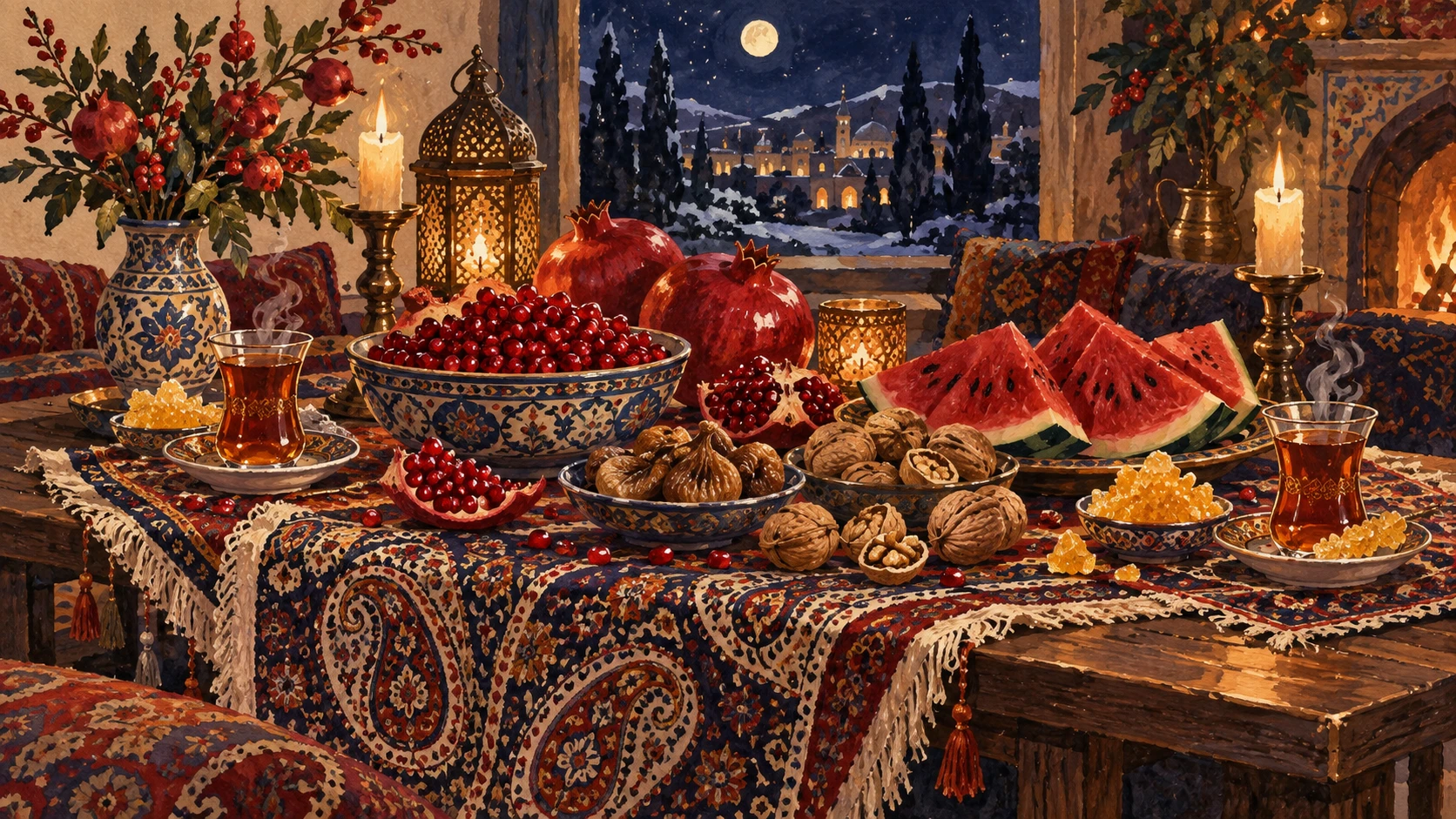
Families gather on the longest night of the year to eat fruit and nuts together.
World Heritage Celebration
In 2022, UNESCO added the Yalda festival to the list of human cultural heritage.
The governments of Afghanistan and Iran prepared the official nomination file together.
People celebrate Yalda in winter on the longest night of the entire solar year.
Families gather at home around tables filled with red fruit and recite classical poems.
International heritage rules protect shared cultural traditions across borders without demanding fixed food menus.
Official registries do not force families to prepare the same expensive holiday foods.
Fresh Red Fruits
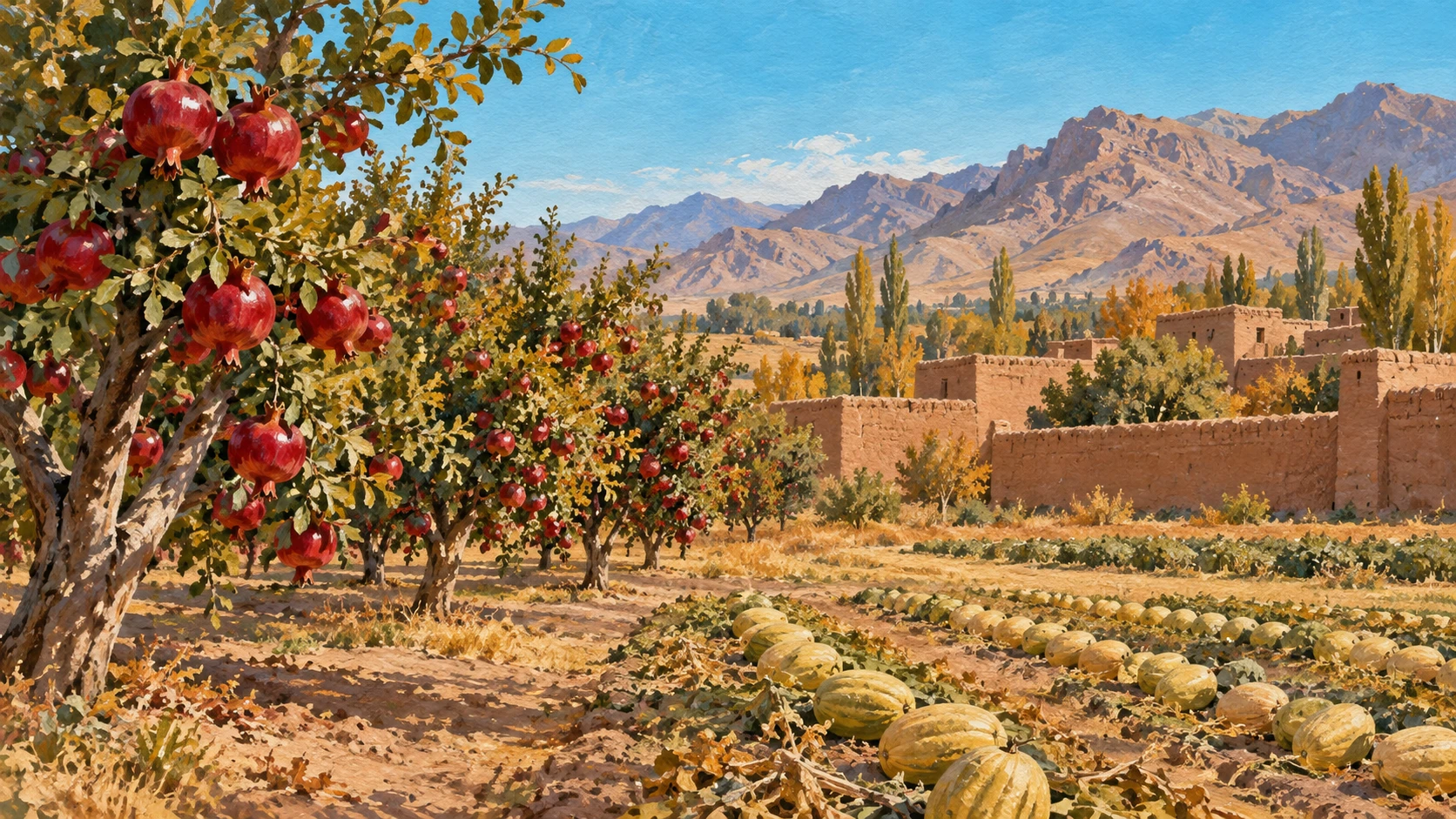
Fresh pomegranates and watermelons are the main red fruits placed on holiday tables.
The bright red fruit color represents warm morning dawn and the return of sunlight.
Farmers use careful autumn storage methods so families can enjoy fresh watermelons in late December.
Orchards in Kandahar and Kapisa pick ripe pomegranates for city markets before the winter solstice.
Village households keep harvested melons safe inside dry straw and cool underground cellars.
The winter holiday creates strong buyer demand for stored sweet melons in late December.
Dried Fruits and Nuts
Dried fruits and roasted nuts give people good food during long cold winter nights.
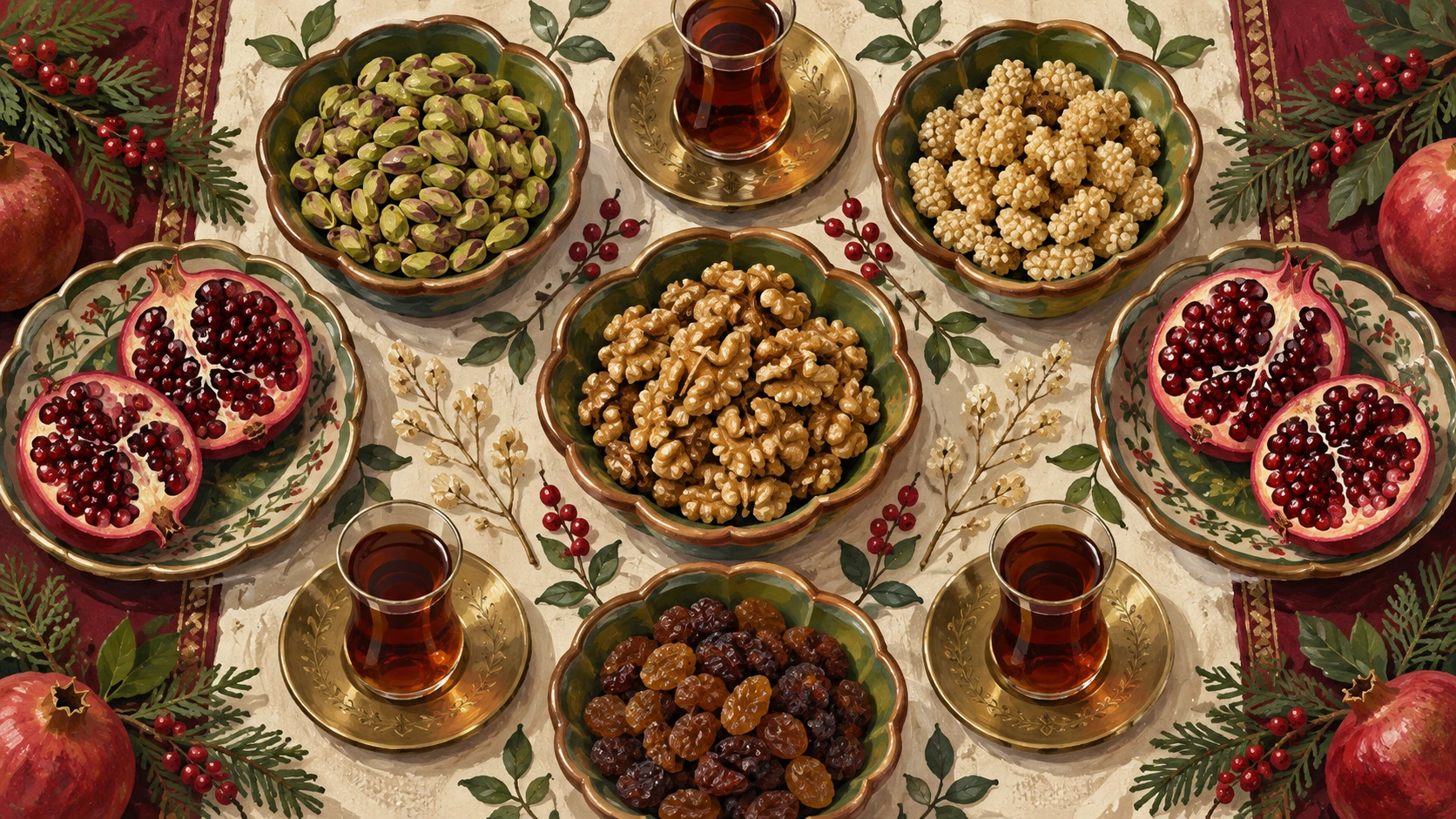
Holiday trays offer tasty walnuts, green raisins, salted pistachios, and roasted chickpeas.
City families soak dried apricots, raisins, and almonds in clean water to make fruit compote.
Sweet white mulberries dried in mountain valleys serve as a popular natural sugar.
Eating mixed nuts and sweet dried fruit gives good energy during freezing cold evenings.
Families prepare their dried fruit bowls several days before the holiday gathering starts.
Evening Tea in Herat
Herat province shares close language and cooking traditions with eastern Khorasan in Iran.
Friends in Herat drink hot tea together and read famous Persian poetry during the solstice.
People drink warm black and green tea sweetened with yellow saffron rock sugar.
Bakers in city bazaars make cardamom halva and sweet layered pastries for holiday shoppers.
Trade routes between Herat and Mashhad carry saffron, aromatic spices, and dried nuts across borders.
Local cooks prepare holiday food using crops grown in nearby valley fields and orchards.
Winter Food Markets
Shop prices for fresh pomegranates and melons increase sharply in the middle of December.
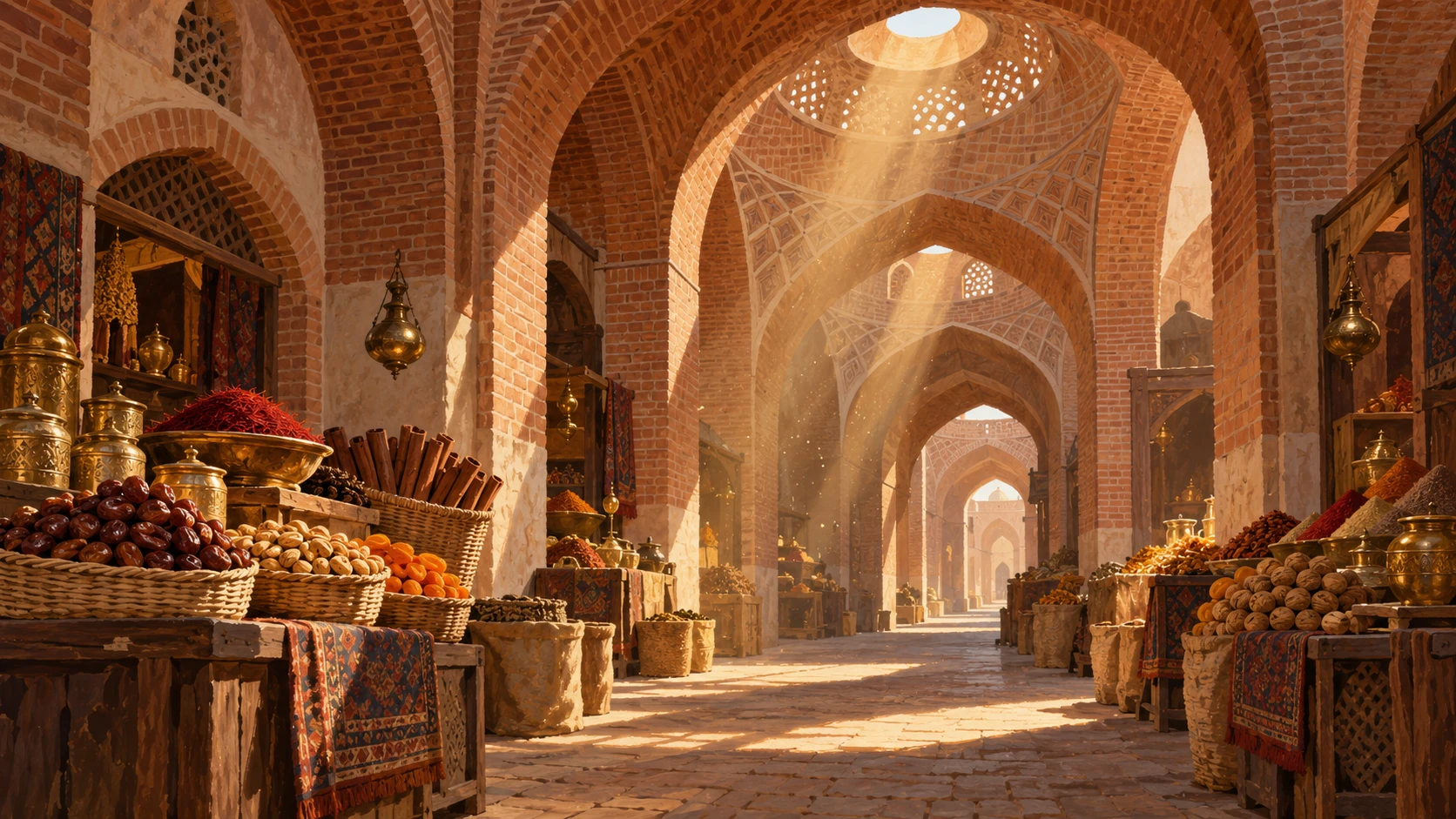
Central bazaars in Kabul depend on heavy trucks bringing fruit from warm southern valleys.
Freezing snow storms on high mountain roads cause long travel delays for fruit trucks.
Market surveys show that fresh fruit costs much more than dried nuts in December.
Families with small budgets buy cheap dried mulberries and roasted melon seeds instead.
Price reports show that family income determines who can afford fresh holiday fruits.
Family Budgets in Winter
Cultural heritage awards do not mean every family can buy large amounts of holiday food.
Hard economic conditions and low family earnings prevent poor households from buying special treats.
Rural families celebrate winter solstice quietly at home without buying costly city sweets.
Holiday table photos do not show whether families receive enough healthy daily nutrition in winter.
Official heritage documents describe shared customs without measuring basic food security across provinces.
Economic reports must separate holiday cultural celebrations from the daily challenges of poor families.
A2 · Elementary
Winter Solstice Traditions and Seasonal Food in Afghanistan
People celebrate Yalda by sharing stored fruit, nuts, and hot tea during cold December nights.
United Nations Cultural Recognition
In 2022, UNESCO formally inscribed Yalda and Chella as intangible cultural heritage.
Afghanistan and Iran submitted a joint multinational nomination document for Inscription 01877.
The registration text describes Yalda as a festive seasonal event marking the winter solstice.
Relatives organize hospitable gatherings where they display seasonal fruits and read classical literature.
International heritage authorities safeguard regional traditions while respecting independent household customs.
State listings omit specific menu requirements so families can celebrate according to their domestic budgets.
Storing Watermelons and Pomegranates
Fresh watermelons and pomegranates serve as the primary symbolic fruits on traditional solstice platters.
The deep crimson shade of these fruits symbolizes the rising morning dawn and renewing sunlight.
Eating fresh watermelon during late December requires specialized post-harvest storage routines starting in autumn.
Commercial orchards in Kandahar and Kapisa transport late pomegranate harvests to provincial bazaar centers.
Farming families protect late-season melons by packing them into dry straw beds within cool earth cellars.
Solstice traditions produce an acute consumer shopping rush for stored watermelon stocks across major cities.
Traditional Dried Fruit Plates
Shelled nuts and dried tree fruits supply durable nutrition when fresh produce becomes scarce in winter.
Hospitality platters regularly include roasted chickpeas, green raisins, salted pistachios, and shelled walnuts.
Urban households prepare festive compotes by hydrating dried apricots, sweet almonds, and dark raisins in bowls.
Dried white mulberries collected from high mountain terraces function as widely enjoyed natural table sweeteners.
High-calorie nut mixtures give people concentrated physical energy throughout freezing December evenings.
Home cooks usually start soaking their dried fruit compote mixtures several days before guests arrive.
Shared Customs in Herat
Herat province maintains historic linguistic and culinary connections with the Khorasan territory of eastern Iran.
Solstice celebrations in Herat involve continuous tea drinking alongside the communal reading of classical Persian poetry.
Hosts offer hot green and black tea accompanied by pieces of crystallized saffron rock sugar.
Local bazaar confectioners craft seasonal pastries and cardamom halva to supply family party tables.
Established trade routes between Herat and Mashhad have long supported shipments of saffron, nuts, and spices.
Regional pastry makers adapt holiday recipes according to provincial horticultural yields and available ingredients.
Transport and Bazaar Prices
Retail prices for pomegranates and watermelons rise sharply during the two weeks before December twenty-first.
Wholesale fruit markets in Kabul rely upon long-haul truck transport from southern agricultural river valleys.
Freezing temperatures and heavy highway snowfall frequently delay transport trucks crossing steep mountain passes.
Market research reveals a significant price gap between perishable fresh melons and shelf-stable domestic nuts.
Budget-conscious shoppers frequently replace expensive fresh fruit with dried valley mulberries and roasted seeds.
Official market price bulletins show that household purchasing power dictates access to premium holiday produce.
Economic Realities of Winter
Official cultural inscriptions do not guarantee that every ordinary family can afford an elaborate solstice feast.
Broad economic distress and diminished wages sharply restrict extra food expenditures for low-income households.
Rural agrarian families mark the winter solstice with modest meals rather than expensive commercial bazaar goods.
Documentary descriptions of celebratory tables do not measure broader household nutritional adequacy during winter.
Safeguarding treaties record shared ritual symbols without indicating consistent food availability across all provinces.
Objective economic reporting distinguishes festive ceremonial customs from underlying household food security.
B1 · Intermediate
Solstice Celebrations and Winter Foodways Across Afghanistan and Iran
Cultural traditions link family hospitality with agricultural storage methods and seasonal bazaar trade.
Official Cultural Heritage Listing
In 2022, UNESCO inscribed Yalda and Chella on the Representative List of the Intangible Cultural Heritage of Humanity.
The nomination dossier was jointly compiled and submitted by cultural ministries in Afghanistan and Iran.
Official documentation recognizes Yalda as a major cultural marker commemorating the winter solstice.
Community celebrations center on evening family reunions enhanced by symbolic fruit displays and poetic recitations.
Multilateral safeguarding agreements confirm cross-border cultural continuity without establishing uniform food rules.
Heritage inventories intentionally avoid prescriptive menu guidelines to honor diverse economic household conditions.
Symbolic Fruits and Post-Harvest Storage
Pomegranates and watermelons form the essential fresh centerpieces presented on festive solstice tables.
The vivid scarlet color of both fruits carries deep symbolic meaning, evoking early morning dawn and radiant sunshine.
Serving fresh watermelon in midwinter relies upon sophisticated agricultural preservation techniques honed over generations.
Horticultural districts in Kandahar and Kapisa transport late pomegranate crops to metropolitan commercial bazaars.
Farming communities store late-harvest melons inside protective dry straw within insulated underground earthen cellars.
The solstice celebration generates an abrupt commercial demand surge for stored melon supplies in provincial markets.
Dried Fruits, Compotes, and Valley Mulberries
Nutritious dried fruits and roasted tree nuts provide vital dietary stability when winter cold halts agricultural production.
Traditional ceremonial platters feature roasted chickpeas, emerald green raisins, salted pistachios, and shelled walnuts.
Urban families craft a cherished celebratory compote by steeping sun-dried apricots, almonds, and raisins in filtered water.
Sun-dried white mulberries harvested across northern mountain valleys function as wholesome organic sweeteners.
The nutrient density of combined nuts and dehydrated fruits delivers crucial caloric sustenance during freezing nights.
Household cooks customarily initiate the steeping of dried fruit compotes several days ahead of the gathering.
Regional Hospitality and Tea Traditions in Herat
Western Herat province exhibits profound linguistic and gastronomic affinities with the Iranian Khorasan region.
Solstice evenings across Herat involve continuous tea hospitality alongside public readings from classical Persian literary masters.
Guests enjoy steaming cups of green and black tea sweetened with fragrant saffron crystal candy.
Experienced confectioners in city bazaars produce seasonal holiday sweets, including spiced cardamom halva and flaky pastries.
Historic commercial corridors linking Herat with Mashhad have sustained steady trade in saffron, confections, and dry nuts.
Provincial artisans craft solstice confections in direct alignment with regional orchard harvests and market availability.
Freight Transport and Seasonal Market Spikes
Consumer prices for fresh pomegranates and watermelons record substantial escalation during the weeks preceding late December.
Central wholesale distribution bazaars in Kabul rely extensively on long-distance truck freight from southern farming basins.
Freezing conditions, ice storms, and heavy mountain pass snowdrifts disrupt trucking timetables and inflate freight charges.
Market monitoring reveals marked price divergence between perishable fresh produce and shelf-stable dried nuts.
Households operating under tight financial constraints routinely substitute expensive fresh fruit with dried mulberries and seeds.
Official market price bulletins demonstrate that consumer access to luxury holiday foods depends entirely on purchasing power.
Household Budgets and Socioeconomic Divergence
Multilateral cultural designations cannot be taken as proof that every Afghan household commands an abundant solstice table.
Severe macroeconomic distress and declining real household earnings sharply curtail discretionary food purchases.
Rural agrarian families commemorate solstice night within modest domestic parameters without purchasing high-end city confections.
Ethnographic accounts of celebratory foods provide no systematic measurement of broad nutritional adequacy during winter.
Safeguarding treaties record shared symbolic customs without measuring real food security across different provinces.
Rigorous socioeconomic reporting distinguishes symbolic cultural observances from the concrete economic hurdles of families.
B2 · Upper Intermediate
Agronomic Practices and Market Dynamics of the Winter Solstice Table
The shared winter solstice festival reflects horticultural preservation methods, highway freight logistics, and consumer commodity markets.
Multilateral Heritage Frameworks
UNESCO formalized the inscription of Yalda and Chella on the Representative List of Intangible Cultural Heritage in 2022.
The formal submission, cataloged as Inscription 01877, was compiled jointly by delegates from Afghanistan and Iran.
Safeguarding dossiers characterize Yalda as an astronomical celebration marking the winter solstice and solar renewal.
Community traditions revolve around domestic hospitality gatherings that unite seasonal fruit presentation with poetic recitations.
International legal treaties validate regional ethnographic continuity across political borders without imposing dietary uniformity.
Heritage inventories purposefully exclude mandatory culinary formulas in recognition of heterogeneous household incomes.
Post-Harvest Storage of Perishable Solstice Staples
Cultivated pomegranates and watermelons represent the preeminent perishable fresh goods exhibited on solstice table spreads.
The pronounced red coloration of these seasonal fruits represents the solar dawn and cyclical renewal of thermal warmth.
Midwinter watermelon consumption relies upon specialized post-harvest storage systems constructed during early autumn harvests.
Specialized orchards located in Kandahar and Kapisa channel late-season pomegranate crops to major regional urban centers.
Agrarian households maintain late-season melons by encasing them in dry straw cushions inside subterranean earthen storage chambers.
The onset of winter solstice customs triggers an intense commercial demand surge for stored melon supplies across metropolitan markets.
Shelf-Stable Fruit Reserves and Nutritional Value
Dehydrated fruits and roasted tree nuts supply essential shelf-stable nutritional reserves when winter terminates regional cultivation.
Ceremonial hospitality trays feature salted pistachios, shelled walnuts, roasted chickpeas, and green table raisins.
Urban families prepare nutritious fruit infusions by rehydrating sun-dried apricots, almonds, and raisins in fresh water.
Sun-cured white mulberries gathered from high mountain valleys serve as widely consumed natural sweeteners during winter gatherings.
The concentrated caloric profile of nuts and dried fruits delivers indispensable metabolic fuel throughout sub-zero nights.
Domestic food preparation protocols dictate soaking dried fruit compotes several days in advance to achieve full culinary infusion.
Cross-Border Commercial Corridors and Urban Confectionery
Herat province shares deep linguistic and gastronomic lineage with the Khorasan territory of contemporary eastern Iran.
Solstice gatherings across Herat systematically pair continuous tea service with the recitation of classical Persian poetry.
Steaming pots of green and black tea are traditionally sweetened with aromatic saffron rock sugar throughout the evening.
Bazaar confectioners fabricate seasonal confectionery assortments, including cardamom halva and delicate layered pastries.
Cross-border merchant networks connecting Herat with Mashhad historically facilitated trade in saffron, confectionery, and tree nuts.
Provincial confectioners calibrate solstice sweets to reflect regional horticultural surpluses and wholesale ingredient prices.
Wholesale Supply Chains and December Price Surges
Retail prices for fresh watermelons and pomegranates undergo marked seasonal appreciation throughout the middle of December.
Wholesale trade networks in Kabul depend heavily on long-distance refrigerated and flatbed trucking from southern agricultural valleys.
Freezing weather and severe snowfalls across critical mountain passes impede transport schedules and escalate trucking freight rates.
Market monitoring indicates significant price divergence between delicate fresh produce and resilient domestic tree nuts.
Lower-income consumers mitigate steep fresh fruit prices by purchasing domestic dried mulberries and roasted melon seeds.
Systematic commodity price bulletins demonstrate that consumer participation in solstice traditions is governed by purchasing power.
Socioeconomic Stratification and Food Security Boundaries
UNESCO safeguarding documentation should not be misconstrued as evidence that all Afghan families maintain lavish solstice spreads.
Prevailing macroeconomic distress and constrained real wages strictly curtail discretionary food outlays among vulnerable families.
Subsistence rural households observe the winter solstice within austere financial boundaries without purchasing urban market goods.
Ethnographic accounts of celebratory food customs do not constitute statistical indices of regional nutritional adequacy.
Heritage protection charters document shared cultural idioms without establishing uniform caloric baselines across administrative districts.
Analytical economic assessments maintain a clear boundary between symbolic solstice rituals and concrete food security metrics.
C1 · Advanced
Yalda Table Foods in Afghan and Iranian Practice: Solstice Foodways and Agronomic Realities
Documentary records of the shared winter solstice table reveal distinct post-harvest preservation practices, seasonal commodity pricing, and regional culinary variations across Afghanistan and Iran.
UNESCO Intangible Heritage Record
UNESCO formally inscribed Yalda and Chella on the Representative List of the Intangible Cultural Heritage of Humanity in 2022.
The official nomination dossier for Inscription 01877 was submitted jointly by the governments of Afghanistan and Iran.
Heritage documentation defines Yalda as the celebration of the winter solstice marking the longest night of the solar year.
UNESCO documentation emphasizes communal family gatherings convened around seasonal fruit displays and literary recitations.
International safeguarding frameworks acknowledge regional cultural continuity across borders without prescribing standardized household menus.
Official heritage registries omit itemized culinary mandates to respect divergent provincial and economic household realities.
Pomegranates and Watermelons as Solstice Staples
Pomegranates and watermelons constitute primary symbolic fresh fruits displayed upon traditional winter solstice tables.
Red coloration in solstice fruits symbolically evokes the warmth of dawn and the cyclical renewal of sunlight.
Watermelons consumed in late December depend upon specialized post-harvest storage techniques implemented during autumn harvests.
Horticultural orchards in Kandahar and Kapisa harvest pomegranates distributed to urban bazaars ahead of the winter solstice.
Traditional agrarian households preserve late-season melons within dry straw bedding and earthen subterranean storage cellars.
Winter solstice customs generate a distinct late-December spike in commercial consumer demand for stored melon stocks.
Dried Fruits, Nuts, and Mewa Traditions
Dried fruits and roasted nuts provide a shelf-stable nutritional foundation for winter solstice gatherings.
Traditional hospitality trays feature shelled walnuts, salted pistachios, roasted chickpeas, and green raisins.
Urban Afghan households often prepare celebratory fruit compotes by rehydrating dried apricots, raisins, and almonds in water.
Sun-dried white mulberries harvested from mountain valleys serve as widely consumed natural sweeteners during winter festivities.
Nut and dried fruit blends offer dense concentrations of dietary energy during prolonged freezing winter nights.
Household preparation of dried fruit infusions frequently commences several days prior to solstice night to ensure infusion.
Herat and Cross-Border Culinary Exchanges
Herat province demonstrates shared linguistic and culinary continuity with eastern Iranian Khorasan food traditions.
Solstice evening gatherings in Herat customarily combine continuous tea service with the recitation of classical Persian poetry.
Brewed black and green tea is traditionally sweetened with crystalline saffron rock sugar throughout evening celebrations.
Confectioners in regional commercial bazaars prepare seasonal sweets including cardamom halva and layered pastries for the solstice.
Cross-border transit corridors historically facilitated commerce in confectionery saffron, spices, and dried nuts between Herat and Mashhad.
Provincial culinary expressions adapt solstice foodways according to local horticultural harvests and regional confectionery practices.
December Market Surges and Supply Logistics
Retail prices for fresh pomegranates and watermelons register noticeable seasonal price escalation during the weeks preceding December 21.
Central wholesale food bazaars in Kabul rely heavily on long-distance truck freight from southern horticultural valleys.
Sub-zero temperatures and snow accumulations across mountain highway passes disrupt freight schedules and inflate transport surcharges.
Market survey data document sharp price divergence between perishable fresh fruits and shelf-stable domestic nuts.
Economically constrained households frequently substitute high-cost fresh produce with domestic dried mulberries and toasted melon seeds.
Commodity price bulletins confirm that consumer access to celebratory solstice foods depends directly on household purchasing power.
Ethnographic Limits and Household Disparities
International heritage registrations cannot be interpreted as empirical proof that all Afghan families maintain lavish solstice tables.
Widespread macroeconomic hardship and reduced household earnings severely restrict non-essential food expenditures across vulnerable populations.
Subsistence rural households observe winter solstice night within strict budgetary limits and without premium urban market confections.
Documented solstice spreads do not provide statistical measures of overall winter nutritional adequacy or caloric sufficiency.
Safeguarding dossiers document shared cultural symbolism without establishing uniform nutritional baselines across provinces.
Rigorous economic reporting maintains a strict boundary between celebrated cultural heritage rituals and household food security indicators.
C2 · Mastery
Agronomic Geographies and Discursive Framings of the Winter Solstice Table in Afghanistan and Iran
A critical analysis of the material culture, commodity logistics, and socioeconomic stratification underpinning winter solstice foodways in Greater Khorasan.
Multilateral Safeguarding and the Dematerialization of Heritage
The 2022 inscription of Yalda and Chella under UNESCO Inscription 01877 formalized multilateral recognition of solstice rites across Greater Khorasan.
Jointly authored by diplomatic and cultural delegates from Afghanistan and Iran, the dossier foregrounds shared cross-border ethnography.
Documentary classifications position the winter solstice as an astronomical watershed signifying the solar triumph over darkness.
Communal gatherings mobilized around seasonal pomological curation and poetic recitations form the core of ethnographic documentation.
Multilateral safeguarding structures valorize trans-boundary cultural continuity while abstaining from defining uniform domestic culinary repertoires.
By omitting standardized food inventories, international heritage authorities accommodate acute regional economic and ecological variances.
Horticultural Perishability and Vernacular Preservation Substrates
Pomegranates and watermelons function as preeminent semiotic anchors whose perishable flesh commands the ceremonial solstice table.
The vivid crimson flesh of these fruits serves an unambiguous allegorical function, evoking dawn light and vernal rebirth.
Consuming watermelons in late December presumes vernacular agrarian engineering tailored to arrest physiological fruit senescence.
Specialized horticultural belts across Kandahar and Kapisa channel late-ripening pomegranate cultivars to major urban consumer bazaars.
Agrarian households preserve fragile late-harvest melons by burying them in desiccated straw matrices within subterranean earthen cellars.
The convergence of solstice ceremonialism generates a pronounced late-December demand spike that strains dwindling stored melon stocks.
Dehydrated Pomological Reserves and Winter Nutritional Vectors
Dehydrated fruits and roasted tree nuts furnish a resilient shelf-stable nutritional foundation against winter agricultural dormancy.
Ceremonial hospitality trays display curated configurations of shelled walnuts, salted pistachios, roasted chickpeas, and dried raisins.
Urban households prepare complex celebratory compotes by rehydrating dehydrated apricots, green raisins, and almond kernels in water.
Desiccated white mulberries harvested from high mountain valleys serve as critical natural sweeteners across regional winter foodways.
The lipid and caloric concentration of these pomological blends delivers indispensable metabolic energy during freezing solstice nights.
Domestic foodway protocols prescribe initiating fruit rehydration several days prior to solstice night to facilitate complete aromatic infusion.
Trans-Provincial Foodways and Khorasani Urban Confectionery
Herat province exhibits an unbroken linguistic, poetic, and gastronomic dialectic with the contiguous Khorasan region of eastern Iran.
Solstice gatherings across Herat systematically integrate continuous tea service with the communal recitation of classical Persian poetry.
Infusions of black and green tea are sweetened with crystalline saffron candy, embodying regional aesthetics of hospitality.
Artisanal confectioners in urban covered bazaars manufacture specialized seasonal confections including cardamom halva and stratified pastries.
Historic trans-regional commercial corridors linking Herat with Mashhad facilitated trade in confectionery saffron, spices, and dried nuts.
Local culinary repertoires dynamically assimilate solstice rituals according to micro-regional orchard yields and confectionery traditions.
Freight Bottlenecks, Wholesale Spikes, and Elasticity of Substitution
Spot retail pricing for watermelons and pomegranates undergoes acute seasonal escalation during the weeks preceding late December.
Kabul wholesale commodity markets rely fundamentally upon long-haul truck transport operating out of southern horticultural basins.
Sub-zero temperatures and heavy snowdrifts along hazardous mountain pass corridors obstruct freight schedules and inflate transport rates.
Empirical market survey data illuminate profound price divergence between perishable fresh fruit and resilient domestic dried nuts.
Resource-constrained households respond to surging produce costs by substituting luxury fruit with dried mulberries and melon seeds.
Wholesale price bulletins demonstrate that household participation in solstice gastronomy is sharply stratified by income elasticity.
Epistemic Divergence Between Cultural Dossiers and Agrarian Realities
Multilateral safeguarding designations cannot be treated as empirical proof that all Afghan households possess abundant solstice spreads.
Severe macroeconomic shocks and eroded real incomes substantially restrict non-essential caloric expenditures across poor populations.
Subsistence rural families observe solstice night within stringent budgetary constraints and without expensive commercial sweets.
Ethnographic accounts of celebratory spreads yield zero quantitative measures of overall winter nutritional adequacy or caloric security.
Diplomatic safeguarding dossiers canonize shared cultural symbolism while bypassing the material deprivation of remote provincial households.
Rigorous socio-economic critique maintains an absolute analytical divide between celebrated cultural rites and agrarian living standards.
Check your understanding
Choose how closely you want to revisit the article. You can refer back while answering, and review explanations when you finish.
Quick Quiz A1
Try one question, then create a free account for the full Quick Quiz. Sign Up Free
Answer every question before checking. There is no time limit.
Your results
/ 1 correct (%)
Read the explanations to see how each answer connects to the article.
-
According to the section on World Heritage Celebration, what does the text identify regarding added?
1. Answer:
Quick Quiz A2
Try one question, then create a free account for the full Quick Quiz. Sign Up Free
Answer every question before checking. There is no time limit.
Your results
/ 1 correct (%)
Read the explanations to see how each answer connects to the article.
-
According to the section on United Nations Cultural Recognition, what does the text identify regarding formally?
1. Answer:
Quick Quiz B1
Try one question, then create a free account for the full Quick Quiz. Sign Up Free
Answer every question before checking. There is no time limit.
Your results
/ 1 correct (%)
Read the explanations to see how each answer connects to the article.
-
According to the section on Official Cultural Heritage Listing, what does the text identify regarding inscribed?
1. Answer:
Quick Quiz B2
Try one question, then create a free account for the full Quick Quiz. Sign Up Free
Answer every question before checking. There is no time limit.
Your results
/ 1 correct (%)
Read the explanations to see how each answer connects to the article.
-
According to the section on Multilateral Heritage Frameworks, what does the text identify regarding formalized?
1. Answer:
Quick Quiz C1
Try one question, then create a free account for the full Quick Quiz. Sign Up Free
Answer every question before checking. There is no time limit.
Your results
/ 1 correct (%)
Read the explanations to see how each answer connects to the article.
-
According to the section on UNESCO Intangible Heritage Record, what does the text identify regarding formally?
1. Answer:
Quick Quiz C2
Try one question, then create a free account for the full Quick Quiz. Sign Up Free
Answer every question before checking. There is no time limit.
Your results
/ 1 correct (%)
Read the explanations to see how each answer connects to the article.
-
According to the section on Multilateral Safeguarding and the Dematerialization of Heritage, what does the text identify regarding yalda?
1. Answer:
