A1 · Beginner
Trade Routes and Border Posts of Afghanistan
A simple guide to the borders, trains, trucks, and trade records of Afghanistan.
Counting Goods Across the Borders
The World Bank collects trade records in a large database called WITS. This system aggregates official customs numbers from partner countries. In these books, official merchandise exports total about one point nine billion dollars each year. These numbers show where trucks and goods go.
Most goods travel to neighboring countries in Central and South Asia. In fact, these partners buy over eighty percent of all documented exports. But economists notice that partner records often diverge from local customs numbers. Small differences happen when counts do not match.
Experts also separate official declarations from undocumented smuggling and informal barter trade. Many items cross mountains without papers. Independent trade audits caution that static database reports miss sudden delays or seasonal border post closures. Real trade changes with the weather.
Trains and Cargo at Hairatan
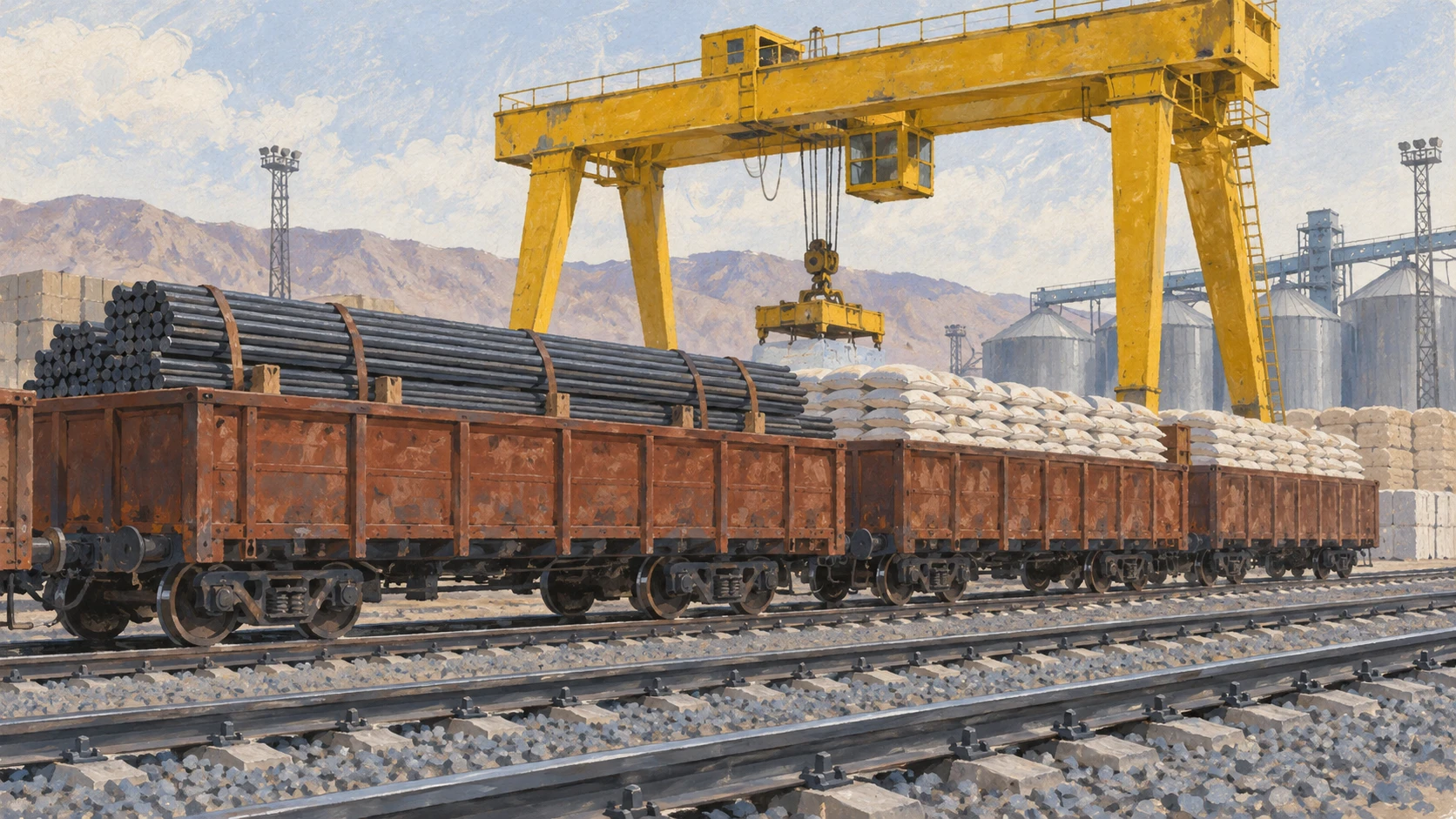
Hairatan is an important dry port along the northern border. It sits on the wide Amu Darya river and connects with Uzbekistan. A seventy-five kilometer broad-gauge rail link connects Termez directly to cargo transshipment yards in Mazar-i-Sharif. Heavy trains carry goods day and night.
Northern customs checkpoints handle large shipments of imported wheat flour, fertilizer, structural steel, and petroleum products. These goods help farmers and builders across the country. Freight forwarders transfer containers from train cars onto heavy multi-axle Afghan trucks for local distribution.
When cargo waits too long, companies must pay expensive demurrage fees at marshalling yards. Rail protocols also set daily quotas for freight wagons that cross the Friendship Bridge over the river. Workers check every wagon carefully before it moves forward.
Trucks from Iran at Islam Qala
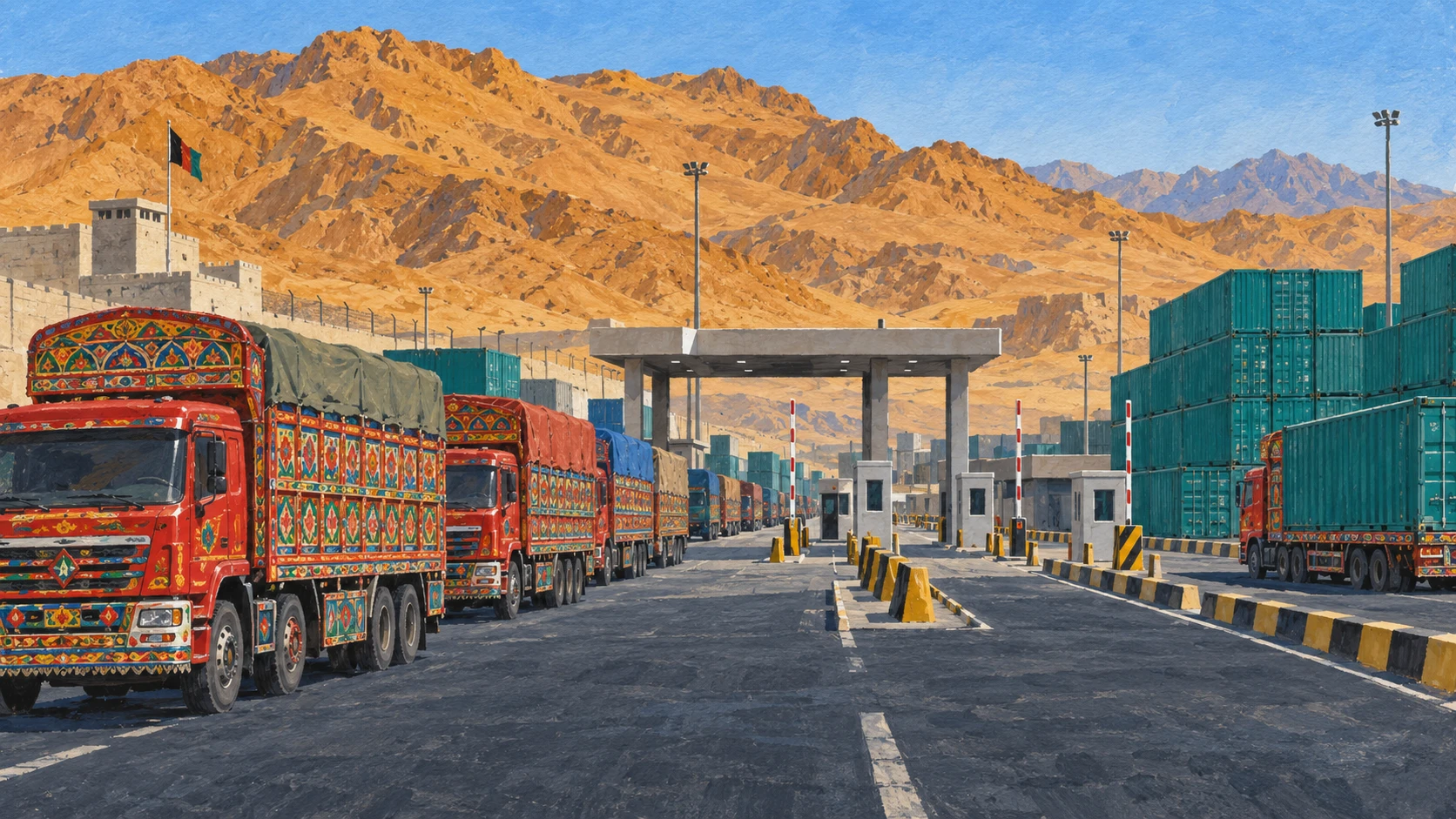
Islam Qala is a busy customs post in Herat Province. It handles most overland commercial highway traffic coming from Iran. Large trucks bring petrochemical fuel, industrial plastics, construction cement, and packaged food items. The road is always filled with vehicles.
Paved highways run directly from Islam Qala into commercial warehouses in Herat city. From there, other routes carry goods toward Kandahar. During peak shipping weeks, truck drivers encounter long customs clearance queues outside the main gates.
Currency exchange volatility between the Iranian rial and the afghani causes quick price adjustments for merchants in Herat. Logistics research shows that modern electronic scanner bays help refrigerated food trucks move through inspections much faster.

Border Gates at Torkham and Spin Boldak
Torkham is an eastern border terminal in Nangarhar Province. It connects the highway from Kabul to Peshawar and South Asian markets. During harvest times, farmers send fresh fruits, dried nuts, medicinal herbs, and raw cotton south through this gate.
In Kandahar Province, the Spin Boldak dry port offers a southern gateway toward the seaport of Karachi. Bilateral transit trade agreements set rules for tracking transponders and vehicle axle standards. These rules keep roads safe and trucks moving.
Sudden border closures caused by political disputes can cause spoilage for perishable horticultural fruit consignments. When gates close, boxes of grapes can rot in the heat. Trade associations advocate building cold-storage staging warehouses near border crossings to save valuable food.
Computer Systems at Customs Houses
The Afghanistan Customs Department uses an automated computer system called ASYCUDA World in provincial customs houses. This tool helps officers read electronic manifests and classification codes to calculate import duties and taxes accurately.
Money collected at border dry ports provides vital public revenue for the national treasury. These fees help pay for public services. However, weak telecommunications connections and power outages at remote border stations sometimes force staff to use manual paper logs.
Official valuation guidelines establish baseline schedules for imported goods to stop invoice under-declaration. Near the gates, licensed clearance brokerage firms help local merchants prepare digital declarations and submit import bills correctly.

Working with Regional Neighbors
Regional programs like the Central Asia Regional Economic Cooperation initiative promote coordinated border management procedures. Working together helps nearby countries share trade information and reduce waiting times.
Being a landlocked developing nation brings higher transport costs and difficult regulatory hurdles for Afghan traders. To solve problems, chamber of commerce delegations hold regular bilateral negotiations to secure truck driver visas and permit quotas.
Economists emphasize that building bonded inland clearance depots near manufacturing centers reduces congestion at border gates. Meanwhile, transport ministries support multimodal freight corridors linking South and Central Asia. Systematic baseline accounting provides clear metrics for future modernization.
A2 · Elementary
Daily Commercial Convoys and Customs Gateways Across Afghanistan
An elementary overview of daily routines for truck convoys, freight trains, and customs clearance agents.
Documenting Formal Freight and Border Volume
International trade records collected in the WITS database reveal the primary flow of goods moving across national borders. The database aggregates reported customs partner records to calculate total merchandise movement. Official registries document approximately one point nine billion dollars in annual merchandise exports. These statistics demonstrate how essential regional supply chains are for local merchants.
Bilateral export destinations in Central and South Asia purchase over eighty percent of all documented goods. However, trade economists observe that mirror trade data from partner countries regularly diverge from national Afghan customs figures. These statistical gaps occur when partner nations record cargo values differently.
Border analysts carefully distinguish recorded customs declarations from informal barter trade and undocumented smuggling across mountain pathways. Furthermore, independent trade audits caution that static database snapshots do not capture transit delays or seasonal border post closures that disrupt commercial operations.
Rail Operations at the Hairatan Border Terminal
Located on the banks of the Amu Darya river, the Hairatan dry port serves as the main northern rail gateway linking Afghanistan with Uzbekistan. A vital seventy-five kilometer cross-border broad-gauge rail link connects Termez directly to freight transshipment yards in Mazar-i-Sharif. Heavy trains arrive daily carrying essential industrial materials and food supplies.
Customs checkpoints in the north inspect substantial shipments of imported wheat flour, agricultural fertilizer, structural steel, and refined petroleum products. Once clearance begins, freight forwarders transfer container cargo onto heavy multi-axle commercial trucks for domestic road distribution to regional towns.
When cargo inspections stall in border marshalling yards, traders face expensive customs demurrage fees and container repositioning costs. Strict railway protocols establish fixed daily quotas for freight wagons passing across the Friendship Bridge over the river, requiring precise scheduling between both nations.
Highway Transit Through the Islam Qala Checkpoint
The Islam Qala customs post in Herat Province manages the primary overland commercial highway traffic arriving from Iran. Long columns of commercial trucks deliver imported petrochemical fuel, industrial plastics, construction cement, and processed packaged food items directly to western distribution hubs.
Well-maintained paved transit highways link Islam Qala directly with commercial warehouses in Herat city, providing onward connections toward Kandahar. During peak shipping periods, cross-border truck drivers encounter multi-day customs clearance queues that stretch along the border approach corridor.
Rapid exchange volatility between the Iranian rial and the afghani forces wholesale import merchants in Herat to make frequent pricing adjustments. Meanwhile, logistics research indicates that modernizing electronic scanner bays significantly reduces clearance times for refrigerated agricultural food trucks.
Eastern Passages and Southern Coastal Corridors
Operating in Nangarhar Province, the Torkham border terminal serves as an essential eastern overland trade corridor connecting Kabul with Peshawar and broader South Asian markets. High volumes of fresh fruits, dried nuts, medicinal herbs, and raw cotton move southward through Torkham during seasonal agricultural harvest peaks.
Further south in Kandahar Province, the Spin Boldak dry port offers a strategic commercial gateway for transit trade flowing toward the seaport of Karachi. Bilateral transit trade agreements establish strict rules regarding tracking transponders, financial bond requirements, and vehicle axle-load standards across both border gates.
Sudden border gate closures triggered by administrative disputes frequently lead to severe spoilage of perishable horticultural fruit consignments. To prevent such losses, regional trade associations advocate building cold-storage staging warehouses on both sides of border crossings to preserve export cargo value.
Automated Processing and Revenue Administration
The Afghanistan Customs Department maintains the automated system known as ASYCUDA World across major provincial border customs houses. The digital platform uses electronic manifests and standardized classification codes to execute computerized calculations of import duties and applicable sales taxes.
Customs revenues collected at border dry ports represent an indispensable source of non-tax domestic public revenue for the state treasury. However, frequent power outages and unstable digital telecommunications connections at remote border stations force customs officers to revert temporarily to manual paper clearance logs.
National valuation guidelines establish minimum baseline valuation schedules for imported manufactured consumer goods to prevent invoice under-declaration. Additionally, licensed customs clearance brokerage firms operating near border posts assist traders in filing digital declarations and processing commercial bills.
Cross-Border Agreements and Trade Facilitation
Multilateral frameworks like the Central Asia Regional Economic Cooperation program actively promote coordinated border management procedures across Central Asia. These initiatives encourage neighboring customs agencies to simplify clearance documents and harmonize transit inspections.
A landlocked developing country status places higher freight transport costs and multiple regulatory hurdles on Afghan commercial traders. To address transit bottlenecks, joint chamber of commerce delegations conduct regular bilateral negotiations over truck driver visa allocations and permit quotas.
Trade economists emphasize that establishing bonded inland clearance depots near manufacturing zones substantially reduces congestion at border dry ports. Furthermore, regional transport ministries promote multimodal freight corridors linking South and Central Asia, while systematic baseline accounting provides measurable metrics for trade corridor modernization.
B1 · Intermediate
Arteries of Central Asian Commerce: Afghanistan's Overland Trade Geography
An intermediate analysis of historical border passes, merchant practices, railway links, and customs bottlenecks.
The Statistical Footprint of Registered Trade
For generations, merchant families in Kabul and regional trading towns have tracked the physical movement of caravans across rugged mountain passes. Today, global economists rely on the World Integrated Trade Solution database maintained by the World Bank. The database aggregates formal merchandise trade flows derived from customs partner records around the world. These registries reveal that annual official merchandise exports total roughly one point nine billion dollars, highlighting the enduring vitality of regional business networks.
The geography of documented sales remains remarkably concentrated. Neighboring countries in Central and South Asia represent over eighty percent of all recorded bilateral merchandise export destinations. Yet veteran trade economists recognize that mirror trade data published by partner customs authorities frequently diverge from domestic Afghan records. These discrepancies arise from differing currency conversion dates, transit transshipment points, and contrasting valuation formulas.
Experienced statisticians maintain a sharp distinction between formal customs declarations and the persistent undercurrent of undocumented commodity smuggling and informal barter trade in peripheral border valleys. Independent trade audits caution that static database snapshots do not capture transit delays or seasonal border post closures, both of which dictate the actual rhythm of commercial life.
The Northern Rail Lifeline Across the Amu Darya
Along the northern frontier, the Hairatan dry port on the historical Amu Darya river stands as the primary rail gateway linking Afghanistan with Uzbekistan and the wider rail networks of Central Asia. The cross-border infrastructure centers on a seventy-five kilometer broad-gauge rail link extending from Termez directly into the bustling transshipment yards of Mazar-i-Sharif. Train wagons arrive steadily, bearing vital supplies that sustain provincial economies.
Customs inspectors at these northern checkpoints clear enormous quantities of imported wheat flour, synthetic fertilizer, structural steel, and refined petroleum products. As rail cars are uncoupled, local freight forwarders transfer container cargo onto heavy multi-axle commercial trucks equipped to handle rough provincial roads. This transshipment process supports an entire ecosystem of cranes, logistics brokers, and warehouse operators.
Delays in documentation can disrupt these delicate logistics chains. When inspections falter, traders accumulate heavy customs demurrage fees and container repositioning costs in crowded marshalling yards. Strict bilateral railway protocols enforce fixed daily quotas for freight wagons permitted across the Friendship Bridge over the Amu Darya, making reliable dispatching essential for regional commerce.
Western Gateways and Highway Corridors in Herat
Positioned along the western border, the Islam Qala customs post in Herat Province handles the overwhelming volume of overland commercial highway traffic flowing from Iran. The corridor buzzes with continuous truck movement, bringing imported petrochemical fuel, industrial plastics, construction cement, and processed packaged food items to wholesale markets throughout the western provinces.
From the frontier, paved transit highways connect Islam Qala directly to commercial storage warehouses in Herat city, before extending south toward the commercial hubs of Farah and Kandahar. During seasonal peaks in trade, long-distance truck drivers encounter multi-day customs clearance queues that line the desert highway, demanding patience and careful logistics management.
Cross-border commerce requires constant financial vigilance. Rapid exchange rate volatility between the Iranian rial and the afghani forces Herat merchants to recalculate import prices almost daily. In response to these operational frictions, recent logistics research demonstrates that modernizing electronic scanner bays significantly reduces cargo clearance processing times, particularly for refrigerated agricultural food trucks carrying perishable produce.
The Khyber Corridor and Southern Transit Lifelines
Rising through the eastern mountain ranges, the Torkham border terminal in Nangarhar Province functions as the historic eastern overland trade corridor connecting Kabul to Peshawar and the sprawling consumer markets of South Asia. During the late summer and autumn harvest peaks, convoys loaded with fresh table grapes, pomegranates, dried nuts, medicinal herbs, and raw cotton move southward through the pass in continuous waves.
To the south, the Spin Boldak dry port in Kandahar Province provides the southern commercial gateway for transit trade moving toward the deep-water seaport of Karachi. Bilateral transit trade agreements strictly define mandatory carrier bond requirements, satellite tracking transponders, and authorized axle-load standards designed to protect regional highways from premature deterioration.
Nevertheless, cross-border commerce remains vulnerable to political volatility. Unannounced border gate closures sparked by administrative disagreements frequently cause devastating spoilage among perishable horticultural fruit consignments trapped in intense heat. Regional trade associations continue to advocate constructing insulated cold-storage staging warehouses on both sides of international border crossings to preserve export value during unforeseen disputes.
Modernizing Customs Operations with Digital Systems
In an effort to regularize fiscal collection, the Afghanistan Customs Department operates the automated system for customs data, widely recognized as ASYCUDA World, across principal provincial border customs houses. The digital platform relies on standardized classification codes and electronic customs manifests to execute computerized calculations of import tariffs and municipal taxes.
The revenues collected at these dry ports represent an indispensable source of non-tax domestic public revenue for the state treasury, supporting public infrastructure and civil administration. Yet digital modernization faces formidable technical obstacles in remote provinces, where unstable telecommunications connections and recurrent power outages force customs officers to revert temporarily to manual paper clearance logs.
To curb fraudulent practices, customs valuation guidelines establish mandatory minimum baseline valuation schedules for imported manufactured goods, preventing deliberate invoice under-declaration. In parallel, a licensed community of customs clearance brokerage firms operating around the dry ports helps private merchants compile accurate digital declarations and verify commercial shipping bills.
Regional Cooperation and Corridor Modernization
Bridging neighboring economic systems requires comprehensive institutional coordination. Multilateral initiatives like the Central Asia Regional Economic Cooperation program actively promote coordinated border management procedures, encouraging joint inspections, harmonized customs documentation, and shared infrastructure standards across member countries.
Despite these efforts, landlocked developing country status imposes persistently higher freight transport costs and complex multi-border regulatory hurdles on Afghan commercial traders. To resolve recurring transit impasses, joint chamber of commerce delegations conduct regular bilateral negotiations over driver visa allocations and annual road permit quotas.
Development economists emphasize that establishing bonded inland clearance depots near primary manufacturing zones can significantly alleviate congestion at frontier dry ports. Furthermore, regional transport ministries continue to promote multimodal freight corridors linking South and Central Asia across Afghan highways and railways, while systematic baseline accounting of customs throughput and border waiting times establishes rigorous empirical metrics for future modernization.
B2 · Upper Intermediate
Cross-Border Logistics Networks and Formal Trade Flows Across Afghanistan
An upper-intermediate analytical study examining recorded trade data, multimodal corridors, customs automation, and institutional governance.
Empirical Trade Patterns and Statistical Divergence in WITS
Quantifying the external commerce of a landlocked economy requires synthesizing disparate customs datasets across multiple jurisdictions. The World Integrated Trade Solution database developed by the World Bank serves as the primary international repository, where it aggregates recorded merchandise trade flows for Afghanistan based upon official customs partner records. According to these documented figures, annual merchandise exports recorded in national trade registries hover around one point nine billion dollars, illustrating the magnitude of formal cross-border exchange.
The geographical distribution of these exports reflects intense regional integration rather than global dispersion. Contiguous and proximate partners in Central and South Asia account for over eighty percent of Afghanistan's documented bilateral merchandise export destinations. Nevertheless, trade economists emphasize that mirror trade data reported by partner countries frequently diverge from national Afghan customs figures. These statistical gaps stem from differences in free-on-board and cost-insurance-freight accounting, tariff classification discrepancies, and the timing of customs declarations across borders.
Furthermore, empirical researchers must rigorously distinguish formal customs declarations from substantial undocumented cross-border commodity smuggling and informal barter trade that flourish along porous frontiers. Independent trade audits caution that static database snapshots do not capture transit delays or seasonal border post closures, which fundamentally shape the real-world operational capacity of regional commercial corridors.
Northern Multimodal Transit and the Hairatan Rail Corridor
The northern border geography of Afghanistan is anchored by the Hairatan dry port along the Amu Darya river, which functions as the principal rail gateway connecting the country to Uzbekistan and the broader Central Asian rail systems. The backbone of this freight artery is the seventy-five kilometer cross-border broad-gauge rail link that connects Termez directly to dedicated freight transshipment yards in Mazar-i-Sharif, permitting the bulk movement of heavy commodities that would otherwise overwhelm regional highway infrastructure.
Customs checkpoints throughout the northern sector process immense volumes of strategic inputs, including imported wheat flour, synthetic fertilizer, structural steel, and refined petroleum products. Because rail wagons operate on a distinct track standard, freight forwarders at Hairatan must efficiently transfer container cargo onto heavy multi-axle commercial trucks for domestic road distribution to provincial consumer markets.
This multimodal interface introduces substantial operational vulnerabilities. When clearance workflows encounter administrative bottlenecks, customs demurrage fees and container repositioning costs rapidly accumulate at border marshalling yards. Furthermore, bilateral railway protocols dictate fixed daily quotas for freight wagons traversing the Friendship Bridge over the Amu Darya, necessitating rigid coordination between national transport authorities.
Western Highway Freight and Islam Qala Border Clearance
Western trade corridors are dominated by the Islam Qala customs post in Herat Province, which processes the primary volume of overland commercial highway traffic originating from Iran. Convoys of commercial trucks crossing this border deliver high-value industrial inputs, notably imported petrochemical fuel, industrial plastics, construction cement, and processed packaged food items destined for urban distribution hubs across the country.
Paved transit highways extend directly from Islam Qala into the commercial warehouses of Herat city, before continuing southward along national ring road segments toward Kandahar. However, during periods of heightened agricultural export or industrial restocking, long-distance truck drivers encounter multi-day customs clearance queues along the border approach corridor, compounding logistical expenses.
Commercial operations along this western axis are further complicated by macroeconomic instability. Severe currency exchange volatility between the Iranian rial and the afghani forces import merchants in Herat to implement immediate, short-term pricing adjustments. In response, modern logistics research underscores that modernizing electronic scanner bays significantly reduces cargo clearance processing times, especially for refrigerated agricultural food trucks transporting perishable commodities.
Transit Dynamics Across Eastern Passes and Southern Gateways
Along the eastern frontier, the Torkham border terminal in Nangarhar Province operates as the indispensable overland trade corridor linking the capital of Kabul with Peshawar and expansive South Asian markets. High-value horticultural shipments, including fresh fruits, dried nuts, medicinal herbs, and raw cotton, move southward through Torkham during seasonal agricultural harvest peaks, generating essential export revenues.
Simultaneously, the Spin Boldak dry port in Kandahar Province constitutes the primary southern commercial gateway for transit trade flowing toward the maritime seaport of Karachi. Bilateral transit trade agreements govern strict regulatory protocols, including carrier financial bond requirements, satellite tracking transponders, and authorized vehicle axle-load standards designed to mitigate highway degradation.
Despite formal agreements, transit along these corridors remains subject to acute administrative instability. Sudden border gate closures sparked by diplomatic or administrative disputes routinely lead to extensive spoilage of perishable horticultural fruit consignments. Consequently, regional trade associations continuously advocate establishing cold-storage staging warehouses on both sides of international border crossings to preserve export value during unforeseen disruptions.
Digital Customs Governance: ASYCUDA World and Fiscal Extraction
To optimize fiscal capture and reduce opportunities for administrative discretion, the Afghanistan Customs Department operates the automated system for customs data known as ASYCUDA World across all major provincial border customs houses. The platform leverages standardized classification codes and electronic customs manifests to execute computerized calculations of statutory import duties and associated sales taxes.
Revenues collected across these border dry ports represent an essential pillar of non-tax domestic public revenue for the national state treasury, underpinning public administration and infrastructure maintenance. However, persistent infrastructure deficits, including unreliable digital telecommunications connections and recurrent power outages at remote border stations, frequently force customs officers to revert temporarily to manual paper clearance logs.
To standardize tariff valuation, customs valuation guidelines establish minimum baseline valuation schedules for imported manufactured consumer goods, systematically deterring invoice under-declaration. Additionally, a specialized sector of licensed customs clearance brokerage firms operating near dry ports assists import merchants in compiling compliant digital declarations and submitting authentic commercial bills.
Institutional Coordination and Corridor Optimization
Achieving seamless transit connectivity requires structured multilateral engagement. Regional transport agreements, such as the Central Asia Regional Economic Cooperation program, actively promote coordinated border management procedures, fostering institutional alignment in risk management, document harmonization, and border agency cooperation.
Nevertheless, inherent landlocked developing country status continues to impose structurally higher freight transport costs and complex multi-border regulatory hurdles on Afghan commercial traders. To address these operational constraints, joint chamber of commerce delegations conduct regular bilateral negotiations to resolve disputed transport permit quotas and commercial driver visa allocations.
Transport economists argue that establishing bonded inland clearance depots adjacent to manufacturing zones would significantly alleviate physical congestion at border dry ports. Furthermore, regional transport ministries continue to promote multimodal freight corridors linking South Asia with Central Asia across Afghan rail and highway networks, while systematic baseline accounting of customs throughput and border waiting times delivers essential empirical metrics for national corridor modernization.
C1 · Advanced
Cross-Border Trade Corridors and Merchandise Flows: Afghanistan's Recorded Geography in WITS
An empirical investigation into recorded merchandise trade flows, partner country geography, northern rail corridors at Hairatan, western highways, and border customs automation.
Recorded Trade Values and Partner Geography in WITS
Quantifying the external sector of Afghanistan requires rigorous interrogation of multilateral customs registries. The World Bank World Integrated Trade Solution database aggregates recorded merchandise trade flows for Afghanistan based on reported customs partner records, providing an essential macroeconomic lens into documented cross-border commerce. Within these registries, official merchandise exports recorded in national trade ledgers total approximately one point nine billion dollars annually, reflecting both formal commercial output and the bounded coverage of state customs collection.
The geographical composition of these merchandise flows exhibits extreme regional concentration. Neighboring countries in Central and South Asia represent over eighty percent of Afghanistan's documented bilateral merchandise export destinations, cementing the country's status as an overland regional trader rather than an open-ocean exporter. However, trade economists observe that mirror trade data reported by partner countries frequently diverge from national Afghan customs figures, reflecting pervasive discrepancies in reporting standards, shipping insurance inclusion, and border valuation timing.
Statistical analysts distinguish formal customs declarations from substantial undocumented cross-border commodity smuggling and informal barter trade that systematically elude official inspection bays. Furthermore, independent trade audits caution that static database snapshots do not capture transit delays or seasonal border post closures, which periodically throttle trade volumes and distort annual revenue projections.
Northern Rail Corridors and Hairatan Dry Port
Along the northern frontier, the Hairatan dry port on the Amu Darya river serves as the principal northern rail gateway connecting Afghanistan to Uzbekistan and Central Asian rail systems. The backbone of this strategic junction is the seventy-five kilometer cross-border broad-gauge rail link that connects Termez in Uzbekistan directly to freight transshipment yards in Mazar-i-Sharif, facilitating the bulk transport of capital goods, construction materials, and essential food commodities.
Northern customs checkpoints handle large volumes of imported wheat flour, fertilizer, structural steel, and refined petroleum products, anchoring basic domestic food security and commercial construction. At the border transshipment depots, freight forwarders at Hairatan transfer rail container cargo onto heavy multi-axle Afghan commercial trucks for domestic road distribution across the Hindu Kush passes.
Operational bottlenecks at this critical northern interface impose severe financial costs on private logistics operators. Customs demurrage fees and container repositioning costs accumulate when cargo transfers experience inspection delays at border marshalling yards, eroding commercial margins. Moreover, bilateral railway protocols establish fixed daily quotas for freight wagons crossing the Friendship Bridge over the Amu Darya, restricting surges in rail freight volume.
Western Highway Trade and Islam Qala Border Terminal
Along the western border, the Islam Qala customs post in Herat Province handles the primary volume of overland commercial highway traffic arriving from Iran. Commercial truck traffic through Islam Qala delivers imported petrochemical fuel, industrial plastics, cement, and processed packaged food items, which supply retail markets and light manufacturing across western and central provinces.
Paved transit highways connect Islam Qala directly to Herat city commercial warehouses and onward southern routes toward Kandahar, integrating western border arrivals into the national highway ring road. Nevertheless, during seasonal shipping peaks or heightened inspection cycles, cross-border truck drivers encounter multi-day customs clearance queues along the border approach corridor, leaving freight immobilized for prolonged periods.
Commercial transactions at Islam Qala remain acutely vulnerable to macroeconomic turbulence. Currency exchange volatility between the Iranian rial and the afghani creates short-term pricing adjustments for import merchants in Herat, destabilizing inventory financing and procurement contracts. Concurrently, logistics research indicates that modernizing electronic scanner bays reduces cargo clearance processing times for refrigerated agricultural food trucks, mitigating transit decay.
Eastern and Southern Transit Through Torkham and Spin Boldak
Connecting Kabul to the Indian subcontinent, the Torkham border terminal in Nangarhar Province functions as the vital eastern overland trade corridor connecting Kabul to Peshawar and South Asian markets. High-value agricultural consignments, including Afghan fresh fruits, dried nuts, medicinal herbs, and raw cotton, move southward through Torkham during seasonal agricultural harvest peaks, generating vital seasonal export earnings.
Complementing the eastern route, the Spin Boldak dry port in Kandahar Province provides the southern commercial gateway for transit trade flowing toward the seaport of Karachi. Formal commercial traffic across these southern portals is regulated by bilateral transit trade agreements that govern bond requirements, tracking transponders, and authorized vehicle axle-load standards across border gates.
Despite legal frameworks, transit reliability across the southern and eastern frontiers remains fragile. Sudden border gate closures caused by administrative disputes result in substantial spoilage of perishable horticultural fruit consignments, devastating smallholder farming cooperatives. Consequently, trade associations advocate establishing cold-storage staging warehouses on both sides of international border crossings to preserve export value during unpredictable terminal closures.
ASYCUDA Customs Automation and Tariff Collection
To standardize border revenue collection, the Afghanistan Customs Department operates the automated system for customs data known as ASYCUDA World across major provincial border customs houses. The digital platform utilizes electronic customs manifests and standardized classification codes to enable computerized calculation of applicable import duties and sales taxes, mitigating opportunities for arbitrary discretionary assessments.
Border tariff collections remain central to state public finance, as customs revenues collected at border dry ports represent a critical source of non-tax domestic public revenue for the state treasury. However, chronic infrastructure deficits complicate electronic administration, where unreliable digital telecommunications connections and power outages at remote border stations force temporary reverts to manual paper clearance logs.
To counter under-invoicing, customs valuation guidelines establish minimum baseline valuation schedules for imported manufactured consumer goods to prevent invoice under-declaration. Navigating these compliance mandates requires specialized commercial intermediaries, as licensed customs clearance brokerage firms operating near dry ports assist import merchants in submitting digital declarations and supporting bills.
Transit Corridor Governance and Regional Integration
Sustained expansion of overland trade requires active engagement with multilateral coordination mechanisms. Regional transport agreements such as the Central Asia Regional Economic Cooperation program promote coordinated border management procedures, establishing harmonized regulatory standards and joint inspection protocols across member states.
Nevertheless, structural geography remains a persistent economic barrier, as landlocked developing country status imposes higher freight transport costs and multi-border regulatory hurdles on Afghan commercial traders. In response to localized logistical frictions, joint chamber of commerce delegations conduct regular bilateral negotiations to resolve transport permit quotas and visa allocations for truck drivers.
Trade economists emphasize that establishing bonded inland clearance depots near manufacturing zones reduces congestion at border dry ports, streamlining commercial flows. Simultaneously, transport ministries promote regional multimodal freight corridors linking South Asia with Central Asia across Afghan rail and road networks, while systematic baseline accounting of customs throughput and border waiting times provides empirical metrics for national trade corridor modernization.
C2 · Mastery
The Political Economy of Afghan Trade Geography: Cartographies of Circulation in WITS
A scholarly treatise examining the institutional political economy of recorded overland trade, customs asymmetries, corridor governance, and infrastructural geography.
Epistemological Cartographies and Data Divergence in WITS
The systemic spatialization of cross-border commodity circulation requires critical deconstruction of international trade databases. Under the auspices of the World Bank, the World Integrated Trade Solution database aggregates recorded merchandise trade flows for Afghanistan based on reported customs partner records, creating a standardized ledger of cross-border exchange. Within this empirical architecture, official merchandise exports recorded in national trade registries total approximately one point nine billion dollars annually, revealing both the structural parameters of formal productive capacity and the institutional boundaries of sovereign customs surveillance.
Spatially, documented commerce exhibits profound geopolitical contiguity. Neighboring countries in Central and South Asia represent over eighty percent of Afghanistan's documented bilateral merchandise export destinations, illustrating how land-based economic gravity overrules maritime integration. However, international trade economists observe that mirror trade data reported by partner countries frequently diverge from national Afghan customs figures, reflecting asymmetric tariff schedules, misaligned valuation timing, and divergent statistical reporting protocols.
Methodologically, statistical analysts distinguish formal customs declarations from substantial undocumented cross-border commodity smuggling and informal barter trade, which flourish across mountainous borderlands characterized by institutional porosity. Furthermore, independent trade audits caution that static database snapshots do not capture transit delays or seasonal border post closures, both of which introduce non-linear disruptions into trade velocity and fiscal planning.
Infrastructural Arteries and Multimodal Transshipment at Hairatan
Along the northern riparian frontier, the Hairatan dry port on the Amu Darya river serves as the principal northern rail gateway connecting Afghanistan to Uzbekistan and Central Asian rail systems. The physical linchpin of this logistical nexus is the seventy-five kilometer cross-border broad-gauge rail link connecting Termez in Uzbekistan directly to freight transshipment yards in Mazar-i-Sharif, effectively linking the landlocked Afghan interior to Soviet-era railway networks.
Customs checkpoints within this northern salient process voluminous consignments of imported wheat flour, fertilizer, structural steel, and refined petroleum products, inputs vital to agrarian reproduction and urban construction. At the railhead, specialized freight forwarders at Hairatan transfer rail container cargo onto heavy multi-axle Afghan commercial trucks for domestic road distribution across arduous mountain passes.
Yet the mechanical and institutional friction of transshipment imposes onerous costs upon market participants. Sizable customs demurrage fees and container repositioning costs accumulate when cargo transfers experience inspection delays at border marshalling yards, degrading the operational viability of long-distance supply lines. Furthermore, bilateral railway protocols establish fixed daily quotas for freight wagons crossing the Friendship Bridge over the Amu Darya, institutionalizing structural throughput constraints.
Western Arterial Flows and customs friction at Islam Qala
The western frontier is organized around the Islam Qala customs post in Herat Province, which handles the primary volume of overland commercial highway traffic arriving from Iran. Heavy commercial truck traffic through Islam Qala delivers imported petrochemical fuel, industrial plastics, cement, and processed packaged food items, underwriting the industrial metabolism and consumption baskets of Herat and western urban nodes.
Paved transit highways connect Islam Qala directly to Herat city commercial warehouses and onward southern routes toward Kandahar, delineating a major logistical corridor that connects western entry points to southern population centers. During high-intensity trade cycles, cross-border truck drivers encounter multi-day customs clearance queues along the border approach corridor, immobilizing significant working capital on desert roads.
This western mercantile corridor remains intensely vulnerable to macroeconomic fluctuations. Currency exchange volatility between the Iranian rial and the afghani creates short-term pricing adjustments for import merchants in Herat, introducing transactional instability into wholesale supply chains. Simultaneously, empirical logistics research indicates that modernizing electronic scanner bays reduces cargo clearance processing times for refrigerated agricultural food trucks, mitigating biological decay in perishable freight.
Eastern Passages, Southern Portals, and Transit Precarity
Traversing the historic spine of the eastern borderland, the Torkham border terminal in Nangarhar Province functions as the vital eastern overland trade corridor connecting Kabul to Peshawar and South Asian markets. High-value horticultural exports, notably Afghan fresh fruits, dried nuts, medicinal herbs, and raw cotton, move southward through Torkham during seasonal agricultural harvest peaks, generating vital liquidity for rural producers.
To the south, the Spin Boldak dry port in Kandahar Province provides the southern commercial gateway for transit trade flowing toward the seaport of Karachi. Formal overland passage through these borderlands is mediated by bilateral transit trade agreements that govern bond requirements, tracking transponders, and authorized vehicle axle-load standards across border gates.
However, geopolitical volatility continuously disrupts corridor predictability. Sudden border gate closures caused by administrative disputes result in substantial spoilage of perishable horticultural fruit consignments, destroying seasonal equity for agrarian enterprises. Consequently, proactive trade associations advocate establishing cold-storage staging warehouses on both sides of international border crossings to preserve export value amidst chronic border gate closures.
Techno-Bureaucratic Rationalization: ASYCUDA and Sovereign Revenue
In an effort to regularize administrative surveillance and minimize rent-seeking discretion, the Afghanistan Customs Department operates the automated system for customs data known as ASYCUDA World across major provincial border customs houses. The technological apparatus deploys electronic customs manifests and standardized classification codes to enable computerized calculation of applicable import duties and sales taxes across diverse commodity classes.
Customs revenues collected at border dry ports represent a critical source of non-tax domestic public revenue for the state treasury, sustaining the baseline operational solvency of public institutions. Nonetheless, spatial infrastructure deficits undermine this digital apparatus, as unreliable digital telecommunications connections and power outages at remote border stations force temporary reverts to manual paper clearance logs.
To curb fraudulent practices, customs valuation guidelines establish minimum baseline valuation schedules for imported manufactured consumer goods to prevent invoice under-declaration. In parallel, a licensed stratum of customs clearance brokerage firms operating near dry ports assists import merchants in submitting digital declarations and supporting bills, mediating between private capital and the fiscal apparatus.
Institutional Geopolitics, Regionalism, and Corridor Modernization
The strategic governance of landlocked transit corridors requires institutional alignment with regional regulatory regimes. Regional transport agreements such as the Central Asia Regional Economic Cooperation program promote coordinated border management procedures, establishing formal platforms for joint inspections, harmonized customs protocols, and integrated trade facilitation.
Nonetheless, persistent landlocked developing country status imposes higher freight transport costs and multi-border regulatory hurdles on Afghan commercial traders, structurally handicapping export competitiveness. To resolve persistent operational bottlenecks, joint chamber of commerce delegations conduct regular bilateral negotiations to resolve transport permit quotas and visa allocations for truck drivers.
Regional spatial economists emphasize that establishing bonded inland clearance depots near manufacturing zones reduces congestion at border dry ports, internalizing customs administration within domestic industrial zones. Concurrently, transport ministries promote regional multimodal freight corridors linking South Asia with Central Asia across Afghan rail and road networks, while systematic baseline accounting of customs throughput and border waiting times provides empirical metrics for national trade corridor modernization.
Check your understanding
Choose how closely you want to revisit the article. You can refer back while answering, and review explanations when you finish.
Quick Quiz A1
Try one question, then create a free account for the full Quick Quiz. Sign Up Free
Answer every question before checking. There is no time limit.
Your results
/ 1 correct (%)
Read the explanations to see how each answer connects to the article.
-
According to the section on Counting Goods Across the Borders, what does the text identify regarding bank?
1. Answer:
Quick Quiz A2
Try one question, then create a free account for the full Quick Quiz. Sign Up Free
Answer every question before checking. There is no time limit.
Your results
/ 1 correct (%)
Read the explanations to see how each answer connects to the article.
-
According to the section on Documenting Formal Freight and Border Volume, what does the text identify regarding trade?
1. Answer:
Quick Quiz B1
Try one question, then create a free account for the full Quick Quiz. Sign Up Free
Answer every question before checking. There is no time limit.
Your results
/ 1 correct (%)
Read the explanations to see how each answer connects to the article.
-
According to the section on The Statistical Footprint of Registered Trade, what does the text identify regarding merchant?
1. Answer:
Quick Quiz B2
Try one question, then create a free account for the full Quick Quiz. Sign Up Free
Answer every question before checking. There is no time limit.
Your results
/ 1 correct (%)
Read the explanations to see how each answer connects to the article.
-
According to the section on Empirical Trade Patterns and Statistical Divergence in WITS, what does the text identify regarding external?
1. Answer:
Quick Quiz C1
Try one question, then create a free account for the full Quick Quiz. Sign Up Free
Answer every question before checking. There is no time limit.
Your results
/ 1 correct (%)
Read the explanations to see how each answer connects to the article.
-
According to the section on Recorded Trade Values and Partner Geography in WITS, what does the text identify regarding external?
1. Answer:
Quick Quiz C2
Try one question, then create a free account for the full Quick Quiz. Sign Up Free
Answer every question before checking. There is no time limit.
Your results
/ 1 correct (%)
Read the explanations to see how each answer connects to the article.
-
According to the section on Epistemological Cartographies and Data Divergence in WITS, what does the text identify regarding spatialization?
1. Answer:
