A1 · Beginner
Farming and Wheat Harvests in Parwan
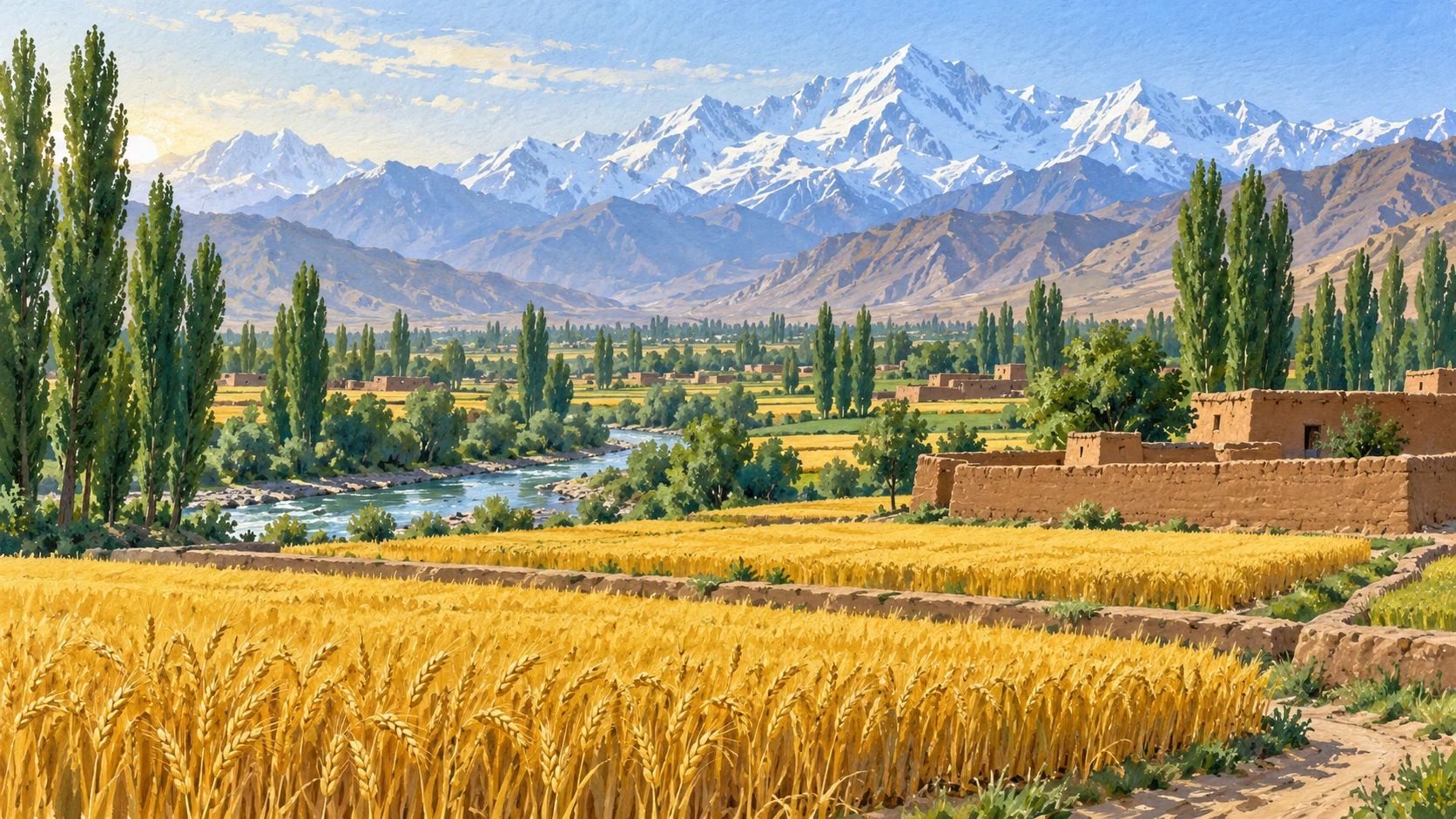
Farming helped the economy grow in 2024. People in Parwan grow wheat, take grain to local mills, and bake bread.
Agricultural Performance in the FY2024 Economic Recovery
A report from the World Bank shows that agricultural growth was a main driver of economic recovery in Afghanistan in fiscal year 2024. Total farm output grew by three percent after good winter snowpack and spring rains.
Official data shows that crop production makes up over twenty-five percent of gross domestic product. Farming gains helped balance stagnation in manufacturing and building.
Experts note that sector growth numbers do not remove poverty in rural villages. Audits show that good weather cannot fix weak irrigation systems.
Irrigated Wheat Production and Harvest Baselines
Irrigated wheat is the main food crop in Afghanistan, covering one point two million hectares of valley land. Cereal surveys record over four point three million metric tons of wheat from grain provinces.
Irrigated plots yield two point four metric tons per hectare, which is higher than rainfed land. Parwan grows wheat along river plains of the Ghorband and Panjshir river confluence.
High fertilizer prices and seed shortages limit harvest gains for smallholder families. Reliable canal water keeps wheat healthy during hot summer days.
Parwan Grain Supply Chains and Village Intermediaries
Smallholder farmers in Parwan sell extra wheat sacks to village traders called dalals. These buyers combine small bags into truckloads for bazaars in Charikar and provincial grain markets.
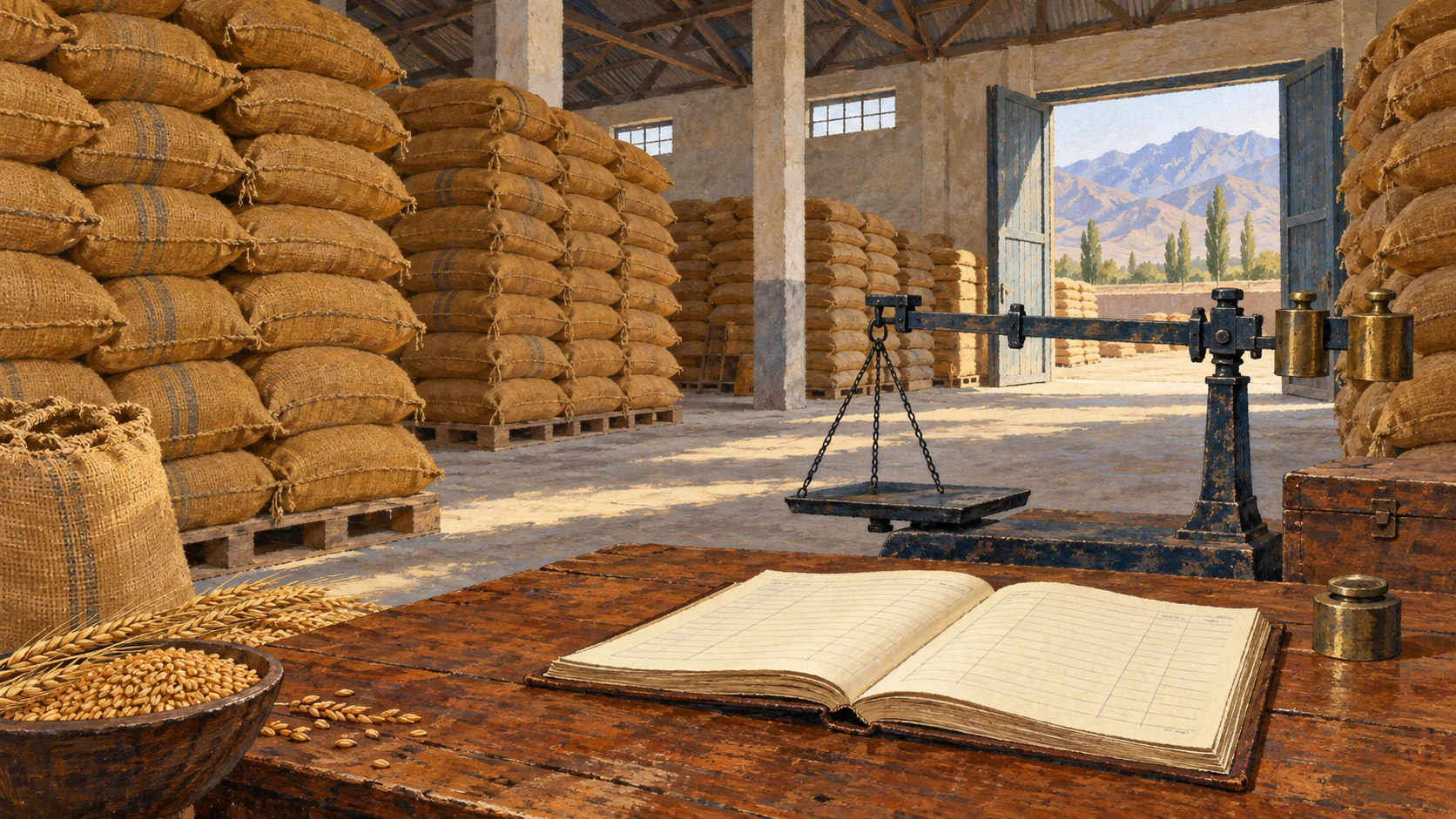
Grain prices change quickly during harvest season and drop when supply surges. Markets use provincial seers and mechanical balance scales at licensed depots.
Road delays and checkpoints raise transport costs to city hubs. Farmers with no storage space face lower prices when selling grain to traders.
Flour Milling, Processing, and Urban Distribution
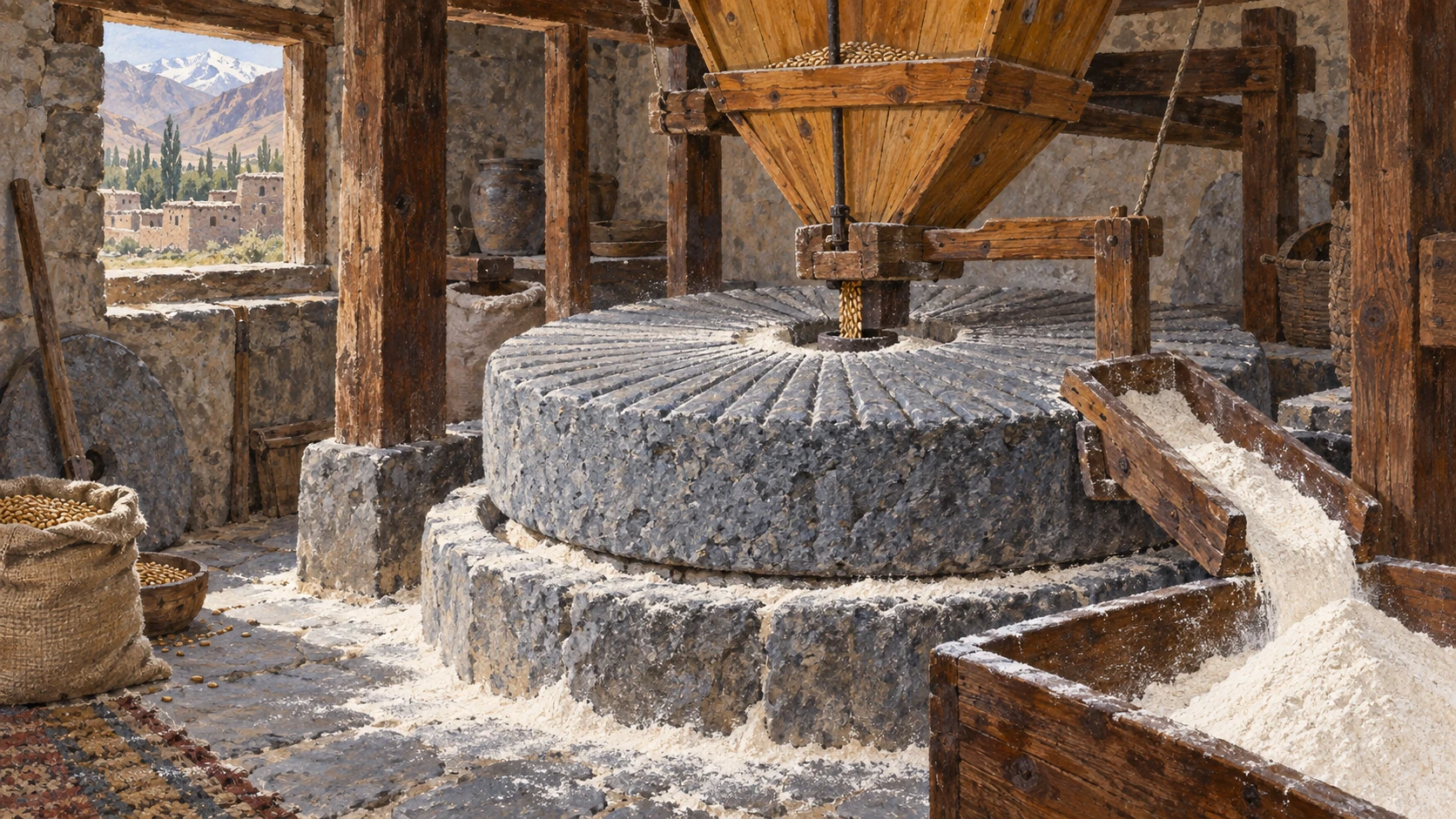
Diesel and water mills across Parwan grind wheat into flour for local bakeries. Large industrial roller mills in Charikar use cleaning separators, magnetic destoners, and roller stands.
Afghan flour competes against imported flour arriving through border crossings. Millers blend local white wheat with soft imported grain for baking bread.
Power cuts and generator fuel make up high costs for commercial mills. Wholesalers deliver fifty-kilogram sacks to traditional nanwayi bakeries across Kabul.
Harvest Labour Wages and Rural Employment Patterns
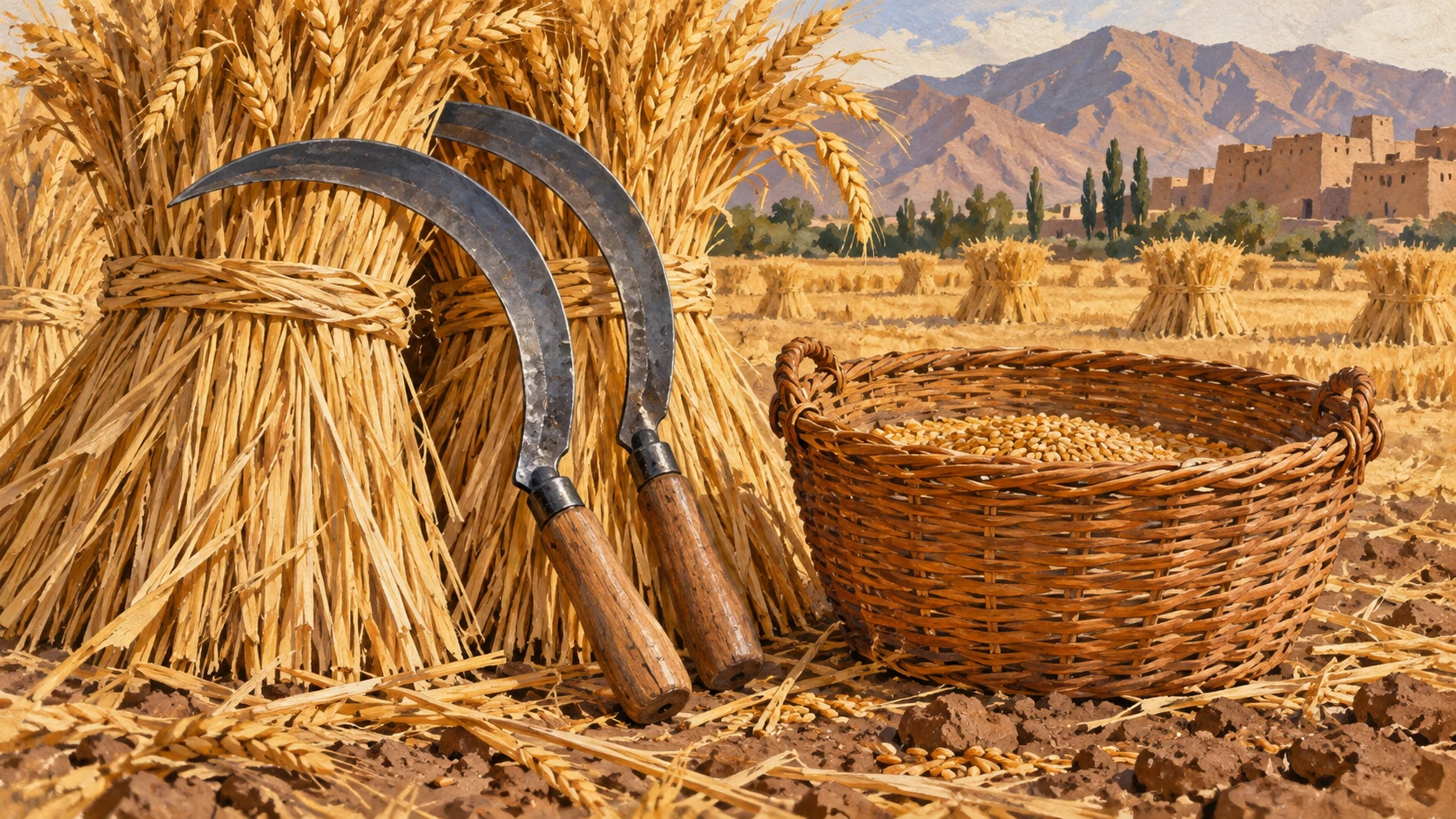
The summer wheat harvest creates seasonal jobs for thousands of landless workers. Field teams use handheld sickles to cut wheat sheaves into tall stooks.
Daily cash wages for harvest work range between two hundred fifty and three hundred fifty afghanis in Parwan. Tractor machines now replace old animal sleds for threshing grain.
Surveys show that high food prices limit what workers can buy with their pay. Farm workers travel down from mountain valleys to cut earlier lowland wheat.
Post-Harvest Storage and Food Security Governance
The Ministry of Agriculture keeps grain in large storage silos to protect wheat reserves. Grain weevils, fungal mold, and damp air spoil up to fifteen percent of farm grain.
Aid programs give out sealed storage bags and metal bins to protect grain. Market networks track wholesale grain prices in eight trading hubs to find food shortages.
Economists urge officials to set up grain procurement with floor prices to protect local wheat growers. Tracking provincial grain flows provides good data for national food security planning.
A2 · Elementary
Wheat Farming, Flour Mills, and Harvest Jobs in Parwan
Farmers in Parwan grow wheat along river valleys, sell surplus grain in local markets, and hire workers during the busy summer harvest.
Agricultural Performance in the FY2024 Economic Recovery
In Afghanistan, farming was an important driver for family life and the national economy in fiscal year 2024. A World Bank report shows that total farm output grew by approximately three percent after winter snowpack and spring rains brought fresh water to valley fields.
Crop production makes up more than twenty-five percent of gross domestic product according to national accounts data. Good grain harvests helped villages eat well while factories and construction sites were quiet during prolonged stagnation.
However, analysts say that headline sector growth does not remove daily poverty in rural smallholder villages. Good weather cannot fix underlying structural vulnerabilities in irrigation infrastructure, so farmers still worry about dry summers.
Irrigated Wheat Production and Harvest Baselines
Wheat is the staple food crop for Afghan families, covering one point two million hectares of arable valley land where green shoots rise in spring. National cereal assessments show that farmers harvested more than four point three million metric tons of wheat across the country.
Irrigated fields produce two point four metric tons per hectare, which is much better than dry rainfed cereal plots on dusty hillsides. In Parwan Province, farmers grow wheat along river plains where the Ghorband and Panjshir rivers meet at the river confluence.
High chemical fertilizer costs and shortages of certified seeds make farming hard for smallholder family farms in Parwan. Agronomic surveys show that access to reliable canal water networks increases grain harvest stability during regional hot spells.
Parwan Grain Supply Chains and Village Intermediaries
Smallholder farmers in Parwan sell extra wheat sacks to village middlemen called dalals at local collection points near the main road. The dalals gather small farmer consignments into commercial truckloads and drive them to district bazaars in Charikar and provincial grain markets.
Farmgate wheat prices fluctuate sharply during harvest months because so much fresh grain arrives before stabilizing in late autumn. Trading depots weigh wheat sacks with balance scales and standardized provincial seers.
Transport bottlenecks and checkpoint delays increase freight costs between rural farm gates and urban wholesale trading hubs. Farmers without good storage rooms face disadvantageous price negotiations with wholesale traders who want cheap grain.
Flour Milling, Processing, and Urban Distribution
Commercial diesel and water-powered flour mills across Parwan grind harvested wheat grain into standard grade flour for bakeries. Industrial roller mills in Charikar operate automated grain cleaning separators, magnetic destoners, and multi-stage roller reduction stands.
Domestic Afghan flour competes directly against imported packaged flour consignments arriving through northern and western border crossings. Commercial millers blend local white wheat with softer imported grain to achieve required baking gluten ratios so bread bakes nicely in clay ovens.
Electricity shortages and diesel generator expenses constitute the largest variable overhead costs for commercial milling enterprises. Flour wholesalers distribute fifty-kilogram sacks to traditional nanwayi bakeries across Kabul and nearby districts.
Harvest Labour Wages and Rural Employment Patterns
The annual wheat harvest generates temporary agricultural wage employment for tens of thousands of landless seasonal farmworkers who need work to feed their children. Harvesting teams work with handheld sickles, manually cutting, bunching, and stacking wheat sheaves into conical field stooks.
Daily cash wages for casual agricultural harvest labour average between two hundred fifty and three hundred fifty afghanis across Parwan. Mechanical threshing machines powered by tractor power take-off shafts increasingly replace traditional animal-drawn threshing sleds, helping farmers finish before rainy weather arrives.
Wage surveys record that real purchasing power for agricultural day labourers remains constrained by high staple food costs. Seasonal labor migration flows bring agricultural workers from higher mountain valleys down to earlier-ripening lowland wheat fields.
Post-Harvest Storage and Food Security Governance
The Ministry of Agriculture maintains strategic grain storage silos in major provincial capitals to stabilize domestic wheat market reserves for emergency times. On-farm storage losses caused by grain weevils, fungal mold, and moisture exposure claim up to fifteen percent of domestic harvests when grain sits in damp rooms.
Agricultural development programs distribute hermetic grain storage bags and metal storage bins to reduce rural post-harvest losses. Market price monitoring networks track daily wholesale grain prices across eight major provincial trading hubs to detect localized deficits before bread prices rise.
Agricultural economists urge policymakers to expand domestic grain procurement schemes that guarantee floor prices for local wheat growers. Systematic baseline accounting of provincial grain balances and trade flows provides empirical evidence for national food security planning.
B1 · Intermediate
Growing Wheat and Supporting the Economy: Farm Harvests and Flour Mills in Parwan
A regional look at how wheat harvests helped Afghanistan recover in 2024, how farmers sell grain to local traders, and how flour mills supply bakeries.
Agricultural Performance in the FY2024 Economic Recovery
The World Bank Development Update records that agricultural growth served as a primary driver of macroeconomic recovery in Afghanistan during fiscal year 2024. Across the country, favorable seasonal precipitation and improved snowpack helped revitalize rural farming output.
Aggregate agricultural output expanded by approximately three percent, buoyed by favorable winter snowpack and improved spring rainfall. National accounts data published by the statistical authority verify that crop production accounts for over twenty-five percent of national gross domestic product.
Multilateral economists observe that agricultural gains partially compensated for prolonged stagnation in industrial manufacturing and public construction. Nonetheless, development analysts distinguish headline sector growth figures from persistent poverty rates across rural smallholder farming communities, while independent economic audits caution that favorable seasonal weather does not resolve underlying structural vulnerabilities in irrigation infrastructure.
Irrigated Wheat Production and Harvest Baselines
Irrigated wheat represents the staple food crop in Afghanistan, covering over one point two million hectares of arable valley land. National cereal assessments record total annual wheat production exceeding four point three million metric tons across commercial grain provinces.
Irrigated wheat yields average approximately two point four metric tons per hectare, significantly outperforming unpredictable rainfed cereal plots. Parwan Province maintains intensive irrigated wheat cultivation along the fertile river plains of the Ghorband and Panjshir river confluence.
However, high chemical fertilizer prices and certified seed shortages constrain yield potential across smallholder family farms in Parwan. Agronomic surveys document that access to reliable canal water networks increases grain harvest stability during regional hot spells.
Parwan Grain Supply Chains and Village Intermediaries
Smallholder farmers in Parwan sell surplus wheat harvest sacks to local village intermediaries known as dalals operating at rural collection points. Dalals consolidate small farmer consignments into commercial truckloads for transport to district bazaars in Charikar and provincial grain markets.
Farmgate wheat prices fluctuate sharply during harvest months, dropping as local supply surges before stabilizing in late autumn. Traditional grain measurement relies on standardized provincial seers and mechanical balance scales at licensed grain weighing depots.
Transport bottlenecks and checkpoint delays increase freight costs between rural farm gates and urban wholesale trading hubs. Supply chain studies show that small farmers with limited on-farm grain storage capacity face disadvantageous price negotiations with wholesale traders.
Flour Milling, Processing, and Urban Distribution
Commercial diesel and water-powered flour mills across Parwan grind harvested wheat grain into standard grade flour for bakeries. Large industrial roller mills in Charikar operate automated grain cleaning separators, magnetic destoners, and multi-stage roller reduction stands.
Domestic Afghan flour competes directly against imported packaged flour consignments arriving through northern and western border crossings. Commercial millers blend locally harvested hard white wheat with softer imported grain to achieve required baking gluten ratios.
Electricity shortages and diesel generator operating expenses constitute the largest variable overhead costs for commercial milling enterprises. Flour wholesalers distribute fifty-kilogram sacks to traditional nanwayi bakeries across Kabul and surrounding urban districts.
Harvest Labour Wages and Rural Employment Patterns
The annual wheat harvest generates temporary agricultural wage employment for tens of thousands of landless seasonal farmworkers. Harvesting teams work with handheld sickles, manually cutting, bunching, and stacking wheat sheaves into conical field stooks.
Daily cash wages for casual agricultural harvest labour average between two hundred fifty and three hundred fifty afghanis across Parwan. Mechanical threshing machines powered by tractor power take-off shafts increasingly replace traditional animal-drawn threshing sleds.
Wage surveys record that real purchasing power for agricultural day labourers remains constrained by high staple food costs. Seasonal labor migration flows bring agricultural workers from higher mountain valleys down to earlier-ripening lowland wheat fields.
Post-Harvest Storage and Food Security Governance
The Ministry of Agriculture maintains strategic grain storage silos in major provincial capitals to stabilize domestic wheat market reserves. On-farm storage losses caused by grain weevils, fungal mold, and moisture exposure claim up to fifteen percent of domestic harvests.
Agricultural development programs distribute hermetic grain storage bags and metal storage bins to reduce rural post-harvest losses. Market price monitoring networks track daily wholesale grain prices across eight major provincial trading hubs to detect localized deficits.
Agricultural economists urge policymakers to expand domestic grain procurement schemes that guarantee floor prices for local wheat growers. Systematic baseline accounting of provincial grain balances and trade flows provides empirical evidence for national food security planning.
B2 · Upper Intermediate
Irrigated Wheat, Farm Supply Chains, and Economic Recovery in Parwan
An analytical study of how strong wheat harvests drove national economic recovery in fiscal year 2024, examining grain markets, flour milling, and rural farm wages.
Agricultural Performance in the FY2024 Economic Recovery
The World Bank Development Update records that agricultural growth served as a primary driver of macroeconomic recovery in Afghanistan during fiscal year 2024. Amid widespread industrial stagnation and fiscal contraction, rural crop output provided essential counter-cyclical momentum for the national economy.
Aggregate agricultural output expanded by approximately three percent, buoyed by favorable winter snowpack and improved spring rainfall across key watershed zones. National accounts data published by the statistical authority verify that crop production accounts for over twenty-five percent of national gross domestic product.
Multilateral economists observe that agricultural gains partially compensated for prolonged stagnation in industrial manufacturing and public construction. However, development analysts distinguish headline sector growth figures from persistent poverty rates across rural smallholder farming communities, while independent economic audits caution that favorable seasonal weather does not resolve underlying structural vulnerabilities in irrigation infrastructure.
Irrigated Wheat Production and Harvest Baselines
Irrigated wheat represents the staple food crop in Afghanistan, covering over one point two million hectares of arable valley land. National cereal assessments record total annual wheat production exceeding four point three million metric tons across commercial grain provinces.
Irrigated wheat yields average approximately two point four metric tons per hectare, significantly outperforming unpredictable rainfed cereal plots. Parwan Province maintains intensive irrigated wheat cultivation along the fertile river plains of the Ghorband and Panjshir river confluence.
High chemical fertilizer prices and certified seed shortages constrain yield potential across smallholder family farms in Parwan. Agronomic surveys document that access to reliable canal water networks increases grain harvest stability during regional hot spells.
Parwan Grain Supply Chains and Village Intermediaries
Smallholder farmers in Parwan sell surplus wheat harvest sacks to local village intermediaries known as dalals operating at rural collection points. Dalals consolidate small farmer consignments into commercial truckloads for transport to district bazaars in Charikar and provincial grain markets.
Farmgate wheat prices fluctuate sharply during harvest months, dropping as local supply surges before stabilizing in late autumn. Traditional grain measurement relies on standardized provincial seers and mechanical balance scales at licensed grain weighing depots.
Transport bottlenecks and checkpoint delays increase freight costs between rural farm gates and urban wholesale trading hubs. Supply chain studies show that small farmers with limited on-farm grain storage capacity face disadvantageous price negotiations with wholesale traders.
Flour Milling, Processing, and Urban Distribution
Commercial diesel and water-powered flour mills across Parwan grind harvested wheat grain into standard grade flour for bakeries. Large industrial roller mills in Charikar operate automated grain cleaning separators, magnetic destoners, and multi-stage roller reduction stands.
Domestic Afghan flour competes directly against imported packaged flour consignments arriving through northern and western border crossings. Commercial millers blend locally harvested hard white wheat with softer imported grain to achieve required baking gluten ratios.
Electricity shortages and diesel generator operating expenses constitute the largest variable overhead costs for commercial milling enterprises. Flour wholesalers distribute fifty-kilogram sacks to traditional nanwayi bakeries across Kabul and surrounding urban districts.
Harvest Labour Wages and Rural Employment Patterns
The annual wheat harvest generates temporary agricultural wage employment for tens of thousands of landless seasonal farmworkers. Harvesting teams work with handheld sickles, manually cutting, bunching, and stacking wheat sheaves into conical field stooks.
Daily cash wages for casual agricultural harvest labour average between two hundred fifty and three hundred fifty afghanis across Parwan. Mechanical threshing machines powered by tractor power take-off shafts increasingly replace traditional animal-drawn threshing sleds.
Wage surveys record that real purchasing power for agricultural day labourers remains constrained by high staple food costs. Seasonal labor migration flows bring agricultural workers from higher mountain valleys down to earlier-ripening lowland wheat fields.
Post-Harvest Storage and Food Security Governance
The Ministry of Agriculture maintains strategic grain storage silos in major provincial capitals to stabilize domestic wheat market reserves. On-farm storage losses caused by grain weevils, fungal mold, and moisture exposure claim up to fifteen percent of domestic harvests.
Agricultural development programs distribute hermetic grain storage bags and metal storage bins to reduce rural post-harvest losses. Market price monitoring networks track daily wholesale grain prices across eight major provincial trading hubs to detect localized deficits.
Agricultural economists urge policymakers to expand domestic grain procurement schemes that guarantee floor prices for local wheat growers. Systematic baseline accounting of provincial grain balances and trade flows provides empirical evidence for national food security planning.
C1 · Advanced
Irrigated Wheat and Economic Recovery: Grain Supply Chains and Flour Milling in Parwan
An empirical investigation into agricultural growth as a recovery driver in Afghanistan, irrigated wheat baselines, Parwan grain supply chains, flour milling, and rural harvest labour.
Agricultural Performance in the FY2024 Economic Recovery
The World Bank Development Update records that agricultural growth served as a primary driver of macroeconomic recovery in Afghanistan during fiscal year 2024. Following multiple seasons of debilitating drought, aggregate agricultural output expanded by approximately three percent, buoyed by favorable winter snowpack and improved spring rainfall that replenished degraded aquifers.
National accounts data published by the statistical authority verify that crop production accounts for over twenty-five percent of national gross domestic product. Multilateral economists observe that agricultural gains partially compensated for prolonged stagnation in industrial manufacturing and public construction across provincial capitals.
However, development analysts distinguish headline sector growth figures from persistent poverty rates across rural smallholder farming communities. Furthermore, independent economic audits caution that favorable seasonal weather does not resolve underlying structural vulnerabilities in irrigation infrastructure, leaving smallholders exposed to hydrologic shocks.
Irrigated Wheat Production and Harvest Baselines
Irrigated wheat represents the staple food crop in Afghanistan, covering over one point two million hectares of arable valley land. National cereal assessments record total annual wheat production exceeding four point three million metric tons across commercial grain provinces, indicating substantial agrarian resilience.
Irrigated wheat yields average approximately two point four metric tons per hectare, significantly outperforming unpredictable rainfed cereal plots that suffer from erratic precipitation. Parwan Province maintains intensive irrigated wheat cultivation along the fertile river plains of the Ghorband and Panjshir river confluence.
Nonetheless, high chemical fertilizer prices and certified seed shortages constrain yield potential across smallholder family farms in Parwan. Agronomic surveys document that access to reliable canal water networks increases grain harvest stability during regional hot spells.
Parwan Grain Supply Chains and Village Intermediaries
Smallholder farmers in Parwan sell surplus wheat harvest sacks to local village intermediaries known as dalals operating at rural collection points. Dalals consolidate small farmer consignments into commercial truckloads for transport to district bazaars in Charikar and provincial grain markets.
Farmgate wheat prices fluctuate sharply during harvest months, dropping as local supply surges before stabilizing in late autumn. Traditional grain measurement relies on standardized provincial seers and mechanical balance scales at licensed grain weighing depots.
Transport bottlenecks and checkpoint delays increase freight costs between rural farm gates and urban wholesale trading hubs. Supply chain studies show that small farmers with limited on-farm grain storage capacity face disadvantageous price negotiations with wholesale traders, who exploit seasonal market gluts.
Flour Milling, Processing, and Urban Distribution
Commercial diesel and water-powered flour mills across Parwan grind harvested wheat grain into standard grade flour for bakeries. Large industrial roller mills in Charikar operate automated grain cleaning separators, magnetic destoners, and multi-stage roller reduction stands.
Domestic Afghan flour competes directly against imported packaged flour consignments arriving through northern and western border crossings. Commercial millers blend locally harvested hard white wheat with softer imported grain to achieve required baking gluten ratios, tailoring flour batches to artisanal demands.
Electricity shortages and diesel generator operating expenses constitute the largest variable overhead costs for commercial milling enterprises. Flour wholesalers distribute fifty-kilogram sacks to traditional nanwayi bakeries across Kabul and surrounding urban districts.
Harvest Labour Wages and Rural Employment Patterns
The annual wheat harvest generates temporary agricultural wage employment for tens of thousands of landless seasonal farmworkers. Harvesting teams work with handheld sickles, manually cutting, bunching, and stacking wheat sheaves into conical field stooks.
Daily cash wages for casual agricultural harvest labour average between two hundred fifty and three hundred fifty afghanis across Parwan. Mechanical threshing machines powered by tractor power take-off shafts increasingly replace traditional animal-drawn threshing sleds, accelerating post-reaping workflows.
Wage surveys record that real purchasing power for agricultural day labourers remains constrained by high staple food costs. Seasonal labor migration flows bring agricultural workers from higher mountain valleys down to earlier-ripening lowland wheat fields.
Post-Harvest Storage and Food Security Governance
The Ministry of Agriculture maintains strategic grain storage silos in major provincial capitals to stabilize domestic wheat market reserves. On-farm storage losses caused by grain weevils, fungal mold, and moisture exposure claim up to fifteen percent of domestic harvests, depleting farmgate revenues.
Agricultural development programs distribute hermetic grain storage bags and metal storage bins to reduce rural post-harvest losses. Concurrently, market price monitoring networks track daily wholesale grain prices across eight major provincial trading hubs to detect localized deficits.
Agricultural economists urge policymakers to expand domestic grain procurement schemes that guarantee floor prices for local wheat growers. Systematic baseline accounting of provincial grain balances and trade flows provides empirical evidence for national food security planning.
C2 · Mastery
Agrarian Surplus, Cereal Commodity Circuits, and Macroeconomic Stabilization in Afghanistan: The Political Economy of Wheat in Parwan
A rigorous scholarly assessment of agricultural recovery during fiscal year 2024, evaluating irrigated cereal productivity baselines, intermediary grain consolidation, milling energetics, and seasonal harvest labour dynamics.
Agricultural Performance in the FY2024 Economic Recovery
The World Bank Development Update records that agricultural growth served as a primary driver of macroeconomic recovery in Afghanistan during fiscal year 2024. Following protracted multi-year droughts, aggregate agricultural output expanded by approximately three percent, buoyed by favorable winter snowpack and improved spring rainfall that replenished critical endorheic aquifers.
National accounts data published by the statistical authority verify that crop production accounts for over twenty-five percent of national gross domestic product. Multilateral economists observe that agricultural gains partially compensated for prolonged stagnation in industrial manufacturing and public construction across urban centers.
However, development analysts distinguish headline sector growth figures from persistent poverty rates across rural smallholder farming communities. Furthermore, independent economic audits caution that favorable seasonal weather does not resolve underlying structural vulnerabilities in irrigation infrastructure, leaving agrarian households exposed to climatic volatility.
Irrigated Wheat Production and Harvest Baselines
Irrigated wheat represents the staple food crop in Afghanistan, covering over one point two million hectares of arable valley land. National cereal assessments record total annual wheat production exceeding four point three million metric tons across commercial grain provinces, demonstrating significant agrarian capacity.
Irrigated wheat yields average approximately two point four metric tons per hectare, significantly outperforming unpredictable rainfed cereal plots that endure extreme precipitation variability. Parwan Province maintains intensive irrigated wheat cultivation along the fertile river plains of the Ghorband and Panjshir river confluence.
Nonetheless, high chemical fertilizer prices and certified seed shortages constrain yield potential across smallholder family farms in Parwan. Agronomic surveys document that access to reliable canal water networks increases grain harvest stability during regional hot spells.
Parwan Grain Supply Chains and Village Intermediaries
Smallholder farmers in Parwan sell surplus wheat harvest sacks to local village intermediaries known as dalals operating at rural collection points. Dalals consolidate small farmer consignments into commercial truckloads for transport to district bazaars in Charikar and provincial grain markets.
Farmgate wheat prices fluctuate sharply during harvest months, dropping as local supply surges before stabilizing in late autumn. Traditional grain measurement relies on standardized provincial seers and mechanical balance scales at licensed grain weighing depots.
Transport bottlenecks and checkpoint delays increase freight costs between rural farm gates and urban wholesale trading hubs. Supply chain studies show that small farmers with limited on-farm grain storage capacity face disadvantageous price negotiations with wholesale traders, who systematically capitalize on localized harvest surpluses.
Flour Milling, Processing, and Urban Distribution
Commercial diesel and water-powered flour mills across Parwan grind harvested wheat grain into standard grade flour for bakeries. Large industrial roller mills in Charikar operate automated grain cleaning separators, magnetic destoners, and multi-stage roller reduction stands.
Domestic Afghan flour competes directly against imported packaged flour consignments arriving through northern and western border crossings. Commercial millers blend locally harvested hard white wheat with softer imported grain to achieve required baking gluten ratios, calibrating grist compositions to commercial baker specifications.
Electricity shortages and diesel generator operating expenses constitute the largest variable overhead costs for commercial milling enterprises. Flour wholesalers distribute fifty-kilogram sacks to traditional nanwayi bakeries across Kabul and surrounding urban districts.
Harvest Labour Wages and Rural Employment Patterns
The annual wheat harvest generates temporary agricultural wage employment for tens of thousands of landless seasonal farmworkers. Harvesting teams work with handheld sickles, manually cutting, bunching, and stacking wheat sheaves into conical field stooks.
Daily cash wages for casual agricultural harvest labour average between two hundred fifty and three hundred fifty afghanis across Parwan. Mechanical threshing machines powered by tractor power take-off shafts increasingly replace traditional animal-drawn threshing sleds, restructuring rural labour energetics.
Wage surveys record that real purchasing power for agricultural day labourers remains constrained by high staple food costs. Seasonal labor migration flows bring agricultural workers from higher mountain valleys down to earlier-ripening lowland wheat fields.
Post-Harvest Storage and Food Security Governance
The Ministry of Agriculture maintains strategic grain storage silos in major provincial capitals to stabilize domestic wheat market reserves. On-farm storage losses caused by grain weevils, fungal mold, and moisture exposure claim up to fifteen percent of domestic harvests, eroding peasant income.
Agricultural development programs distribute hermetic grain storage bags and metal storage bins to reduce rural post-harvest losses. Simultaneously, market price monitoring networks track daily wholesale grain prices across eight major provincial trading hubs to detect localized deficits.
Agricultural economists urge policymakers to expand domestic grain procurement schemes that guarantee floor prices for local wheat growers. Systematic baseline accounting of provincial grain balances and trade flows provides empirical evidence for national food security planning.
Check your understanding
Choose how closely you want to revisit the article. You can refer back while answering, and review explanations when you finish.
Quick Quiz A1
Try one question, then create a free account for the full Quick Quiz. Sign Up Free
Answer every question before checking. There is no time limit.
Your results
/ 1 correct (%)
Read the explanations to see how each answer connects to the article.
-
According to the section on Agricultural Performance in the FY2024 Economic Recovery, what does the text identify regarding world?
1. Answer:
Quick Quiz A2
Try one question, then create a free account for the full Quick Quiz. Sign Up Free
Answer every question before checking. There is no time limit.
Your results
/ 1 correct (%)
Read the explanations to see how each answer connects to the article.
-
According to the section on Agricultural Performance in the FY2024 Economic Recovery, what does the text identify regarding farming?
1. Answer:
Quick Quiz B1
Try one question, then create a free account for the full Quick Quiz. Sign Up Free
Answer every question before checking. There is no time limit.
Your results
/ 1 correct (%)
Read the explanations to see how each answer connects to the article.
-
According to the section on Agricultural Performance in the FY2024 Economic Recovery, what does the text identify regarding bank?
1. Answer:
Quick Quiz B2
Try one question, then create a free account for the full Quick Quiz. Sign Up Free
Answer every question before checking. There is no time limit.
Your results
/ 1 correct (%)
Read the explanations to see how each answer connects to the article.
-
According to the section on Agricultural Performance in the FY2024 Economic Recovery, what does the text identify regarding bank?
1. Answer:
Quick Quiz C1
Try one question, then create a free account for the full Quick Quiz. Sign Up Free
Answer every question before checking. There is no time limit.
Your results
/ 1 correct (%)
Read the explanations to see how each answer connects to the article.
-
According to the section on Agricultural Performance in the FY2024 Economic Recovery, what does the text identify regarding bank?
1. Answer:
Quick Quiz C2
Try one question, then create a free account for the full Quick Quiz. Sign Up Free
Answer every question before checking. There is no time limit.
Your results
/ 1 correct (%)
Read the explanations to see how each answer connects to the article.
-
According to the section on Agricultural Performance in the FY2024 Economic Recovery, what does the text identify regarding bank?
1. Answer:
