A1 · Beginner
City Workers Clean Kabul Roads Before August Celebrations
Street sweepers and road crews clean avenues and paint street curbs before mid-August holiday events.
City Directives for August Events
Kabul Municipality issued formal directives detailing public event preparations and ceremonial boulevard maintenance. Early morning meetings set daily maintenance tasks for city teams.
Municipal departments coordinated logistics across central police districts ahead of mid-August public commemorative events. District sanitation directors supervised 24-hour schedules.
City authorities allocated specialized fuel and vehicle repair allowances for civic fleet deployment. Public square management requires coordinated inter-agency security protocols and traffic permits. Empirical administrative reviews confirm municipal readiness orders without verifying uniform inter-district execution.
Workers gather at city yards before sunrise to drink hot tea and collect their tools.
Painting Curbs and Patching Potholes
Municipal road crews repainted thousands of meters of concrete road medians in bright yellow and white reflective paint.
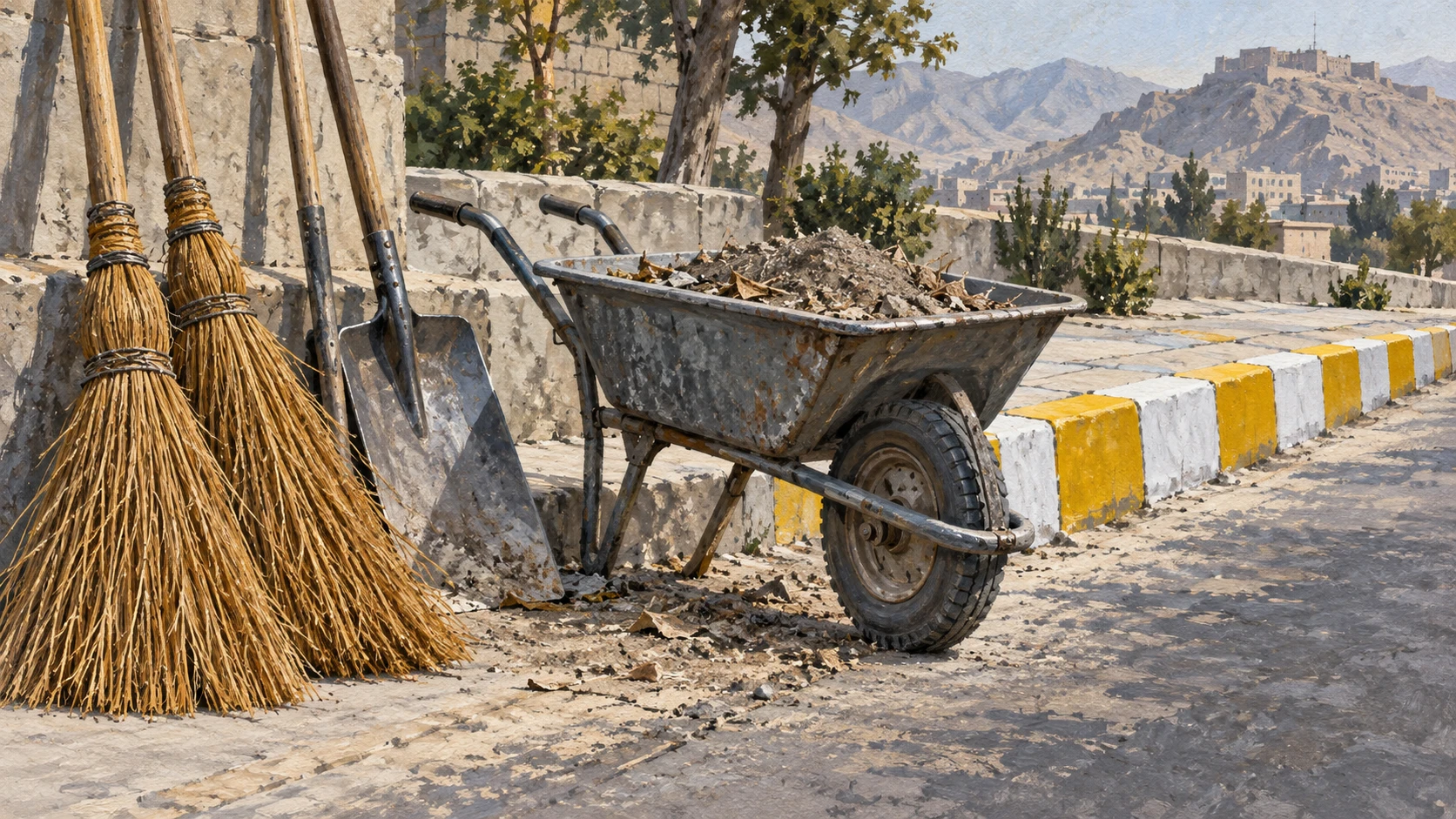
Sanitation sweepers cleared street dust, accumulated sediment, and gravel along primary ceremonial boulevards. Workers push wide brooms along the curbs.
The paved roadway network spans over eight hundred kilometers, requiring seasonal asphalt pothole patching. Maintenance crews deployed cold-mix asphalt and compactors to repair arterial thoroughfares. Enforcement squads removed roadside stalls and unlicensed merchant displays. Preparations prioritize visible ceremonial arteries over secondary neighborhood alleys.
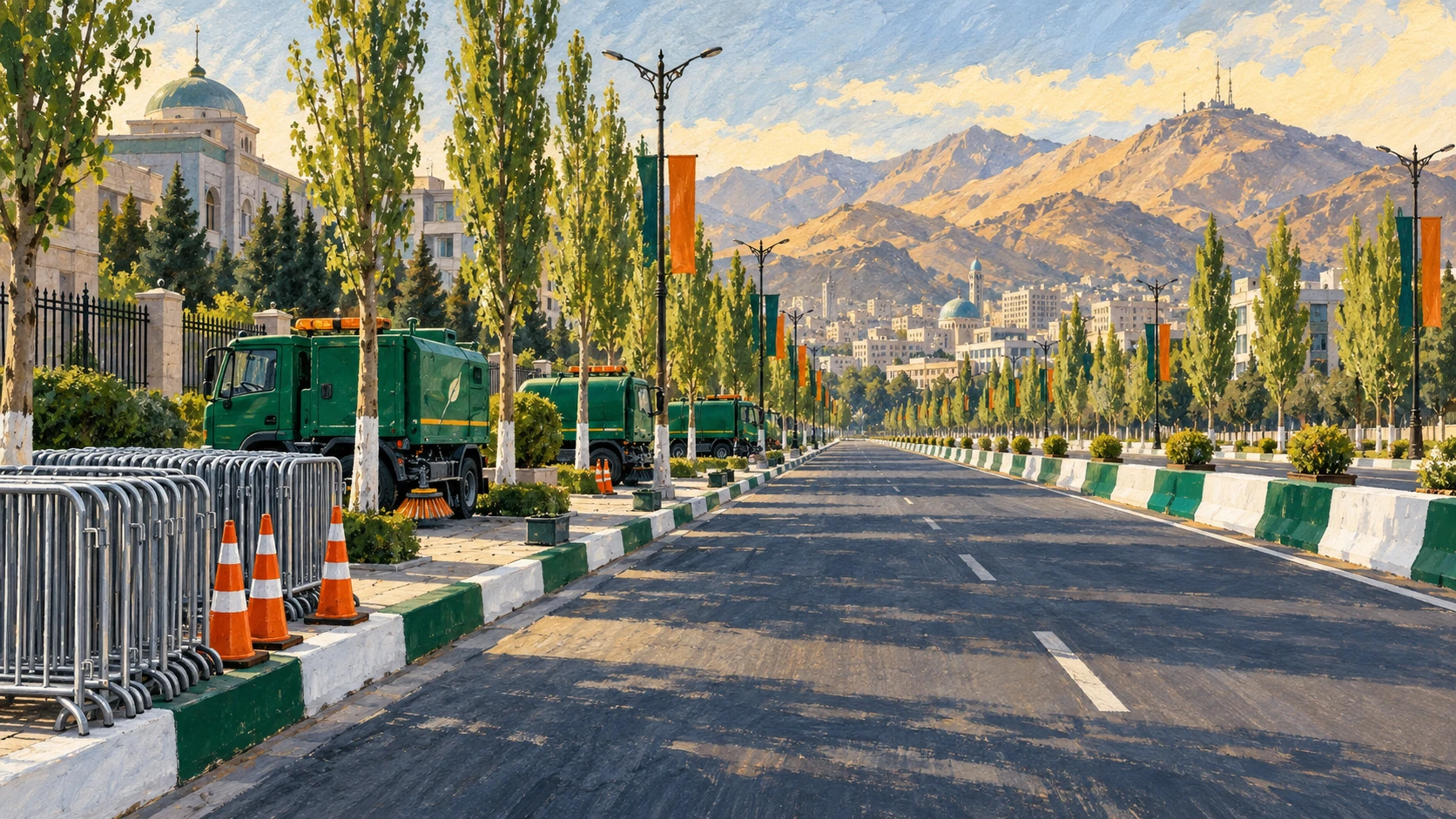
Crews place bright orange traffic cones along the lanes while they paint the concrete.
Steel Scaffolding and Public Stages
Staging teams assembled modular steel scaffolding and shade tarpaulins across public commemorative grounds. Workers fasten metal tubes with heavy iron bolts.
Technical inspectors audited temporary electrical wiring, sound system cabling, and generator connections. They test light switches before crowds arrive.
Major venues including Chaman-e Hozori and public event halls accommodate multi-day institutional exhibitions. Assembly infrastructure must comply with crowd flow clearances and perimeter fencing standards. Erecting decorative archways requires structural anchoring against sudden summer wind gusts. Audits show private contractors construct booths without formal safety checklists.
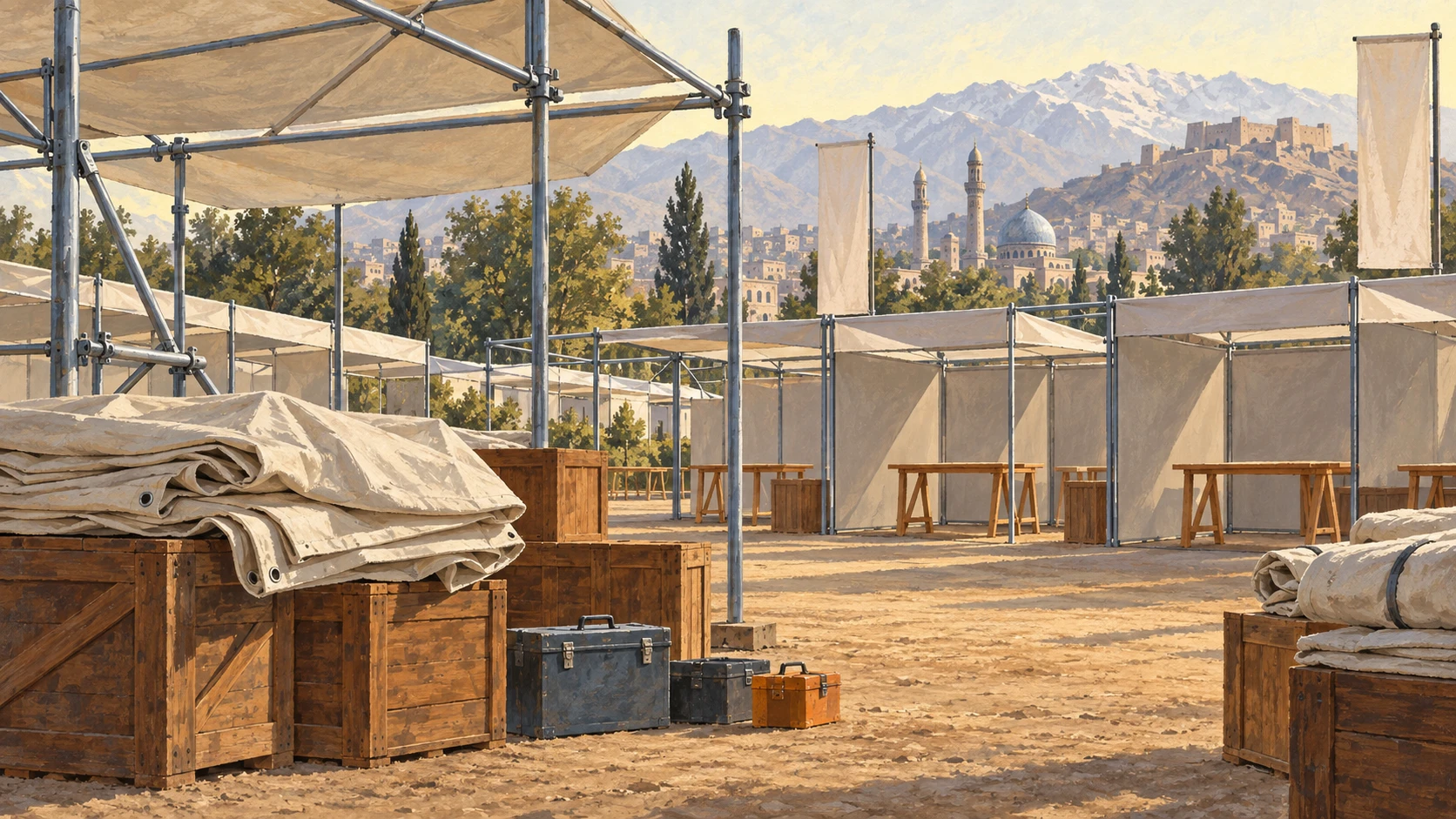
Young carpenters carry wooden boards and steel pipes across the open festival grass.
Garbage Trucks and Landfill Dumps
The capital generates between two thousand and twenty-four hundred metric tons of municipal solid waste daily. Big trucks collect garbage bags every night.
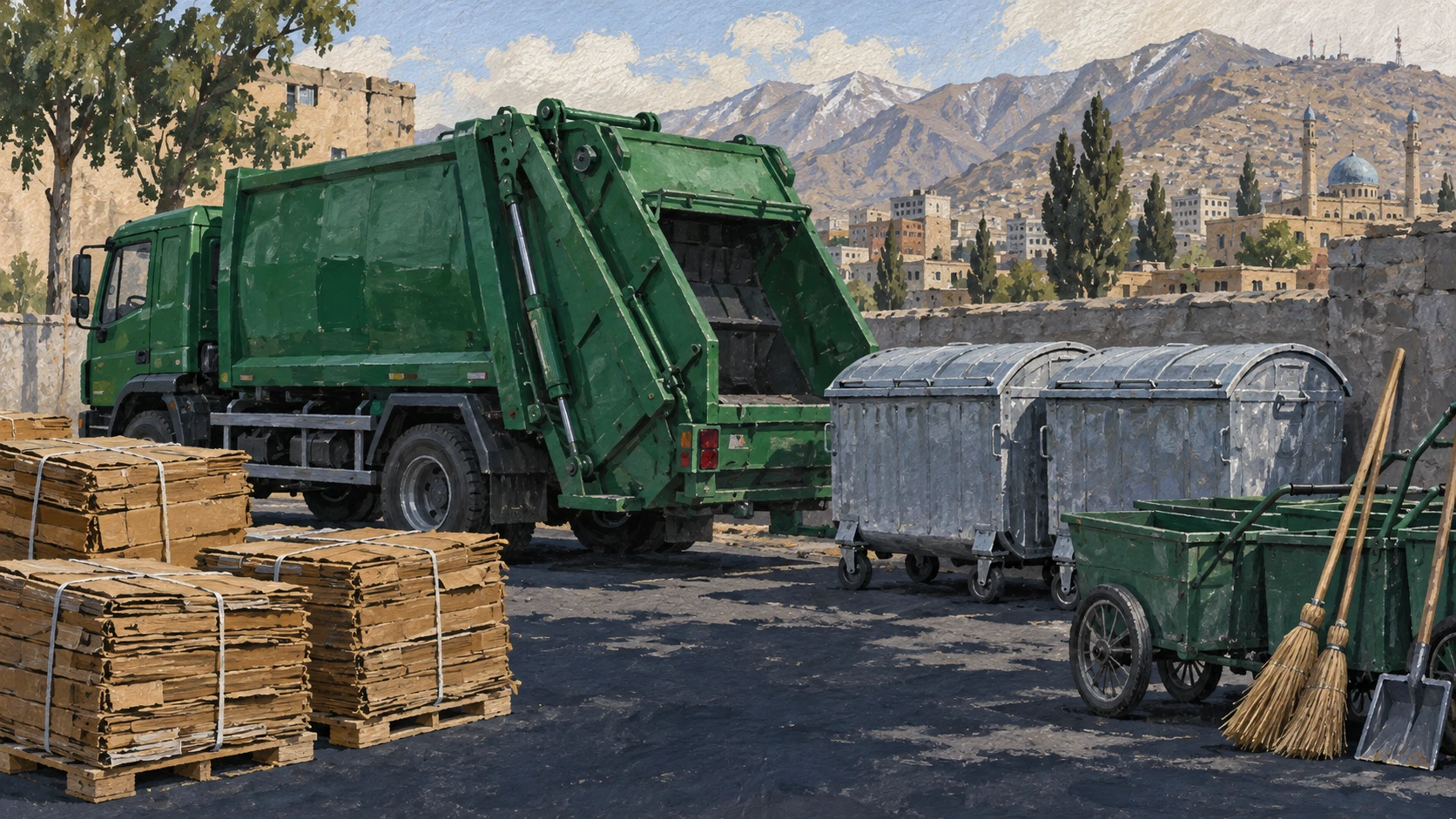
Sanitation departments dispatch hydraulic compactor trucks and open-bed haulers to transport event refuse. Crews lift metal barrels into the back.
Public gathering sites experience rapid refuse surges requiring hourly metal bin clearance and waste transfer. The Gazak disposal facility south of Kabul operates as an open uncontrolled landfill facing severe environmental strain. Collection fleets suffer frequent mechanical breakdowns due to unpaved routes. Informal cardboard scavengers divert dry packaging waste prior to municipal hauling.
Drivers start noisy diesel truck engines early to haul away heavy trash loads.
Sweepers Working in Summer Heat
Street sweepers and daily wage sanitation workers operate in mid-August temperatures exceeding thirty-five degrees Celsius. The afternoon sun feels very hot on the streets.
Sanitation staff lack adequate protective equipment including heavy leather gloves, dust respirators, and high-visibility vests. Many workers tie cloth scarves across their faces.
Municipal contract workers rely on modest daily wages ranging between two hundred and three hundred Afghanis. Overtime shifts during civic mobilizations strain workforces without rest breaks. Informal mutual support networks provide communal water canteens and shared shade rotations. Labour assessments emphasize that occupational health safeguards remain largely unenforced.
Tired cleaners sit together under leafy tree branches to rest their sore feet.
Traffic Detours and Street Cleanup
Traffic police and municipal authorities implemented vehicle detours and road closures around central event corridors. Police officers place wooden barriers across busy intersections.
Road closures disrupt commercial access and retail revenues for neighborhood shopkeepers along arterial boulevards. Customers cannot drive cars to local grocery shops.
Public transit minibus routes and shared taxis face congestion and elongated travel times during multi-day events. Post-event recovery schedules require forty-eight hours to clear residual debris and restore routine traffic flows. Analysts advocate for structured public notification systems before closing arteries. Baseline tracking of post-event waste tonnage provides empirical metrics for infrastructure planning.
Police officers blow loud whistles to direct slow cars onto narrow dirt side streets.
A2 · Elementary
Municipal Maintenance and Road Readiness for Kabul Celebrations
City departments mobilize maintenance crews and sweepers to prepare ceremonial thoroughfares ahead of mid-August events.
Municipal Directives and District Logistics
In early August, Kabul Municipality issued formal directives detailing public event preparations and ceremonial boulevard maintenance. Civic directors held morning assemblies in local municipal offices to organize staff shifts before the holidays.
Municipal departments coordinated logistics across central police districts ahead of mid-August public commemorative events. Official operational plans mobilized district sanitation directors to supervise 24-hour maintenance schedules on primary avenues. Authorities allocated specialized fuel and vehicle repair allowances for civic fleet deployment to keep machinery running smoothly. Managing crowded public square spaces requires coordinated inter-agency security protocols and traffic permits. Empirical administrative reviews confirm municipal readiness orders without verifying uniform inter-district execution.
City supervisors check paper duty rosters every morning and distribute clean wooden clipboards to field foremen while assistants refill metal water kettles.
Street Sweeping and Curb Painting Operations
Municipal road crews repainted thousands of meters of concrete road medians in bright yellow and white reflective paint. Drivers slowed down as workers rolled fresh color along the raised dividers during early dawn hours.
Sanitation sweepers cleared street dust, accumulated sediment, and gravel along primary ceremonial boulevards using wide straw brooms and metal dustpans. The city paved roadway network spans over eight hundred kilometers, requiring seasonal asphalt pothole patching after cold winter freezes. Maintenance crews deployed cold-mix asphalt and compactors to repair arterial thoroughfares. District enforcement squads removed roadside stalls and unlicensed merchant encroaching displays along event routes, because pre-event preparations prioritize visible ceremonial arteries over secondary neighborhood residential alleys.
Painters wash their paint rollers in tin buckets with soapy water after finishing each long street section while local children watch from bakery doorsteps.
Staging Scaffolding and Exhibition Pavilions
Event staging teams assembled modular steel scaffolding and shade tarpaulins across public commemorative grounds. Workers climbed high metal frames with hand wrenches to fasten iron clamps tightly in place.
Municipal technical inspectors audited temporary electrical wiring, sound system cabling, and generator connections to prevent power cutoffs. Major civic venues including Chaman-e Hozori and public event halls accommodate multi-day institutional exhibitions visited by thousands of citizens. Temporary public assembly infrastructure must comply with basic crowd flow clearances and perimeter fencing standards. Erecting ceremonial decorative archways requires structural anchoring against sudden high Kabul summer wind gusts, while independent audits document that private contractors and municipal workers construct booths without formal safety checklists.
Electricians inspect rubber power cords and generator fuel tanks before festival gates open while carpenters stack extra wooden planks near tents.
Solid Waste Collection and Landfill Strain
Under ordinary daily life, Kabul generates between two thousand and twenty-four hundred metric tons of municipal solid waste daily. Sanitation departments dispatch hydraulic compactor trucks and open-bed haulers to transport event refuse from congested celebration plazas.
Public gathering sites experience rapid refuse surges requiring hourly metal bin clearance and waste transfer to stop trash barrels from spilling onto pavements. The Gazak disposal facility south of Kabul operates as an open uncontrolled landfill facing severe environmental strain from mounting rubbish piles. Solid waste collection fleets suffer frequent mechanical breakdowns due to unpaved access routes along rough roads, while informal cardboard scavengers and scrap collectors divert dry packaging waste from event venues prior to municipal hauling.
Collection drivers navigate bumpy dirt roads toward the landfill while checking tire air pressure and wiping dusty windshield glass with damp rags.
Working Conditions in Severe Summer Heat
Municipal street sweepers and daily wage sanitation workers operate in mid-August temperatures exceeding thirty-five degrees Celsius. Working beneath blistering sunshine on baking asphalt causes profound fatigue, headaches, and heavy dehydration.
Sanitation staff lack adequate protective equipment including heavy leather gloves, dust respirators, and high-visibility vests to shield their lungs and hands. Municipal contract workers rely on modest daily wages ranging between two hundred and three hundred Afghanis to feed their families. Extended overtime shifts during civic mobilizations strain municipal sanitation workforces without guaranteed rest breaks. Informal mutual support networks among municipal crews provide communal water canteens and shared shade rotations, while labour assessments emphasize that occupational health safeguards for cleaners remain largely unenforced.
Foremen refill large plastic water coolers with fresh ice cubes to keep field sweepers hydrated.
Traffic Closures and Post-Event Recovery
Traffic police and municipal authorities implemented vehicle detours and road closures around central event corridors to secure holiday procession paths. Uniformed officers placed concrete blocks and striped metal gates across major roundabouts.
These road closures disrupt commercial access and retail revenues for neighborhood shopkeepers along arterial boulevards who lose daily shoppers. Public transit minibus routes and shared taxis face congestion and elongated travel times during multi-day events. Post-event municipal recovery schedules require forty-eight hours to clear residual debris and restore routine traffic flows across downtown streets. Independent urban policy analysts advocate for structured public notification systems before closing commercial arteries, while systematic baseline tracking of post-event waste tonnage provides empirical metrics for municipal infrastructure planning.
Shopkeepers sweep their own shop doorsteps while waiting for municipal road barricades to open.
B1 · Intermediate
Civic Preparations and Sanitation Mobilization in Kabul
Ahead of national commemorative events, Kabul Municipality undertakes intensive street cleaning, scaffolding construction, and waste management.
Municipal Directives and District Operational Mobilization
Ahead of mid-August commemorative events, Kabul Municipality issued formal directives detailing public event preparations and ceremonial boulevard maintenance. Civic departments coordinated logistics across central police districts, setting up operational command structures to manage crowd flows and civic displays.
District sanitation directors were mobilized to supervise round-the-clock 24-hour maintenance schedules across the capital. Municipal authorities allocated specialized fuel and vehicle repair allowances for civic fleet deployment to keep machinery operational. In Kabul, public square management requires coordinated inter-agency security protocols and traffic permits, although empirical administrative reviews confirm municipal readiness orders without verifying uniform inter-district execution.
Boulevard Refurbishment and Pavement Repair
Municipal road crews worked through the night repainting thousands of meters of concrete road medians in bright yellow and white reflective paint. Concurrently, sanitation sweepers cleared street dust, accumulated sediment, and gravel along primary ceremonial boulevards.
The capital metropolitan paved roadway network encompasses an extensive spatial arterial grid spanning over eight hundred kilometers, requiring seasonal asphalt pothole patching after harsh winter freezes. Maintenance crews deployed cold-mix asphalt and compactors to repair arterial thoroughfares ahead of heavy ceremonial convoys. District enforcement squads removed roadside stalls and unlicensed merchant encroaching displays along event routes, as pre-event roadway preparations prioritize visible ceremonial arteries over secondary neighborhood residential alleys.
Exhibition Staging, Scaffolding, and Electrical Safety
Across major event grounds, staging teams assembled modular steel scaffolding and shade tarpaulins to accommodate institutional exhibitions. Municipal technical inspectors audited temporary electrical wiring, sound system cabling, and generator connections to prevent power failures during civic speeches.
Major civic venues including Chaman-e Hozori and public event halls were prepared for multi-day institutional exhibitions. Engineers emphasized that temporary public assembly infrastructure must comply with basic crowd flow clearances and perimeter fencing standards. Erecting ceremonial decorative archways requires structural anchoring against sudden high Kabul summer wind gusts, though independent audits document that private contractors and municipal workers construct booths without formal safety checklists.
Solid Waste Collection Surges and Disposal Constraints
Under routine conditions, Kabul generates between two thousand and twenty-four hundred metric tons of municipal solid waste daily. Sanitation departments dispatch hydraulic compactor trucks and open-bed haulers to transport event refuse away from public ceremonial spaces.
During public gatherings, sites experience rapid refuse surges requiring hourly metal bin clearance and waste transfer. The Gazak disposal facility south of Kabul operates as an open uncontrolled landfill facing severe environmental strain from mounting urban waste. Municipal solid waste collection fleets suffer frequent mechanical breakdowns due to unpaved access routes, while informal cardboard scavengers and scrap collectors divert dry packaging waste from event venues prior to municipal hauling.
Labour Welfare, Heat Stress, and Informal Support
Municipal street sweepers and daily wage sanitation workers operate in grueling mid-August temperatures exceeding thirty-five degrees Celsius. Despite the harsh dust and heat, sanitation staff lack adequate protective equipment including heavy leather gloves, dust respirators, and high-visibility vests.
Most municipal contract workers rely on modest daily wages ranging between two hundred and three hundred Afghanis. Extended overtime shifts during civic mobilizations strain municipal sanitation workforces without guaranteed rest breaks. To cope, informal mutual support networks among municipal crews provide communal water canteens and shared shade rotations, while labour assessments emphasize that occupational health safeguards for municipal cleaners remain largely unenforced.
Urban Traffic Impacts and Infrastructure Metrics
To facilitate official processions, traffic police and municipal authorities implemented vehicle detours and road closures around central event corridors. However, these road closures disrupt commercial access and retail revenues for neighborhood shopkeepers along arterial boulevards.
Public transit minibus routes and shared taxis face severe congestion and elongated travel times during multi-day events. Post-event municipal recovery schedules require forty-eight hours to clear residual debris and restore routine traffic flows. Independent urban policy analysts advocate for structured public notification systems before closing commercial arteries, while systematic baseline tracking of post-event waste tonnage provides empirical metrics for municipal infrastructure planning.
B2 · Upper Intermediate
Civic Event Logistics and Waste Management Infrastructure in Kabul
An analysis of municipal administrative mandates, roadway refurbishment protocols, and solid waste haulage constraints during mid-August commemorative mobilizations.
Administrative Directives and District Operational Protocols
Ahead of mid-August commemorative events, Kabul Municipality issued formal directives detailing public event preparations and ceremonial boulevard maintenance. Civic departments coordinated logistics across central police districts to align spatial security protocols with municipal maintenance operations.
Official operational plans mobilized district sanitation directors to supervise 24-hour maintenance schedules across primary commercial and administrative sectors. Municipal authorities allocated specialized fuel and vehicle repair allowances for civic fleet deployment to prevent mechanical bottlenecks. In Kabul, public square management requires coordinated inter-agency security protocols and traffic permits, although empirical administrative reviews confirm municipal readiness orders without verifying uniform inter-district execution.
Roadway Infrastructure Renewal and Median Refurbishment
Municipal road crews repainted thousands of meters of concrete road medians in bright yellow and white reflective paint to enhance vehicular demarcation. Simultaneously, sanitation sweepers cleared street dust, accumulated sediment, and gravel along primary ceremonial boulevards.
The capital metropolitan paved roadway network encompasses an extensive spatial arterial grid spanning over eight hundred kilometers, requiring seasonal asphalt pothole patching following harsh winter freezes. Maintenance crews deployed cold-mix asphalt and compactors to repair arterial thoroughfares ahead of heavy ceremonial convoys. District enforcement squads removed roadside stalls and unlicensed merchant encroaching displays along event routes, reflecting administrative priorities that favor visible ceremonial arteries over secondary neighborhood residential alleys.
Temporary Scaffolding, Electrical Audits, and Structural Hazards
Event staging teams assembled modular steel scaffolding and shade tarpaulins across public commemorative grounds to accommodate institutional exhibitions. Municipal technical inspectors audited temporary electrical wiring, sound system cabling, and generator connections to prevent power disruptions.
Major civic venues including Chaman-e Hozori and public event halls accommodate multi-day institutional exhibitions with substantial foot traffic. Structural guidelines mandate that temporary public assembly infrastructure comply with basic crowd flow clearances and perimeter fencing standards. Erecting ceremonial decorative archways requires structural anchoring against sudden high Kabul summer wind gusts, though independent audits document that private contractors and municipal workers construct booths without formal safety checklists.
Solid Waste Surges, Haulage Capacities, and Disposal Strains
Under normal municipal parameters, Kabul generates between two thousand and twenty-four hundred metric tons of municipal solid waste daily. Sanitation departments dispatch hydraulic compactor trucks and open-bed haulers to transport event refuse away from crowded central venues.
Public gathering sites experience rapid refuse surges requiring hourly metal bin clearance and waste transfer to avoid overflowing receptacles. The Gazak disposal facility south of Kabul operates as an open uncontrolled landfill facing severe environmental strain from untreated urban effluent. Municipal solid waste collection fleets suffer frequent mechanical breakdowns due to unpaved access routes, while informal cardboard scavengers and scrap collectors divert dry packaging waste from event venues prior to municipal hauling.
Thermal Stress, Informal Solidarity, and Occupational Precariousness
Municipal street sweepers and daily wage sanitation workers operate in mid-August temperatures exceeding thirty-five degrees Celsius without climate-controlled rest facilities. Sanitation staff lack adequate protective equipment including heavy leather gloves, dust respirators, and high-visibility vests, exposing them to chronic dust inhalation.
Municipal contract workers rely on modest daily wages ranging between two hundred and three hundred Afghanis. Extended overtime shifts during civic mobilizations strain municipal sanitation workforces without guaranteed rest breaks. Consequently, informal mutual support networks among municipal crews provide communal water canteens and shared shade rotations, while labour assessments emphasize that occupational health safeguards for municipal cleaners remain largely unenforced.
Vehicular Disruption, Retail Externalities, and Planning Baselines
Traffic police and municipal authorities implemented vehicle detours and road closures around central event corridors to secure ceremonial routes. However, these road closures disrupt commercial access and retail revenues for neighborhood shopkeepers along arterial boulevards.
Public transit minibus routes and shared taxis face congestion and elongated travel times during multi-day events. Post-event municipal recovery schedules require forty-eight hours to clear residual debris and restore routine traffic flows. Independent urban policy analysts advocate for structured public notification systems before closing commercial arteries, while systematic baseline tracking of post-event waste tonnage provides empirical metrics for municipal infrastructure planning.
C1 · Advanced
Kabul Municipality Civic Event Logistics: Exhibition Staging, Road Preparations, and Post-Event Waste Management
Operational mobilizations for mid-August commemorations reveal the strain on municipal sanitation fleets, street infrastructure, and precarious public cleaners.
Civic Event Mandates and District Coordination
Ahead of mid-August commemorative celebrations, Kabul Municipality issued formal directives detailing public event preparations and ceremonial boulevard maintenance. Civic departments coordinated logistics across central police districts to align spatial security protocols with municipal maintenance operations, establishing unified operational command structures across the metropolitan core.
Official operational plans mobilized district sanitation directors to supervise continuous 24-hour maintenance schedules across key administrative sectors. Municipal authorities allocated specialized fuel and vehicle repair allowances for civic fleet deployment to avert debilitating mechanical bottlenecks. Within the capital, public square management requires coordinated inter-agency security protocols and traffic permits, although empirical administrative reviews confirm municipal readiness orders without verifying uniform inter-district execution, highlighting stark administrative disparities between central avenues and peripheral zones.
Boulevard Cleaning, Curb Painting, and Roadway Readiness
To project administrative authority, municipal road crews repainted thousands of meters of concrete road medians in bright yellow and white reflective paint. Concurrently, sanitation sweepers cleared street dust, accumulated sediment, and loose gravel along primary ceremonial boulevards to prepare the thoroughfares for official motorcades.
The capital metropolitan paved roadway network encompasses an extensive spatial arterial grid spanning over eight hundred kilometers, requiring seasonal asphalt pothole patching following harsh winter freeze-thaw cycles. Maintenance crews deployed cold-mix asphalt and compactors to repair arterial thoroughfares ahead of heavy ceremonial convoys. District enforcement squads removed roadside stalls and unlicensed merchant encroaching displays along event routes, reflecting municipal priorities that favor visible ceremonial arteries over secondary neighborhood residential alleys.
Public Staging, Exhibition Stalls, and Scaffolding
Across key civic assembly grounds, event staging teams assembled modular steel scaffolding and shade tarpaulins across public commemorative grounds to accommodate multi-day institutional exhibitions. Municipal technical inspectors audited temporary electrical wiring, sound system cabling, and generator connections to prevent power disruptions during public addresses.
Major civic venues including Chaman-e Hozori and public event halls accommodate multi-day institutional exhibitions drawing thousands of daily spectators. Architectural guidelines mandate that temporary public assembly infrastructure must comply with basic crowd flow clearances and perimeter fencing standards. Erecting ceremonial decorative archways requires structural anchoring against sudden high Kabul summer wind gusts, though independent audits document that private contractors and municipal workers construct booths without formal safety checklists.
Sanitation Logistics, Waste Haulage, and Landfill Capacity
The festive mobilization dramatically compounds the capital's solid waste burden. Under standard municipal parameters, Kabul generates between two thousand and twenty-four hundred metric tons of municipal solid waste daily, prompting sanitation departments to dispatch hydraulic compactor trucks and open-bed haulers to transport event refuse away from crowded central venues.
Public gathering sites experience rapid refuse surges requiring hourly metal bin clearance and waste transfer to avoid overflowing receptacles along pedestrian concourses. The Gazak disposal facility south of Kabul operates as an open uncontrolled landfill facing severe environmental strain from mounting urban waste. Municipal solid waste collection fleets suffer frequent mechanical breakdowns due to unpaved access routes, while informal cardboard scavengers and scrap collectors divert dry packaging waste from event venues prior to municipal hauling, providing an essential informal recycling buffer.
Worker Conditions, Heat Stress, and Daily Labour
The physical burden of municipal readiness falls heavily upon municipal street sweepers and daily wage sanitation workers who operate in mid-August temperatures exceeding thirty-five degrees Celsius without climate-controlled rest facilities. Sanitation staff lack adequate protective equipment including heavy leather gloves, dust respirators, and high-visibility vests, exposing them to chronic dust inhalation and solar radiation.
Municipal contract workers rely on modest daily wages ranging between two hundred and three hundred Afghanis to sustain their households. Extended overtime shifts during civic mobilizations strain municipal sanitation workforces without guaranteed rest breaks. Consequently, informal mutual support networks among municipal crews provide communal water canteens and shared shade rotations, while labour assessments emphasize that occupational health safeguards for municipal cleaners remain largely unenforced.
Neighborhood Effects, Traffic Disruption, and Baseline Tracking
To facilitate official ceremonies, traffic police and municipal authorities implemented vehicle detours and road closures around central event corridors. However, these road closures disrupt commercial access and retail revenues for neighborhood shopkeepers along arterial boulevards who depend on daily walk-in commerce.
Concurrently, public transit minibus routes and shared taxis face severe congestion and elongated travel times during multi-day events. Post-event municipal recovery schedules require forty-eight hours to clear residual debris and restore routine traffic flows across the city center. Independent urban policy analysts advocate for structured public notification systems before closing commercial arteries, while systematic baseline tracking of post-event waste tonnage provides empirical metrics for municipal infrastructure planning.
C2 · Mastery
Municipal Mobilization and Spatial Governance: The Political Ecology of Civic Staging and Waste Haulage in Kabul
A critical examination of civic administrative directives, road infrastructure refurbishment, labor precariousness, and landfill ecology during the 24 Asad commemoration.
Bureaucratic Directives and Administrative Coordination
Ahead of mid-August commemorative celebrations, the municipal bureaucratic apparatus promulgated formal directives detailing public event preparations and ceremonial boulevard maintenance across key municipal sectors. Municipal departments coordinated logistics across central police districts, instituting hierarchical protocols to orchestrate spatial security and civic cleanliness during high-profile ceremonial gatherings.
Official operational plans mobilized district sanitation directors to supervise continuous 24-hour maintenance schedules across primary commercial corridors. Municipal authorities allocated specialized fuel and vehicle repair allowances for civic fleet deployment to mitigate systemic machinery breakdowns. Within the capital, public square management requires coordinated inter-agency security protocols and traffic permits, although empirical administrative reviews confirm municipal readiness orders without verifying uniform inter-district execution.
Infrastructural Renewal, Median Kerbing, and Pavement Remediation
Municipal road crews repainted thousands of meters of concrete road medians in bright yellow and white reflective paint, elevating optical demarcation across arterial pathways. Simultaneously, sanitation sweepers cleared street dust, accumulated sediment, and gravel along primary ceremonial boulevards to prepare ceremonial avenues for heavy vehicular traffic.
The capital metropolitan paved roadway network encompasses an extensive spatial arterial grid spanning over eight hundred kilometers, requiring seasonal asphalt pothole patching following harsh winter freeze-thaw cycles. Municipal maintenance crews deployed cold-mix asphalt and compactors to repair arterial thoroughfares ahead of heavy ceremonial convoys. Concurrently, district enforcement squads removed roadside stalls and unlicensed merchant encroaching displays along event routes, underscoring municipal priorities that favor ceremonial thoroughfares over secondary residential alleys.
Pavilion Engineering, Scaffolding Mechanics, and Safety Audits
Event staging teams assembled modular steel scaffolding and shade tarpaulins across public commemorative grounds to accommodate multi-day institutional exhibitions. Municipal technical inspectors audited temporary electrical wiring, sound system cabling, and generator connections to prevent structural electrical faults during public events.
Major civic venues including Chaman-e Hozori and public event halls accommodate multi-day institutional exhibitions hosting thousands of daily visitors. Structural guidelines mandate that temporary public assembly infrastructure must comply with basic crowd flow clearances and perimeter fencing standards. Erecting ceremonial decorative archways requires structural anchoring against sudden high Kabul summer wind gusts, though independent audits document that private contractors and municipal workers construct booths without formal safety checklists.
Municipal Refuse Dynamics, Landfill Strain, and Informal Scrap Diversion
Under standard urban baseline parameters, Kabul generates between two thousand and twenty-four hundred metric tons of municipal solid waste daily. Sanitation departments dispatch hydraulic compactor trucks and open-bed haulers to transport event refuse away from crowded central venues.
Public gathering sites experience rapid refuse surges requiring hourly metal bin clearance and waste transfer to avoid overflowing receptacles along pedestrian walkways. The Gazak disposal facility south of Kabul operates as an open uncontrolled landfill facing severe environmental strain from mounting urban waste. Municipal solid waste collection fleets suffer frequent mechanical breakdowns due to unpaved access routes, while informal cardboard scavengers and scrap collectors divert dry packaging waste from event venues prior to municipal hauling.
Thermal Exposure, Labor Precariousness, and Subaltern Mutualism
Municipal street sweepers and daily wage sanitation workers operate in mid-August temperatures exceeding thirty-five degrees Celsius without climate-controlled rest shelters. Sanitation staff lack adequate protective equipment including heavy leather gloves, dust respirators, and high-visibility vests, exposing them to chronic dust inhalation.
Municipal contract workers rely on modest daily wages ranging between two hundred and three hundred Afghanis to support their dependents. Extended overtime shifts during civic mobilizations strain municipal sanitation workforces without guaranteed rest breaks. Consequently, informal mutual support networks among municipal crews provide communal water canteens and shared shade rotations, while labour assessments emphasize that occupational health safeguards for municipal cleaners remain largely unenforced.
Urban Spatial Friction, Commercial Externalities, and Post-Event Metrics
Traffic police and municipal authorities implemented vehicle detours and road closures around central event corridors to isolate ceremonial parade routes. However, these road closures disrupt commercial access and retail revenues for neighborhood shopkeepers along arterial boulevards who rely on continuous footfall.
Public transit minibus routes and shared taxis face congestion and elongated travel times during multi-day events. Post-event municipal recovery schedules require forty-eight hours to clear residual debris and restore routine traffic flows across downtown thoroughfares. Independent urban policy analysts advocate for structured public notification systems before closing commercial arteries, while systematic baseline tracking of post-event waste tonnage provides empirical metrics for municipal infrastructure planning.
Check your understanding
Choose how closely you want to revisit the article. You can refer back while answering, and review explanations when you finish.
Quick Quiz A1
Try one question, then create a free account for the full Quick Quiz. Sign Up Free
Answer every question before checking. There is no time limit.
Your results
/ 1 correct (%)
Read the explanations to see how each answer connects to the article.
-
According to the section on City Directives for August Events, what does the text identify regarding municipality?
1. Answer:
Quick Quiz A2
Try one question, then create a free account for the full Quick Quiz. Sign Up Free
Answer every question before checking. There is no time limit.
Your results
/ 1 correct (%)
Read the explanations to see how each answer connects to the article.
-
According to the section on Municipal Directives and District Logistics, what does the text identify regarding august?
1. Answer:
Quick Quiz B1
Try one question, then create a free account for the full Quick Quiz. Sign Up Free
Answer every question before checking. There is no time limit.
Your results
/ 1 correct (%)
Read the explanations to see how each answer connects to the article.
-
According to the section on Municipal Directives and District Operational Mobilization, what does the text identify regarding mid?
1. Answer:
Quick Quiz B2
Try one question, then create a free account for the full Quick Quiz. Sign Up Free
Answer every question before checking. There is no time limit.
Your results
/ 1 correct (%)
Read the explanations to see how each answer connects to the article.
-
According to the section on Administrative Directives and District Operational Protocols, what does the text identify regarding mid?
1. Answer:
Quick Quiz C1
Try one question, then create a free account for the full Quick Quiz. Sign Up Free
Answer every question before checking. There is no time limit.
Your results
/ 1 correct (%)
Read the explanations to see how each answer connects to the article.
-
According to the section on Civic Event Mandates and District Coordination, what does the text identify regarding mid?
1. Answer:
Quick Quiz C2
Try one question, then create a free account for the full Quick Quiz. Sign Up Free
Answer every question before checking. There is no time limit.
Your results
/ 1 correct (%)
Read the explanations to see how each answer connects to the article.
-
According to the section on Bureaucratic Directives and Administrative Coordination, what does the text identify regarding mid?
1. Answer:
