
A1 · Beginner
Ramadan Bread and Charity in the Capital City
Families in Kabul buy flour and give charity before the morning prayers of Eid.
Setting the Spring Charity Rate
On March 9, 2026 Pajhwok Afghan News reported that religious authorities established the Fitr charity rate between sixty-two and sixty-four Afghanis per individual. Early in the morning families wake up before dawn to eat food and drink hot tea.
The annual zakat rate was officially pegged to the retail market value of one sa'a of standard grain in regional bazaars. Parents count their small copper coins at home.
Scholars designated one sa'a as approximately three kilograms of flour according to established Islamic legal jurisprudence. Resident accounts showed whether sixty-two Afghanis per person remained affordable for multi-child households. Religious notices confirmed that head almsgiving remains mandatory before communal Eid morning prayers. Independent verification confirms the dated announcement without proving uniform compliance across districts.
Flour Bags and Wholesale Grain Markets
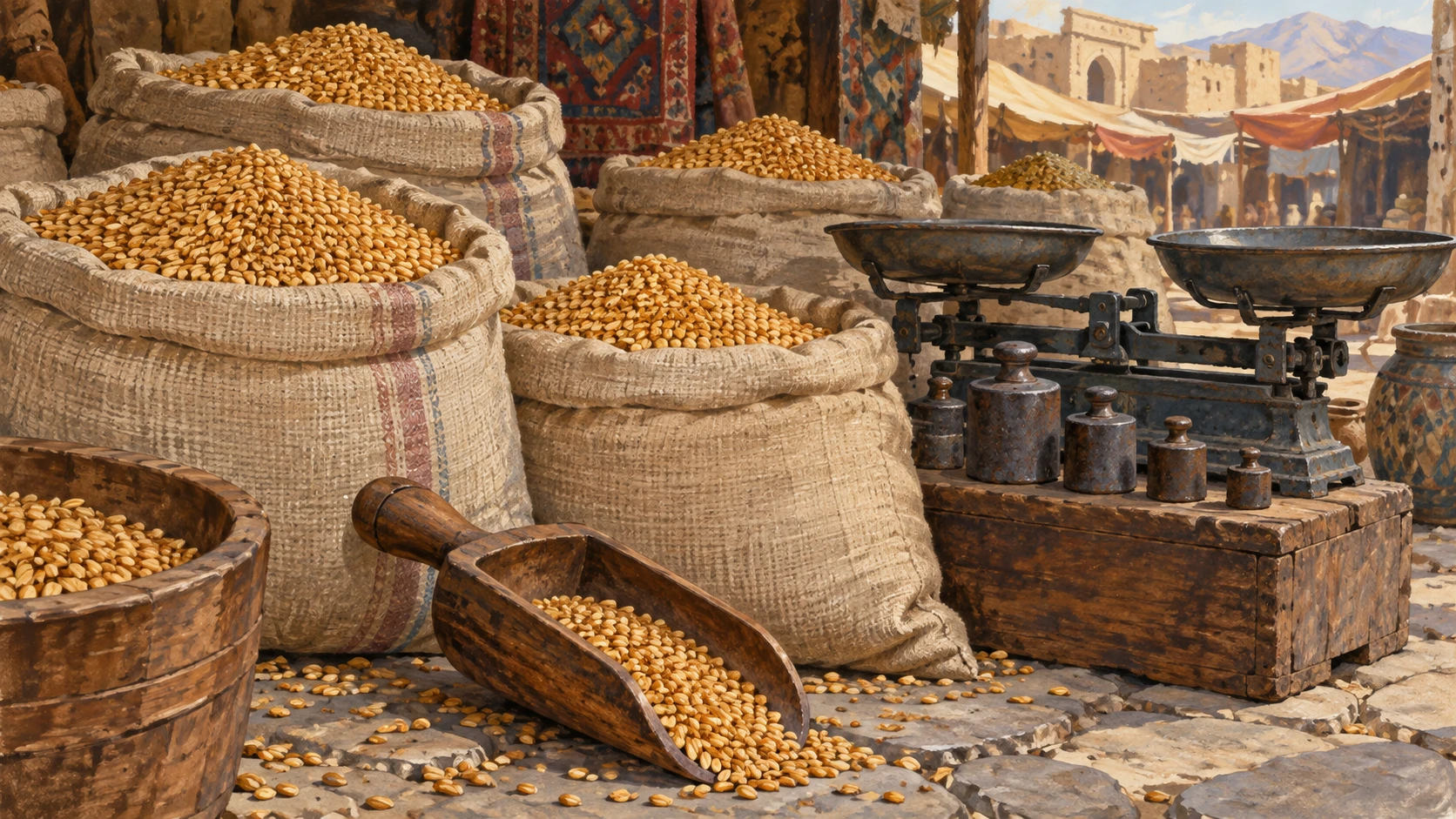
Wholesale grain traders in Sarai Shamali import commercial flour consignments from Kazakhstan, Uzbekistan, and Pakistan. Many large freight trucks bring heavy white sacks into the crowded city yards where laborers carry them on their shoulders.
Regional transport bottlenecks and border tariffs create price disparities between imported fine flour and northern Afghan domestic grain. Buyers look at different bags to find good prices.
Commercial roller mills operate below capacity due to erratic electrical power and high diesel generator operating costs. Fifty kilogram sacks of domestic grain averaged between fifteen hundred and seventeen hundred Afghanis in early 2026. Peri-urban watermills and hammer mills grind grain for rural consumption. Short inventory reserves leave buyers vulnerable to cross-border supply shocks.
Inspectors at the Neighborhood Bakeries
The city deploys inspection teams across police districts to monitor retail food prices during Ramadan. Officers walk past open shop doors and check hand scales.
Commissions publish daily price caps for staple goods like cooking oil, sugar, and pulses. Shoppers look at posted paper signs before opening their purses.
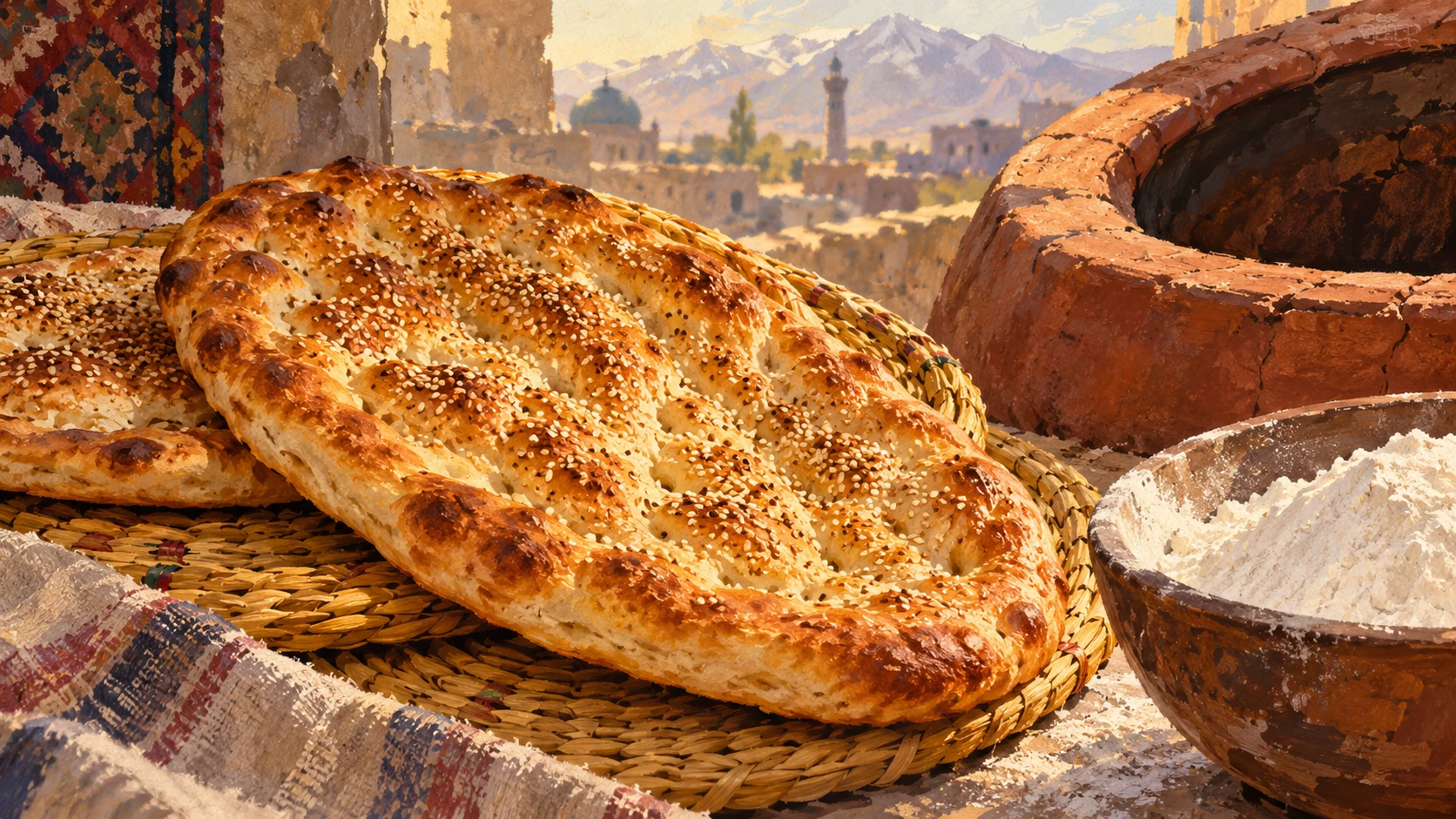
Enforcement teams inspect commercial bakeries to enforce standard bread weight regulations and prevent unauthorized price escalation for traditional naan. Bakeries with clay tandoors face high operational overhead from wood fuel, liquefied petroleum gas, and imported flour. Penalty notices record administrative fines and temporary closures for shopkeepers violating schedules. Monitors note enforcement remains concentrated in central commercial areas with limited peripheral reach.
Family Budgets and Daily Bread
Food security assessments document that vulnerable urban households spend over sixty percent of monthly earnings on basic staples. Mothers cook simple dinners in dark kitchens.
Rising living costs force impoverished families to reduce dietary diversity, substituting vegetables, meat, and dairy with plain tea and bread. Children drink sweetened tea when milk is too expensive.
Families rely on informal credit ledgers with neighborhood bakers and corner grocery shops to purchase daily food rations during Ramadan. Unskilled day labourers and casual construction workers have irregular wage earnings that fail to cover subsistence budgets. Winter debt accumulations for heating wood and charcoal leave low-income homes with compounded debt burdens. Surveys show families prioritize grain over clothing, footwear, and healthcare.
Mosque Collections and Helping Neighbors
Local community mosques and neighborhood elders coordinate informal charity collections to identify the most destitute families before Eid. Old men sit on clean carpets after evening prayers to plan distribution.
Traditional zakat disbursements are distributed directly as physical sacks of flour or cash to widowed mothers and disabled labourers. Volunteers carry bags directly to modest family homes.
Communal solidarity funds called sanduq-e khairiyah pool neighborhood donations to purchase bulk food rations for impoverished residents. Private charity functions without bureaucratic registries, protecting personal dignity and privacy for recipient heads. Economic instability contracted donations from middle-class families whose disposable incomes eroded under high inflation. Strict editorial standards require verified testimonies and consented accounts before reporting almsgiving transfers.

Food Aid and City Planning
International humanitarian agencies implement targeted seasonal cash transfers and emergency rations to mitigate severe urban food insecurity. Blue and white trucks bring sealed food boxes to dusty district centers.
Economic analysts emphasize that short-term religious charity cannot substitute for universal institutional social protection programs. Experts want lasting jobs for struggling city workers.
Donation disparities create geographical imbalances between prosperous central districts and under-resourced peripheral informal settlements. Policy evaluations highlight the urgent need for regular market transparency systems accessible in Dari and Pashto. Advocates urge authorities to balance price cap enforcement with supportive fuel subsidies for essential bakeries. Longitudinal nutritional monitoring establishes baselines to verify whether pricing reforms improve security.
A2 · Elementary
Daily Bread, Market Inspections, and Eid Charity in Kabul
Shoppers in Kabul buy bags of flour while neighborhood committees collect gifts for struggling families before Eid.
Calculating the Annual Fitr Payment
Early in March, religious offices announced the spring charity amounts for each family member. Pajhwok Afghan News reported on March 9, 2026 that authorities set the Fitr rate between sixty-two and sixty-four Afghanis per individual. Shoppers in regional bazaars saw that the zakat cost was officially pegged to the retail market value of one sa'a of standard grain.
In traditional Islamic legal jurisprudence, scholars define one sa'a as approximately three kilograms of wheat flour or grain. Resident accounts showed parents assessing whether sixty-two Afghanis remained affordable for multi-child households. Official religious notices reminded everyone that head almsgiving remains mandatory before communal Eid morning prayers. Independent verification confirmed the dated announcement without proving uniform compliance across all city districts.
Grain Trucks and Peri-Urban Mills
Large freight trucks bring commercial flour consignments from Kazakhstan, Uzbekistan, and Pakistan into the busy Sarai Shamali terminal. Wholesale grain traders stack the white cloth bags inside cool storage buildings. Road transport bottlenecks and border tariffs cause price disparities between imported fine flour and domestically milled northern Afghan wheat.
City roller mills operate below capacity because municipal electricity cuts off often and diesel generator fuel costs a lot of money. Retail surveys recorded that fifty kilogram sacks of domestic grain averaged between fifteen hundred and seventeen hundred Afghanis in early 2026. Out in peri-urban valleys, traditional watermills and small hammer mills grind grain for rural consumption, while wholesale suppliers keep short inventory reserves vulnerable to cross-border supply shocks.
Checking Bakery Scales and Bread Weights
During Ramadan, city inspection teams walk through police districts to monitor retail food prices. Officials post daily price caps for staple goods like cooking oil, granulated sugar, and pulses. Shoppers look at these printed boards before entering grocery shops.
Enforcement teams visit commercial bakeries to enforce standard bread weight regulations and prevent unauthorized price escalation for traditional naan. Bakers working with hot clay tandoors face heavy operational overhead from expensive wood fuel, liquefied petroleum gas, and imported flour. Penalty notices record administrative fines and temporary closures for shopkeepers caught violating municipal price schedules, but independent monitors note enforcement remains concentrated in central commercial streets with limited reach in peripheral settlements.
Buying Food on Credit and Managing Debt
Food security assessments show that vulnerable urban households spend over sixty percent of monthly earnings on basic staples. Rising living costs force impoverished families to reduce dietary diversity, substituting meat, vegetables, and dairy with plain tea and bread.
Families rely on informal credit ledgers with neighborhood bakers and corner grocery shops to purchase daily food rations during Ramadan. Unskilled day labourers and casual construction workers earn irregular daily wages that fail to cover subsistence food budgets. Cold winter debt accumulations for heating wood and charcoal leave low-income households with compounded debt burdens in spring, compelling families to prioritize food grain purchases over clothing, footwear, and healthcare.
Community Boxes and Mosque Donations
Local community mosques and neighborhood elders coordinate informal charity collections to identify the most destitute families before Eid. Elders visit narrow alleyways to learn who needs help. Traditional zakat al-fitr disbursements are distributed directly as physical sacks of wheat flour or equivalent cash to widowed mothers and disabled labourers.
Communal solidarity funds known as sanduq-e khairiyah pool neighborhood donations to purchase bulk food rations for impoverished residents. Traditional private charity functions without bureaucratic registries, protecting the personal dignity and privacy of recipient household heads. Economic instability has contracted charitable donations from middle-class homes whose disposable incomes eroded under high inflation, while strict editorial standards require verified testimonies and consented accounts before reporting almsgiving transfers.
Emergency Rations and Market Information
International humanitarian agencies implement targeted seasonal cash transfers and emergency wheat rations to mitigate severe urban food insecurity. White distribution trucks bring supplies to community centers. Economic analysts emphasize that short-term religious charity cannot substitute for universal institutional social protection programs.
Charity disparities create geographical imbalances between prosperous central Kabul neighborhoods and under-resourced peripheral informal settlements. Independent policy evaluations highlight the urgent need for regular market transparency systems accessible in Dari and Pashto. Consumer protection advocates urge authorities to balance price cap enforcement with supportive fuel subsidies for essential bakeries, while longitudinal nutritional monitoring establishes empirical baselines to verify whether staple commodity pricing reforms improve household food security.
B1 · Intermediate
Ramadan Bread Economies and Communal Almsgiving in Kabul
During the sacred fast, Kabul residents balance wheat flour expenses, mandatory religious charity, and rising bakery operational costs.
Establishing the Fitr Benchmark in Early 2026
On March 9, 2026 Pajhwok Afghan News reported that religious authorities established the annual Fitr charity rate between sixty-two and sixty-four Afghanis per individual. The rate was officially pegged to the retail market value of one sa'a of standard wheat grain across regional bazaars.
Islamic legal jurisprudence designates one sa'a as approximately three kilograms of wheat flour or grain, establishing a clear physical benchmark for religious charity. Resident accounts captured widespread debate over whether sixty-two Afghanis per person remained affordable for vulnerable multi-child households facing steep living costs. Official religious notices confirmed that head-of-household almsgiving remains mandatory prior to communal Eid al-Fitr morning prayers, although independent verification confirms that the dated announcement established an official rate without proving uniform compliance across all Kabul districts.
Regional Supply Corridors and Commercial Milling Dynamics
In Kabul's northern wholesale hub of Sarai Shamali, grain traders coordinate commercial wheat flour consignments imported from Kazakhstan, Uzbekistan, and Pakistan. However, persistent regional transport bottlenecks and border tariffs create notable price disparities between imported fine flour and domestically milled northern Afghan wheat.
Commercial roller flour mills in Kabul operate well below capacity due to erratic municipal electrical power and high diesel generator operating costs. Retail surveys record that fifty-kilogram sacks of domestic wheat flour averaged between fifteen hundred and seventeen hundred Afghanis in early 2026. In peripheral districts, traditional watermills and small diesel hammer mills process locally grown grain for rural household consumption, while wholesale suppliers maintain short inventory reserves that leave urban retail prices highly vulnerable to regional cross-border supply shocks.
Municipal Price Inspection Teams and Bakery Overhead
To control Ramadan inflation, Kabul Municipality deploys market inspection teams across city police districts to monitor retail prices of essential food commodities. Municipal commissions publish daily official price caps for staple goods including wheat flour, cooking oil, granulated sugar, and pulses.
Enforcement teams inspect commercial bakeries to enforce standard bread weight regulations and prevent unauthorized price escalation for traditional naan. Bakeries operating traditional clay tandoors face escalating operational overhead from expensive wood fuel, liquefied petroleum gas, and imported flour. Municipal penalty notices record administrative fines and temporary closures imposed on retail shopkeepers caught violating price schedules, though independent monitors note enforcement remains concentrated in central commercial districts with limited reach in peripheral settlements.
Household Caloric Strategies, Informal Credit, and Winter Debt
Multilateral food security assessments document that vulnerable urban households spend over sixty percent of monthly earnings on basic food staples. Rising living costs force impoverished families to reduce dietary diversity by substituting vegetables, meat, and dairy with plain tea and bread.
Urban households rely on informal credit ledgers with neighborhood bakers and corner grocery shops to purchase daily food rations during Ramadan. Unskilled day labourers and casual construction workers experience irregular daily wage earnings that frequently fail to cover subsistence food budgets. Furthermore, winter debt accumulations for home heating wood and charcoal leave low-income households with compounded debt burdens entering the spring festival season, forcing families to prioritize grain purchases over clothing, footwear, and healthcare.
Community Solidarity Funds and Direct Cash Transfers
Ahead of the holiday, local community mosques and neighborhood elders coordinate informal charity collections to identify the most vulnerable destitute families before Eid. Traditional zakat al-fitr disbursements are distributed directly as physical sacks of wheat flour or equivalent cash to widowed mothers and disabled labourers.
Informal communal solidarity funds known as sanduq-e khairiyah pool neighborhood donations to purchase bulk food rations for impoverished residents. This traditional private charity functions without bureaucratic registries, preserving the personal dignity and privacy of recipient household heads. However, severe economic instability has contracted charitable donations from middle-class households whose own disposable incomes have eroded under high inflation, while strict editorial standards require verified community testimonies and consented household accounts before reporting specific almsgiving transfers.
Safety Net Gaps, Market Transparency, and Policy baselines
To address structural shortfalls, international humanitarian agencies implement targeted seasonal cash transfers and emergency wheat rations to mitigate severe urban food insecurity. Even so, economic analysts emphasize that short-term religious charity cannot substitute for universal institutional social protection programs.
Disparities in charitable giving create geographical imbalances between prosperous central Kabul neighborhoods and under-resourced peripheral informal settlements. Independent policy evaluations highlight the urgent need for regular municipal market transparency systems accessible in Dari and Pashto. Consumer protection advocates urge municipal authorities to balance price cap enforcement with supportive fuel subsidies for essential bakeries, while longitudinal nutritional monitoring establishes empirical baselines to assess whether staple commodity pricing reforms improve household food security.
B2 · Upper Intermediate
Commodity Benchmarking and Staple Food Access in Kabul
An analysis of wheat flour import flows, tandoor bakery operating economics, and informal charity mechanisms during the 2026 Ramadan observance.
Religious Jurisprudence and the Fitr Commodity Metric
On March 9, 2026 Pajhwok Afghan News reported that religious authorities established the annual Fitr charity rate between sixty-two and sixty-four Afghanis per individual. The rate was officially pegged to the retail market value of one sa'a of standard wheat grain in regional bazaars, translating theological mandate into an empirical market price.
Islamic legal jurisprudence defines one sa'a as approximately three kilograms of wheat flour or grain, serving as a standardized dietary reference point. Resident accounts captured critical debates regarding whether sixty-two Afghanis per person remained affordable for vulnerable multi-child households facing systemic wage stagnation. Religious notices confirmed that head-of-household almsgiving remains mandatory prior to communal Eid al-Fitr morning prayers, although independent verification confirms that the announcement established an official charity rate without verifying uniform compliance across all Kabul districts.
Cross-Border Wheat Flows and Milling Capacity Constraints
Wholesale grain traders in Kabul's northern Sarai Shamali terminal import commercial wheat flour consignments from Kazakhstan, Uzbekistan, and Pakistan. However, regional transport bottlenecks and border tariffs create substantial price disparities between imported fine flour and domestically milled northern Afghan wheat.
Commercial roller flour mills in Kabul operate well below capacity due to erratic municipal electrical power and high diesel generator operating costs. Retail commodity surveys record that fifty-kilogram sacks of domestic wheat flour averaged between fifteen hundred and seventeen hundred Afghanis in early 2026. In peripheral districts, traditional watermills and small diesel hammer mills process locally grown grain for rural household consumption, while wholesale suppliers maintain short inventory reserves, rendering urban retail flour prices highly vulnerable to regional cross-border supply shocks.
Municipal Price Caps and Tandoor Operational Overhead
Kabul Municipality deploys market inspection teams across city police districts to monitor retail prices of essential food commodities during Ramadan. Municipal commissions publish daily official price caps for staple goods including wheat flour, cooking oil, granulated sugar, and pulses.
Enforcement teams inspect commercial bakeries to enforce standard bread weight regulations and prevent unauthorized price escalation for traditional naan. Bakeries operating traditional clay tandoors face escalating operational overhead from expensive wood fuel, liquefied petroleum gas, and imported flour. Municipal penalty notices record administrative fines and temporary closures imposed on retail shopkeepers caught violating municipal price schedules, although independent monitors observe that enforcement remains concentrated in central commercial districts with limited reach in peripheral settlements.
Household Caloric Compression, Credit Ledgers, and Seasonal Debt
Multilateral food security assessments document that vulnerable urban households spend over sixty percent of monthly earnings on basic food staples. Rising living costs force impoverished families to reduce dietary diversity by substituting vegetables, meat, and dairy with plain tea and bread.
Urban households rely on informal credit ledgers with neighborhood bakers and corner grocery shops to purchase daily food rations during Ramadan. Unskilled day labourers and casual construction workers experience irregular daily wage earnings that frequently fail to cover subsistence food budgets. Winter debt accumulations for home heating wood and charcoal leave low-income households with compounded debt burdens entering the spring festival season, compelling families to prioritize food grain purchases over clothing, footwear, and healthcare.
Informal Almsgiving, Communal Solidarity, and Dignity
Local community mosques and neighborhood elders coordinate informal charity collections to identify the most vulnerable destitute families before Eid. Traditional zakat al-fitr disbursements are distributed directly as physical sacks of wheat flour or equivalent cash to widowed mothers and disabled labourers.
Informal communal solidarity funds known as sanduq-e khairiyah pool neighborhood donations to purchase bulk food rations for impoverished residents. Traditional private charity functions without bureaucratic registries, preserving the personal dignity and privacy of recipient household heads. Nevertheless, economic instability has contracted charitable donations from middle-class households whose disposable incomes have eroded under high inflation, while strict editorial standards require verified community testimonies and consented household accounts before reporting specific almsgiving transfers.
Institutional Protection Deficits and Baseline Metrics
International humanitarian agencies implement targeted seasonal cash transfers and emergency wheat rations to mitigate severe urban food insecurity. However, economic analysts emphasize that short-term religious charity cannot substitute for universal institutional social protection programs.
Disparities in charitable giving create geographical imbalances between prosperous central Kabul neighborhoods and under-resourced peripheral informal settlements. Independent policy evaluations highlight the urgent need for regular municipal market transparency systems accessible in Dari and Pashto. Consumer protection advocates urge municipal authorities to balance price cap enforcement with supportive fuel subsidies for essential bakeries, while longitudinal nutritional monitoring establishes empirical baselines to assess whether staple commodity pricing reforms improve household food security.
C1 · Advanced
Fitr Charity and Wheat Benchmarks in Kabul: Commodity Pricing, Household Vulnerability, and Municipal Oversight
Religious rulings pegging alms to staple grain prices highlight the interplay between volatile cross-border supply chains, municipal price ceilings, and urban poverty during Ramadan.
The March 2026 Fitr Charity Ruling and Wheat Price Benchmark
On March 9, 2026 Pajhwok Afghan News announced that religious authorities established the Fitr charity rate between sixty-two and sixty-four Afghanis per individual. This annual zakat al-fitr mandate was officially pegged to the retail market value of one sa'a of standard wheat grain across regional bazaars, directly linking devotional obligations to contemporary food costs.
Clerical scholars designated one sa'a as approximately three kilograms of wheat flour or grain in accordance with established Islamic legal jurisprudence. Local reportage featured resident accounts assessing whether sixty-two Afghanis per person remained affordable for vulnerable multi-child households confronting severe wage deflation. Official religious notices confirmed that head-of-household almsgiving remains mandatory prior to communal Eid al-Fitr morning prayers, although independent verification confirms that the dated announcement established an official charity rate without proving uniform compliance across all Kabul districts.
Grain Market Dynamics, Milling, and Wholesale Inflows
Wholesale grain traders operating in Kabul's northern Sarai Shamali market import commercial wheat flour consignments from Kazakhstan, Uzbekistan, and Pakistan to satisfy urban flour demand. However, persistent regional transport bottlenecks and border tariffs generate acute price disparities between imported fine flour and domestically milled northern Afghan wheat.
Commercial roller flour mills across the capital operate significantly below capacity due to erratic municipal electrical power and exorbitant diesel generator operating costs. Retail commodity surveys record that fifty-kilogram sacks of domestic wheat flour averaged between fifteen hundred and seventeen hundred Afghanis in early 2026. Meanwhile, traditional watermills and small diesel hammer mills in peri-urban districts process locally grown grain for rural household consumption, while wholesale suppliers maintain short inventory reserves, rendering urban retail flour prices highly vulnerable to regional cross-border supply shocks.
Municipal Market Oversight, Price Control, and Bakeries
Kabul Municipality deploys market inspection teams across city police districts to monitor retail prices of essential food commodities throughout the fasting month. Municipal commissions publish daily official price caps for staple goods including wheat flour, cooking oil, granulated sugar, and pulses.
Enforcement squads visit commercial bakeries to enforce standard bread weight regulations and prevent unauthorized price escalation for traditional naan. Bakeries operating traditional clay tandoors confront escalating operational overhead from expensive wood fuel, liquefied petroleum gas, and imported flour. Official penalty notices record administrative fines and temporary closures imposed on retail shopkeepers caught violating municipal price schedules, while independent monitors note that municipal price enforcement remains concentrated in central commercial districts with limited reach in peripheral settlements.
Household Coping Strategies, Dietary Shifts, and Debt
Multilateral food security assessments document that vulnerable urban households spend over sixty percent of monthly earnings on basic food staples. Escalating living costs compel impoverished families to reduce dietary diversity by substituting vegetables, meat, and dairy with plain tea and bread.
Consequently, urban households rely on informal credit ledgers with neighborhood bakers and corner grocery shops to purchase daily food rations during Ramadan. Unskilled day labourers and casual construction workers experience irregular daily wage earnings that frequently fail to cover subsistence food budgets. Moreover, winter debt accumulations for home heating wood and charcoal leave low-income households with compounded debt burdens entering the spring festival season, while economic surveys establish that financial stress compels households to prioritize food grain purchases over clothing, footwear, and healthcare.
Informal Almsgiving Networks, Mosques, and Direct Transfers
In response to widespread indigence, community mosques and neighborhood elders coordinate informal charity collections to identify the most vulnerable destitute families before Eid. Traditional zakat al-fitr disbursements are distributed directly as physical sacks of wheat flour or equivalent cash to widowed mothers and disabled labourers.
Informal communal solidarity funds known as sanduq-e khairiyah pool neighborhood donations to purchase bulk food rations for impoverished residents. Traditional private charity functions without bureaucratic registries, preserving the personal dignity and privacy of recipient household heads. However, persistent economic instability has contracted charitable donations from middle-class households whose own disposable incomes have eroded under high inflation, while strict editorial standards require verified community testimonies and consented household accounts before reporting specific almsgiving transfers.
Policy Implications, Safety Nets, and Baseline Tracking
To counteract structural deprivation, international humanitarian agencies implement targeted seasonal cash transfers and emergency wheat rations to mitigate severe urban food insecurity. Nevertheless, economic analysts emphasize that short-term religious charity cannot substitute for universal institutional social protection programs.
Pronounced disparities in charitable giving generate geographical imbalances between prosperous central Kabul neighborhoods and under-resourced peripheral informal settlements. Independent policy evaluations highlight the urgent need for regular municipal market transparency systems accessible in Dari and Pashto. Consumer protection advocates urge municipal authorities to balance price cap enforcement with supportive fuel subsidies for essential bakeries, while longitudinal nutritional monitoring establishes empirical baselines to assess whether staple commodity pricing reforms improve household food security.
C2 · Mastery
The Political Economy of Fitr Almsgiving: Grain Benchmarks, Tandoor Operational Costs, and Social Safety Nets in Kabul
A critical examination of the jurisprudential calibration of zakat al-fitr, wholesale milling dynamics, and informal urban credit mechanisms during the 2026 fast.
Jurisprudential Calibration and the Sa'a Grain Metric
On March 9, 2026 Pajhwok Afghan News documented that clerical authorities calibrated the per capita Fitr charity rate between sixty-two and sixty-four Afghanis per individual. This canonical obligation was pegged directly to the prevailing retail market value of one sa'a of standard wheat grain across urban bazaars, establishing an explicit concordance between theological jurisprudence and macro-commodity pricing.
In classical Islamic legal jurisprudence, scholars define one sa'a as approximately three kilograms of wheat flour or grain, providing an empirical physical metric for redistributive justice. Empirical reporting examined resident accounts evaluating whether sixty-two Afghanis per person remained affordable for vulnerable multi-child households facing acute purchasing power erosion. Clerical edicts reiterated that head-of-household almsgiving remains mandatory prior to the communal Eid al-Fitr morning prayers, yet independent verification confirms that the announcement promulgated a formal charity rate without demonstrating uniform compliance across all Kabul districts.
Wholesale Grain Geographies and Milling Inefficiencies
Wholesale commodities brokers concentrated in Kabul's Sarai Shamali depot orchestrate commercial wheat flour consignments imported from Kazakhstan, Uzbekistan, and Pakistan. Nonetheless, structural transport bottlenecks and cross-border customs tariffs generate profound price disparities between imported fine flour and domestically milled northern Afghan wheat.
Commercial roller flour mills across the capital operate drastically below rated capacity due to erratic municipal electrical power and steep diesel generator operating costs. Retail commodity surveys record that fifty-kilogram sacks of domestic wheat flour averaged between fifteen hundred and seventeen hundred Afghanis in early 2026. Meanwhile, traditional watermills and small diesel hammer mills in peri-urban districts process locally grown grain for rural household consumption, while wholesale grain suppliers maintain short inventory reserves, rendering urban retail flour prices highly vulnerable to regional cross-border supply shocks.
Municipal Price Decrees, Regulatory Enforcement, and Tandoors
Kabul Municipality dispatches market inspection teams across urban police districts to monitor retail prices of essential food commodities throughout the holy month. Municipal commissions publish daily official price caps for staple goods including wheat flour, cooking oil, granulated sugar, and pulses.
Enforcement teams inspect commercial bakeries to enforce standard bread weight regulations and prevent unauthorized price escalation for traditional naan. Bakeries operating traditional clay tandoors face escalating operational overhead from expensive wood fuel, liquefied petroleum gas, and imported flour. Municipal penalty notices record administrative fines and temporary closures imposed on retail shopkeepers caught violating municipal price schedules, while independent market monitors note that municipal price enforcement remains concentrated in central commercial districts with limited reach in peripheral settlements.
Nutritional Pauperization, Debt Ledgers, and Caloric Rationing
Multilateral food security assessments document that vulnerable urban households spend over sixty percent of monthly earnings on basic food staples. Rising living costs force impoverished families to reduce dietary diversity by substituting vegetables, meat, and dairy with plain tea and bread.
Consequently, urban households rely on informal credit ledgers with neighborhood bakers and corner grocery shops to purchase daily food rations during Ramadan. Unskilled day labourers and casual construction workers experience irregular daily wage earnings that frequently fail to cover subsistence food budgets. Winter debt accumulations for home heating wood and charcoal leave low-income households with compounded debt burdens entering the spring festival season, while economic surveys establish that financial stress compels households to prioritize food grain purchases over clothing, footwear, and healthcare.
Communal Philanthropy, Sanduq-e Khairiyah, and Privacy
Local community mosques and neighborhood elders coordinate informal charity collections to identify the most vulnerable destitute families before Eid. Traditional zakat al-fitr disbursements are distributed directly as physical sacks of wheat flour or equivalent cash to widowed mothers and disabled labourers.
Informal communal solidarity funds known as sanduq-e khairiyah pool neighborhood donations to purchase bulk food rations for impoverished residents. Traditional private charity functions without bureaucratic registries, preserving the personal dignity and privacy of recipient household heads. Economic instability has contracted charitable donations from middle-class households whose own disposable incomes have eroded under high inflation, while strict editorial standards require verified community testimonies and consented household accounts before reporting specific almsgiving transfers.
Macro-Institutional Gaps, Linguistic Parity, and Baselines
International humanitarian agencies implement targeted seasonal cash transfers and emergency wheat rations to mitigate severe urban food insecurity. Economic analysts emphasize that short-term religious charity cannot substitute for universal institutional social protection programs.
Disparities in charitable giving create geographical imbalances between prosperous central Kabul neighborhoods and under-resourced peripheral informal settlements. Independent policy evaluations highlight the urgent need for regular municipal market transparency systems accessible in Dari and Pashto. Consumer protection advocates urge municipal authorities to balance price cap enforcement with supportive fuel subsidies for essential bakeries, while longitudinal nutritional monitoring establishes empirical baselines to assess whether staple commodity pricing reforms improve household food security.
Check your understanding
Choose how closely you want to revisit the article. You can refer back while answering, and review explanations when you finish.
Quick Quiz A1
Try one question, then create a free account for the full Quick Quiz. Sign Up Free
Answer every question before checking. There is no time limit.
Your results
/ 1 correct (%)
Read the explanations to see how each answer connects to the article.
-
According to the section on Setting the Spring Charity Rate, what does the text identify regarding pajhwok?
1. Answer:
Quick Quiz A2
Try one question, then create a free account for the full Quick Quiz. Sign Up Free
Answer every question before checking. There is no time limit.
Your results
/ 1 correct (%)
Read the explanations to see how each answer connects to the article.
-
According to the section on Calculating the Annual Fitr Payment, what does the text identify regarding march?
1. Answer:
Quick Quiz B1
Try one question, then create a free account for the full Quick Quiz. Sign Up Free
Answer every question before checking. There is no time limit.
Your results
/ 1 correct (%)
Read the explanations to see how each answer connects to the article.
-
According to the section on Establishing the Fitr Benchmark in Early 2026, what does the text identify regarding pajhwok?
1. Answer:
Quick Quiz B2
Try one question, then create a free account for the full Quick Quiz. Sign Up Free
Answer every question before checking. There is no time limit.
Your results
/ 1 correct (%)
Read the explanations to see how each answer connects to the article.
-
According to the section on Religious Jurisprudence and the Fitr Commodity Metric, what does the text identify regarding pajhwok?
1. Answer:
Quick Quiz C1
Try one question, then create a free account for the full Quick Quiz. Sign Up Free
Answer every question before checking. There is no time limit.
Your results
/ 1 correct (%)
Read the explanations to see how each answer connects to the article.
-
According to the section on The March 2026 Fitr Charity Ruling and Wheat Price Benchmark, what does the text identify regarding pajhwok?
1. Answer:
Quick Quiz C2
Try one question, then create a free account for the full Quick Quiz. Sign Up Free
Answer every question before checking. There is no time limit.
Your results
/ 1 correct (%)
Read the explanations to see how each answer connects to the article.
-
According to the section on Jurisprudential Calibration and the Sa'a Grain Metric, what does the text identify regarding pajhwok?
1. Answer:
