A1 · Beginner
Albanian Folk Iso-Polyphony: Ancient Multipart Singing
Traditional multipart songs, vocal drones, and community music in Southern Albania.
Ancient Singing Across Southern Albania
UNESCO proclaimed Albanian folk iso-polyphony a Masterpiece of Oral and Intangible Heritage. The tradition is inscribed on the Representative List of global heritage.
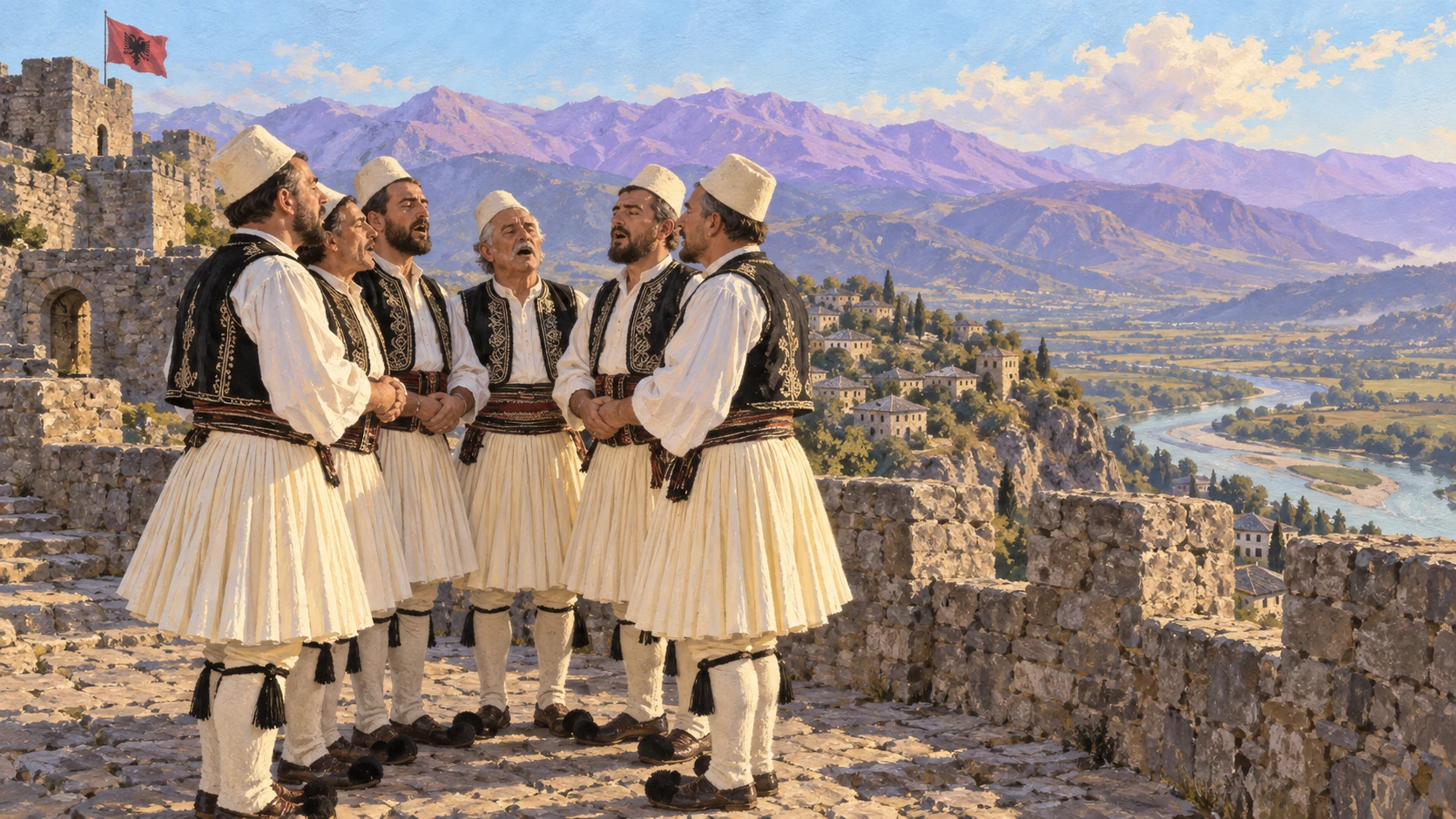
Singers practice iso-polyphony across southern provinces like Laberia, Toskeria, Chamuria, and Myzeqe. The art form is performed a cappella without musical instruments.
The steady drone called iso takes its name from ancient Byzantine chant. State legislation protects this singing under official statutory custody. Ensembles typically comprise several adult singers in close contact.
Singing Roles and the Steady Drone
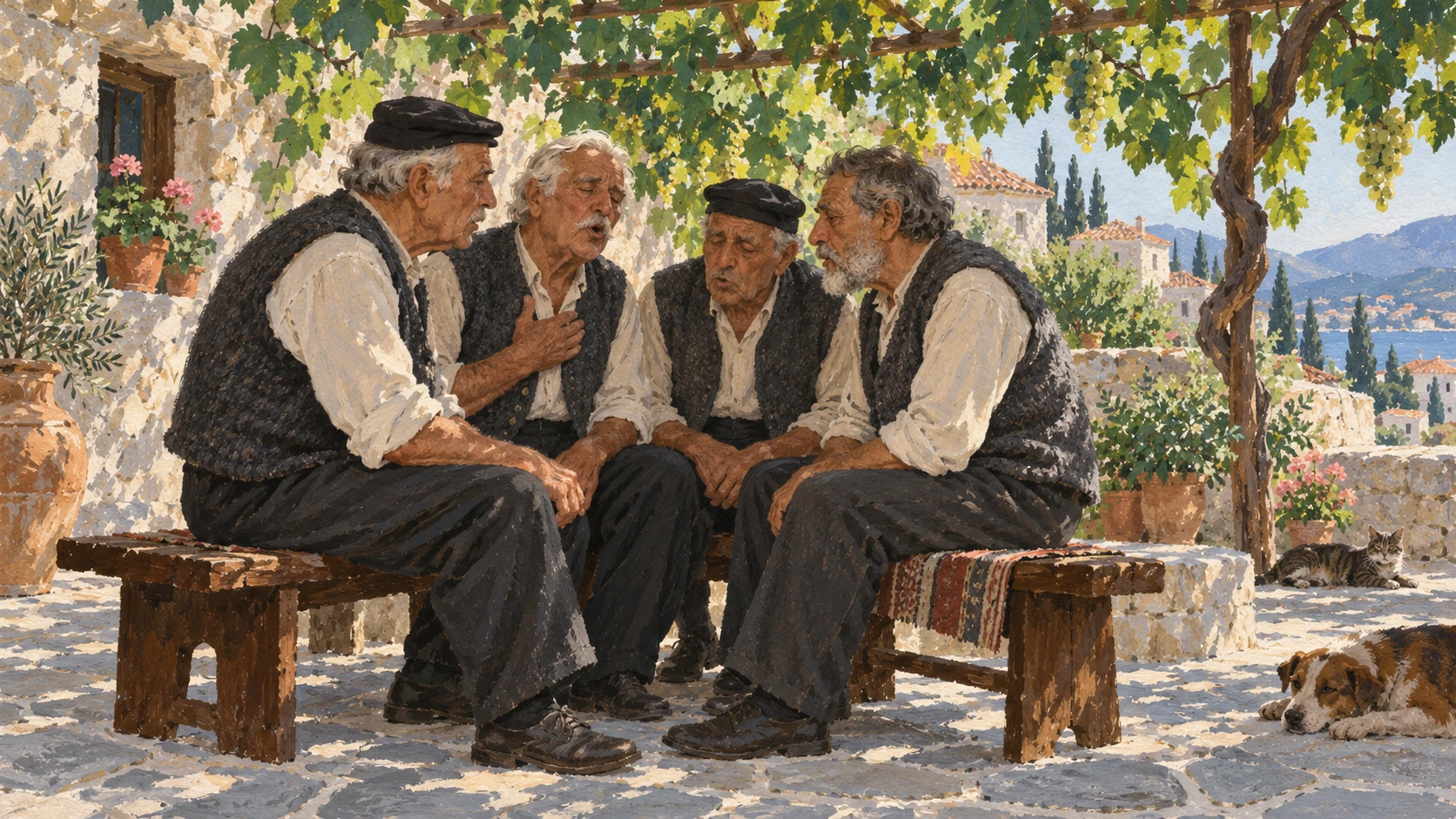
The lead soloist called the marresi initiates the vocal melody and sings the opening verse. A secondary soloist called the preresi enters in antiphonal dialogue.
In Lab multipart singing, a third distinctive voice called the hedhesi acts as thrower. The supporting choir called the isotare sings a continuous guttural drone.
Singers use circular breathing and staggered inhalation to maintain acoustic continuity. Their multipart textures create rich harmonic friction and natural overtone resonance.
Styles of the Lab and Tosk Regions
Lab polyphony comes from rugged southwestern highlands with tense vocal timbre and sharp pauses. Tosk singing from southeastern valleys has softer modal ornamentation.
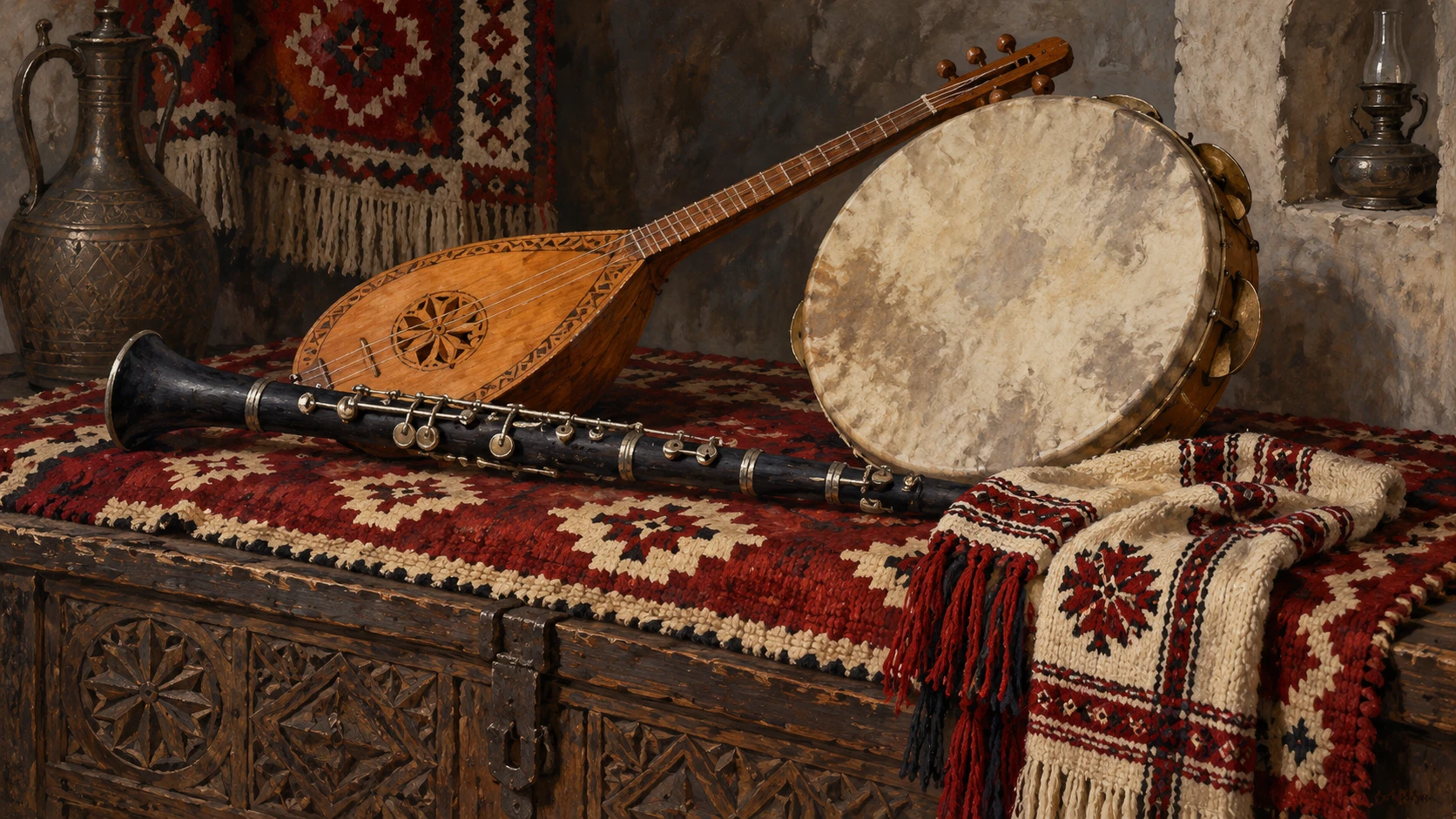
Women in Permet and Vlora sing delicate multipart ballads of family life. In urban centers, saze ensembles use clarinets and violins to emulate vocal parts.
Regional language variations and rhyming couplets shape syllabic meters in each song. Mountain shepherds originally called across rocky ravines to communicate over long distances.
Feasts, Weddings, and Mourning Songs
Village weddings and family banquets provide the primary setting for spontaneous polyphony. During sad times, women sing funerary lamentations called vajtim to express grief.
Musicians created the instrumental kaba as an improvised weeping lament on clarinet and lute. Wine and raki feasts bring communities together for joyful singing rituals.
Narrative epic ballads chronicle historic resistance and regional mountain customs. Seasonal agrarian harvest festivals unite neighbouring villages in friendly vocal contests.
The Famous Festival at Gjirokastra
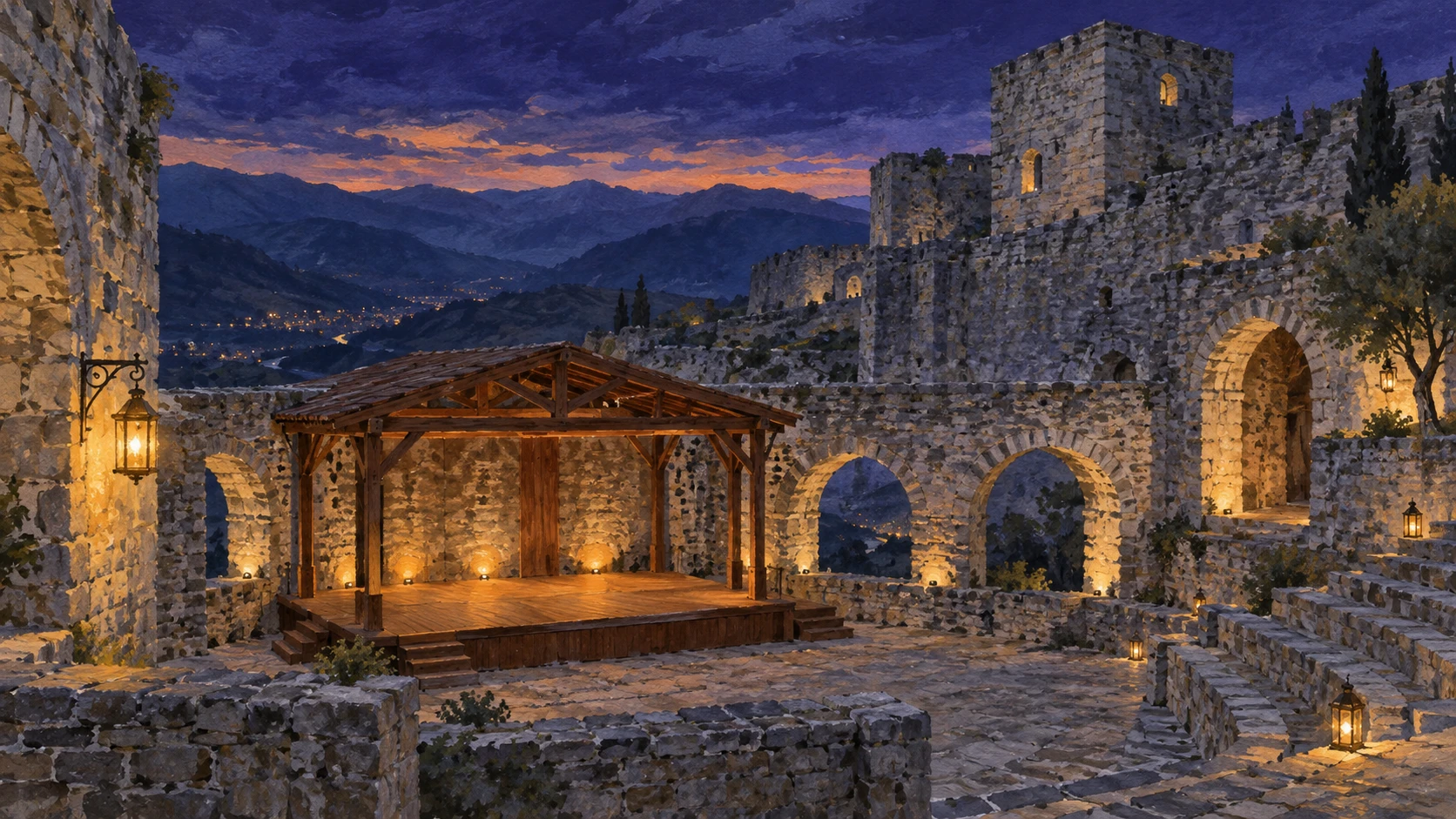
The National Folklore Festival of Gjirokastra convenes quinquennially inside the grand castle fortress. Founded in 1968, the event is the premier showcase for regional folklore.
The Institute of Cultural Anthropology in Tirana preserves thousands of hours of field recordings. Ensembles perform on the open-air citadel stage overlooking the wide Drino valley.
Expert jury panels judge regional costuming and strict faithfulness to archaic songs. Recent archival digitization has transferred magnetic reel tapes into modern digital repositories.
Passing the Songs to New Generations
Rural depopulation and migration threaten the natural communal transmission of village songs. Community workshops now connect elder singers with local students in southern municipalities.
Independent civic associations organize local festivals and recording sessions to protect endangered songs. Modern youth groups sing traditional arrangements in urban concert halls.
School curricula incorporate polyphonic vocal theory into secondary music classes. Cultural exchange programs promote Balkan vocal traditions across Adriatic partner networks.
A2 · Elementary
Albanian Folk Iso-Polyphony: Multipart Singing Traditions
Communal vocal polyphony, sustained drones, and cultural heritage in Southern Albania.
Intangible Cultural Heritage and Regional Geography
In 2005, UNESCO proclaimed Albanian folk iso-polyphony a Masterpiece of the Oral and Intangible Heritage of Humanity, followed by official inscription on the Representative List in 2008.
The multipart vocal tradition is actively practiced across historical southern provinces, including the rugged mountain districts of Laberia, Toskeria, Chamuria, and the plains of Myzeqe. Performances are delivered strictly a cappella without the use of accompanying musical instruments.
The continuous vocal drone called the iso derives its historical designation from Byzantine liturgical chanting practices. Albanian cultural legislation formally designates iso-polyphony as a protected intangible heritage element under statutory custody. Ensembles typically comprise between four and seven adult male or female singers standing in close physical contact.
Vocal Architecture and Antiphonal Interaction
The primary soloist, known as the marresi, initiates each vocal phrase, setting the melodic contour, tempo, and poetic verse for the ensemble. The secondary soloist, termed the preresi or kthyesi, enters in dynamic antiphonal dialogue to cut or turn the musical line against the leader.
In four-part Lab polyphony, a distinctive third voice called the hedhesi acts as the thrower, leaping above the lead melody with high-pitched calls. Meanwhile, the supporting choir called the isotare sustains an unbroken guttural drone on a single harmonic pitch.
Singers utilize disciplined circular breathing and staggered inhalation to ensure the uninterrupted acoustic continuity of the vocal drone. These complex vocal textures generate intense harmonic friction, narrow intervals, and overtone amplification through precise natural resonance.
Dialectal Diversity Between Lab and Tosk Singing
Lab polyphony, originating in the rugged southwestern highlands, is renowned for its tense vocal timbre, dramatic emotional pauses, and strict four-part polyphonic structure. By contrast, Tosk polyphonic singing from southeastern river valleys displays softer chest resonance, lyrical ornamentation, and flowing modal lines.
All-female vocal ensembles in towns such as Permet and Vlora perform delicate multipart ballads that commemorate domestic life and heroic local memories. In urban centers, traditional saze ensembles formed, employing clarinets, lutes, and violins to emulate the polyphonic roles of the singers.
Linguistic variations across regional dialects shape the rhythmic cadence, rhyming couplets, and syllabic meters of each regional repertoire. Highland shepherds and pastoralists originally developed resonant calls across deep mountain ravines to communicate over long distances.
Communal Celebrations, Laments, and the Instrumental Kaba
Traditional village weddings and extended family banquets have long provided the primary social setting for spontaneous polyphonic singing. In moments of communal grief, women perform moving funerary lamentations known as vajtim, transforming shared sorrow into powerful vocal art.
From these sorrowful laments arose the instrumental kaba, an improvised weeping genre performed on the clarinet accompanied by a continuous drone. Shared festive dinners featuring roasted lamb, local wine, and raki strengthen communal bonding through hours of collective music-making.
Narrative epic songs sung in polyphony recount historical battles, anti-Ottoman resistance, and customary highland codes of honor. Seasonal agrarian harvest festivals bring neighboring village groups together for spirited singing contests under ancient town plane trees.
The National Folklore Festival and Archival Conservation
Every five years, the National Folklore Festival of Gjirokastra convenes inside the monumental stone fortress overlooking the Drino river valley. Inaugurated in 1968, the festival serves as the premier national showcase for authentic regional singing and traditional folk costumes.
The Institute of Cultural Anthropology and Art Studies in Tirana preserves thousands of hours of historical audio field recordings gathered across remote villages. Master polyphonic groups gather on the open-air citadel stage to perform archaic vocal repertoires before large festival audiences.
A distinguished jury evaluates performing ensembles based on stylistic authenticity, adherence to ancestral vocal techniques, and regional costume integrity. Recent institutional digitization programs have successfully converted vintage magnetic reel tapes into secure digital audio repositories.
Safeguarding Living Traditions Amid Demographic Change
Extensive rural depopulation and young people migrating to urban centers have disrupted the traditional generational transmission of village singing. To counteract this loss, dedicated safeguarding workshops connect master singers with primary and secondary students across southern municipalities.
Local civic associations actively organize community singing gatherings and archival recording sessions to preserve endangered village songs. Simultaneously, contemporary youth ensembles perform multipart arrangements in metropolitan concert halls and international world music festivals.
National education authorities have introduced polyphonic vocal concepts into public school music curricula to foster cultural awareness. Furthermore, international cultural exchange initiatives celebrate Balkan vocal polyphony through collaborative performances across Adriatic and Mediterranean networks.
B1 · Intermediate
Albanian Folk Iso-Polyphony: Multipart Singing Traditions
Intangible cultural heritage, vocal drones, and community safeguarding in Southern Albania.
Intangible Cultural Heritage and Regional Distribution
In 2005, UNESCO proclaimed Albanian folk iso-polyphony a Masterpiece of the Oral and Intangible Heritage of Humanity, followed by its formal inscription on the Representative List in 2008.
The multipart vocal tradition is actively practiced across historical southern provinces, encompassing the rugged mountain districts of Laberia, Toskeria, Chamuria, and the agricultural plains of Myzeqe. Performances are delivered strictly a cappella without the assistance of accompanying musical instruments.
The continuous vocal drone known as the iso derives its historical nomenclature from Byzantine liturgical chanting traditions. Albanian national cultural legislation formally classifies iso-polyphony as a protected intangible heritage element under statutory state custody. Performing ensembles typically comprise between four and seven adult male or female singers standing in close physical contact to coordinate harmonic breathing.
Polyphonic Architecture and Antiphonal Mechanics
The primary soloist, known as the marresi, initiates each melodic line, establishing the musical contour, dynamic tempo, and poetic narrative verse for the ensemble. The secondary soloist, termed the preresi or kthyesi, enters in dynamic antiphonal dialogue, cutting or turning melodic phrases against the leader.
In traditional four-part Lab polyphony, a distinctive third melodic voice designated as the hedhesi acts as the thrower, leaping above the lead vocal line with piercing microtonal ornaments. Concurrently, the supporting choir called the isotare sustains an unbroken guttural vocal drone on a single fundamental harmonic pitch.
Singers utilize disciplined circular breathing techniques and staggered inhalation to ensure the seamless acoustic continuity of the supporting drone. These intricate vocal textures generate intense harmonic friction, narrow musical intervals, and overtone amplification through precise microtonal resonance.
Dialectal Diversity and Stylistic Variations
Lab polyphony, originating in the rugged southwestern highlands, is renowned for its tense vocal timbre, dramatic emotional pauses, and strict four-part polyphonic architecture. In contrast, Tosk polyphonic singing from southeastern river valleys features softer chest resonance, delicate ornamentation, and flowing modal lines.
All-female vocal ensembles in historical towns such as Permet and Vlora perform delicate multipart ballads celebrating domestic life, seasonal cycles, and heroic ancestral memories. In southern urban centers, instrumental saze ensembles emerged, employing clarinets, lutes, and violins to emulate the polyphonic roles of traditional vocalists.
Regional linguistic variations across Gheg, Tosk, and Lab idioms shape the rhythmic cadence, rhyming couplets, and syllabic meters of traditional songs. Highland shepherds and pastoralists originally developed resonant polyphonic calls across deep mountain ravines to communicate across long distances.
Social Contexts, Funerary Laments, and the Instrumental Kaba
Traditional village weddings and extended family banquets have long provided the primary communal setting for spontaneous polyphonic music-making. In solemn moments of collective mourning, women perform moving funerary lamentations known as vajtim, channeling personal grief into ancestral poetic laments.
From these sorrowful vocal traditions arose the instrumental kaba genre, an improvised weeping lament played on the clarinet accompanied by a continuous drone lute. Festive evening meals featuring roasted meats, local wine, and raki strengthen communal bonding through hours of participatory multipart singing.
Narrative epic ballads sung in polyphony chronicle historical resistance against foreign invaders, highland blood feuds, and customary codes of hospitality. Seasonal agrarian harvest festivals unite neighbouring mountain villages in spirited multipart singing contests under ancient town plane trees.
The Gjirokastra Festival and Ethnomusicological Preservation
Every five years, the National Folklore Festival of Gjirokastra convenes inside the monumental hilltop fortress overlooking the Drino river valley. Inaugurated in 1968, the festival serves as the premier national showcase for authentic regional singing and traditional folklore ensembles.
The Institute of Cultural Anthropology and Art Studies in Tirana preserves thousands of hours of historical audio field recordings gathered across remote rural regions. Master polyphonic ensembles assemble on the open-air citadel stage to perform archaic vocal repertoires before domestic and international audiences.
A distinguished jury evaluates performing ensembles based on stylistic authenticity, traditional costuming, vocal balance, and faithfulness to archaic repertoires. Modern institutional digitization initiatives have successfully converted vintage magnetic reel tapes into accessible digital audio repositories.
Safeguarding Living Traditions Amid Demographic Transition
Accelerating rural depopulation and young citizens migrating to urban centers have significantly disrupted the traditional familial transmission of village singing. To address these demographic pressures, dedicated safeguarding workshops connect elder master singers with primary and secondary students across southern municipalities.
Independent civic associations actively organize community singing gatherings and archival recording sessions to protect endangered village repertoires. Simultaneously, contemporary youth ensembles perform multipart arrangements in metropolitan concert halls and international world music festivals.
National educational authorities have integrated polyphonic vocal theory into secondary school music curricula to sustain youth appreciation. Furthermore, bilateral cultural exchange programs promote Balkan multipart vocal heritage across Adriatic and Mediterranean academic networks.
B2 · Upper Intermediate
Albanian Folk Iso-Polyphony: Multipart Singing Traditions
Intangible cultural heritage, vocal drones, and community safeguarding in Southern Albania.
UNESCO Recognition and Ethnomusicological Geography
In 2005, UNESCO proclaimed Albanian folk iso-polyphony a Masterpiece of the Oral and Intangible Heritage of Humanity, culminating in its formal inscription upon the Representative List in 2008.
The multipart vocal tradition is actively practiced across historical southern provinces, encompassing the rugged mountainous terrain of Laberia, Toskeria, Chamuria, and the agricultural lowlands of Myzeqe. Performances are delivered strictly a cappella without the assistance of accompanying musical instruments, emphasizing the pure acoustic resonance of unaccompanied human voices.
The continuous vocal drone known as the iso derives its historical nomenclature from Byzantine liturgical chant traditions. Albanian national cultural legislation formally classifies iso-polyphony as a protected intangible heritage element under statutory state custody. Performing ensembles typically comprise between four and seven adult male or female singers standing in close physical contact to coordinate precise harmonic breathing.
Multipart Architecture and Antiphonal Mechanics
The primary soloist, known as the marresi, initiates each melodic line, establishing the musical contour, dynamic tempo, and poetic narrative verse for the entire ensemble. The secondary soloist, termed the preresi or kthyesi, enters in dynamic antiphonal dialogue, cutting or turning melodic phrases against the leader.
In traditional four-part Lab polyphony, a distinctive third melodic voice designated as the hedhesi acts as the thrower, leaping above the lead vocal line with piercing microtonal ornaments. Concurrently, the supporting choir called the isotare sustains an unbroken guttural vocal drone on a single fundamental harmonic pitch.
Singers utilize disciplined circular breathing techniques and staggered inhalation to ensure the seamless acoustic continuity of the supporting drone. These intricate vocal textures generate intense harmonic friction, narrow musical intervals, and overtone amplification through precise microtonal resonance.
Dialectal Diversity and Stylistic Variations
Lab polyphony, originating in the rugged southwestern highlands, is renowned for its tense vocal timbre, dramatic emotional pauses, and strict four-part polyphonic architecture. In contrast, Tosk polyphonic singing from southeastern river valleys features softer chest resonance, delicate ornamentation, and flowing modal lines.
All-female vocal ensembles in historical towns such as Permet and Vlora perform delicate multipart ballads celebrating domestic life, seasonal cycles, and heroic ancestral memories. In southern urban centers, instrumental saze ensembles emerged, employing clarinets, lutes, and violins to emulate the polyphonic roles of traditional vocalists.
Regional linguistic variations across Gheg, Tosk, and Lab idioms shape the rhythmic cadence, rhyming couplets, and syllabic meters of traditional songs. Highland shepherds and pastoralists originally developed resonant polyphonic calls across deep mountain ravines to communicate across long distances.
Social Contexts, Funerary Laments, and the Instrumental Kaba
Traditional village weddings and extended family banquets have long provided the primary communal setting for spontaneous polyphonic music-making. In solemn moments of collective mourning, women perform moving funerary lamentations known as vajtim, channeling personal grief into ancestral poetic laments.
From these sorrowful vocal traditions arose the instrumental kaba genre, an improvised weeping lament played on the clarinet accompanied by a continuous drone lute. Festive evening meals featuring roasted meats, local wine, and raki strengthen communal bonding through hours of participatory multipart singing.
Narrative epic ballads sung in polyphony chronicle historical resistance against foreign invaders, highland blood feuds, and customary codes of hospitality. Seasonal agrarian harvest festivals unite neighbouring mountain villages in spirited multipart singing contests under ancient town plane trees.
The Gjirokastra Festival and Ethnomusicological Preservation
Every five years, the National Folklore Festival of Gjirokastra convenes inside the monumental hilltop fortress overlooking the Drino river valley. Inaugurated in 1968, the festival serves as the premier national showcase for authentic regional singing and traditional folklore ensembles.
The Institute of Cultural Anthropology and Art Studies in Tirana preserves thousands of hours of historical audio field recordings gathered across remote rural regions. Master polyphonic ensembles assemble on the open-air citadel stage to perform archaic vocal repertoires before domestic and international audiences.
A distinguished jury evaluates performing ensembles based on stylistic authenticity, traditional costuming, vocal balance, and faithfulness to archaic repertoires. Modern institutional digitization initiatives have successfully converted vintage magnetic reel tapes into accessible digital audio repositories.
Safeguarding Living Traditions Amid Demographic Transition
Accelerating rural depopulation and young citizens migrating to urban centers have significantly disrupted the traditional familial transmission of village singing. To address these demographic pressures, dedicated safeguarding workshops connect elder master singers with primary and secondary students across southern municipalities.
Independent civic associations actively organize community singing gatherings and archival recording sessions to protect endangered village repertoires. Simultaneously, contemporary youth ensembles perform multipart arrangements in metropolitan concert halls and international world music festivals.
National educational authorities have integrated polyphonic vocal theory into secondary school music curricula to sustain youth appreciation. Furthermore, bilateral cultural exchange programs promote Balkan multipart vocal heritage across Adriatic and Mediterranean academic networks.
C1 · Advanced
Albanian Folk Iso-Polyphony: Multipart Singing Traditions
Intangible cultural heritage, vocal drones, and community safeguarding in Southern Albania.
UNESCO Recognition and Ethnomusicological Geography
In 2005, UNESCO proclaimed Albanian folk iso-polyphony a Masterpiece of the Oral and Intangible Heritage of Humanity, culminating in its formal inscription upon the Representative List in 2008.
The multipart vocal tradition is actively practiced across historical southern provinces, encompassing the rugged mountainous terrain of Laberia, Toskeria, Chamuria, and the agricultural lowlands of Myzeqe. Performances are delivered strictly a cappella without the assistance of accompanying musical instruments, emphasizing the pure acoustic resonance of unaccompanied human voices.
The continuous vocal drone known as the iso derives its historical nomenclature from Byzantine liturgical chant traditions. Albanian national cultural legislation formally classifies iso-polyphony as a protected intangible heritage element under statutory state custody. Performing ensembles typically comprise between four and seven adult male or female singers standing in close physical contact to coordinate precise harmonic breathing.
Multipart Architecture and Antiphonal Mechanics
The primary soloist, known as the marresi, initiates each melodic line, establishing the musical contour, dynamic tempo, and poetic narrative verse for the entire ensemble. The secondary soloist, termed the preresi or kthyesi, enters in dynamic antiphonal dialogue, cutting or turning melodic phrases against the leader.
In traditional four-part Lab polyphony, a distinctive third melodic voice designated as the hedhesi acts as the thrower, leaping above the lead vocal line with piercing microtonal ornaments. Concurrently, the supporting choir called the isotare sustains an unbroken guttural vocal drone on a single fundamental harmonic pitch.
Singers utilize disciplined circular breathing techniques and staggered inhalation to ensure the seamless acoustic continuity of the supporting drone. These intricate vocal textures generate intense harmonic friction, narrow musical intervals, and overtone amplification through precise microtonal resonance.
Dialectal Diversity and Stylistic Variations
Lab polyphony, originating in the rugged southwestern highlands, is renowned for its tense vocal timbre, dramatic emotional pauses, and strict four-part polyphonic architecture. In contrast, Tosk polyphonic singing from southeastern river valleys features softer chest resonance, delicate ornamentation, and flowing modal lines.
All-female vocal ensembles in historical towns such as Permet and Vlora perform delicate multipart ballads celebrating domestic life, seasonal cycles, and heroic ancestral memories. In southern urban centers, instrumental saze ensembles emerged, employing clarinets, lutes, and violins to emulate the polyphonic roles of traditional vocalists.
Regional linguistic variations across Gheg, Tosk, and Lab idioms shape the rhythmic cadence, rhyming couplets, and syllabic meters of traditional songs. Highland shepherds and pastoralists originally developed resonant polyphonic calls across deep mountain ravines to communicate across long distances.
Social Contexts, Funerary Laments, and the Instrumental Kaba
Traditional village weddings and extended family banquets have long provided the primary communal setting for spontaneous polyphonic music-making. In solemn moments of collective mourning, women perform moving funerary lamentations known as vajtim, channeling personal grief into ancestral poetic laments.
From these sorrowful vocal traditions arose the instrumental kaba genre, an improvised weeping lament played on the clarinet accompanied by a continuous drone lute. Festive evening meals featuring roasted meats, local wine, and raki strengthen communal bonding through hours of participatory multipart singing.
Narrative epic ballads sung in polyphony chronicle historical resistance against foreign invaders, highland blood feuds, and customary codes of hospitality. Seasonal agrarian harvest festivals unite neighbouring mountain villages in spirited multipart singing contests under ancient town plane trees.
The Gjirokastra Festival and Ethnomusicological Preservation
Every five years, the National Folklore Festival of Gjirokastra convenes inside the monumental hilltop fortress overlooking the Drino river valley. Inaugurated in 1968, the festival serves as the premier national showcase for authentic regional singing and traditional folklore ensembles.
The Institute of Cultural Anthropology and Art Studies in Tirana preserves thousands of hours of historical audio field recordings gathered across remote rural regions. Master polyphonic ensembles assemble on the open-air citadel stage to perform archaic vocal repertoires before domestic and international audiences.
A distinguished jury evaluates performing ensembles based on stylistic authenticity, traditional costuming, vocal balance, and faithfulness to archaic repertoires. Modern institutional digitization initiatives have successfully converted vintage magnetic reel tapes into accessible digital audio repositories.
Safeguarding Living Traditions Amid Demographic Transition
Accelerating rural depopulation and young citizens migrating to urban centers have significantly disrupted the traditional familial transmission of village singing. To address these demographic pressures, dedicated safeguarding workshops connect elder master singers with primary and secondary students across southern municipalities.
Independent civic associations actively organize community singing gatherings and archival recording sessions to protect endangered village repertoires. Simultaneously, contemporary youth ensembles perform multipart arrangements in metropolitan concert halls and international world music festivals.
National educational authorities have integrated polyphonic vocal theory into secondary school music curricula to sustain youth appreciation. Furthermore, bilateral cultural exchange programs promote Balkan multipart vocal heritage across Adriatic and Mediterranean academic networks.
C2 · Mastery
Albanian Folk Iso-Polyphony: Multipart Singing Traditions
Intangible cultural heritage, vocal drones, and community safeguarding in Southern Albania.
UNESCO Recognition and Ethnomusicological Geography
In 2005, UNESCO proclaimed Albanian folk iso-polyphony a Masterpiece of the Oral and Intangible Heritage of Humanity, culminating in its formal inscription upon the Representative List in 2008.
The multipart vocal tradition is actively practiced across historical southern provinces, encompassing the rugged mountainous terrain of Laberia, Toskeria, Chamuria, and the agricultural lowlands of Myzeqe. Performances are delivered strictly a cappella without the assistance of accompanying musical instruments, emphasizing the pure acoustic resonance of unaccompanied human voices.
The continuous vocal drone known as the iso derives its historical nomenclature from Byzantine liturgical chant traditions. Albanian national cultural legislation formally classifies iso-polyphony as a protected intangible heritage element under statutory state custody. Performing ensembles typically comprise between four and seven adult male or female singers standing in close physical contact to coordinate precise harmonic breathing.
Multipart Architecture and Antiphonal Mechanics
The primary soloist, known as the marresi, initiates each melodic line, establishing the musical contour, dynamic tempo, and poetic narrative verse for the entire ensemble. The secondary soloist, termed the preresi or kthyesi, enters in dynamic antiphonal dialogue, cutting or turning melodic phrases against the leader.
In traditional four-part Lab polyphony, a distinctive third melodic voice designated as the hedhesi acts as the thrower, leaping above the lead vocal line with piercing microtonal ornaments. Concurrently, the supporting choir called the isotare sustains an unbroken guttural vocal drone on a single fundamental harmonic pitch.
Singers utilize disciplined circular breathing techniques and staggered inhalation to ensure the seamless acoustic continuity of the supporting drone. These intricate vocal textures generate intense harmonic friction, narrow musical intervals, and overtone amplification through precise microtonal resonance.
Dialectal Diversity and Stylistic Variations
Lab polyphony, originating in the rugged southwestern highlands, is renowned for its tense vocal timbre, dramatic emotional pauses, and strict four-part polyphonic architecture. In contrast, Tosk polyphonic singing from southeastern river valleys features softer chest resonance, delicate ornamentation, and flowing modal lines.
All-female vocal ensembles in historical towns such as Permet and Vlora perform delicate multipart ballads celebrating domestic life, seasonal cycles, and heroic ancestral memories. In southern urban centers, instrumental saze ensembles emerged, employing clarinets, lutes, and violins to emulate the polyphonic roles of traditional vocalists.
Regional linguistic variations across Gheg, Tosk, and Lab idioms shape the rhythmic cadence, rhyming couplets, and syllabic meters of traditional songs. Highland shepherds and pastoralists originally developed resonant polyphonic calls across deep mountain ravines to communicate across long distances.
Social Contexts, Funerary Laments, and the Instrumental Kaba
Traditional village weddings and extended family banquets have long provided the primary communal setting for spontaneous polyphonic music-making. In solemn moments of collective mourning, women perform moving funerary lamentations known as vajtim, channeling personal grief into ancestral poetic laments.
From these sorrowful vocal traditions arose the instrumental kaba genre, an improvised weeping lament played on the clarinet accompanied by a continuous drone lute. Festive evening meals featuring roasted meats, local wine, and raki strengthen communal bonding through hours of participatory multipart singing.
Narrative epic ballads sung in polyphony chronicle historical resistance against foreign invaders, highland blood feuds, and customary codes of hospitality. Seasonal agrarian harvest festivals unite neighbouring mountain villages in spirited multipart singing contests under ancient town plane trees.
The Gjirokastra Festival and Ethnomusicological Preservation
Every five years, the National Folklore Festival of Gjirokastra convenes inside the monumental hilltop fortress overlooking the Drino river valley. Inaugurated in 1968, the festival serves as the premier national showcase for authentic regional singing and traditional folklore ensembles.
The Institute of Cultural Anthropology and Art Studies in Tirana preserves thousands of hours of historical audio field recordings gathered across remote rural regions. Master polyphonic ensembles assemble on the open-air citadel stage to perform archaic vocal repertoires before domestic and international audiences.
A distinguished jury evaluates performing ensembles based on stylistic authenticity, traditional costuming, vocal balance, and faithfulness to archaic repertoires. Modern institutional digitization initiatives have successfully converted vintage magnetic reel tapes into accessible digital audio repositories.
Safeguarding Living Traditions Amid Demographic Transition
Accelerating rural depopulation and young citizens migrating to urban centers have significantly disrupted the traditional familial transmission of village singing. To address these demographic pressures, dedicated safeguarding workshops connect elder master singers with primary and secondary students across southern municipalities.
Independent civic associations actively organize community singing gatherings and archival recording sessions to protect endangered village repertoires. Simultaneously, contemporary youth ensembles perform multipart arrangements in metropolitan concert halls and international world music festivals.
National educational authorities have integrated polyphonic vocal theory into secondary school music curricula to sustain youth appreciation. Furthermore, bilateral cultural exchange programs promote Balkan multipart vocal heritage across Adriatic and Mediterranean academic networks.
Check your understanding
Choose how closely you want to revisit the article. You can refer back while answering, and review explanations when you finish.
Quick Quiz A1
Try one question, then create a free account for the full Quick Quiz. Sign Up Free
Answer every question before checking. There is no time limit.
Your results
/ 1 correct (%)
Read the explanations to see how each answer connects to the article.
-
What organization proclaimed Albanian folk iso-polyphony a Masterpiece of Oral and Intangible Heritage?
1. Answer:
Quick Quiz A2
Try one question, then create a free account for the full Quick Quiz. Sign Up Free
Answer every question before checking. There is no time limit.
Your results
/ 1 correct (%)
Read the explanations to see how each answer connects to the article.
-
In what year was Albanian folk iso-polyphony officially inscribed on the UNESCO Representative List?
1. Answer:
Quick Quiz B1
Try one question, then create a free account for the full Quick Quiz. Sign Up Free
Answer every question before checking. There is no time limit.
Your results
/ 1 correct (%)
Read the explanations to see how each answer connects to the article.
-
Under what international framework was Albanian folk iso-polyphony recognized in 2008?
1. Answer:
Quick Quiz B2
Try one question, then create a free account for the full Quick Quiz. Sign Up Free
Answer every question before checking. There is no time limit.
Your results
/ 1 correct (%)
Read the explanations to see how each answer connects to the article.
-
Under what international convention was Albanian folk iso-polyphony inscribed in 2008?
1. Answer:
Quick Quiz C1
Try one question, then create a free account for the full Quick Quiz. Sign Up Free
Answer every question before checking. There is no time limit.
Your results
/ 1 correct (%)
Read the explanations to see how each answer connects to the article.
-
Under what international convention was Albanian folk iso-polyphony inscribed in 2008?
1. Answer:
Quick Quiz C2
Try one question, then create a free account for the full Quick Quiz. Sign Up Free
Answer every question before checking. There is no time limit.
Your results
/ 1 correct (%)
Read the explanations to see how each answer connects to the article.
-
Under what international convention was Albanian folk iso-polyphony inscribed in 2008?
1. Answer:
