A1 · Beginner
Paths Across the Pasture: Transhumance Routes and Mountain Dairies in Albania
A documentary look at seasonal sheep droving, stone shepherd huts, and traditional raw milk cheeses in the highlands of Albania.
The Seasonal Droving Tradition and UNESCO Recognition
UNESCO inscribed transhumance on the Representative List of Intangible Cultural Heritage recognizing multinational pastoral droving paths including Albania.
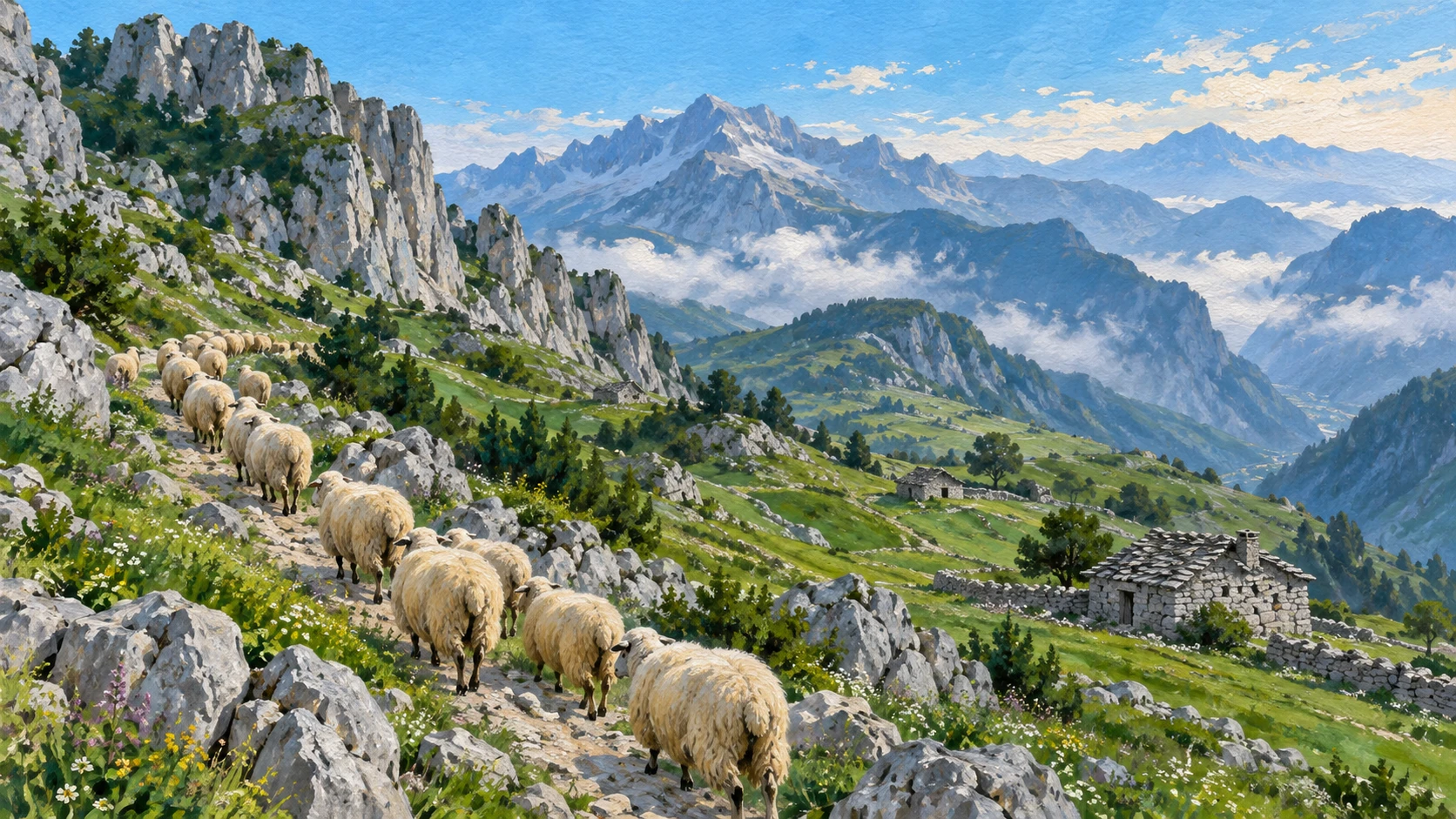
Pastoralists drive sheep and goat herds between low winter pastures and high summer mountain meadows known as verishtet.
The seasonal migration begins in late spring as rising temperatures dry lowland grazing forage along coastal and valley plains.
Flocks navigate traditional stone droving corridors across river gorges and limestone mountain passes across Southern Albania.
Shepherds maintain customary droving rights negotiated between valley municipalities and upland pastoral communes.
Droving journeys require several days of overland travel, moving herds in early morning before midday heat.
High Pasture Settlement and the Architecture of the Stan
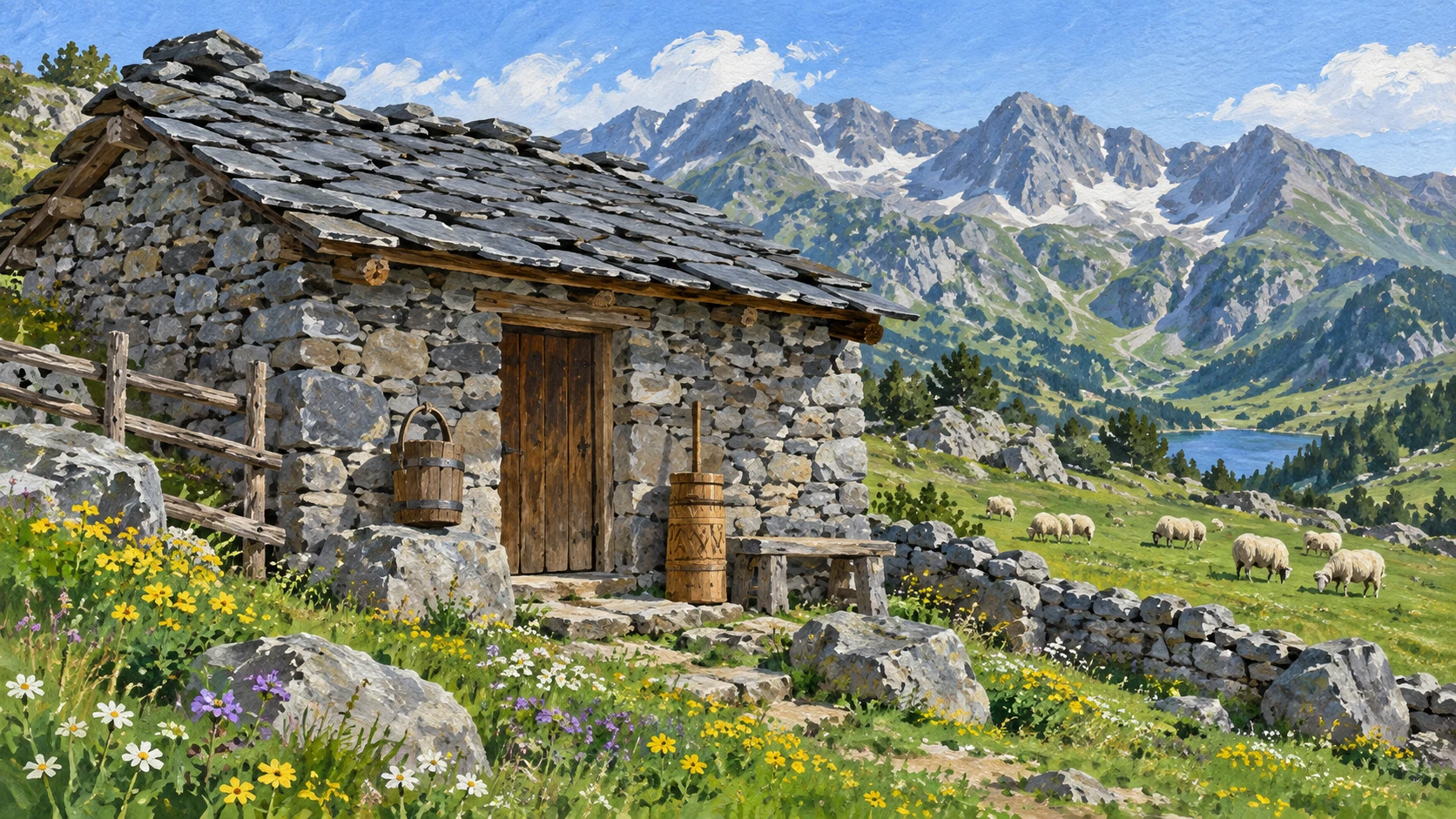
Pastoral families establish seasonal summer settlements centered around dry-stone shepherd huts known locally as stane.
The traditional stan features fieldstone walls, lime mortar, timber beams, and a slate tile roof resistant to mountain winds.
Highland camps provide essential animal pens, water troughs, and shaded processing enclosures for milking large sheep flocks.
Shepherds perform twice-daily hand milking of sheep and goats inside stone holding pens during summer pasture residency.
Upland pastures supply rich alpine forage containing wild thyme, clover, and native grasses that flavor raw milk yields.
Summer grazing maintains open mountain landscapes preventing shrub encroachment on subalpine grassland ecosystems.
Mountain Dairying and Traditional Cheese Production
Fresh unpasteurized sheep milk is processed directly at mountain stane into curd using traditional natural rennet enzymes.
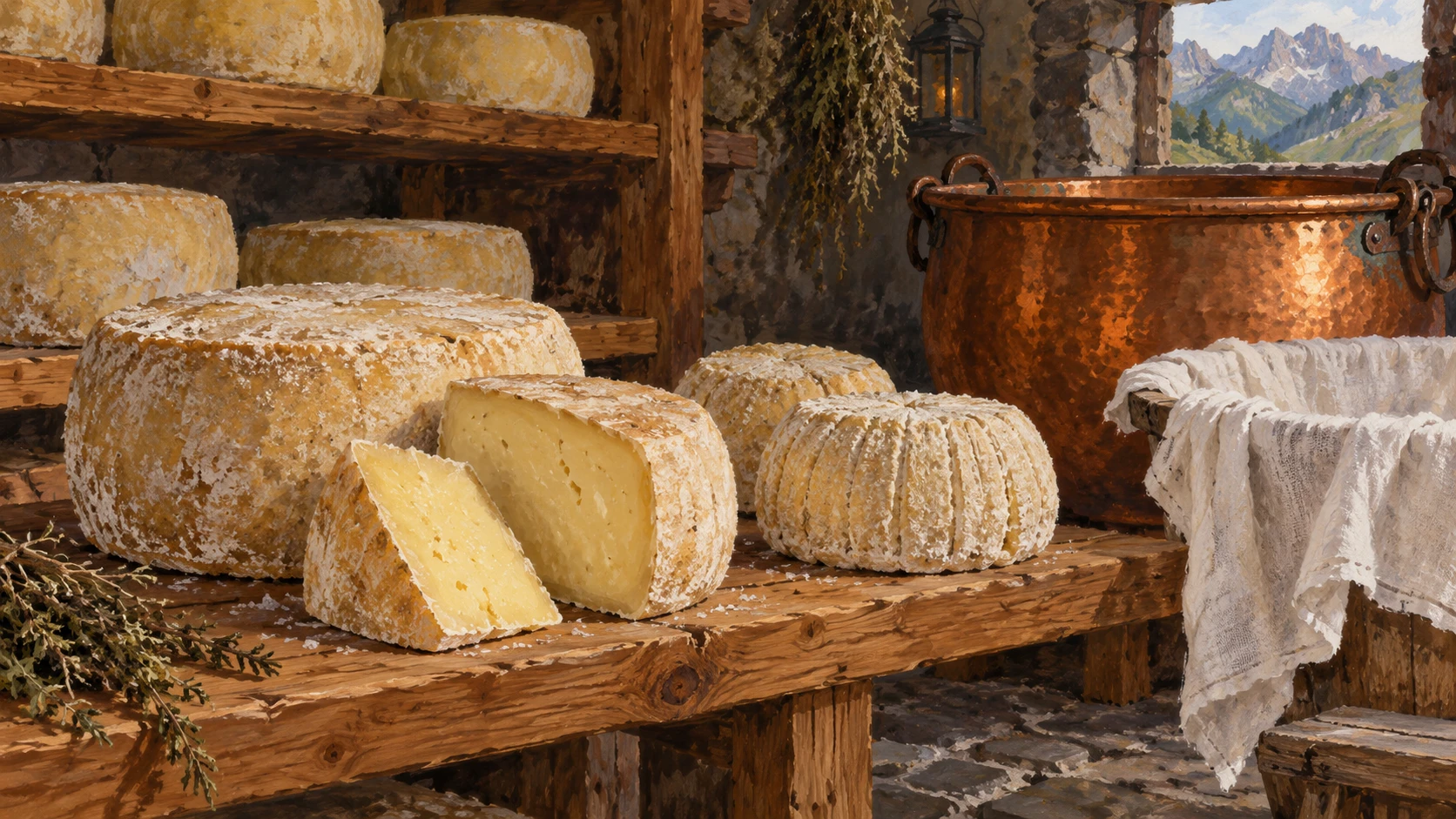
Cheesemakers heat milk in large copper cauldrons over wood fires to achieve curd separation for firm alpine cheeses.
Curd blocks are pressed in woven linen cloths and wooden perforated molds to expel remaining liquid whey.
Hard sheep milk cheese known as Kaçkavall is salted and aged on ventilated pine shelving inside cool stone cellars.
Northern pastoralists produce Mishavina cheese by packing salted curd into wooden casks for airtight anaerobic fermentation.
Traditional dairy processing transforms perishable seasonal milk into durable cheeses capable of surviving warm transport down mountain trails.
Commercial Pathways, Village Bazars, and Urban Demand
Pastoralists transport aged mountain cheeses down pack trails using pack mules and four-wheel-drive farm pickups.
Regional town markets in Gjirokaster, Korce, and Shkoder serve as primary wholesale trading hubs for seasonal artisan cheese.
High-altitude raw milk cheeses command substantial price premiums in Tirana specialty food shops and agro-tourism restaurants.
Livestock surveys record hundreds of thousands of sheep and goats supporting household livelihoods in mountainous rural municipalities.
Wool and live lambs sold at autumn livestock fairs provide secondary cash income to cover winter fodder purchases.
Direct farm-gate cheese sales allow pastoral households to capture higher profit margins without intermediaries.
Generational Transition, Labor Scarcity, and Environmental Pressures
The pastoral sector faces acute demographic contraction as younger generations migrate from mountain villages to coastal cities and abroad.
Severe shortages of experienced seasonal shepherds have forced some pastoral families to reduce herd sizes.
Modern paved highway construction and land privatization have fragmented historical livestock migration corridors.
Climate fluctuations reduce summer spring flows and dry highland watering troughs earlier in warm seasons.
Rising transport fuel costs increase the expense of hauling dairy equipment, feed supplements, and family supplies to high pastures.
Lack of refrigerated mobile milk collection trucks prevents remote alpine camps from marketing fresh liquid milk.
Pastoral Safeguarding, Origin Labels, and Sustainable Gastronomy
Albania's national action plan promotes geographical indication certification to protect traditional mountain dairy names.
Cultural heritage institutions catalog pastoral folklore, droving songs, and artisan cheesemaking techniques for educational archives.
European rural development grants co-finance solar panels, stainless steel storage tanks, and clean water access at highland stane.
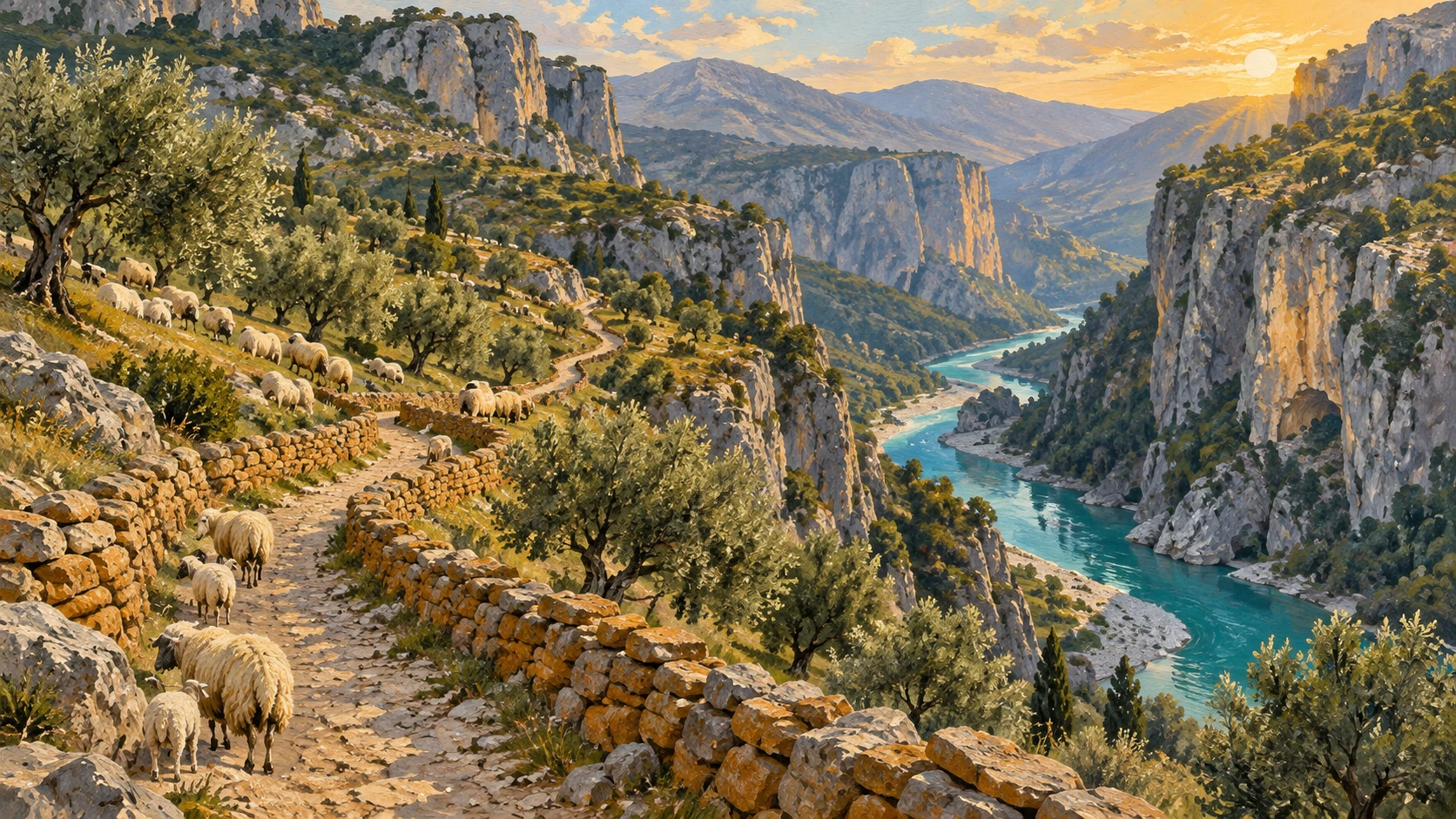
Agro-tourism cooperatives integrate pastoral cheese tasting trails with mountain hiking routes in national park buffer zones.
Preserving seasonal livestock droving protects high-nature-value grasslands and supports endemic plant biodiversity.
Sustainable mountain gastronomy links ancient transhumance foodways with modern culinary appreciation and rural economic viability.
A2 · Elementary
Paths Across the Pasture: Transhumance Routes and Mountain Dairies in Albania
A documentary look at seasonal sheep droving, stone shepherd huts, and traditional raw milk cheeses in the highlands of Albania.
The Seasonal Droving Tradition and UNESCO Recognition
UNESCO inscribed transhumance on the Representative List of Intangible Cultural Heritage recognizing multinational pastoral droving paths including Albania.
Pastoralists drive sheep and goat herds between low winter pastures and high summer mountain meadows known as verishtet.
The seasonal migration begins in late spring as rising temperatures dry lowland grazing forage along coastal and valley plains.
Flocks navigate traditional stone droving corridors across river gorges and limestone mountain passes across Southern Albania.
Shepherds maintain customary droving rights negotiated between valley municipalities and upland pastoral communes.
Droving journeys require several days of overland travel, moving herds in early morning before midday heat.
High Pasture Settlement and the Architecture of the Stan
Pastoral families establish seasonal summer settlements centered around dry-stone shepherd huts known locally as stane.
The traditional stan features fieldstone walls, lime mortar, timber beams, and a slate tile roof resistant to mountain winds.
Highland camps provide essential animal pens, water troughs, and shaded processing enclosures for milking large sheep flocks.
Shepherds perform twice-daily hand milking of sheep and goats inside stone holding pens during summer pasture residency.
Upland pastures supply rich alpine forage containing wild thyme, clover, and native grasses that flavor raw milk yields.
Summer grazing maintains open mountain landscapes preventing shrub encroachment on subalpine grassland ecosystems.
Mountain Dairying and Traditional Cheese Production
Fresh unpasteurized sheep milk is processed directly at mountain stane into curd using traditional natural rennet enzymes.
Cheesemakers heat milk in large copper cauldrons over wood fires to achieve curd separation for firm alpine cheeses.
Curd blocks are pressed in woven linen cloths and wooden perforated molds to expel remaining liquid whey.
Hard sheep milk cheese known as Kaçkavall is salted and aged on ventilated pine shelving inside cool stone cellars.
Northern pastoralists produce Mishavina cheese by packing salted curd into wooden casks for airtight anaerobic fermentation.
Traditional dairy processing transforms perishable seasonal milk into durable cheeses capable of surviving warm transport down mountain trails.
Commercial Pathways, Village Bazars, and Urban Demand
Pastoralists transport aged mountain cheeses down pack trails using pack mules and four-wheel-drive farm pickups.
Regional town markets in Gjirokaster, Korce, and Shkoder serve as primary wholesale trading hubs for seasonal artisan cheese.
High-altitude raw milk cheeses command substantial price premiums in Tirana specialty food shops and agro-tourism restaurants.
Livestock surveys record hundreds of thousands of sheep and goats supporting household livelihoods in mountainous rural municipalities.
Wool and live lambs sold at autumn livestock fairs provide secondary cash income to cover winter fodder purchases.
Direct farm-gate cheese sales allow pastoral households to capture higher profit margins without intermediaries.
Generational Transition, Labor Scarcity, and Environmental Pressures
The pastoral sector faces acute demographic contraction as younger generations migrate from mountain villages to coastal cities and abroad.
Severe shortages of experienced seasonal shepherds have forced some pastoral families to reduce herd sizes.
Modern paved highway construction and land privatization have fragmented historical livestock migration corridors.
Climate fluctuations reduce summer spring flows and dry highland watering troughs earlier in warm seasons.
Rising transport fuel costs increase the expense of hauling dairy equipment, feed supplements, and family supplies to high pastures.
Lack of refrigerated mobile milk collection trucks prevents remote alpine camps from marketing fresh liquid milk.
Pastoral Safeguarding, Origin Labels, and Sustainable Gastronomy
Albania's national action plan promotes geographical indication certification to protect traditional mountain dairy names.
Cultural heritage institutions catalog pastoral folklore, droving songs, and artisan cheesemaking techniques for educational archives.
European rural development grants co-finance solar panels, stainless steel storage tanks, and clean water access at highland stane.
Agro-tourism cooperatives integrate pastoral cheese tasting trails with mountain hiking routes in national park buffer zones.
Preserving seasonal livestock droving protects high-nature-value grasslands and supports endemic plant biodiversity.
Sustainable mountain gastronomy links ancient transhumance foodways with modern culinary appreciation and rural economic viability.
B1 · Intermediate
Paths Across the Pasture: Transhumance Routes and Mountain Dairies in Albania
A documentary look at seasonal sheep droving, stone shepherd huts, and traditional raw milk cheeses in the highlands of Albania.
The Seasonal Droving Tradition and UNESCO Recognition
UNESCO inscribed transhumance on the Representative List of Intangible Cultural Heritage recognizing multinational pastoral droving paths including Albania.
Pastoralists drive sheep and goat herds between low winter pastures and high summer mountain meadows known as verishtet.
The seasonal migration begins in late spring as rising temperatures dry lowland grazing forage along coastal and valley plains.
Flocks navigate traditional stone droving corridors across river gorges and limestone mountain passes across Southern Albania.
Shepherds maintain customary droving rights negotiated between valley municipalities and upland pastoral communes.
Droving journeys require several days of overland travel, moving herds in early morning before midday heat.
High Pasture Settlement and the Architecture of the Stan
Pastoral families establish seasonal summer settlements centered around dry-stone shepherd huts known locally as stane.
The traditional stan features fieldstone walls, lime mortar, timber beams, and a slate tile roof resistant to mountain winds.
Highland camps provide essential animal pens, water troughs, and shaded processing enclosures for milking large sheep flocks.
Shepherds perform twice-daily hand milking of sheep and goats inside stone holding pens during summer pasture residency.
Upland pastures supply rich alpine forage containing wild thyme, clover, and native grasses that flavor raw milk yields.
Summer grazing maintains open mountain landscapes preventing shrub encroachment on subalpine grassland ecosystems.
Mountain Dairying and Traditional Cheese Production
Fresh unpasteurized sheep milk is processed directly at mountain stane into curd using traditional natural rennet enzymes.
Cheesemakers heat milk in large copper cauldrons over wood fires to achieve curd separation for firm alpine cheeses.
Curd blocks are pressed in woven linen cloths and wooden perforated molds to expel remaining liquid whey.
Hard sheep milk cheese known as Kaçkavall is salted and aged on ventilated pine shelving inside cool stone cellars.
Northern pastoralists produce Mishavina cheese by packing salted curd into wooden casks for airtight anaerobic fermentation.
Traditional dairy processing transforms perishable seasonal milk into durable cheeses capable of surviving warm transport down mountain trails.
Commercial Pathways, Village Bazars, and Urban Demand
Pastoralists transport aged mountain cheeses down pack trails using pack mules and four-wheel-drive farm pickups.
Regional town markets in Gjirokaster, Korce, and Shkoder serve as primary wholesale trading hubs for seasonal artisan cheese.
High-altitude raw milk cheeses command substantial price premiums in Tirana specialty food shops and agro-tourism restaurants.
Livestock surveys record hundreds of thousands of sheep and goats supporting household livelihoods in mountainous rural municipalities.
Wool and live lambs sold at autumn livestock fairs provide secondary cash income to cover winter fodder purchases.
Direct farm-gate cheese sales allow pastoral households to capture higher profit margins without intermediaries.
Generational Transition, Labor Scarcity, and Environmental Pressures
The pastoral sector faces acute demographic contraction as younger generations migrate from mountain villages to coastal cities and abroad.
Severe shortages of experienced seasonal shepherds have forced some pastoral families to reduce herd sizes.
Modern paved highway construction and land privatization have fragmented historical livestock migration corridors.
Climate fluctuations reduce summer spring flows and dry highland watering troughs earlier in warm seasons.
Rising transport fuel costs increase the expense of hauling dairy equipment, feed supplements, and family supplies to high pastures.
Lack of refrigerated mobile milk collection trucks prevents remote alpine camps from marketing fresh liquid milk.
Pastoral Safeguarding, Origin Labels, and Sustainable Gastronomy
Albania's national action plan promotes geographical indication certification to protect traditional mountain dairy names.
Cultural heritage institutions catalog pastoral folklore, droving songs, and artisan cheesemaking techniques for educational archives.
European rural development grants co-finance solar panels, stainless steel storage tanks, and clean water access at highland stane.
Agro-tourism cooperatives integrate pastoral cheese tasting trails with mountain hiking routes in national park buffer zones.
Preserving seasonal livestock droving protects high-nature-value grasslands and supports endemic plant biodiversity.
Sustainable mountain gastronomy links ancient transhumance foodways with modern culinary appreciation and rural economic viability.
B2 · Upper Intermediate
Paths Across the Pasture: Transhumance Routes and Mountain Dairies in Albania
A documentary look at seasonal sheep droving, stone shepherd huts, and traditional raw milk cheeses in the highlands of Albania.
The Seasonal Droving Tradition and UNESCO Recognition
UNESCO inscribed transhumance on the Representative List of Intangible Cultural Heritage recognizing multinational pastoral droving paths including Albania.
Pastoralists drive sheep and goat herds between low winter pastures and high summer mountain meadows known as verishtet.
The seasonal migration begins in late spring as rising temperatures dry lowland grazing forage along coastal and valley plains.
Flocks navigate traditional stone droving corridors across river gorges and limestone mountain passes across Southern Albania.
Shepherds maintain customary droving rights negotiated between valley municipalities and upland pastoral communes.
Droving journeys require several days of overland travel, moving herds in early morning before midday heat.
High Pasture Settlement and the Architecture of the Stan
Pastoral families establish seasonal summer settlements centered around dry-stone shepherd huts known locally as stane.
The traditional stan features fieldstone walls, lime mortar, timber beams, and a slate tile roof resistant to mountain winds.
Highland camps provide essential animal pens, water troughs, and shaded processing enclosures for milking large sheep flocks.
Shepherds perform twice-daily hand milking of sheep and goats inside stone holding pens during summer pasture residency.
Upland pastures supply rich alpine forage containing wild thyme, clover, and native grasses that flavor raw milk yields.
Summer grazing maintains open mountain landscapes preventing shrub encroachment on subalpine grassland ecosystems.
Mountain Dairying and Traditional Cheese Production
Fresh unpasteurized sheep milk is processed directly at mountain stane into curd using traditional natural rennet enzymes.
Cheesemakers heat milk in large copper cauldrons over wood fires to achieve curd separation for firm alpine cheeses.
Curd blocks are pressed in woven linen cloths and wooden perforated molds to expel remaining liquid whey.
Hard sheep milk cheese known as Kaçkavall is salted and aged on ventilated pine shelving inside cool stone cellars.
Northern pastoralists produce Mishavina cheese by packing salted curd into wooden casks for airtight anaerobic fermentation.
Traditional dairy processing transforms perishable seasonal milk into durable cheeses capable of surviving warm transport down mountain trails.
Commercial Pathways, Village Bazars, and Urban Demand
Pastoralists transport aged mountain cheeses down pack trails using pack mules and four-wheel-drive farm pickups.
Regional town markets in Gjirokaster, Korce, and Shkoder serve as primary wholesale trading hubs for seasonal artisan cheese.
High-altitude raw milk cheeses command substantial price premiums in Tirana specialty food shops and agro-tourism restaurants.
Livestock surveys record hundreds of thousands of sheep and goats supporting household livelihoods in mountainous rural municipalities.
Wool and live lambs sold at autumn livestock fairs provide secondary cash income to cover winter fodder purchases.
Direct farm-gate cheese sales allow pastoral households to capture higher profit margins without intermediaries.
Generational Transition, Labor Scarcity, and Environmental Pressures
The pastoral sector faces acute demographic contraction as younger generations migrate from mountain villages to coastal cities and abroad.
Severe shortages of experienced seasonal shepherds have forced some pastoral families to reduce herd sizes.
Modern paved highway construction and land privatization have fragmented historical livestock migration corridors.
Climate fluctuations reduce summer spring flows and dry highland watering troughs earlier in warm seasons.
Rising transport fuel costs increase the expense of hauling dairy equipment, feed supplements, and family supplies to high pastures.
Lack of refrigerated mobile milk collection trucks prevents remote alpine camps from marketing fresh liquid milk.
Pastoral Safeguarding, Origin Labels, and Sustainable Gastronomy
Albania's national action plan promotes geographical indication certification to protect traditional mountain dairy names.
Cultural heritage institutions catalog pastoral folklore, droving songs, and artisan cheesemaking techniques for educational archives.
European rural development grants co-finance solar panels, stainless steel storage tanks, and clean water access at highland stane.
Agro-tourism cooperatives integrate pastoral cheese tasting trails with mountain hiking routes in national park buffer zones.
Preserving seasonal livestock droving protects high-nature-value grasslands and supports endemic plant biodiversity.
Sustainable mountain gastronomy links ancient transhumance foodways with modern culinary appreciation and rural economic viability.
C1 · Advanced
Paths Across the Pasture: Transhumance Routes and Mountain Dairies in Albania
A documentary look at seasonal sheep droving, stone shepherd huts, and traditional raw milk cheeses in the highlands of Albania.
The Seasonal Droving Tradition and UNESCO Recognition
UNESCO inscribed transhumance on the Representative List of Intangible Cultural Heritage recognizing multinational pastoral droving paths including Albania.
Pastoralists drive sheep and goat herds between low winter pastures and high summer mountain meadows known as verishtet.
The seasonal migration begins in late spring as rising temperatures dry lowland grazing forage along coastal and valley plains.
Flocks navigate traditional stone droving corridors across river gorges and limestone mountain passes across Southern Albania.
Shepherds maintain customary droving rights negotiated between valley municipalities and upland pastoral communes.
Droving journeys require several days of overland travel, moving herds in early morning before midday heat.
High Pasture Settlement and the Architecture of the Stan
Pastoral families establish seasonal summer settlements centered around dry-stone shepherd huts known locally as stane.
The traditional stan features fieldstone walls, lime mortar, timber beams, and a slate tile roof resistant to mountain winds.
Highland camps provide essential animal pens, water troughs, and shaded processing enclosures for milking large sheep flocks.
Shepherds perform twice-daily hand milking of sheep and goats inside stone holding pens during summer pasture residency.
Upland pastures supply rich alpine forage containing wild thyme, clover, and native grasses that flavor raw milk yields.
Summer grazing maintains open mountain landscapes preventing shrub encroachment on subalpine grassland ecosystems.
Mountain Dairying and Traditional Cheese Production
Fresh unpasteurized sheep milk is processed directly at mountain stane into curd using traditional natural rennet enzymes.
Cheesemakers heat milk in large copper cauldrons over wood fires to achieve curd separation for firm alpine cheeses.
Curd blocks are pressed in woven linen cloths and wooden perforated molds to expel remaining liquid whey.
Hard sheep milk cheese known as Kaçkavall is salted and aged on ventilated pine shelving inside cool stone cellars.
Northern pastoralists produce Mishavina cheese by packing salted curd into wooden casks for airtight anaerobic fermentation.
Traditional dairy processing transforms perishable seasonal milk into durable cheeses capable of surviving warm transport down mountain trails.
Commercial Pathways, Village Bazars, and Urban Demand
Pastoralists transport aged mountain cheeses down pack trails using pack mules and four-wheel-drive farm pickups.
Regional town markets in Gjirokaster, Korce, and Shkoder serve as primary wholesale trading hubs for seasonal artisan cheese.
High-altitude raw milk cheeses command substantial price premiums in Tirana specialty food shops and agro-tourism restaurants.
Livestock surveys record hundreds of thousands of sheep and goats supporting household livelihoods in mountainous rural municipalities.
Wool and live lambs sold at autumn livestock fairs provide secondary cash income to cover winter fodder purchases.
Direct farm-gate cheese sales allow pastoral households to capture higher profit margins without intermediaries.
Generational Transition, Labor Scarcity, and Environmental Pressures
The pastoral sector faces acute demographic contraction as younger generations migrate from mountain villages to coastal cities and abroad.
Severe shortages of experienced seasonal shepherds have forced some pastoral families to reduce herd sizes.
Modern paved highway construction and land privatization have fragmented historical livestock migration corridors.
Climate fluctuations reduce summer spring flows and dry highland watering troughs earlier in warm seasons.
Rising transport fuel costs increase the expense of hauling dairy equipment, feed supplements, and family supplies to high pastures.
Lack of refrigerated mobile milk collection trucks prevents remote alpine camps from marketing fresh liquid milk.
Pastoral Safeguarding, Origin Labels, and Sustainable Gastronomy
Albania's national action plan promotes geographical indication certification to protect traditional mountain dairy names.
Cultural heritage institutions catalog pastoral folklore, droving songs, and artisan cheesemaking techniques for educational archives.
European rural development grants co-finance solar panels, stainless steel storage tanks, and clean water access at highland stane.
Agro-tourism cooperatives integrate pastoral cheese tasting trails with mountain hiking routes in national park buffer zones.
Preserving seasonal livestock droving protects high-nature-value grasslands and supports endemic plant biodiversity.
Sustainable mountain gastronomy links ancient transhumance foodways with modern culinary appreciation and rural economic viability.
C2 · Mastery
Paths Across the Pasture: Transhumance Routes and Mountain Dairies in Albania
A documentary look at seasonal sheep droving, stone shepherd huts, and traditional raw milk cheeses in the highlands of Albania.
The Seasonal Droving Tradition and UNESCO Recognition
UNESCO inscribed transhumance on the Representative List of Intangible Cultural Heritage recognizing multinational pastoral droving paths including Albania.
Pastoralists drive sheep and goat herds between low winter pastures and high summer mountain meadows known as verishtet.
The seasonal migration begins in late spring as rising temperatures dry lowland grazing forage along coastal and valley plains.
Flocks navigate traditional stone droving corridors across river gorges and limestone mountain passes across Southern Albania.
Shepherds maintain customary droving rights negotiated between valley municipalities and upland pastoral communes.
Droving journeys require several days of overland travel, moving herds in early morning before midday heat.
High Pasture Settlement and the Architecture of the Stan
Pastoral families establish seasonal summer settlements centered around dry-stone shepherd huts known locally as stane.
The traditional stan features fieldstone walls, lime mortar, timber beams, and a slate tile roof resistant to mountain winds.
Highland camps provide essential animal pens, water troughs, and shaded processing enclosures for milking large sheep flocks.
Shepherds perform twice-daily hand milking of sheep and goats inside stone holding pens during summer pasture residency.
Upland pastures supply rich alpine forage containing wild thyme, clover, and native grasses that flavor raw milk yields.
Summer grazing maintains open mountain landscapes preventing shrub encroachment on subalpine grassland ecosystems.
Mountain Dairying and Traditional Cheese Production
Fresh unpasteurized sheep milk is processed directly at mountain stane into curd using traditional natural rennet enzymes.
Cheesemakers heat milk in large copper cauldrons over wood fires to achieve curd separation for firm alpine cheeses.
Curd blocks are pressed in woven linen cloths and wooden perforated molds to expel remaining liquid whey.
Hard sheep milk cheese known as Kaçkavall is salted and aged on ventilated pine shelving inside cool stone cellars.
Northern pastoralists produce Mishavina cheese by packing salted curd into wooden casks for airtight anaerobic fermentation.
Traditional dairy processing transforms perishable seasonal milk into durable cheeses capable of surviving warm transport down mountain trails.
Commercial Pathways, Village Bazars, and Urban Demand
Pastoralists transport aged mountain cheeses down pack trails using pack mules and four-wheel-drive farm pickups.
Regional town markets in Gjirokaster, Korce, and Shkoder serve as primary wholesale trading hubs for seasonal artisan cheese.
High-altitude raw milk cheeses command substantial price premiums in Tirana specialty food shops and agro-tourism restaurants.
Livestock surveys record hundreds of thousands of sheep and goats supporting household livelihoods in mountainous rural municipalities.
Wool and live lambs sold at autumn livestock fairs provide secondary cash income to cover winter fodder purchases.
Direct farm-gate cheese sales allow pastoral households to capture higher profit margins without intermediaries.
Generational Transition, Labor Scarcity, and Environmental Pressures
The pastoral sector faces acute demographic contraction as younger generations migrate from mountain villages to coastal cities and abroad.
Severe shortages of experienced seasonal shepherds have forced some pastoral families to reduce herd sizes.
Modern paved highway construction and land privatization have fragmented historical livestock migration corridors.
Climate fluctuations reduce summer spring flows and dry highland watering troughs earlier in warm seasons.
Rising transport fuel costs increase the expense of hauling dairy equipment, feed supplements, and family supplies to high pastures.
Lack of refrigerated mobile milk collection trucks prevents remote alpine camps from marketing fresh liquid milk.
Pastoral Safeguarding, Origin Labels, and Sustainable Gastronomy
Albania's national action plan promotes geographical indication certification to protect traditional mountain dairy names.
Cultural heritage institutions catalog pastoral folklore, droving songs, and artisan cheesemaking techniques for educational archives.
European rural development grants co-finance solar panels, stainless steel storage tanks, and clean water access at highland stane.
Agro-tourism cooperatives integrate pastoral cheese tasting trails with mountain hiking routes in national park buffer zones.
Preserving seasonal livestock droving protects high-nature-value grasslands and supports endemic plant biodiversity.
Sustainable mountain gastronomy links ancient transhumance foodways with modern culinary appreciation and rural economic viability.
Check your understanding
Choose how closely you want to revisit the article. You can refer back while answering, and review explanations when you finish.
Quick Quiz A1
Try one question, then create a free account for the full Quick Quiz. Sign Up Free
Answer every question before checking. There is no time limit.
Your results
/ 1 correct (%)
Read the explanations to see how each answer connects to the article.
-
What did UNESCO inscribe on the Representative List of Intangible Cultural Heritage?
1. Answer:
Quick Quiz A2
Try one question, then create a free account for the full Quick Quiz. Sign Up Free
Answer every question before checking. There is no time limit.
Your results
/ 1 correct (%)
Read the explanations to see how each answer connects to the article.
-
What did UNESCO inscribe on the Representative List of Intangible Cultural Heritage?
1. Answer:
Quick Quiz B1
Try one question, then create a free account for the full Quick Quiz. Sign Up Free
Answer every question before checking. There is no time limit.
Your results
/ 1 correct (%)
Read the explanations to see how each answer connects to the article.
-
What did UNESCO inscribe on the Representative List of Intangible Cultural Heritage?
1. Answer:
Quick Quiz B2
Try one question, then create a free account for the full Quick Quiz. Sign Up Free
Answer every question before checking. There is no time limit.
Your results
/ 1 correct (%)
Read the explanations to see how each answer connects to the article.
-
What did UNESCO inscribe on the Representative List of Intangible Cultural Heritage?
1. Answer:
Quick Quiz C1
Try one question, then create a free account for the full Quick Quiz. Sign Up Free
Answer every question before checking. There is no time limit.
Your results
/ 1 correct (%)
Read the explanations to see how each answer connects to the article.
-
What did UNESCO inscribe on the Representative List of Intangible Cultural Heritage?
1. Answer:
Quick Quiz C2
Try one question, then create a free account for the full Quick Quiz. Sign Up Free
Answer every question before checking. There is no time limit.
Your results
/ 1 correct (%)
Read the explanations to see how each answer connects to the article.
-
What did UNESCO inscribe on the Representative List of Intangible Cultural Heritage?
1. Answer:
