A1 · Beginner
Dita e Veres in Elbasan: Vernacular Spring Celebrations and Civic Fairs
A contemporaneous municipal account details artisan markets, traditional ballokume baking, and urban logistics across the seasonal festival hub.
Municipal Festivities and Spring Fairs in Central Elbasan
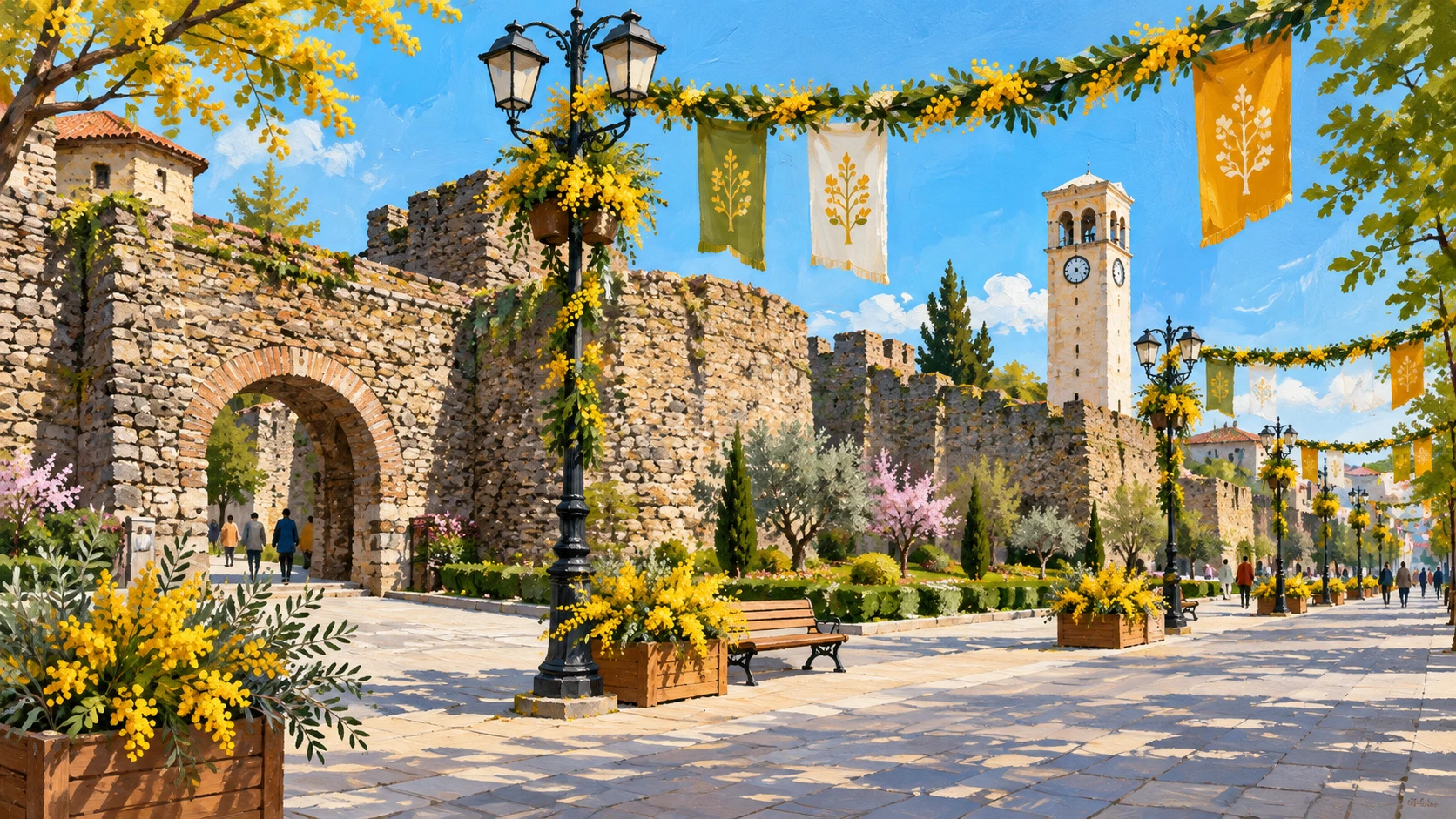
The Municipality of Elbasan published a contemporaneous administrative account on 13 March 2026 reporting citywide festivities and open-air artisan fairs. Elbasan serves historically as the recognized epicenter of Dita e Veres, welcoming thousands of regional visitors each March.
Municipal authorities organized pedestrian fair corridors across Boulevard Qemal Stafa and the public gardens of Rinia Park. Contemporaneous municipal reporting documented active commercial stalls, musical performances, and civic welcoming events ahead of the official holiday.
The administrative bulletin focused on civic hospitality and street cleanliness rather than compiling unverified final attendance totals. Official municipal notices coordinated opening schedules for regional craft producers, food vendors, and civic cultural exhibits.
Ancient Illyrian Rites and Seasonal Rebirth
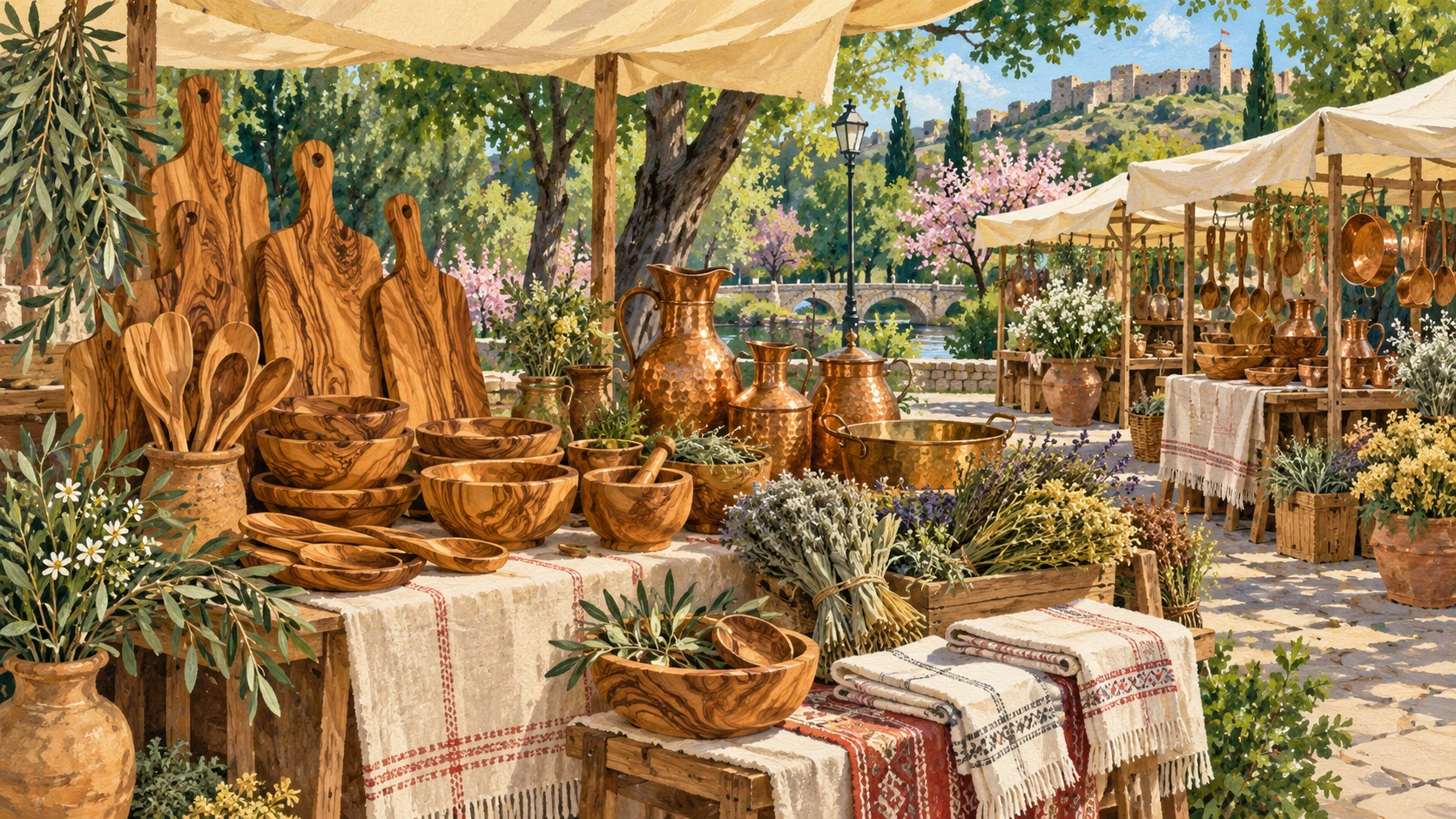
Dita e Veres traces historical origins to ancient Illyrian pre-Christian agrarian rites honoring the rebirth of nature and the vernal equinox. Ancient inhabitants celebrated the pagan fertility goddess Zana near sacred forest sanctuaries located around the mountain springs of Candavia.
Highland and valley communities maintained the tradition through centuries as a secular festival celebrating spring renewal and agricultural vitality. The customary celebration retained non-sectarian character, uniting Albanian families across Orthodox, Muslim, Bektashi, and Catholic backgrounds.
Ethnological documentation confirms that central Albanian households preserved specific domestic rituals associated with spring cleansing and solar bonfires. National legislation designated 14 March as an official statutory public holiday across the Republic of Albania in 2004.
Traditional Ballokume and Copper Basin Confectionery
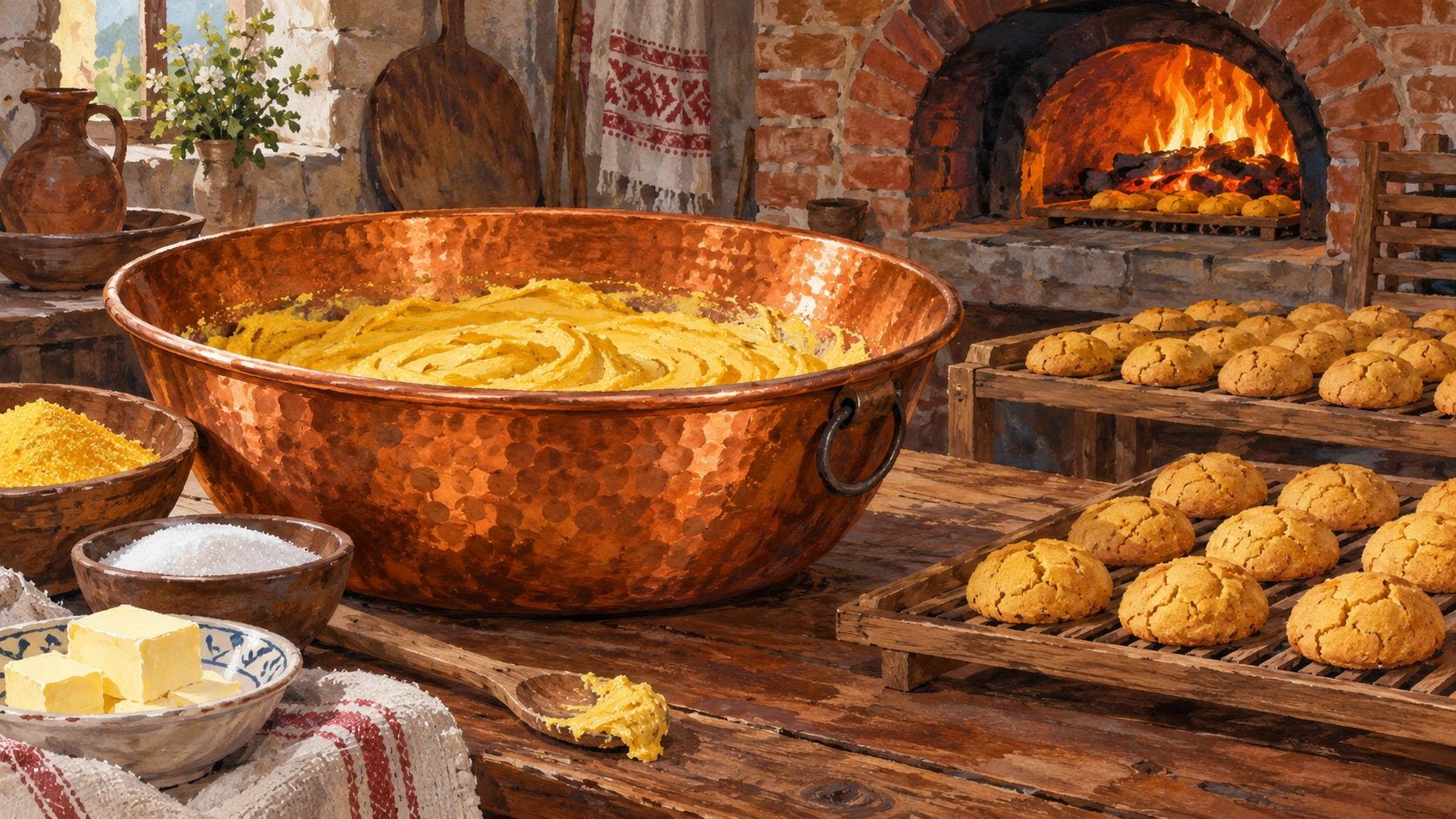
The signature culinary centerpiece of Dita e Veres is ballokume, an authentic traditional shortbread sweet baked from sifted maize flour. Authentic recipe preparation requires creaming equal parts butter and sugar by hand inside heavy, wide-rimmed hammered copper bowls.
Bakers stir the cornflour batter with polished wooden spatulas for up to forty minutes to achieve a glossy aerated emulsion. Confectioners add egg yolks and fine wood-ash alkaline water, which enhances the golden yellow hue and tender, crumbly texture.
Traditional bakeries bake the large round cakes inside wood-fired brick ovens, using dry oak embers to regulate surface caramelization. Household gift sharing of freshly baked ballokume to neighbors and relatives reinforces community solidarity and hospitality.
Verore Talismans and Vernacular Spring Rites
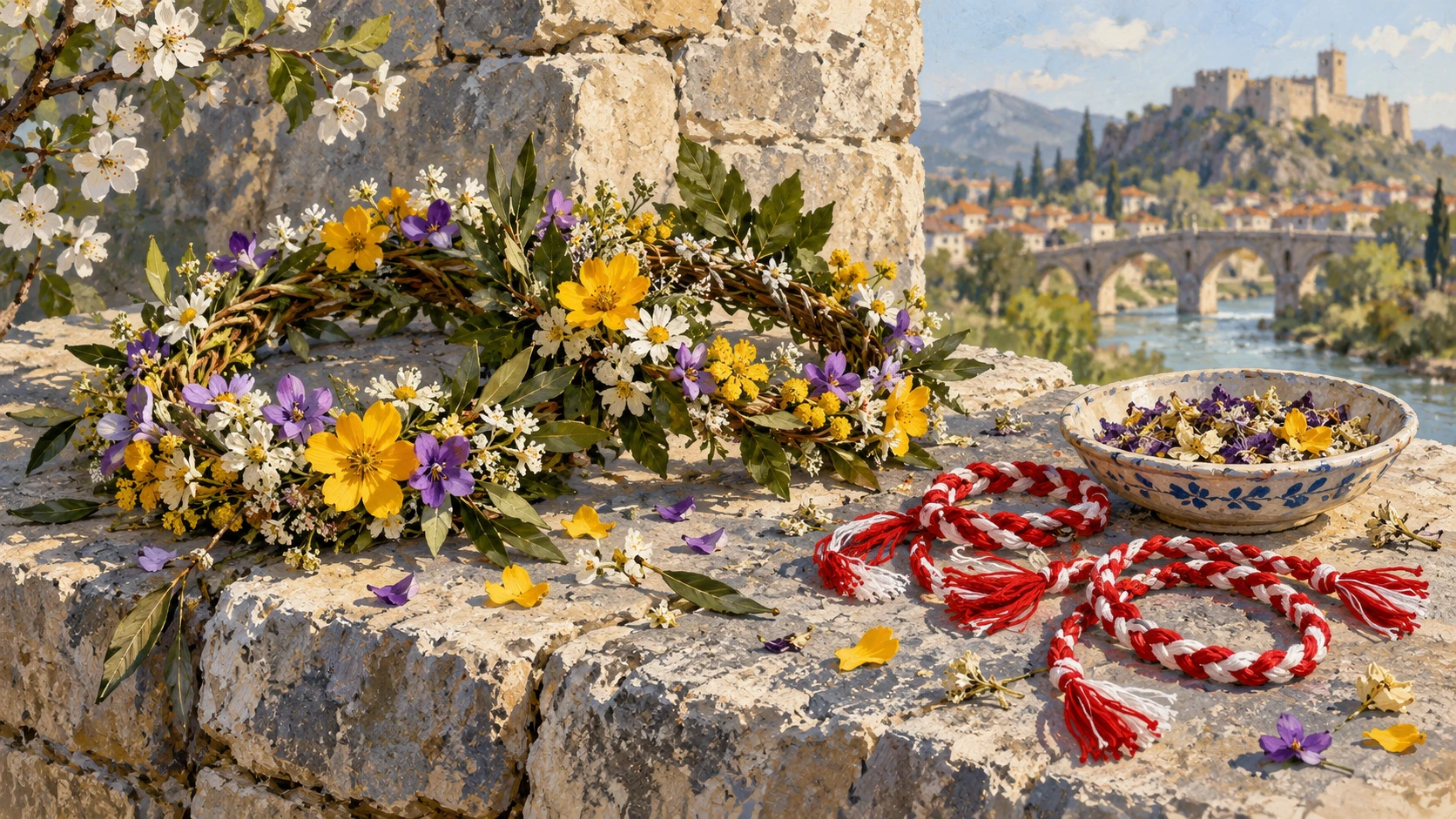
Children and families celebrate the season by tying verore, braided bracelets woven from twisted red and white wool or cotton threads. According to vernacular custom, the white strand symbolizes purity and winter snow, while the red strand represents health, vitality, and summer sun.
Wearers keep the verore talisman bound to their wrists until sighting the first migratory swallow or stork of spring. Tradition dictates that participants tie discarded verore threads onto blossoming fruit branches to wish for bountiful harvests and nest building.
Families gather wild yellow mimosa blossoms, purple violets, and laurel sprigs to weave festive floral wreaths for entryways. Highland youths historically ignited ceremonial twilight bonfires called zjarret e veres to mark the symbolic transition toward warmth.
Urban Pedestrian Zones and Civic Logistics
Municipal administration reorders urban traffic flows, pedestrianizing major thoroughfares connecting the central square to Elbasan Castle. Temporary park-and-ride corridors and shuttle buses mitigate vehicle congestion caused by incoming intercity holiday traffic.
Municipal sanitation crews conduct round-the-clock waste collection and street washing across festival zones. Emergency response services establish mobile medical triage posts and coordinated police patrols along crowded promenades.
Designated market zoning separates hot food vendors and wood-fired baking stalls from delicate artisanal textile exhibits. Civic infrastructure investments restored lighting and public pavements within the historical perimeter of the Elbasan fortress.
Regional Commerce and Shared Cultural Pride
The spring festival generates vital seasonal revenue for regional confectioners, honey producers, olive oil millers, and wood artisans. Hotel accommodations and hospitality businesses in Elbasan and surrounding Shkumbin valley towns reach annual peak occupancy.
Regional cultural ensembles perform traditional central Albanian folk dances accompanied by clarinets, lutes, and frame drums. Elbasan leverages its annual festival identity to promote year-round cultural heritage tourism and archaeological landmark visits.
Generational continuity is sustained as elder master bakers instruct youth in manual copper basin whipping and oven firing. Dita e Veres affirms civic pride, demonstrating how living agrarian heritage adapts seamlessly into contemporary urban celebrations.
A2 · Elementary
Dita e Veres in Elbasan: Vernacular Spring Celebrations and Civic Fairs
A contemporaneous municipal account details artisan markets, traditional ballokume baking, and urban logistics across the seasonal festival hub.
Municipal Administration and Contemporaneous Event Documentation
The Municipality of Elbasan published a contemporaneous administrative account on 13 March 2026 reporting citywide festivities and open-air artisan fairs. Elbasan serves historically as the recognized epicenter of Dita e Veres, welcoming thousands of regional visitors each March.
Municipal authorities organized pedestrian fair corridors across Boulevard Qemal Stafa and the public gardens of Rinia Park. Contemporaneous municipal reporting documented active commercial stalls, musical performances, and civic welcoming events ahead of the official holiday.
The administrative bulletin focused on civic hospitality and street cleanliness rather than compiling unverified final attendance totals. Official municipal notices coordinated opening schedules for regional craft producers, food vendors, and civic cultural exhibits.
Ancient Illyrian Dianic Cults and Secular Spring Continuity
Dita e Veres traces historical origins to ancient Illyrian pre-Christian agrarian rites honoring the rebirth of nature and the vernal equinox. Ancient inhabitants celebrated the pagan fertility goddess Zana near sacred forest sanctuaries located around the mountain springs of Candavia.
Highland and valley communities maintained the tradition through centuries as a secular festival celebrating spring renewal and agricultural vitality. The customary celebration retained non-sectarian character, uniting Albanian families across Orthodox, Muslim, Bektashi, and Catholic backgrounds.
Ethnological documentation confirms that central Albanian households preserved specific domestic rituals associated with spring cleansing and solar bonfires. National legislation designated 14 March as an official statutory public holiday across the Republic of Albania in 2004.
Artisanal Maize Confectionery and Hammered Copper Basins
The signature culinary centerpiece of Dita e Veres is ballokume, an authentic traditional shortbread sweet baked from sifted maize flour. Authentic recipe preparation requires creaming equal parts butter and sugar by hand inside heavy, wide-rimmed hammered copper bowls.
Bakers stir the cornflour batter with polished wooden spatulas for up to forty minutes to achieve a glossy aerated emulsion. Confectioners add egg yolks and fine wood-ash alkaline water, which enhances the golden yellow hue and tender, crumbly texture.
Traditional bakeries bake the large round cakes inside wood-fired brick ovens, using dry oak embers to regulate surface caramelization. Household gift sharing of freshly baked ballokume to neighbors and relatives reinforces community solidarity and hospitality.
Chromatic Symbolism, Verore Talismans, and Floral Rites
Children and families celebrate the season by tying verore, braided bracelets woven from twisted red and white wool or cotton threads. According to vernacular custom, the white strand symbolizes purity and winter snow, while the red strand represents health, vitality, and summer sun.
Wearers keep the verore talisman bound to their wrists until sighting the first migratory swallow or stork of spring. Tradition dictates that participants tie discarded verore threads onto blossoming fruit branches to wish for bountiful harvests and nest building.
Families gather wild yellow mimosa blossoms, purple violets, and laurel sprigs to weave festive floral wreaths for entryways. Highland youths historically ignited ceremonial twilight bonfires called zjarret e veres to mark the symbolic transition toward warmth.
Urban Circulation, Sanitation Protocols, and Public Safety
Municipal administration reorders urban traffic flows, pedestrianizing major thoroughfares connecting the central square to Elbasan Castle. Temporary park-and-ride corridors and shuttle buses mitigate vehicle congestion caused by incoming intercity holiday traffic.
Municipal sanitation crews conduct round-the-clock waste collection and street washing across festival zones. Emergency response services establish mobile medical triage posts and coordinated police patrols along crowded promenades.
Designated market zoning separates hot food vendors and wood-fired baking stalls from delicate artisanal textile exhibits. Civic infrastructure investments restored lighting and public pavements within the historical perimeter of the Elbasan fortress.
Regional Economic Multipliers and Living Heritage Preservation
The spring festival generates vital seasonal revenue for regional confectioners, honey producers, olive oil millers, and wood artisans. Hotel accommodations and hospitality businesses in Elbasan and surrounding Shkumbin valley towns reach annual peak occupancy.
Regional cultural ensembles perform traditional central Albanian folk dances accompanied by clarinets, lutes, and frame drums. Elbasan leverages its annual festival identity to promote year-round cultural heritage tourism and archaeological landmark visits.
Generational continuity is sustained as elder master bakers instruct youth in manual copper basin whipping and oven firing. Dita e Veres affirms civic pride, demonstrating how living agrarian heritage adapts seamlessly into contemporary urban celebrations.
B1 · Intermediate
Dita e Veres in Elbasan: Vernacular Spring Celebrations and Civic Fairs
A contemporaneous municipal account details artisan markets, traditional ballokume baking, and urban logistics across the seasonal festival hub.
Municipal Administration and Contemporaneous Event Documentation
The Municipality of Elbasan published a contemporaneous administrative account on 13 March 2026 reporting citywide festivities and open-air artisan fairs. Elbasan serves historically as the recognized epicenter of Dita e Veres, welcoming thousands of regional visitors each March.
Municipal authorities organized pedestrian fair corridors across Boulevard Qemal Stafa and the public gardens of Rinia Park. Contemporaneous municipal reporting documented active commercial stalls, musical performances, and civic welcoming events ahead of the official holiday.
The administrative bulletin focused on civic hospitality and street cleanliness rather than compiling unverified final attendance totals. Official municipal notices coordinated opening schedules for regional craft producers, food vendors, and civic cultural exhibits.
Ancient Illyrian Dianic Cults and Secular Spring Continuity
Dita e Veres traces historical origins to ancient Illyrian pre-Christian agrarian rites honoring the rebirth of nature and the vernal equinox. Ancient inhabitants celebrated the pagan fertility goddess Zana near sacred forest sanctuaries located around the mountain springs of Candavia.
Highland and valley communities maintained the tradition through centuries as a secular festival celebrating spring renewal and agricultural vitality. The customary celebration retained non-sectarian character, uniting Albanian families across Orthodox, Muslim, Bektashi, and Catholic backgrounds.
Ethnological documentation confirms that central Albanian households preserved specific domestic rituals associated with spring cleansing and solar bonfires. National legislation designated 14 March as an official statutory public holiday across the Republic of Albania in 2004.
Artisanal Maize Confectionery and Hammered Copper Basins
The signature culinary centerpiece of Dita e Veres is ballokume, an authentic traditional shortbread sweet baked from sifted maize flour. Authentic recipe preparation requires creaming equal parts butter and sugar by hand inside heavy, wide-rimmed hammered copper bowls.
Bakers stir the cornflour batter with polished wooden spatulas for up to forty minutes to achieve a glossy aerated emulsion. Confectioners add egg yolks and fine wood-ash alkaline water, which enhances the golden yellow hue and tender, crumbly texture.
Traditional bakeries bake the large round cakes inside wood-fired brick ovens, using dry oak embers to regulate surface caramelization. Household gift sharing of freshly baked ballokume to neighbors and relatives reinforces community solidarity and hospitality.
Chromatic Symbolism, Verore Talismans, and Floral Rites
Children and families celebrate the season by tying verore, braided bracelets woven from twisted red and white wool or cotton threads. According to vernacular custom, the white strand symbolizes purity and winter snow, while the red strand represents health, vitality, and summer sun.
Wearers keep the verore talisman bound to their wrists until sighting the first migratory swallow or stork of spring. Tradition dictates that participants tie discarded verore threads onto blossoming fruit branches to wish for bountiful harvests and nest building.
Families gather wild yellow mimosa blossoms, purple violets, and laurel sprigs to weave festive floral wreaths for entryways. Highland youths historically ignited ceremonial twilight bonfires called zjarret e veres to mark the symbolic transition toward warmth.
Urban Circulation, Sanitation Protocols, and Public Safety
Municipal administration reorders urban traffic flows, pedestrianizing major thoroughfares connecting the central square to Elbasan Castle. Temporary park-and-ride corridors and shuttle buses mitigate vehicle congestion caused by incoming intercity holiday traffic.
Municipal sanitation crews conduct round-the-clock waste collection and street washing across festival zones. Emergency response services establish mobile medical triage posts and coordinated police patrols along crowded promenades.
Designated market zoning separates hot food vendors and wood-fired baking stalls from delicate artisanal textile exhibits. Civic infrastructure investments restored lighting and public pavements within the historical perimeter of the Elbasan fortress.
Regional Economic Multipliers and Living Heritage Preservation
The spring festival generates vital seasonal revenue for regional confectioners, honey producers, olive oil millers, and wood artisans. Hotel accommodations and hospitality businesses in Elbasan and surrounding Shkumbin valley towns reach annual peak occupancy.
Regional cultural ensembles perform traditional central Albanian folk dances accompanied by clarinets, lutes, and frame drums. Elbasan leverages its annual festival identity to promote year-round cultural heritage tourism and archaeological landmark visits.
Generational continuity is sustained as elder master bakers instruct youth in manual copper basin whipping and oven firing. Dita e Veres affirms civic pride, demonstrating how living agrarian heritage adapts seamlessly into contemporary urban celebrations.
B2 · Upper Intermediate
Dita e Veres in Elbasan: Vernacular Spring Celebrations and Civic Fairs
A contemporaneous municipal account details artisan markets, traditional ballokume baking, and urban logistics across the seasonal festival hub.
Municipal Administration and Contemporaneous Event Documentation
The Municipality of Elbasan published a contemporaneous administrative account on 13 March 2026 reporting citywide festivities and open-air artisan fairs. Elbasan serves historically as the recognized epicenter of Dita e Veres, welcoming thousands of regional visitors each March.
Municipal authorities organized pedestrian fair corridors across Boulevard Qemal Stafa and the public gardens of Rinia Park. Contemporaneous municipal reporting documented active commercial stalls, musical performances, and civic welcoming events ahead of the official holiday.
The administrative bulletin focused on civic hospitality and street cleanliness rather than compiling unverified final attendance totals. Official municipal notices coordinated opening schedules for regional craft producers, food vendors, and civic cultural exhibits.
Ancient Illyrian Dianic Cults and Secular Spring Continuity
Dita e Veres traces historical origins to ancient Illyrian pre-Christian agrarian rites honoring the rebirth of nature and the vernal equinox. Ancient inhabitants celebrated the pagan fertility goddess Zana near sacred forest sanctuaries located around the mountain springs of Candavia.
Highland and valley communities maintained the tradition through centuries as a secular festival celebrating spring renewal and agricultural vitality. The customary celebration retained non-sectarian character, uniting Albanian families across Orthodox, Muslim, Bektashi, and Catholic backgrounds.
Ethnological documentation confirms that central Albanian households preserved specific domestic rituals associated with spring cleansing and solar bonfires. National legislation designated 14 March as an official statutory public holiday across the Republic of Albania in 2004.
Artisanal Maize Confectionery and Hammered Copper Basins
The signature culinary centerpiece of Dita e Veres is ballokume, an authentic traditional shortbread sweet baked from sifted maize flour. Authentic recipe preparation requires creaming equal parts butter and sugar by hand inside heavy, wide-rimmed hammered copper bowls.
Bakers stir the cornflour batter with polished wooden spatulas for up to forty minutes to achieve a glossy aerated emulsion. Confectioners add egg yolks and fine wood-ash alkaline water, which enhances the golden yellow hue and tender, crumbly texture.
Traditional bakeries bake the large round cakes inside wood-fired brick ovens, using dry oak embers to regulate surface caramelization. Household gift sharing of freshly baked ballokume to neighbors and relatives reinforces community solidarity and hospitality.
Chromatic Symbolism, Verore Talismans, and Floral Rites
Children and families celebrate the season by tying verore, braided bracelets woven from twisted red and white wool or cotton threads. According to vernacular custom, the white strand symbolizes purity and winter snow, while the red strand represents health, vitality, and summer sun.
Wearers keep the verore talisman bound to their wrists until sighting the first migratory swallow or stork of spring. Tradition dictates that participants tie discarded verore threads onto blossoming fruit branches to wish for bountiful harvests and nest building.
Families gather wild yellow mimosa blossoms, purple violets, and laurel sprigs to weave festive floral wreaths for entryways. Highland youths historically ignited ceremonial twilight bonfires called zjarret e veres to mark the symbolic transition toward warmth.
Urban Circulation, Sanitation Protocols, and Public Safety
Municipal administration reorders urban traffic flows, pedestrianizing major thoroughfares connecting the central square to Elbasan Castle. Temporary park-and-ride corridors and shuttle buses mitigate vehicle congestion caused by incoming intercity holiday traffic.
Municipal sanitation crews conduct round-the-clock waste collection and street washing across festival zones. Emergency response services establish mobile medical triage posts and coordinated police patrols along crowded promenades.
Designated market zoning separates hot food vendors and wood-fired baking stalls from delicate artisanal textile exhibits. Civic infrastructure investments restored lighting and public pavements within the historical perimeter of the Elbasan fortress.
Regional Economic Multipliers and Living Heritage Preservation
The spring festival generates vital seasonal revenue for regional confectioners, honey producers, olive oil millers, and wood artisans. Hotel accommodations and hospitality businesses in Elbasan and surrounding Shkumbin valley towns reach annual peak occupancy.
Regional cultural ensembles perform traditional central Albanian folk dances accompanied by clarinets, lutes, and frame drums. Elbasan leverages its annual festival identity to promote year-round cultural heritage tourism and archaeological landmark visits.
Generational continuity is sustained as elder master bakers instruct youth in manual copper basin whipping and oven firing. Dita e Veres affirms civic pride, demonstrating how living agrarian heritage adapts seamlessly into contemporary urban celebrations.
C1 · Advanced
Dita e Veres in Elbasan: Vernacular Spring Celebrations and Civic Fairs
A contemporaneous municipal account details artisan markets, traditional ballokume baking, and urban logistics across the seasonal festival hub.
Municipal Administration and Contemporaneous Event Documentation
The Municipality of Elbasan published a contemporaneous administrative account on 13 March 2026 reporting citywide festivities and open-air artisan fairs. Elbasan serves historically as the recognized epicenter of Dita e Veres, welcoming thousands of regional visitors each March.
Municipal authorities organized pedestrian fair corridors across Boulevard Qemal Stafa and the public gardens of Rinia Park. Contemporaneous municipal reporting documented active commercial stalls, musical performances, and civic welcoming events ahead of the official holiday.
The administrative bulletin focused on civic hospitality and street cleanliness rather than compiling unverified final attendance totals. Official municipal notices coordinated opening schedules for regional craft producers, food vendors, and civic cultural exhibits.
Ancient Illyrian Dianic Cults and Secular Spring Continuity
Dita e Veres traces historical origins to ancient Illyrian pre-Christian agrarian rites honoring the rebirth of nature and the vernal equinox. Ancient inhabitants celebrated the pagan fertility goddess Zana near sacred forest sanctuaries located around the mountain springs of Candavia.
Highland and valley communities maintained the tradition through centuries as a secular festival celebrating spring renewal and agricultural vitality. The customary celebration retained non-sectarian character, uniting Albanian families across Orthodox, Muslim, Bektashi, and Catholic backgrounds.
Ethnological documentation confirms that central Albanian households preserved specific domestic rituals associated with spring cleansing and solar bonfires. National legislation designated 14 March as an official statutory public holiday across the Republic of Albania in 2004.
Artisanal Maize Confectionery and Hammered Copper Basins
The signature culinary centerpiece of Dita e Veres is ballokume, an authentic traditional shortbread sweet baked from sifted maize flour. Authentic recipe preparation requires creaming equal parts butter and sugar by hand inside heavy, wide-rimmed hammered copper bowls.
Bakers stir the cornflour batter with polished wooden spatulas for up to forty minutes to achieve a glossy aerated emulsion. Confectioners add egg yolks and fine wood-ash alkaline water, which enhances the golden yellow hue and tender, crumbly texture.
Traditional bakeries bake the large round cakes inside wood-fired brick ovens, using dry oak embers to regulate surface caramelization. Household gift sharing of freshly baked ballokume to neighbors and relatives reinforces community solidarity and hospitality.
Chromatic Symbolism, Verore Talismans, and Floral Rites
Children and families celebrate the season by tying verore, braided bracelets woven from twisted red and white wool or cotton threads. According to vernacular custom, the white strand symbolizes purity and winter snow, while the red strand represents health, vitality, and summer sun.
Wearers keep the verore talisman bound to their wrists until sighting the first migratory swallow or stork of spring. Tradition dictates that participants tie discarded verore threads onto blossoming fruit branches to wish for bountiful harvests and nest building.
Families gather wild yellow mimosa blossoms, purple violets, and laurel sprigs to weave festive floral wreaths for entryways. Highland youths historically ignited ceremonial twilight bonfires called zjarret e veres to mark the symbolic transition toward warmth.
Urban Circulation, Sanitation Protocols, and Public Safety
Municipal administration reorders urban traffic flows, pedestrianizing major thoroughfares connecting the central square to Elbasan Castle. Temporary park-and-ride corridors and shuttle buses mitigate vehicle congestion caused by incoming intercity holiday traffic.
Municipal sanitation crews conduct round-the-clock waste collection and street washing across festival zones. Emergency response services establish mobile medical triage posts and coordinated police patrols along crowded promenades.
Designated market zoning separates hot food vendors and wood-fired baking stalls from delicate artisanal textile exhibits. Civic infrastructure investments restored lighting and public pavements within the historical perimeter of the Elbasan fortress.
Regional Economic Multipliers and Living Heritage Preservation
The spring festival generates vital seasonal revenue for regional confectioners, honey producers, olive oil millers, and wood artisans. Hotel accommodations and hospitality businesses in Elbasan and surrounding Shkumbin valley towns reach annual peak occupancy.
Regional cultural ensembles perform traditional central Albanian folk dances accompanied by clarinets, lutes, and frame drums. Elbasan leverages its annual festival identity to promote year-round cultural heritage tourism and archaeological landmark visits.
Generational continuity is sustained as elder master bakers instruct youth in manual copper basin whipping and oven firing. Dita e Veres affirms civic pride, demonstrating how living agrarian heritage adapts seamlessly into contemporary urban celebrations.
C2 · Mastery
Dita e Veres in Elbasan: Vernacular Spring Celebrations and Civic Fairs
A contemporaneous municipal account details artisan markets, traditional ballokume baking, and urban logistics across the seasonal festival hub.
Municipal Administration and Contemporaneous Event Documentation
The Municipality of Elbasan published a contemporaneous administrative account on 13 March 2026 reporting citywide festivities and open-air artisan fairs. Elbasan serves historically as the recognized epicenter of Dita e Veres, welcoming thousands of regional visitors each March.
Municipal authorities organized pedestrian fair corridors across Boulevard Qemal Stafa and the public gardens of Rinia Park. Contemporaneous municipal reporting documented active commercial stalls, musical performances, and civic welcoming events ahead of the official holiday.
The administrative bulletin focused on civic hospitality and street cleanliness rather than compiling unverified final attendance totals. Official municipal notices coordinated opening schedules for regional craft producers, food vendors, and civic cultural exhibits.
Ancient Illyrian Dianic Cults and Secular Spring Continuity
Dita e Veres traces historical origins to ancient Illyrian pre-Christian agrarian rites honoring the rebirth of nature and the vernal equinox. Ancient inhabitants celebrated the pagan fertility goddess Zana near sacred forest sanctuaries located around the mountain springs of Candavia.
Highland and valley communities maintained the tradition through centuries as a secular festival celebrating spring renewal and agricultural vitality. The customary celebration retained non-sectarian character, uniting Albanian families across Orthodox, Muslim, Bektashi, and Catholic backgrounds.
Ethnological documentation confirms that central Albanian households preserved specific domestic rituals associated with spring cleansing and solar bonfires. National legislation designated 14 March as an official statutory public holiday across the Republic of Albania in 2004.
Artisanal Maize Confectionery and Hammered Copper Basins
The signature culinary centerpiece of Dita e Veres is ballokume, an authentic traditional shortbread sweet baked from sifted maize flour. Authentic recipe preparation requires creaming equal parts butter and sugar by hand inside heavy, wide-rimmed hammered copper bowls.
Bakers stir the cornflour batter with polished wooden spatulas for up to forty minutes to achieve a glossy aerated emulsion. Confectioners add egg yolks and fine wood-ash alkaline water, which enhances the golden yellow hue and tender, crumbly texture.
Traditional bakeries bake the large round cakes inside wood-fired brick ovens, using dry oak embers to regulate surface caramelization. Household gift sharing of freshly baked ballokume to neighbors and relatives reinforces community solidarity and hospitality.
Chromatic Symbolism, Verore Talismans, and Floral Rites
Children and families celebrate the season by tying verore, braided bracelets woven from twisted red and white wool or cotton threads. According to vernacular custom, the white strand symbolizes purity and winter snow, while the red strand represents health, vitality, and summer sun.
Wearers keep the verore talisman bound to their wrists until sighting the first migratory swallow or stork of spring. Tradition dictates that participants tie discarded verore threads onto blossoming fruit branches to wish for bountiful harvests and nest building.
Families gather wild yellow mimosa blossoms, purple violets, and laurel sprigs to weave festive floral wreaths for entryways. Highland youths historically ignited ceremonial twilight bonfires called zjarret e veres to mark the symbolic transition toward warmth.
Urban Circulation, Sanitation Protocols, and Public Safety
Municipal administration reorders urban traffic flows, pedestrianizing major thoroughfares connecting the central square to Elbasan Castle. Temporary park-and-ride corridors and shuttle buses mitigate vehicle congestion caused by incoming intercity holiday traffic.
Municipal sanitation crews conduct round-the-clock waste collection and street washing across festival zones. Emergency response services establish mobile medical triage posts and coordinated police patrols along crowded promenades.
Designated market zoning separates hot food vendors and wood-fired baking stalls from delicate artisanal textile exhibits. Civic infrastructure investments restored lighting and public pavements within the historical perimeter of the Elbasan fortress.
Regional Economic Multipliers and Living Heritage Preservation
The spring festival generates vital seasonal revenue for regional confectioners, honey producers, olive oil millers, and wood artisans. Hotel accommodations and hospitality businesses in Elbasan and surrounding Shkumbin valley towns reach annual peak occupancy.
Regional cultural ensembles perform traditional central Albanian folk dances accompanied by clarinets, lutes, and frame drums. Elbasan leverages its annual festival identity to promote year-round cultural heritage tourism and archaeological landmark visits.
Generational continuity is sustained as elder master bakers instruct youth in manual copper basin whipping and oven firing. Dita e Veres affirms civic pride, demonstrating how living agrarian heritage adapts seamlessly into contemporary urban celebrations.
Check your understanding
Choose how closely you want to revisit the article. You can refer back while answering, and review explanations when you finish.
Quick Quiz A1
Try one question, then create a free account for the full Quick Quiz. Sign Up Free
Answer every question before checking. There is no time limit.
Your results
/ 1 correct (%)
Read the explanations to see how each answer connects to the article.
-
On what date did the Municipality of Elbasan publish its administrative account of festivities?
1. Answer:
Quick Quiz A2
Try one question, then create a free account for the full Quick Quiz. Sign Up Free
Answer every question before checking. There is no time limit.
Your results
/ 1 correct (%)
Read the explanations to see how each answer connects to the article.
-
What administrative body released a contemporaneous account of Dita e Veres on 13 March 2026?
1. Answer:
Quick Quiz B1
Try one question, then create a free account for the full Quick Quiz. Sign Up Free
Answer every question before checking. There is no time limit.
Your results
/ 1 correct (%)
Read the explanations to see how each answer connects to the article.
-
What administrative body released a contemporaneous account of Dita e Veres on 13 March 2026?
1. Answer:
Quick Quiz B2
Try one question, then create a free account for the full Quick Quiz. Sign Up Free
Answer every question before checking. There is no time limit.
Your results
/ 1 correct (%)
Read the explanations to see how each answer connects to the article.
-
What administrative body released a contemporaneous account of Dita e Veres on 13 March 2026?
1. Answer:
Quick Quiz C1
Try one question, then create a free account for the full Quick Quiz. Sign Up Free
Answer every question before checking. There is no time limit.
Your results
/ 1 correct (%)
Read the explanations to see how each answer connects to the article.
-
What administrative body released a contemporaneous account of Dita e Veres on 13 March 2026?
1. Answer:
Quick Quiz C2
Try one question, then create a free account for the full Quick Quiz. Sign Up Free
Answer every question before checking. There is no time limit.
Your results
/ 1 correct (%)
Read the explanations to see how each answer connects to the article.
-
What administrative body released a contemporaneous account of Dita e Veres on 13 March 2026?
1. Answer:
