A1 · Beginner
Fiter Bajram 2026 in Albania: Calendar Setting and Civic Observance
A liturgical date reference marks the spring culmination of Ramadan as public prayers, pastry sharing, and multi-confessional visits shape civic life.
Official Calendar Setting and National Statutory Holiday
The official liturgical calendar published by the Albanian Muslim Community established the first day of Fiter Bajram on 20 March 2026. The date calculation marks the formal culmination of the holy fasting month of Ramadan according to astronomical lunar observations.
The publication serves as an administrative date-setting reference rather than a comprehensive sociological census of individual religious practice. Community authorities circulated official congregational prayer timetables across municipal muftiates nationwide.
National holiday legislation designates Fiter Bajram as an official non-working statutory public holiday throughout the Republic of Albania. Municipal public schools and central civil service agencies suspend normal operations in observance of the statutory holiday.
Dawn Assemblies across Central Squares and Mosques
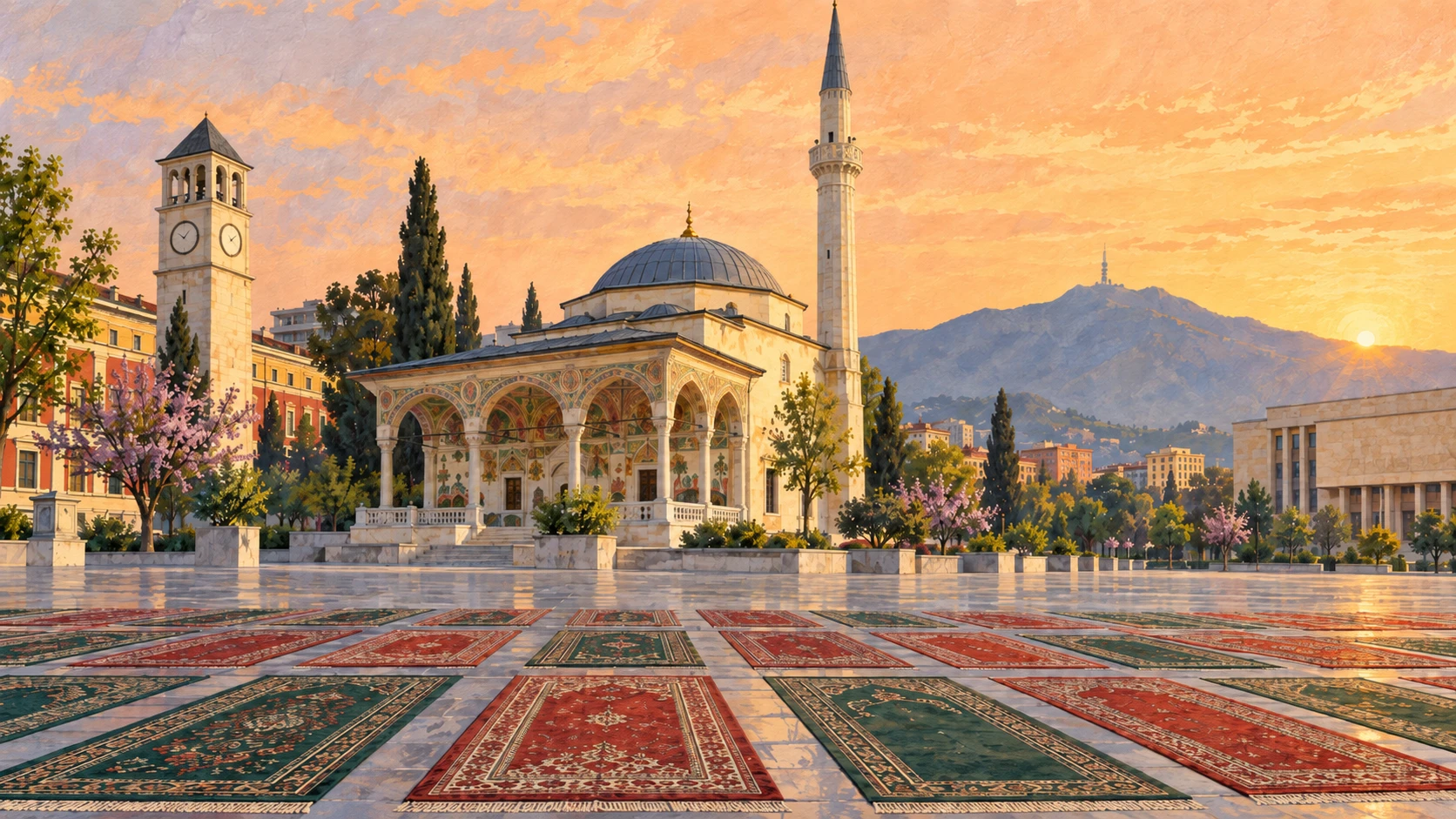
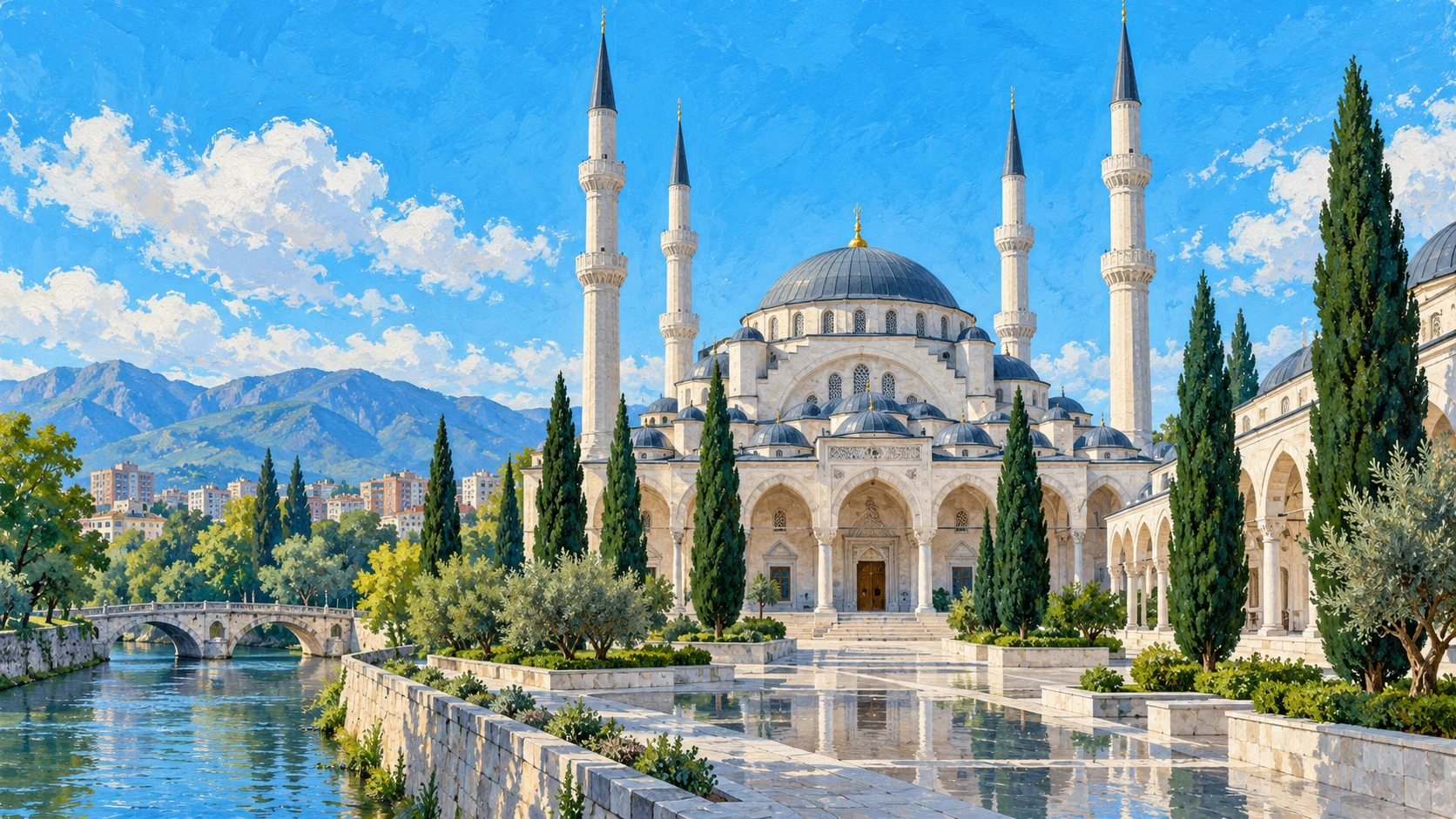
Thousands of worshipers gather at dawn in Tirana to perform the solemn communal morning prayer. Large congregational assemblies occur outdoors across Skanderbeg Square and inside the Great Mosque of Namazgjah.
Municipal traffic police temporarily divert motor vehicle access along surrounding boulevards to facilitate pedestrian prayer corridors. Imams deliver the holiday sermon, emphasizing spiritual renewal, charity, peace, and national fraternity.
Regional mosques in major urban centers including Shkodra, Durres, Vlora, and Elbasan host simultaneous morning prayer ceremonies. Community security volunteers and state emergency teams coordinate crowd circulation at major congregational sites.
Charitable Solidarity and Community Support
Observant households distribute mandatory charitable contributions known as Zekat al-Fitr prior to the morning holiday prayers. The charitable requirement ensures that impoverished families and vulnerable citizens participate fully in festive holiday dining.
Community foundations collect and allocate food parcels, basic staples, and financial aid to lower-income households. Youth volunteers and charitable civic organizations distribute aid packages across urban social centers and isolated rural communities.
Philanthropic contributions emphasize direct community solidarity, transcending sectarian affiliations in neighborhood outreach. Local mosques publish transparent financial accountability summaries detailing charitable receipts and social disbursements.
Handcrafted Baklava and Festive Family Hospitality
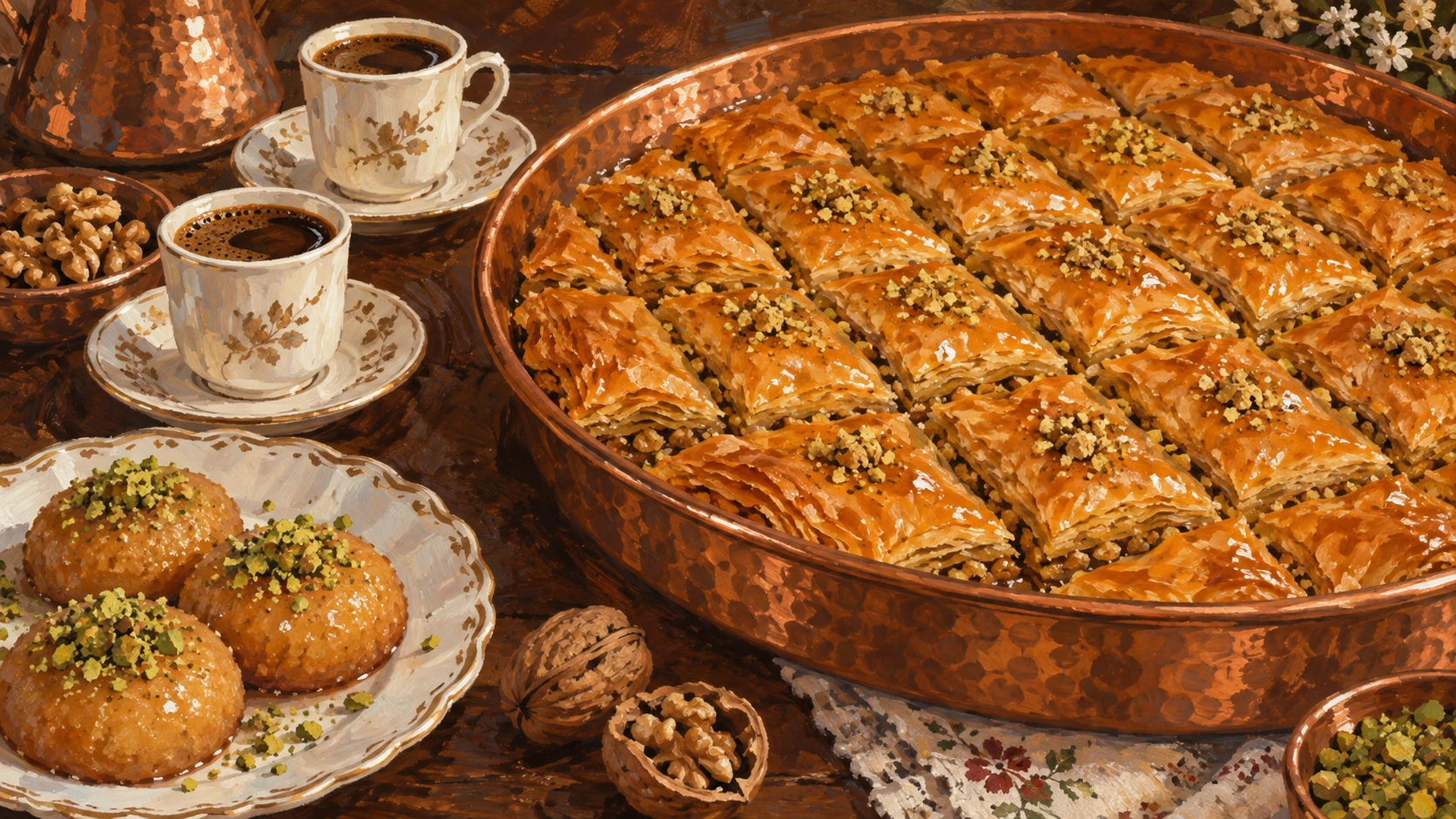
The quintessential culinary centerpiece of Fiter Bajram across Albanian homes is handcrafted walnut or pistachio baklava. Households dedicate hours preceding the holiday to rolling paper-thin phyllo dough sheets across large round baking pans called tepsia.
The multi-layered pastry is clarified with churned highland butter and steeped in a fragrant cooled lemon and sugar syrup. Alongside baklava, traditional tables feature sheqerpare, kadaif, roasted meats, and seasonal savory pies called byrek.
Hospitality etiquette dictates offering sweet confections and Turkish coffee immediately upon a guest entering the family home. Confectionery bakeries across major cities report annual peak retail sales of phyllo sheets and nuts during the preceding week.
Reciprocal Home Visits and Historic Multi-Confessional Harmony
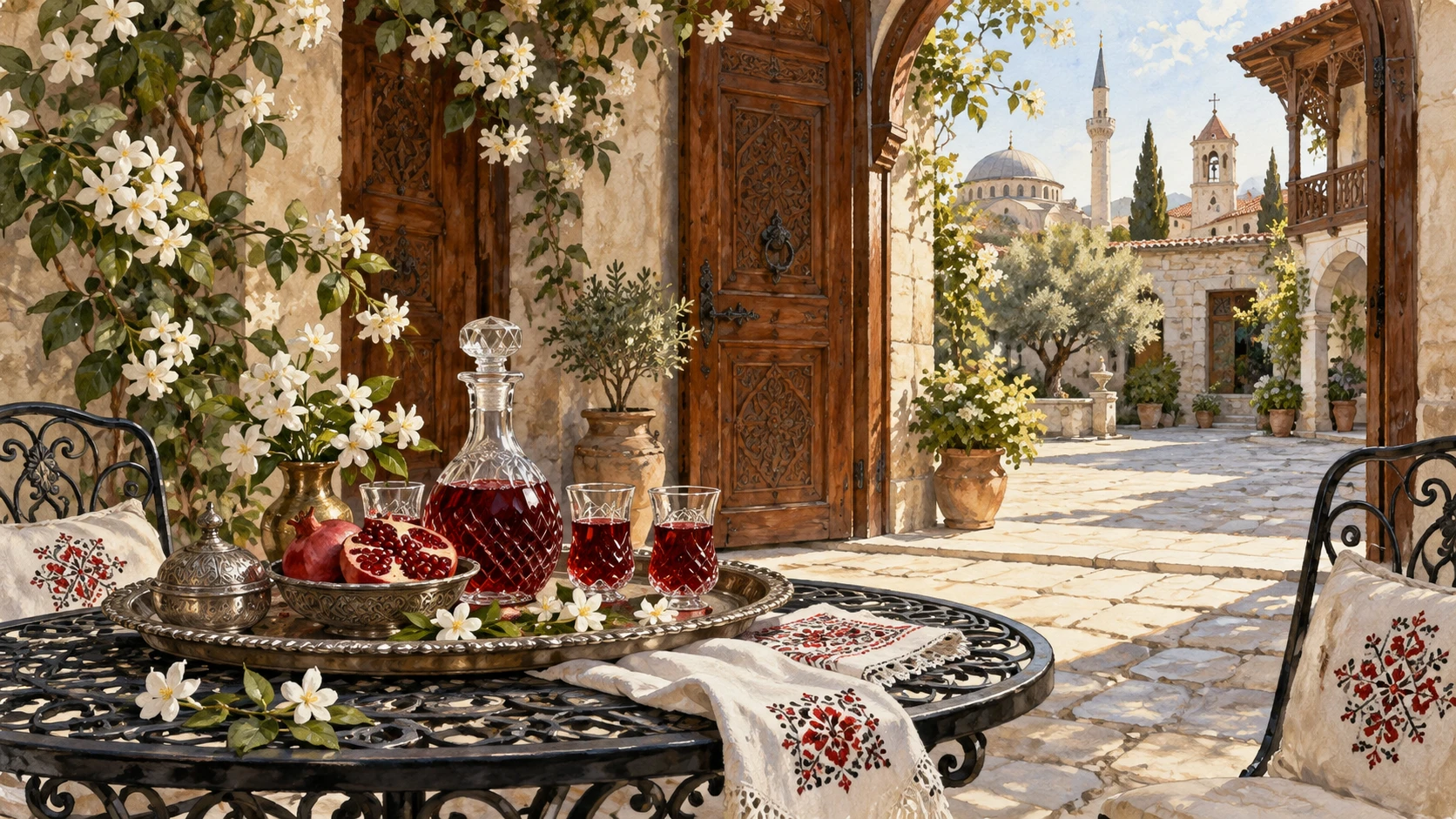
Albanian social custom features reciprocal home visits exchanged among family members, neighbors, and colleagues. Christian, Bektashi, and non-religious citizens routinely visit Muslim neighbors to convey festive congratulations and share pastries.
The State Committee on Cults highlights inter-religious hospitality as a cornerstone of Albania's historic multi-confessional harmony. National political leaders and regional religious dignitaries exchange formal diplomatic greetings at central community headquarters.
Highland and coastal communities preserve ancestral secular traditions where doors remain unlocked to welcome casual drop-in guests. Children receive holiday gifts, small monetary tokens called llokume, and new garments from extended family relatives.
Sociological Perspectives and Coexistence in Modern Civic Life
A fixed calendar date cannot settle the wide variance in individual spiritual observance across different age groups and regions. Sociological surveys demonstrate that secularized urban citizens observe Fiter Bajram primarily as a cultural and family tradition.
Regional differences distinguish large metropolitan public assemblies from quieter private household observances in remote mountain districts. Contemporaneous municipal reporting distinguishes date-setting decrees from independently documented neighborhood crowd dynamics.
Albanian media networks provide live broadcast coverage of morning prayers while highlighting secular civic festivities. The holiday retrospective reflects how centuries of coexistence anchor modern civic identity in shared hospitality and mutual respect.
A2 · Elementary
Fiter Bajram 2026 in Albania: Calendar Setting and Civic Observance
A liturgical date reference marks the spring culmination of Ramadan as public prayers, pastry sharing, and multi-confessional visits shape civic life.
Official Calendar Setting and National Statutory Holiday
The official liturgical calendar published by the Albanian Muslim Community established the first day of Fiter Bajram on 20 March 2026. The date calculation marks the formal culmination of the holy fasting month of Ramadan according to astronomical lunar observations.
The publication serves as an administrative date-setting reference rather than a comprehensive sociological census of individual religious practice. Community authorities circulated official congregational prayer timetables across municipal muftiates nationwide.
National holiday legislation designates Fiter Bajram as an official non-working statutory public holiday throughout the Republic of Albania. Municipal public schools and central civil service agencies suspend normal operations in observance of the statutory holiday.
Dawn Assemblies across Central Squares and Mosques
Thousands of worshipers gather at dawn in Tirana to perform the solemn communal morning prayer. Large congregational assemblies occur outdoors across Skanderbeg Square and inside the Great Mosque of Namazgjah.
Municipal traffic police temporarily divert motor vehicle access along surrounding boulevards to facilitate pedestrian prayer corridors. Imams deliver the holiday sermon, emphasizing spiritual renewal, charity, peace, and national fraternity.
Regional mosques in major urban centers including Shkodra, Durres, Vlora, and Elbasan host simultaneous morning prayer ceremonies. Community security volunteers and state emergency teams coordinate crowd circulation at major congregational sites.
Charitable Solidarity and Community Support
Observant households distribute mandatory charitable contributions known as Zekat al-Fitr prior to the morning holiday prayers. The charitable requirement ensures that impoverished families and vulnerable citizens participate fully in festive holiday dining.
Community foundations collect and allocate food parcels, basic staples, and financial aid to lower-income households. Youth volunteers and charitable civic organizations distribute aid packages across urban social centers and isolated rural communities.
Philanthropic contributions emphasize direct community solidarity, transcending sectarian affiliations in neighborhood outreach. Local mosques publish transparent financial accountability summaries detailing charitable receipts and social disbursements.
Handcrafted Baklava and Festive Family Hospitality
The quintessential culinary centerpiece of Fiter Bajram across Albanian homes is handcrafted walnut or pistachio baklava. Households dedicate hours preceding the holiday to rolling paper-thin phyllo dough sheets across large round baking pans called tepsia.
The multi-layered pastry is clarified with churned highland butter and steeped in a fragrant cooled lemon and sugar syrup. Alongside baklava, traditional tables feature sheqerpare, kadaif, roasted meats, and seasonal savory pies called byrek.
Hospitality etiquette dictates offering sweet confections and Turkish coffee immediately upon a guest entering the family home. Confectionery bakeries across major cities report annual peak retail sales of phyllo sheets and nuts during the preceding week.
Reciprocal Home Visits and Historic Multi-Confessional Harmony
Albanian social custom features reciprocal home visits exchanged among family members, neighbors, and colleagues. Christian, Bektashi, and non-religious citizens routinely visit Muslim neighbors to convey festive congratulations and share pastries.
The State Committee on Cults highlights inter-religious hospitality as a cornerstone of Albania's historic multi-confessional harmony. National political leaders and regional religious dignitaries exchange formal diplomatic greetings at central community headquarters.
Highland and coastal communities preserve ancestral secular traditions where doors remain unlocked to welcome casual drop-in guests. Children receive holiday gifts, small monetary tokens called llokume, and new garments from extended family relatives.
Sociological Perspectives and Coexistence in Modern Civic Life
A fixed calendar date cannot settle the wide variance in individual spiritual observance across different age groups and regions. Sociological surveys demonstrate that secularized urban citizens observe Fiter Bajram primarily as a cultural and family tradition.
Regional differences distinguish large metropolitan public assemblies from quieter private household observances in remote mountain districts. Contemporaneous municipal reporting distinguishes date-setting decrees from independently documented neighborhood crowd dynamics.
Albanian media networks provide live broadcast coverage of morning prayers while highlighting secular civic festivities. The holiday retrospective reflects how centuries of coexistence anchor modern civic identity in shared hospitality and mutual respect.
B1 · Intermediate
Fiter Bajram 2026 in Albania: Calendar Setting and Civic Observance
A liturgical date reference marks the spring culmination of Ramadan as public prayers, pastry sharing, and multi-confessional visits shape civic life.
Official Calendar Setting and National Statutory Holiday
The official liturgical calendar published by the Albanian Muslim Community established the first day of Fiter Bajram on 20 March 2026. The date calculation marks the formal culmination of the holy fasting month of Ramadan according to astronomical lunar observations.
The publication serves as an administrative date-setting reference rather than a comprehensive sociological census of individual religious practice. Community authorities circulated official congregational prayer timetables across municipal muftiates nationwide.
National holiday legislation designates Fiter Bajram as an official non-working statutory public holiday throughout the Republic of Albania. Municipal public schools and central civil service agencies suspend normal operations in observance of the statutory holiday.
Dawn Assemblies across Central Squares and Mosques
Thousands of worshipers gather at dawn in Tirana to perform the solemn communal morning prayer. Large congregational assemblies occur outdoors across Skanderbeg Square and inside the Great Mosque of Namazgjah.
Municipal traffic police temporarily divert motor vehicle access along surrounding boulevards to facilitate pedestrian prayer corridors. Imams deliver the holiday sermon, emphasizing spiritual renewal, charity, peace, and national fraternity.
Regional mosques in major urban centers including Shkodra, Durres, Vlora, and Elbasan host simultaneous morning prayer ceremonies. Community security volunteers and state emergency teams coordinate crowd circulation at major congregational sites.
Charitable Solidarity and Community Support
Observant households distribute mandatory charitable contributions known as Zekat al-Fitr prior to the morning holiday prayers. The charitable requirement ensures that impoverished families and vulnerable citizens participate fully in festive holiday dining.
Community foundations collect and allocate food parcels, basic staples, and financial aid to lower-income households. Youth volunteers and charitable civic organizations distribute aid packages across urban social centers and isolated rural communities.
Philanthropic contributions emphasize direct community solidarity, transcending sectarian affiliations in neighborhood outreach. Local mosques publish transparent financial accountability summaries detailing charitable receipts and social disbursements.
Handcrafted Baklava and Festive Family Hospitality
The quintessential culinary centerpiece of Fiter Bajram across Albanian homes is handcrafted walnut or pistachio baklava. Households dedicate hours preceding the holiday to rolling paper-thin phyllo dough sheets across large round baking pans called tepsia.
The multi-layered pastry is clarified with churned highland butter and steeped in a fragrant cooled lemon and sugar syrup. Alongside baklava, traditional tables feature sheqerpare, kadaif, roasted meats, and seasonal savory pies called byrek.
Hospitality etiquette dictates offering sweet confections and Turkish coffee immediately upon a guest entering the family home. Confectionery bakeries across major cities report annual peak retail sales of phyllo sheets and nuts during the preceding week.
Reciprocal Home Visits and Historic Multi-Confessional Harmony
Albanian social custom features reciprocal home visits exchanged among family members, neighbors, and colleagues. Christian, Bektashi, and non-religious citizens routinely visit Muslim neighbors to convey festive congratulations and share pastries.
The State Committee on Cults highlights inter-religious hospitality as a cornerstone of Albania's historic multi-confessional harmony. National political leaders and regional religious dignitaries exchange formal diplomatic greetings at central community headquarters.
Highland and coastal communities preserve ancestral secular traditions where doors remain unlocked to welcome casual drop-in guests. Children receive holiday gifts, small monetary tokens called llokume, and new garments from extended family relatives.
Sociological Perspectives and Coexistence in Modern Civic Life
A fixed calendar date cannot settle the wide variance in individual spiritual observance across different age groups and regions. Sociological surveys demonstrate that secularized urban citizens observe Fiter Bajram primarily as a cultural and family tradition.
Regional differences distinguish large metropolitan public assemblies from quieter private household observances in remote mountain districts. Contemporaneous municipal reporting distinguishes date-setting decrees from independently documented neighborhood crowd dynamics.
Albanian media networks provide live broadcast coverage of morning prayers while highlighting secular civic festivities. The holiday retrospective reflects how centuries of coexistence anchor modern civic identity in shared hospitality and mutual respect.
B2 · Upper Intermediate
Fiter Bajram 2026 in Albania: Calendar Setting and Civic Observance
A liturgical date reference marks the spring culmination of Ramadan as public prayers, pastry sharing, and multi-confessional visits shape civic life.
Official Calendar Setting and National Statutory Holiday
The official liturgical calendar published by the Albanian Muslim Community established the first day of Fiter Bajram on 20 March 2026. The date calculation marks the formal culmination of the holy fasting month of Ramadan according to astronomical lunar observations.
The publication serves as an administrative date-setting reference rather than a comprehensive sociological census of individual religious practice. Community authorities circulated official congregational prayer timetables across municipal muftiates nationwide.
National holiday legislation designates Fiter Bajram as an official non-working statutory public holiday throughout the Republic of Albania. Municipal public schools and central civil service agencies suspend normal operations in observance of the statutory holiday.
Dawn Assemblies across Central Squares and Mosques
Thousands of worshipers gather at dawn in Tirana to perform the solemn communal morning prayer. Large congregational assemblies occur outdoors across Skanderbeg Square and inside the Great Mosque of Namazgjah.
Municipal traffic police temporarily divert motor vehicle access along surrounding boulevards to facilitate pedestrian prayer corridors. Imams deliver the holiday sermon, emphasizing spiritual renewal, charity, peace, and national fraternity.
Regional mosques in major urban centers including Shkodra, Durres, Vlora, and Elbasan host simultaneous morning prayer ceremonies. Community security volunteers and state emergency teams coordinate crowd circulation at major congregational sites.
Charitable Solidarity and Community Support
Observant households distribute mandatory charitable contributions known as Zekat al-Fitr prior to the morning holiday prayers. The charitable requirement ensures that impoverished families and vulnerable citizens participate fully in festive holiday dining.
Community foundations collect and allocate food parcels, basic staples, and financial aid to lower-income households. Youth volunteers and charitable civic organizations distribute aid packages across urban social centers and isolated rural communities.
Philanthropic contributions emphasize direct community solidarity, transcending sectarian affiliations in neighborhood outreach. Local mosques publish transparent financial accountability summaries detailing charitable receipts and social disbursements.
Handcrafted Baklava and Festive Family Hospitality
The quintessential culinary centerpiece of Fiter Bajram across Albanian homes is handcrafted walnut or pistachio baklava. Households dedicate hours preceding the holiday to rolling paper-thin phyllo dough sheets across large round baking pans called tepsia.
The multi-layered pastry is clarified with churned highland butter and steeped in a fragrant cooled lemon and sugar syrup. Alongside baklava, traditional tables feature sheqerpare, kadaif, roasted meats, and seasonal savory pies called byrek.
Hospitality etiquette dictates offering sweet confections and Turkish coffee immediately upon a guest entering the family home. Confectionery bakeries across major cities report annual peak retail sales of phyllo sheets and nuts during the preceding week.
Reciprocal Home Visits and Historic Multi-Confessional Harmony
Albanian social custom features reciprocal home visits exchanged among family members, neighbors, and colleagues. Christian, Bektashi, and non-religious citizens routinely visit Muslim neighbors to convey festive congratulations and share pastries.
The State Committee on Cults highlights inter-religious hospitality as a cornerstone of Albania's historic multi-confessional harmony. National political leaders and regional religious dignitaries exchange formal diplomatic greetings at central community headquarters.
Highland and coastal communities preserve ancestral secular traditions where doors remain unlocked to welcome casual drop-in guests. Children receive holiday gifts, small monetary tokens called llokume, and new garments from extended family relatives.
Sociological Perspectives and Coexistence in Modern Civic Life
A fixed calendar date cannot settle the wide variance in individual spiritual observance across different age groups and regions. Sociological surveys demonstrate that secularized urban citizens observe Fiter Bajram primarily as a cultural and family tradition.
Regional differences distinguish large metropolitan public assemblies from quieter private household observances in remote mountain districts. Contemporaneous municipal reporting distinguishes date-setting decrees from independently documented neighborhood crowd dynamics.
Albanian media networks provide live broadcast coverage of morning prayers while highlighting secular civic festivities. The holiday retrospective reflects how centuries of coexistence anchor modern civic identity in shared hospitality and mutual respect.
C1 · Advanced
Fiter Bajram 2026 in Albania: Calendar Setting and Civic Observance
A liturgical date reference marks the spring culmination of Ramadan as public prayers, pastry sharing, and multi-confessional visits shape civic life.
Official Calendar Setting and National Statutory Holiday
The official liturgical calendar published by the Albanian Muslim Community established the first day of Fiter Bajram on 20 March 2026. The date calculation marks the formal culmination of the holy fasting month of Ramadan according to astronomical lunar observations.
The publication serves as an administrative date-setting reference rather than a comprehensive sociological census of individual religious practice. Community authorities circulated official congregational prayer timetables across municipal muftiates nationwide.
National holiday legislation designates Fiter Bajram as an official non-working statutory public holiday throughout the Republic of Albania. Municipal public schools and central civil service agencies suspend normal operations in observance of the statutory holiday.
Dawn Assemblies across Central Squares and Mosques
Thousands of worshipers gather at dawn in Tirana to perform the solemn communal morning prayer. Large congregational assemblies occur outdoors across Skanderbeg Square and inside the Great Mosque of Namazgjah.
Municipal traffic police temporarily divert motor vehicle access along surrounding boulevards to facilitate pedestrian prayer corridors. Imams deliver the holiday sermon, emphasizing spiritual renewal, charity, peace, and national fraternity.
Regional mosques in major urban centers including Shkodra, Durres, Vlora, and Elbasan host simultaneous morning prayer ceremonies. Community security volunteers and state emergency teams coordinate crowd circulation at major congregational sites.
Charitable Solidarity and Community Support
Observant households distribute mandatory charitable contributions known as Zekat al-Fitr prior to the morning holiday prayers. The charitable requirement ensures that impoverished families and vulnerable citizens participate fully in festive holiday dining.
Community foundations collect and allocate food parcels, basic staples, and financial aid to lower-income households. Youth volunteers and charitable civic organizations distribute aid packages across urban social centers and isolated rural communities.
Philanthropic contributions emphasize direct community solidarity, transcending sectarian affiliations in neighborhood outreach. Local mosques publish transparent financial accountability summaries detailing charitable receipts and social disbursements.
Handcrafted Baklava and Festive Family Hospitality
The quintessential culinary centerpiece of Fiter Bajram across Albanian homes is handcrafted walnut or pistachio baklava. Households dedicate hours preceding the holiday to rolling paper-thin phyllo dough sheets across large round baking pans called tepsia.
The multi-layered pastry is clarified with churned highland butter and steeped in a fragrant cooled lemon and sugar syrup. Alongside baklava, traditional tables feature sheqerpare, kadaif, roasted meats, and seasonal savory pies called byrek.
Hospitality etiquette dictates offering sweet confections and Turkish coffee immediately upon a guest entering the family home. Confectionery bakeries across major cities report annual peak retail sales of phyllo sheets and nuts during the preceding week.
Reciprocal Home Visits and Historic Multi-Confessional Harmony
Albanian social custom features reciprocal home visits exchanged among family members, neighbors, and colleagues. Christian, Bektashi, and non-religious citizens routinely visit Muslim neighbors to convey festive congratulations and share pastries.
The State Committee on Cults highlights inter-religious hospitality as a cornerstone of Albania's historic multi-confessional harmony. National political leaders and regional religious dignitaries exchange formal diplomatic greetings at central community headquarters.
Highland and coastal communities preserve ancestral secular traditions where doors remain unlocked to welcome casual drop-in guests. Children receive holiday gifts, small monetary tokens called llokume, and new garments from extended family relatives.
Sociological Perspectives and Coexistence in Modern Civic Life
A fixed calendar date cannot settle the wide variance in individual spiritual observance across different age groups and regions. Sociological surveys demonstrate that secularized urban citizens observe Fiter Bajram primarily as a cultural and family tradition.
Regional differences distinguish large metropolitan public assemblies from quieter private household observances in remote mountain districts. Contemporaneous municipal reporting distinguishes date-setting decrees from independently documented neighborhood crowd dynamics.
Albanian media networks provide live broadcast coverage of morning prayers while highlighting secular civic festivities. The holiday retrospective reflects how centuries of coexistence anchor modern civic identity in shared hospitality and mutual respect.
C2 · Mastery
Fiter Bajram 2026 in Albania: Calendar Setting and Civic Observance
A liturgical date reference marks the spring culmination of Ramadan as public prayers, pastry sharing, and multi-confessional visits shape civic life.
Official Calendar Setting and National Statutory Holiday
The official liturgical calendar published by the Albanian Muslim Community established the first day of Fiter Bajram on 20 March 2026. The date calculation marks the formal culmination of the holy fasting month of Ramadan according to astronomical lunar observations.
The publication serves as an administrative date-setting reference rather than a comprehensive sociological census of individual religious practice. Community authorities circulated official congregational prayer timetables across municipal muftiates nationwide.
National holiday legislation designates Fiter Bajram as an official non-working statutory public holiday throughout the Republic of Albania. Municipal public schools and central civil service agencies suspend normal operations in observance of the statutory holiday.
Dawn Assemblies across Central Squares and Mosques
Thousands of worshipers gather at dawn in Tirana to perform the solemn communal morning prayer. Large congregational assemblies occur outdoors across Skanderbeg Square and inside the Great Mosque of Namazgjah.
Municipal traffic police temporarily divert motor vehicle access along surrounding boulevards to facilitate pedestrian prayer corridors. Imams deliver the holiday sermon, emphasizing spiritual renewal, charity, peace, and national fraternity.
Regional mosques in major urban centers including Shkodra, Durres, Vlora, and Elbasan host simultaneous morning prayer ceremonies. Community security volunteers and state emergency teams coordinate crowd circulation at major congregational sites.
Charitable Solidarity and Community Support
Observant households distribute mandatory charitable contributions known as Zekat al-Fitr prior to the morning holiday prayers. The charitable requirement ensures that impoverished families and vulnerable citizens participate fully in festive holiday dining.
Community foundations collect and allocate food parcels, basic staples, and financial aid to lower-income households. Youth volunteers and charitable civic organizations distribute aid packages across urban social centers and isolated rural communities.
Philanthropic contributions emphasize direct community solidarity, transcending sectarian affiliations in neighborhood outreach. Local mosques publish transparent financial accountability summaries detailing charitable receipts and social disbursements.
Handcrafted Baklava and Festive Family Hospitality
The quintessential culinary centerpiece of Fiter Bajram across Albanian homes is handcrafted walnut or pistachio baklava. Households dedicate hours preceding the holiday to rolling paper-thin phyllo dough sheets across large round baking pans called tepsia.
The multi-layered pastry is clarified with churned highland butter and steeped in a fragrant cooled lemon and sugar syrup. Alongside baklava, traditional tables feature sheqerpare, kadaif, roasted meats, and seasonal savory pies called byrek.
Hospitality etiquette dictates offering sweet confections and Turkish coffee immediately upon a guest entering the family home. Confectionery bakeries across major cities report annual peak retail sales of phyllo sheets and nuts during the preceding week.
Reciprocal Home Visits and Historic Multi-Confessional Harmony
Albanian social custom features reciprocal home visits exchanged among family members, neighbors, and colleagues. Christian, Bektashi, and non-religious citizens routinely visit Muslim neighbors to convey festive congratulations and share pastries.
The State Committee on Cults highlights inter-religious hospitality as a cornerstone of Albania's historic multi-confessional harmony. National political leaders and regional religious dignitaries exchange formal diplomatic greetings at central community headquarters.
Highland and coastal communities preserve ancestral secular traditions where doors remain unlocked to welcome casual drop-in guests. Children receive holiday gifts, small monetary tokens called llokume, and new garments from extended family relatives.
Sociological Perspectives and Coexistence in Modern Civic Life
A fixed calendar date cannot settle the wide variance in individual spiritual observance across different age groups and regions. Sociological surveys demonstrate that secularized urban citizens observe Fiter Bajram primarily as a cultural and family tradition.
Regional differences distinguish large metropolitan public assemblies from quieter private household observances in remote mountain districts. Contemporaneous municipal reporting distinguishes date-setting decrees from independently documented neighborhood crowd dynamics.
Albanian media networks provide live broadcast coverage of morning prayers while highlighting secular civic festivities. The holiday retrospective reflects how centuries of coexistence anchor modern civic identity in shared hospitality and mutual respect.
Check your understanding
Choose how closely you want to revisit the article. You can refer back while answering, and review explanations when you finish.
Quick Quiz A1
Try one question, then create a free account for the full Quick Quiz. Sign Up Free
Answer every question before checking. There is no time limit.
Your results
/ 1 correct (%)
Read the explanations to see how each answer connects to the article.
-
On what date did the KMSH liturgical calendar fix the first day of Fiter Bajram in 2026?
1. Answer:
Quick Quiz A2
Try one question, then create a free account for the full Quick Quiz. Sign Up Free
Answer every question before checking. There is no time limit.
Your results
/ 1 correct (%)
Read the explanations to see how each answer connects to the article.
-
On what date did the KMSH liturgical calendar fix the first day of Fiter Bajram in 2026?
1. Answer:
Quick Quiz B1
Try one question, then create a free account for the full Quick Quiz. Sign Up Free
Answer every question before checking. There is no time limit.
Your results
/ 1 correct (%)
Read the explanations to see how each answer connects to the article.
-
On what date did the KMSH liturgical calendar fix the first day of Fiter Bajram in 2026?
1. Answer:
Quick Quiz B2
Try one question, then create a free account for the full Quick Quiz. Sign Up Free
Answer every question before checking. There is no time limit.
Your results
/ 1 correct (%)
Read the explanations to see how each answer connects to the article.
-
On what date did the KMSH liturgical calendar fix the first day of Fiter Bajram in 2026?
1. Answer:
Quick Quiz C1
Try one question, then create a free account for the full Quick Quiz. Sign Up Free
Answer every question before checking. There is no time limit.
Your results
/ 1 correct (%)
Read the explanations to see how each answer connects to the article.
-
On what date did the KMSH liturgical calendar fix the first day of Fiter Bajram in 2026?
1. Answer:
Quick Quiz C2
Try one question, then create a free account for the full Quick Quiz. Sign Up Free
Answer every question before checking. There is no time limit.
Your results
/ 1 correct (%)
Read the explanations to see how each answer connects to the article.
-
On what date did the KMSH liturgical calendar fix the first day of Fiter Bajram in 2026?
1. Answer:
