A1 · Beginner
Dita e Veres in Elbasan: Public Services and Event Logistics
A municipal programme notice maps festival venues across Elbasan while operational records detail staging, sanitation, and crowd safety.
Municipal Programme Notices and Urban Event Mapping
The Municipality of Elbasan published an official programme notice scheduling festive activities across the week of 9 to 15 March 2026. The municipal notice designated primary event venues across Boulevard Qemal Stafa, Rinia Park, Skampa Theatre, and the Castle district.
A published schedule indicates planned dates and sites but does not in itself constitute empirical evidence of operational completion. Events scheduled throughout the week included youth athletics, open-air photo exhibitions, and children's puppet theatre performances.
Municipal spatial planning distributed activity nodes across the urban core to manage pedestrian density and visitor dispersion. Official notices instructed regional artisans and performers regarding allocated setup windows and venue entrance corridors.

Technical Staging, Sound Towers, and Heritage Clearances
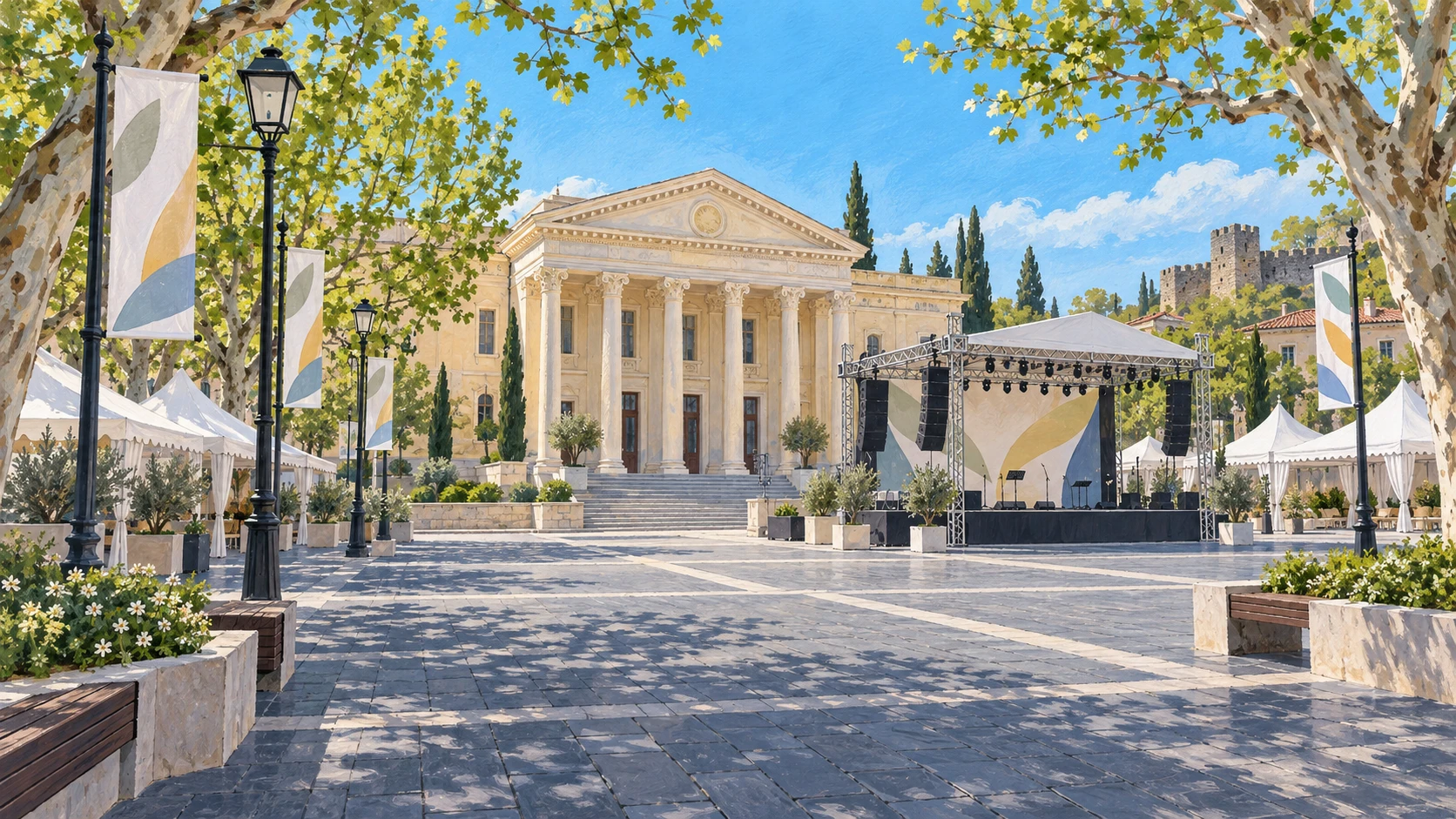
Municipal production teams assembled modular aluminum stage trussing and overhead weather-resistant lighting arrays along central plazas. Acoustic engineers positioned line-array sound speaker towers at calibrated intervals to deliver clear sound without overwhelming historic facades.
Heavy-duty rubber cable ramps protected underground and street-level electrical wiring crossing pedestrian walkways. Backup diesel generators provided auxiliary electrical power to soundstages in the event of grid interruptions.
Temporary technical structures erected near ancient stone fortress walls adhered to heritage conservation clearance regulations. Contracted rigging technicians performed structural load inspections on overhead banners and lighting rigs prior to public assemblies.
Perimeter Gates, Park-and-Ride Services, and Crowd Safety
State Police and municipal transit marshals implemented phased street closures isolating the historic center from through traffic. Designated perimeter access gates restricted vehicle passage to accredited emergency vehicles and registered market supply vans.
Coordinated park-and-ride facilities outside the central ring road provided shuttle services for incoming regional motorists. Foot patrols and stationary observation posts monitored crowded pedestrian thoroughfares to prevent crowd bottlenecks.
Tactical barrier lines separated moving vehicular corridors from high-density artisan display and confectionery zones. Public announcements and dynamic digital roadside signs notified drivers of alternative detour routes around Elbasan.
Street Washing, Waste Recycling, and Baker Ash Handling
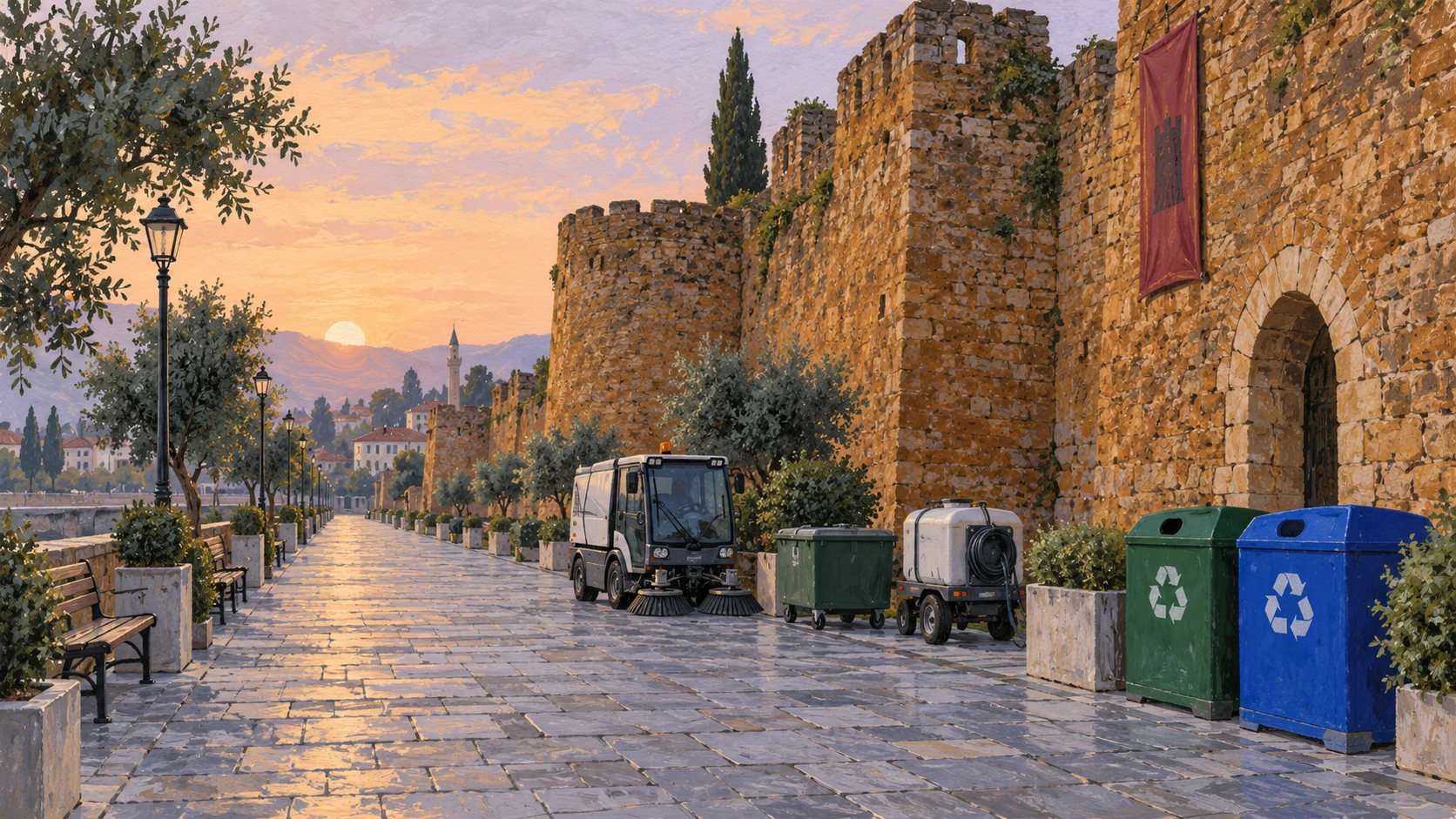
Municipal public works departments mobilized specialized cleaning teams operating on rotating twelve-hour shifts throughout the week. Sanitation workers positioned hundreds of high-capacity recycling and organic waste bins across festival thoroughfares.
Mechanical street sweepers and high-pressure water washing trucks cleaned public promenades during pre-dawn hours. Temporary mobile sanitation stations connected to municipal sewage mains were installed in Rinia Park and near castle gateways.
Specialized disposal protocols handled hot cooking ash and wood-fired oven waste generated by commercial ballokume bakers. Post-event operational tallies recorded several dozen metric tons of mixed municipal solid waste collected and recycled.
Paramedic Corridors, Water Stations, and Barrier-Free Access
The National Emergency Service deployed rapid-response ambulances and motorized paramedic units at strategic assembly nodes. Field triage stations staffed by medical professionals provided immediate on-site treatment for minor injuries and fatigue.
Dedicated barrier-free emergency lanes remained cleared of vendor stalls to ensure rapid ambulance transit to regional hospitals. Municipal planners designated step-free pedestrian ramps ensuring wheelchair and stroller accessibility along historic cobblestone paths.
Temporary public drinking water points supplied fresh municipal water to crowds during daytime festivities. Lost-and-found civic coordination booths assisted separated family members and reunified lost children.

Accounting Audits, Choke Points, and Medium-Sized Urban Governance
Municipal analysts emphasize distinguishing advance promotional programme brochures from verified post-event operational reporting. Transparent administrative accounting documents public expenditures on private contractors, municipal overtime, and equipment leasing.
Post-festival evaluation reports identify pedestrian choke points to improve public corridor flow for future seasonal editions. Civic engagement forums allow resident business owners and neighborhood associations to review municipal event performance.
The operational complexity of Dita e Veres illustrates how medium-sized municipalities manage intense seasonal infrastructure spikes. Effective public service coordination preserves civic order, ensuring that intangible cultural festivities remain safe and accessible.
A2 · Elementary
Dita e Veres in Elbasan: Public Services and Event Logistics
A municipal programme notice maps festival venues across Elbasan while operational records detail staging, sanitation, and crowd safety.
Municipal Programme Notices and Urban Event Mapping
The Municipality of Elbasan published an official programme notice scheduling festive activities across the week of 9 to 15 March 2026. The municipal notice designated primary event venues across Boulevard Qemal Stafa, Rinia Park, Skampa Theatre, and the Castle district.
A published schedule indicates planned dates and sites but does not in itself constitute empirical evidence of operational completion. Events scheduled throughout the week included youth athletics, open-air photo exhibitions, and children's puppet theatre performances.
Municipal spatial planning distributed activity nodes across the urban core to manage pedestrian density and visitor dispersion. Official notices instructed regional artisans and performers regarding allocated setup windows and venue entrance corridors.
Technical Staging, Sound Towers, and Heritage Clearances
Municipal production teams assembled modular aluminum stage trussing and overhead weather-resistant lighting arrays along central plazas. Acoustic engineers positioned line-array sound speaker towers at calibrated intervals to deliver clear sound without overwhelming historic facades.
Heavy-duty rubber cable ramps protected underground and street-level electrical wiring crossing pedestrian walkways. Backup diesel generators provided auxiliary electrical power to soundstages in the event of grid interruptions.
Temporary technical structures erected near ancient stone fortress walls adhered to heritage conservation clearance regulations. Contracted rigging technicians performed structural load inspections on overhead banners and lighting rigs prior to public assemblies.
Perimeter Gates, Park-and-Ride Services, and Crowd Safety
State Police and municipal transit marshals implemented phased street closures isolating the historic center from through traffic. Designated perimeter access gates restricted vehicle passage to accredited emergency vehicles and registered market supply vans.
Coordinated park-and-ride facilities outside the central ring road provided shuttle services for incoming regional motorists. Foot patrols and stationary observation posts monitored crowded pedestrian thoroughfares to prevent crowd bottlenecks.
Tactical barrier lines separated moving vehicular corridors from high-density artisan display and confectionery zones. Public announcements and dynamic digital roadside signs notified drivers of alternative detour routes around Elbasan.
Street Washing, Waste Recycling, and Baker Ash Handling
Municipal public works departments mobilized specialized cleaning teams operating on rotating twelve-hour shifts throughout the week. Sanitation workers positioned hundreds of high-capacity recycling and organic waste bins across festival thoroughfares.
Mechanical street sweepers and high-pressure water washing trucks cleaned public promenades during pre-dawn hours. Temporary mobile sanitation stations connected to municipal sewage mains were installed in Rinia Park and near castle gateways.
Specialized disposal protocols handled hot cooking ash and wood-fired oven waste generated by commercial ballokume bakers. Post-event operational tallies recorded several dozen metric tons of mixed municipal solid waste collected and recycled.
Paramedic Corridors, Water Stations, and Barrier-Free Access
The National Emergency Service deployed rapid-response ambulances and motorized paramedic units at strategic assembly nodes. Field triage stations staffed by medical professionals provided immediate on-site treatment for minor injuries and fatigue.
Dedicated barrier-free emergency lanes remained cleared of vendor stalls to ensure rapid ambulance transit to regional hospitals. Municipal planners designated step-free pedestrian ramps ensuring wheelchair and stroller accessibility along historic cobblestone paths.
Temporary public drinking water points supplied fresh municipal water to crowds during daytime festivities. Lost-and-found civic coordination booths assisted separated family members and reunified lost children.
Accounting Audits, Choke Points, and Medium-Sized Urban Governance
Municipal analysts emphasize distinguishing advance promotional programme brochures from verified post-event operational reporting. Transparent administrative accounting documents public expenditures on private contractors, municipal overtime, and equipment leasing.
Post-festival evaluation reports identify pedestrian choke points to improve public corridor flow for future seasonal editions. Civic engagement forums allow resident business owners and neighborhood associations to review municipal event performance.
The operational complexity of Dita e Veres illustrates how medium-sized municipalities manage intense seasonal infrastructure spikes. Effective public service coordination preserves civic order, ensuring that intangible cultural festivities remain safe and accessible.
B1 · Intermediate
Dita e Veres in Elbasan: Public Services and Event Logistics
A municipal programme notice maps festival venues across Elbasan while operational records detail staging, sanitation, and crowd safety.
Municipal Programme Notices and Urban Event Mapping
The Municipality of Elbasan published an official programme notice scheduling festive activities across the week of 9 to 15 March 2026. The municipal notice designated primary event venues across Boulevard Qemal Stafa, Rinia Park, Skampa Theatre, and the Castle district.
A published schedule indicates planned dates and sites but does not in itself constitute empirical evidence of operational completion. Events scheduled throughout the week included youth athletics, open-air photo exhibitions, and children's puppet theatre performances.
Municipal spatial planning distributed activity nodes across the urban core to manage pedestrian density and visitor dispersion. Official notices instructed regional artisans and performers regarding allocated setup windows and venue entrance corridors.
Technical Staging, Sound Towers, and Heritage Clearances
Municipal production teams assembled modular aluminum stage trussing and overhead weather-resistant lighting arrays along central plazas. Acoustic engineers positioned line-array sound speaker towers at calibrated intervals to deliver clear sound without overwhelming historic facades.
Heavy-duty rubber cable ramps protected underground and street-level electrical wiring crossing pedestrian walkways. Backup diesel generators provided auxiliary electrical power to soundstages in the event of grid interruptions.
Temporary technical structures erected near ancient stone fortress walls adhered to heritage conservation clearance regulations. Contracted rigging technicians performed structural load inspections on overhead banners and lighting rigs prior to public assemblies.
Perimeter Gates, Park-and-Ride Services, and Crowd Safety
State Police and municipal transit marshals implemented phased street closures isolating the historic center from through traffic. Designated perimeter access gates restricted vehicle passage to accredited emergency vehicles and registered market supply vans.
Coordinated park-and-ride facilities outside the central ring road provided shuttle services for incoming regional motorists. Foot patrols and stationary observation posts monitored crowded pedestrian thoroughfares to prevent crowd bottlenecks.
Tactical barrier lines separated moving vehicular corridors from high-density artisan display and confectionery zones. Public announcements and dynamic digital roadside signs notified drivers of alternative detour routes around Elbasan.
Street Washing, Waste Recycling, and Baker Ash Handling
Municipal public works departments mobilized specialized cleaning teams operating on rotating twelve-hour shifts throughout the week. Sanitation workers positioned hundreds of high-capacity recycling and organic waste bins across festival thoroughfares.
Mechanical street sweepers and high-pressure water washing trucks cleaned public promenades during pre-dawn hours. Temporary mobile sanitation stations connected to municipal sewage mains were installed in Rinia Park and near castle gateways.
Specialized disposal protocols handled hot cooking ash and wood-fired oven waste generated by commercial ballokume bakers. Post-event operational tallies recorded several dozen metric tons of mixed municipal solid waste collected and recycled.
Paramedic Corridors, Water Stations, and Barrier-Free Access
The National Emergency Service deployed rapid-response ambulances and motorized paramedic units at strategic assembly nodes. Field triage stations staffed by medical professionals provided immediate on-site treatment for minor injuries and fatigue.
Dedicated barrier-free emergency lanes remained cleared of vendor stalls to ensure rapid ambulance transit to regional hospitals. Municipal planners designated step-free pedestrian ramps ensuring wheelchair and stroller accessibility along historic cobblestone paths.
Temporary public drinking water points supplied fresh municipal water to crowds during daytime festivities. Lost-and-found civic coordination booths assisted separated family members and reunified lost children.
Accounting Audits, Choke Points, and Medium-Sized Urban Governance
Municipal analysts emphasize distinguishing advance promotional programme brochures from verified post-event operational reporting. Transparent administrative accounting documents public expenditures on private contractors, municipal overtime, and equipment leasing.
Post-festival evaluation reports identify pedestrian choke points to improve public corridor flow for future seasonal editions. Civic engagement forums allow resident business owners and neighborhood associations to review municipal event performance.
The operational complexity of Dita e Veres illustrates how medium-sized municipalities manage intense seasonal infrastructure spikes. Effective public service coordination preserves civic order, ensuring that intangible cultural festivities remain safe and accessible.
B2 · Upper Intermediate
Dita e Veres in Elbasan: Public Services and Event Logistics
A municipal programme notice maps festival venues across Elbasan while operational records detail staging, sanitation, and crowd safety.
Municipal Programme Notices and Urban Event Mapping
The Municipality of Elbasan published an official programme notice scheduling festive activities across the week of 9 to 15 March 2026. The municipal notice designated primary event venues across Boulevard Qemal Stafa, Rinia Park, Skampa Theatre, and the Castle district.
A published schedule indicates planned dates and sites but does not in itself constitute empirical evidence of operational completion. Events scheduled throughout the week included youth athletics, open-air photo exhibitions, and children's puppet theatre performances.
Municipal spatial planning distributed activity nodes across the urban core to manage pedestrian density and visitor dispersion. Official notices instructed regional artisans and performers regarding allocated setup windows and venue entrance corridors.
Technical Staging, Sound Towers, and Heritage Clearances
Municipal production teams assembled modular aluminum stage trussing and overhead weather-resistant lighting arrays along central plazas. Acoustic engineers positioned line-array sound speaker towers at calibrated intervals to deliver clear sound without overwhelming historic facades.
Heavy-duty rubber cable ramps protected underground and street-level electrical wiring crossing pedestrian walkways. Backup diesel generators provided auxiliary electrical power to soundstages in the event of grid interruptions.
Temporary technical structures erected near ancient stone fortress walls adhered to heritage conservation clearance regulations. Contracted rigging technicians performed structural load inspections on overhead banners and lighting rigs prior to public assemblies.
Perimeter Gates, Park-and-Ride Services, and Crowd Safety
State Police and municipal transit marshals implemented phased street closures isolating the historic center from through traffic. Designated perimeter access gates restricted vehicle passage to accredited emergency vehicles and registered market supply vans.
Coordinated park-and-ride facilities outside the central ring road provided shuttle services for incoming regional motorists. Foot patrols and stationary observation posts monitored crowded pedestrian thoroughfares to prevent crowd bottlenecks.
Tactical barrier lines separated moving vehicular corridors from high-density artisan display and confectionery zones. Public announcements and dynamic digital roadside signs notified drivers of alternative detour routes around Elbasan.
Street Washing, Waste Recycling, and Baker Ash Handling
Municipal public works departments mobilized specialized cleaning teams operating on rotating twelve-hour shifts throughout the week. Sanitation workers positioned hundreds of high-capacity recycling and organic waste bins across festival thoroughfares.
Mechanical street sweepers and high-pressure water washing trucks cleaned public promenades during pre-dawn hours. Temporary mobile sanitation stations connected to municipal sewage mains were installed in Rinia Park and near castle gateways.
Specialized disposal protocols handled hot cooking ash and wood-fired oven waste generated by commercial ballokume bakers. Post-event operational tallies recorded several dozen metric tons of mixed municipal solid waste collected and recycled.
Paramedic Corridors, Water Stations, and Barrier-Free Access
The National Emergency Service deployed rapid-response ambulances and motorized paramedic units at strategic assembly nodes. Field triage stations staffed by medical professionals provided immediate on-site treatment for minor injuries and fatigue.
Dedicated barrier-free emergency lanes remained cleared of vendor stalls to ensure rapid ambulance transit to regional hospitals. Municipal planners designated step-free pedestrian ramps ensuring wheelchair and stroller accessibility along historic cobblestone paths.
Temporary public drinking water points supplied fresh municipal water to crowds during daytime festivities. Lost-and-found civic coordination booths assisted separated family members and reunified lost children.
Accounting Audits, Choke Points, and Medium-Sized Urban Governance
Municipal analysts emphasize distinguishing advance promotional programme brochures from verified post-event operational reporting. Transparent administrative accounting documents public expenditures on private contractors, municipal overtime, and equipment leasing.
Post-festival evaluation reports identify pedestrian choke points to improve public corridor flow for future seasonal editions. Civic engagement forums allow resident business owners and neighborhood associations to review municipal event performance.
The operational complexity of Dita e Veres illustrates how medium-sized municipalities manage intense seasonal infrastructure spikes. Effective public service coordination preserves civic order, ensuring that intangible cultural festivities remain safe and accessible.
C1 · Advanced
Dita e Veres in Elbasan: Public Services and Event Logistics
A municipal programme notice maps festival venues across Elbasan while operational records detail staging, sanitation, and crowd safety.
Municipal Programme Notices and Urban Event Mapping
The Municipality of Elbasan published an official programme notice scheduling festive activities across the week of 9 to 15 March 2026. The municipal notice designated primary event venues across Boulevard Qemal Stafa, Rinia Park, Skampa Theatre, and the Castle district.
A published schedule indicates planned dates and sites but does not in itself constitute empirical evidence of operational completion. Events scheduled throughout the week included youth athletics, open-air photo exhibitions, and children's puppet theatre performances.
Municipal spatial planning distributed activity nodes across the urban core to manage pedestrian density and visitor dispersion. Official notices instructed regional artisans and performers regarding allocated setup windows and venue entrance corridors.
Technical Staging, Sound Towers, and Heritage Clearances
Municipal production teams assembled modular aluminum stage trussing and overhead weather-resistant lighting arrays along central plazas. Acoustic engineers positioned line-array sound speaker towers at calibrated intervals to deliver clear sound without overwhelming historic facades.
Heavy-duty rubber cable ramps protected underground and street-level electrical wiring crossing pedestrian walkways. Backup diesel generators provided auxiliary electrical power to soundstages in the event of grid interruptions.
Temporary technical structures erected near ancient stone fortress walls adhered to heritage conservation clearance regulations. Contracted rigging technicians performed structural load inspections on overhead banners and lighting rigs prior to public assemblies.
Perimeter Gates, Park-and-Ride Services, and Crowd Safety
State Police and municipal transit marshals implemented phased street closures isolating the historic center from through traffic. Designated perimeter access gates restricted vehicle passage to accredited emergency vehicles and registered market supply vans.
Coordinated park-and-ride facilities outside the central ring road provided shuttle services for incoming regional motorists. Foot patrols and stationary observation posts monitored crowded pedestrian thoroughfares to prevent crowd bottlenecks.
Tactical barrier lines separated moving vehicular corridors from high-density artisan display and confectionery zones. Public announcements and dynamic digital roadside signs notified drivers of alternative detour routes around Elbasan.
Street Washing, Waste Recycling, and Baker Ash Handling
Municipal public works departments mobilized specialized cleaning teams operating on rotating twelve-hour shifts throughout the week. Sanitation workers positioned hundreds of high-capacity recycling and organic waste bins across festival thoroughfares.
Mechanical street sweepers and high-pressure water washing trucks cleaned public promenades during pre-dawn hours. Temporary mobile sanitation stations connected to municipal sewage mains were installed in Rinia Park and near castle gateways.
Specialized disposal protocols handled hot cooking ash and wood-fired oven waste generated by commercial ballokume bakers. Post-event operational tallies recorded several dozen metric tons of mixed municipal solid waste collected and recycled.
Paramedic Corridors, Water Stations, and Barrier-Free Access
The National Emergency Service deployed rapid-response ambulances and motorized paramedic units at strategic assembly nodes. Field triage stations staffed by medical professionals provided immediate on-site treatment for minor injuries and fatigue.
Dedicated barrier-free emergency lanes remained cleared of vendor stalls to ensure rapid ambulance transit to regional hospitals. Municipal planners designated step-free pedestrian ramps ensuring wheelchair and stroller accessibility along historic cobblestone paths.
Temporary public drinking water points supplied fresh municipal water to crowds during daytime festivities. Lost-and-found civic coordination booths assisted separated family members and reunified lost children.
Accounting Audits, Choke Points, and Medium-Sized Urban Governance
Municipal analysts emphasize distinguishing advance promotional programme brochures from verified post-event operational reporting. Transparent administrative accounting documents public expenditures on private contractors, municipal overtime, and equipment leasing.
Post-festival evaluation reports identify pedestrian choke points to improve public corridor flow for future seasonal editions. Civic engagement forums allow resident business owners and neighborhood associations to review municipal event performance.
The operational complexity of Dita e Veres illustrates how medium-sized municipalities manage intense seasonal infrastructure spikes. Effective public service coordination preserves civic order, ensuring that intangible cultural festivities remain safe and accessible.
C2 · Mastery
Dita e Veres in Elbasan: Public Services and Event Logistics
A municipal programme notice maps festival venues across Elbasan while operational records detail staging, sanitation, and crowd safety.
Municipal Programme Notices and Urban Event Mapping
The Municipality of Elbasan published an official programme notice scheduling festive activities across the week of 9 to 15 March 2026. The municipal notice designated primary event venues across Boulevard Qemal Stafa, Rinia Park, Skampa Theatre, and the Castle district.
A published schedule indicates planned dates and sites but does not in itself constitute empirical evidence of operational completion. Events scheduled throughout the week included youth athletics, open-air photo exhibitions, and children's puppet theatre performances.
Municipal spatial planning distributed activity nodes across the urban core to manage pedestrian density and visitor dispersion. Official notices instructed regional artisans and performers regarding allocated setup windows and venue entrance corridors.
Technical Staging, Sound Towers, and Heritage Clearances
Municipal production teams assembled modular aluminum stage trussing and overhead weather-resistant lighting arrays along central plazas. Acoustic engineers positioned line-array sound speaker towers at calibrated intervals to deliver clear sound without overwhelming historic facades.
Heavy-duty rubber cable ramps protected underground and street-level electrical wiring crossing pedestrian walkways. Backup diesel generators provided auxiliary electrical power to soundstages in the event of grid interruptions.
Temporary technical structures erected near ancient stone fortress walls adhered to heritage conservation clearance regulations. Contracted rigging technicians performed structural load inspections on overhead banners and lighting rigs prior to public assemblies.
Perimeter Gates, Park-and-Ride Services, and Crowd Safety
State Police and municipal transit marshals implemented phased street closures isolating the historic center from through traffic. Designated perimeter access gates restricted vehicle passage to accredited emergency vehicles and registered market supply vans.
Coordinated park-and-ride facilities outside the central ring road provided shuttle services for incoming regional motorists. Foot patrols and stationary observation posts monitored crowded pedestrian thoroughfares to prevent crowd bottlenecks.
Tactical barrier lines separated moving vehicular corridors from high-density artisan display and confectionery zones. Public announcements and dynamic digital roadside signs notified drivers of alternative detour routes around Elbasan.
Street Washing, Waste Recycling, and Baker Ash Handling
Municipal public works departments mobilized specialized cleaning teams operating on rotating twelve-hour shifts throughout the week. Sanitation workers positioned hundreds of high-capacity recycling and organic waste bins across festival thoroughfares.
Mechanical street sweepers and high-pressure water washing trucks cleaned public promenades during pre-dawn hours. Temporary mobile sanitation stations connected to municipal sewage mains were installed in Rinia Park and near castle gateways.
Specialized disposal protocols handled hot cooking ash and wood-fired oven waste generated by commercial ballokume bakers. Post-event operational tallies recorded several dozen metric tons of mixed municipal solid waste collected and recycled.
Paramedic Corridors, Water Stations, and Barrier-Free Access
The National Emergency Service deployed rapid-response ambulances and motorized paramedic units at strategic assembly nodes. Field triage stations staffed by medical professionals provided immediate on-site treatment for minor injuries and fatigue.
Dedicated barrier-free emergency lanes remained cleared of vendor stalls to ensure rapid ambulance transit to regional hospitals. Municipal planners designated step-free pedestrian ramps ensuring wheelchair and stroller accessibility along historic cobblestone paths.
Temporary public drinking water points supplied fresh municipal water to crowds during daytime festivities. Lost-and-found civic coordination booths assisted separated family members and reunified lost children.
Accounting Audits, Choke Points, and Medium-Sized Urban Governance
Municipal analysts emphasize distinguishing advance promotional programme brochures from verified post-event operational reporting. Transparent administrative accounting documents public expenditures on private contractors, municipal overtime, and equipment leasing.
Post-festival evaluation reports identify pedestrian choke points to improve public corridor flow for future seasonal editions. Civic engagement forums allow resident business owners and neighborhood associations to review municipal event performance.
The operational complexity of Dita e Veres illustrates how medium-sized municipalities manage intense seasonal infrastructure spikes. Effective public service coordination preserves civic order, ensuring that intangible cultural festivities remain safe and accessible.
Check your understanding
Choose how closely you want to revisit the article. You can refer back while answering, and review explanations when you finish.
Quick Quiz A1
Try one question, then create a free account for the full Quick Quiz. Sign Up Free
Answer every question before checking. There is no time limit.
Your results
/ 1 correct (%)
Read the explanations to see how each answer connects to the article.
-
Across what week in March 2026 did the Municipality of Elbasan schedule festive programme activities?
1. Answer:
Quick Quiz A2
Try one question, then create a free account for the full Quick Quiz. Sign Up Free
Answer every question before checking. There is no time limit.
Your results
/ 1 correct (%)
Read the explanations to see how each answer connects to the article.
-
Across what week in March 2026 did the Municipality of Elbasan schedule festive programme activities?
1. Answer:
Quick Quiz B1
Try one question, then create a free account for the full Quick Quiz. Sign Up Free
Answer every question before checking. There is no time limit.
Your results
/ 1 correct (%)
Read the explanations to see how each answer connects to the article.
-
Across what week in March 2026 did the Municipality of Elbasan schedule festive programme activities?
1. Answer:
Quick Quiz B2
Try one question, then create a free account for the full Quick Quiz. Sign Up Free
Answer every question before checking. There is no time limit.
Your results
/ 1 correct (%)
Read the explanations to see how each answer connects to the article.
-
Across what week in March 2026 did the Municipality of Elbasan schedule festive programme activities?
1. Answer:
Quick Quiz C1
Try one question, then create a free account for the full Quick Quiz. Sign Up Free
Answer every question before checking. There is no time limit.
Your results
/ 1 correct (%)
Read the explanations to see how each answer connects to the article.
-
Across what week in March 2026 did the Municipality of Elbasan schedule festive programme activities?
1. Answer:
Quick Quiz C2
Try one question, then create a free account for the full Quick Quiz. Sign Up Free
Answer every question before checking. There is no time limit.
Your results
/ 1 correct (%)
Read the explanations to see how each answer connects to the article.
-
Across what week in March 2026 did the Municipality of Elbasan schedule festive programme activities?
1. Answer:
