A1 · Beginner
Gjirokastra Bazaar Morning: Medicinal Plants and Historic Trade Rhythms
Early openings along cobblestone alleys reveal how mountain tea foragers, herbal merchants, and conservation rules sustain market life.
Morning Openings and Market Streets in the Old Bazaar
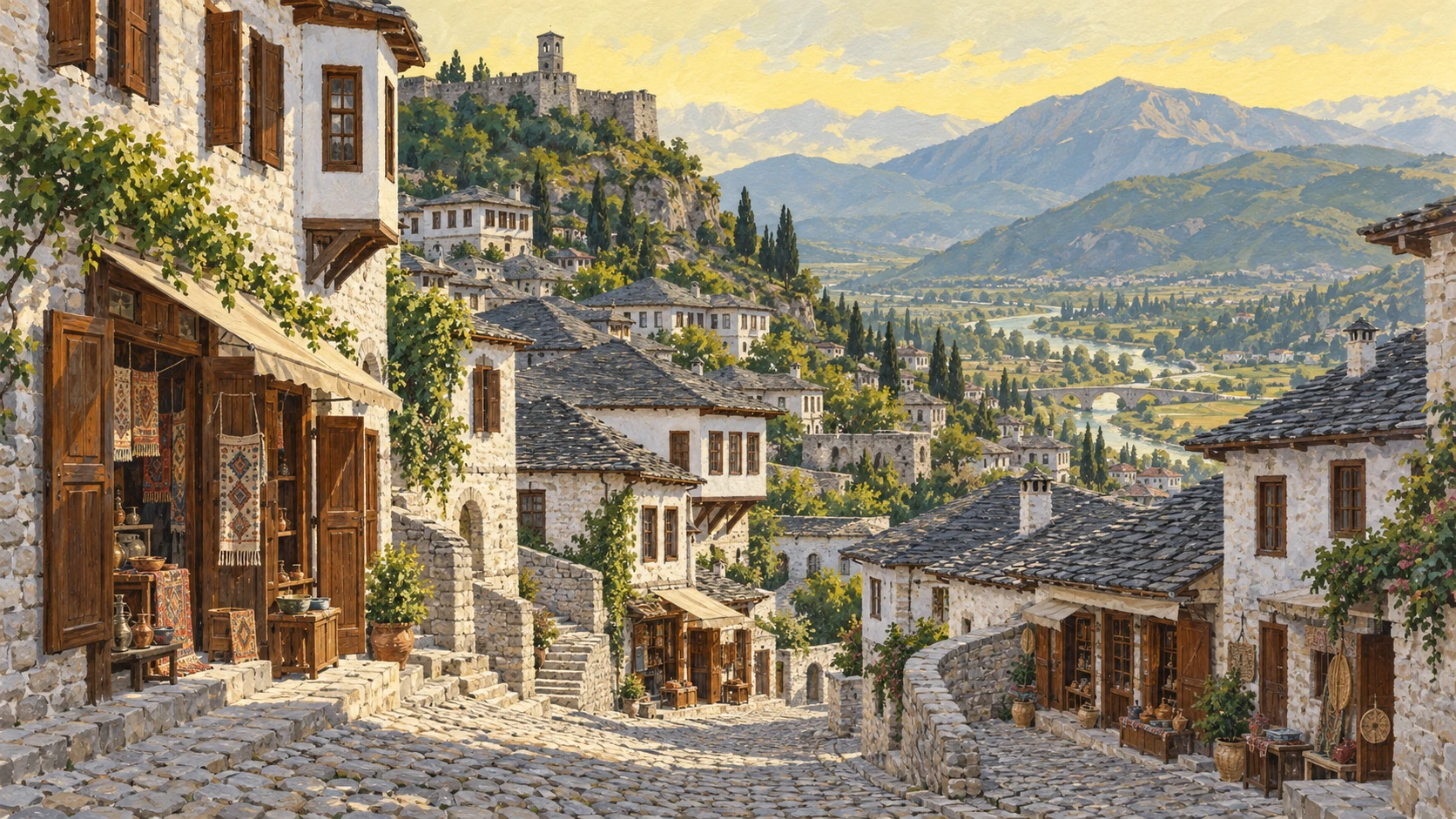
Bazaar shopkeepers in Gjirokaster initiate daily morning opening routines between seven and eight o'clock. Merchants remove folding wooden window shutters to open stone storefronts along the sloping limestone streets of Qafa e Pazarit.
Municipal sanitation regulations mandate sweeping and washing pedestrian stone pavements prior to the commencement of trade. Municipal delivery vehicles must complete commercial unloading before morning pedestrian hours begin.
Early morning cafe gatherings allow neighboring stallholders to exchange news and assess local foot traffic. The daily morning schedule represents routine commerce rather than an unvarying year-round calendar.
Mountain Tea and Dried Aromatic Plant Varieties
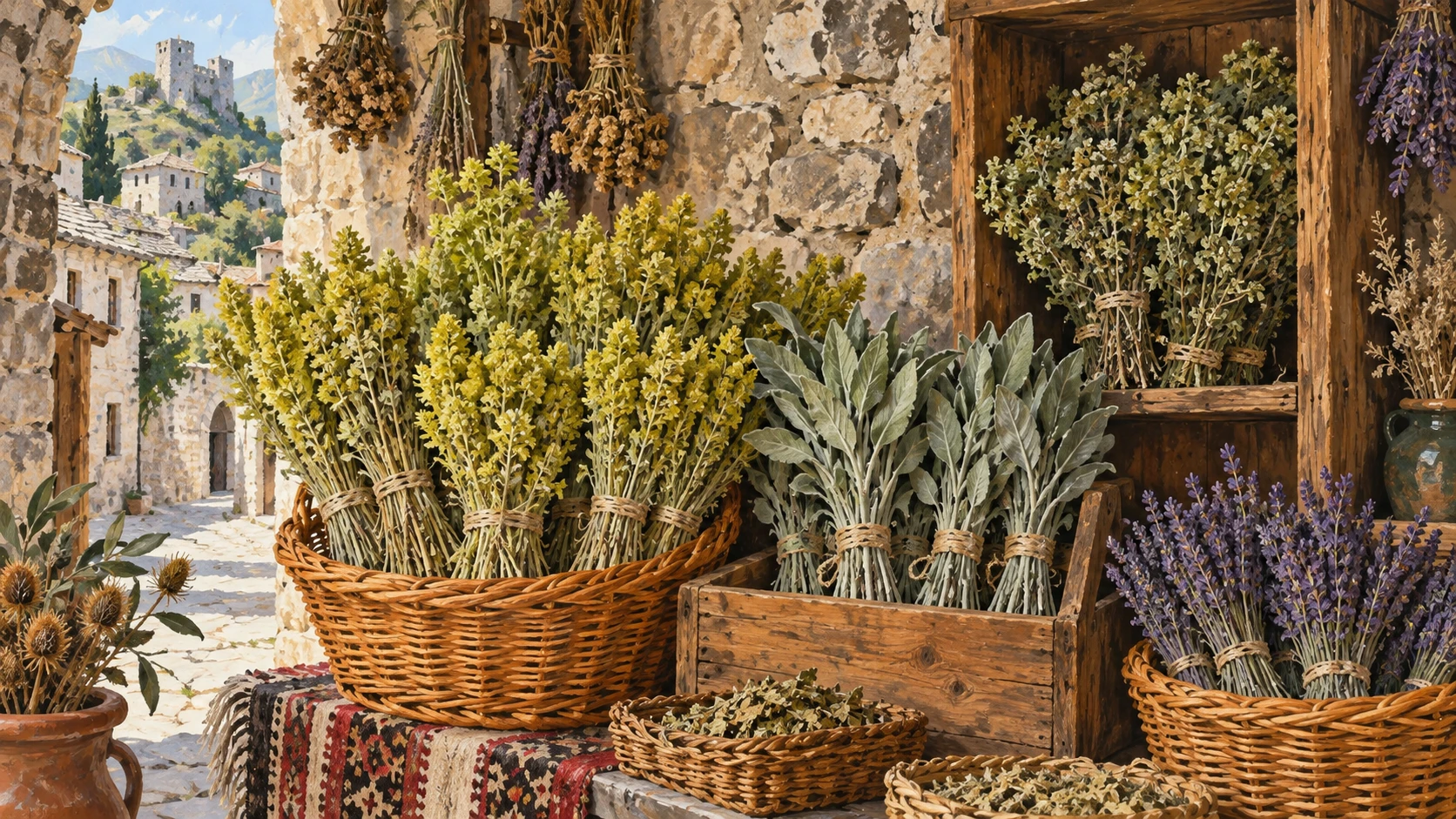
Bazaar stalls feature wild mountain tea known botanically as Sideritis raeseri alongside wild sage and oregano. Dried medicinal herbs are displayed in hand-woven wicker baskets, linen sacks, and wooden cubbies.
Herbal vendors package whole dried blossoms and aromatic leaves into transparent paper-tied packets. Stalls also offer dried lavender, juniper berries, chamomile flowers, and laurel leaves sourced across southern Albania.
The medicinal plant trade forms a distinctive commercial specialty within the historic market district. Domestic retail purchases in bazaar shops coexist with larger wholesale trade networks supplying domestic processors.
Highland Gathering Routes and Alpine Harvest Cycles
Harvesters collect wild aromatic plants from alpine limestone meadows across Mount Gjere and the Nemercka range. Highland foraging occurs primarily during early summer flowering cycles between late May and July.
Rural village gatherers transport sun-dried herbal bundles down mountain bridle paths to urban collection hubs. Herbal quality grading depends on blossom coloration, moisture content, and essential oil fragrance intensity.
Traditional harvesters use hand sickles to cut flowering stems without uprooting perennial wild shrubs. Foraging provides supplemental seasonal cash income for elderly pastoral residents in remote mountainous communes.
Trader Perspectives and Seasonal Economic Conditions
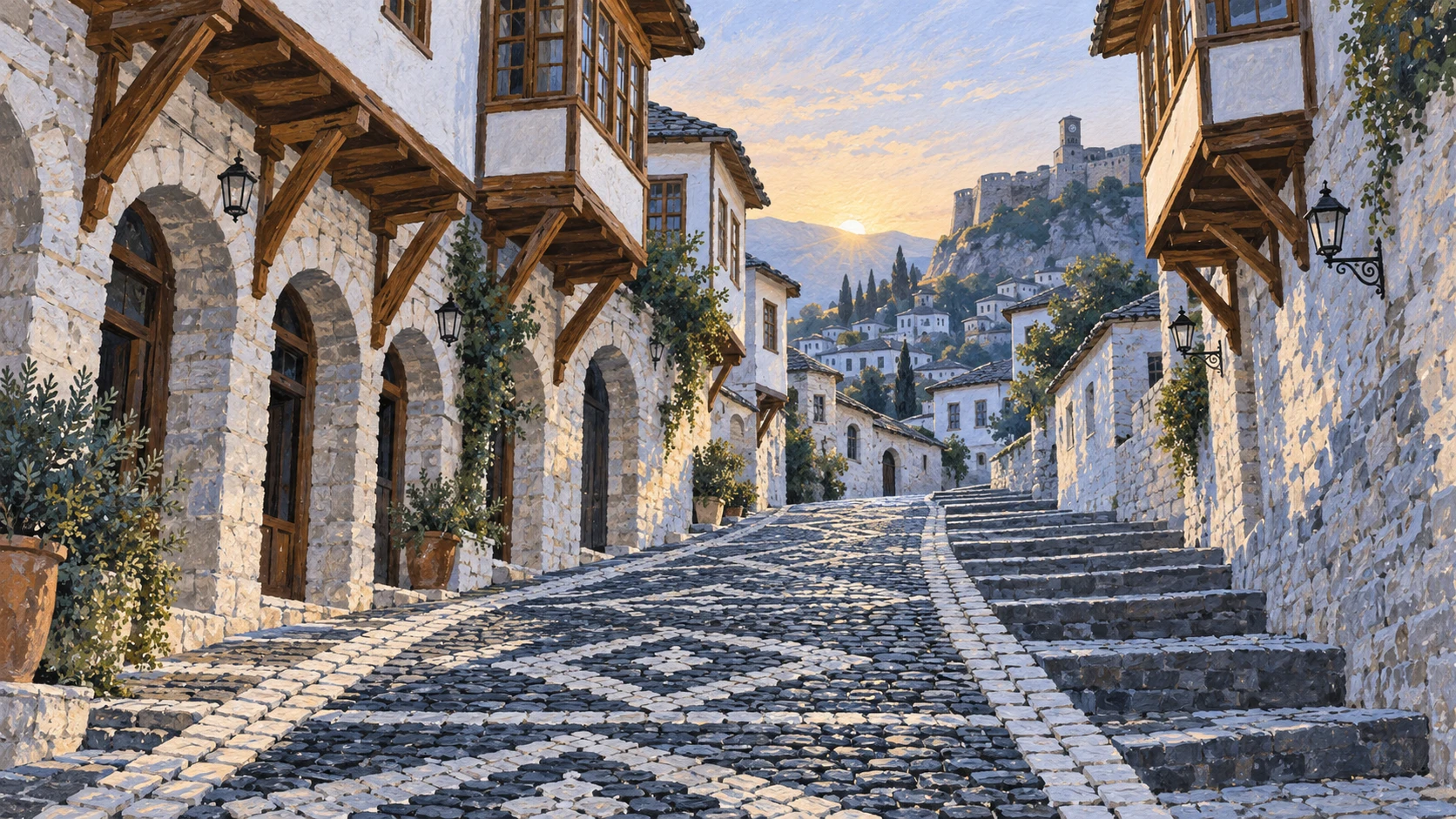
Named bazaar merchants report rising operational costs alongside growing customer curiosity for traditional botanicals. Shopkeepers emphasize that selling medicinal plants is one specialized business amongst diverse bazaar trades.
Traders navigate fluctuating seasonal yields influenced by spring precipitation and summer heat waves. Experienced vendors share practical preparation advice regarding brewing temperatures and infusion steeping durations.
Albanian medicinal plants command established regional export demand through the southern border crossing at Kakavija. Bazaar herbalists express concern regarding the gradual aging of skilled highland foragers and collectors.
Harvest Quotas and Environmental Protection Rules
State environmental authorities establish annual collection quotas to prevent wild plant population depletion. Protected alpine zones enforce strict harvesting bans to safeguard vulnerable endemic botanical colonies.
Regional agricultural directorates issue formal harvesting licenses to registered gatherer cooperatives. Forestry inspectors monitor transit corridors to curb unlicensed commercial foraging on public lands.
Community awareness initiatives encourage sustainable cutting techniques that preserve flower seed dispersal. Pilot cultivation plots on lower valley terraces aim to reduce harvesting pressure on delicate wild alpine habitats.
Ottoman Stone Shophouses and Historic Continuity
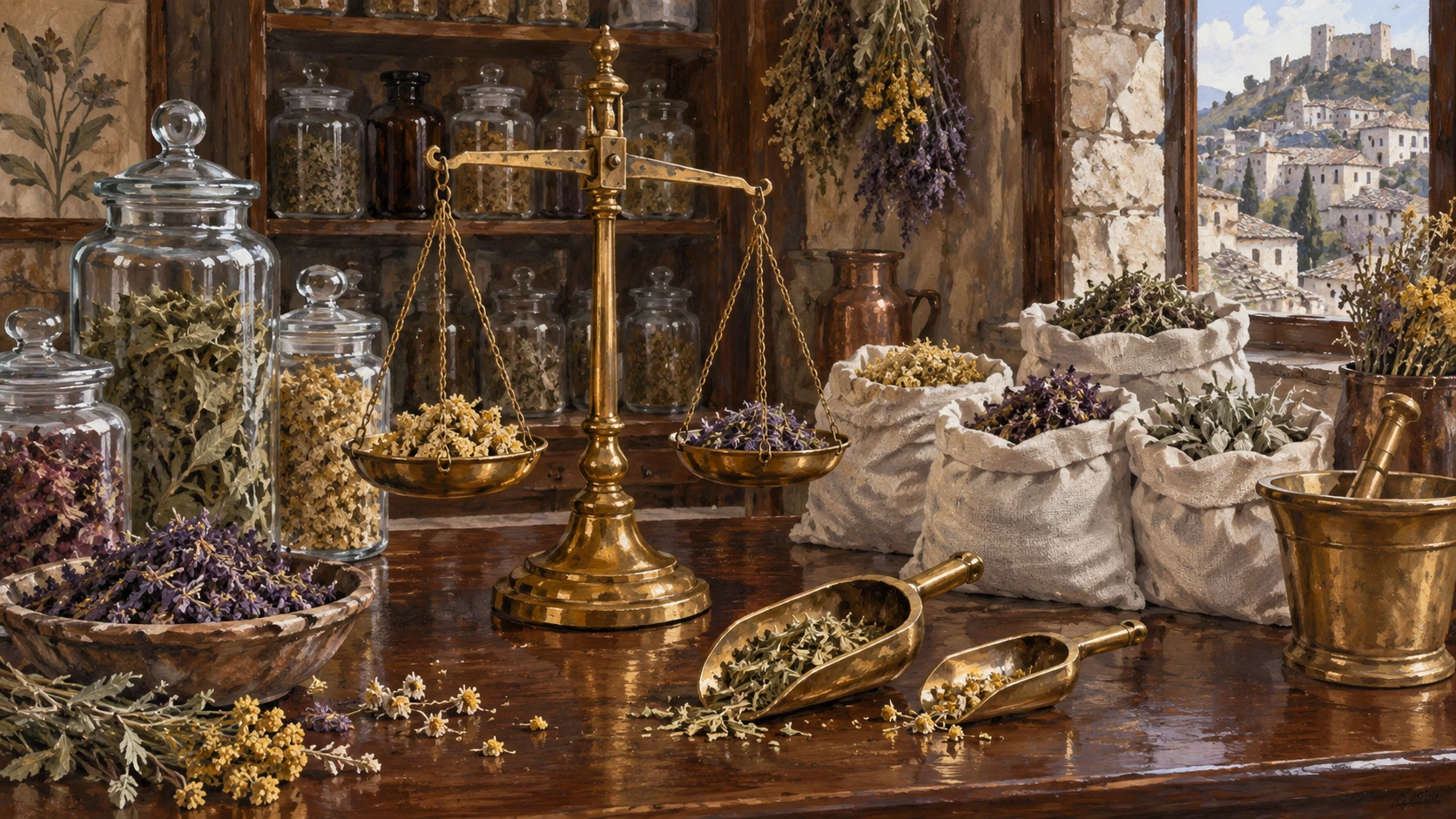
The Old Bazaar of Gjirokaster features multi-story Ottoman stone shophouses crowned with indigenous grey slate roofs. UNESCO world heritage management rules prohibit irreversible structural alterations to historic wooden shopfronts.
Steep pedestrian alleys paved with black and white limestone cobblestones channel walking traffic through the bazaar. Commercial signage in the bazaar must adhere to strict dimension, typography, and materials standards.
The market district balances dynamic economic activity with rigorous architectural heritage preservation. Daily commercial continuity sustains the living urban heritage of Gjirokaster across generations.
A2 · Elementary
Gjirokastra Bazaar Morning: Medicinal Plants and Historic Trade Rhythms
Early openings along cobblestone alleys reveal how mountain tea foragers, herbal merchants, and conservation rules sustain market life.
Morning Openings and Market Streets in the Old Bazaar
Bazaar shopkeepers in Gjirokaster initiate daily morning opening routines between seven and eight o'clock. Merchants remove folding wooden window shutters to open stone storefronts along the sloping limestone streets of Qafa e Pazarit.
Municipal sanitation regulations mandate sweeping and washing pedestrian stone pavements prior to the commencement of trade. Municipal delivery vehicles must complete commercial unloading before morning pedestrian hours begin.
Early morning cafe gatherings allow neighboring stallholders to exchange news and assess local foot traffic. The daily morning schedule represents routine commerce rather than an unvarying year-round calendar.
Mountain Tea and Dried Aromatic Plant Varieties
Bazaar stalls feature wild mountain tea known botanically as Sideritis raeseri alongside wild sage and oregano. Dried medicinal herbs are displayed in hand-woven wicker baskets, linen sacks, and wooden cubbies.
Herbal vendors package whole dried blossoms and aromatic leaves into transparent paper-tied packets. Stalls also offer dried lavender, juniper berries, chamomile flowers, and laurel leaves sourced across southern Albania.
The medicinal plant trade forms a distinctive commercial specialty within the historic market district. Domestic retail purchases in bazaar shops coexist with larger wholesale trade networks supplying domestic processors.
Highland Gathering Routes and Alpine Harvest Cycles
Harvesters collect wild aromatic plants from alpine limestone meadows across Mount Gjere and the Nemercka range. Highland foraging occurs primarily during early summer flowering cycles between late May and July.
Rural village gatherers transport sun-dried herbal bundles down mountain bridle paths to urban collection hubs. Herbal quality grading depends on blossom coloration, moisture content, and essential oil fragrance intensity.
Traditional harvesters use hand sickles to cut flowering stems without uprooting perennial wild shrubs. Foraging provides supplemental seasonal cash income for elderly pastoral residents in remote mountainous communes.
Trader Perspectives and Seasonal Economic Conditions
Named bazaar merchants report rising operational costs alongside growing customer curiosity for traditional botanicals. Shopkeepers emphasize that selling medicinal plants is one specialized business amongst diverse bazaar trades.
Traders navigate fluctuating seasonal yields influenced by spring precipitation and summer heat waves. Experienced vendors share practical preparation advice regarding brewing temperatures and infusion steeping durations.
Albanian medicinal plants command established regional export demand through the southern border crossing at Kakavija. Bazaar herbalists express concern regarding the gradual aging of skilled highland foragers and collectors.
Harvest Quotas and Environmental Protection Rules
State environmental authorities establish annual collection quotas to prevent wild plant population depletion. Protected alpine zones enforce strict harvesting bans to safeguard vulnerable endemic botanical colonies.
Regional agricultural directorates issue formal harvesting licenses to registered gatherer cooperatives. Forestry inspectors monitor transit corridors to curb unlicensed commercial foraging on public lands.
Community awareness initiatives encourage sustainable cutting techniques that preserve flower seed dispersal. Pilot cultivation plots on lower valley terraces aim to reduce harvesting pressure on delicate wild alpine habitats.
Ottoman Stone Shophouses and Historic Continuity
The Old Bazaar of Gjirokaster features multi-story Ottoman stone shophouses crowned with indigenous grey slate roofs. UNESCO world heritage management rules prohibit irreversible structural alterations to historic wooden shopfronts.
Steep pedestrian alleys paved with black and white limestone cobblestones channel walking traffic through the bazaar. Commercial signage in the bazaar must adhere to strict dimension, typography, and materials standards.
The market district balances dynamic economic activity with rigorous architectural heritage preservation. Daily commercial continuity sustains the living urban heritage of Gjirokaster across generations.
B1 · Intermediate
Gjirokastra Bazaar Morning: Medicinal Plants and Historic Trade Rhythms
Early openings along cobblestone alleys reveal how mountain tea foragers, herbal merchants, and conservation rules sustain market life.
Morning Openings and Market Streets in the Old Bazaar
Bazaar shopkeepers in Gjirokaster initiate daily morning opening routines between seven and eight o'clock. Merchants remove folding wooden window shutters to open stone storefronts along the sloping limestone streets of Qafa e Pazarit.
Municipal sanitation regulations mandate sweeping and washing pedestrian stone pavements prior to the commencement of trade. Municipal delivery vehicles must complete commercial unloading before morning pedestrian hours begin.
Early morning cafe gatherings allow neighboring stallholders to exchange news and assess local foot traffic. The daily morning schedule represents routine commerce rather than an unvarying year-round calendar.
Mountain Tea and Dried Aromatic Plant Varieties
Bazaar stalls feature wild mountain tea known botanically as Sideritis raeseri alongside wild sage and oregano. Dried medicinal herbs are displayed in hand-woven wicker baskets, linen sacks, and wooden cubbies.
Herbal vendors package whole dried blossoms and aromatic leaves into transparent paper-tied packets. Stalls also offer dried lavender, juniper berries, chamomile flowers, and laurel leaves sourced across southern Albania.
The medicinal plant trade forms a distinctive commercial specialty within the historic market district. Domestic retail purchases in bazaar shops coexist with larger wholesale trade networks supplying domestic processors.
Highland Gathering Routes and Alpine Harvest Cycles
Harvesters collect wild aromatic plants from alpine limestone meadows across Mount Gjere and the Nemercka range. Highland foraging occurs primarily during early summer flowering cycles between late May and July.
Rural village gatherers transport sun-dried herbal bundles down mountain bridle paths to urban collection hubs. Herbal quality grading depends on blossom coloration, moisture content, and essential oil fragrance intensity.
Traditional harvesters use hand sickles to cut flowering stems without uprooting perennial wild shrubs. Foraging provides supplemental seasonal cash income for elderly pastoral residents in remote mountainous communes.
Trader Perspectives and Seasonal Economic Conditions
Named bazaar merchants report rising operational costs alongside growing customer curiosity for traditional botanicals. Shopkeepers emphasize that selling medicinal plants is one specialized business amongst diverse bazaar trades.
Traders navigate fluctuating seasonal yields influenced by spring precipitation and summer heat waves. Experienced vendors share practical preparation advice regarding brewing temperatures and infusion steeping durations.
Albanian medicinal plants command established regional export demand through the southern border crossing at Kakavija. Bazaar herbalists express concern regarding the gradual aging of skilled highland foragers and collectors.
Harvest Quotas and Environmental Protection Rules
State environmental authorities establish annual collection quotas to prevent wild plant population depletion. Protected alpine zones enforce strict harvesting bans to safeguard vulnerable endemic botanical colonies.
Regional agricultural directorates issue formal harvesting licenses to registered gatherer cooperatives. Forestry inspectors monitor transit corridors to curb unlicensed commercial foraging on public lands.
Community awareness initiatives encourage sustainable cutting techniques that preserve flower seed dispersal. Pilot cultivation plots on lower valley terraces aim to reduce harvesting pressure on delicate wild alpine habitats.
Ottoman Stone Shophouses and Historic Continuity
The Old Bazaar of Gjirokaster features multi-story Ottoman stone shophouses crowned with indigenous grey slate roofs. UNESCO world heritage management rules prohibit irreversible structural alterations to historic wooden shopfronts.
Steep pedestrian alleys paved with black and white limestone cobblestones channel walking traffic through the bazaar. Commercial signage in the bazaar must adhere to strict dimension, typography, and materials standards.
The market district balances dynamic economic activity with rigorous architectural heritage preservation. Daily commercial continuity sustains the living urban heritage of Gjirokaster across generations.
B2 · Upper Intermediate
Gjirokastra Bazaar Morning: Medicinal Plants and Historic Trade Rhythms
Early openings along cobblestone alleys reveal how mountain tea foragers, herbal merchants, and conservation rules sustain market life.
Morning Openings and Market Streets in the Old Bazaar
Bazaar shopkeepers in Gjirokaster initiate daily morning opening routines between seven and eight o'clock. Merchants remove folding wooden window shutters to open stone storefronts along the sloping limestone streets of Qafa e Pazarit.
Municipal sanitation regulations mandate sweeping and washing pedestrian stone pavements prior to the commencement of trade. Municipal delivery vehicles must complete commercial unloading before morning pedestrian hours begin.
Early morning cafe gatherings allow neighboring stallholders to exchange news and assess local foot traffic. The daily morning schedule represents routine commerce rather than an unvarying year-round calendar.
Mountain Tea and Dried Aromatic Plant Varieties
Bazaar stalls feature wild mountain tea known botanically as Sideritis raeseri alongside wild sage and oregano. Dried medicinal herbs are displayed in hand-woven wicker baskets, linen sacks, and wooden cubbies.
Herbal vendors package whole dried blossoms and aromatic leaves into transparent paper-tied packets. Stalls also offer dried lavender, juniper berries, chamomile flowers, and laurel leaves sourced across southern Albania.
The medicinal plant trade forms a distinctive commercial specialty within the historic market district. Domestic retail purchases in bazaar shops coexist with larger wholesale trade networks supplying domestic processors.
Highland Gathering Routes and Alpine Harvest Cycles
Harvesters collect wild aromatic plants from alpine limestone meadows across Mount Gjere and the Nemercka range. Highland foraging occurs primarily during early summer flowering cycles between late May and July.
Rural village gatherers transport sun-dried herbal bundles down mountain bridle paths to urban collection hubs. Herbal quality grading depends on blossom coloration, moisture content, and essential oil fragrance intensity.
Traditional harvesters use hand sickles to cut flowering stems without uprooting perennial wild shrubs. Foraging provides supplemental seasonal cash income for elderly pastoral residents in remote mountainous communes.
Trader Perspectives and Seasonal Economic Conditions
Named bazaar merchants report rising operational costs alongside growing customer curiosity for traditional botanicals. Shopkeepers emphasize that selling medicinal plants is one specialized business amongst diverse bazaar trades.
Traders navigate fluctuating seasonal yields influenced by spring precipitation and summer heat waves. Experienced vendors share practical preparation advice regarding brewing temperatures and infusion steeping durations.
Albanian medicinal plants command established regional export demand through the southern border crossing at Kakavija. Bazaar herbalists express concern regarding the gradual aging of skilled highland foragers and collectors.
Harvest Quotas and Environmental Protection Rules
State environmental authorities establish annual collection quotas to prevent wild plant population depletion. Protected alpine zones enforce strict harvesting bans to safeguard vulnerable endemic botanical colonies.
Regional agricultural directorates issue formal harvesting licenses to registered gatherer cooperatives. Forestry inspectors monitor transit corridors to curb unlicensed commercial foraging on public lands.
Community awareness initiatives encourage sustainable cutting techniques that preserve flower seed dispersal. Pilot cultivation plots on lower valley terraces aim to reduce harvesting pressure on delicate wild alpine habitats.
Ottoman Stone Shophouses and Historic Continuity
The Old Bazaar of Gjirokaster features multi-story Ottoman stone shophouses crowned with indigenous grey slate roofs. UNESCO world heritage management rules prohibit irreversible structural alterations to historic wooden shopfronts.
Steep pedestrian alleys paved with black and white limestone cobblestones channel walking traffic through the bazaar. Commercial signage in the bazaar must adhere to strict dimension, typography, and materials standards.
The market district balances dynamic economic activity with rigorous architectural heritage preservation. Daily commercial continuity sustains the living urban heritage of Gjirokaster across generations.
C1 · Advanced
Gjirokastra Bazaar Morning: Medicinal Plants and Historic Trade Rhythms
Early openings along cobblestone alleys reveal how mountain tea foragers, herbal merchants, and conservation rules sustain market life.
Morning Openings and Market Streets in the Old Bazaar
Bazaar shopkeepers in Gjirokaster initiate daily morning opening routines between seven and eight o'clock. Merchants remove folding wooden window shutters to open stone storefronts along the sloping limestone streets of Qafa e Pazarit.
Municipal sanitation regulations mandate sweeping and washing pedestrian stone pavements prior to the commencement of trade. Municipal delivery vehicles must complete commercial unloading before morning pedestrian hours begin.
Early morning cafe gatherings allow neighboring stallholders to exchange news and assess local foot traffic. The daily morning schedule represents routine commerce rather than an unvarying year-round calendar.
Mountain Tea and Dried Aromatic Plant Varieties
Bazaar stalls feature wild mountain tea known botanically as Sideritis raeseri alongside wild sage and oregano. Dried medicinal herbs are displayed in hand-woven wicker baskets, linen sacks, and wooden cubbies.
Herbal vendors package whole dried blossoms and aromatic leaves into transparent paper-tied packets. Stalls also offer dried lavender, juniper berries, chamomile flowers, and laurel leaves sourced across southern Albania.
The medicinal plant trade forms a distinctive commercial specialty within the historic market district. Domestic retail purchases in bazaar shops coexist with larger wholesale trade networks supplying domestic processors.
Highland Gathering Routes and Alpine Harvest Cycles
Harvesters collect wild aromatic plants from alpine limestone meadows across Mount Gjere and the Nemercka range. Highland foraging occurs primarily during early summer flowering cycles between late May and July.
Rural village gatherers transport sun-dried herbal bundles down mountain bridle paths to urban collection hubs. Herbal quality grading depends on blossom coloration, moisture content, and essential oil fragrance intensity.
Traditional harvesters use hand sickles to cut flowering stems without uprooting perennial wild shrubs. Foraging provides supplemental seasonal cash income for elderly pastoral residents in remote mountainous communes.
Trader Perspectives and Seasonal Economic Conditions
Named bazaar merchants report rising operational costs alongside growing customer curiosity for traditional botanicals. Shopkeepers emphasize that selling medicinal plants is one specialized business amongst diverse bazaar trades.
Traders navigate fluctuating seasonal yields influenced by spring precipitation and summer heat waves. Experienced vendors share practical preparation advice regarding brewing temperatures and infusion steeping durations.
Albanian medicinal plants command established regional export demand through the southern border crossing at Kakavija. Bazaar herbalists express concern regarding the gradual aging of skilled highland foragers and collectors.
Harvest Quotas and Environmental Protection Rules
State environmental authorities establish annual collection quotas to prevent wild plant population depletion. Protected alpine zones enforce strict harvesting bans to safeguard vulnerable endemic botanical colonies.
Regional agricultural directorates issue formal harvesting licenses to registered gatherer cooperatives. Forestry inspectors monitor transit corridors to curb unlicensed commercial foraging on public lands.
Community awareness initiatives encourage sustainable cutting techniques that preserve flower seed dispersal. Pilot cultivation plots on lower valley terraces aim to reduce harvesting pressure on delicate wild alpine habitats.
Ottoman Stone Shophouses and Historic Continuity
The Old Bazaar of Gjirokaster features multi-story Ottoman stone shophouses crowned with indigenous grey slate roofs. UNESCO world heritage management rules prohibit irreversible structural alterations to historic wooden shopfronts.
Steep pedestrian alleys paved with black and white limestone cobblestones channel walking traffic through the bazaar. Commercial signage in the bazaar must adhere to strict dimension, typography, and materials standards.
The market district balances dynamic economic activity with rigorous architectural heritage preservation. Daily commercial continuity sustains the living urban heritage of Gjirokaster across generations.
C2 · Mastery
Gjirokastra Bazaar Morning: Medicinal Plants and Historic Trade Rhythms
Early openings along cobblestone alleys reveal how mountain tea foragers, herbal merchants, and conservation rules sustain market life.
Morning Openings and Market Streets in the Old Bazaar
Bazaar shopkeepers in Gjirokaster initiate daily morning opening routines between seven and eight o'clock. Merchants remove folding wooden window shutters to open stone storefronts along the sloping limestone streets of Qafa e Pazarit.
Municipal sanitation regulations mandate sweeping and washing pedestrian stone pavements prior to the commencement of trade. Municipal delivery vehicles must complete commercial unloading before morning pedestrian hours begin.
Early morning cafe gatherings allow neighboring stallholders to exchange news and assess local foot traffic. The daily morning schedule represents routine commerce rather than an unvarying year-round calendar.
Mountain Tea and Dried Aromatic Plant Varieties
Bazaar stalls feature wild mountain tea known botanically as Sideritis raeseri alongside wild sage and oregano. Dried medicinal herbs are displayed in hand-woven wicker baskets, linen sacks, and wooden cubbies.
Herbal vendors package whole dried blossoms and aromatic leaves into transparent paper-tied packets. Stalls also offer dried lavender, juniper berries, chamomile flowers, and laurel leaves sourced across southern Albania.
The medicinal plant trade forms a distinctive commercial specialty within the historic market district. Domestic retail purchases in bazaar shops coexist with larger wholesale trade networks supplying domestic processors.
Highland Gathering Routes and Alpine Harvest Cycles
Harvesters collect wild aromatic plants from alpine limestone meadows across Mount Gjere and the Nemercka range. Highland foraging occurs primarily during early summer flowering cycles between late May and July.
Rural village gatherers transport sun-dried herbal bundles down mountain bridle paths to urban collection hubs. Herbal quality grading depends on blossom coloration, moisture content, and essential oil fragrance intensity.
Traditional harvesters use hand sickles to cut flowering stems without uprooting perennial wild shrubs. Foraging provides supplemental seasonal cash income for elderly pastoral residents in remote mountainous communes.
Trader Perspectives and Seasonal Economic Conditions
Named bazaar merchants report rising operational costs alongside growing customer curiosity for traditional botanicals. Shopkeepers emphasize that selling medicinal plants is one specialized business amongst diverse bazaar trades.
Traders navigate fluctuating seasonal yields influenced by spring precipitation and summer heat waves. Experienced vendors share practical preparation advice regarding brewing temperatures and infusion steeping durations.
Albanian medicinal plants command established regional export demand through the southern border crossing at Kakavija. Bazaar herbalists express concern regarding the gradual aging of skilled highland foragers and collectors.
Harvest Quotas and Environmental Protection Rules
State environmental authorities establish annual collection quotas to prevent wild plant population depletion. Protected alpine zones enforce strict harvesting bans to safeguard vulnerable endemic botanical colonies.
Regional agricultural directorates issue formal harvesting licenses to registered gatherer cooperatives. Forestry inspectors monitor transit corridors to curb unlicensed commercial foraging on public lands.
Community awareness initiatives encourage sustainable cutting techniques that preserve flower seed dispersal. Pilot cultivation plots on lower valley terraces aim to reduce harvesting pressure on delicate wild alpine habitats.
Ottoman Stone Shophouses and Historic Continuity
The Old Bazaar of Gjirokaster features multi-story Ottoman stone shophouses crowned with indigenous grey slate roofs. UNESCO world heritage management rules prohibit irreversible structural alterations to historic wooden shopfronts.
Steep pedestrian alleys paved with black and white limestone cobblestones channel walking traffic through the bazaar. Commercial signage in the bazaar must adhere to strict dimension, typography, and materials standards.
The market district balances dynamic economic activity with rigorous architectural heritage preservation. Daily commercial continuity sustains the living urban heritage of Gjirokaster across generations.
Check your understanding
Choose how closely you want to revisit the article. You can refer back while answering, and review explanations when you finish.
Quick Quiz A1
Try one question, then create a free account for the full Quick Quiz. Sign Up Free
Answer every question before checking. There is no time limit.
Your results
/ 1 correct (%)
Read the explanations to see how each answer connects to the article.
-
Between what morning hours do bazaar shopkeepers in Gjirokaster begin opening routines?
1. Answer:
Quick Quiz A2
Try one question, then create a free account for the full Quick Quiz. Sign Up Free
Answer every question before checking. There is no time limit.
Your results
/ 1 correct (%)
Read the explanations to see how each answer connects to the article.
-
Between what morning hours do bazaar shopkeepers in Gjirokaster begin opening routines?
1. Answer:
Quick Quiz B1
Try one question, then create a free account for the full Quick Quiz. Sign Up Free
Answer every question before checking. There is no time limit.
Your results
/ 1 correct (%)
Read the explanations to see how each answer connects to the article.
-
Between what morning hours do bazaar shopkeepers in Gjirokaster begin opening routines?
1. Answer:
Quick Quiz B2
Try one question, then create a free account for the full Quick Quiz. Sign Up Free
Answer every question before checking. There is no time limit.
Your results
/ 1 correct (%)
Read the explanations to see how each answer connects to the article.
-
Between what morning hours do bazaar shopkeepers in Gjirokaster begin opening routines?
1. Answer:
Quick Quiz C1
Try one question, then create a free account for the full Quick Quiz. Sign Up Free
Answer every question before checking. There is no time limit.
Your results
/ 1 correct (%)
Read the explanations to see how each answer connects to the article.
-
Between what morning hours do bazaar shopkeepers in Gjirokaster begin opening routines?
1. Answer:
Quick Quiz C2
Try one question, then create a free account for the full Quick Quiz. Sign Up Free
Answer every question before checking. There is no time limit.
Your results
/ 1 correct (%)
Read the explanations to see how each answer connects to the article.
-
Between what morning hours do bazaar shopkeepers in Gjirokaster begin opening routines?
1. Answer:
