A1 · Beginner
Snowy Mountains Hydro Scheme and Clean Electric Power
How workers from thirty nations built dams and tunnels to bring water and power to Australia.
Building the Scheme with Workers from Many Lands
In 1949 Australia started a huge water and power project in the high Snowy Mountains.
A leader named William Hudson guided the project with care and strong safety rules.
More than one hundred thousand workers came from thirty nations to build the tunnels and dams.
World engineering groups called the mountain water scheme a great modern wonder.
Work began near Adaminaby in 1949 and finished twenty-five years later in 1974.
People from many countries lived together in mountain camps and learned safe work habits.
Dams, Deep Tunnels, and Water for Inland Farms
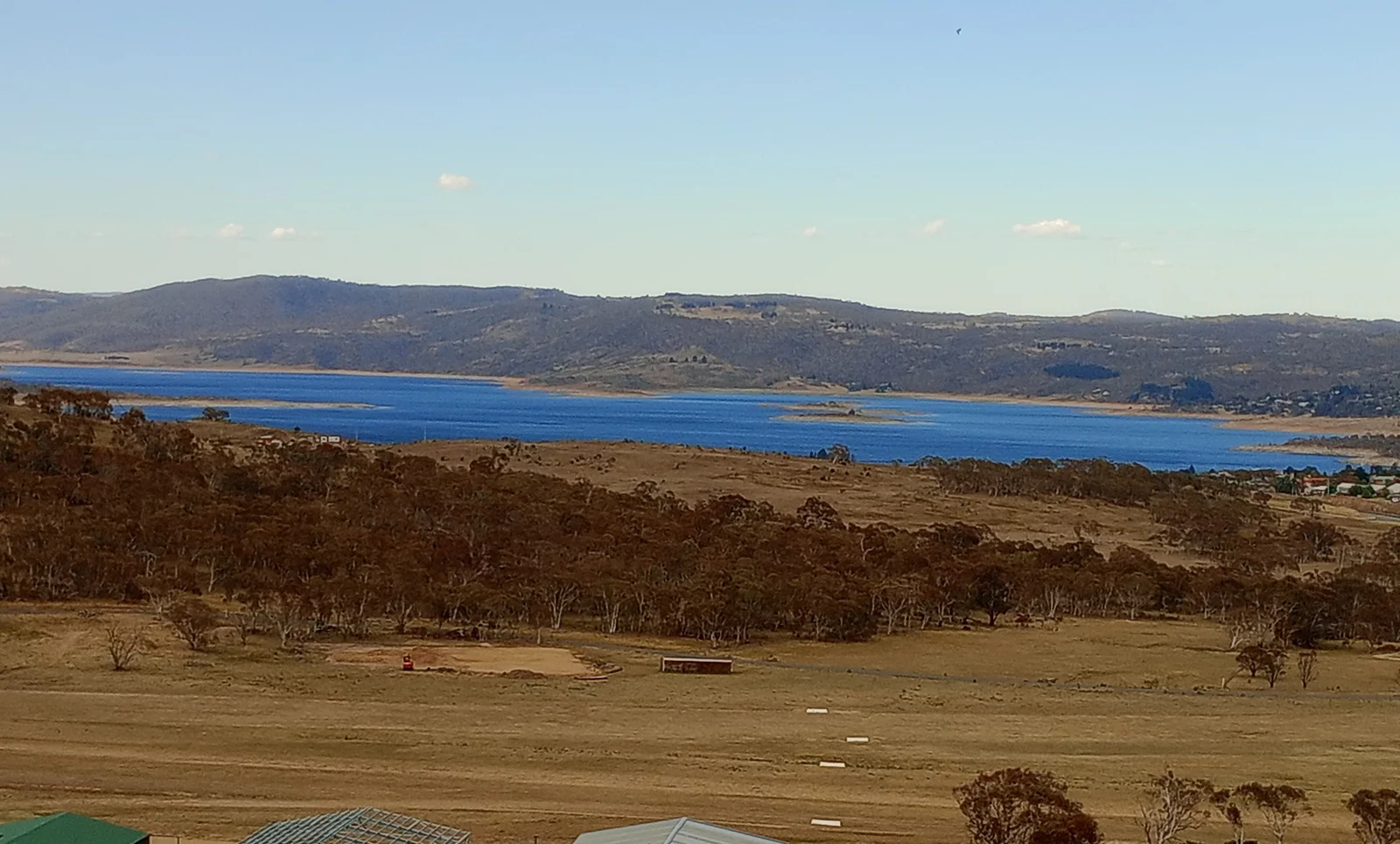
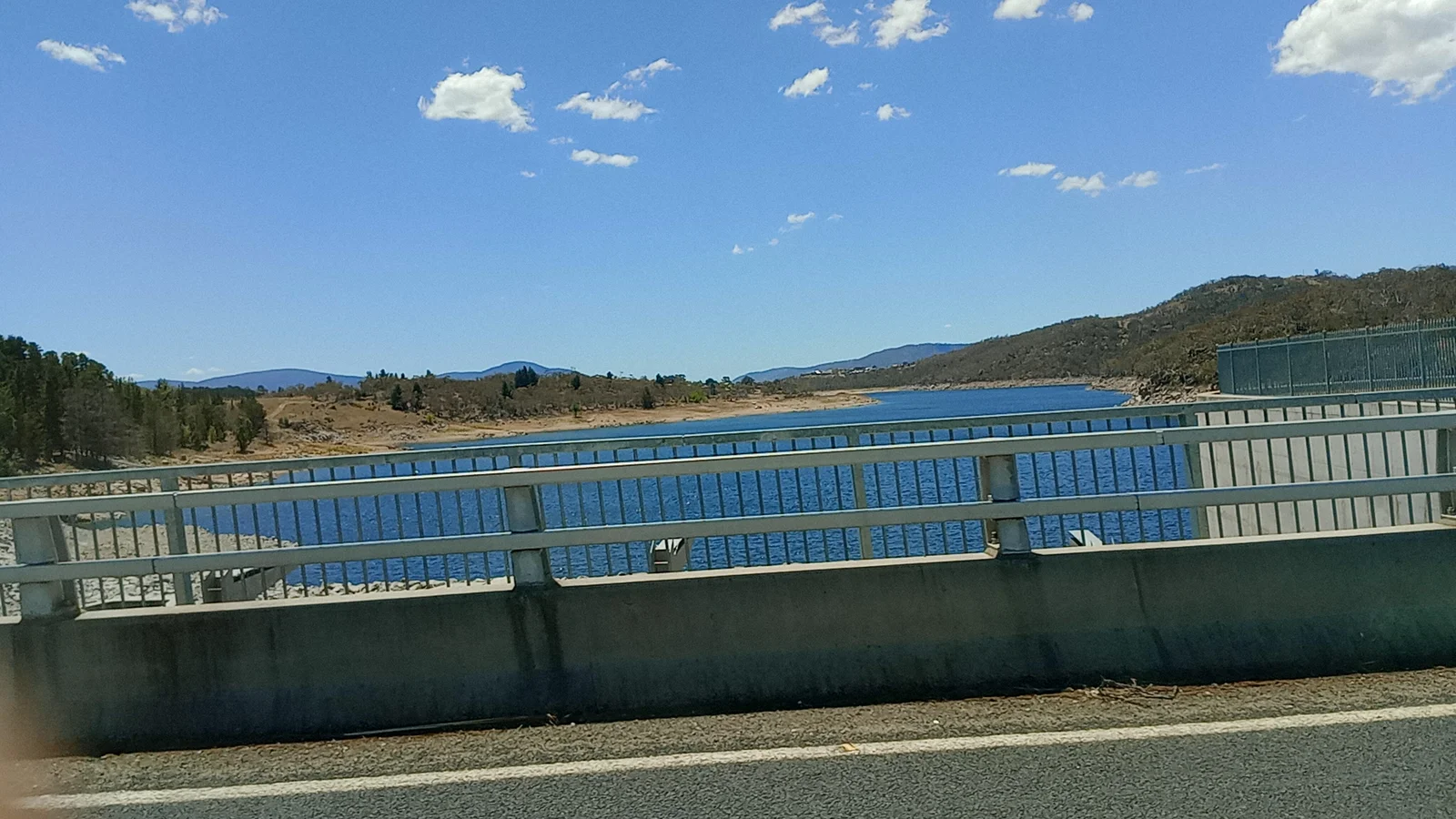
The mountain scheme has sixteen large dams and many long rock tunnels.
Lake Eucumbene is the biggest water lake and holds nine times the water of Sydney Harbour.
Deep tunnels carry cold mountain river water west through the high Great Dividing Range.
The Jindabyne Pumping Station lifts fresh lake water up into the mountain reservoir.
River water flows down to farms near the Murray and Murrumbidgee rivers to grow food.
Workers bolted hard rock roofs inside the tunnels to keep the diggers safe from falling stones.
Power Stations, Fast Water, and Clean Electricity
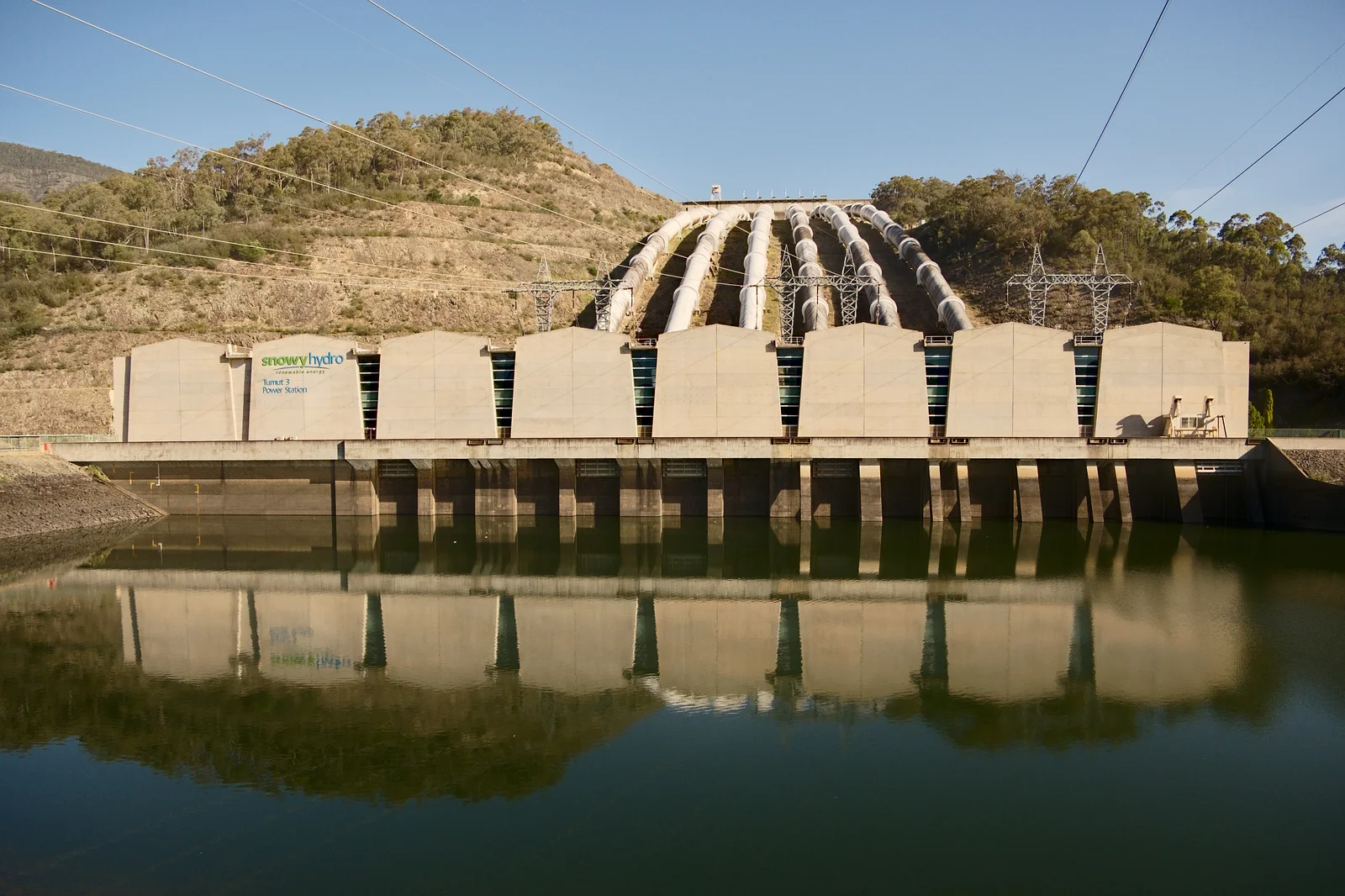
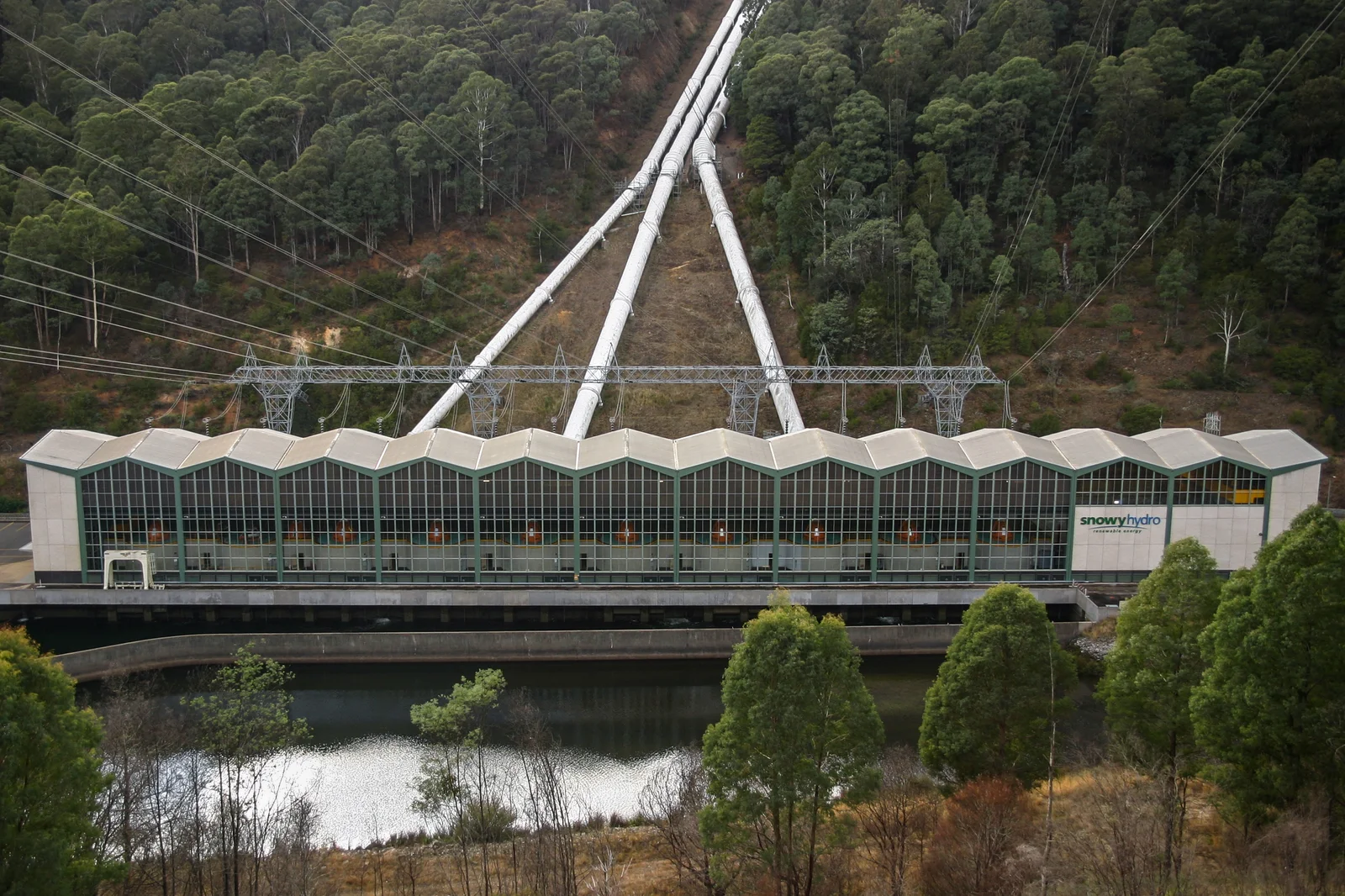
Eight power stations make clean electric power from falling mountain water.
The huge Tumut 3 Power Station makes clean power and can pump water back up the mountain.
The Murray power stations use steep water drops from high mountain lakes to turn giant wheels.
Snowy Hydro sends fast electric power into the national power grid when cities need more light.
Big water turbines can start spinning and reach full electric power in just a few minutes.
The water scheme sends clean electric power to homes in New South Wales and Victoria.
Snowy 2.0 and Storing Clean Energy for the Nation
Workers are now building a new project called Snowy 2.0 to store more green power.
Long rock tunnels connect Tantangara Reservoir high in the hills with Talbingo Reservoir below.
The new plant will store large amounts of power to support clean wind and solar energy.
Giant digging machines drill deep underground tunnels through hard mountain stone.
Big pumps lift water up during sunny days and release water when people need electricity.
Stored hydro power helps Australia replace old coal plants with clean renewable energy.
A2 · Elementary
Snowy Mountains Hydro Scheme and the National Energy Grid
Post-war civil engineering, alpine water diversion, renewable hydroelectricity, and the new Snowy 2.0 project.
Post-War Nation Building and a Multicultural Workforce
In 1949 the Australian government passed the Snowy Mountains Act to launch the nation's largest civil engineering project.
Engineer William Hudson managed the Snowy Mountains Authority with a strict focus on workplace safety and fast construction.
Over one hundred thousand immigrants from thirty countries came to Australia, creating a vibrant multicultural workforce across the mountains.
International engineering societies celebrated the Snowy Mountains Scheme as an outstanding engineering achievement of the modern era.
Construction started officially in 1949 at Adaminaby and was completed successfully twenty-five years later in 1974 on schedule.
Diverse migrant communities lived together in high mountain villages, pioneering mutual respect and modern workplace safety rules.
Mountain Reservoirs, Trans-Alpine Tunnels, and River Irrigation
The completed scheme includes sixteen large dams, one hundred and forty-five kilometers of tunnels, and eighty kilometers of mountain aqueducts.
Lake Eucumbene acts as the primary reservoir for the network, holding nine times the volume of Sydney Harbour.
Two main tunnel systems divert alpine river water through the Great Dividing Range toward dry inland river valleys.
The Jindabyne Pumping Station moves large volumes of water uphill into the Geehi Reservoir system for energy production.
Diverted alpine water flows into the Murray and Murrumbidgee river systems, providing reliable irrigation for Australian agricultural farms.
Engineers developed innovative rock-bolting methods during tunnel construction, which soon spread to mining and tunneling projects worldwide.
Hydroelectric Stations, Fast Dispatch, and Grid Reliability
The scheme features eight power stations, including two large subterranean machine halls constructed deep within solid granite mountains.
Tumut 3 Power Station generates eighteen hundred megawatts of electricity and uses reversible pumps to store energy during off-peak hours.
The Murray 1 and Murray 2 power stations use high water pressure from Geehi Reservoir to drive massive electricity generators.
Snowy Hydro supplies flexible generation to the National Electricity Market, maintaining grid frequency and preventing electricity blackouts.
Modern hydroelectric turbines can start quickly and deliver maximum generation output within minutes of a grid dispatch call.
The Snowy network generates over four thousand megawatts of clean electricity for cities across New South Wales and Victoria.
Snowy 2.0 Pumped Storage and Clean Energy Transition
Engineers are expanding the network through Snowy 2.0, adding two thousand megawatts of flexible pumped-storage capacity.
New tunnels stretching twenty-seven kilometers will link Tantangara Reservoir with Talbingo Reservoir deep beneath Kosciuszko National Park.
The expansion provides three hundred and fifty gigawatt-hours of energy storage to support Australia's transition toward solar and wind power.
Powerful tunnel boring machines like Florence excavate subterranean chambers and water pathways through difficult alpine geology.
Reversible pump-turbines will pump water uphill during sunny daytime hours and release it when consumer electricity demand peaks.
Deep pumped-hydro storage allows the national energy grid to phase out aging coal stations and embrace clean renewable electricity.
B1 · Intermediate
Snowy Mountains Hydro Scheme and National Energy Grid
Post-war civil engineering, alpine water diversion, renewable hydroelectricity, and the Snowy 2.0 pumped storage expansion.
Post-War Nation Building, Hudson's Leadership, and Multicultural Labor
In 1949 Prime Minister Ben Chifley and the Commonwealth Parliament passed the Snowy Mountains Hydro-electric Power Act, initiating Australia's premier post-war nation-building project.
Sir William Hudson directed the Snowy Mountains Authority with uncompromising discipline, mandating seatbelts and strict safety protocols decades ahead of global industry norms.
More than one hundred thousand workers from over thirty countries migrated to Australia, establishing a pioneering multicultural workforce that permanently transformed Australian society.
The American Society of Civil Engineers designated the Snowy Mountains Scheme as one of the seven civil engineering wonders of the modern world.
Construction commenced officially in October 1949 near the township of Adaminaby and concluded twenty-five years later in 1974 within original financial projections.
The peaceful integration of former wartime adversaries in alpine work camps demonstrated that shared civil objectives could foster cultural cohesion and workplace safety.
Trans-Mountain Civil Engineering, Lake Eucumbene, and Inland Irrigation
The completed infrastructure network incorporates sixteen major storage dams, one hundred and forty-five kilometers of trans-mountain tunnels, and eighty kilometers of alpine aqueducts.
Lake Eucumbene serves as the central storage reservoir of the scheme, impounding an enormous water volume equal to nine times that of Sydney Harbour.
The dual Snowy-Tumut and Snowy-Murray developments divert east-flowing alpine waters westward through the Great Dividing Range into inland river valleys.
The Jindabyne Pumping Station lifts water from Lake Jindabyne across the alpine divide into the Geehi Reservoir system to power down-gradient turbines.
Diverted river flows discharge thousands of gigalitres annually into the Murray and Murrumbidgee irrigation basins, underwriting multi-billion-dollar agricultural industries.
Engineers on the Snowy Scheme pioneered permanent rock-bolting techniques that secured excavated tunnel arches without heavy timber framing, transforming international tunneling.
Hydroelectric Generating Stations, Rapid Dispatch, and Grid Reliability
The scheme operates eight power stations, including two major subterranean generating halls excavated hundreds of meters beneath rugged granite mountains.
Tumut 3 Power Station delivers eighteen hundred megawatts of capacity, functioning as both a conventional generator and a pumped storage facility during high system demand.
Murray 1 and Murray 2 power stations utilize the steep hydraulic fall from Geehi Reservoir to generate high-output hydroelectricity along the western alpine escarpment.
Snowy Hydro provides vital fast-ramping dispatchable capacity to the National Electricity Market, maintaining grid frequency and backing up variable generation.
Subterranean hydroelectric turbines can spin up from standstill and deliver full electrical generation output within minutes of receiving automated market instructions.
Generating assets across the Snowy scheme supply over four thousand megawatts of clean electricity into state transmission networks across south-eastern Australia.
Snowy 2.0 Pumped Hydro Expansion and Grid Decarbonization
Construction is underway on Snowy 2.0, a landmark engineering expansion designed to add two thousand megawatts of flexible pumped-hydro generating capacity.
A twenty-seven-kilometer subterranean tunnel system will link the high Tantangara Reservoir with the lower Talbingo Reservoir deep beneath the Snowy Mountains.
The mega-project will provide three hundred and fifty gigawatt-hours of large-scale, deep energy storage to firm variable wind and solar generation across the national grid.
Massive tunnel boring machines, including the customized machine named Florence, bore through faulted alpine granite and complex geological shear zones.
Reversible pump-turbines will pump water to the upper storage reservoir during daytime renewable surpluses and discharge it during evening peak demand periods.
Deep pumped-hydro energy storage anchors the national decarbonization strategy as Australia closes aging coal-fired thermal generation assets across the eastern seaboard.
B2 · Upper Intermediate
Snowy Mountains Hydro Scheme and the National Energy Grid
Post-war civil engineering, alpine water diversion, renewable hydroelectricity, and the modern Snowy 2.0 pumped storage expansion.
Post-War Nation Building, Hudson's Directorship, and Multicultural Integration
In 1949 Prime Minister Ben Chifley and the Commonwealth Parliament enacted the Snowy Mountains Hydro-electric Power Act, launching Australia's most ambitious post-war civil engineering initiative.
Commissioner Sir William Hudson presided over the Snowy Mountains Authority with operational rigor, instituting mandatory vehicular seatbelts and pioneering industrial safety measures.
More than one hundred thousand immigrants from over thirty European and international nations journeyed to the Snowy Mountains, establishing an enduring model of multicultural workforce collaboration.
The American Society of Civil Engineers formally recognized the Snowy Mountains Scheme as one of the seven civil engineering wonders of the modern era.
Construction started officially in October 1949 at Adaminaby and reached scheduled completion twenty-five years later in 1974, meeting original budgetary and technical parameters.
Coexistence and camaraderie among diverse national groups in isolated mountain barracks helped dismantle pre-war social insularity and redefine post-war Australian identity.
Trans-Mountain Hydrological Diversion, Lake Eucumbene, and Basin Irrigation
The integrated hydrological network encompasses sixteen substantial dams, one hundred and forty-five kilometers of trans-mountain diversion tunnels, and eighty kilometers of high-altitude aqueducts.
Lake Eucumbene functions as the system's central storage reservoir, containing nine times the water volume of Sydney Harbour beneath its expansive mountain surface.
The interconnected Snowy-Tumut and Snowy-Murray engineering complexes redirect seaward-flowing alpine streams through the Great Dividing Range toward semi-arid western farming belts.
The high-capacity Jindabyne Pumping Station raises water from Lake Jindabyne across the continental divide into the Geehi Reservoir catchment.
Controlled water discharges deliver thousands of gigalitres of fresh mountain runoff each year into the Murray and Murrumbidgee river basins, safeguarding critical food production.
Geotechnical specialists on the scheme refined systematic rock-bolting methods that anchored tunnel arches with steel tendons, establishing modern underground excavation practices worldwide.
Subterranean Generating Infrastructure, Market Dispatch, and Grid Firming
The scheme operates eight hydroelectric power stations, including two massive underground machine halls hollowed out of solid Palaeozoic granite formations.
Tumut 3 Power Station boasts an operational capacity of eighteen hundred megawatts, leveraging both conventional gravity discharge and high-volume pumped storage mechanics.
Murray 1 and Murray 2 generating stations exploit the immense hydraulic head drop between Geehi Reservoir and the Murray River to produce immense blocks of hydroelectricity.
Snowy Hydro operates as a critical market firming asset in the National Electricity Market, providing instantaneous frequency control ancillary services and grid stabilization.
Water-driven turbine assemblies can accelerate from idle conditions to full electrical generation capacity within minutes of receiving automated digital dispatch signals.
The regional hydro complex feeds more than four thousand megawatts of emissions-free electricity into high-voltage transmission networks spanning New South Wales, Victoria, and the ACT.
Snowy 2.0 Pumped Hydro Storage, Florence TBM, and Grid Decarbonization
Civil contractors are executing the Snowy 2.0 expansion, a multi-billion-dollar project designed to inject two thousand megawatts of dispatchable pumped-hydro capacity into the national grid.
The engineering alignment features twenty-seven kilometers of underground tunnels connecting Tantangara Reservoir at high elevation with the lower Talbingo Reservoir.
The pumped-storage development provides three hundred and fifty gigawatt-hours of continuous deep energy storage to buffer intermittent utility-scale solar and wind generation.
Specialized hard-rock tunnel boring machines, notably the colossal machine christened Florence, excavate vast conduit diameters through complex alpine thrust faults and fractured granite.
Reversible pump-turbines consume surplus midday renewable power to pump water uphill, then reverse rotation to generate electricity during critical evening demand spikes.
Large-scale pumped-hydro infrastructure provides the long-duration storage backbone required as Australia accelerates the orderly retirement of legacy coal-fired generation stations.
C1 · Advanced
Snowy Mountains Hydro Scheme and National Energy Grid
Post-war civil engineering, alpine water diversion, renewable hydroelectricity, and the Snowy 2.0 pumped storage expansion.
Post-War Nation Building, Hudson's Directorship, and Multicultural Labor
In 1949 the federal parliament enacted the Snowy Mountains Hydro-electric Power Act, initiating Australia's most transformative civil engineering undertaking.
Commissioner Sir William Hudson exercised statutory authority with uncompromising rigor, instituting mandatory vehicular safety standards decades ahead of private industry.
More than one hundred thousand international workers arrived from thirty war-torn nations, generating a multicultural labor force that permanently altered Australian society.
The American Society of Civil Engineers acclaimed the Snowy Mountains Scheme as one of the seven civil engineering wonders of the modern world.
Construction commenced officially in October 1949 at Adaminaby and culminated in 1974, fulfilling original economic budgets over twenty-five intense years.
The egalitarian ethos of remote alpine work camps fostered workplace cohesion among former European adversaries, establishing modern Australian industrial identity.
Trans-Mountain Engineering, Lake Eucumbene, and Basin Irrigation
The finished infrastructure incorporates sixteen large dams, one hundred and forty-five kilometers of tunnels, and eighty kilometers of mountain conduits.
Lake Eucumbene serves as the scheme's primary hydrological reservoir, impounding an enormous water volume equal to nine times that of Sydney Harbour.
Capturing heavy orographic snowfall, the Snowy-Tumut and Snowy-Murray developments divert eastward-flowing alpine rivers westward through the Great Dividing Range.
The Jindabyne Pumping Station lifts cold mountain runoff across a steep topographic gradient into the high-elevation Geehi Reservoir system.
Diverted flows discharge thousands of gigalitres annually into alluvial valleys along the Murray and Murrumbidgee rivers, sustaining intensive agricultural irrigation.
Geotechnical engineers on the scheme pioneered rock-bolting reinforcement methods that anchored fractured strata with mechanical steel rods, transforming subterranean excavation.
Subterranean Machine Halls, Market Dispatch, and Grid Stability
The scheme operates eight generating stations, including two massive underground caverns hollowed hundreds of meters deep within crystalline granite rock.
Tumut 3 Power Station delivers eighteen hundred megawatts of capacity, utilizing reversible pump turbines to recycle water during off-peak market intervals.
High-pressure steel penstocks plummet down the western alpine slopes at Murray 1 and Murray 2 to harness immense hydraulic head.
Snowy Hydro provides fast-ramping dispatchable power into the National Electricity Market, maintaining grid frequency during unexpected thermal plant trips.
Subterranean generators provide synchronous frequency response and reach full generation output within minutes of automated digital dispatch directives.
Transmission interconnectors carry over four thousand megawatts of clean electricity from alpine generating assets to Sydney, Melbourne, and Canberra.
Snowy 2.0 Pumped Hydro Storage and National Grid Decarbonization
Engineers are executing the Snowy 2.0 expansion, a flagship energy project designed to expand pumped-storage generation by two thousand megawatts.
A twenty-seven-kilometer subterranean waterway will link Tantangara Reservoir with Talbingo Reservoir deep beneath the Kosciuszko alpine wilderness.
The mega-project will contribute three hundred and fifty gigawatt-hours of utility-scale storage, buffering volatile solar and wind generation across the grid.
Specialized hard-rock tunnel boring machines, including the customized cutterhead Florence, excavate vast diameters through folded metamorphic rock.
Reversible pump-turbines will elevate water during midday solar abundance and discharge hydro flows during peak evening electricity demand.
Large-scale pumped storage provides the foundational firming asset required for grid decarbonization as aging coal-fired generators retire across eastern Australia.
C2 · Mastery
Snowy Mountains Hydro Scheme and National Energy Grid
An authoritative engineering, historical, and energy economics study of trans-mountain diversion, alpine hydroelectricity, and deep pumped storage.
Post-War Nation Building, Hudson's Directorship, and Multicultural Labor
In 1949 Prime Minister Ben Chifley promulgated the Snowy Mountains Hydro-electric Power Act, initiating the young Commonwealth's most audacious civil undertaking.
Commissioner Sir William Hudson governed the Snowy Mountains Authority with uncompromising discipline, enforcing strict safety protocols that presaged modern occupational regulations.
A labor force exceeding one hundred thousand immigrants from thirty sovereign nations arrived in the mountains, creating a dynamic post-war European diaspora.
The American Society of Civil Engineers lauded the scheme's monumental scale, designating it among the seven civil engineering wonders of the modern world.
Groundbreaking construction work commenced in October 1949 at Adaminaby, reaching successful culmination twenty-five years later in 1974 within projected financial appropriations.
Interethnic camaraderie across remote construction camps nurtured civic pluralism, breaking down pre-war isolationism and forging contemporary Australian multiculturalism.
Trans-Mountain Hydrological Diversion, Lake Eucumbene, and Basin Irrigation
The finished civil asset comprises sixteen major impoundments, one hundred and forty-five kilometers of trans-mountain tunnels, and eighty kilometers of concrete aqueducts.
Lake Eucumbene functions as the central hydrological fulcrum, containing a volumetric capacity equivalent to nine times the water in Sydney Harbour.
The trans-basin Snowy-Tumut and Snowy-Murray diversion networks rechannel alpine river flows westward across the Great Dividing Range continental divide.
The monumental Jindabyne Pumping Station delivers hydraulic lift across the Great Dividing Range to transfer water into the Geehi Reservoir system.
Diverted alpine waters discharge thousands of gigalitres per year into riparian channels of the Murray and Murrumbidgee, sustaining continental food security.
Scheme engineers developed systemic rock-bolting procedures to stabilize excavation arches, achieving structural consolidation of treacherous fault zones without timber shoring.
Subterranean Machine Halls, Ancillary Market Dispatch, and Grid Stabilization
The scheme incorporates eight powerhouses, including two major subterranean halls excavated out of massive Palaeozoic granite plutons.
Tumut 3 Power Station commands eighteen hundred megawatts of capacity, utilizing dual-mode hydroelectric generation and pumped-storage mechanics to balance regional load.
Descending the western alpine escarpment from Geehi Reservoir, surface penstocks feed high-pressure discharges to Pelton and Francis turbines at Murray 1 and Murray 2.
Snowy Hydro functions as the preeminent ancillary services provider in the National Electricity Market, providing vital frequency stabilization and peak power.
Spinning turbine units deliver mechanical inertia and can ramp to full generation capacity within minutes of automated dispatch instructions.
Robust high-voltage transmission corridors export more than four thousand megawatts of clean power across the New South Wales and Victorian networks.
Snowy 2.0 Pumped Hydro Storage, Florence TBM, and Grid Decarbonization
Snowy Hydro is advancing the Snowy 2.0 expansion, an engineering mega-project designed to add two thousand megawatts of flexible pumped-storage capacity.
The engineering corridor comprises twenty-seven kilometers of deep trans-mountain tunnels linking Tantangara Reservoir with the lower Talbingo Reservoir.
The installation provides three hundred and fifty gigawatt-hours of continuous energy storage, anchoring national power supplies against renewable supply fluctuations.
Subterranean excavations utilize advanced geotechnical monitoring and customized tunnel boring machines, including Florence, to penetrate faulted alpine strata.
Massive reversible pump-turbines pump water to the upper catchment during intermittent renewable surpluses, generating power when consumption peaks.
Long-duration pumped-hydro energy storage anchors the national grid transition as coal-fired thermal generation systematically departs from eastern Australia.
Check your understanding
Choose how closely you want to revisit the article. You can refer back while answering, and review explanations when you finish.
Quick Quiz A1
Try one question, then create a free account for the full Quick Quiz. Sign Up Free
Answer every question before checking. There is no time limit.
Your results
/ 1 correct (%)
Read the explanations to see how each answer connects to the article.
-
In what year did legislative action initiate the historic Snowy Mountains hydro project?
1. Answer:
Quick Quiz A2
Try one question, then create a free account for the full Quick Quiz. Sign Up Free
Answer every question before checking. There is no time limit.
Your results
/ 1 correct (%)
Read the explanations to see how each answer connects to the article.
-
In what year did legislative action initiate the historic Snowy Mountains hydro project?
1. Answer:
Quick Quiz B1
Try one question, then create a free account for the full Quick Quiz. Sign Up Free
Answer every question before checking. There is no time limit.
Your results
/ 1 correct (%)
Read the explanations to see how each answer connects to the article.
-
In what year did legislative action initiate the historic Snowy Mountains hydro project?
1. Answer:
Quick Quiz B2
Try one question, then create a free account for the full Quick Quiz. Sign Up Free
Answer every question before checking. There is no time limit.
Your results
/ 1 correct (%)
Read the explanations to see how each answer connects to the article.
-
In what year did legislative action initiate the historic Snowy Mountains hydro project?
1. Answer:
Quick Quiz C1
Try one question, then create a free account for the full Quick Quiz. Sign Up Free
Answer every question before checking. There is no time limit.
Your results
/ 1 correct (%)
Read the explanations to see how each answer connects to the article.
-
In what year did legislative action initiate the historic Snowy Mountains hydro project?
1. Answer:
Quick Quiz C2
Try one question, then create a free account for the full Quick Quiz. Sign Up Free
Answer every question before checking. There is no time limit.
Your results
/ 1 correct (%)
Read the explanations to see how each answer connects to the article.
-
In what year did legislative action initiate the historic Snowy Mountains hydro project?
1. Answer:
