A1 · Beginner
The Great Barrier Reef and Ocean Life
Discover the giant coral reef along Australia's warm tropical coast.
A Huge Living World
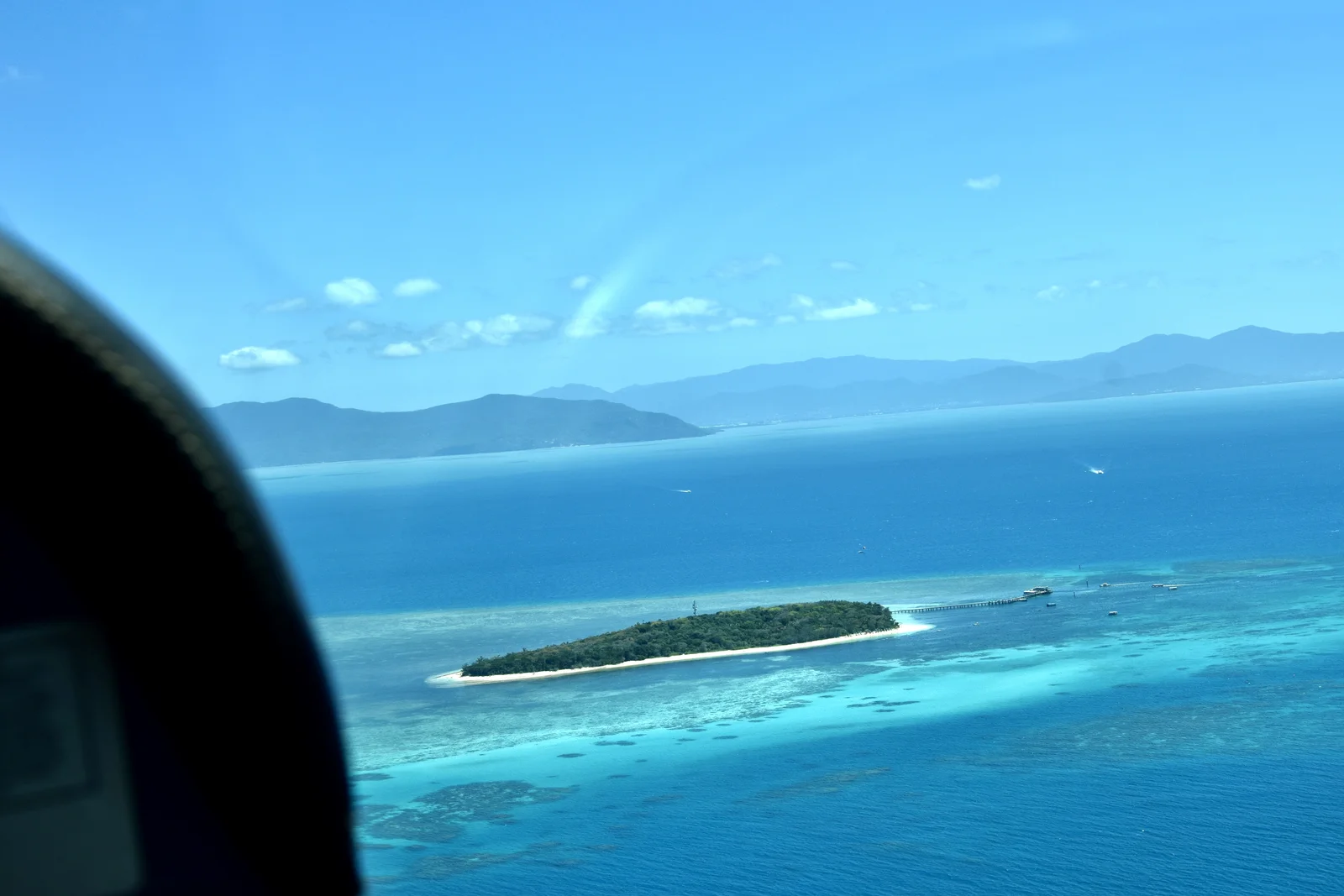
The Great Barrier Reef stretches over two thousand kilometers along the sunny coast of Queensland.
The giant maze includes about three thousand separate coral reefs and nine hundred tropical islands.
The whole ocean park covers a massive area that is bigger than the country of Italy.
First Nations people have cared for these blue waters and coastal reefs for sixty thousand years.
UNESCO named the Great Barrier Reef a World Heritage site in 1981 to protect its rare beauty.
Astronauts floating in space can clearly see the white and turquoise lines of the giant reef.

Tiny Animals Building Big Rocks
Tiny coral polyps extract minerals from seawater to build hard calcium carbonate shells that form underwater rocks.
The small polyps live with photosynthetic algae called zooxanthellae that supply essential nutrition and bright colors.
Every spring millions of corals release eggs together during one magical night under the full moon.
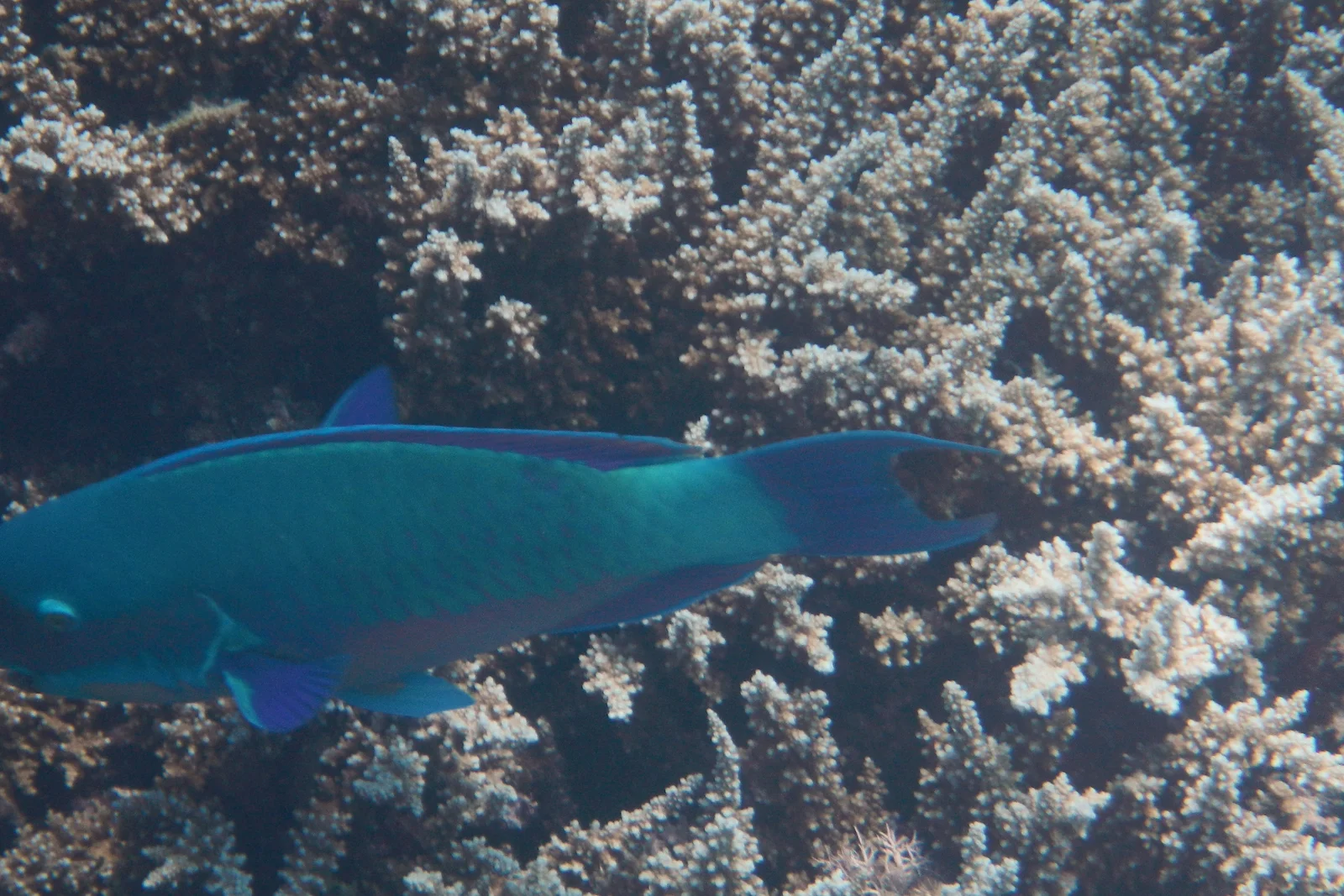
More than fifteen hundred species of colorful fish swim among the soft corals and sea plants.
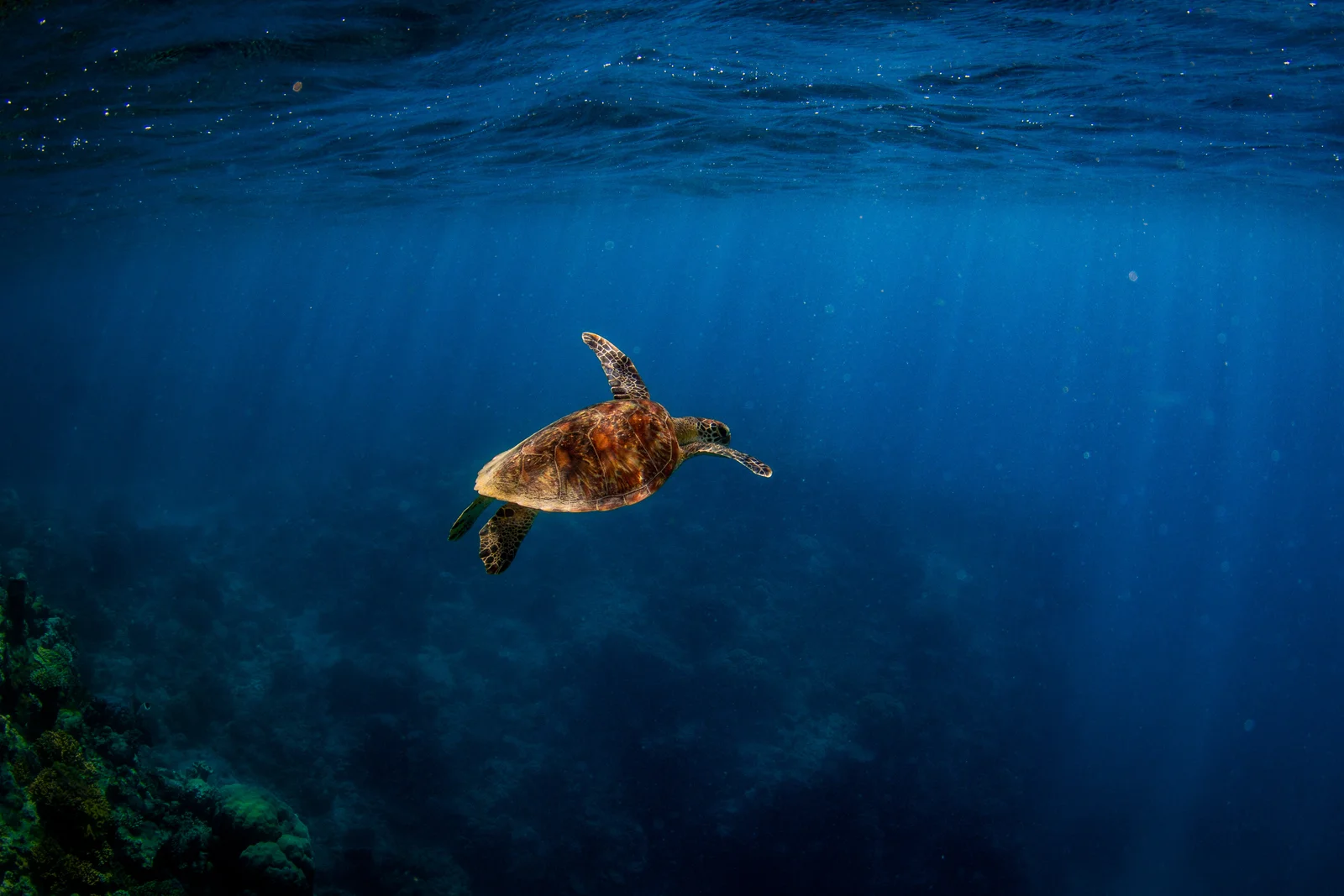
Mother green turtles lay their eggs on sandy beaches while humpback whales swim in deep channels.
Gentle dugongs eat sea grass in shallow bays while graceful manta rays glide above the reefs.
Warm Waters and Ocean Dangers
When severe heat waves make ocean water too warm, corals lose their algae and turn white from stress.
Severe heat waves caused seven huge coral bleaching events between 1998 and 2024.
Acid in warmer seawater makes it harder for young corals to grow strong protective skeletons.
Sharp crown-of-thorns starfish eat living corals and destroy large parts of the underwater gardens.
Severe tropical cyclones generate giant waves that mechanically shatter delicate branching corals into small pieces.
Agricultural catchment runoff transports excess river sediment and fertilizer nitrogen into sensitive coastal reef waters.
Protecting the Reef for Tomorrow
The Australian Government set up the marine park authority in 1975 to guard ocean animals.
Strict fishing rules protect 33.3 percent of the entire marine park from all commercial boats.
Marine scientists in Townsville study healthy corals in modern sea tanks to help reefs survive.
Divers plant baby corals grown in ocean nurseries on damaged reef rocks to help them grow.
The national Reef 2050 plan invests billions of dollars to clean up river water and protect nature.
Traditional Owner sea ranger programs combine generational ecological knowledge with drone patrols to guard ancestral waters.
A2 · Elementary
Great Barrier Reef: Australia's Coral Wonder
Explore the complex biology, vast geography, and modern conservation challenges of the world's greatest reef.
Vast Geography of the Coral Sea
The Great Barrier Reef extends for over 2,300 kilometers along the continental shelf of northeastern Queensland.
The immense marine labyrinth comprises nearly 3,000 distinct coral reefs and over 900 continental islands and cays.
Encompassing roughly 344,400 square kilometers, the marine park protects an ocean territory larger than Italy.
Aboriginal and Torres Strait Islander Traditional Owners have stewarded Sea Country for more than 60,000 years.
In 1981, UNESCO inscribed the entire reef system on the World Heritage List for its extraordinary natural value.
The immense reef complex is the largest structure built by living organisms and is visible from outer space.
Coral Polyps and Marine Biodiversity
Hard corals secrete calcium carbonate skeletons, slowly building massive underwater limestone formations over centuries.
Microscopic photosynthetic algae called zooxanthellae live inside coral tissue, providing most of their daily energy.
Each spring following the full moon, colonies release millions of gametes in synchronized mass coral spawning.
The reef provides critical habitat for 1,500 fish species, 400 coral varieties, and 4,000 kinds of mollusks.
Endangered green sea turtles nest on isolated sand cays, while humpback whale pods nurse newborn calves.
Sharks patrol deep outer reef channels while herbivorous dugongs graze peacefully across coastal seagrass meadows.
Marine Heatwaves and Bleaching Threats
Severe marine heatwaves place intense thermal stress on corals, forcing polyps to expel their essential zooxanthellae.
Consecutive mass bleaching episodes struck the reef ecosystem in 1998, 2002, 2016, 2017, 2020, 2022, and 2024.
Rising ocean acidity weakens the mineral saturation of seawater, slowing the growth of calcium carbonate skeletons.
Outbreaks of coral-eating crown-of-thorns starfish can strip large reefs of their living tissue within months.
Powerful tropical cyclones generate destructive waves that mechanically break fragile branching corals into rubble.
Agricultural runoff from mainland Queensland farms washes sediment, fertilizer nitrogen, and chemicals into coastal lagoons.
Marine Governance and Scientific Renewal
The Australian Parliament created the Great Barrier Reef Marine Park Authority in 1975 to regulate conservation zones.
A landmark zoning reform in 2004 increased fully protected green zones from 4.5 percent to 33.3 percent.
Researchers at the Australian Institute of Marine Science operate advanced laboratories in Townsville to track reef health.
Scientists cultivate heat-resistant coral strains in specialized ocean nurseries before planting them onto degraded reefs.
The comprehensive Reef 2050 Plan directs billions of dollars toward improving catchment water quality and coastal habitats.
Traditional Owner ranger groups combine cultural custody with digital drones and satellites to safeguard ancestral waters.
B1 · Intermediate
The Great Barrier Reef: Complexity and Crisis in the Coral Sea
An analysis of the world's most extensive coral ecosystem, examining symbiotic marine biology, climatic warming, and adaptive park governance.
Continental Geography and Indigenous Custodianship
Stretching across 2,300 kilometers along the Queensland continental shelf, the Great Barrier Reef forms the planet's premier marine sanctuary.
The complex system incorporates approximately 3,000 individual reefs and 900 islands scattered across the Coral Sea.
With an aggregate area of 344,400 square kilometers, the marine park surpasses the total territorial landmass of Italy.
Aboriginal and Torres Strait Islander clans have maintained unbroken cultural traditions and marine stewardship across Sea Country for 60,000 years.
In 1981 UNESCO inscribed the ecosystem on the World Heritage List after determining that it satisfied all four natural criteria.
The immense biological structure remains the only living organism assembly clearly visible from orbital space.
Polyp Biology, Symbiosis, and Ecological Wealth
Colonial scleractinian polyps precipitate calcium carbonate to construct durable limestone architectural skeletons across the sea floor.
Corals depend upon mutualistic endosymbiosis with photosynthetic zooxanthellae dinoflagellates that furnish up to 90 percent of their metabolic nutrition.
Synchronous mass coral spawning occurs annually during springtime full moons, broadcasting billions of genetic bundles into ocean currents.
The labyrinthine reef habitat sustains 1,500 species of marine fish, 400 hard coral taxa, and 4,000 distinct mollusks.
Sandy cays provide indispensable rookeries for vulnerable green turtles while sheltered passages serve as calving zones for migrating humpback whales.
Apex predators such as reef sharks and manta rays dominate pelagic food webs while dugongs graze across sprawling shallow seagrass beds.
Thermal Heatwaves, Bleaching, and Environmental Pressures
Abnormal marine heatwaves induce severe cellular stress within coral tissues, triggering the catastrophic expulsion of photosynthetic zooxanthellae.
Successive mass bleaching events damaged vast coral tracts across the ecosystem in 1998, 2002, 2016, 2017, 2020, 2022, and 2024.
Accelerating ocean acidification reduces carbonate availability, impeding skeletal calcification and weakening structural wave resistance.
Periodic population booms of predatory crown-of-thorns starfish decimate healthy reef sections by digesting living coral polyps.
Intense tropical cyclones generate enormous wave energy that mechanically shatters shallow branching coral thickets into limestone fields.
Mainland river catchments discharge agricultural runoff containing agricultural fertilizers, fine sediments, and pesticides into sensitive nearshore lagoons.
Statutory Zoning, Scientific Restoration, and Ranger Programs
The federal Great Barrier Reef Marine Park Act established a dedicated management authority in 1975 to regulate maritime activities.
The 2004 Representative Areas Program expanded no-take green zones to cover 33.3 percent of the total marine territory.
The Australian Institute of Marine Science leads continuous ecological monitoring while pioneering coral resilience research in Townsville.
Innovative restoration initiatives deploy larval reseeding techniques to distribute genetically robust coral larvae over compromised reefs.
The federal and state Reef 2050 Plan coordinates multi-billion-dollar investments targeting catchment runoff reduction and ecosystem recovery.
Indigenous Traditional Owner Ranger units utilize satellite tracking and uncrewed vessels to enforce cultural protocols and protect marine life.
B2 · Upper Intermediate
The Great Barrier Reef: Ecology, Thermal Stress, and Resilience
Investigating the biological mechanisms of coral calcification, the accelerating threat of marine heatwaves, and modern conservation governance.
Geographic Dimension and Ancient Cultural Heritage
Extending 2,300 kilometers along the northeastern Queensland continental shelf, the Great Barrier Reef constitutes Earth's largest reef ecosystem.
The intricate marine network integrates nearly 3,000 individual coral reefs and 900 continental islands and low-lying coral cays.
Covering approximately 344,400 square kilometers, the marine park encompasses a maritime territory substantially larger than the United Kingdom.
Indigenous Aboriginal and Torres Strait Islander Traditional Owners have maintained continuous spiritual connection and custody of Sea Country for 60,000 years.
UNESCO formally inscribed the marine province on the World Heritage List in 1981, recognizing its superlative natural phenomena across four criteria.
The sprawling organic structure remains unique among planetary landforms in its unambiguous visibility from orbital space.
Biochemical Calcification and Ecological Wealth
Reef construction relies upon tiny scleractinian polyps that precipitate calcium carbonate exoskeletons to erect interlocking limestone ramparts.
The biological engine of the reef is a mutualistic endosymbiosis with photosynthetic dinoflagellates providing polyps with essential sugars.
Springtime triggers synchronous mass coral spawning following the full moon, unleashing immense clouds of reproductive gametes into tropical swells.
This underwater metropolis supports extraordinary biodiversity, sheltering 1,500 species of fish alongside 4,000 types of marine mollusks.
Isolated sand cays furnish prime nesting sanctuaries for green turtles, while deep submarine trenches shelter calving humpback whale pods.
High-trophic apex predators such as gray reef sharks and tiger sharks patrol outer walls while dugongs graze coastal seagrass pastures.
Thermal Disruption, Bleaching Cycles, and Ecological Pressures
Prolonged marine heatwaves induce acute cellular breakdown within corals, causing polyps to expel their vital symbiotic algae in mass bleaching episodes.
Widespread bleaching crises struck the reef system in 1998, 2002, 2016, 2017, 2020, 2022, and 2024, testing coral survivability.
Progressive ocean acidification diminishes carbonate saturation states, severely impairing the capacity of calcifying organisms to build durable skeletons.
Recurring population explosions of corallivorous crown-of-thorns starfish consume living tissue across extensive stretches of hard coral cover.
Intense tropical cyclones generate ferocious sub-surface wave action that mechanically fractures delicate branching acropora colonies into barren rubble.
Terrestrial agricultural runoff channels dissolved inorganic nitrogen, sediment loads, and toxic pesticides from coastal Queensland catchments into reef lagoons.
Statutory Zoning, Scientific Restoration, and Ranger Stewardship
The Australian Parliament passed the landmark Great Barrier Reef Marine Park Act in 1975, creating a dedicated statutory conservation authority.
Under the 2004 Representative Areas Program, the federal government increased no-take green zones from 4.5 percent to 33.3 percent.
The Australian Institute of Marine Science coordinates the Long-Term Monitoring Program from Townsville, benchmarking regional coral cover trends.
Cutting-edge ecological interventions deploy larval reseeding and assisted gene flow to disperse heat-tolerant coral recruits onto devastated patches.
The overarching Reef 2050 Plan directs billions in public and private capital toward catchment remediation and climate resilience projects.
Traditional Owner Sea Ranger groups integrate generational ecological knowledge with drone surveillance and remote sensing to safeguard ancestral waters.
C1 · Advanced
The Great Barrier Reef: Marine Ecology and Contemporary Governance
A critical analysis of coral calcification biochemistry, anthropogenic thermal disturbance, and adaptive marine park administration in the Coral Sea.
Spatial Magnitude and Indigenous Sea Country Custody
Spanning 2,300 kilometers along the Queensland continental shelf, the Great Barrier Reef represents the most extensive barrier reef system globally.
The labyrinthine archipelago comprises approximately 3,000 discrete hermatypic reefs and 900 continental islands and low-lying coral cays.
Occupying an aggregate oceanic expanse of 344,400 square kilometers, the marine park encompasses a geographic footprint exceeding that of Italy.
Traditional Owner clans have maintained an unbroken continuum of spiritual custodianship and seasonal marine harvesting across Sea Country for 60,000 years.
Formal inscription upon the UNESCO World Heritage List occurred in 1981, recognizing the province across all four distinct natural criteria.
The massive biological formation represents the premier organism assembly on Earth possessing unambiguous visibility from orbital space.
Calcification Biochemistry and Trophic Complexity
Structural accretion depends upon scleractinian coral calcification, wherein polyps precipitate crystalline calcium carbonate to establish massive biogenic frameworks.
This metabolic calcification is energized by obligate endosymbiosis with photosynthetic zooxanthellae dinoflagellates that translocate synthesized carbohydrates to the host.
Colonies coordinate an annual synchronous broadcast spawning event following vernal full moons, inundating surrounding currents with millions of gametes.
The resultant structural complexity fosters extraordinary marine biodiversity, encompassing 1,500 teleost fish species and 400 distinct coral varieties.
Maritime passages function as critical calving sanctuaries for migrating humpback whale pods while remote cays support endangered green sea turtles.
Intricate trophic cascades connect pelagic apex carnivores, including reef sharks and pelagic rays, with dugongs grazing in benthic seagrass communities.
Anthropogenic Thermal Stress, Bleaching, and Ecosystem Decline
Anomalous marine heatwaves induce catastrophic oxidative stress within coral tissues, causing the breakdown of photosynthetic pathways and zooxanthellae expulsion.
Systemic mass coral bleaching crises destabilized the biome during severe thermal events in 1998, 2002, 2016, 2017, 2020, 2022, and 2024.
Concurrently, progressive ocean acidification reduces seawater aragonite saturation, progressively attenuating calcification rates across coral colonies.
Episodic outbreaks of the corallivorous crown-of-thorns starfish exert intense biological predation, stripping mature hard coral cover across hundreds of kilometers.
Severe cyclonic gales unleash destructive hydrodynamic forces that mechanically shatter fragile branching coral colonies into calcified scree.
Diffuse catchment runoff introduces elevated nitrogen loads, agrochemicals, and fine terrestrial sediment, smothering nearshore benthic habitats.
Legislative Conservation, Evolutionary Interventions, and Indigenous Oversight
Legislative conservation originated with the federal Great Barrier Reef Marine Park Act of 1975, institutionalizing comprehensive spatial administration.
The landmark 2004 Representative Areas Program radically expanded highly protected no-take marine sanctuaries to 33.3 percent of the park.
The Australian Institute of Marine Science executes longitudinal ecological surveys while conducting controlled environmental trials within Townsville research simulators.
Experimental coral restoration techniques incorporate assisted larval reseeding and selective thermal hardening to enhance thermal tolerance in wild populations.
The multi-jurisdictional Reef 2050 Sustainability Plan coordinates public funding allocations toward catchment restoration and water purification targets.
Indigenous Traditional Owner Ranger units synthesize millennia of ecological knowledge with modern digital telemetry to patrol ancestral maritime estates.
C2 · Mastery
The Great Barrier Reef: Biogeography, Climate Perturbation, and Resilience
A definitive examination of Coral Sea bio-construction, thermal threshold collapse, and the structural socio-ecological governance of a planetary asset.
Spatial Magnitude and Anthropological Custodianship
Traversing 2,300 kilometers along the northeastern Australian continental margin, the Great Barrier Reef forms a labyrinthine barrier reef province of peerless dimensions.
The complex system integrates a dense constellation of 3,000 distinct coral reefs and 900 continental islands and coral cays.
Encompassing an oceanic realm of 344,400 square kilometers, the marine sanctuary covers a maritime expanse substantially larger than Italy.
Aboriginal and Torres Strait Islander Traditional Owners have maintained intimate cultural dominion over Sea Country from time immemorial, spanning 60,000 years.
In 1981 UNESCO consecrated the marine province upon the World Heritage List, explicitly recognizing its universal value across four natural criteria.
The biogenic structure remains the preeminent living biome on Earth, exhibiting undeniable structural visibility to instruments in orbital space.
Scleractinian Biomineralization and Trophic Networks
Framework accretion is mediated by colonial scleractinian polyps that extract dissolved ions from seawater to precipitate protective calcium carbonate matrices.
Reef bio-construction relies upon obligate mutualistic endosymbiosis with photosynthetic dinoflagellates, which deliver metabolic sugars directly to the polyp host.
Colonies execute an annual synchronous mass spawning event following vernal full moons, dispersing trillions of buoyant gametes across the Coral Sea.
This architectural scaffolding sustains hyper-diverse marine assemblages, supporting over 1,500 teleost fish species alongside 4,000 mollusk varieties.
Pelagic corridors furnish indispensable calving sanctuaries for migrating humpback whale pods while isolated coral cays shelter endangered green turtle rookeries.
Apex pelagic predators such as tiger sharks and reef sharks anchor complex trophic pyramids, while herbivorous dugongs maintain seagrass beds.
Thermal Thresholds, Bleaching Dynamics, and Environmental Attrition
Intense marine heatwaves destabilize photosynthetic reactions within endosymbionts, triggering the acute expulsion of zooxanthellae and systemic coral pallor.
Unprecedented pan-reef bleaching episodes devastated widespread coral assemblages in 1998, 2002, 2016, 2017, 2020, 2022, and 2024.
Progressive ocean acidification systematically reduces aragonite saturation states, chemically undermining calcification efficiency in hermatypic corals.
Chronic population irruptions of the corallivorous crown-of-thorns starfish systematically decimate extensive tracts of living hard coral tissue.
Violent cyclonic gales generate catastrophic sub-surface hydrodynamic sheer that can mechanically fracture branching coral thickets into pulverized rubble.
Terrestrial agricultural runoff discharges fine sediment plumes, pesticide residues, and bioavailable nitrogen from Queensland catchments into coastal waters.
Institutional Administration, Assisted Evolution, and First Nations Rangers
Statutory marine park management was formally codified under the Great Barrier Reef Marine Park Act of 1975, establishing GBRMPA.
The historic 2004 Representative Areas Program rezoned the maritime commons, expanding strictly enforced no-take green zones to 33.3 percent.
The Australian Institute of Marine Science conducts rigorous longitudinal surveys and orchestrates experimental physiological simulations at its Townsville research headquarters.
Innovative conservation paradigms deploy larval reseeding and selective breeding to cultivate superior thermal resilience in wild coral recruits.
The intergovernmental Reef 2050 Plan directs multi-billion-dollar investments into catchment land remediation, water quality targets, and reef protection.
Indigenous Traditional Owner Ranger units seamlessly fuse ancestral marine custodianship with autonomous satellite telemetry to monitor remote Sea Country.
Check your understanding
Choose how closely you want to revisit the article. You can refer back while answering, and review explanations when you finish.
Quick Quiz A1
Try one question, then create a free account for the full Quick Quiz. Sign Up Free
Answer every question before checking. There is no time limit.
Your results
/ 1 correct (%)
Read the explanations to see how each answer connects to the article.
-
What approximate distance does the Great Barrier Reef stretch along the Queensland continental margin?
1. Answer:
Quick Quiz A2
Try one question, then create a free account for the full Quick Quiz. Sign Up Free
Answer every question before checking. There is no time limit.
Your results
/ 1 correct (%)
Read the explanations to see how each answer connects to the article.
-
What approximate distance does the Great Barrier Reef stretch along the Queensland continental margin?
1. Answer:
Quick Quiz B1
Try one question, then create a free account for the full Quick Quiz. Sign Up Free
Answer every question before checking. There is no time limit.
Your results
/ 1 correct (%)
Read the explanations to see how each answer connects to the article.
-
What approximate distance does the Great Barrier Reef stretch along the Queensland continental margin?
1. Answer:
Quick Quiz B2
Try one question, then create a free account for the full Quick Quiz. Sign Up Free
Answer every question before checking. There is no time limit.
Your results
/ 1 correct (%)
Read the explanations to see how each answer connects to the article.
-
What approximate distance does the Great Barrier Reef stretch along the Queensland continental margin?
1. Answer:
Quick Quiz C1
Try one question, then create a free account for the full Quick Quiz. Sign Up Free
Answer every question before checking. There is no time limit.
Your results
/ 1 correct (%)
Read the explanations to see how each answer connects to the article.
-
What approximate distance does the Great Barrier Reef stretch along the Queensland continental margin?
1. Answer:
Quick Quiz C2
Try one question, then create a free account for the full Quick Quiz. Sign Up Free
Answer every question before checking. There is no time limit.
Your results
/ 1 correct (%)
Read the explanations to see how each answer connects to the article.
-
What approximate distance does the Great Barrier Reef stretch along the Queensland continental margin?
1. Answer:
