A1 · Beginner
Sydney Opera House and Utzon's Vision
Discover how an architect built white concrete sails over Sydney Harbour.
The Big Building Contest
Premier Joseph Cahill started a global contest in 1955 to design a great opera house at Bennelong Point.
Danish architect Jorn Utzon won the competition in 1957 after judge Eero Saarinen loved his beautiful drawings.
The chosen site at Bennelong Point was named after Woollarawarre Bennelong and once held a tram depot.
Utzon planned a huge stone platform inspired by old Mayan temples to lift the halls above the blue water.
A special state lottery raised over one hundred million dollars so local citizens did not pay heavy taxes.
Workers started digging the massive base in March 1959 before engineers finished drawings for the roof.
Building the White Shells
Engineer Ove Arup and his team worked hard for years trying to calculate shapes for the giant roof sails.
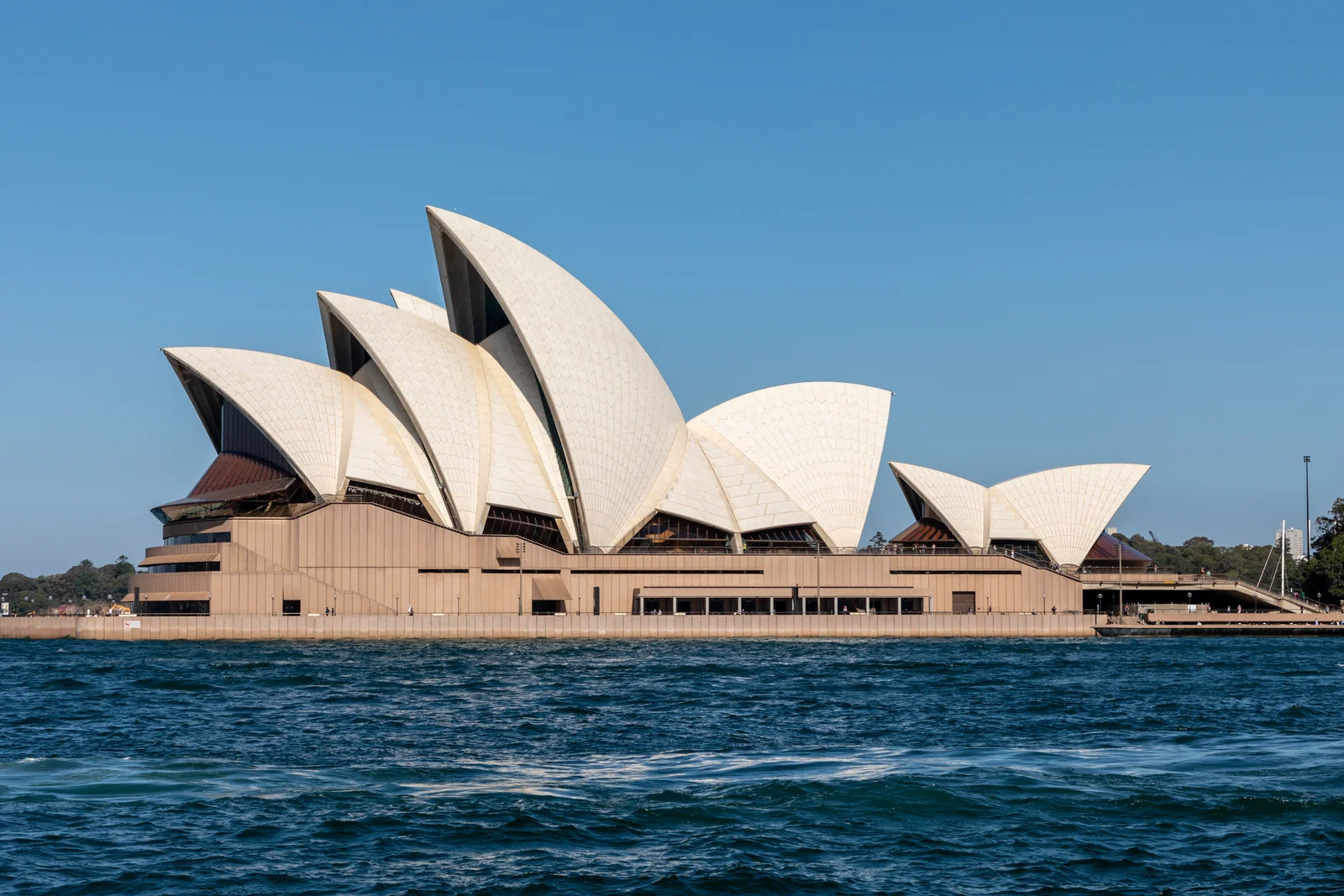
In 1961 Utzon discovered the spherical solution by cutting all curved roof pieces from a single giant sphere.
Builders cast arched concrete ribs in molds and lifted them into place with strong steel cranes.
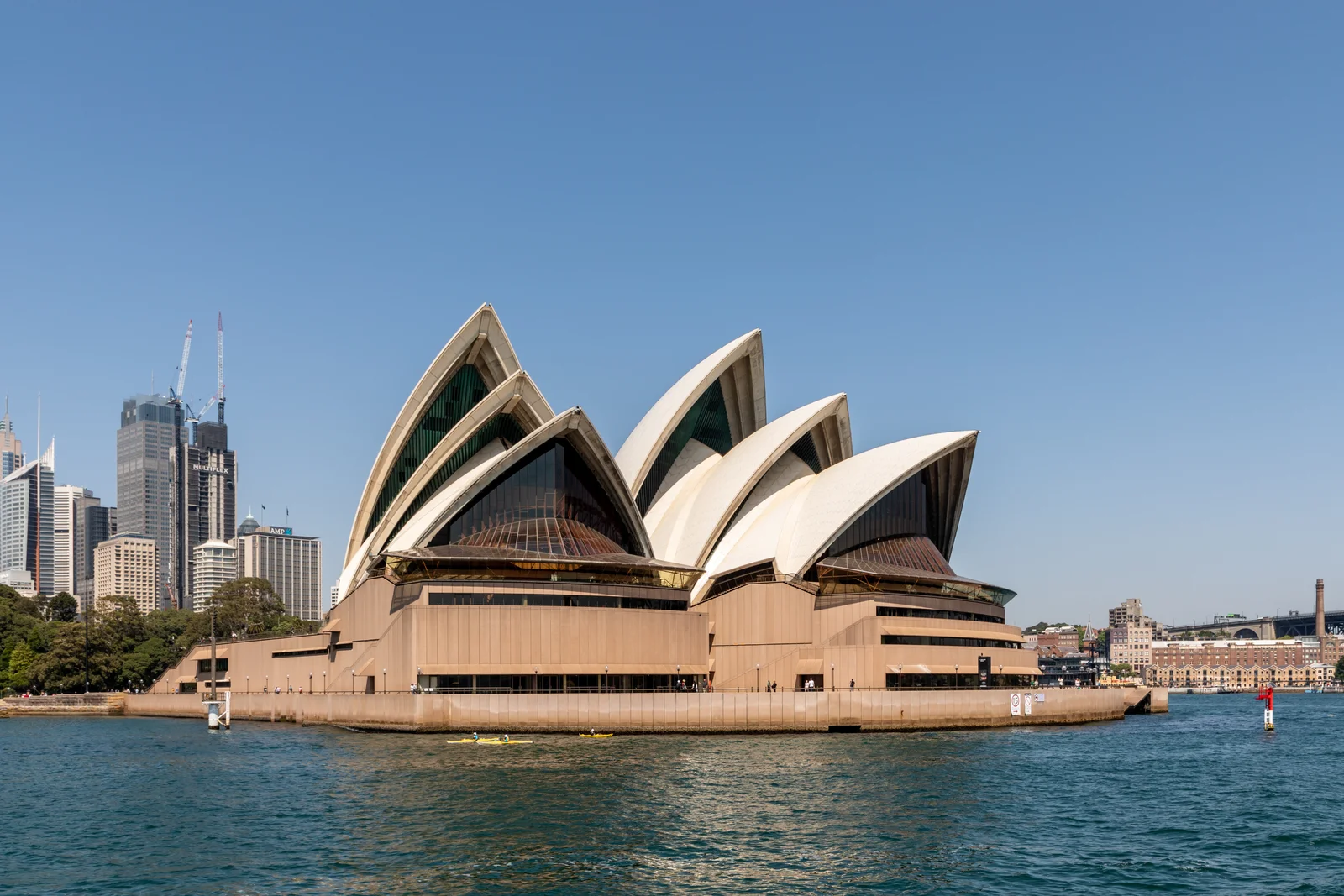
Over one million white and cream ceramic tiles from Swedish maker Hoganas cover the famous roof shells.
The glossy tiles reflect bright sunlight and wash clean naturally whenever ocean rain pours from the sky.
Engineers used early digital computers to solve complex math problems and test the weight of the roof.
Arguments and the Grand Opening
A new state minister named Davis Hughes argued with Utzon about rising costs and building changes in 1965.
Hughes stopped paying design fees, forcing Utzon to resign from the project in February 1966.
More than one thousand citizens and architects marched through Sydney streets demanding the return of Utzon.
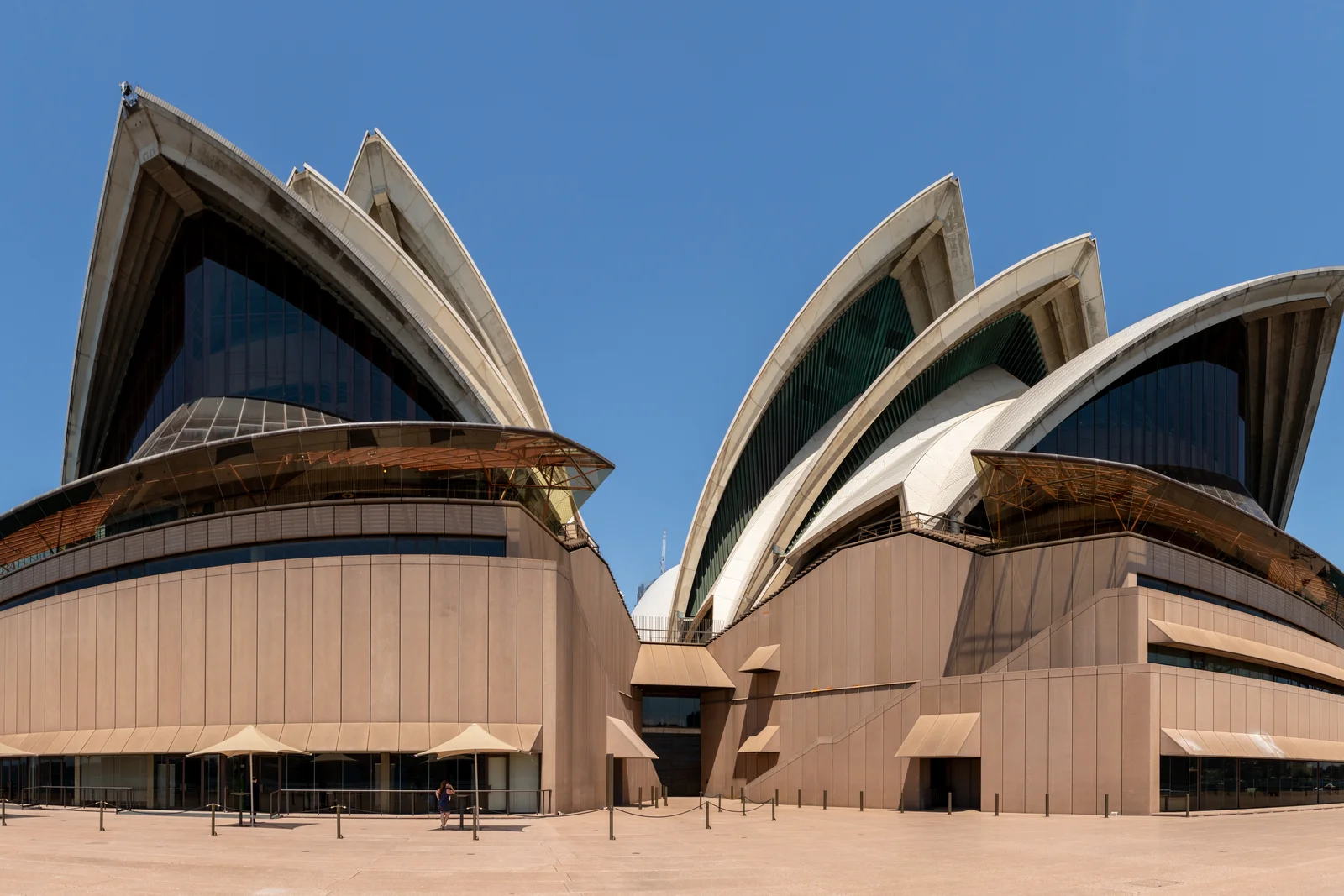
Australian architect Peter Hall took over the difficult job of finishing the inside halls and glass walls.
Hall turned the largest auditorium into a dedicated Concert Hall and placed opera inside the smaller hall.
Queen Elizabeth II officially opened the Sydney Opera House on October 20 1973 before cheering crowds.
A World Heritage Treasure
In 1999 Utzon agreed to write design principles to guide all future repairs and conservation work.
Jorn Utzon received the famous Pritzker Architecture Prize in 2003 for creating this twentieth century masterwork.
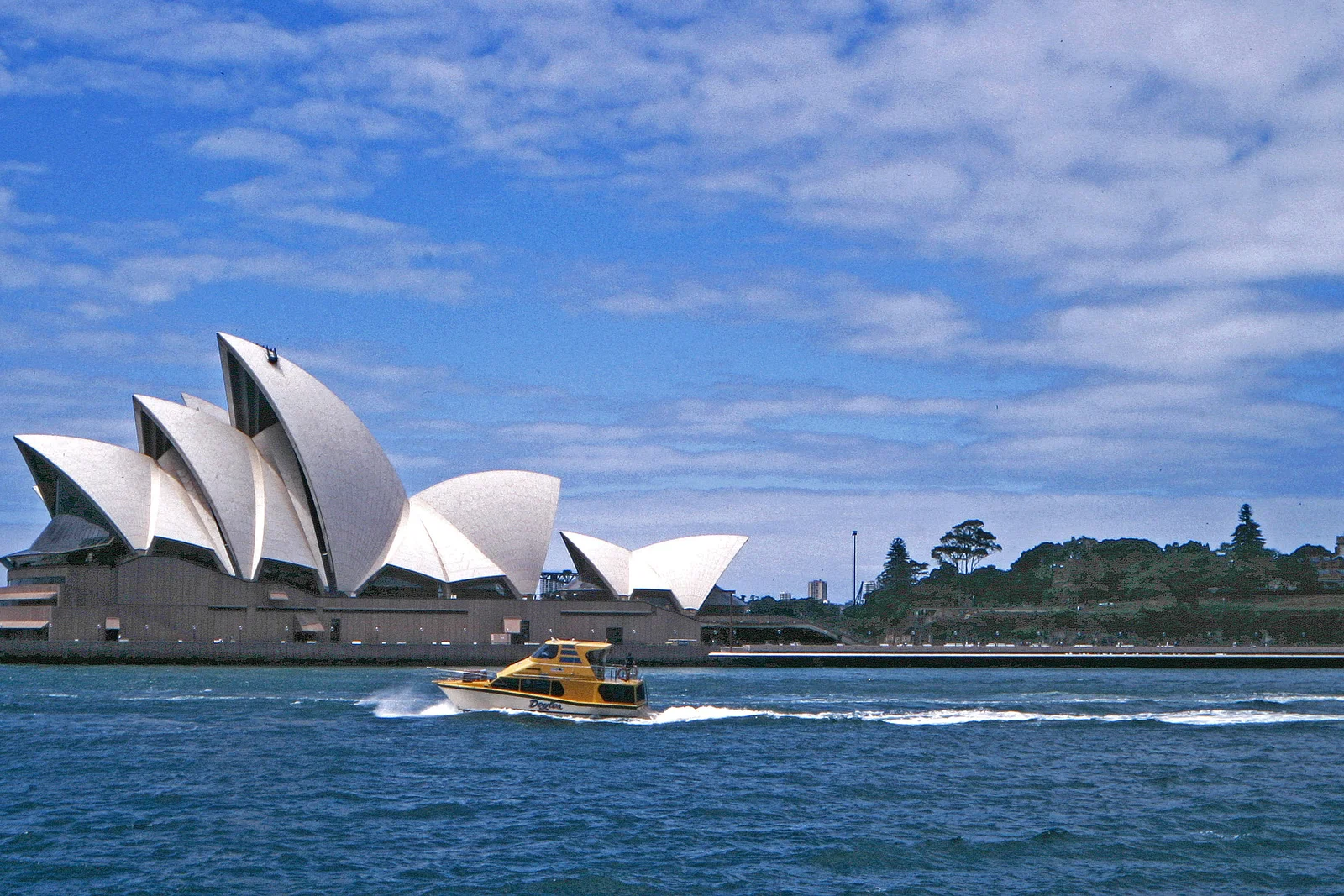
UNESCO added the building to the World Heritage List in 2007 as a masterpiece of human creative genius.
A major renewal project finished in 2022 gave the Concert Hall world class acoustics and clear sound.
The building hosts eighteen hundred performances each year and welcomes ten million visitors to its harbor boardwalks.
The white sails stand as the famous global symbol of Australia and supreme expressionist architecture.
A2 · Elementary
Sydney Opera House and Jorn Utzon's Masterpiece
Explore the dramatic creation and engineering breakthroughs behind Australia's most famous landmark.
An International Competition at Bennelong Point
In September 1955, New South Wales Premier Joseph Cahill announced an international design competition for an opera house at Bennelong Point.
Danish architect Jorn Utzon won the competition in January 1957 with Scheme 218 after judge Eero Saarinen championed his expressive sketches.
The prominent site on Bennelong Point honored Woollarawarre Bennelong and had previously accommodated a colonial fort and electric tram depot.
Utzon designed a monumental granite podium inspired by ancient Mayan platforms to raise the performance halls above the harbor waters.
The ambitious public project was funded entirely through the State Lottery of New South Wales, avoiding burdens on taxpayers.
Premier Cahill directed workers to begin constructing the heavy podium in March 1959 before roof engineering was resolved.
The Spherical Solution and Concrete Sails
Engineer Sir Ove Arup and his structural team spent years testing parabolic curves to support the freeform roof shells.
In 1961 Utzon conceived the spherical solution, deriving every vaulted roof section from the surface of a single sphere.
This geometric breakthrough allowed factories to manufacture identical precast concrete ribs assembled on site with steel trusses.
Swedish pottery manufacturer Hoganas produced over one million glossy white and matte cream ceramic tiles to clad the shells.
The combination of smooth and unglazed tiles created an organic self-cleaning surface that glitters under Australian sunlight.
Arup relied on early digital computers to execute thousands of complex structural stress calculations for the arched sails.
Political Conflict and Queen Elizabeth's Opening
Political friction erupted in 1965 when newly elected Minister for Public Works Davis Hughes challenged Utzon over soaring project costs.
After Hughes withheld professional fee payments and rejected acoustic models, Utzon resigned from the construction project in February 1966.
More than one thousand architects and concerned citizens marched through Sydney to protest Utzon's departure and demand his reinstatement.
Sydney architect Peter Hall accepted the daunting task of designing the complex interior auditoriums and massive glass curtain walls.
Hall reconfigured the major hall into a dedicated Concert Hall and shifted opera staging into the secondary auditorium.
Queen Elizabeth II officially inaugurated the completed Sydney Opera House on October 20 1973 before a global television audience.
World Heritage Status and Lasting Architectural Fame
In 1999 Utzon reconciled with the Sydney Opera House Trust, publishing formal design principles to govern all future interior renovations.
Utzon won the prestigious Pritzker Architecture Prize in 2003, with international jurors celebrating his daring twentieth century masterwork.
UNESCO inscribed the building on the World Heritage List in 2007 as an undeniable masterpiece of human creative genius.
A major acoustic renewal project completed in 2022 transformed the Concert Hall into an acoustically pristine orchestral venue.
Today the arts complex presents over eighteen hundred performances each year and attracts ten million tourists to its waterfront boardwalks.
The soaring white shells endure as a universal visual emblem of modern Australia and a pinnacle of expressionist architecture.
B1 · Intermediate
Sydney Opera House: Expressionism on the Harbour
How visionary Danish architecture and pioneering structural engineering transformed Sydney's maritime skyline.
The Bennelong Point Vision and the 1957 Competition
Premier Joseph Cahill launched an international design competition in September 1955 to erect an opera house on Bennelong Point.
Danish architect Jorn Utzon secured victory in January 1957 with Scheme 218 after American juror Eero Saarinen championed his daring sketches.
The dramatic site on Bennelong Point bore the name of Woollarawarre Bennelong and had formerly accommodated Fort Macquarie and a municipal tram depot.
Utzon conceived a massive granite-clad podium influenced by Mesoamerican ceremonial terraces to elevate the performing auditoriums above surrounding harbor currents.
To insulate the state treasury from expenditure risks, the New South Wales government funded the venture through dedicated public lottery drawings.
Political pressure prompted Cahill to initiate podium excavation in March 1959 well before engineers had devised a workable roof design.
Structural Engineering and the Geometry of the Sphere
Consulting engineer Sir Ove Arup confronted severe structural challenges while attempting to formulate stable mathematical profiles for Utzon's freeform roof sails.
Utzon achieved an engineering breakthrough in 1961 by developing his spherical solution, demonstrating that every shell segment could be extracted from a single sphere of 75-meter radius.
This spherical geometry enabled the standardized prefabrication of arched concrete rib components that cranes bolted together along radial trajectories.
Specialist Swedish ceramic manufacturer Hoganas fabricated 1,056,006 glazed white and unglazed cream tiles arranged in subtle chevron panels.
The dual-finish ceramic exterior endowed the monumental shells with a self-cleaning surface that captured shifting daylight across Sydney Harbour.
Arup deployed early mainframe computers to crunch tens of thousands of structural equations, pioneering digital engineering in modern civil construction.
Ministerial Strife, Utzon's Departure, and the 1973 Opening
Escalating construction costs prompted intense friction following the 1965 election of conservative Minister for Public Works Davis Hughes.
When Hughes withheld architectural progress payments and questioned experimental plywood mockups, Utzon submitted his bitter resignation in February 1966.
Utzon's abrupt withdrawal ignited public fury, prompting over one thousand architects, students, and citizens to march through Sydney demanding his reinstatement.
Australian architect Peter Hall undertook the unenviable assignment of completing the interior concert halls and suspended bronze glass facades.
Hall redesigned the primary auditorium into a dedicated Concert Hall for symphony orchestra performances while reallocating staged opera productions to the secondary hall.
Queen Elizabeth II presided over the grand royal opening on October 20 1973, welcoming the landmark into active international cultural service.
Global Canonization and Contemporary Renewal
Utzon formally re-engaged with the Opera House Trust in 1999 to codify foundational design principles safeguarding the complex during future modifications.
The international architectural community honored Utzon with the 2003 Pritzker Architecture Prize, citing the harbor shells as an epochal creative triumph.
UNESCO recognized the complex in 2007 by inscribing it on the World Heritage List under Criterion i as a masterpiece of human creative genius.
A three-hundred-million-dollar Decade of Renewal culminated in 2022 with advanced acoustic baffling and stage machinery modernizing the Concert Hall.
The performing arts center now stages approximately eighteen hundred annual presentations while drawing ten million pedestrians along Bennelong Point annually.
The gleaming sculptural roofline stands universally recognized as the quintessential icon of modern Australia and twentieth-century expressionist architecture.
B2 · Upper Intermediate
Sydney Opera House: The Triumph of Utzon's Expressionism
The architectural audacity, structural mathematics, and political drama that produced a modern world heritage landmark.
Civic Ambition and the International Competition
In September 1955, New South Wales Premier Joseph Cahill initiated an international design competition to establish a dual-hall performing arts center upon Bennelong Point.
Danish architect Jorn Utzon triumphed in January 1957 with Scheme 218 after competition judge Eero Saarinen famously extracted his conceptual drawings from the rejected submissions.
The strategic promontory on Bennelong Point commemorated Woollarawarre Bennelong and had historically accommodated colonial fortification batteries and a sprawling electric tramway depot.
Utzon envisioned a colossal granite-faced podium inspired by Mayan and Aztec ceremonial platforms, deliberately lifting audiences above harbor traffic and urban congestion.
The state government established the dedicated Sydney Opera House Lottery to bankroll escalating construction obligations without siphoning capital from ordinary consolidated revenues.
Anxious to guarantee project momentum, Premier Cahill ordered work on the concrete substructure to commence in March 1959 before roof engineering had matured.
The Spherical Solution and Prefabricated Engineering
The structural consulting firm Ove Arup and Partners grappled for four years with intractable mathematical calculations trying to resolve freeform parabolic sail geometries.
Utzon unlocked the structural conundrum in 1961 through his revolutionary spherical solution, slicing every vaulted shell segment from the uniform surface of a single sphere.
This geometric breakthrough permitted the systematic precasting of modular segmented concrete ribs that site workers assembled sequentially using movable erection trusses.
To clad the soaring concrete vaults, Swedish ceramics firm Hoganas manufactured 1,056,006 glossy white and matte cream tiles fastened in triangular chevron panels.
The juxtaposition of glazed and unglazed ceramic tiles created an organic luminescence that shifts across the day while shedding harbor soot through natural rainfall.
Engineers under Ove Arup deployed earliest commercial digital computers to resolve tens of thousands of structural load equations, revolutionizing computer-aided structural analysis.
Administrative Acrimony, Utzon's Exile, and Inauguration
The accession of the Askin Liberal government in 1965 elevated Davis Hughes to Minister for Public Works, precipitating relentless bureaucratic conflict over soaring expenditure.
Hughes systematically withheld statutory architectural fees and vetoed experimental acoustic mockups, prompting Jorn Utzon to tender his acrimonious resignation in February 1966.
The architect's departure triggered intense civil unrest, culminating in a protest march of over one thousand architects and cultural figures demanding Utzon's reinstatement.
A government-appointed design consortium led by Australian architect Peter Hall assumed responsibility for executing internal auditoriums and hanging bronze glass curtain walls.
Hall controversially transformed the largest auditorium into a dedicated orchestral Concert Hall, relegating staged opera to the smaller adjoining theater.
Queen Elizabeth II formally inaugurated the Sydney Opera House on October 20 1973 amid royal fanfare and global television coverage.
UNESCO Consecration and the Architectural Legacy
A poignant reconciliation materialized in 1999 when Utzon accepted an invitation to formulate comprehensive design principles directing subsequent capital refurbishment.
The international architectural jury conferred the Pritzker Architecture Prize upon Jorn Utzon in 2003, commemorating his monumental contribution to world cultural heritage.
In 2007 UNESCO inscribed the Sydney Opera House upon the World Heritage List under Criterion i, celebrating the monument as a masterpiece of human creative genius.
A sweeping Decade of Renewal concluded in 2022 after extensive acoustic upgrades, installing sculpted petal reflectors and automated stage risers within the Concert Hall.
The performing arts complex continues to mount over eighteen hundred performances annually while Bennelong Point attracts over ten million international visitors.
The soaring silhouette stands universally acknowledged as the preeminent symbol of Australian national identity and a masterpiece of expressionist architecture.
C1 · Advanced
Sydney Opera House: Expressionist Form and Structural Rigor
An analytical study of Jorn Utzon's structural synthesis, pioneering digital engineering, and the socio-political crucible of Bennelong Point.
Civic Vision and the 1957 International Competition
In September 1955, New South Wales Premier Joseph Cahill promulgated an international architectural competition to erect a premier performing arts complex upon the Bennelong Point promontory.
Danish modernist Jorn Utzon clinched victory in January 1957 with Scheme 218 after American adjudicator Eero Saarinen aggressively rescued the evocative entry from discarded folios.
The contested site commemorated indigenous intermediary Woollarawarre Bennelong, having previously accommodated colonial military redoubts and an expansive electric tram depot.
Utzon conceptualized an austere, granite-faced substructure informed by Mesoamerican monumental terraces, creating an elevated public plateau isolated from waterfront noise.
To evade parliamentary appropriations crises, Premier Cahill financed the speculative enterprise through the state-run Sydney Opera House Lottery, amassing unprecedented capital reserves.
Premier Cahill prematurely ordered earthmovers to inaugurate podium construction in March 1959, locking the structural footprint into place before roof geometries had stabilized.
The Spherical Solution and Computational Engineering
The engineering consultancy Ove Arup and Partners struggled through three agonizing iterations, seeking to stabilize complex parabolic roof forms against harbor wind sheer.
Utzon resolved the structural impasse in 1961 by postulating his elegant spherical solution, carving all vaulted roof shells from the surface of a singular sphere possessing a 75-meter radius.
The mathematical consistency of the sphere enabled the industrial prefabrication of identical arched precast concrete rib segments hoisted into alignment by specialized crane rigs.
The exterior roof shells were meticulously clad in 1,056,006 glossy white and unglazed cream ceramic tiles manufactured by the Swedish pottery atelier Hoganas.
The textured ceramic envelope imparted a dynamic luminescence that shifted continuously under maritime solar exposure while executing an organic self-cleansing cycle.
Ove Arup deployed early digital computational engines to calculate multi-axial stress equations, laying foundational precedents for modern computer-aided structural design.
Ministerial Discord, Utzon's Resignation, and Completion
The political ascendance of the conservative Coalition in 1965 installed Davis Hughes as Minister for Public Works, initiating an acrimonious bureaucratic campaign against Utzon.
Following months of withheld professional fee disbursements and bureaucratic obstructionism regarding interior finishes, Utzon tendered his definitive resignation in February 1966.
The sudden abdication convulsed the cultural establishment, prompting a vociferous protest march of over one thousand architects and citizens demanding Utzon's immediate reinstatement.
Young Australian architect Peter Hall shouldered the thankless commission to redesign the unbuilt auditorium layouts and erect the daring hanging glass facades.
Hall radically revised the interior hall acoustics, transforming the cavernous major shell into a dedicated Concert Hall and shifting opera staging into the secondary auditorium.
Queen Elizabeth II conducted the royal inauguration on October 20 1973, officially consecrating the monumental complex before a worldwide television audience.
Canonization, Reconciliation, and Contemporary Renovation
A historic institutional reconciliation unfolded in 1999 when Utzon formally authored the Utzon Design Principles to regulate future internal interventions and acoustic retrofits.
The international architectural jury honored Utzon with the 2003 Pritzker Architecture Prize, citing the Sydney Opera House as one of the defining triumphs of twentieth-century architecture.
In 2007 UNESCO inscribed the complex upon the World Heritage List under Criterion i, acknowledging the site as an immortal masterpiece of human creative genius.
The extensive three-hundred-million-dollar Decade of Renewal culminated in 2022 with transformative acoustic baffling and technical stage modernization within the Concert Hall.
The performing arts complex sustains an annual program exceeding eighteen hundred presentations while welcoming more than ten million visitors across its harbor promenades.
The sculptural vaults endure globally as the paramount symbol of Australian civic identity and an unassailable triumph of structural expressionist design.
C2 · Mastery
Sydney Opera House: Utzon's Monumental Expressionism and Engineering Alchemy
A definitive appraisal of Bennelong Point's structural evolution, computer-aided mathematical geometry, and the architectural canonization of Jorn Utzon.
Civic Ambition and the International Competition of 1957
In September 1955, New South Wales Premier Joseph Cahill heralded an international design competition to establish a monumental performing arts citadel on the Bennelong Point promontory.
Danish visionary Jorn Utzon secured victory in January 1957 with Scheme 218 after Finnish-American architect Eero Saarinen vigorously championed his lyrical, hand-drawn perspectives.
The dramatic maritime promontory honored Woollarawarre Bennelong, having sequentially housed colonial defensive batteries, Fort Macquarie, and a repurposed municipal tram depot.
Utzon conceived a monumental, granite-clad substructure informed by Mesoamerican ceremonial plateaus, intentionally isolating spectators from terrestrial urban distractions.
To inoculate the public purse against escalating budget inflation, Premier Cahill financed construction through the state-run Sydney Opera House Lottery, overflowing ministerial coffers.
Premier Cahill prematurely ordered ground-breaking on the massive substructure in March 1959, unilaterally commencing civil works before roof structural calculations existed.
The Spherical Solution and Computational Morphometry
The engineering consultancy Ove Arup and Partners spent four exhausting years calculating elliptical and parabolic geometries that repeatedly failed to guarantee structural equilibrium.
Utzon achieved a transcendent conceptual breakthrough in 1961 by discovering the spherical solution, extracting every vaulted shell segment from the singular geometric curvature of a 75-meter sphere.
This spherical breakthrough facilitated the serial factory fabrication of prefabricated precast concrete rib trusses, assembled in situ with high-tensile steel tension cables.
The monumental shell surfaces were sheathed in 1,056,006 glossy white and matte cream ceramic tiles manufactured by Swedish pottery Hoganas in chevron configurations.
The alternating gloss and unglazed ceramic surfaces imparted an iridescent luminescence that responded organically to sunlight while shedding maritime grime through rainfall.
Arup's structural engineers utilized early digital mainframe computers to execute tens of thousands of finite-element stress calculations, setting historical benchmarks in computational design.
Bureaucratic Intransigence, Exile, and the 1973 Inauguration
The 1965 electoral triumph of the Liberal-Country Party coalition installed Davis Hughes as Minister for Public Works, inaugurating an era of administrative intransigence and ruthless financial austerity.
Following months wherein Hughes systematically withheld statutory design fees and canceled acoustic plywood fabrication, Utzon tendered his acrimonious resignation in February 1966.
Utzon's abrupt departure incited massive civil outrage, culminating in a demonstration of over one thousand architects and students marching through Sydney demanding his reinstatement.
A beleaguered consortium led by Australian architect Peter Hall assumed the arduous responsibility of re-engineering the incomplete interiors and installing suspended glass walls.
Hall reconfigured the primary auditorium into a dedicated Concert Hall for symphonic concerts, obliging the Australian Opera to occupy the significantly smaller proscenium auditorium.
Queen Elizabeth II presided over the ceremonial inauguration on October 20 1973, celebrating the complex with splendid royal pageantry before a global television audience.
World Heritage Inscription and Modern Acoustic Renaissance
An overdue institutional reconciliation materialized in 1999 when Utzon re-engaged to establish the comprehensive Utzon Design Principles to guide all future capital conservation.
The Hyatt Foundation bestowed the prestigious Pritzker Architecture Prize upon Jorn Utzon in 2003, designating the Sydney Opera House an iconic masterwork of the twentieth century.
In 2007 UNESCO inscribed the complex on the World Heritage List under Criterion i, acknowledging the harbor vaults as an extraordinary masterpiece of human creative genius.
A three-hundred-million-dollar Decade of Renewal culminated in 2022 with profound acoustic enhancements, integrating articulated timber reflectors throughout the Concert Hall.
The performing arts complex sustains an annual program exceeding eighteen hundred presentations while welcoming ten million domestic and international tourists to its harbor promenades.
The iconic precast vaults stand unchallenged as the quintessential emblem of Australian national pride and the supreme achievement of twentieth-century expressionist architecture.
Check your understanding
Choose how closely you want to revisit the article. You can refer back while answering, and review explanations when you finish.
Quick Quiz A1
Try one question, then create a free account for the full Quick Quiz. Sign Up Free
Answer every question before checking. There is no time limit.
Your results
/ 1 correct (%)
Read the explanations to see how each answer connects to the article.
-
In which year did New South Wales Premier Joseph Cahill announce the international design competition for the opera house?
1. Answer:
Quick Quiz A2
Try one question, then create a free account for the full Quick Quiz. Sign Up Free
Answer every question before checking. There is no time limit.
Your results
/ 1 correct (%)
Read the explanations to see how each answer connects to the article.
-
In which year did New South Wales Premier Joseph Cahill announce the international design competition for the opera house?
1. Answer:
Quick Quiz B1
Try one question, then create a free account for the full Quick Quiz. Sign Up Free
Answer every question before checking. There is no time limit.
Your results
/ 1 correct (%)
Read the explanations to see how each answer connects to the article.
-
In which year did New South Wales Premier Joseph Cahill announce the international design competition for the opera house?
1. Answer:
Quick Quiz B2
Try one question, then create a free account for the full Quick Quiz. Sign Up Free
Answer every question before checking. There is no time limit.
Your results
/ 1 correct (%)
Read the explanations to see how each answer connects to the article.
-
In which year did New South Wales Premier Joseph Cahill announce the international design competition for the opera house?
1. Answer:
Quick Quiz C1
Try one question, then create a free account for the full Quick Quiz. Sign Up Free
Answer every question before checking. There is no time limit.
Your results
/ 1 correct (%)
Read the explanations to see how each answer connects to the article.
-
In which year did New South Wales Premier Joseph Cahill announce the international design competition for the opera house?
1. Answer:
Quick Quiz C2
Try one question, then create a free account for the full Quick Quiz. Sign Up Free
Answer every question before checking. There is no time limit.
Your results
/ 1 correct (%)
Read the explanations to see how each answer connects to the article.
-
In which year did New South Wales Premier Joseph Cahill announce the international design competition for the opera house?
1. Answer:
