A1 · Beginner
Aboriginal Dot Painting and Desert Stories
Learn how desert painters use colorful dots to share ancient sacred stories about the land.
The Birth of the Desert Art Movement
A schoolteacher named Geoffrey Bardon arrived at the desert community of Papunya in 1971.
Senior elders painted the famous Honey Ant mural on the local school wall.
Artists started using bright acrylic paints on canvas instead of drawing in desert sand.
Painters formed the Papunya Tula cooperative in 1972 to sell their artwork together.
Aboriginal artists put small dots on the canvas to protect sacred secret signs.
A famous art show called Dreamings in New York showed these bright paintings in 1988.
Ancient Stories and Desert Symbols
The deep spiritual belief called Tjukurpa guides desert painters through ancient sacred law.
Ancestral beings walked across the dry red land and created mountains, trees, and waterholes.
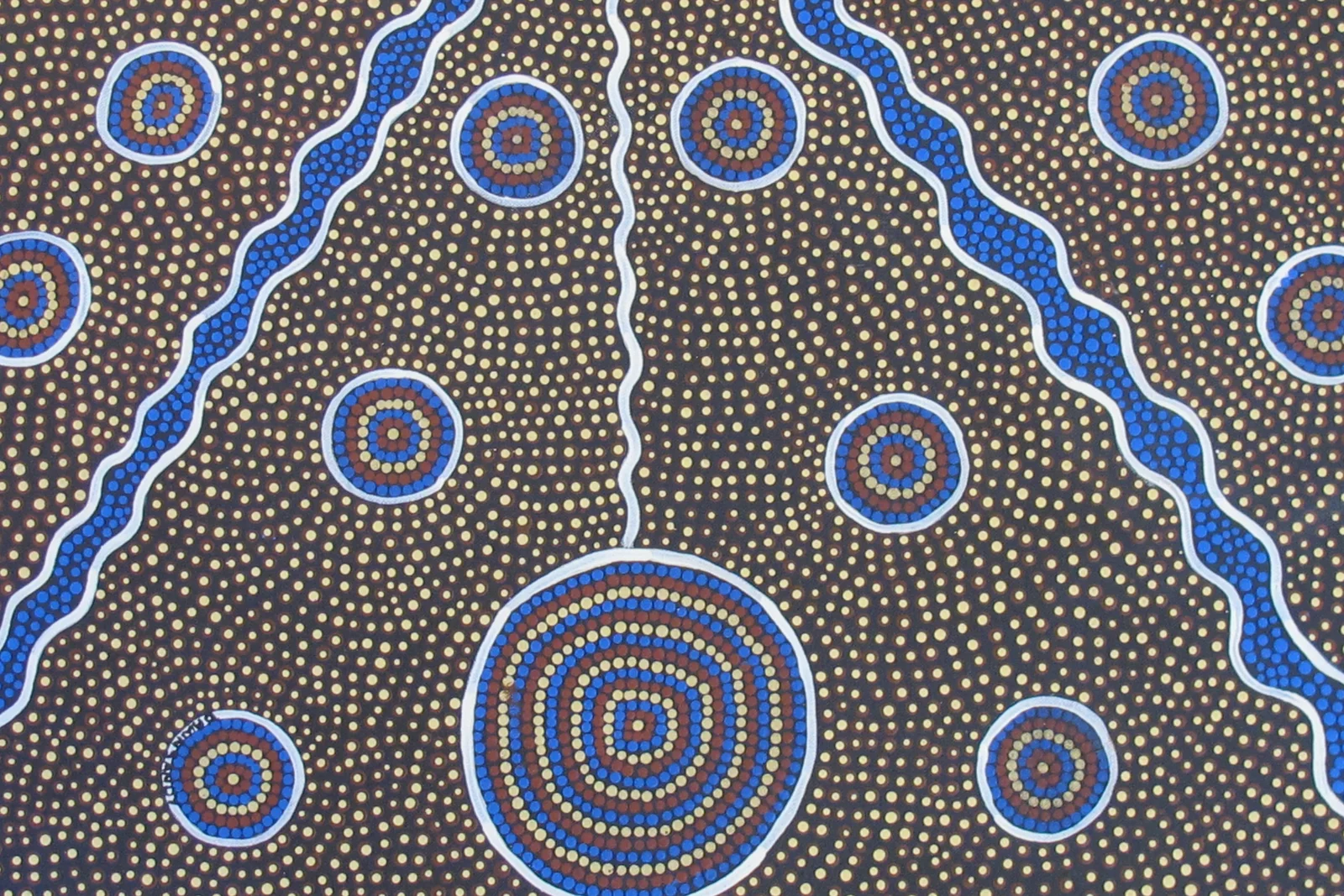
Painted concentric circles show waterholes, camping places, and ceremonial grounds in the sand.
Special U-shaped lines depict people sitting on the ground beside their wooden digging sticks.
Long wavy pathways show the desert journeys of powerful creator spirits across the country.
The sacred Tingari stories tell long creation tales across the Great Sandy Desert.
Desert Ochre and Community Art Centers
Artists long ago used natural red and yellow earth ochres from ancient desert quarries.
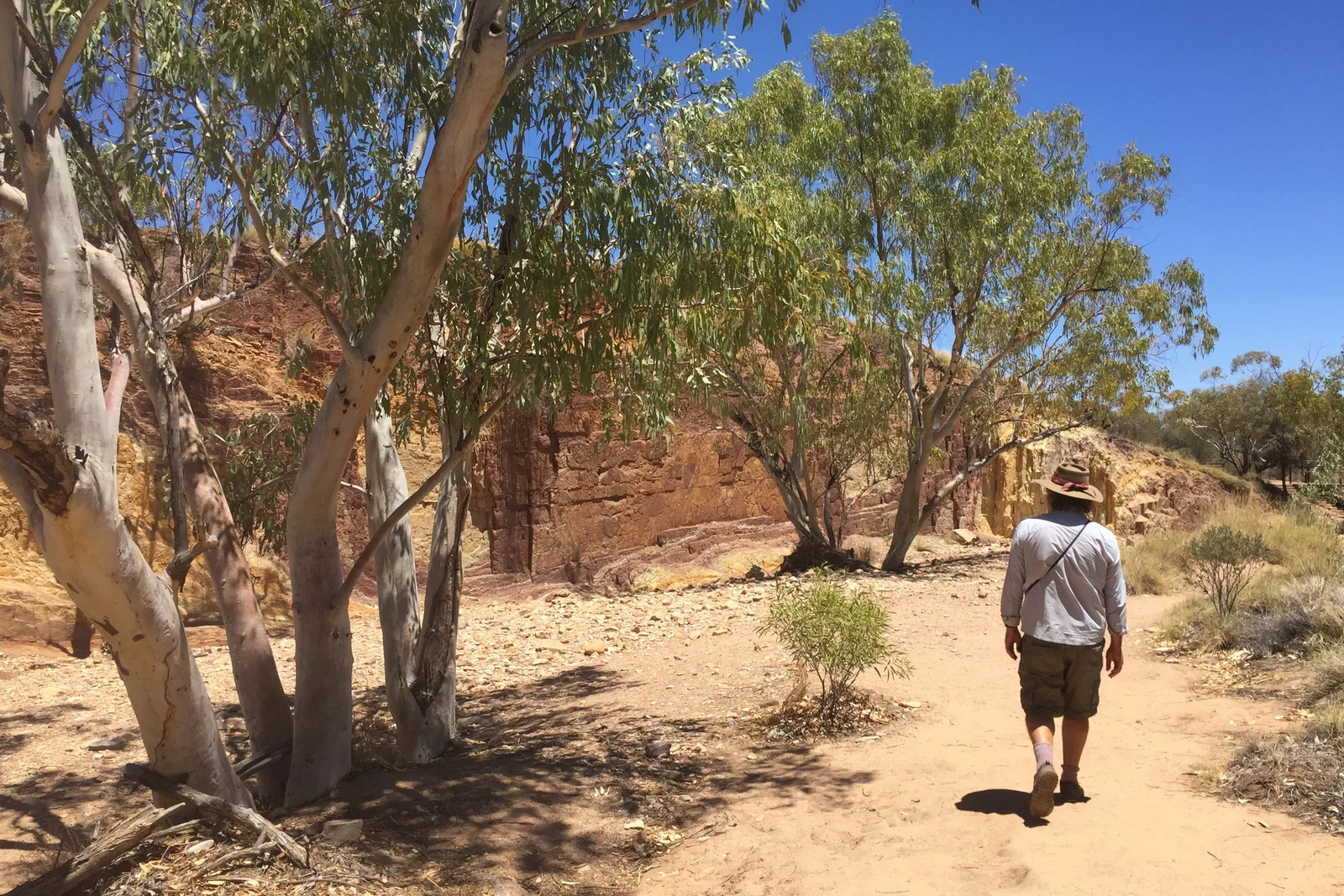
Aboriginal people gathered colorful mineral rock at the famous Ochre Pits for many centuries.
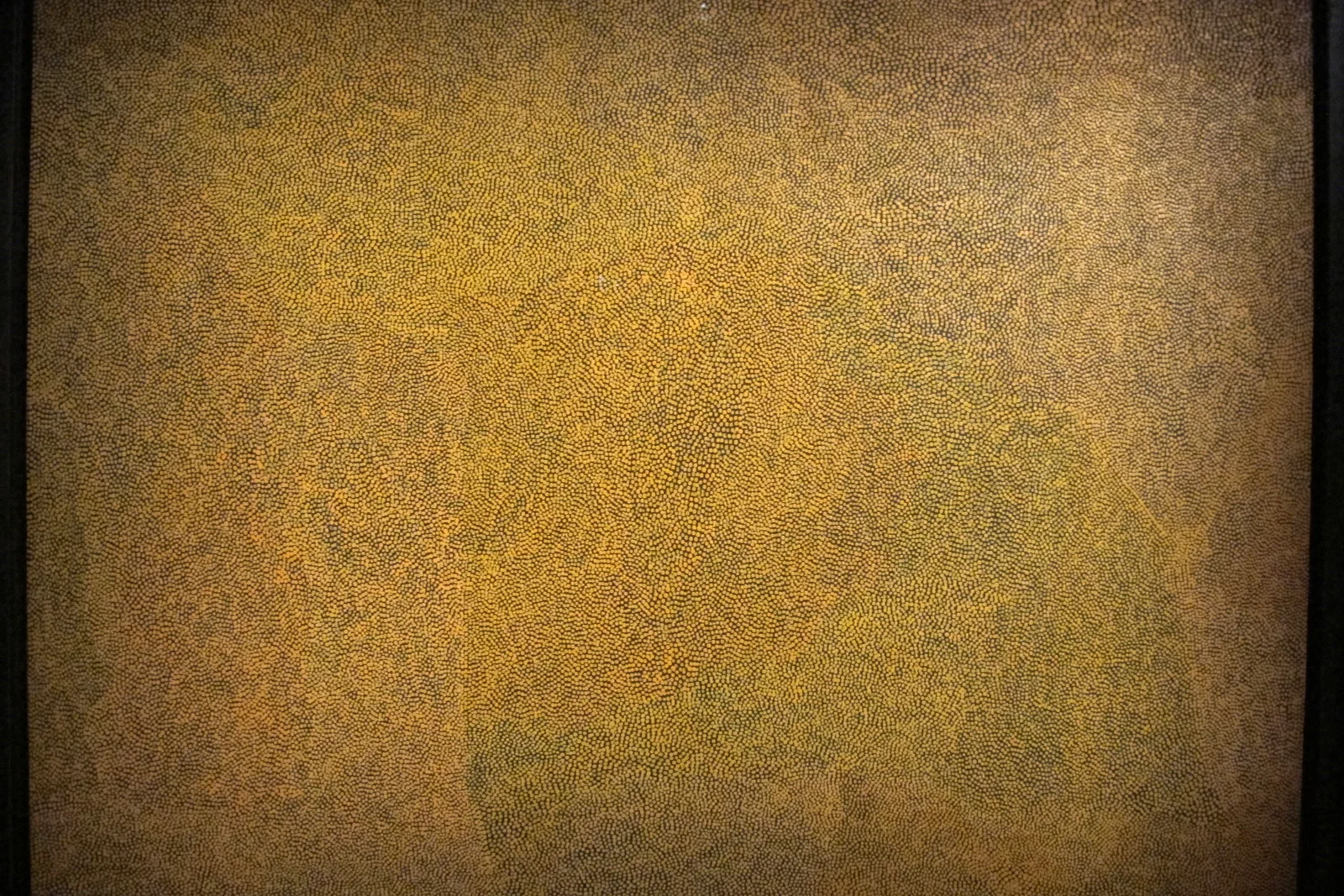
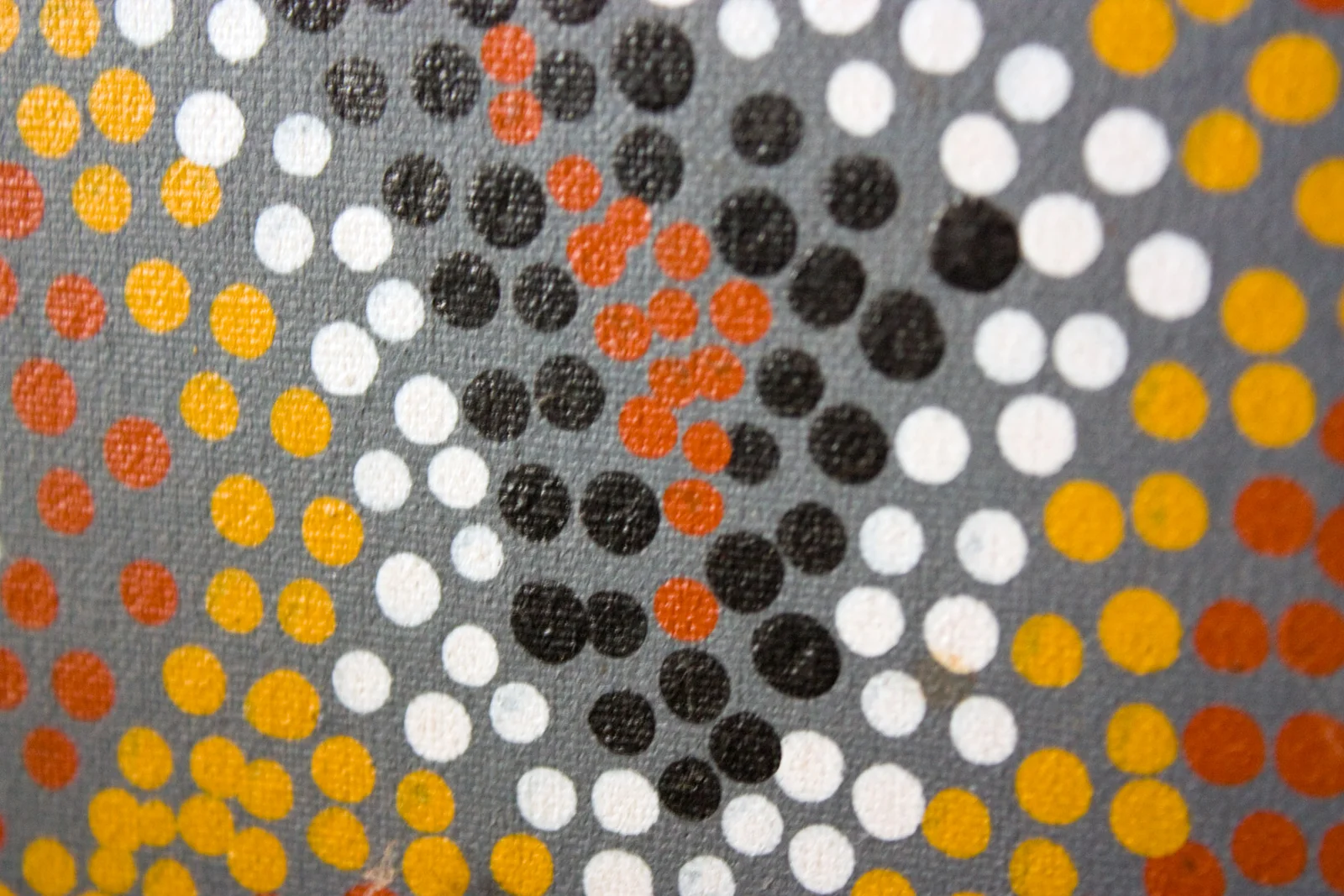
Painters use small wooden sticks and fine brushes to make neat dots of paint.
Community art centers like Warlukurlangu at Yuendumu help local painters sell original works fairly.
Money from selling art helps remote desert towns build clinics and buy school supplies.
An organization called Desart helps more than thirty Indigenous art centers across Central Australia.
Legal Protection and Global Respect
A landmark court case led by John Bulun Bulun in 1998 protected communal art rights.
The Indigenous Art Code started in 2009 to protect desert painters from dishonest buyers.
A national law in 2009 gives artists a five percent royalty when paintings are resold.
A famous artist named Emily Kame Kngwarreye created huge paintings of Yam Dreaming stories.
Famous museums in Paris and London show large Aboriginal dot paintings to international visitors.
Modern desert paintings act like real land deeds that prove Aboriginal ownership of country.
A2 · Elementary
Aboriginal Dot Painting and Desert Dreamtime Art
Discover the Papunya Tula art movement, sacred desert iconography, and ethical community art centers.
The Rise of the Papunya Art Movement
In 1971 schoolteacher Geoffrey Bardon arrived at the remote Papunya settlement west of Alice Springs.
Aboriginal elders painted the celebrated Honey Ant mural across the Papunya school wall.
Painters quickly transitioned from temporary sand sculptures and body designs to durable acrylics on canvas.
Artists established the Papunya Tula cooperative in 1972 to manage the ethical sale of paintings.
Elders applied thick layers of dots over background designs to conceal sacred ceremonial knowledge.
The groundbreaking 1988 Dreamings exhibition in New York introduced Western Desert painting to international museums.
Spiritual Law and Desert Iconography
The foundational philosophy of desert painting rests upon Jukurrpa, the sacred ancestral law.
Creator spirits shaped the desert landscape during ancient creation times, forming valleys and waterways.
Concentric circles depict waterholes, campsites, and important ceremonial gathering grounds in the desert.
Curved U-shapes signify people sitting cross-legged on the earth holding straight digging sticks.
Wavy track lines trace the long physical and spiritual journeys of ancestral creator figures.
The sacred Tingari cycle chronicles the epic journeys of creation ancestors across the Gibson Desert.
Earth Pigments and Remote Art Centers
Traditional ceremonies utilized natural red, yellow, and white earth ochres dug from sacred geological quarries.
Arrernte people mined the famous Ochre Pits in the West MacDonnell Ranges over countless generations.
Artists apply acrylic dots with wooden skewers and small brushes to produce a shimmering visual effect.
Community cooperatives like Warlukurlangu at Yuendumu ensure that sales revenue returns directly to artists.
Art sales provide vital funding for remote community infrastructure, medical care, and elder support.
The peak advocacy body Desart supports over thirty Aboriginal-owned art centers across Central Australia.
Cultural Copyright and International Acclaim
In 1998 the Federal Court ruling in John Bulun Bulun recognized communal cultural copyright obligations.
Established in 2009, the Indigenous Art Code prevents dishonest dealers from exploiting remote desert artists.
The 2009 resale royalty law grants artists a five percent payment whenever their artwork is resold.
Renowned artist Emily Kame Kngwarreye gained worldwide fame for monumental paintings celebrating Yam Dreaming songlines.
Leading international museums in Paris and London proudly display Western Desert dot paintings.
Modern desert painting serves as a visual title deed confirming continuous Aboriginal custodianship of country.
B1 · Intermediate
Indigenous Dot Painting and the Western Desert Art Movement
Examining the Papunya revolution, the visual language of the Dreaming, and the cultural integrity of desert art.
The Papunya Genesis and Acrylic Canvas Revolution
The Western Desert art movement began in 1971 when art teacher Geoffrey Bardon arrived at Papunya.
Senior tribal elders collaborated to paint the monumental Honey Ant mural on the local school wall.
The artists transformed ephemeral ceremonial ground art and body paint into permanent acrylic works on canvas.
In 1972, painters incorporated the artist-owned cooperative Papunya Tula Artists to control commercial distribution.
Painters developed dense fields of overlapping dots specifically to obscure sacred-secret ceremonial symbols from uninitiated outsiders.
The celebrated 1988 Dreamings exhibition in New York introduced Western Desert masterpieces to global art institutions.
Cosmological Lore and Desert Symbolism
The spiritual foundation of desert painting derives from Tjukurpa, which articulates ancestral law and creation narratives.
Ancestral creator spirits traveled across the arid continent, creating landforms and imbuing rocks with spiritual power.
Concentric circles represent vital desert waterholes, seasonal campsites, and sacred ceremonial meeting places.
U-shaped pictograms portray human beings seated on the sand, accompanied by linear digging sticks or spears.
meandering pathways and animal tracks map the extensive physical and spiritual travels of creation ancestors.
The revered Tingari cycle recounts the epic travels of ancestral groups traversing the Gibson and Great Sandy Deserts.
Natural Mineral Ochres and Ethical Art Centers
For thousands of years, traditional painters gathered red, yellow, and white earth ochres from ancient mineral quarries.
The vivid Ochre Pits within the West MacDonnell National Park were mined for generations by Arrernte people.
Painters utilize wooden sticks, satay skewers, and delicate brushes to build vibrating fields of colored dots.
Community-owned enterprises like Warlukurlangu at Yuendumu and Ikuntji at Haasts Bluff protect ethical artist remuneration.
Proceeds generated by art sales directly support community infrastructure, local medical transport, and cultural preservation.
The peak organization Desart provides essential governance advocacy for more than thirty Aboriginal art centers.
Indigenous Copyright, Resale Royalties, and Global Legacy
The landmark 1998 Federal Court case John Bulun Bulun confirmed fiduciary duties to protect communal cultural heritage.
Introduced in 2009, the Indigenous Art Code establishes binding fair trading standards against predatory art dealers.
The Resale Royalty Right for Visual Artists Act 2009 guarantees living painters five percent on secondary market sales.
Utopia elder Emily Kame Kngwarreye achieved international prominence for expansive abstract canvases tracing Yam Dreaming songlines.
Major overseas cultural institutions including the British Museum and Paris museums house significant desert art collections.
Desert dot painting stands as an enduring visual title deed asserting unbroken Aboriginal sovereignty and ancestral tenure.
B2 · Upper Intermediate
Indigenous Dot Painting: Iconography, Lore, and Sovereignty
An analytical exploration of the Papunya Tula movement, sacred Tjukurpa iconography, and the legal battles protecting Aboriginal cultural property.
The Papunya Inception and the Acrylic Canvas Renaissance
The modern Western Desert painting movement crystallized in 1971 with the arrival of art teacher Geoffrey Bardon at Papunya.
Senior Pintupi and Luritja elders painted the historic Honey Ant mural on the settlement school wall, sparking an artistic renaissance.
Artists translated transient ceremonial sand sculptures and sacred body painting onto durable hardboard and acrylic canvas.
The artist-owned cooperative Papunya Tula Artists was formally incorporated in 1972 to manage intellectual property and sales.
The distinctive dotting technique evolved intentionally to conceal sacred ceremonial iconography from uninitiated audiences.
The landmark 1988 Dreamings exhibition in New York catapulted Western Desert acrylic painting onto the international contemporary art stage.
Tjukurpa Cosmology and the Visual Lexicon of the Desert
Desert aesthetics are fundamentally anchored in Jukurrpa, an all-encompassing philosophy unifying ancestral creation, moral law, and land.
Ancestral beings moved across primordial landscapes, gouging watercourses and imbuing geological formations with sacred potency.
Concentric circles function as primary iconographic symbols indicating life-sustaining waterholes, desert soaks, and ceremonial sites.
Distinctive U-shaped motifs delineate human figures seated cross-legged on the earth, often accompanied by hunting spears.
Undulating tracks and directional lines record the ancient spatial navigations of creator ancestors across desert topographies.
The sacred Tingari cycle details the transformative wanderings of ancestral creation parties through the Gibson Desert.
Mineral Ochres, Dot Application, and Art Center Collectives
Traditional ceremonies utilized rich red, yellow, and white earth ochres extracted from venerable geological quarries.
The renowned Ochre Pits in the West MacDonnell National Park were systematically mined by Arrernte people for intertribal trade.
Contemporary artists employ wooden skewers, cut twigs, and fine brushes to create dynamic optical shimmer across the canvas.
Community art centers such as Warlukurlangu at Yuendumu and Ikuntji at Haasts Bluff secure transparent revenue return for artists.
Commercial revenue flowing into community art centers funds vital local healthcare, school programs, and elder care facilities.
Desart operates as the peak advocacy organization supporting more than thirty Central Australian Indigenous art cooperatives.
Indigenous Intellectual Property, Resale Rights, and Global Stature
The pivotal 1998 Federal Court ruling in John Bulun Bulun v R & T Textiles recognized legal fiduciary duties to protect communal knowledge.
Promulgated in 2009, the Indigenous Art Code establishes rigorous ethical benchmarks to shield vulnerable painters from exploitation.
The Resale Royalty Right for Visual Artists Act 2009 entitles creators to a five percent royalty on secondary market transactions.
Utopia master Emily Kame Kngwarreye achieved global acclaim with monumental canvases mapping her sacred Yam Dreaming inheritance.
Prestigious international museums including the British Museum and the Musee du quai Branly in Paris hold desert dot paintings.
Central Australian desert painting functions as a living visual title deed affirming enduring Aboriginal sovereignty over ancestral homelands.
C1 · Advanced
Indigenous Dot Painting and the Western Desert Art Movement
A comprehensive analysis of Papunya Tula acrylic abstraction, sacred Jukurrpa cartography, communal copyright jurisprudence, and global museum reception.
Papunya Genesis, Material Transmutation, and the Politics of Secrecy
The Western Desert art movement crystallized in 1971 following the arrival of visionary art teacher Geoffrey Bardon at Papunya settlement.
Senior elders executed the seminal Honey Ant mural across the Papunya school wall, transmuting ceremonial ground mosaics into public painting.
Artists decisively shifted from ephemeral sand paintings and ground sculptures to modern synthetic polymer acrylics on linen canvas.
The artists formally incorporated Papunya Tula Artists in 1972 as an Indigenous-owned cooperative to maintain commercial autonomy.
The distinctive dotting methodology was strategically deployed to overdot and veil sacred esoteric motifs from uninitiated viewers.
The celebrated 1988 Dreamings exhibition in New York inaugurated international museum recognition for Western Desert contemporary abstraction.
Jukurrpa Cosmology, Sacred Topography, and the Spatial Lexicon
The intellectual scaffolding of desert painting resides in Jukurrpa, an ontological cosmology uniting creation lore, ecology, and kinship.
Ancestral creation progenitors traversed the primordial topography, depositing sacred essence and establishing immutable territorial boundaries.
Concentric circles operate as foundational glyphs denoting subterranean waterholes, ancestral campsites, and sacred ceremonial grounds.
U-shaped motifs depict seated human figures cross-legged upon the sand, frequently juxtaposed with foraging digging sticks.
Meandering songline tracks map the continental spatial trajectories carved by mythological creator beings during creation.
The sacred Tingari cycle preserves the esoteric narratives of ancestral creation groups wandering across the Gibson Desert.
Natural Ochre Mining, Optical Vibration, and Cooperative Enterprise
For millenary epochs, desert ceremonies utilized natural hematite and limonite earth ochres excavated from sacred geological quarries.
The historic Ochre Pits in the West MacDonnell National Park were systematically mined by Arrernte custodians for regional barter.
Painters apply dense constellations of acrylic dots with wooden skewers and fine brushes, generating dazzling optical vibration.
Community-owned art centres such as Warlukurlangu at Yuendumu guarantee ethical provenance and equitable revenue distribution to painters.
Commercial proceeds generated by art centres directly underwrite remote community clinics, educational resources, and cultural preservation.
Desart functions as the paramount peak advocacy organization supporting over thirty Aboriginal-owned art cooperatives across Central Australia.
Communal Copyright Jurisprudence, Resale Equity, and Visual Sovereignty
The landmark 1998 Federal Court decision in John Bulun Bulun v R & T Textiles recognized fiduciary stewardship over communal cultural property.
Formulated in 2009, the Indigenous Art Code establishes statutory ethical standards to suppress predatory exploitation by unscrupulous dealers.
The Resale Royalty Right for Visual Artists Act 2009 legally mandates a five percent royalty payment on secondary art resales.
Utopia matriarch Emily Kame Kngwarreye garnered global acclaim for monumental expressive canvases embodying her Yam Dreaming ancestry.
International institutions including the British Museum and the Musee du quai Branly in Paris prominently exhibit desert masterworks.
Contemporary desert painting operates as an irrefutable visual title deed demonstrating unceded Aboriginal sovereignty across ancestral homelands.
C2 · Mastery
Aboriginal Dot Painting and Desert Lore: Sacred Space and Sovereignty
A definitive critique of Western Desert acrylic modernism, esoteric Jukurrpa cartography, communal copyright jurisprudence, and aesthetic decolonization.
The Papunya Catalyst, Material Transmutation, and Hermeneutic Veiling
The Western Desert painting movement discovered an unexpected catalyst in 1971 when schoolteacher Geoffrey Bardon arrived at the remote Papunya settlement.
Senior Indigenous elders painted the monumental Honey Ant mural on the school exterior, inaugurating an extraordinary aesthetic renaissance.
The painters transposed ephemeral sand mosaics and ceremonial body decoration into permanent synthetic polymer acrylics on hardboard and canvas.
The artists formally incorporated the Papunya Tula cooperative in 1972, safeguarding economic independence and cultural self-determination.
The ubiquitous dotting technique functioned as an act of hermeneutic veiling deployed to conceal sacred esoteric iconography from uninitiated eyes.
The groundbreaking 1988 Dreamings exhibition in New York introduced Western Desert painting to the global contemporary art cannon.
Ontological Cartography, Jukurrpa Epistemology, and Mythic Topography
The philosophical architecture of desert painting emanates from Jukurrpa, an ontological paradigm integrating ancestral myth, law, and land.
Ancestral demiurges traversed the primordial continent, imbuing physical features with enduring metaphysical vitality during creation.
Concentric circles denote subterranean aquifers, permanent desert soaks, and sacred ceremonial spaces where ritual songlines converge.
The ubiquitous U-shaped glyph signifies human bodies seated cross-legged on the sand, accompanied by linear digging sticks.
Undulating track motifs delineate continental migration corridors, transforming the canvas into a sophisticated cognitive map of country.
The sacred Tingari cycle embodies the mythic pedagogical journeys of ancestral creation groups traversing the Gibson Desert.
Ochre Mineralogy, Pointillist Dynamics, and Cooperative Governance
The rich mineralogy of natural earth ochres sustained ceremonial painters who excavated sacred geological quarries for tens of thousands of years.
The celebrated Ochre Pits in the West MacDonnell National Park were mined for millennia by Arrernte custodians for continent-wide trade.
Contemporary painters deploy wooden skewers, satay sticks, and fine brushes to generate pointillist optical shimmer across the canvas.
Community-owned art centres such as Warlukurlangu at Yuendumu establish transparent provenance and equitable remuneration for artists.
Enterprise revenues generated by art centre sales directly fund remote healthcare initiatives, educational support, and cultural archives.
Desart operates as the paramount advocacy confederation representing more than thirty Central Australian Aboriginal-owned art centres.
Fiduciary Jurisprudence, Resale Equity, and Decolonial Title
Landmark copyright jurisprudence was established in the 1998 Federal Court ruling in John Bulun Bulun v R & T Textiles, recognizing fiduciary obligations safeguarding communal cultural heritage.
Promulgated in 2009, the Indigenous Art Code establishes mandatory fair trading benchmarks to eradicate predatory carpetbagging in remote regions.
The Resale Royalty Right for Visual Artists Act 2009 entitles creators to a statutory five percent royalty on secondary market transactions.
Utopia elder Emily Kame Kngwarreye achieved international prominence with monumental canvases translating her organic Yam Dreaming inheritance.
World-renowned institutions such as the British Museum and the Musee du quai Branly in Paris house expansive collections of desert dot paintings.
Desert acrylic painting endures as a profound visual title deed asserting unextinguished Aboriginal sovereignty over ancestral desert estates.
Check your understanding
Choose how closely you want to revisit the article. You can refer back while answering, and review explanations when you finish.
Quick Quiz A1
Try one question, then create a free account for the full Quick Quiz. Sign Up Free
Answer every question before checking. There is no time limit.
Your results
/ 1 correct (%)
Read the explanations to see how each answer connects to the article.
-
In which year did schoolteacher Geoffrey Bardon arrive at the desert settlement of Papunya?
1. Answer:
Quick Quiz A2
Try one question, then create a free account for the full Quick Quiz. Sign Up Free
Answer every question before checking. There is no time limit.
Your results
/ 1 correct (%)
Read the explanations to see how each answer connects to the article.
-
In which year did schoolteacher Geoffrey Bardon arrive at the desert settlement of Papunya?
1. Answer:
Quick Quiz B1
Try one question, then create a free account for the full Quick Quiz. Sign Up Free
Answer every question before checking. There is no time limit.
Your results
/ 1 correct (%)
Read the explanations to see how each answer connects to the article.
-
In which year did schoolteacher Geoffrey Bardon arrive at the desert settlement of Papunya?
1. Answer:
Quick Quiz B2
Try one question, then create a free account for the full Quick Quiz. Sign Up Free
Answer every question before checking. There is no time limit.
Your results
/ 1 correct (%)
Read the explanations to see how each answer connects to the article.
-
In which year did schoolteacher Geoffrey Bardon arrive at the desert settlement of Papunya?
1. Answer:
Quick Quiz C1
Try one question, then create a free account for the full Quick Quiz. Sign Up Free
Answer every question before checking. There is no time limit.
Your results
/ 1 correct (%)
Read the explanations to see how each answer connects to the article.
-
In which year did schoolteacher Geoffrey Bardon arrive at the desert settlement of Papunya?
1. Answer:
Quick Quiz C2
Try one question, then create a free account for the full Quick Quiz. Sign Up Free
Answer every question before checking. There is no time limit.
Your results
/ 1 correct (%)
Read the explanations to see how each answer connects to the article.
-
In which year did schoolteacher Geoffrey Bardon arrive at the desert settlement of Papunya?
1. Answer:
