A1 · Beginner
Käsekrainer Sausage and Austrian Sausage Stand Culture
How small street stands in Austrian cities serve hot cheese sausages with bread and mustard.
Butcher Recipes and Cheese Sausage History
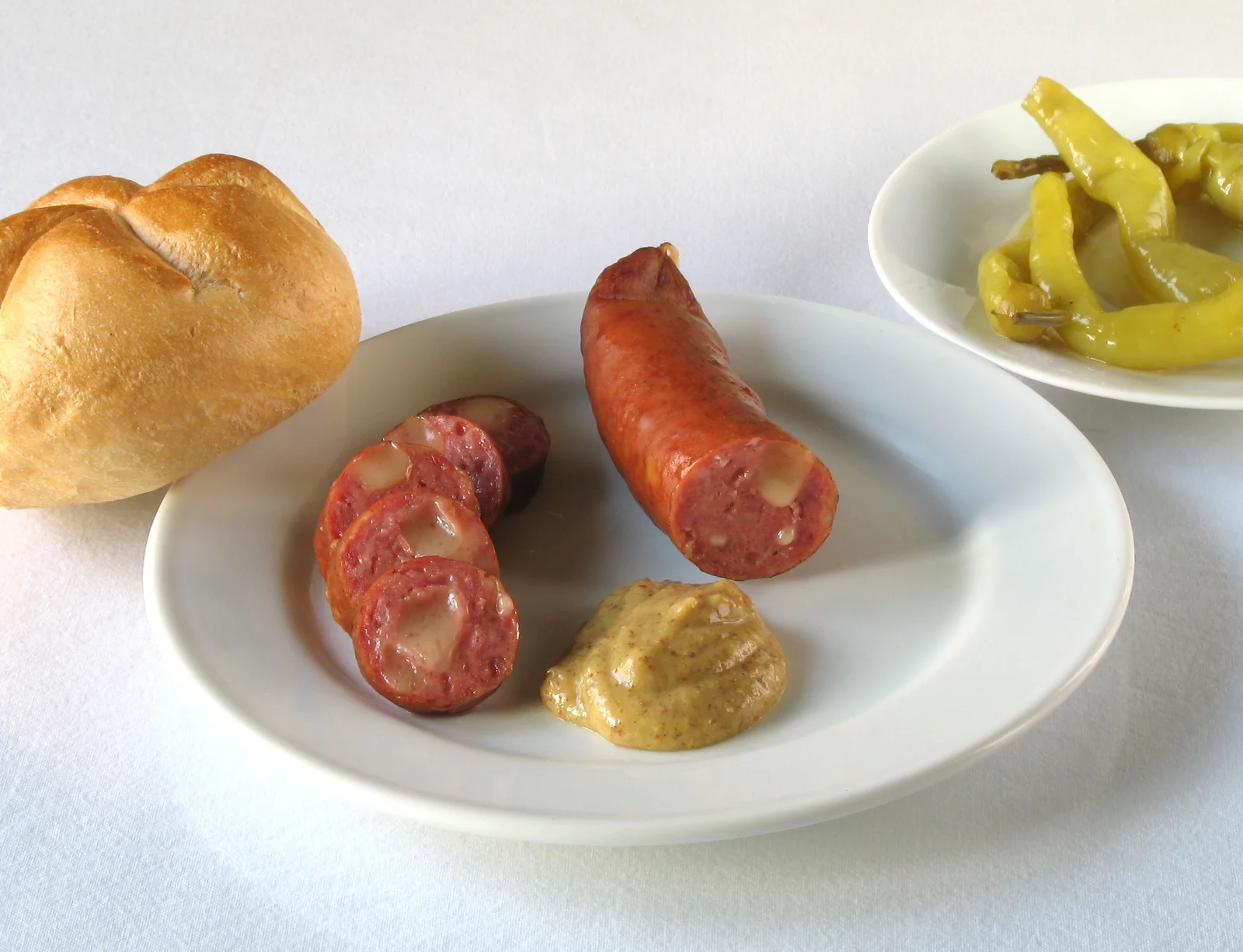
Austrian butchers created the Käsekrainer sausage during the late twentieth century.
Coarse pork and beef are mixed with small cubes of rich Emmentaler cheese.
Butchers fill thin pork casings with the savory meat and cheese mixture.
The sausages hang inside special smokehouses over mild beechwood fires for gentle smoking.
In 2012 a famous culinary agreement between Austria and Slovenia protects both national sausage names.
Family butcher shops across Austria make regional variations of this famous sausage today.
Hot Griddles and Sizzling Cheese Feet
Cooks warm the sausages slowly on wide flat grills to heat the meat evenly.
Piercing the thin casing with a fork releases tiny drops of hot liquid cheese.
The hot melted cheese hits the flat iron surface and sizzles loudly in the kitchen.
Golden crispy edges form quickly on the grill and are known as cheese feet.
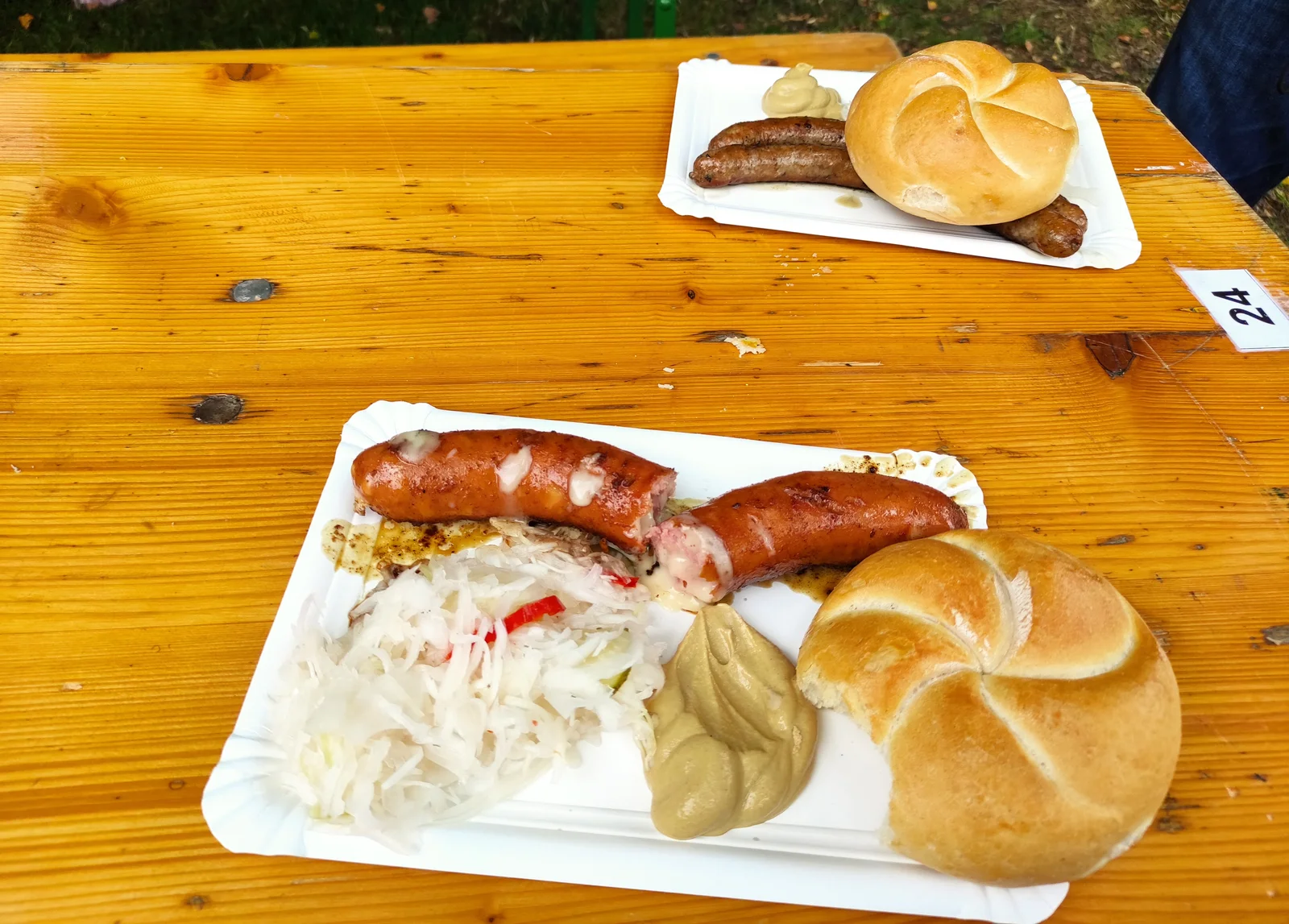
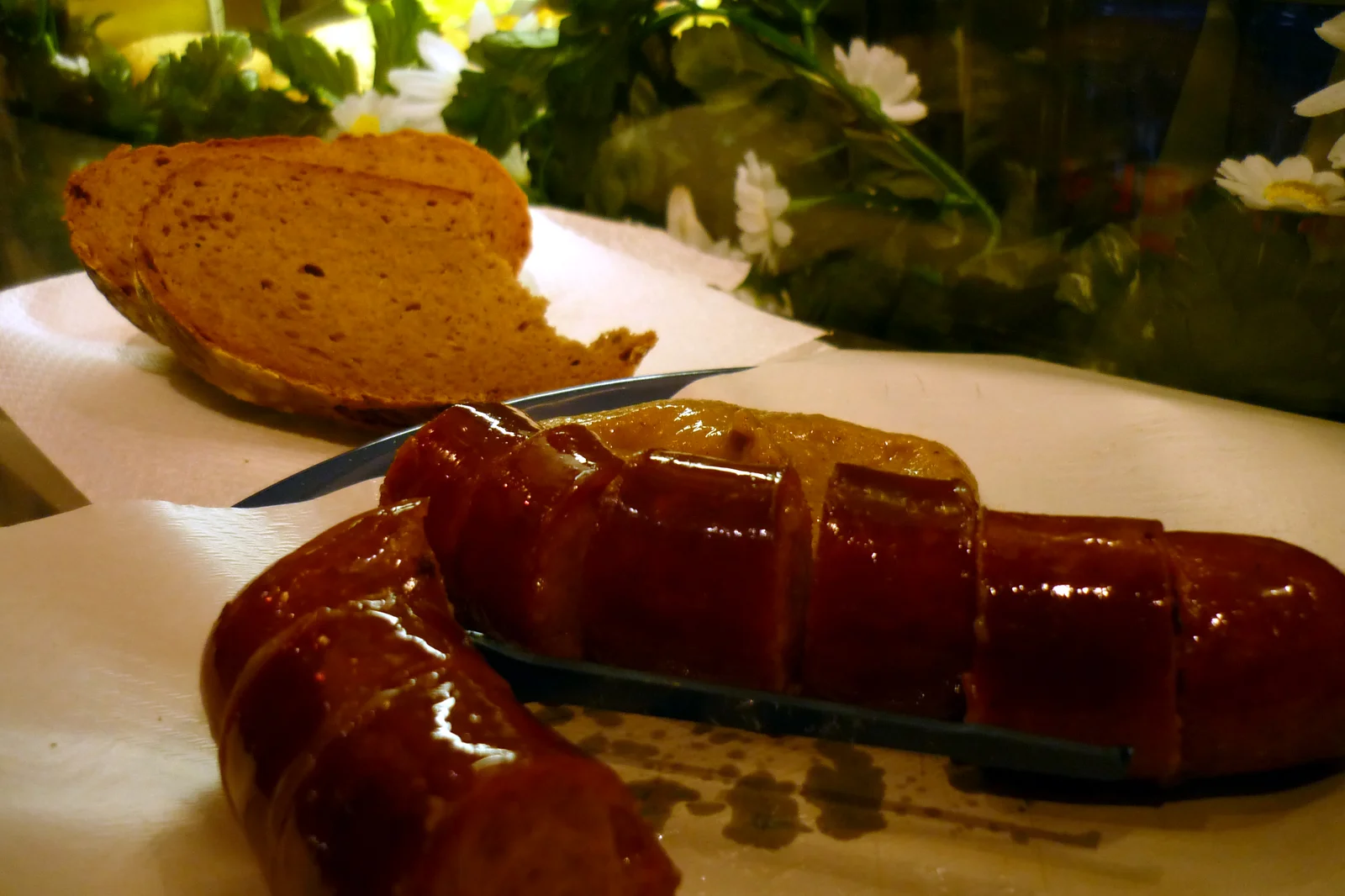
The warm sausage combines a crunchy outer skin with smooth melted cheese inside.
Stand workers slice the hot sausage into small pieces using sharp metal shears.
Street Stands, Bread Rolls, and Night Workers
The first Austrian sausage sellers pushed small wooden carts through city streets long ago.
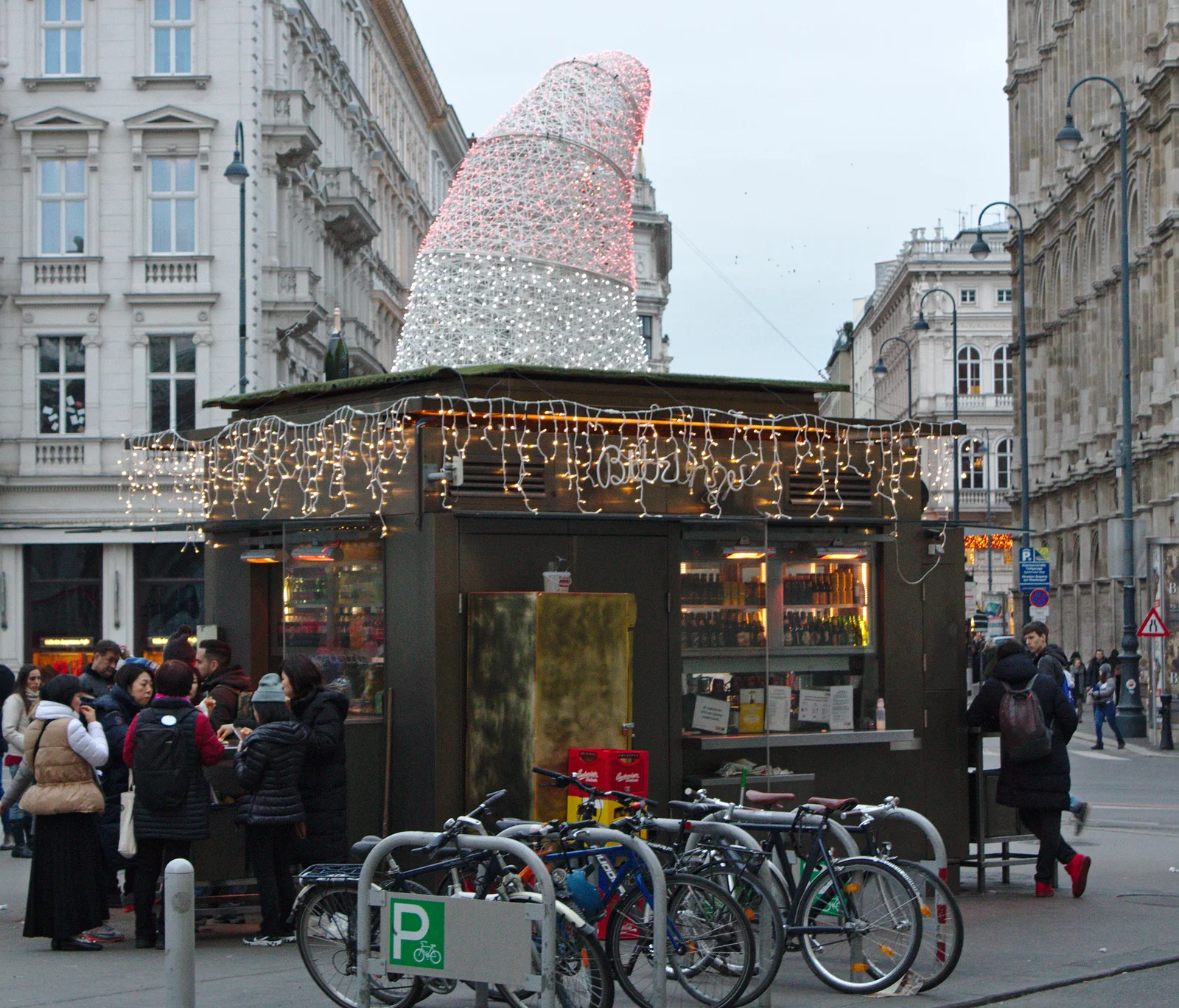
In 1969 the city allowed permanent sausage kiosks on open public sidewalks and plazas.
Workers, students, and night travelers stand together around the metal counter to eat.
Servers place the hot sausage on a paper plate with crusty bread and mustard.
Customers use traditional Viennese dialect words when ordering hot sausages at the stand.
Sausage kiosks stay open very late to serve hungry people during cold winter nights.
Living Traditions and City Heritage
In 2024 UNESCO recognized Viennese sausage stand culture as a treasured national tradition.
Bright kiosks feature stainless steel counters and small roofs that protect guests from rain.
Many modern sausage stands buy fresh organic meat from local country farms and butchers.
Local neighbors visit the same stand every week to talk with friendly stand owners.
City inspectors visit every kiosk regularly to ensure the food stays fresh and clean.
Street sausage stands remain a warm and welcoming part of daily urban life in Austria.
A2 · Elementary
Käsekrainer Sausage and Austrian Sausage Stand Culture
Smoked pork sausages filled with cheese, sizzling street griddles, and historic night stands across Austrian squares.
Butcher Craftsmanship and Recipe Development
Austrian butcher shops developed the modern Käsekrainer sausage by enriching traditional smoked meat recipes with cheese.
The standard formulation blends coarsely ground pork, selected beef, and diced Emmentaler cheese cubes.
Master butchers pack the prepared meat and cheese filling into natural hog casings.
Mild beechwood smoke imparts a distinctive golden brown color and aromatic flavor to the hanging sausages.
In 2012 an official agreement between Austria and Slovenia established clear legal names for their respective sausages.
Butchers throughout Upper Austria, Styria, and Vienna craft distinctive batches according to long butcher traditions.
Griddling Dynamics and the Formation of Käsefusserl
Sausage stands prepare the Käsekrainer slowly on flat steel griddles over moderate heat.
The cook pierces the taut sausage skin with a fork to allow hot cheese to escape.
Escaping molten cheese contacts the hot griddle surface and begins to fry into crisp crusts.
Locals affectionately call these crunchy, caramelized cheese formations Käsefusserl across Austrian street menus.
This technique produces a crisp exterior casing that contrasts with the rich melted cheese inside.
The server uses curved butcher shears to slice the finished sausage into convenient bite-sized rounds.
The Urban Würstelstand and Social Counter Culture
Viennese sausage stands began in the nineteenth century as mobile wooden carts operated by military veterans.
Municipal authorities granted permanent licenses for fixed street kiosks in central Vienna beginning in 1969.
The sausage stand functions as a social equalizer where office clerks, tradespeople, and theater patrons gather together.
Traditional orders include a crusty round Semmel roll or dense dark sourdough bread alongside sharp mustard.
Regular customers use characteristic Viennese dialect phrases to specify their preferred sausage cuts and condiments.
Extended nighttime operating hours make these street kiosks vital gathering spots near railway stations and theaters.
Preserving Culinary Heritage in Modern Austrian Cities
The Austrian Commission for UNESCO inscribed Viennese Würstelstand culture onto the national intangible cultural heritage register.
Distinctive kiosks showcase polished stainless steel service counters, bright neon signs, and standing ledges.
Forward-looking kiosk proprietors collaborate with regional artisan butchers to procure certified pasture-raised pork and beef.
While tourists seek out historic stands, neighborhood residents provide dependable daytime patronage throughout the working week.
Municipal health officers inspect refrigeration units and prep surfaces to maintain strict food hygiene regulations.
The persistent popularity of sausage stands highlights Austria's ongoing appreciation for accessible public street cuisine.
B1 · Intermediate
Käsekrainer Sausage and Austrian Sausage Stand Culture
Culinary history, flat-top griddling techniques, and the egalitarian late-night ritual of Austrian sausage stands.
Origins, Meat Ratios, and Beechwood Smoking
The Käsekrainer emerged in post-war Austria when creative butchers modified traditional Carniolan sausage methods with diced alpine cheese.
Official Austrian butchery guidelines require coarse pork shoulder, lean beef trim, and approximately ten to twenty percent Emmentaler cheese.
Tightly packed into natural pork casings, each link retains firm moisture while absorbing delicate hardwood smoke compounds.
Curing and hot smoking over fragrant beechwood embers impart a mellow woodsy aroma and durable casing resilience.
A landmark 2012 diplomatic settlement between Austria and Slovenia safeguarded both the Slovenian Kranjska klobasa and Austrian Käsekrainer denominations.
Regional meat masters in Styria, Upper Austria, and Lower Austria preserve subtle generational nuances in spice blending and smoking duration.
Flat-Top Griddling and the Sizzle of Käsefusserl
Achieving optimal texture demands slow pan frying on a seasoned flat-top steel griddle rather than hasty high-heat boiling.
The vendor gently pricks the taut outer skin with specialized forks to release pressurizing melted cheese during heating.
As droplets of creamy Emmentaler spill onto searing metal, they fry instantly into lacy, golden-brown crusts termed Käsefusserl.
Experienced grill masters rotate the links methodically to cultivate maximum cheese crust without scorching delicate milk solids.
This thermal process yields a textural contrast between snappy exterior casings, juicy meat matrix, and molten dairy pockets.
Servers rapidly slice the blistered links into uniform bite-sized pieces with ergonomic butcher shears upon customer request.
Street Kiosks, Midnight Crowds, and Counter Etiquette
Mobile wooden cook wagons originated during the late Habsburg Empire as state-licensed concessions for disabled military veterans.
In 1969 municipal reforms permitted stationary kiosks on Vienna streets, transforming seasonal carts into permanent urban institutions.
The contemporary Würstelstand serves as an egalitarian gathering point where shift workers, corporate executives, and students mingle effortlessly.
Orders arrive promptly on sturdy paper trays flanked by a crisp Semmel bread roll, sweet Kremser mustard, or pungent estragon mustard.
Ordering customs embrace expressive Viennese dialect terminology that designates precise combinations of bread, pickles, and sausages.
By operating well past midnight, these illuminated sidewalk counters sustain pedestrian vitality across Vienna plazas and train stations.
Cultural Inscription and Modern Gastronomic Vitality
Recognizing centuries of civic hospitality, the Austrian Commission for UNESCO formally added Viennese sausage stand culture to its intangible heritage inventory.
Standard kiosk architecture combines utilitarian stainless steel prep surfaces, protective awnings, and elevated standing bars for patrons.
Modern operators emphasize provenance by sourcing naturally pastured meats, additive-free seasonings, and local alpine cheeses from family butchers.
While international travelers flock to famous central kiosks, neighborhood outposts rely primarily on daily patronage from dedicated local regulars.
Rigorous health inspections by municipal market authorities ensure refrigerated storage compliance and exemplary sanitation throughout long operating shifts.
The enduring vitality of Austrian sausage stands demonstrates how street food can anchor urban sociability and living culinary heritage.
B2 · Upper Intermediate
Käsekrainer Sausage and Austrian Sausage Stand Culture
The evolution of cheese-studded sausages, street griddle caramelization, and the civic heritage of Viennese kiosks.
Butcher Artistry, Compositional Norms, and Legal Accord
The culinary development of the Käsekrainer reflects innovative Austrian adaptation of southeastern European sausage traditions during the late twentieth century.
Under Austrian food codex standards, authentic Käsekrainer must incorporate high-quality coarse pork, selected beef, and genuine alpine Emmentaler cheese.
Master butchers pack the meat and cheese filling into natural hog casings to maintain internal moisture.
Gentle smoking over untreated beechwood logs cures the natural hog casing while embedding savory aromatic nuances throughout the meat.
The formal 2012 bilateral agreement between Austria and Slovenia concluded years of geographic naming debates by granting protected status to both regional specialties.
Generational butcher guilds across Upper Austria, Styria, and metropolitan Vienna uphold rigorous artisanal standards through exacting meat selection.
Thermal Dynamics and the Art of the Caramelized Foot
Preparing an authentic Käsekrainer requires precise heat management on flat steel planchas to liquefy interior cheese without rupturing the casing.
Experienced grill attendants make precise diagonal incisions or pin pricks that encourage molten Emmentaler to escape onto the hot griddle.
Upon contacting the heated metal, the escaped cheese undergoes rapid Maillard browning and dehydration to create the celebrated crunchy Käsefusserl.
Balancing griddle temperatures between different heating zones prevents bitter carbonization of dairy lactose while thoroughly warming the coarse pork interior.
The finished sausage delivers an alluring sensory profile marked by a crisp exterior snap, savory garlic notes, and velvety melted cheese pockets.
Skilled cooks use curved butcher shears to segment the hot sausage into uniform morsels, allowing cheese skirts to cling to every serving.
The Egalitarian Counter and Midnight Urban Rituals
Viennese street sausage culture traces its operational roots to mobile imperial cook carts granted to injured war veterans as livelihood concessions.
The decisive legal modernization occurred in 1969 when municipal authorities authorized stationary kiosk structures on public rights-of-way throughout Vienna.
The resulting Würstelstand became a quintessential public salon where social stratification evaporates over paper plates and communal standing bars.
Culinary custom dictates serving the sliced sausage with dark caraway rye bread or a crisp Semmel, accompanied by sweet Kremser or sharp tarragon mustard.
A vibrant vernacular lexicon flourishes at the counter, allowing customers to communicate complex preferences using historic Viennese dialect expressions.
Open into the early morning hours, these illuminated street outposts serve as dependable social waypoints across transit junctions and theater plazas.
Heritage Stewardship and Contemporary Gastronomic Renewal
Formal recognition by the Austrian Commission for UNESCO elevated Viennese sausage stand culture to the national register of intangible cultural heritage.
Functional kiosk architecture featuring compact stainless steel worktables, neon marquees, and cantilevered standing shelves fosters immediate neighborhood intimacy.
Contemporary stand proprietors actively modernize the craft by partnering with independent slaughterhouses to provide certified organic, locally raised meats.
Although prominent inner-city stands attract substantial international tourism, peripheral kiosks depend upon multigenerational local regulars for commercial survival.
Continuous municipal market authority oversight guarantees that refrigerated showcases and cooking surfaces adhere to stringent microbiological safety norms.
The resilient prominence of Austrian sausage stands reinforces the democratic value of accessible, open-air public dining in modern European urban centers.
C1 · Advanced
Käsekrainer Sausage and Austrian Sausage Stand Culture
Butcher craftsmanship, cheese caramelization physics, and the socio-cultural fabric of Austrian street gastronomy.
Charcuterie Provenance, Formulation, and Beechwood Smoke
Tracing the historical provenance of the Käsekrainer reveals an Austrian reinterpretation of classical Carniolan charcuterie principles during the late twentieth century.
Butcher standards mandate strict meat proportions, combining coarsely diced pork shoulder, lean beef trim, and cubes of aged Emmentaler cheese.
Encased within breathable natural hog casings, the emulsion safeguards vital internal humidity while welcoming aromatic hardwood smoke compounds.
Suspended in specialized smoking kilns over glowing beechwood embers, the links acquire a glossy mahogany tint and firm structural cohesion.
The resulting product was codified under Austrian food regulations following a landmark 2012 accord with Slovenia regarding regional sausage designations.
Renowned family charcuteries across Upper Austria and Styria preserve generational artisanship by hand-mixing distinctive seasoning bouquets for their batches.
Thermal Mechanics, Griddle Physics, and Käsefusserl
Mastering the flat griddle requires nuanced temperature staging, because excessive initial heat threatens to rupture the taut casing prematurely.
The cook employs strategic pricking with fine needles to release controlled jets of boiling whey and liquified milkfat.
Through these perforated channels, golden dairy fats discharge onto the searing steel, triggering vigorous localized caramelization.
The resulting crispy cheese skirts, universally cherished as Käsefusserl, impart remarkable savoriness to the blistering sausage exterior.
This culinary transformation provides a distinctive tactile journey, contrasting a brittle outer snap with luxurious pools of warm melted cheese.
Operators skillfully employ curved butcher shears to portion the piping hot links into neat, mouth-sized pieces for immediate service.
The Egalitarian Kiosk, Street Etiquette, and Nocturnal Vitality
Evolving from itinerant mobile wheeled carts licensed to imperial veterans, sausage vending has long shaped Austrian street culture.
In 1969 municipal market authorities granted permanent operating permits for fixed street kiosks across central Vienna.
Today the local Würstelstand stands as an exceptionally egalitarian institution where construction laborers, opera attendees, and students assemble companionably.
Customers receive their orders on recyclable paper trays accompanied by crusty bread rolls and traditional condiments like sharp mustard and pickled peppers.
The lively ordering dialogue relies heavily on colourful vernacular terminology, where historic Viennese slang designates precise sausage varieties and side dishes.
These luminous street kiosks function as nocturnal community anchors, offering warm sustenance to travelers and late-night strollers across urban crossroads.
Intangible Cultural Heritage and Contemporary Stewardship
The Austrian Commission for UNESCO officially inscribed Viennese sausage stand culture upon its national ledger of intangible cultural heritage.
Architectural preservation of historic metal kiosks balances streamlined stainless steel sanitation standards with vintage neon lighting and classic exterior profiles.
Forward-thinking proprietors deliberately champion sustainable food sourcing by procuring certified heritage pork and artisanal alpine cheeses for daily menus.
While iconic downtown stands attract substantial tourist foot traffic, suburban kiosks rely on steadfast daytime trade from neighbourhood workers and residents.
Routine inspections by municipal food safety agencies enforce rigorous cold-chain integrity and sanitization practices across every active operating district.
The sustained success of Austrian sausage culture underscores the deep civic appetite for communal open-air gastronomy and living municipal heritage.
C2 · Mastery
Käsekrainer Sausage and Austrian Sausage Stand Culture
Gastro-historical lineage, thermal cheese mechanics, and the democratic civic ethos of the Viennese Würstelstand.
Gastro-Historical Lineage and Butchery Codification
Examining the regional lineage of the Käsekrainer illuminates how mid-twentieth-century Austrian butchers reimagined traditional south-Slavic Carniolan pork sausage recipes.
Official charcuterie statutes mandate an exacting admixture of coarsely textured pork, beef trim, and dense alpine Emmentaler cheese cubes.
Stuffed securely into natural collagen casings, the sausage maintains mechanical integrity throughout the initial hot-water parboiling cycle.
Subsequent exposure to smoldering beechwood logs imbues the cured meat with aromatic phenols while conferring an indelible bronze surface luster.
A formal 2012 bilateral concordat between Vienna and Ljubljana permanently resolved geographic nomenclature disputes, protecting Austrian and Slovenian culinary sausage naming traditions alike.
Independent butcher guilds across Upper Austria, Styria, and Vienna sustain this craft through exacting meat curing recipes and rigorous peer review.
Thermal Dynamics and the Synthesis of Cheese Feet
Achieving the optimal finish requires calculated griddle orchestration, utilizing variable temperature sectors across a heavy carbon-steel surface.
The chef administers deliberate puncture incisions across the taut casing, prompting molten dairy fats to emerge under internal vapor pressure.
This controlled effusion onto searing metal induces instantaneous Maillard reactions, precipitating crispy amber rinds known colloquially as Käsefusserl.
Rapid thermal coagulation transforms escaped milk proteins into crunchy savory skirts that adhere firmly to the exterior sausage wall.
Differential cheese viscosity between the crisp caramelized exterior casing and fluid interior reservoir establishes a celebrated sensory interplay of textures on the palate.
The cook employs heavy butcher implements to sever the steaming cylinder into bite-sized disks without squandering precious melted cheese contents.
The Democratic Sanctuary and Nocturnal Street Etiquette
The historical antecedents of the Viennese Würstelstand reside in mobile wooden cookers authorized by the Habsburg monarchy for disabled army veterans.
A landmark municipal ordinance in 1969 formally sanctioned stationary street pavilions, cementing their presence across Vienna's civic landscape.
The contemporary kiosk operates as a bastion of conviviality where hierarchical social barriers dissolve across modest stainless steel standing ledges.
Patrons partake in customary accompaniments, pairing blistered sausages with rustic sourdough bread and the fiery pungency of freshly grated horseradish.
Patrons navigate ordering rituals through an expressive local argot, employing historic dialect terms to request specific mustard blends and accompaniments.
Standing as illuminated nocturnal sentinels, these urban outposts provide warmth, quick nourishment, and fellowship to night owls and public transit riders.
Civic Inscription, Hygiene Oversight, and Culinary Resilience
A definitive cultural milestone occurred when UNESCO approved the inscription of Viennese Würstelstand culture onto the national intangible heritage list.
Modernized kiosk designs seamlessly integrate hygienic stainless steel standing ledges with heritage features like protective canopies and vintage typography.
Conscientious kiosk operators maintain vitality by patronizing independent regional artisans, procuring certified organic meats and biodynamic mustard seeds.
While central tourist hubs generate substantial revenue, outer district kiosks remain sustained by the steadfast patronage of local blue-collar regulars.
Rigorous statutory oversight by municipal market officials ensures unwavering compliance with microbiological safety codes and cold-storage protocols.
The remarkable resilience of Austrian sausage culture affirms that casual street gastronomy can serve as a vital medium for enduring civic solidarity.
Check your understanding
Choose how closely you want to revisit the article. You can refer back while answering, and review explanations when you finish.
Quick Quiz A1
Try one question, then create a free account for the full Quick Quiz. Sign Up Free
Answer every question before checking. There is no time limit.
Your results
/ 1 correct (%)
Read the explanations to see how each answer connects to the article.
-
What Austrian craftspeople or butcher shops initially created the Käsekrainer sausage?
1. Answer:
Quick Quiz A2
Try one question, then create a free account for the full Quick Quiz. Sign Up Free
Answer every question before checking. There is no time limit.
Your results
/ 1 correct (%)
Read the explanations to see how each answer connects to the article.
-
What Austrian craftspeople or butcher shops initially created the Käsekrainer sausage?
1. Answer:
Quick Quiz B1
Try one question, then create a free account for the full Quick Quiz. Sign Up Free
Answer every question before checking. There is no time limit.
Your results
/ 1 correct (%)
Read the explanations to see how each answer connects to the article.
-
What Austrian craftspeople or butcher shops initially created the Käsekrainer sausage?
1. Answer:
Quick Quiz B2
Try one question, then create a free account for the full Quick Quiz. Sign Up Free
Answer every question before checking. There is no time limit.
Your results
/ 1 correct (%)
Read the explanations to see how each answer connects to the article.
-
What Austrian craftspeople or butcher shops initially created the Käsekrainer sausage?
1. Answer:
Quick Quiz C1
Try one question, then create a free account for the full Quick Quiz. Sign Up Free
Answer every question before checking. There is no time limit.
Your results
/ 1 correct (%)
Read the explanations to see how each answer connects to the article.
-
What Austrian craftspeople or butcher shops initially created the Käsekrainer sausage?
1. Answer:
Quick Quiz C2
Try one question, then create a free account for the full Quick Quiz. Sign Up Free
Answer every question before checking. There is no time limit.
Your results
/ 1 correct (%)
Read the explanations to see how each answer connects to the article.
-
What Austrian craftspeople or butcher shops initially created the Käsekrainer sausage?
1. Answer:
