A1 · Beginner
Viennese Coffeehouse Culture and Traditional Melange Service
How historic cafes in Vienna serve coffee on silver trays with water glasses and sweet pastries.
The First Cafes, Imperial Permits, and Heritage Status
In 1685 an Armenian trader named Johannes Diodato opened the first official coffeehouse in Vienna.
Emperor Leopold I gave Diodato an imperial permit to sell hot coffee in the city.
By the late eighteenth century, Viennese coffeehouses had marble tables and soft benches for guests.
In 2011 world heritage leaders recognized Viennese coffeehouse culture as a special living tradition.
Guests pay for their coffee and can sit quietly for hours to enjoy the warm room.
Coffeehouse owners welcome guests to rest, read, or talk with friends over a single drink.
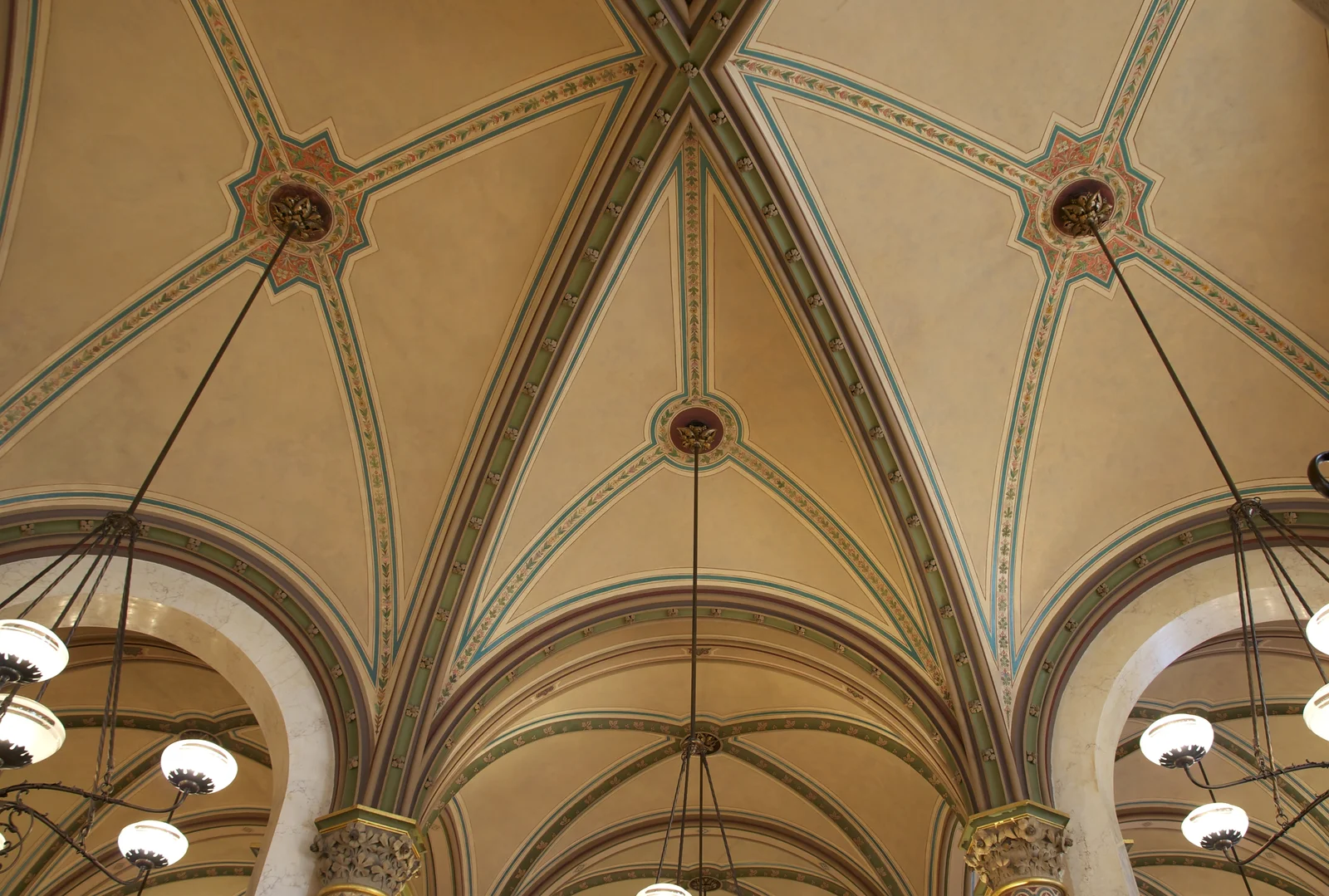
Coffee on Silver Trays, Water Glasses, and Sweet Foam
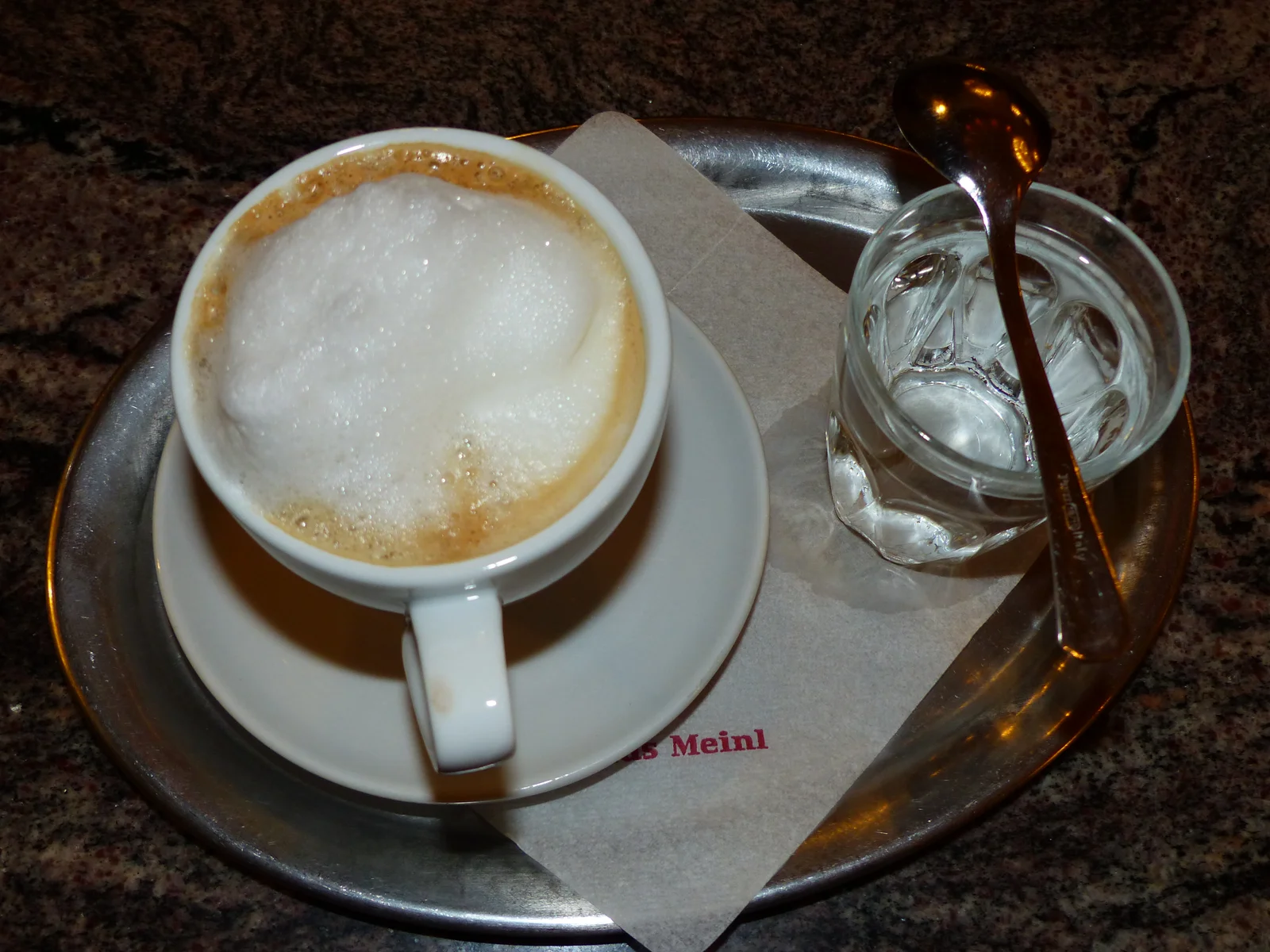
Waiters bring warm coffee on a small silver tray with a cold glass of fresh water.
A small metal spoon rests upside down across the water glass to show the water is clean.
The popular Wiener Melange combines dark espresso coffee with warm milk and thick white milk foam.
An Einspanner is strong black coffee served in a glass with sweet whipped cream on top.
Menus offer many coffee styles with different amounts of milk and water.
Friendly head waiters wear black vests and serve guests with polite manners.
Bentwood Chairs, Daily Newspapers, and Warm Living Rooms
Classic wooden chairs made by Michael Thonet fill the rooms of old coffeehouses.
Cafe Daum added curved wooden chairs and billiard tables to create bright open spaces.
Wooden holders hold daily morning newspapers so people can read the news with their coffee.
Large tables in the cafes hold many newspapers and magazines from different cities.
Smooth marble tables and glass lights create a bright and comfortable room for visitors.
People treat the coffeehouse like a second living room outside their own homes.
Famous Writers, Apple Strudel, and Modern Cafes
Famous writers and poets worked at cafe tables to write poems and books.
Writer Peter Altenberg loved Cafe Central so much that he received his mail there.
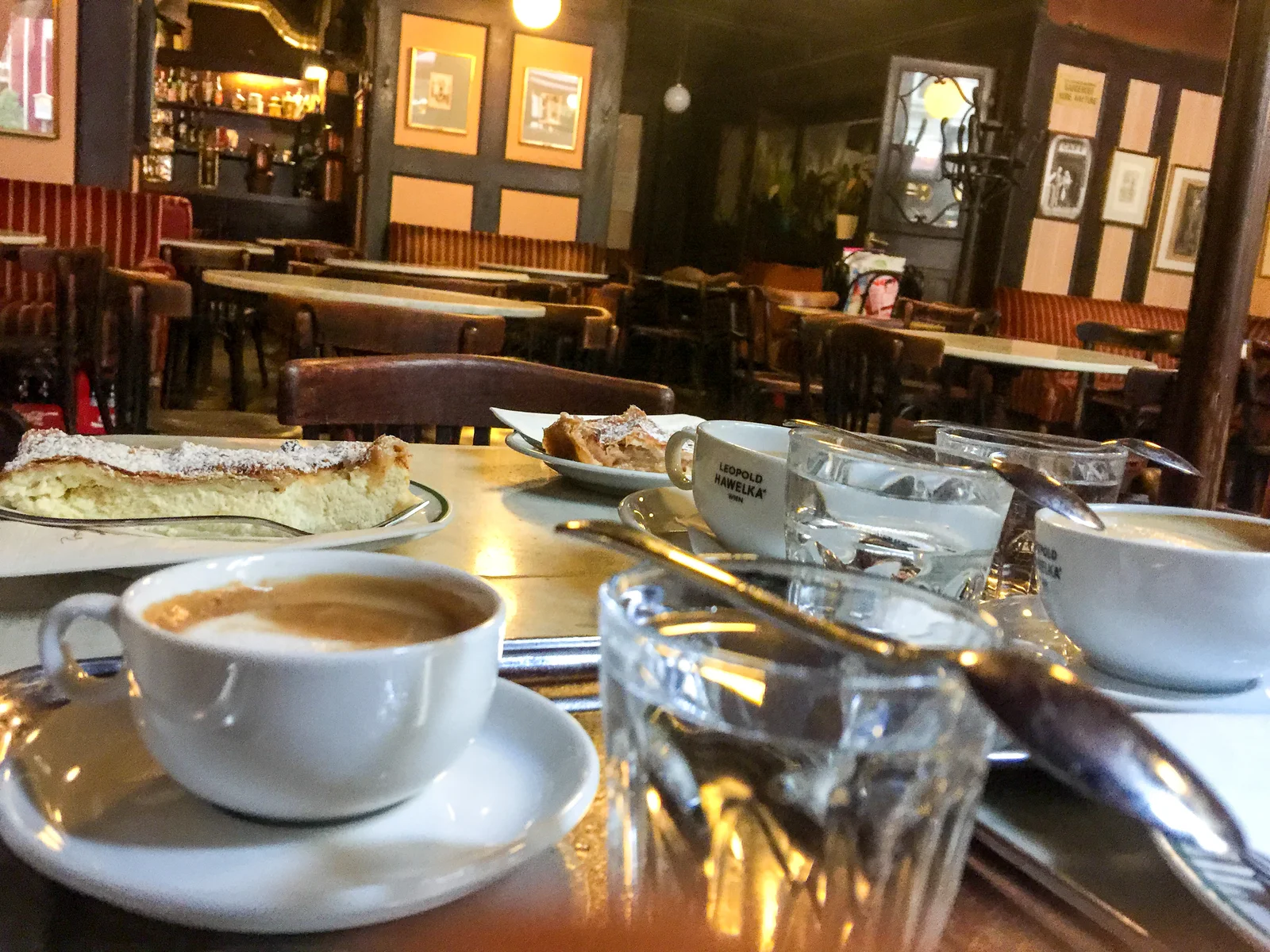
Bakeries inside the cafes bake sweet apple strudel and rich chocolate cakes every day.
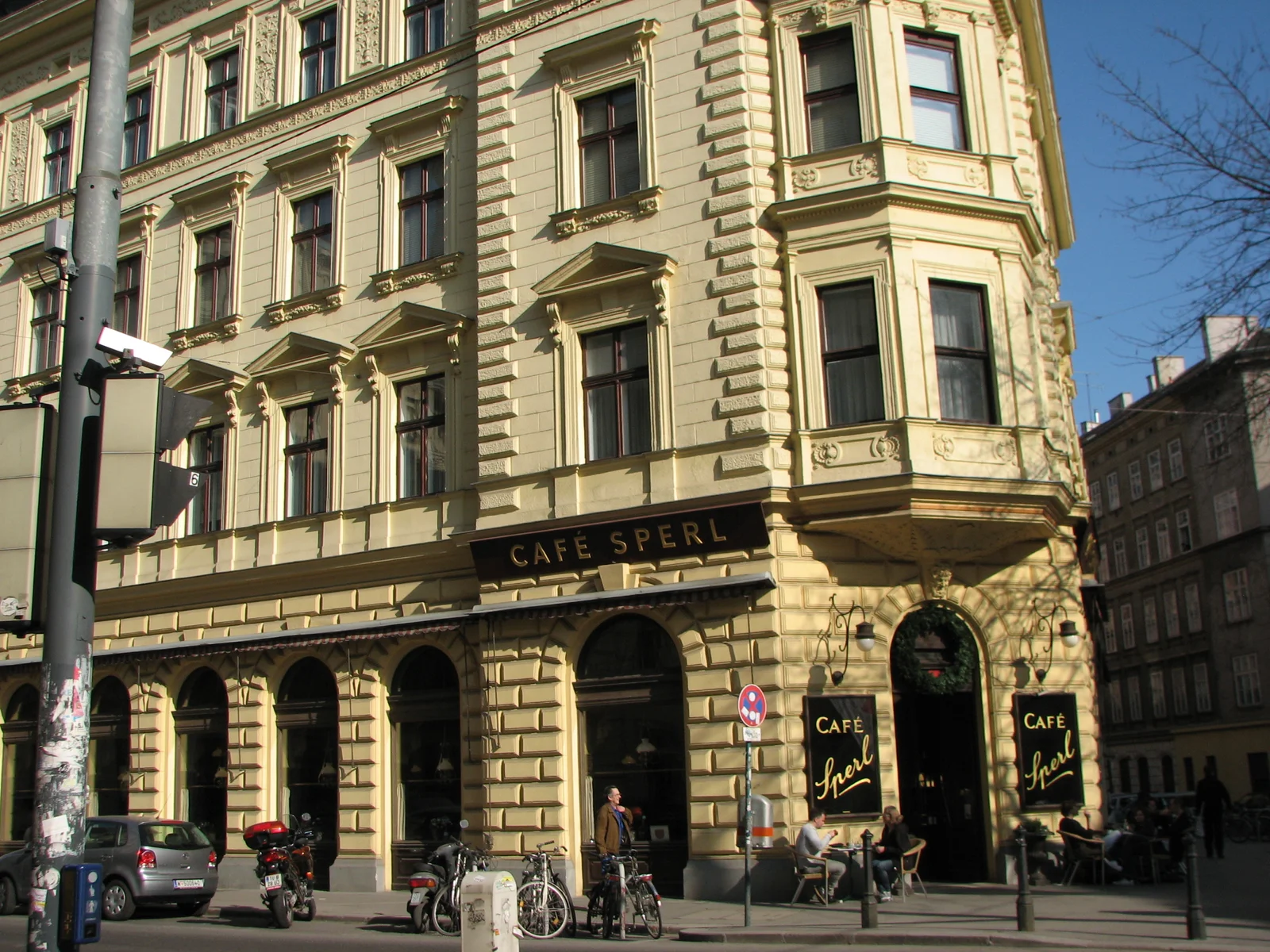
Historic cafes like Cafe Sperl and Cafe Hawelka keep their original dark wood rooms intact.
More than one thousand coffeehouses welcome local people and travelers across Vienna today.
The traditional coffeehouse remains a central part of daily food culture and social life in Austria.
A2 · Elementary
Viennese Coffeehouse Culture and Traditional Melange Service
Imperial origins, elegant silver tray service, Thonet bentwood furniture, and historic literary cafes in Vienna.
Imperial Charters, Early Cafes, and UNESCO Recognition
In 1685 an Armenian merchant named Johannes Diodato received an imperial privilege to open Vienna's first coffeehouse.
Emperor Leopold I granted Diodato this royal trading right to reward his loyal diplomatic work.
During the late eighteenth century, Viennese cafes introduced marble tables, cushioned booths, and card games.
In 2011 UNESCO inscribed Viennese coffeehouse culture on its national list of intangible cultural heritage.
The coffeehouse became famous as a place where patrons buy one coffee and stay for many hours.
Generous cafe owners created an unhurried social environment where guests could relax without pressure.
The Silver Tray Ritual, Wiener Melange, and Cafe Etiquette
Traditional Viennese waiters serve coffee on an oval silver tray accompanied by a glass of cold water.
A small coffee spoon rests face down across the glass to show that the water is freshly poured.
The classic Wiener Melange consists of equal parts espresso and steamed milk topped with creamy foam.
Another favorite drink is the Einspanner, which combines double espresso in a tall glass with thick whipped cream.
Traditional Austrian menus list numerous coffee varieties based on their color and milk ratio.
Experienced head waiters, respectfully called Herr Ober, direct the dining room wearing formal black suits.
Thonet Bentwood Design, Reading Tables, and Public Parlors
Famous bentwood chairs designed by Michael Thonet became standard furniture across Viennese cafes.
Cafe Daum popularized curved wooden chairs and game tables during the 1840s, transforming cafe interiors.
Handcrafted wooden holders keep international and local newspapers organized for customers to read freely.
Historic coffeehouses provide reading tables filled with daily papers, cultural journals, and magazines.
White marble tabletops, polished mirrors, and crystal chandeliers give historic cafes an elegant atmosphere.
Viennese residents view the coffeehouse as an extended living room where they can meet friends and read.
Literary Circles, Classic Pastries, and Contemporary Life
Renowned modernist authors and poets used cafes like Cafe Central and Cafe Griensteidl as personal offices.
Bohemian writer Peter Altenberg spent entire days writing at Cafe Central and received his post there.
In-house pastry kitchens prepare classic Austrian desserts, including Sachertorte, Esterhazy torte, and warm Apfelstrudel.
Heritage cafes like Cafe Sperl, Cafe Landtmann, and Cafe Hawelka preserve their original architectural charm.
Over one thousand licensed coffeehouses operate in Vienna today, maintaining historic customs alongside modern espresso bars.
The Viennese coffeehouse remains an essential culinary institution that anchors daily urban community life.
B1 · Intermediate
Viennese Coffeehouse Culture and Traditional Melange Service
Imperial licensing, the silver tray ritual, Thonet bentwood craft, and the living heritage of Viennese cafes.
The 1685 Diodato Privilege, Enlightenment Cafes, and UNESCO Status
In 1685 Armenian merchant Johannes Diodato obtained the first imperial coffeehouse privilege in Vienna, dispelling the myth of Kolschitzky.
Emperor Leopold I granted Diodato this exclusive brewing charter in recognition of his confidential courier and diplomatic services.
By the late eighteenth century, Viennese coffee establishments had standardized elegant interiors with marble tables and upholstered seating.
In 2011 the Austrian Commission for UNESCO officially designated Viennese Coffee House Culture as intangible cultural heritage.
UNESCO recognized the coffeehouse as an urban sanctuary where patrons purchase time and space while paying only for coffee.
Proprietors nurtured a unique ethos of hospitality that allowed visitors to linger for entire afternoons over a single drink.
The Ritual of Service, Wiener Melange, and Professional Waitstaff
Authentic Viennese coffee service requires delivering beverages on an oval silver tray alongside a glass of pure mountain water.
Waitstaff place a coffee spoon upside down across the water glass to signify that the water was drawn fresh from the tap.
The Wiener Melange features freshly pulled espresso blended with steamed milk and crowned with a cloud of velvety milk foam.
The rich Einspanner combines a double shot of dark mocha in a glass tumbler beneath a dense layer of cold whipped cream.
Traditional coffee menus categorize selections according to precise shades of brown, from Kleiner Schwarzer to Verlangerter.
Formal head waiters, traditionally addressed as Herr Ober, manage table service with disciplined grace and black waistcoats.
Thonet Chair No. 14, Newspaper Rods, and the Extended Living Room
Michael Thonet's iconic Chair No. 14, crafted from steam-bent beechwood, furnished hundreds of Viennese coffee halls.
The historic Cafe Daum introduced curved bentwood seating and billiards during the 1840s, pioneering modern cafe decor.
Elegant wooden newspaper rods, known locally as Zeitungshalter, protect broadsheets and international gazettes from wear.
Traditional cafes dedicate central tables to extensive collections of domestic daily papers and international periodicals.
Polished Carrara marble tables, gilded mirrors, and grand chandeliers characterized the upscale establishments along the Ringstrasse.
Urban planners and sociologists celebrate the Viennese coffeehouse as a democratic third place bridging home and work.
Fin-de-Siecle Literary Salons, Pastry Arts, and Contemporary Vitality
During the fin de siecle era, prominent writers including Peter Altenberg and Karl Kraus transformed coffeehouses into literary salons.
Eccentric author Peter Altenberg listed Cafe Central as his official residence, drafting lyrical sketches on napkins and stationery.
Master confectioners in cafe kitchens produce iconic Austrian pastries, such as rich chocolate Sachertorte and flaky Apfelstrudel.
Landmark cafes including Cafe Sperl, Cafe Landtmann, and Cafe Hawelka carefully maintain their historic 19th-century interior fabric.
More than one thousand traditional coffeehouses operate across the Austrian capital, coexisting with contemporary third-wave roasters.
The Viennese coffeehouse stands as a protected pillar of Austrian culinary identity, blending historic ceremony with vibrant public life.
B2 · Upper Intermediate
Viennese Coffeehouse Culture and Traditional Melange Service
Johannes Diodato's imperial charter, the silver tray ritual, Thonet bentwood furniture, and fin-de-siecle literary salons in Vienna.
Imperial Privileges, Enlightenment Coffee Salons, and Intangible Heritage
Historical archives confirm that Armenian merchant Johannes Diodato secured Vienna's first imperial coffeehouse concession in 1685, refuting the Kolschitzky legend.
Emperor Leopold I awarded Diodato this lucrative brewing monopoly to reward his valuable intelligence gathering during the Ottoman siege.
During the Enlightenment era, Viennese coffeehouses crystallized their distinct architectural layout with marble-topped tables and velvet banquettes.
In 2011 the Austrian Commission for UNESCO inscribed Viennese Coffee House Culture onto the National Inventory of Intangible Cultural Heritage.
The UNESCO citation highlighted the coffeehouse as an egalitarian sanctuary where time and space are consumed without commercial urgency.
Cafe proprietors cultivated a relaxed code of conduct that encouraged guests to read and converse for hours without supplemental orders.
The Table Service Ritual, Wiener Melange, and Waitstaff Hierarchy
Strict service etiquette dictates that every coffee order arrives on a polished oval silver tray with a glass of tap water.
The attending waiter balances a silver spoon face down atop the water glass, validating the purity and freshness of the pour.
The Wiener Melange harmonizes a shot of espresso with an equal volume of hot milk beneath a crown of dense frothed milk.
The decadent Einspanner presents a double mocha in a handled glass beneath an insulating barrier of chilled whipped cream.
Historic beverage rosters classify preparations through nuanced variations in roasting intensity and milk dilution, including Kleiner Brauner.
Distinguished head waiters, known ceremonially as Herr Ober, supervise dining rooms with refined etiquette and crisp black attire.
Bentwood Furnishings, Zeitungshalter Reading Culture, and Urban Salons
Industrialist Michael Thonet revolutionized cafe seating with his lightweight Chair No. 14, manufactured from modular bent beechwood rods.
Cafe Daum established modern hospitality design in the 1840s by introducing bentwood chairs alongside recreational billiard tables.
Custom wooden newspaper holders, called Zeitungshalter, preserve fragile broadsheet papers for communal reading across morning hours.
Viennese establishments curate expansive periodicals libraries, offering local dailies alongside major European newspapers and literary reviews.
Pristine white Carrara marble surfaces and radiant Bohemian crystal chandeliers defined the opulent cafes flanking the imperial Ringstrasse.
Sociologists identify the classical coffeehouse as an indispensable social institution that provides an accessible public living room.
Literary Modernism, Master Confectionery, and Contemporary Permanence
Prominent intellectuals such as Peter Altenberg, Arthur Schnitzler, and Karl Kraus utilized Cafe Central and Cafe Griensteidl as creative headquarters.
Poet Peter Altenberg adopted Cafe Central as his permanent postal address, composing impressionistic vignettes at his reserved corner table.
Traditional pastry chefs maintain celebrated confectionery crafts, baking delicate Apfelstrudel, Esterhazy tortes, and glazed Sachertorte daily.
Historic institutions like Cafe Sperl, Cafe Landtmann, and Cafe Hawelka preserve authentic decorative woodwork and vintage upholstery.
Today over one thousand registered coffeehouses sustain traditional hospitality rituals while adapting to contemporary metropolitan tastes.
Viennese coffeehouse culture endures as a defining emblem of Austrian gastronomy, celebrating leisure, conversation, and culinary craftsmanship.
C1 · Advanced
Viennese Coffeehouse Culture and Traditional Melange Service
Imperial licensing, the silver tray ritual, Thonet industrial design, and the culinary sociology of Austrian coffeehouse institutions.
The 1685 Diodato Charter, Enlightenment Spaces, and Heritage Status
Archival records confirm that Armenian merchant Johannes Diodato obtained the inaugural imperial coffeehouse concession in Vienna in 1685.
Emperor Leopold I conferred this commercial monopoly upon Diodato to compensate his confidential diplomatic couriers during the Ottoman wars.
Throughout the eighteenth century, coffeehouse proprietors standardized elegant interiors featuring marble tables, upholstered banquettes, and chess boards.
In 2011 the Austrian Commission for UNESCO inscribed Viennese coffeehouse culture onto the national inventory of intangible cultural heritage.
The inscription celebrated the coffeehouse as an urban sanctuary where time and space are consumed without commercial pressure.
Proprietors established an enduring ethos of hospitality, permitting customers to occupy tables for hours after ordering a single beverage.
The Ceremony of Service, Wiener Melange, and Professional Waitstaff
Classical table presentation requires serving every coffee order upon an oval silver tray accompanied by a glass of cold water.
The waiter places an inverted coffee spoon across the water glass to attest to the pristine purity of Vienna's mountain spring water.
The Wiener Melange blends a single shot of dark espresso with steamed milk, crowned by an airy dome of velvety foam.
The Einspanner pairs a double mocha in an elongated glass with an insulating cap of chilled whipped cream.
The traditional beverage roster differentiates roasts through exact gradations of color and milk dilution, including the Kleiner Brauner.
Head waiters clad in formal black attire coordinate room service with seasoned dignity, addressed respectfully as Herr Ober.
Thonet Chair No. 14, Newspaper Culture, and Democratic Public Space
Michael Thonet developed the ubiquitous Chair No. 14 using steam-bent beechwood, establishing the defining aesthetic of Viennese public seating.
Cafe Daum revolutionized urban cafe interiors during the 1840s by integrating lightweight bentwood furniture alongside popular billiard tables.
Curved wooden newspaper rods, known as Zeitungshalter, preserve delicate periodicals for patrons engaged in prolonged morning reading.
Traditional establishments maintain extensive communal racks displaying broadsheet newspapers, illustrated journals, and international gazettes.
Gleaming Carrara marble tables and crystal chandeliers accentuated the architectural grandeur of Ringstrasse establishments.
Social theorists characterize the Viennese coffeehouse as an accessible democratic parlour mediating between domestic privacy and public life.
Literary Modernism, Confectionery Arts, and Contemporary Continuity
During the fin de siecle, writers including Peter Altenberg and Karl Kraus converted Cafe Central into productive literary offices.
Peter Altenberg famously conducted his daily correspondence from Cafe Central, receiving parcels and composing aphorisms on cafe stationery.
In-house bakehouses uphold venerable confectionery standards, turning out authentic Sachertorte, Esterhazy cake, and warm Apfelstrudel daily.
Landmark institutions including Cafe Sperl and Cafe Hawelka preserve original walnut paneling, plush banquettes, and historic patina.
Over one thousand licensed coffeehouses operate across Vienna today, maintaining venerable service standards alongside specialty roasters.
The Viennese coffeehouse remains an exceptional pillar of Austrian gastronomy, celebrating contemplative leisure and refined urban conversation.
C2 · Mastery
Viennese Coffeehouse Culture and Traditional Melange Service
An authoritative historical, ampelographic, and sociological analysis of Diodato's charter, silver tray service, Thonet design, and Viennese cafe society.
The 1685 Diodato Charter, Enlightenment Salons, and UNESCO Status
Archival records confirm that Armenian merchant Johannes Diodato obtained the inaugural imperial coffeehouse concession in Vienna in 1685, dispelling the myth of Kolschitzky.
Emperor Leopold I exercised his sovereign prerogative by granting Diodato an exclusive brewing monopoly for invaluable wartime courier services.
Throughout the Enlightenment, Viennese coffeehouse proprietors furnished spacious interiors with marble tables, velvet banquettes, and chess tables.
In 2011 the Austrian Commission for UNESCO validated this tradition through formal inscription onto the National Inventory of Intangible Cultural Heritage.
The citation celebrated the coffeehouse as an unhurried social realm where time and space are savored without consumerist pressure.
Proprietors instituted an egalitarian code of hospitality, allowing patrons to inhabit a table for hours over a single coffee.
The Ceremony of Service, Wiener Melange, and Professional Waitstaff
Rigorous service etiquette dictates that every coffee arrives upon a polished silver tray accompanied by a glass of water.
The waiter positions an upturned spoon atop the water glass, providing a ceremonial guarantee of fresh tap water from alpine aquifers.
The Wiener Melange combines dark roasted coffee and steamed milk beneath an immaculate layer of velvety milk foam.
Prepared for discerning connoisseurs, the Einspanner presents a double mocha in a handled tumbler beneath a thick blanket of whipped cream.
Traditional cafe menus feature nuanced gradations of roast depth and dairy proportions, ranging from Kleiner Schwarzer to Verlangerter.
Experienced head waiters maintain impeccable professional composure, clad in dark waistcoats and addressed deferentially as Herr Ober.
Thonet Chair No. 14, Newspaper Culture, and Democratic Public Space
Industrialist Michael Thonet revolutionized cafe seating with his streamlined Chair No. 14, constructed from modular steam-bent beechwood.
Cafe Daum modernized hospitality aesthetics during the 1840s, pairing bentwood chairs with recreational billiard tables in open salon spaces.
Specialized wooden frames, designated as Zeitungshalter, protect broadsheet newspapers for communal browsing across quiet morning hours.
Grand coffeehouses maintain reading tables stocked with domestic broadsheets, foreign gazettes, and intellectual quarterlies.
Polished Carrara marble tabletops and opulent crystal chandeliers defined the architectural atmosphere of grand Ringstrasse establishments.
Sociologists celebrate the Viennese coffeehouse as an inclusive intellectual institution functioning as a democratic communal parlour.
Literary Modernism, Confectionery Arts, and Contemporary Continuity
Fin-de-siecle literary figures, notably Peter Altenberg and Karl Kraus, transformed Cafe Central and Cafe Griensteidl into intellectual workshops.
Peter Altenberg claimed Cafe Central as his legal domicile, writing ephemeral poems on napkins and receiving personal correspondence there.
In-house bakehouses preserve classical confectionery arts, crafting artisanal Sachertorte, Esterhazy slices, and warm hand-stretched apple Apfelstrudel.
Historic institutions such as Cafe Sperl, Cafe Landtmann, and Cafe Hawelka preserve original 19th-century woodwork and architectural integrity.
More than one thousand licensed coffeehouses operate in Vienna today, perpetuating time-honored rituals alongside modern third-wave establishments.
The Viennese coffeehouse remains an enduring monument of Austrian gastronomy, harmonizing social leisure with cultural conversation.
Check your understanding
Choose how closely you want to revisit the article. You can refer back while answering, and review explanations when you finish.
Quick Quiz A1
Try one question, then create a free account for the full Quick Quiz. Sign Up Free
Answer every question before checking. There is no time limit.
Your results
/ 1 correct (%)
Read the explanations to see how each answer connects to the article.
-
In what year did Johannes Diodato obtain the first imperial coffeehouse privilege in Vienna?
1. Answer:
Quick Quiz A2
Try one question, then create a free account for the full Quick Quiz. Sign Up Free
Answer every question before checking. There is no time limit.
Your results
/ 1 correct (%)
Read the explanations to see how each answer connects to the article.
-
In what year did Johannes Diodato obtain the first imperial coffeehouse privilege in Vienna?
1. Answer:
Quick Quiz B1
Try one question, then create a free account for the full Quick Quiz. Sign Up Free
Answer every question before checking. There is no time limit.
Your results
/ 1 correct (%)
Read the explanations to see how each answer connects to the article.
-
In what year did Johannes Diodato obtain the first imperial coffeehouse privilege in Vienna?
1. Answer:
Quick Quiz B2
Try one question, then create a free account for the full Quick Quiz. Sign Up Free
Answer every question before checking. There is no time limit.
Your results
/ 1 correct (%)
Read the explanations to see how each answer connects to the article.
-
In what year did Johannes Diodato obtain the first imperial coffeehouse privilege in Vienna?
1. Answer:
Quick Quiz C1
Try one question, then create a free account for the full Quick Quiz. Sign Up Free
Answer every question before checking. There is no time limit.
Your results
/ 1 correct (%)
Read the explanations to see how each answer connects to the article.
-
In what year did Johannes Diodato obtain the first imperial coffeehouse privilege in Vienna?
1. Answer:
Quick Quiz C2
Try one question, then create a free account for the full Quick Quiz. Sign Up Free
Answer every question before checking. There is no time limit.
Your results
/ 1 correct (%)
Read the explanations to see how each answer connects to the article.
-
In what year did Johannes Diodato obtain the first imperial coffeehouse privilege in Vienna?
1. Answer:
