A1 · Beginner
Brenner Pass Rail Freight and Trans-Alpine Logistics
Mountain valleys in Tyrol handle heavy European truck traffic with electric trains, rolling highways, and deep base tunnels.
Trans-Alpine Freight Bottlenecks and Valley Ecology
The famous mountain pass stands at 1,370 metres elevation between Austria and northern Italy.
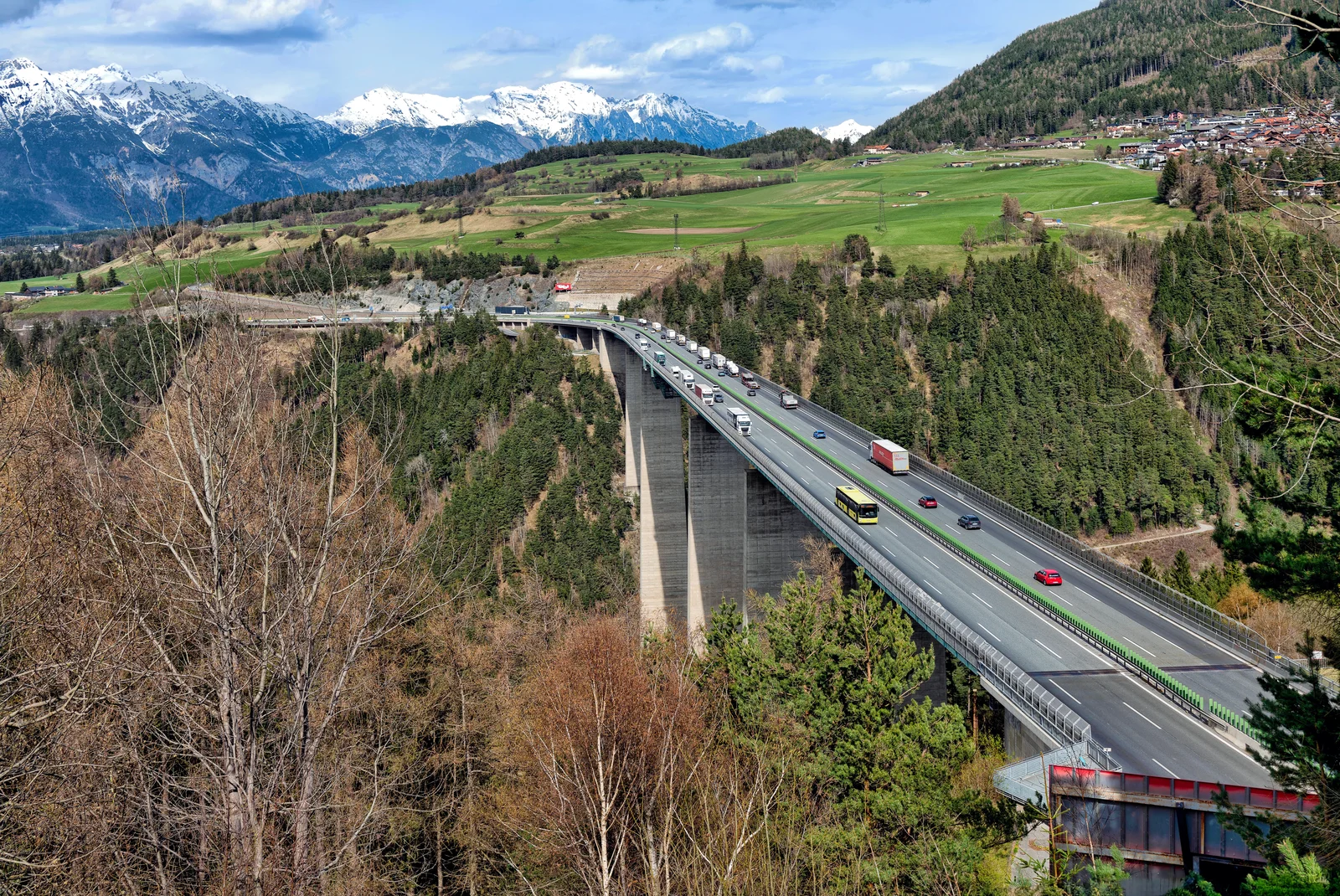
More than two million heavy trucks drive along the steep motorway corridor every single year.
Narrow valley floors between steep mountains trap dark vehicle smoke and dangerous exhaust fumes.
Regional leaders in Tyrol use block dispatching rules to stop heavy truck jams on busy mornings.
European laws encourage shipping companies to move heavy freight from highway roads onto electrified trains.
Careful transport plans protect clean mountain nature while supporting busy factory trade between Germany and Italy.
The Rolling Highway and Intermodal Operations
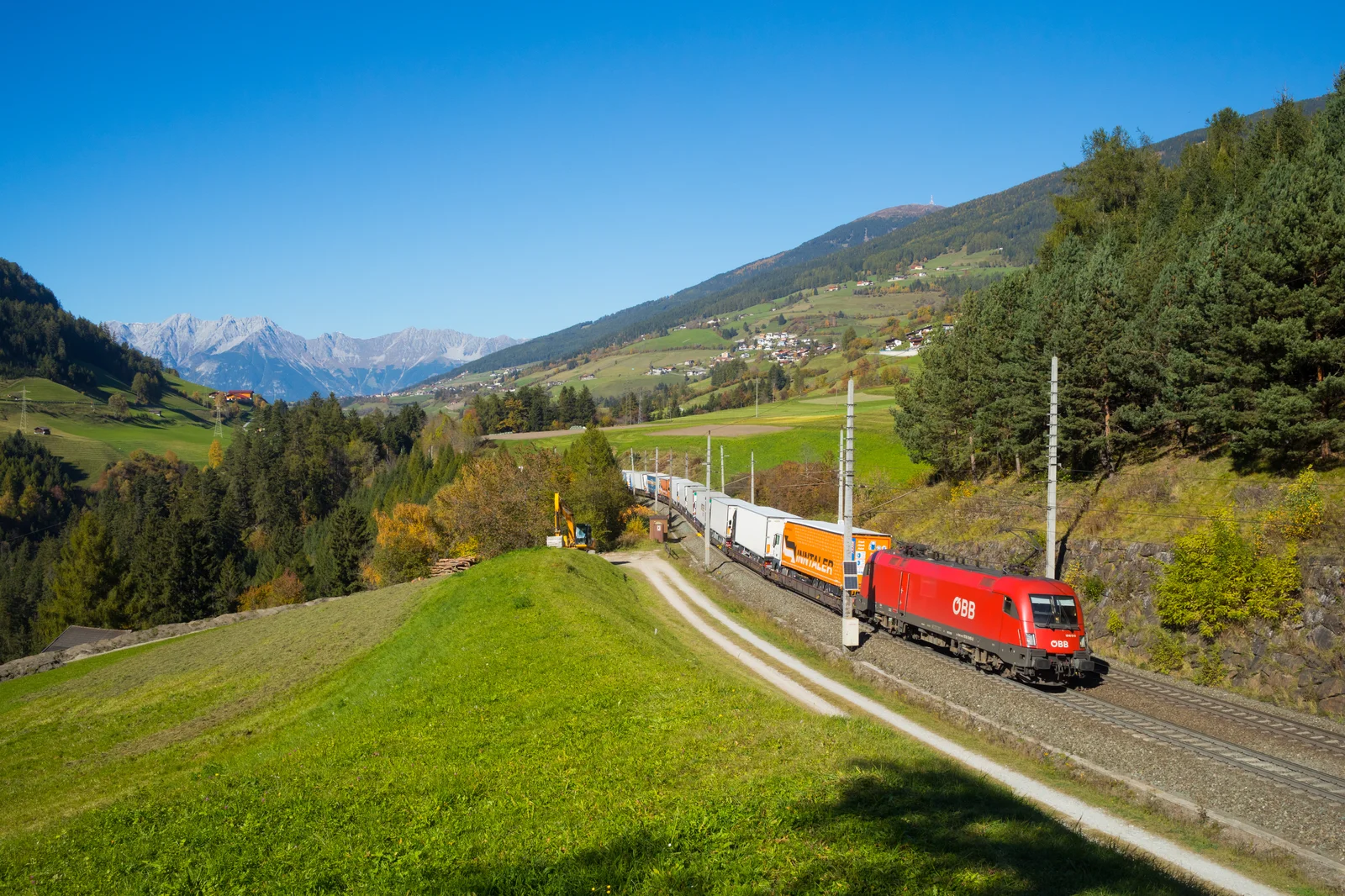
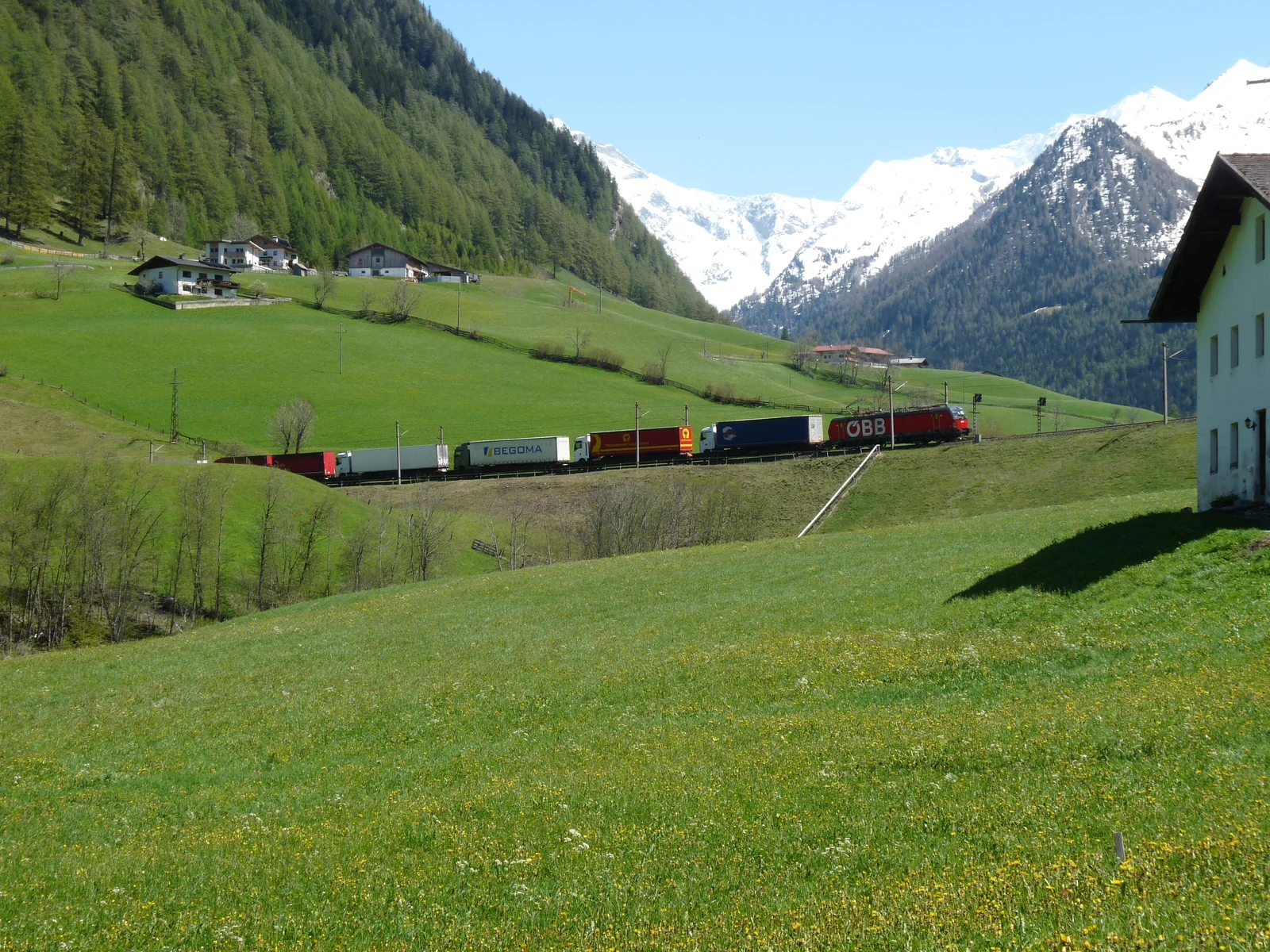
The Rolling Highway service carries entire semi-trucks on low flat rail wagons across the mountains.
Drivers rest inside passenger train cars while trains travel between terminals in Wörgl and Brennersee.
Modern electric locomotives pull long freight trains loaded with heavy shipping containers across alpine ridges.
Giant cranes lift truck trailers directly onto rail cars to cross mountain borders without highway traffic.
Steep hills on the historic mountain railway line require extra helper engines to push heavy trains uphill.
Thick wooden noise walls along tracks protect local village families from loud train wheels at night.
Subterranean Mega-Engineering of the Base Tunnel
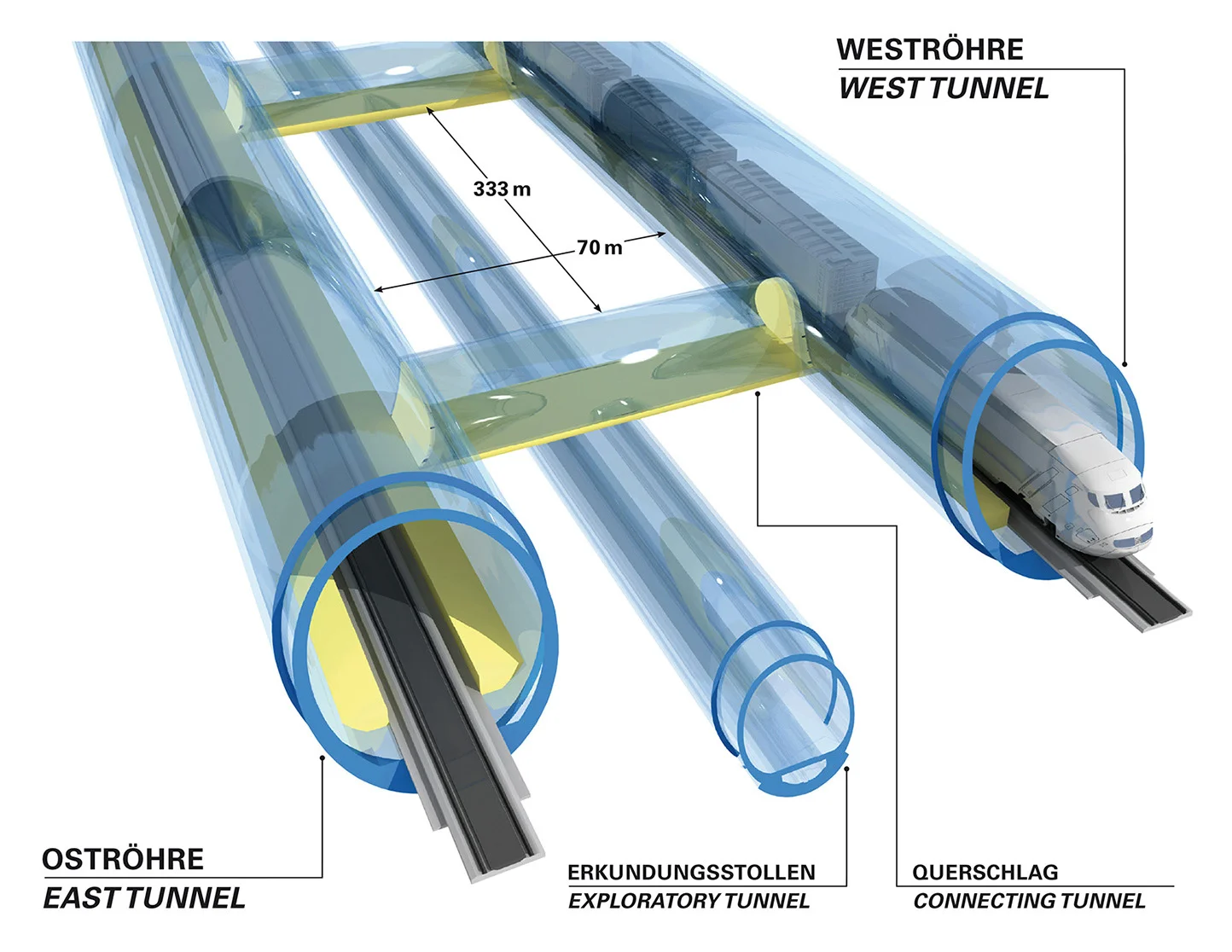
Engineers are digging a sixty-four-kilometre underground railway connecting the city of Innsbruck to Fortezza.
When finished, this twin railway tunnel will form the longest underground train line in the entire world.
The flat tunnel runs gently under high mountains so heavy freight trains can glide easily without climbing steep slopes.
Gigantic rotary boring machines with sharp steel cutters grind through hard solid rock deep under the Alps.
Powerful freight locomotives will pull heavy cargo trains through the mountain base without burning extra electric energy.
Two parallel train tubes connect with safety doors every 333 metres to protect passengers during emergencies.
European Corridor Integration and Modal Shift
This busy mountain route is the central link of a great trade corridor from Scandinavia to the Mediterranean.
Fast passenger trains will link Munich, Innsbruck, Verona, and Milan in less than three hours.
Railway engineers build four tracks along valley approach routes in Bavaria and South Tyrol to handle extra traffic.
Moving fifty million tonnes of factory goods to electric trains will cut air pollution across sensitive alpine valleys.
Digital rail systems and automatic wagon couplers will increase cargo train capacity across the mountain corridor.
Modern international railways unite Austria, Germany, and Italy inside one efficient European trading network.
A2 · Elementary
Brenner Pass Rail Freight and Trans-Alpine Logistics
High-altitude mountain trade bottlenecks, Rolling Highway flatcars, and subterranean base tunnel engineering in Austria.
Trans-Alpine Freight Bottlenecks and Valley Ecology
At 1,370 metres elevation, the Brenner Pass provides the lowest and most heavily traversed transit gap across the Central Alps.
Over two million heavy freight trucks cross the Austrian-Italian border along the Brenner motorway every calendar year.
Steep valley walls in the Tyrolean Inn and Wipp valleys trap vehicular exhaust emissions and microscopic particulate matter.
Tyrolean authorities enacted strict driving restrictions and block dispatching measures to regulate highway freight traffic during peak hours.
European Union transport directives prioritize shifting commercial cargo from congested highways onto electrified railway corridors.
Integrated modal shift policies protect fragile alpine ecosystems while maintaining critical trade between German and Italian industrial regions.
The Rolling Highway and Intermodal Operations
The Rolling Highway system transports fully loaded commercial semi-trucks on specialized low-floor rail wagons across Tyrol.
Intermodal freight terminals in Wörgl and Brennersee allow truck drivers to sleep in passenger coaches during mountain rail transit.
National operator ÖBB Rail Cargo Group utilizes multi-system electric locomotives to haul heavy freight over alpine grades.
Unaccompanied combined transport terminals transfer standard shipping containers and swap bodies directly from road trailers to rail cars.
Steep grades along the historic 1867 mountain railway route necessitate supplementary banking locomotives to push heavy cargo trains uphill.
Acoustic noise barriers and modern synthetic composite brake pads reduce railway noise for residents living near tracks.
Subterranean Mega-Engineering of the Base Tunnel
The Brenner Base Tunnel project is excavating a continuous sixty-four-kilometre subterranean railway connecting Innsbruck with Fortezza.
Upon completion, this joint mega-project and its northern bypass will become the longest underground railway passage in the world.
The base tunnel eliminates steep mountain elevation gains by following a nearly level profile with a maximum gradient of seven per mille.
Massive tunnel boring machines with twelve-metre diameter cutterheads grind through complex metamorphic rock strata beneath alpine peaks.
This horizontal track layout enables heavy freight trains weighing over two thousand tonnes to cross the Alps without helper engines.
Twin single-track railway tubes linked by cross passages every 333 metres provide optimal aerodynamic safety and rapid passenger evacuation.
European Corridor Integration and Modal Shift
The Brenner Pass constitutes the vital core bottleneck along the Trans-European Scandinavian-Mediterranean transport corridor.
High-speed passenger rail services through the base tunnel will connect Munich, Innsbruck, Verona, and Milan in under three hours.
Extensive four-track railway feeder line expansions in Bavaria and South Tyrol are preparing connecting lines for increased tunnel capacity.
European decarbonization targets rely on shifting fifty million tonnes of annual cargo from highway tarmac to zero-emission rail.
Digital automatic train couplers and automated signalling systems will expand corridor rail freight throughput by twenty-five percent.
Cross-border logistical integration between Austria, Germany, and Italy underpins the economic cohesion of the European single market.
B1 · Intermediate
Brenner Pass Rail Freight and Trans-Alpine Logistics
Alpine transit bottlenecks, Rolling Highway intermodal systems, base tunnel mega-engineering, and European freight corridors in Austria.
Trans-Alpine Freight Bottlenecks and Valley Ecology
Positioned at 1,370 metres elevation, the Brenner Pass represents the lowest natural crossing point across the Central Alps.
More than two million heavy commercial goods vehicles traverse the Brenner motorway corridor through Tyrol every year.
The steep topography of the Inn and Wipp valleys confines air circulation, concentrating vehicular nitrogen dioxide and fine particulate matter.
The provincial government of Tyrol enforced sectoral driving prohibitions and systematic block dispatching to curb chronic highway gridlock.
European Union mobility treaties mandate shifting trans-alpine freight volumes from highway asphalt to high-capacity electrified rail.
Regional freight management strategies aim to protect sensitive alpine habitats while preserving industrial supply chains between Germany and Italy.
The Rolling Highway and Intermodal Operations
The Rolling Highway, known locally as the RoLa, carries complete tractor-trailer rigs on specialized ultra-low-floor railway wagons.
Logistical loading terminals at Wörgl and Brennersee enable truck drivers to complete mandatory rest periods inside accompanying passenger cars.
ÖBB Rail Cargo Group coordinates trans-alpine combined transport operations utilizing high-output multi-system electric locomotives.
Unaccompanied intermodal networks convey standardized swap bodies and marine shipping containers across high mountain passes.
Steep gradients along the historic 1867 Brenner mountain line require auxiliary banking locomotives to assist heavy freight trains uphill.
Acoustic noise barriers and low-noise composite brake blocks significantly diminish sound emissions for adjacent valley communities.
Subterranean Mega-Engineering of the Base Tunnel
The Brenner Base Tunnel enterprise is boring a sixty-four-kilometre subterranean railway corridor linking Innsbruck to Fortezza in South Tyrol.
When connected to the existing Innsbruck rail bypass, the infrastructure will form the longest underground rail transit tunnel on Earth.
The base tunnel bypasses steep alpine slopes by adopting a nearly horizontal gradient that peaks at barely seven per mille.
Heavy-duty tunnel boring machines equipped with twelve-metre cutterheads penetrate intricate metamorphic rock formations deep within the mountains.
This level route allows commercial freight trains weighing more than two thousand tonnes to traverse the Alps without pusher locomotives.
Two parallel single-track railway tubes connected by cross passages every 333 metres deliver state-of-the-art aerodynamic ventilation and safety.
European Corridor Integration and Modal Shift
The Brenner corridor represents the preeminent logistical bottleneck along the European Scandinavian-Mediterranean Core Network Corridor.
Future high-speed passenger services will slash intercity travel times between Munich, Innsbruck, Verona, and Milan to under three hours.
Four-track feeder route expansions in Bavaria and northern Italy are being constructed to channel traffic efficiently toward the tunnel portals.
Climate neutrality strategies target shifting fifty million tonnes of trans-alpine freight from highway corridors to zero-emission electric rail.
Digital automatic coupling technology and automated traffic management systems will increase corridor freight capacity by twenty-five percent.
Trilateral logistical harmonization between Austria, Italy, and Germany reinforces the economic integration of the European Union.
B2 · Upper Intermediate
Brenner Pass Rail Freight and Trans-Alpine Logistics
Alpine transit bottlenecks, Rolling Highway intermodal systems, base tunnel mega-engineering, and European freight corridors in Austria.
Trans-Alpine Freight Bottlenecks and Valley Ecology
Elevated at 1,370 metres above sea level, the Brenner Pass constitutes the lowest and most heavily frequented freight notch across the Alps.
Annual heavy goods vehicle transits across the Brenner motorway corridor routinely exceed 2.4 million individual truck journeys.
The narrow orography of the Inn and Wipp valleys restricts atmospheric dispersion, trapping heavy concentrations of nitrogen dioxide and particulates.
Provincial authorities in Tyrol implemented sectoral driving bans and block dispatching protocols to prevent motorway paralysis at the Kiefersfelden border.
European Union freight corridors prioritize the modal shift of heavy trans-alpine logistics from road corridors to electrified railway systems.
Sustainable freight initiatives seek to safeguard sensitive alpine ecosystems while maintaining cross-border commercial links between Germany and Italy.
The Rolling Highway and Intermodal Operations
The Rolling Highway system, designated as the RoLa, transports loaded semi-trailer trucks on specialized low-floor rail flatcars across Tyrol.
High-volume intermodal terminals in Wörgl and Brennersee allow long-haul truck drivers to satisfy statutory rest hours while in transit.
Logistics operator ÖBB Rail Cargo Group deploys multi-system electric locomotives capable of seamless interoperability across national grids.
Unaccompanied intermodal services shuttle standardized containers and maritime freight boxes through alpine corridors on flatbed wagons.
Steep twenty-six per mille gradients on the historic 1867 Brenner mountain railway necessitate auxiliary banking engines to push heavy trains uphill.
Extensive noise abatement walls and synthetic composite brake blocks attenuate railway noise pollution throughout alpine residential valleys.
Subterranean Mega-Engineering of the Base Tunnel
The Brenner Base Tunnel represents a sixty-four-kilometre subterranean rail mega-project connecting Innsbruck in Austria with Fortezza in Italy.
Incorporating the completed Innsbruck underground rail bypass, the contiguous tunnel complex will constitute the longest subterranean rail passage on Earth.
By piercing the alpine massif at its base, the tunnel eliminates severe mountain inclines, maintaining a gentle maximum slope of seven per mille.
Automated tunnel boring machines sporting twelve-metre cutterheads grind through complex schist, gneiss, and limestone formations beneath alpine summits.
This flat railway profile permits two-thousand-tonne freight trains to cross the alpine barrier utilizing a single standard electric locomotive.
Dual single-track tubes interconnected by transversal cross passages at 333-metre intervals optimize aerodynamic efficiency and emergency escape.
European Corridor Integration and Modal Shift
The Brenner axis serves as the critical transit nexus along the Trans-European Transport Network Scandinavian-Mediterranean Corridor.
Express passenger services utilizing the base tunnel will dramatically compress travel times between Munich, Innsbruck, Verona, and Milan.
Massive four-track approach line expansions throughout the Bavarian Inn Valley and South Tyrol will deliver necessary feeder capacity.
National decarbonization targets require transferring fifty million tonnes of annual freight from congested motorways to zero-emission rail lines.
The rollout of digital automatic couplers and predictive dispatching will augment rail freight throughput across the alpine corridor by twenty-five percent.
Trilateral coordination between Austrian, Italian, and German rail networks guarantees the logistical integration of Central European supply chains.
C1 · Advanced
Brenner Pass Rail Freight and Trans-Alpine Logistics
Alpine transit bottlenecks, Rolling Highway intermodal systems, base tunnel mega-engineering, and European freight corridors in Austria.
Trans-Alpine Freight Bottlenecks and Valley Ecology
Situated at 1,370 metres elevation, the Brenner Pass functions as the lowest topographic depression and most heavily exploited transit conduit across the Alps.
Annual heavy commercial vehicle traffic along the Brenner motorway corridor routinely exceeds 2.4 million articulated freight trucks.
The constricted orography of the Inn and Wipp valleys severely inhibits atmospheric dispersion, trapping toxic emissions and microscopic particulate matter.
Tyrolean authorities enacted contentious sectoral driving bans and block dispatching protocols to curtail catastrophic motorway congestion at the northern frontier.
European Union infrastructure treaties mandate accelerating the modal shift of trans-alpine freight from highway tarmac to electrified railway networks.
Cross-border transit policies strive to protect delicate alpine ecosystems while preserving vital industrial trade flows between Germany and Italy.
The Rolling Highway and Intermodal Operations
The Rolling Highway service, known as the RoLa, conveys fully laden commercial semi-trucks on specialized low-floor articulated rail wagons across Tyrol.
Intermodal transshipment terminals at Wörgl and Brennersee allow long-haul truck drivers to fulfill mandatory rest hours inside accompanying couchette coaches.
ÖBB Rail Cargo Group marshals multi-system electric locomotives ensuring seamless interoperability across national boundaries.
Unaccompanied intermodal rail networks transport standardized swap bodies and sea containers across the Alps without highway transit.
Demanding twenty-six per mille gradients on the legacy 1867 mountain railway mandate auxiliary banking locomotives to propel heavy trains uphill.
Extensive acoustic sound walls and whisper-quiet synthetic brake shoes mitigate railway noise exposure for communities along the rail line.
Subterranean Mega-Engineering of the Base Tunnel
The Brenner Base Tunnel enterprise is excavating a sixty-four-kilometre subterranean railway corridor directly connecting Innsbruck to Fortezza in South Tyrol.
When seamlessly linked with the existing Innsbruck rail bypass, the subterranean complex will form the longest continuous underground rail link in the world.
By piercing the alpine massif at its crystalline base, the tunnel eliminates steep mountain inclines, restricting track gradient to barely seven per mille.
High-powered tunnel boring machines utilizing twelve-metre cutterhead disks excavate complex metamorphic schist and limestone strata beneath alpine summits.
This horizontal alignment allows heavy freight consists weighing over two thousand tonnes to traverse the Alps without secondary banking engines.
Twin single-track railway tubes interconnected by evacuation cross passages every 333 metres ensure superior aerodynamic dissipation and structural safety.
European Corridor Integration and Modal Shift
The Brenner Pass constitutes the preeminent infrastructural bottleneck along the Trans-European Transport Network Scandinavian-Mediterranean Corridor.
High-speed intercity passenger services will compress transit times between Munich, Innsbruck, Verona, and Milan to under three hours.
Comprehensive four-track approach railway construction across Bavaria and northern Italy will furnish essential feeder capacity for the each base tunnel portal.
Continental decarbonization strategies hinge upon transferring fifty million tonnes of annual freight from congested highways to electrified rail networks.
The deployment of digital automatic couplers and intelligent traffic management systems will augment corridor freight capacity by twenty-five percent.
Trilateral logistical harmonization between Austria, Italy, and Germany reinforces the structural cohesion of the European single market.
C2 · Mastery
Brenner Pass Rail Freight and Trans-Alpine Logistics
Trans-alpine orographic bottlenecks, RoLa intermodal flatcar logistics, subterranean base tunnel excavation, and European rail corridors in Austria.
Trans-Alpine Freight Bottlenecks and Valley Ecology
Resting at 1,370 metres elevation, the Brenner Pass represents the lowest orographic breach and the most heavily utilized commercial artery across the Central Alps.
Annual heavy commercial vehicle movements along the Brenner motorway corridor routinely exceed 2.4 million heavy articulated transport trucks.
The severe topographic constriction of the Inn and Wipp valleys restricts meteorological dispersion, concentrating exhaust emissions and fine particulate matter.
The provincial government of Tyrol implemented stringent sectoral driving prohibitions and block dispatching to mitigate chronic highway congestion.
European Union transit directives demand the aggressive modal shift of trans-alpine freight volumes from motorway pavement to high-capacity rail lines.
Intermodal freight policies seek to preserve vulnerable alpine biospheres while sustaining manufacturing trade flows connecting Germany and Italy.
The Rolling Highway and Intermodal Operations
The Rolling Highway service, known as the RoLa, transports fully laden commercial road tractors and semi-trailers on specialized ultra-low-floor rail flatcars across Tyrol.
Intermodal freight terminals located in Wörgl and Brennersee allow long-haul truck drivers to satisfy statutory rest obligations inside passenger carriages.
ÖBB Rail Cargo Group operates modern multi-system electric locomotives capable of seamless interoperability across disparate national power grids.
Unaccompanied intermodal services shuttle standardized containers and maritime freight boxes through high mountain passes on specialized flatbed wagons.
Steep twenty-six per mille gradients on the historic 1867 mountain railway route necessitate auxiliary banking locomotives to push heavy freight trains uphill.
Acoustic noise mitigation barriers and synthetic whisper brake pads drastically attenuate sound emissions across adjacent valley settlements.
Subterranean Mega-Engineering of the Base Tunnel
The Brenner Base Tunnel mega-project is boring a continuous sixty-four-kilometre subterranean railway corridor connecting Innsbruck directly to Fortezza.
Incorporating the completed Innsbruck underground rail bypass, the subterranean complex will form the longest continuous underground rail link in the world.
Piercing the central alpine massif at its base, the flat tunnel eliminates severe mountain climbs, capping maximum track slope at seven per mille.
Enormous tunnel boring machines deploying twelve-metre cutterheads grind through complex metamorphic schist, gneiss, and limestone formations beneath alpine crests.
This horizontal track geometry permits commercial freight trains exceeding two thousand tonnes to cross the Alps without supplementary pusher locomotives.
Dual single-track rail tubes interconnected by cross passages every 333 metres maximize aerodynamic efficiency and emergency passenger evacuation.
European Corridor Integration and Modal Shift
The Brenner axis represents the indispensable logistical bottleneck along the European Union Scandinavian-Mediterranean Core Network Corridor.
High-speed passenger services operating through the base tunnel will slash intercity transit times between Munich, Innsbruck, Verona, and Milan to under three hours.
Four-track railway feeder line expansions in Bavaria and northern Italy will deliver the high-volume capacity required to feed base tunnel portals.
European decarbonization targets require shifting fifty million tonnes of annual cargo from congested motorways to zero-emission electrified rail corridors.
The deployment of digital automatic couplers and predictive automated dispatching will boost corridor rail freight throughput by twenty-five percent.
Trilateral infrastructural alignment between Austria, Italy, and Germany reinforces the economic cohesion of the European internal market.
Check your understanding
Choose how closely you want to revisit the article. You can refer back while answering, and review explanations when you finish.
Quick Quiz A1
Try one question, then create a free account for the full Quick Quiz. Sign Up Free
Answer every question before checking. There is no time limit.
Your results
/ 1 correct (%)
Read the explanations to see how each answer connects to the article.
-
At what geographic elevation does the alpine Brenner Pass cross the mountain ridge?
1. Answer:
Quick Quiz A2
Try one question, then create a free account for the full Quick Quiz. Sign Up Free
Answer every question before checking. There is no time limit.
Your results
/ 1 correct (%)
Read the explanations to see how each answer connects to the article.
-
At what geographic elevation does the alpine Brenner Pass cross the mountain ridge?
1. Answer:
Quick Quiz B1
Try one question, then create a free account for the full Quick Quiz. Sign Up Free
Answer every question before checking. There is no time limit.
Your results
/ 1 correct (%)
Read the explanations to see how each answer connects to the article.
-
At what geographic elevation does the alpine Brenner Pass cross the mountain ridge?
1. Answer:
Quick Quiz B2
Try one question, then create a free account for the full Quick Quiz. Sign Up Free
Answer every question before checking. There is no time limit.
Your results
/ 1 correct (%)
Read the explanations to see how each answer connects to the article.
-
At what geographic elevation does the alpine Brenner Pass cross the mountain ridge?
1. Answer:
Quick Quiz C1
Try one question, then create a free account for the full Quick Quiz. Sign Up Free
Answer every question before checking. There is no time limit.
Your results
/ 1 correct (%)
Read the explanations to see how each answer connects to the article.
-
At what geographic elevation does the alpine Brenner Pass cross the mountain ridge?
1. Answer:
Quick Quiz C2
Try one question, then create a free account for the full Quick Quiz. Sign Up Free
Answer every question before checking. There is no time limit.
Your results
/ 1 correct (%)
Read the explanations to see how each answer connects to the article.
-
At what geographic elevation does the alpine Brenner Pass cross the mountain ridge?
1. Answer:
