A1 · Beginner
Easter Observance and Austrian Spring Traditions
Cathedral liturgies, wooden noise ratchets, decorative palm bouquets, and festive family meals celebrate spring in Austria.
Holy Week Services at St. Stephen's Cathedral
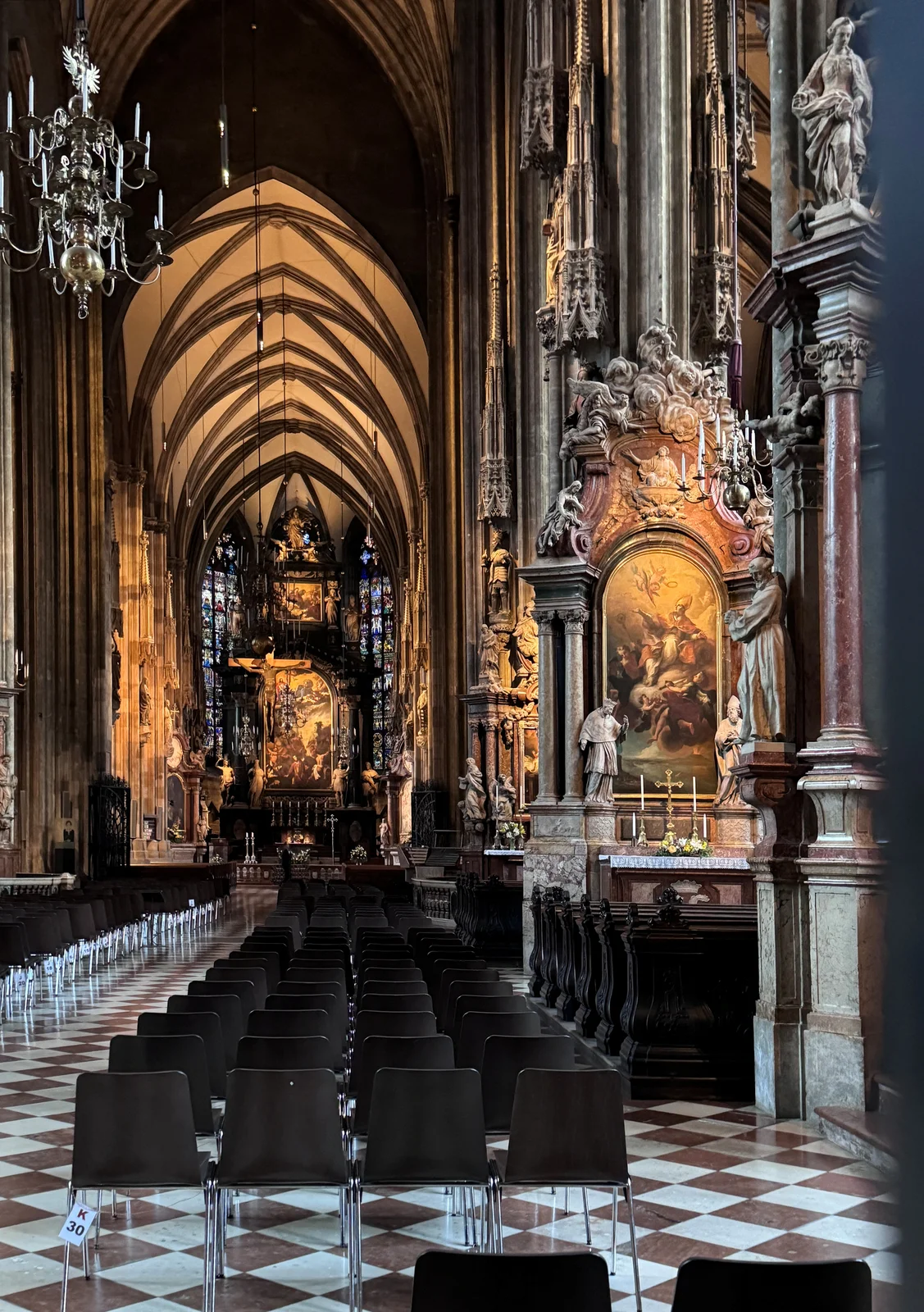
St. Stephen's Cathedral in Vienna publishes an annual calendar of church services led by the Archbishop of Vienna.
On Palm Sunday, clergy bless green branches with congregants on Stephansplatz before entering through the Giant's Door.
Priests gather for the Chrism Mass to consecrate holy oils for sacraments across the archdiocese.
On Holy Thursday, the ceremonial washing of feet honors apostolic humility before bare altars signal mourning.
Good Friday services focus on solemn Passion readings and the veneration of the holy cross without organ music.
The cathedral archives preserve centuries of sacred manuscripts and choir music from the famous metropolitan seat.
Wooden Ratschen and the Great Pummerin Bell
Popular Austrian folklore says church bells fall silent on Holy Thursday because they fly to Rome.
During the bell silence, village communities use carved wooden noise instruments called Ratschen.
Craftsmanship of Austrian Ratschen joined the official UNESCO list of intangible cultural heritage in 2015.
Local youths walk through village streets with wooden ratchets, chanting rhymed couplets to announce daily church services.
Inside churches, parishioners turn heavy wheeled ratchets to make deafening rattles instead of ringing metal altar bells.
The giant Pummerin bell in the North Tower rings loudly to herald the joyful Easter Vigil celebration.

Palm Bouquets and Village Craftsmanship
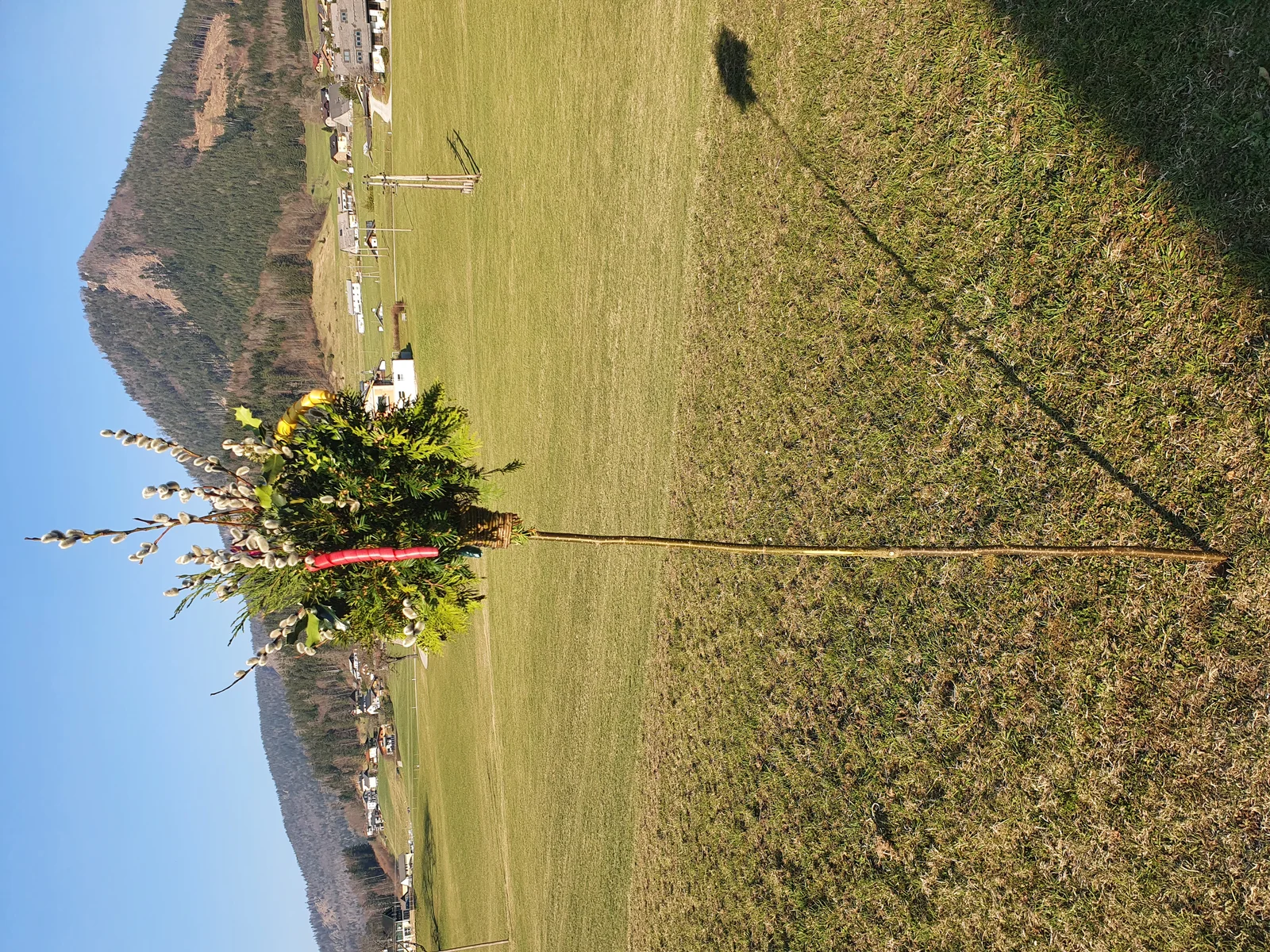
Families across Austria craft decorative botanical bundles called Palmbuschen for Palm Sunday blessings in church.
Traditional bouquets combine green plants like willow catkins, boxwood, juniper, and dark yew twigs.
Craftsmen bind the greenery onto tall hazel poles decorated with colorful ribbons and tasty bakery pretzels.
In Alpine villages like Faistenau near Salzburg, young men make tall poles that measure over ten metres.
After receiving a priest's blessing, people bring branches home to place inside living rooms, stables, and green fields.
Farmers keep consecrated willow twigs to protect farm crops and animals against summer hailstorms and lightning strikes.
Easter Feasts and Outdoor Bonfires
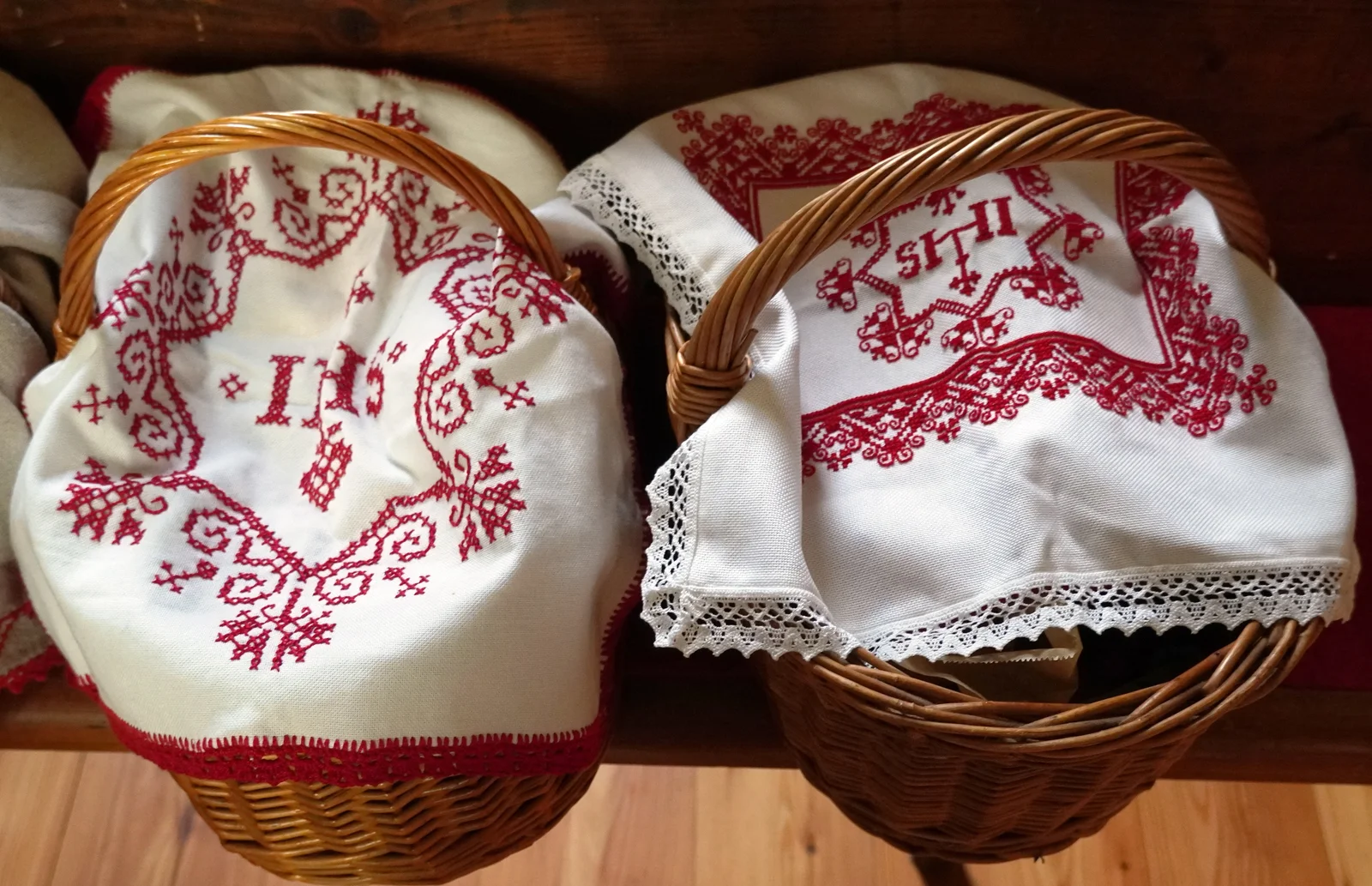
On Holy Saturday, people bring wicker baskets covered in white linen to church for the Speisensegnung food blessing.
Baskets hold smoked ham, cured sausages, dyed eggs, fresh horseradish, and sweet bread called Osterpinze.
In Styria and Carinthia, this festive church blessing is called Fleischweihe and gathers many local families.
Families gather together for a delicious Easter breakfast feast featuring the consecrated meat, bread, and eggs.
On Saturday night and Easter Sunday, villagers build massive wood bonfires called Osterfeuer across high hilltops and meadows.
Neighbors, brass musicians, and volunteer firefighters gather around the bright fires to welcome spring light together.
A2 · Elementary
Easter Observance and Austrian Spring Traditions
Historic cathedral ceremonies, traditional wooden ratchets, braided palm poles, and festive food blessings mark Holy Week in Austria.
Holy Week Rites at St. Stephen's Cathedral
St. Stephen's Cathedral in Vienna releases a detailed Holy Week calendar outlining services led by the Archbishop of Vienna.
On Palm Sunday, clergy gather with worshippers on Stephansplatz for the blessing of greenery before entering the Giant's Door.
Priests from across the archdiocese assemble for the Chrism Mass to consecrate holy oils used throughout the liturgical year.
Maundy Thursday liturgy features the ritual washing of feet, followed by the complete stripping of altars for solemn mourning.
Good Friday commemoration includes readings of the Passion story and veneration of the holy cross without organ accompaniment.
The cathedral archives safeguard centuries of choral manuscripts and liturgical orders from this historic metropolitan seat.
Ratschen Traditions and the Pummerin Bell
Austrian folklore recounts that church bells fall silent on Holy Thursday evening because they have flown to Rome.
Throughout the liturgical silence, communities utilize carved wooden noise instruments known as Ratschen to mark the hours.
Austrian Ratschen craftsmanship and ceremonial noise-making received formal recognition on the UNESCO cultural heritage register in 2015.
Groups of parish youths walk through residential streets with wooden ratchets, reciting traditional rhymed couplets to announce service times.
Large wheeled wooden ratchets are operated during church liturgies to generate loud rattles that replace traditional altar bells.
The massive Pummerin bell in the North Tower sounds across Vienna to proclaim the arrival of the Easter Vigil.
Palmbuschen Arrangements and Rural Customs
Across Austrian provinces, families and parish guilds assemble decorative botanical arrangements called Palmbuschen for Palm Sunday blessings.
A classic Palmbuschen arrangement incorporates symbolic plants including soft pussy willow catkins, boxwood, juniper, and mountain yew.
Makers fasten the botanical bundle onto tall hazel or willow poles adorned with bright silk ribbons and baked pretzels.
In Alpine valleys such as Faistenau in Salzburg province, villagers construct impressive poles reaching over ten metres in height.
Following the priest's blessing, families carry consecrated branches home to display in living rooms, barns, and crop fields.
Rural households preserve the blessed willow twigs throughout the year to protect crops and livestock from destructive summer hailstorms.
Traditional Food Blessings and Easter Fires
On Holy Saturday, worshippers carry ornate wicker baskets covered with linen cloths to parish churches for the Speisensegnung blessing.
These festive baskets contain smoked ham, cured sausages, colorful hard-boiled eggs, grated horseradish, and sweet Osterpinze yeast bread.
In regions like Styria and Carinthia, this popular rite is called Fleischweihe and fills historic churches with multi-generational crowds.
After the evening vigil service concludes, Austrian families enjoy a celebratory Easter breakfast centered on the newly blessed food delicacies.
On Holy Saturday night and Easter Sunday, communities erect monumental outdoor bonfires called Osterfeuer on surrounding hilltops and meadows.
Local villagers, community brass bands, and volunteer firefighters assemble near the towering fires to welcome the arrival of spring.
B1 · Intermediate
Easter Observance and Austrian Spring Traditions
Metropolitan cathedral liturgies, UNESCO-recognized wooden ratchets, crafted palm poles, and communal food blessings shape Austrian Easter.
Metropolitan Liturgy at St. Stephen's Cathedral
St. Stephen's Cathedral in Vienna publishes an authoritative Holy Week calendar scheduling solemn liturgies celebrated by the Archbishop of Vienna.
On Palm Sunday morning, cathedral clergy assemble with worshippers on Stephansplatz for the ceremonial blessing of greenery before processing through the Giant's Door.
The Holy Thursday Chrism Mass convenes hundreds of diocesan priests to consecrate sacred oils used for parish sacraments throughout the liturgical year.
Maundy Thursday evening rites include the ritual washing of feet to honor apostolic humility before altars are stripped bare in solemn mourning.
Good Friday liturgy in the cathedral nave centers on the Passion reading and veneration of the holy cross without choral organ accompaniment.
The cathedral historical archives preserve centuries of liturgical orders and sacred choral manuscripts representing Austria's metropolitan ecclesiastical seat.
Acoustic Ratschen and the Tower Pummerin
Austrian folklore maintains that church bells fall completely silent on Holy Thursday evening, inspiring the common legend that the bells fly to Rome.
Deprived of bell chimes until the Easter Vigil, Austrian parishes employ carved wooden noise-makers known as Ratschen to announce prayer hours.
Austrian Ratschen craftsmanship and street noise-making were officially inscribed on the UNESCO National Inventory of Intangible Cultural Heritage in 2015.
Parish youths traverse neighborhood streets carrying portable wooden ratchets, chanting traditional rhymed couplets to summon villagers to liturgical services.
Churches also deploy heavy wheeled ratchets with wooden gears to produce deafening rattles that substitute for silver altar bells.
The historic Pummerin bell in the cathedral North Tower finally breaks its silence to herald the joyful Easter Vigil resurrection proclamation.
Palmbuschen Crafting and Agrarian Protection
Across Austrian provinces, community guilds and families craft ornate botanical bundles known as Palmbuschen for Palm Sunday liturgical consecration.
Traditional Palmbuschen bouquets combine seven or nine symbolic plants, highlighting willow catkins, boxwood, prickly juniper, and evergreen yew.
Villagers bind the dense botanical arrangement onto tall hazel poles adorned with vibrant colored ribbons and baked bread pretzels.
In Salzburg communities such as Faistenau, craftsmen compete vigorously to build the tallest Palmbuschen poles, sometimes exceeding ten metres in height.
After receiving a priest's solemn blessing, consecrated branches are carried home to protect domestic living rooms, animal stables, and plowed fields.
Rural farming households preserve blessed willow twigs in roof rafters to shield buildings and livestock from dangerous summer hailstorms.
Speisensegnung Consecration and Mountain Osterfeuer
On Holy Saturday, Austrian Catholics bring wicker baskets covered in embroidered linen cloths to church for the time-honored Speisensegnung blessing.
These traditional baskets contain smoked ham, cured sausages, dyed eggs, pungent horseradish root, and sweet yeast bread called Osterpinze.
In southern provinces like Styria and Carinthia, the food blessing is known as Fleischweihe and attracts thousands of families to parish churches.
Following the nighttime Easter Vigil liturgy, families gather around domestic tables to share an abundant breakfast featuring the consecrated delicacies.
On Holy Saturday night, rural communities across Austria build monumental outdoor timber bonfires known as Osterfeuer on elevated hilltops and meadows.
Local residents, brass musicians, and volunteer firefighters gather beside the blazing fires to celebrate the seasonal arrival of spring.
B2 · Upper Intermediate
Easter Observance and Austrian Spring Traditions
Sacred cathedral rituals, UNESCO ratchet heritage, regional Palmbuschen botany, and communal culinary blessings embody Austrian Holy Week.
Cathedral Liturgical Calendar and Holy Week Rites
St. Stephen's Cathedral in Vienna issues an annual Holy Week calendar designating cathedral liturgies presided over by the Archbishop of Vienna.
On Palm Sunday, cathedral clergy assemble with the public on Stephansplatz to bless palm greenery before entering through the Romanesque Giant's Door.
During the Holy Thursday Chrism Mass, diocesan priests gather within the Gothic nave to consecrate sacred oils utilized for sacramental rites throughout the year.
The Maundy Thursday liturgy incorporates the ceremonial washing of feet symbolizing pastoral humility, followed by the rigorous stripping of the high altars.
Good Friday commemoration focuses on the solemn Passion narrative and the silent veneration of the holy cross without organ or bell accompaniment.
Cathedral archives curate centuries of illuminated missals and choral manuscripts reflecting continuous ecclesiastical tradition within Austria's premier metropolitan seat.
Intangible Ratschen Heritage and the Pummerin
Austrian folklore recounts that church bells fall silent following the Gloria on Holy Thursday, giving rise to the saying that the bells fly to Rome.
To fill the liturgical silence between Holy Thursday and the Easter Vigil, parishes deploy carved wooden instruments known as Ratschen.
The communal craft and performance practice of Austrian Ratschen were inscribed on the UNESCO National Inventory of Intangible Cultural Heritage in 2015.
Youthful parish groups traverse rural lanes operating handheld wooden ratchets while chanting rhymed couplets to summon villagers to prayer.
Parish sacristans deploy heavy wheeled gear ratchets inside sanctuaries to generate deafening rattles that replace customary liturgical altar chimes.
The great Pummerin bell in the cathedral North Tower breaks its solemn silence to herald the midnight Easter Vigil resurrection proclamation.
Palmbuschen Botany and Alpine Agrarian Rites
Across Austrian valleys, families and agricultural guilds craft elaborate botanical bundles called Palmbuschen for Palm Sunday liturgical blessings.
Traditional botanical recipes require seven or nine sacred plants, prominently combining pussy willow catkins, boxwood, juniper, and evergreen yew.
Artisans secure the dense greenery onto long hazel poles adorned with vibrant dyed ribbons, streamers, and circular braided pretzels.
In Alpine communities like Faistenau in Salzburg province, local youths assemble towering Palmbuschen poles that frequently exceed ten metres in height.
Once blessed with holy water, consecrated branches are carried home and distributed among family living rooms, livestock stables, and cultivated fields.
Agrarian folklore attributes protective power to these blessed twigs, shielding rural farmsteads and livestock against summer hailstorms and lightning.
The Speisensegnung Banquet and Communal Bonfires
On Holy Saturday morning, Austrian parishioners transport woven wicker baskets covered in embroidered linen to church for the Speisensegnung blessing.
These consecrated baskets contain smoked pork ham, cured sausages, decorated dyed eggs, fresh horseradish, and sweet yeast bread known as Osterpinze.
Known in Styria and Carinthia as the Fleischweihe, this ritual feast consecration brings multi-generational crowds into adorned parish churches.
Following the solemn Easter Vigil, households assemble for the festive Easter breakfast to consume the consecrated meats, bread, and seasonal delicacies.
Across rural valleys on Holy Saturday night, village associations construct monumental wooden pyres called Osterfeuer upon prominent hilltops and meadows.
These communal Osterfeuer gatherings unite local residents, traditional brass ensembles, and volunteer firefighters in welcoming the arrival of spring.
C1 · Advanced
Easter Observance and Austrian Spring Traditions
Metropolitan cathedral solemnity, UNESCO-inscribed ratchet craftsmanship, ritualized Palmbuschen botany, and communal food consecrations in Austria.
Metropolitan Liturgies at St. Stephen's Cathedral
St. Stephen's Cathedral in Vienna publishes an authoritative Holy Week calendar detailing solemn liturgies presided over by the metropolitan Archbishop of Vienna.
On Palm Sunday, clergy assemble with congregants on Stephansplatz for the ceremonial blessing of greenery before advancing through the historic Giant's Door.
The Holy Thursday Chrism Mass convenes diocesan clergy to consecrate sacred oils utilized for sacramental rites throughout the liturgical year.
The evening liturgy incorporates the ceremonial washing of feet to enact apostolic humility before the high altars are stripped bare in profound mourning.
Good Friday commemoration in the Gothic choir focuses on the Passion narrative and solemn intercessions without organ or bell accompaniment.
The cathedral archives safeguard centuries of choral manuscripts and liturgical rubrics, preserving ecclesiastical reverence within Austria's foremost episcopal seat.
Acoustic Ratschen Heritage and the Pummerin
Deeply rooted Austrian folklore maintains that church bells fall silent on Holy Thursday, giving rise to the legend that the bells fly to Rome.
During the liturgical silence preceding the Easter Vigil, Austrian parishes employ intricate carved wooden noise-makers known as Ratschen.
Austrian Ratschen craftsmanship and associated procession rituals were formally inscribed on the UNESCO Austrian Inventory of Intangible Cultural Heritage in 2015.
Parish servers and village youths traverse residential lanes with handheld ratchets, reciting rhymed couplets to announce scheduled liturgical gatherings.
Churches deploy colossal wheeled ratchets fitted with geared wooden cogs, generating deafening rattles to supplant conventional liturgical bells.
The monumental Pummerin bell in the North Tower breaks its Holy Week silence to herald the triumphant Easter Vigil resurrection proclamation.
Botanical Palmbuschen and Agrarian Protection
Across Austrian provinces, families and parish guilds assemble intricate botanical bundles known as Palmbuschen for Palm Sunday liturgical blessings.
Traditional folklore dictates that each bundle combine seven or nine symbolic plants, predominantly featuring willow catkins, boxwood, juniper, and yew.
Artisans mount these botanical arrangements onto slender hazel poles adorned with colorful silk ribbons and braided yeast pretzels.
In Alpine Salzburg villages such as Faistenau, young parishioners construct vertiginous Palmbuschen poles exceeding ten metres in height.
Following liturgical blessing, consecrated branches are reverently placed inside domestic living rooms, cattle stables, and arable crop fields.
Rural households preserve these consecrated twigs throughout the seasons to ward against violent summer hailstorms and protect livestock.
Culinary Speisensegnung and Valley Osterfeuer
On Holy Saturday, worshippers carry ornate wicker baskets lined with embroidered linen to parish sanctuaries for the traditional Speisensegnung food blessing.
These blessed baskets showcase smoked pork ham, cured sausages, hard-boiled dyed eggs, grated horseradish root, and sweet Osterpinze delicacies.
In southern provinces like Styria and Carinthia, this ritual is termed Fleischweihe, drawing fervent multi-generational crowds to regional churches.
After completing the nighttime Easter Vigil, families convene for an elaborate Easter breakfast centered around these consecrated culinary elements.
On Holy Saturday night, rural associations erect monumental timber bonfires known as Osterfeuer across prominent Austrian hilltops and meadows.
The illumination of Osterfeuer pyres gathers villagers, brass bands, and volunteer fire brigades to celebrate the arrival of seasonal warmth.
C2 · Mastery
Easter Observance and Austrian Spring Traditions
Ecclesiastical solemnity at St. Stephen's Cathedral, UNESCO acoustic ratchet heritage, intricate Palmbuschen botany, and communal food blessings in Austria.
Metropolitan Rites at St. Stephen's Cathedral
St. Stephen's Cathedral in Vienna releases an authoritative calendar designating Holy Week liturgies celebrated with pontifical solemnity by the Archbishop of Vienna.
On Palm Sunday, clergy assemble with congregants on Stephansplatz to bless greenery before processing through the Romanesque narthex of the Giant's Door.
The Holy Thursday Chrism Mass convenes diocesan clergy to consecrate sacred oils reserved for sacramental administration across the archdiocese.
The Maundy Thursday liturgy commemorates apostolic humility through foot-washing before the total stripping of the altars inaugurates solemn mourning.
Good Friday commemoration in the Gothic choir observes uncompromising austerity, venerating the holy cross without organ accompaniment or bell ringing.
Cathedral archives preserve centuries of illuminated liturgical ordinals and sacred polyphony, demonstrating unbroken ecclesiastical antiquity within Vienna's episcopal seat.
Acoustic Ratschen Heritage and the Pummerin
Austrian folklore accounts for the sudden Holy Thursday cessation of church bells through the widespread narrative that the bells have flown to Rome.
Filling the acoustic void between the Gloria and the Easter Vigil, parishes deploy carved wooden noisemakers generating a disciplined wooden cacophony.
Austrian Ratschen craftsmanship and ceremonial noise-making practices were formally inscribed on the UNESCO Austrian National Inventory of Intangible Cultural Heritage in 2015.
Itinerant cohorts of parish youths traverse rural lanes with portable wooden ratchets, chanting rhymed couplets to summon the faithful to liturgy.
Mechanized wheeled ratchets equipped with hardwood cogs unleash a thunderous clatter inside sanctuaries, supplanting traditional liturgical altar bells.
The colossal Pummerin bell in the North Tower reverberates across the capital to herald the Easter Vigil resurrection proclamation.
Palmbuschen Botany and Agrarian Rituals
Across Austrian provinces, families and parish confraternities fashion intricate botanical arrangements designated as Palmbuschen through refined artisanal techniques.
Traditional folklore stipulates an exact seasonal botany of seven or nine symbolic plants, highlighting willow catkins, boxwood, juniper, and yew.
Guildsmen fasten the verdant bough onto slender hazel shafts adorned with iridescent dyed ribbons and decorative braided pretzels.
In Alpine Salzburg enclaves such as Faistenau, craftsmen construct vertiginous Palmbuschen poles that easily exceed ten metres in height.
Following priestly consecration, branches are dispersed to domestic chambers, livestock barns, and agrarian fields to enact an apotropaic domestic ritual.
Rural households preserve consecrated willow twigs within timber roofbeams to ward against devastating summer hailstorms and destructive tempests.
Sacramental Food Blessings and Valley Osterfeuer
On Holy Saturday, worshippers transport sumptuous wicker baskets veiled in embroidered linen to parish altars for the Speisensegnung food blessing.
These consecrated vessels preserve smoked pork ham, cured sausages, dyed eggs, pungent grated horseradish root, and sweet braided Osterpinze loaves.
Locally designated as Fleischweihe in Styria and Carinthia, this sacramental ritual gathers dense multi-generational congregations within rural parish churches.
Following the nocturnal Easter Vigil, households assemble for a festive feast centered around the consecrated culinary offerings.
On Holy Saturday night, rural communities erect monumental timber pyres known as Osterfeuer across elevated hilltops and meadows for communal celebrations.
The ignition of Osterfeuer bonfires convenes village residents, brass ensembles, and volunteer firefighters to welcome the arrival of spring.
Check your understanding
Choose how closely you want to revisit the article. You can refer back while answering, and review explanations when you finish.
Quick Quiz A1
Try one question, then create a free account for the full Quick Quiz. Sign Up Free
Answer every question before checking. There is no time limit.
Your results
/ 1 correct (%)
Read the explanations to see how each answer connects to the article.
-
Who leads the Holy Week liturgies scheduled in the calendar published by St. Stephen's Cathedral?
1. Answer:
Quick Quiz A2
Try one question, then create a free account for the full Quick Quiz. Sign Up Free
Answer every question before checking. There is no time limit.
Your results
/ 1 correct (%)
Read the explanations to see how each answer connects to the article.
-
Who leads the Holy Week liturgies scheduled in the calendar published by St. Stephen's Cathedral?
1. Answer:
Quick Quiz B1
Try one question, then create a free account for the full Quick Quiz. Sign Up Free
Answer every question before checking. There is no time limit.
Your results
/ 1 correct (%)
Read the explanations to see how each answer connects to the article.
-
Who leads the Holy Week liturgies scheduled in the calendar published by St. Stephen's Cathedral?
1. Answer:
Quick Quiz B2
Try one question, then create a free account for the full Quick Quiz. Sign Up Free
Answer every question before checking. There is no time limit.
Your results
/ 1 correct (%)
Read the explanations to see how each answer connects to the article.
-
Who leads the Holy Week liturgies scheduled in the calendar published by St. Stephen's Cathedral?
1. Answer:
Quick Quiz C1
Try one question, then create a free account for the full Quick Quiz. Sign Up Free
Answer every question before checking. There is no time limit.
Your results
/ 1 correct (%)
Read the explanations to see how each answer connects to the article.
-
Who leads the Holy Week liturgies scheduled in the calendar published by St. Stephen's Cathedral?
1. Answer:
Quick Quiz C2
Try one question, then create a free account for the full Quick Quiz. Sign Up Free
Answer every question before checking. There is no time limit.
Your results
/ 1 correct (%)
Read the explanations to see how each answer connects to the article.
-
Who leads the Holy Week liturgies scheduled in the calendar published by St. Stephen's Cathedral?
1. Answer:
