A1 · Beginner
Historic Centre of Salzburg and Baroque Architecture
How prince-archbishops built grand stone churches, hilltop castles, and narrow streets in Salzburg.
Cathedral Fires, Italian Builders, and Marble Halls
In 1598 a large church fire burned down the old cathedral in Salzburg.
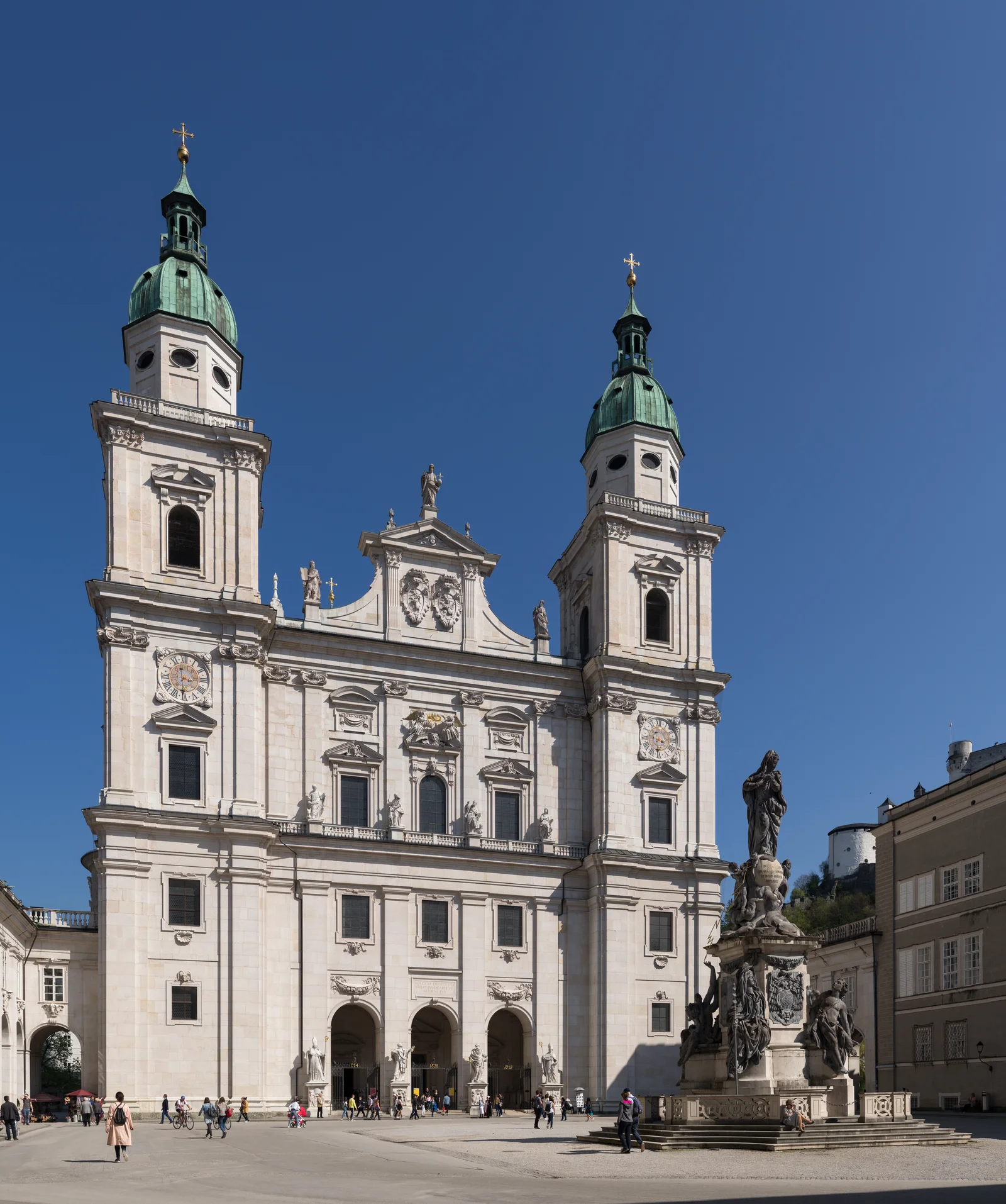
Prince Archbishop Wolf Dietrich began rebuilding the city in the Italian Baroque style.
Architect Vincenzo Scamozzi drew grand plans for open public squares across the town.
Master builder Santino Solari constructed the new cathedral using bright Untersberg marble.
Rulers Markus Sittikus and Paris Lodron added beautiful courtyards and public plazas.
Wealth from historic salt mines paid for the magnificent marble buildings and churches.
The Hilltop Fortress and Rocky River Cliffs
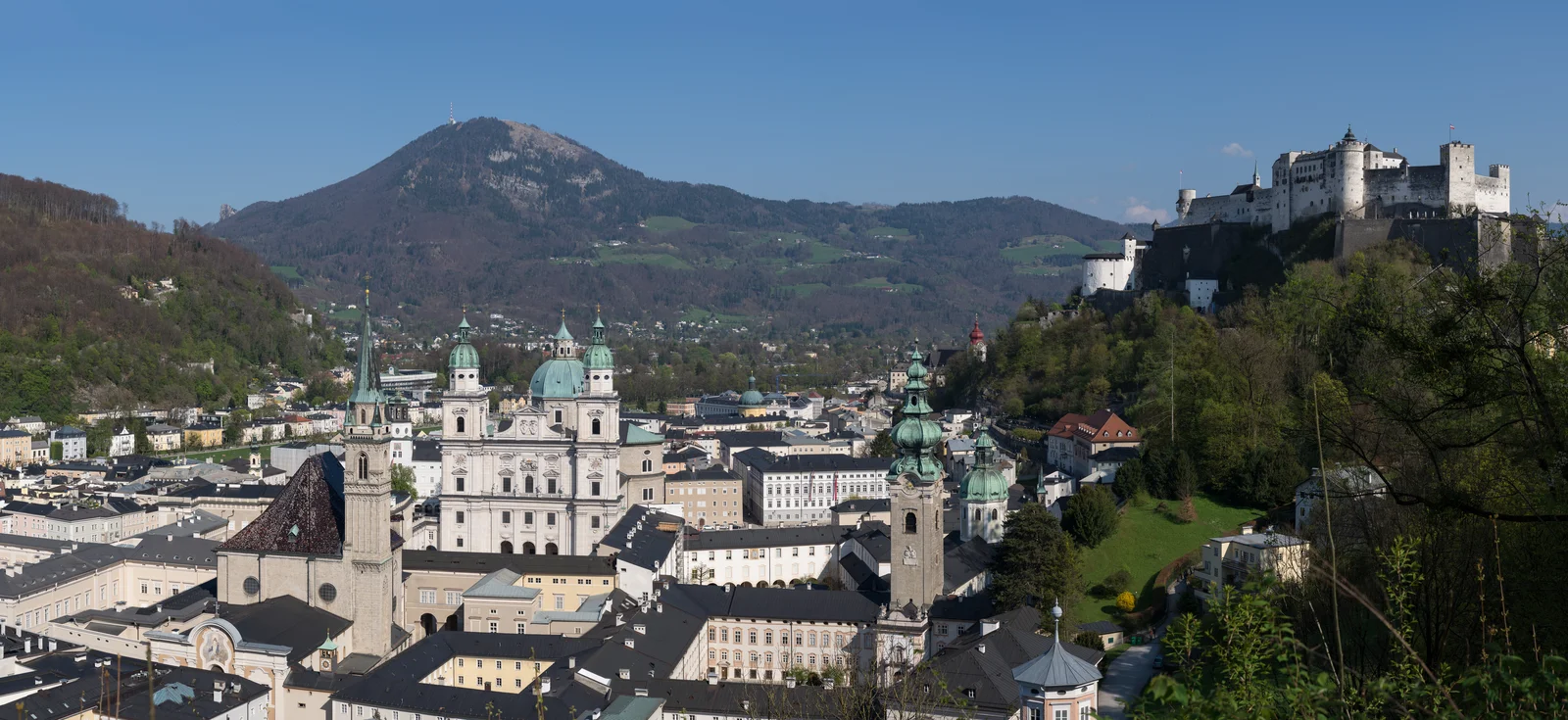
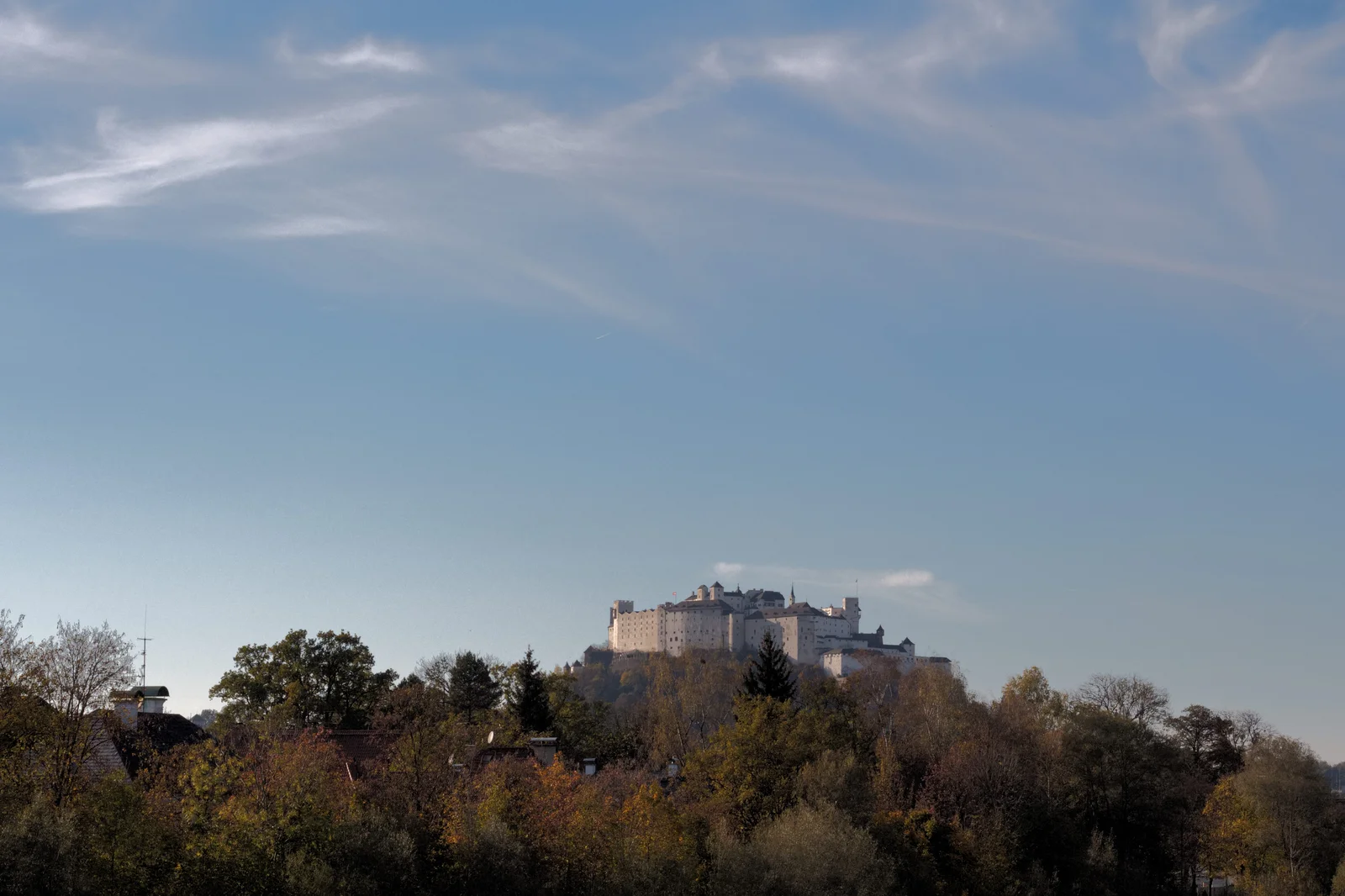
High on the steep hill stands the massive Hohensalzburg Fortress above the town.
Archbishop Leonhard von Keutschach enlarged and strengthened the fortress walls around 1500.
Strong stone towers and mechanical cargo lifts protected the castle from enemy attacks.
Rocky hills and the wide Salzach River helped defend the town from outside invaders.
Thick stone defense walls connect directly with the historic houses below the cliffs.
The high fortress served as a safe home and military center for ruling archbishops.
Narrow Medieval Lanes and Iron Guild Signs
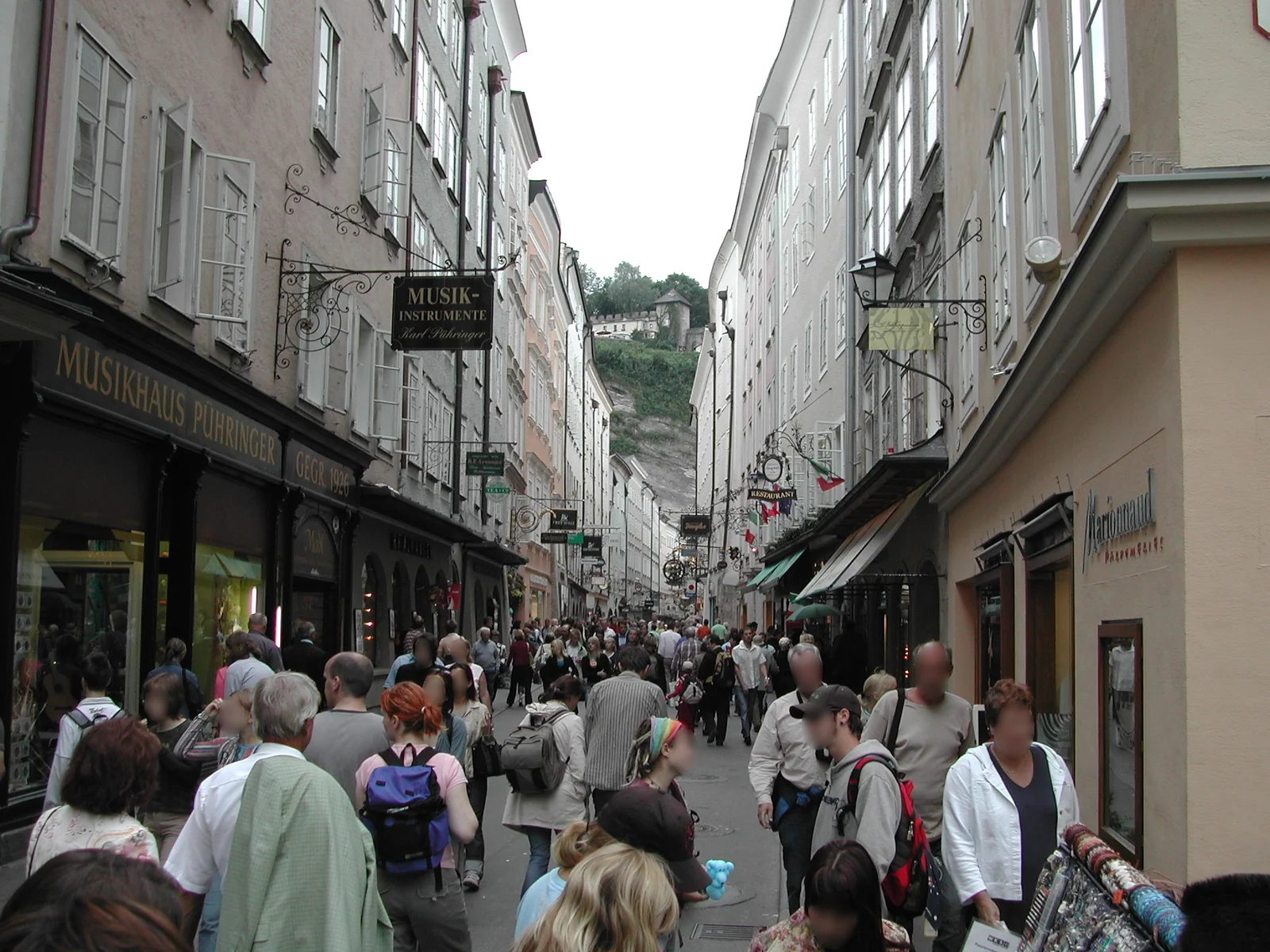
The narrow Getreidegasse was the main shopping street for medieval traders and craftspeople.
Ornate wrought iron signs hang over shop doors to show traditional baker and shoemaker crafts.
Old townhouses have charming arcaded courtyards and walking tunnels called Durchhäuser.
Famous composer Wolfgang Amadeus Mozart was born in a yellow house on Getreidegasse in 1756.
Historic workshops still make fine copper prints, books, and fresh crusty breads today.
City rules protect the historic iron signs and stop bright modern advertisements.
Protecting Historic Buildings and Living City Life
In 1967 Salzburg passed an important preservation law to protect its historic buildings.
World heritage leaders added Salzburg to the famous UNESCO list in 1996.
Building laws control house colors, roofs, and stones across the protected old town.
City leaders protect old buildings while families live and work in the historic center.
Master builders use traditional lime plaster and local mountain stone for restoration work.
Salzburg remains a bustling living city where everyday life meets famous historic landmarks.
A2 · Elementary
Historic Centre of Salzburg and Baroque Architecture
Baroque church domes, the medieval Hohensalzburg fortress, historic guild signs, and urban preservation in Salzburg.
Prince-Archbishops and the Italianate Baroque Renewal
In 1598 a catastrophic church fire destroyed the medieval Romanesque cathedral in Salzburg.
Prince Archbishop Wolf Dietrich von Raitenau launched a massive rebuilding campaign in the Baroque style.
Renowned Italian architect Vincenzo Scamozzi designed extensive master plans inspired by Italian Baroque urban design.
Master builder Santino Solari erected the magnificent Salzburg Cathedral using distinctive white Untersberg marble.
Successive archbishops Markus Sittikus and Paris Lodron expanded the monumental sequence of public plazas.
Revenues from regional salt extraction financed monumental stone architecture and attracted prominent northern Italian artisans.
Hohensalzburg Fortress and Topographical Strongholds
Elevated atop the Festungsberg ridge, eleventh-century Hohensalzburg Fortress dominates the historic urban skyline.
Archbishop Leonhard von Keutschach comprehensively expanded and fortified the complex around the year 1500.
Massive stone bastions, lookout towers, and an early mechanical funicular railway fortified the castle against sieges.
Natural barriers including the steep Mönchsberg cliff and Salzach River limited horizontal city growth.
Fortified stone ramparts integrated directly into cliffside dwellings and medieval city gate structures.
The fortress operated as an impregnable refuge, administrative seat, and permanent military barracks for prince archbishops.
Getreidegasse Merchant Traditions and Artisan Workshops
The narrow Getreidegasse functioned as the primary mercantile axis connecting city markets with river docks.
Intricately crafted wrought iron guild signs project from stone facades to advertise traditional trades.
Deep merchant townhouses feature peaceful arcaded courtyards and pedestrian passages called Durchhäuser.
Composer Wolfgang Amadeus Mozart was born in the Hagenauer House on Getreidegasse in 1756.
Longstanding family workshops preserve traditional crafts such as fine copperplate engraving and artisan bookbinding.
Strict municipal display regulations preserve the historical character of antique guild signs from modern signage.
The 1967 Preservation Act and Living Urban Landscape
The Salzburg Old Town Preservation Act of 1967 established statutory protection for the historic urban centre.
UNESCO inscribed the Historic Centre of Salzburg onto the World Heritage List in 1996.
Preservation bylaws divide the old town into strict zones that regulate plaster finishes and roof materials.
Heritage authorities maintain a functional residential core where local families reside alongside visiting cultural tourists.
Skilled restoration artisans apply traditional lime mortars and quarried conglomerate stone to repair historic masonry.
Salzburg endures as a functioning urban landscape where contemporary civic life coexists with protected monuments.
B1 · Intermediate
Historic Centre of Salzburg and Baroque Architecture
Episcopal urban planning, Italianate marble architecture, fortress defense engineering, and statutory heritage stewardship.
Episcopal Ambition, Scamozzi Urbanism, and Solari Architecture
In 1598 a catastrophic conflagration destroyed the medieval Romanesque cathedral in central Salzburg.
Prince-Archbishop Wolf Dietrich von Raitenau initiated wholesale urban rebuilding to establish a counter-Reformation capital.
Prince-Archbishop Wolf Dietrich commissioned celebrated Italian architect Vincenzo Scamozzi to design a new ecclesiastical capital.
Master builder Santino Solari executed the cathedral construction between 1614 and 1628 using radiant white Untersberg marble.
Subsequent rulers Markus Sittikus and Paris Lodron completed the sweeping plazas of Residenzplatz, Domplatz, and Kapitelplatz.
Substantial revenues from regional salt mining funded ambitious construction campaigns that attracted foremost Italian painters and sculptors.
Festungsberg Bastions, Topographical Limits, and Princely Power
Positioned strategically atop the rocky Festungsberg hill, eleventh-century Hohensalzburg Fortress surveys the historic town below.
Archbishop Leonhard von Keutschach spearheaded comprehensive defensive expansions around the year 1500, introducing fortified towers.
Heavy artillery bastions and the Reisszug mechanical funicular railway ensured reliable logistics during extended military conflicts.
The natural geography of the Mönchsberg rock face and Salzach River channeled the city into a dense, defensible corridor.
Defensive curtain walls merged seamlessly with residential basements and stone gatehouses across the old town boundary.
The citadel functioned as an unbreachable stronghold, administrative treasury, and palatial residence for secular and spiritual rulers.
Getreidegasse Guild Insignia, Durchhäuser, and Artisan Heritage
The narrow Getreidegasse served as the commercial backbone of medieval Salzburg, linking civic markets to regional waterways.
Ornate wrought-iron guild signs extend over pedestrian crowds, displaying gilded boots, pretzel symbols, and locksmith emblems.
Spacious merchant townhouses incorporate vaulted through-houses, known as Durchhäuser, that connect parallel thoroughfares.
The birth of musical virtuoso Wolfgang Amadeus Mozart on Getreidegasse in 1756 permanently anchored the street in world culture.
Generational workshops continue traditional handicrafts, including copperplate printing, umbrella making, and artisanal baking.
Rigid municipal signage ordinances require modern retail brands to adhere to antique wrought-iron design conventions.
Statutory Preservation, UNESCO Status, and Active Civic Fabric
In 1967 Salzburg pioneered modern conservation legislation by enacting the landmark Salzburg Old Town Preservation Act.
UNESCO recognized this unique architectural synthesis by inscribing the historic center on the World Heritage List in 1996.
Statutory preservation regulations establish strict conservation zones that dictate authentic exterior lime washes and timber joinery.
Conservation administrators deliberately safeguard residential housing and neighborhood bakeries to prevent historic quarters from becoming open-air museums.
Restoration stonemasons utilize authentic regional conglomerate rocks and breathable mineral pigments to maintain historic integrity.
Salzburg's historic centre remains a thriving municipal community where preserved monuments harmonize with everyday urban routines.
B2 · Upper Intermediate
Historic Centre of Salzburg and Baroque Architecture
Baroque ecclesiastical master planning, Festungsberg defense engineering, Getreidegasse guild heritage, and urban preservation law.
The Baroque Renewal, Solari's Cathedral, and Roman Grandeur
In 1598 a devastating cathedral fire destroyed the Romanesque church and initiated the city's monumental transformation.
Prince-Archbishop Wolf Dietrich von Raitenau engaged Italian architect Vincenzo Scamozzi to draft master plans modeled on Roman classical urbanism.
Italian master architect Vincenzo Scamozzi conceived monumental master plans that superimposed Roman classical geometry across medieval street patterns.
Architect Santino Solari executed the grand cathedral between 1614 and 1628, cladding its monumental facade in local Untersberg marble.
Successive prince-archbishops Markus Sittikus and Paris Lodron realized the monumental plaza complex surrounding the cathedral precinct.
Immense municipal wealth derived from regional salt trade financed lavish patronage, attracting accomplished northern Italian artisans.
Hohensalzburg Fortress, Topographical Bastions, and Strategic Defense
Dominating the valley skyline, eleventh-century Hohensalzburg Fortress occupies a commanding promontory atop the precipitous Festungsberg ridge.
Archbishop Leonhard von Keutschach systematically modernized the fortification around the year 1500, creating its signature monumental silhouette.
Massive outer bastions, fortified watchtowers, and the early Reisszug cargo railway guaranteed security during regional unrest.
The constriction imposed by the Mönchsberg rock face and Salzach River forced urban density while offering exceptional defensive barriers.
Defensive curtain walls bonded directly with domestic townhouses and fortified gatehouse portals along the riverfront.
The fortress operated simultaneously as an unassailable bastion, princely treasury, and administrative headquarters for episcopal governance.
Merchant Guild Traditions, Getreidegasse Durchhäuser, and Mozart's Legacy
The slender Getreidegasse developed as Salzburg's premier merchant artery, linking inland agricultural trade with river transport wharves.
Intricately forged wrought-iron guild signs project across shopfronts, exhibiting traditional insignia for shoemakers, tailors, and bakers.
Deep burgher residences incorporate classical arcaded courtyards and covered public passageways known locally as Durchhäuser.
The birth of Wolfgang Amadeus Mozart in the Hagenauer House in 1756 forever linked Getreidegasse to classical music history.
Specialized artisan businesses perpetuate historic crafts, including bespoke bookbinding, copperplate engraving, and handcrafted leatherwork.
Municipal preservation ordinances strictly govern commercial exterior decor, preventing standard corporate logos from disturbing historical signage.
Statutory Preservation Law, UNESCO Inscription, and Civic Continuity
The passage of the Salzburg Old Town Preservation Act in 1967 established pioneering legal protections for historic urban fabrics.
UNESCO formally inscribed the Historic Centre of Salzburg onto the World Heritage List in 1996 under cultural criteria.
Statutory preservation covenants partition the core into conservation zones, governing historic paint formulations and roof profiles.
Municipal preservation officials actively prioritize local residential tenancy, preventing the historic core from depopulating into purely commercial spaces.
Specialized conservation craftspeople deploy regional lime mortars and quarried Mönchsberg conglomerate to restore delicate facades.
The living historic center endures as a vibrant civic landscape where centuries-old stone monuments accommodate contemporary urban vitality.
C1 · Advanced
Historic Centre of Salzburg and Baroque Architecture
Baroque urban planning, Italianate marble architecture, fortress defense engineering, and statutory heritage stewardship.
Baroque Urbanism, Scamozzi Master Plans, and Solari Marble
A catastrophic conflagration in 1598 burned the Romanesque cathedral and prompted the complete urban rebuilding of Salzburg.
Prince-Archbishop Wolf Dietrich von Raitenau championed this ecclesiastical renewal, envisioning an Italianate counter-Reformation capital.
Italian master architect Vincenzo Scamozzi conceived monumental master plans that superimposed Roman classical geometry across medieval street patterns.
Master builder Santino Solari executed the monumental cathedral between 1614 and 1628, cladding its facade in quarried Untersberg marble.
Successive prince-archbishops Markus Sittikus and Paris Lodron realized the interconnected public plazas that frame the cathedral precinct.
Vast fiscal revenues generated by regional salt mining bankrolled monumental stone projects and attracted prominent transalpine artisan workshops.
The Festungsberg Fortress, Defense Engineering, and Topography
Occupying a precipitous limestone ridge, eleventh-century Hohensalzburg Fortress served as an imposing citadel overlooking the working town.
Archbishop Leonhard von Keutschach modernized the fortress around 1500, erecting formidable artillery bastions and defensive ramparts.
Pioneering mechanical funiculars and fortified gates ensured tactical resupply during periods of regional peasant rebellion and siege.
The steep topography of the Mönchsberg cliffs and the rushing Salzach River placed natural boundaries upon lateral urban expansion.
Massive stone battlements integrated seamlessly into civic dwellings, forming a continuous defensive ring around the merchant quarter.
The hilltop fortress functioned as an impregnable military redoubt, episcopal treasury, and authoritative administrative center for church rule.
Getreidegasse Guild Insignia, Durchhäuser, and Artisan Heritage
The narrow Getreidegasse served as the principal commercial thoroughfare connecting civic grain markets with busy river wharves.
Ornate wrought-iron guild signs extend over pedestrian crowds, displaying intricate metal insignia that denote traditional bakery, shoemaking, and tailoring trades.
Historic burgher townhouses feature arcaded courtyards and covered public passageways, known locally as Durchhäuser, that link parallel streets.
The birth of musical genius Wolfgang Amadeus Mozart in 1756 permanently enriched the cultural lineage of the Getreidegasse.
Generational family workshops preserve traditional crafts, including copperplate engraving, bespoke bookbinding, and refined metalwork.
Rigorous statutory oversight restricts commercial exterior signage, ensuring that modern retailers maintain antique guild craftsmanship standards.
Statutory Preservation Law, UNESCO Inscription, and Civic Continuity
The landmark Salzburg Old Town Preservation Act of 1967 introduced pioneering statutory mechanisms to safeguard the historic urban ensemble.
UNESCO formally inscribed the historic centre upon the World Heritage List in 1996, recognizing its outstanding cross-cultural architecture.
Protective zoning bylaws govern architectural conservation, dictating strict compliance regarding facade pigments, joinery, and rooflines.
Municipal preservation officials actively balance monumental conservation with active residential tenancy and essential neighborhood commerce.
Restoration conservators utilize traditional slaked lime mortars and quarried conglomerate stones to repair historic wall surfaces.
Salzburg's historic centre endures as a functioning civic ecosystem where living urban traditions thrive alongside preserved monumental heritage.
C2 · Mastery
Historic Centre of Salzburg and Baroque Architecture
Ecclesiastical sovereignty, subterranean limestone geology, guild insignia iconography, and the statutory protection of Salzburg's urban fabric.
Baroque Hegemony, Scamozzi Planning, and Solari Marble
The gastro-historical and spatial transformation of Salzburg commenced after the 1598 cathedral conflagration destroyed the medieval church.
Prince-Archbishop Wolf Dietrich von Raitenau exercised sovereign ecclesiastical sovereignty to launch a comprehensive Baroque city renewal.
Italian master architect Vincenzo Scamozzi drafted an ambitious urban reconfiguration inspired by Roman imperial grandeur.
Architect Santino Solari realized the monumental cathedral edifice between 1614 and 1628, utilizing local Untersberg marble for its striking facade.
Successive archbishops Markus Sittikus and Paris Lodron completed the sweeping public plazas, creating a dramatic spatial juxtaposition with older quarters.
Vast fiscal revenues extracted from alpine salt monopolies funded monumental stone projects, attracting preeminent Italian stone carvers and stucco masters.
The Citadel Promontory, Topographical Defense, and Fortified Fabric
Dominating the Salzach valley from a precipitous limestone promontory, eleventh-century Hohensalzburg Fortress stands as an imposing feudal citadel.
Archbishop Leonhard von Keutschach engineered comprehensive defensive expansions around the year 1500, integrating formidable artillery redoubts.
Strategic mechanical cableways and reinforced gatehouses ensured that the elevated complex remained virtually inviolable during armed insurrections.
The abrupt topographical constraints of the Mönchsberg and the Salzach River dictated intense architectural concentration within the valley floor.
Massive stone fortification walls bonded directly into residential cliff dwellings, creating a defensive barrier that shielded the burgher city below.
This multi-layered stronghold served simultaneously as an unassailable bastion, episcopal treasury, and sovereign administrative seat of power.
Getreidegasse Guild Insignia, Durchhäuser, and Artisan Heritage
The slender Getreidegasse evolved as the principal mercantile artery connecting river wharves with municipal trading squares.
Intricately forged wrought-iron guild signs extend over shopfronts, exhibiting traditional emblems that identify shoemakers, locksmiths, and bakers.
Deep burgher dwellings incorporate classical arcaded courtyards and covered public passageways, known locally as Durchhäuser, that link parallel streets.
The birth of Wolfgang Amadeus Mozart in 1756 permanently enriched the cultural lineage of this vibrant commercial lane.
Independent artisan workshops perpetuate generational crafts, including copperplate engraving, bespoke bookbinding, and refined metalwork.
A rigorous statutory signage ordinance prevents modern corporate branding from eroding the delicate visual integrity of historic guild signs.
Statutory Preservation Law, UNESCO Inscription, and Civic Continuity
The pioneering Salzburg Old Town Preservation Act of 1967 enacted rigorous statutory mechanisms to safeguard the historic urban ensemble.
UNESCO formally approved the inscription of the Historic Centre of Salzburg onto the World Heritage List in 1996.
Statutory preservation covenants partition the core into conservation zones, governing historic paint formulations and roof profiles.
Municipal preservation officials actively balance monumental stewardship with active residential tenancy and essential neighborhood commerce.
Restoration conservators deploy regional slaked lime mortars and quarried conglomerate stones to repair historic wall surfaces.
The remarkable resilience of Salzburg's historic core affirms that living civic traditions can thrive in synthesis with world-renowned monuments.
Check your understanding
Choose how closely you want to revisit the article. You can refer back while answering, and review explanations when you finish.
Quick Quiz A1
Try one question, then create a free account for the full Quick Quiz. Sign Up Free
Answer every question before checking. There is no time limit.
Your results
/ 1 correct (%)
Read the explanations to see how each answer connects to the article.
-
In what year did a destructive fire burn down the Romanesque cathedral in Salzburg?
1. Answer:
Quick Quiz A2
Try one question, then create a free account for the full Quick Quiz. Sign Up Free
Answer every question before checking. There is no time limit.
Your results
/ 1 correct (%)
Read the explanations to see how each answer connects to the article.
-
In what year did a destructive fire burn down the Romanesque cathedral in Salzburg?
1. Answer:
Quick Quiz B1
Try one question, then create a free account for the full Quick Quiz. Sign Up Free
Answer every question before checking. There is no time limit.
Your results
/ 1 correct (%)
Read the explanations to see how each answer connects to the article.
-
In what year did a destructive fire burn down the Romanesque cathedral in Salzburg?
1. Answer:
Quick Quiz B2
Try one question, then create a free account for the full Quick Quiz. Sign Up Free
Answer every question before checking. There is no time limit.
Your results
/ 1 correct (%)
Read the explanations to see how each answer connects to the article.
-
In what year did a destructive fire burn down the Romanesque cathedral in Salzburg?
1. Answer:
Quick Quiz C1
Try one question, then create a free account for the full Quick Quiz. Sign Up Free
Answer every question before checking. There is no time limit.
Your results
/ 1 correct (%)
Read the explanations to see how each answer connects to the article.
-
In what year did a destructive fire burn down the Romanesque cathedral in Salzburg?
1. Answer:
Quick Quiz C2
Try one question, then create a free account for the full Quick Quiz. Sign Up Free
Answer every question before checking. There is no time limit.
Your results
/ 1 correct (%)
Read the explanations to see how each answer connects to the article.
-
In what year did a destructive fire burn down the Romanesque cathedral in Salzburg?
1. Answer:
