A1 · Beginner
Schönbrunn Palace and Habsburg Imperial Gardens
How Austrian rulers built a grand yellow palace, formal green gardens, and the oldest zoo in Vienna.
The Grand Palace and Golden Imperial Rooms
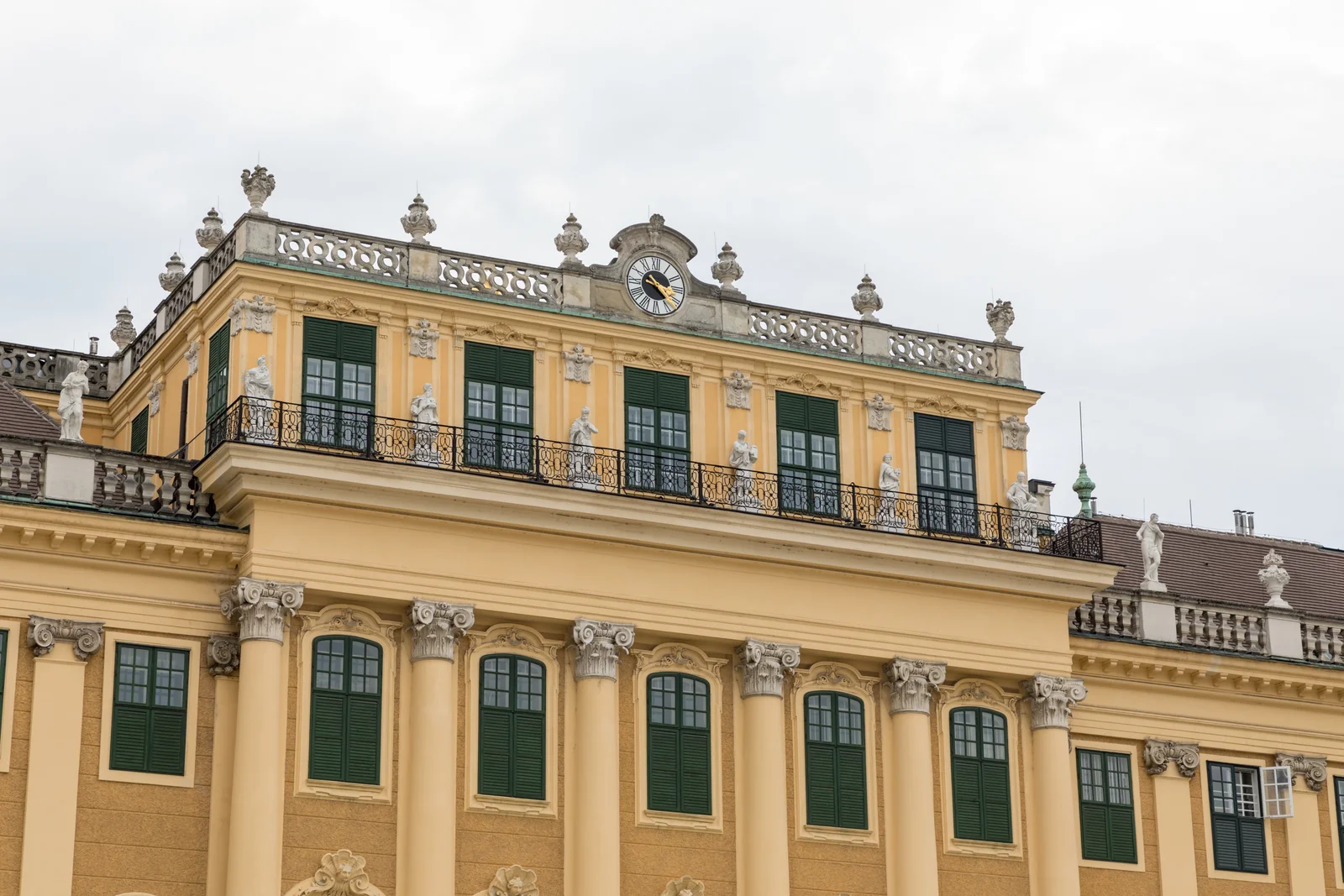
In 1696 Emperor Leopold commissioned architect Fischer von Erlach to build an imperial hunting lodge.
Empress Maria Theresa hired architect Nicolò Pacassi to expand the summer palace in the 1740s.
Schönbrunn Palace has 1441 rooms, and visitors can walk through 45 historic state apartments.
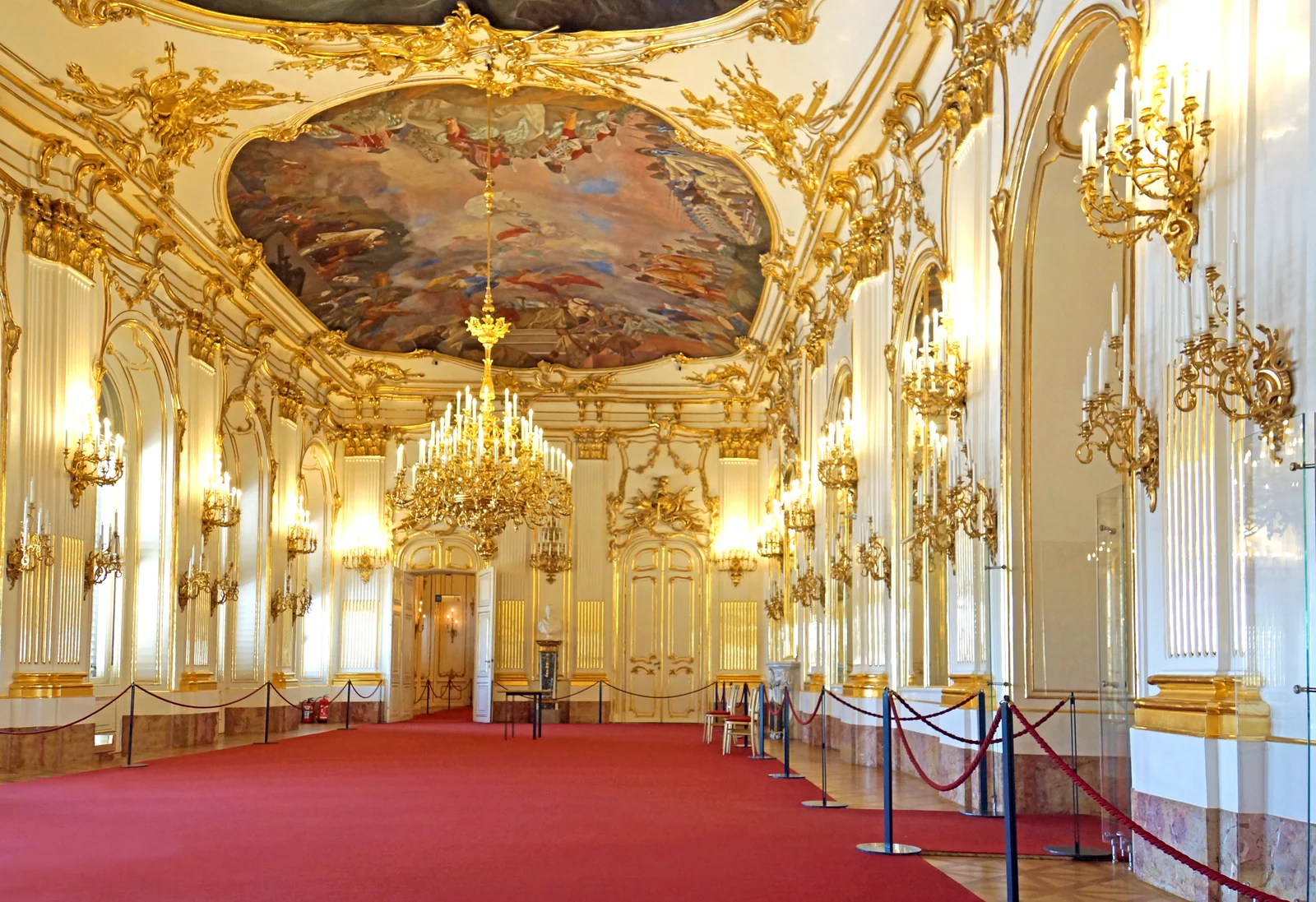
The Great Gallery features high ceilings with bright painted scenes by artist Gregorio Guglielmi.
Empress Maria Theresa chose warm yellow paint for the palace walls, which became famous across Austria.
The Millions Room has rare Asian miniature paintings set inside golden wooden wall panels.
Green Garden Paths, Stone Statues, and Fountains
French designer Jean Trehet planned the formal garden paths and neat flower beds in 1705.
Sculptor Wilhelm Beyer carved thirty-two marble statues of ancient heroes along the garden walkways.
Architect Hohenberg designed the tall stone Gloriette arches atop the green hill in 1775.
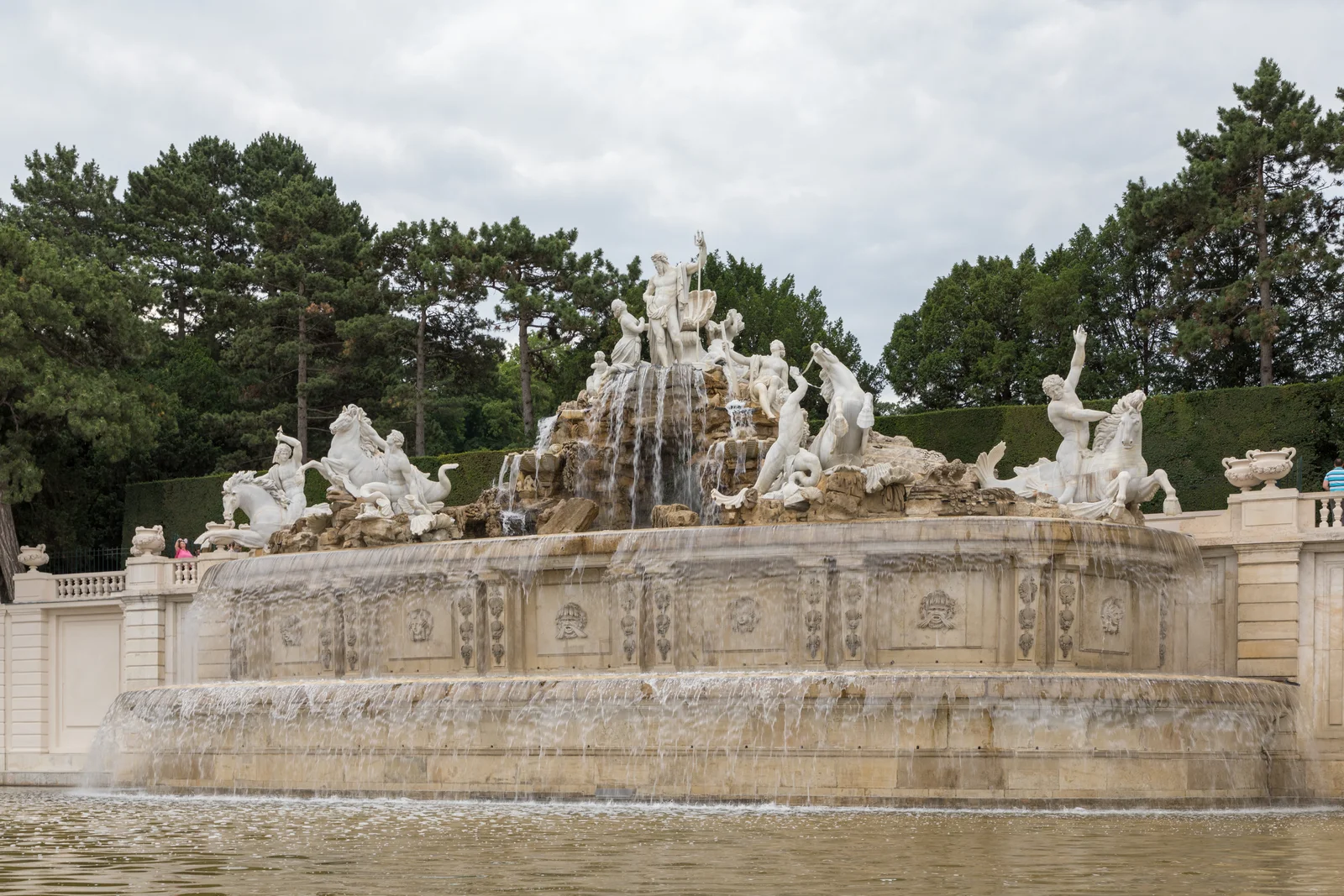
The Neptune Fountain stands below the hill with stone sea gods and flowing water streams.
Old underground pipes carry fresh spring water across the park to feed the palace fountains.
Park builders made a stone Roman ruin in 1778 to look like an ancient temple.
The Glass Plant House and Historic Animal Park
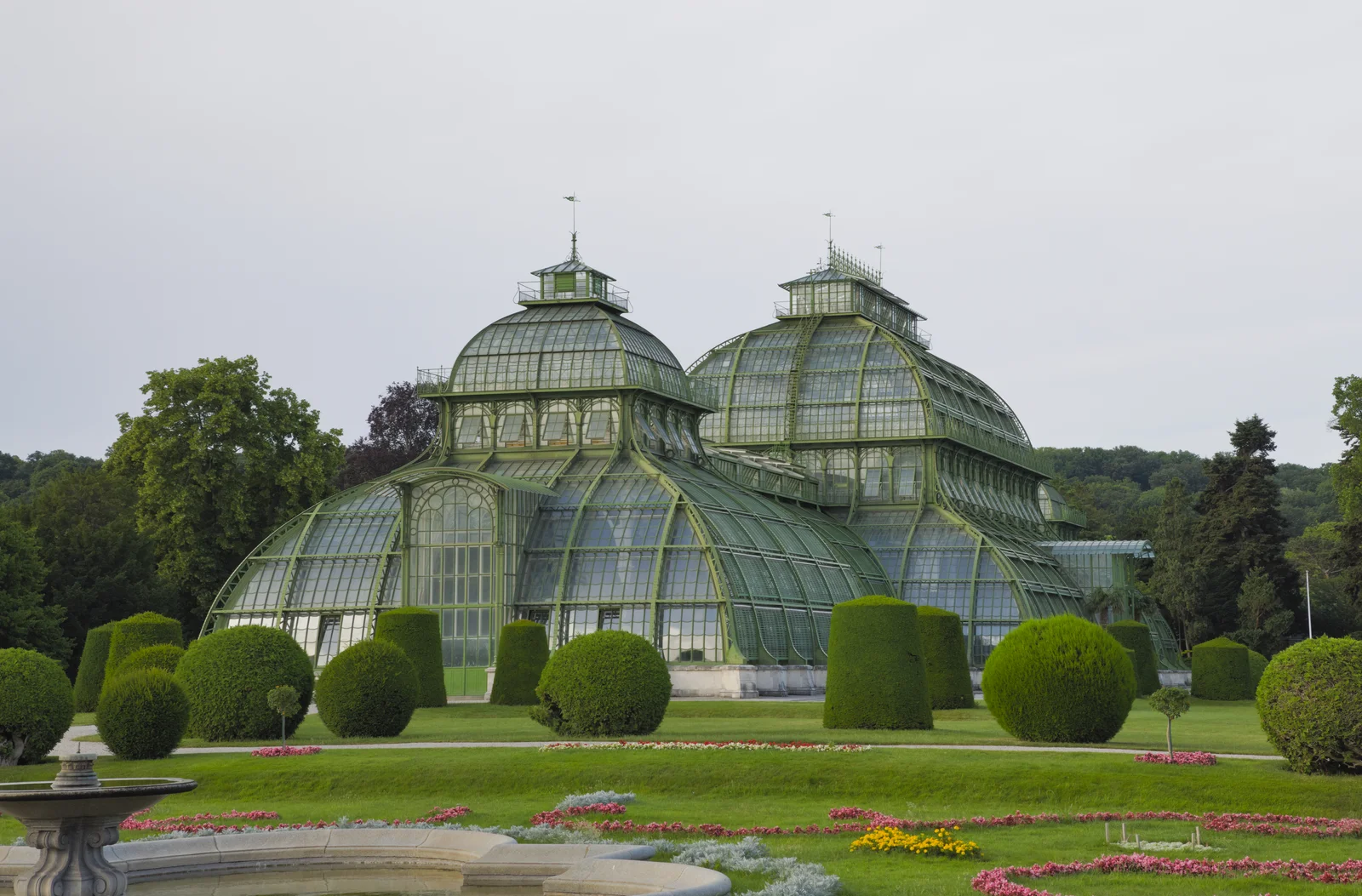
Architect Franz von Segenschmid built the large iron and glass Palmenhaus greenhouse in 1882.
The Palmenhaus has three warm zones for cold, Mediterranean, and tropical mountain plants.
Emperor Franz founded the Schönbrunn zoo in 1752, which is the oldest working zoo in the world.
The long palace Orangery kept warm citrus trees safe from cold winter snow and ice.
Garden workers care for rare historic flowers and green trees using traditional gardening methods.
Imperial researchers traveled across oceans on ships to bring exotic plants back to Vienna.
Protecting Old Stone Walls and Welcoming Park Guests
In 1996 UNESCO added Schönbrunn Palace and its vast gardens to the World Heritage List.
A federal management company took charge of the palace in 1992 to protect its heritage.
Skilled craft workers repair fragile gold leaf and delicate wall plaster inside the royal halls.
Electronic monitors check indoor air and moisture to protect historic wooden floors and paintings.
Restoration teams use traditional lime mortar and breathable mineral paints on the yellow facades.
Schönbrunn welcomes millions of visitors while keeping its green public park free for everyone.
A2 · Elementary
Schönbrunn Palace and Habsburg Imperial Gardens
Baroque palace architecture, monumental fountains, historic glasshouses, and living heritage conservation in Vienna.
The Imperial Summer Residence and Rococo State Rooms
Emperor Leopold I commissioned master architect Johann Bernhard Fischer von Erlach in 1696 to design an imperial residence.
During the 1740s, Empress Maria Theresa appointed Italian architect Nicolò Pacassi to transform the complex into a Rococo palace.
The sprawling palace contains 1441 rooms, including 45 preserved state apartments open for public exhibition.
In the Great Gallery, visitors admire vaulted ceilings decorated with allegorical frescoes painted by Gregorio Guglielmi.
Maria Theresa selected Schönbrunn yellow for the outer facades, creating a signature color for Habsburg imperial estates.
The Millions Room displays exquisite Indo-Persian miniature paintings mounted inside gilded Rococo frames and rosewood wall panels.
Baroque Parterres, Classical Sculptures, and Hilltop Gloriette
Beginning in 1705, French garden designer Jean Trehet planned the geometric parterres and symmetrical tree-lined avenues.
Sculptor Johann Christian Wilhelm Beyer carved thirty-two classical marble statues that line the Great Parterre.
Architect Johann Ferdinand Hetzendorf von Hohenberg built the monumental Gloriette colonnade on the hilltop in 1775.
At the foot of the hill, the Neptune Fountain displays sea deities surrounded by pressurized water jets.
An eighteenth-century subterranean conduit network channels natural spring water to power the park's ornamental fountains.
Hohenberg also constructed the picturesque Roman Ruin in 1778, evoking ancient imperial monuments within the park.
The Grand Palmenhaus, Historic Menagerie, and Imperial Citrus
Architect Franz von Segenschmid designed the monumental wrought-iron Palmenhaus conservatory, which officially opened in 1882.
The glasshouse contains three distinct temperature pavilions housing cold-temperate, Mediterranean, and tropical botanical collections.
Emperor Franz I Stephan founded the Schönbrunn Menagerie in 1752, making it the oldest continuously operating zoo worldwide.
The 189-meter Orangery building sheltered fragile citrus trees during winter and hosted grand court musical receptions.
Federal garden specialists continue to cultivate rare historical citrus varieties using centuries-old horticultural techniques.
Early Habsburg botanical expeditions sailed to distant continents to collect living plants for the imperial greenhouses.
Statutory Heritage Protection, Delicate Craft, and Public Parklands
UNESCO inscribed the Palace and Gardens of Schönbrunn on the World Heritage List in 1996 for cultural significance.
The federal operating company Schloß Schönbrunn GmbH assumed responsibility for the estate in 1992 to ensure sustainable management.
Specialized conservators apply gold leaf and repair delicate stucco reliefs to preserve imperial decorative arts.
Precise climate controls protect historical parquet wood floors, tapestries, and ceiling frescoes from humidity shifts.
Restoration architects require breathable mineral washes and natural lime mortars to safeguard the historic palace facades.
Schönbrunn successfully accommodates millions of museum guests while providing open green recreation for local city residents.
B1 · Intermediate
Schönbrunn Palace and Habsburg Imperial Gardens
Imperial Habsburg architecture, French formal garden geometry, historic botanical collections, and modern monument stewardship in Vienna.
Imperial Hunting Seat to Monumental Rococo Residence
Emperor Leopold I commissioned architect Johann Bernhard Fischer von Erlach in 1696 to replace a damaged hunting lodge with a grand summer palace.
Empress Maria Theresa initiated a comprehensive redesign during the 1740s, engaging court architect Nicolò Pacassi to introduce refined Rococo interiors.
Across its expansive footprint, the palace incorporates 1441 rooms, with forty-five lavishly restored imperial apartments accessible to museum visitors.
The Great Gallery served as the ceremonial heart of court diplomacy, illuminated by tall arched windows and Gregorio Guglielmi's ceiling frescoes.
Maria Theresa chose Schönbrunn yellow for the exterior plaster, establishing an iconic architectural color scheme associated with Austrian state buildings.
Within the Millions Room, rare Indo-Persian miniature paintings rest inside intricate gilded cartouches framed by Brazilian rosewood paneling.
French Parterre Geometry, Hydraulic Engineering, and the Gloriette
French landscape designer Jean Trehet planned the formal park layout starting in 1705, using diagonal avenues and trimmed hedge corridors.
Between 1773 and 1780, sculptor Johann Christian Wilhelm Beyer produced thirty-two marble statues illustrating classical mythology along the Great Parterre.
In 1775, architect Johann Ferdinand Hetzendorf von Hohenberg crowned the southern ridge with the open arcade of the Gloriette colonnade.
Beneath the hill, the sculpted marble figures of the Neptune Fountain create a theatrical backdrop powered by historic water pressure.
An ingenious subterranean hydraulic network engineered during the eighteenth century channels natural spring water from nearby hills into the palace basins.
Hohenberg engineered the Roman Ruin in 1778 as an artificial classical monument, reflecting the Habsburg fascination with ancient Roman imperial heritage.
The 1882 Palmenhaus, the 1752 Menagerie, and Imperial Horticulture
Engineered by Franz von Segenschmid, the magnificent wrought-iron Palmenhaus opened in 1882 as one of Europe's largest glass conservatories.
The structure features three distinct climatic zones that shelter cold-temperate species, Mediterranean flora, and humid tropical rain forest specimens.
Emperor Franz I Stephan founded Tiergarten Schönbrunn in 1752, creating a radial menagerie that endures as the world's oldest operating zoo.
The 189-meter palace Orangery provided winter shelter for prized citrus trees while serving as a banquet hall for imperial musical rivalries.
Federal garden curators preserve valuable historical citrus cultivars and historic camellias through archival propagation methods.
Eighteenth-century botanical expeditions sponsored by Emperor Franz I gathered rare plant specimens from the Americas and South Africa.
World Heritage Inscription, Fine Art Conservation, and Civic Access
UNESCO officially added the Palace and Gardens of Schönbrunn to the World Heritage List in 1996 in recognition of its intact Baroque ensemble.
The autonomous federal enterprise Schloß Schönbrunn GmbH took over property operations in 1992, financing heritage work through self-sustaining tourism.
Professional restorers perform delicate gold leaf gilding and consolidate historical stucco reliefs to counter natural material deterioration.
Advanced atmospheric monitoring systems stabilize interior temperature and humidity to protect antique wooden parquet floors and painted fabrics.
Conservation regulations enforce the use of slaked lime mortars and breathable mineral paints during all exterior facade restorations.
The estate successfully maintains intensive tourist operations while preserving free daily parkland access for Viennese walkers and runners.
B2 · Upper Intermediate
Schönbrunn Palace and Habsburg Imperial Gardens
Nicolò Pacassi's Rococo interiors, Hohenberg's park monuments, Segenschmid's iron glasshouse, and statutory conservation in Vienna.
Architectural Evolution from Hunting Seat to Rococo Palace
In 1696, Emperor Leopold I commissioned court architect Johann Bernhard Fischer von Erlach to erect an imperial summer residence celebrating dynastic triumph.
Empress Maria Theresa extensively reconstructed the estate in the 1740s, engaging Nicolò Pacassi to create a unified Rococo palace suited for imperial government.
Encompassing 1441 rooms, the vast palace structure features forty-five ceremonial state apartments preserved with authentic eighteenth-century furnishings.
The Great Gallery showcases magnificent vaulted ceilings painted by Gregorio Guglielmi, celebrating Maria Theresa's reign through grand allegorical compositions.
The distinctive Schönbrunn yellow facade finish, chosen by Maria Theresa, became the definitive architectural signature for public buildings throughout the monarchy.
In the Millions Room, precious sixteenth-century Indo-Persian miniatures are set into carved Rococo cartouches and dark Brazilian rosewood wainscoting.
Landscape Design, Classical Sculptural Programs, and Hilltop Architecture
Commencing in 1705, French landscape architect Jean Trehet established the geometric Baroque parterres, clipped hornbeam hedges, and radial avenues.
Sculptor Johann Christian Wilhelm Beyer installed thirty-two expressive marble statues of classical mythological figures beside the Great Parterre by 1780.
Johann Ferdinand Hetzendorf von Hohenberg completed the Gloriette in 1775, erecting an arched classical colonnade that crowns the visual axis of the garden.
At the base of the palace hill, the Neptune Fountain integrates monumental marble sculptures with dynamic cascades fed by historic water supplies.
A complex subterranean system of gravity-fed pipes and stone cisterns, constructed in the eighteenth century, continues to supply water to park fountains.
Hohenberg designed the picturesque Roman Ruin in 1778, creating an evocative artificial monument intended to symbolize Habsburg descent from ancient emperors.
Ironwork Conservatories, the 1752 Zoo, and Botanical Stewardship
Architect Franz von Segenschmid engineered the Palmenhaus in 1882, utilizing prefabricated wrought-iron arches and thousands of curved glass panes.
The massive glasshouse contains three interconnected pavilions that maintain cold-temperate, Mediterranean, and tropical climatic conditions.
Founded by Emperor Franz I Stephan in 1752, the imperial menagerie at Schönbrunn holds international distinction as the world's oldest operating zoological garden.
The monumental 189-meter Orangery building sheltered valuable potted citrus trees and provided a grand setting for imperial musical entertainment.
Horticultural specialists from the Austrian Federal Gardens maintain centuries-old plant lineages through traditional grafting and greenhouse cultivation.
Extensive scientific voyages commissioned by Emperor Franz I enriched the Schönbrunn greenhouses with newly discovered botanical specimens from across the globe.
Monument Protection Law, Conservation Craft, and Public Parkland
UNESCO inscribed Schönbrunn Palace and its surrounding gardens as a World Heritage site in 1996, recognizing its outstanding universal value.
Founded in 1992, the Schloß Schönbrunn operating company manages property preservation, tourism revenue, and cultural programming with financial independence.
Expert restorers employ historic poliment water gilding and artisan stucco consolidation to maintain the delicate gilded ornamentation of the imperial rooms.
Automated climate control sensors monitor microclimates within state rooms to prevent dimensional distortion in historic parquet floors and tapestries.
Monument conservation standards require traditional slaked lime washes and breathable mineral coatings to protect exterior facades from environmental decay.
The Schönbrunn complex balances high-density museum tourism with universal free pedestrian access to one of Vienna's most cherished historic parks.
C1 · Advanced
Schönbrunn Palace and Habsburg Imperial Gardens
Imperial residence design, French parterre geometry, Segenschmid iron engineering, and museum conservation standards at Schönbrunn.
Dynastic Patronage, Pacassi Interiors, and Rococo Artistry
Following the devastation of earlier hunting estates, Emperor Leopold I commissioned Johann Bernhard Fischer von Erlach in 1696 to plan a sovereign residence.
Empress Maria Theresa orchestrated an ambitious architectural transformation during the 1740s, appointing Nicolò Pacassi to supervise extensive reconstruction.
The resulting imperial complex encompasses 1441 rooms, featuring forty-five state apartments preserved with museum-grade historical accuracy.
The monumental Great Gallery features vaulted ceilings illuminated by allegorical frescoes painted by Italian artist Gregorio Guglielmi.
Maria Theresa selected the distinctive Schönbrunn yellow mineral pigment for the exterior facades, establishing an imperial aesthetic standard across Austria.
The Millions Room integrates prized Indo-Persian miniature paintings framed by gilded Rococo cartouches and imported Brazilian rosewood panelling.
French Axial Landscaping, Mythological Statuary, and Waterworks
Beginning in 1705, French master gardener Jean Trehet laid out the formal parterres and diagonal avenues according to strict geometric principles.
Between 1773 and 1780, sculptor Johann Christian Wilhelm Beyer installed thirty-two classical marble sculptures along the main parterre borders.
Johann Ferdinand Hetzendorf von Hohenberg completed the commanding Gloriette colonnade in 1775 to terminate the dramatic southern garden axis.
At the foot of the hill, the monumental Neptune Fountain harnesses pressurized water conduits to animate dramatic marble representations of marine deities.
An eighteenth-century subterranean stone reservoir and piping system engineered under imperial direction continues to supply water to ornamental fountains.
Hohenberg engineered the Roman Ruin in 1778 as an intentional architectural caprice, evoking antique Roman grandeur amid manicured parkland.
The 1882 Palmenhaus, Imperial Zoos, and Botanical Science
Master architect Franz von Segenschmid constructed the monumental iron-and-glass Palmenhaus glasshouse, which was inaugurated in 1882.
The conservatory incorporates three independently regulated climatic pavilions that accommodate cold-temperate, subtropical Mediterranean, and tropical flora.
Emperor Franz I Stephan founded Tiergarten Schönbrunn in 1752, creating a radial menagerie recognized today as the world's oldest operating zoo.
The 189-meter Orangery building protected citrus trees against sub-zero winter temperatures while serving as an imperial hall for competitive court music.
Specialists at the Austrian Federal Gardens maintain living historical collections through specialized propagation and archival horticulture.
Eighteenth-century botanical expeditions funded by the Habsburg court introduced hundreds of exotic plant species into the imperial greenhouse collections.
UNESCO Heritage Status, Preventive Conservation, and Civic Parkland
In 1996, UNESCO declared the Palace and Gardens of Schönbrunn a World Heritage site under international cultural heritage criteria.
Established in 1992, the Schloß Schönbrunn operating company administers long-term heritage stewardship, funding conservation through museum admissions.
Skilled craft specialists perform delicate water gilding and stucco restoration to preserve ornamental Rococo paneling throughout the imperial suites.
Continuous environmental monitoring protects delicate marquetry parquet floors, tapestries, and ceiling paintings against fluctuating interior humidity.
The federal monument office enforces strict material guidelines, requiring traditional slaked lime mortars and breathable pigments for facade repairs.
Schönbrunn manages enormous international visitor volumes while maintaining free public access to its historic landscape gardens for local residents.
C2 · Mastery
Schönbrunn Palace and Habsburg Imperial Gardens
Ecclesiastical patronage, Trehet parterre geometry, Segenschmid iron engineering, and statutory conservation at Austria's premier imperial estate.
Baroque Imperial Ambition, Pacassi Reconstruction, and Rococo Art
In 1696, Emperor Leopold I commissioned master architect Johann Bernhard Fischer von Erlach to erect a grand edifice symbolizing Habsburg dynastic resilience.
Empress Maria Theresa initiated a total architectural metamorphosis in the 1740s, engaging Nicolò Pacassi to replace original Baroque plans with opulent Rococo state rooms.
The resulting palace contains 1441 rooms, embodying imperial magnificence through forty-five meticulously conserved state apartments open to public exhibition.
The Great Gallery showcases monumental ceiling vaults painted with allegorical frescoes by Gregorio Guglielmi celebrating the prosperity of the Habsburg realm.
Maria Theresa selected the famous Schönbrunn yellow facade finish, creating an exterior luminescence that came to define Austrian public architecture.
Within the Millions Room, rare sixteenth-century Indo-Persian miniatures are set into carved Rococo cartouches and rich Brazilian rosewood paneling.
French Parterre Geometry, Hohenberg Monumetalism, and Hydraulics
Beginning in 1705, French landscape designer Jean Trehet configured the grand park using strict mathematical symmetry and geometric hedge corridors.
Sculptor Johann Christian Wilhelm Beyer installed thirty-two mythological marble statues beside the Great Parterre, assembling a classical pantheon between 1773 and 1780.
Johann Ferdinand Hetzendorf von Hohenberg completed the Gloriette in 1775, erecting an open arched arcade that crowns the southern hillside axis.
At the base of the slope, the marble Neptune Fountain integrates dynamic hydraulic water jets with sculptures representing maritime deities.
An eighteenth-century subterranean conduit system and hillside aquifer collection network continue to supply fresh water to the historic palace fountains.
Hohenberg engineered the Roman Ruin in 1778 as an evocative architectural folly, reinforcing the dynasty's conscious identification with ancient imperial authority.
Segenschmid Iron Conservatories, Imperial Menageries, and Botany
Engineered by Franz von Segenschmid, the monumental wrought-iron Palmenhaus opened in 1882 as a masterwork of nineteenth-century conservatory engineering.
The structure encloses three distinct climatic zones that maintain cold-temperate, Mediterranean, and humid tropical environments for exotic botanical collections.
Founded by Emperor Franz I Stephan in 1752, the imperial menagerie at Schönbrunn endures as the oldest continuous zoological institution in the world.
The 189-meter Orangery protected delicate citrus groves against frost while providing a grand venue for court festivities and musical competitions.
Specialists within the Austrian Federal Gardens preserve living botanical heritage through traditional propagation and archival cultivation techniques.
Habsburg botanical expeditions gathered thousands of rare plant taxa from the Caribbean, South America, and the Cape of Good Hope for the royal greenhouses.
Statutory Monument Conservation, Poliment Gilding, and Civic Vitality
UNESCO confirmed the cultural inscription of the Palace and Gardens of Schönbrunn on the World Heritage List in 1996.
The Schloß Schönbrunn operating company has managed estate conservation and visitor flow since 1992, generating autonomous revenue for continuous structural restoration.
Master conservators employ traditional poliment water gilding and mineral plaster techniques to preserve fragile Rococo stuccowork throughout the state apartments.
Advanced digital climate sensors continuously regulate interior humidity levels to safeguard historical parquet flooring, tapestries, and ceiling paintings.
Statutory preservation guidelines mandate slaked lime mortars and breathable mineral pigments for all exterior facade repairs across the imperial estate.
Schönbrunn reconciles mass international cultural tourism with open civic access, providing Vienna's urban public with an unblemished historic park.
Check your understanding
Choose how closely you want to revisit the article. You can refer back while answering, and review explanations when you finish.
Quick Quiz A1
Try one question, then create a free account for the full Quick Quiz. Sign Up Free
Answer every question before checking. There is no time limit.
Your results
/ 1 correct (%)
Read the explanations to see how each answer connects to the article.
-
Which imperial ruler commissioned architect Fischer von Erlach in 1696 to design Schönbrunn?
1. Answer:
Quick Quiz A2
Try one question, then create a free account for the full Quick Quiz. Sign Up Free
Answer every question before checking. There is no time limit.
Your results
/ 1 correct (%)
Read the explanations to see how each answer connects to the article.
-
Which imperial ruler commissioned architect Fischer von Erlach in 1696 to design Schönbrunn?
1. Answer:
Quick Quiz B1
Try one question, then create a free account for the full Quick Quiz. Sign Up Free
Answer every question before checking. There is no time limit.
Your results
/ 1 correct (%)
Read the explanations to see how each answer connects to the article.
-
Which imperial ruler commissioned architect Fischer von Erlach in 1696 to design Schönbrunn?
1. Answer:
Quick Quiz B2
Try one question, then create a free account for the full Quick Quiz. Sign Up Free
Answer every question before checking. There is no time limit.
Your results
/ 1 correct (%)
Read the explanations to see how each answer connects to the article.
-
Which imperial ruler commissioned architect Fischer von Erlach in 1696 to design Schönbrunn?
1. Answer:
Quick Quiz C1
Try one question, then create a free account for the full Quick Quiz. Sign Up Free
Answer every question before checking. There is no time limit.
Your results
/ 1 correct (%)
Read the explanations to see how each answer connects to the article.
-
Which imperial ruler commissioned architect Fischer von Erlach in 1696 to design Schönbrunn?
1. Answer:
Quick Quiz C2
Try one question, then create a free account for the full Quick Quiz. Sign Up Free
Answer every question before checking. There is no time limit.
Your results
/ 1 correct (%)
Read the explanations to see how each answer connects to the article.
-
Which imperial ruler commissioned architect Fischer von Erlach in 1696 to design Schönbrunn?
1. Answer:
